


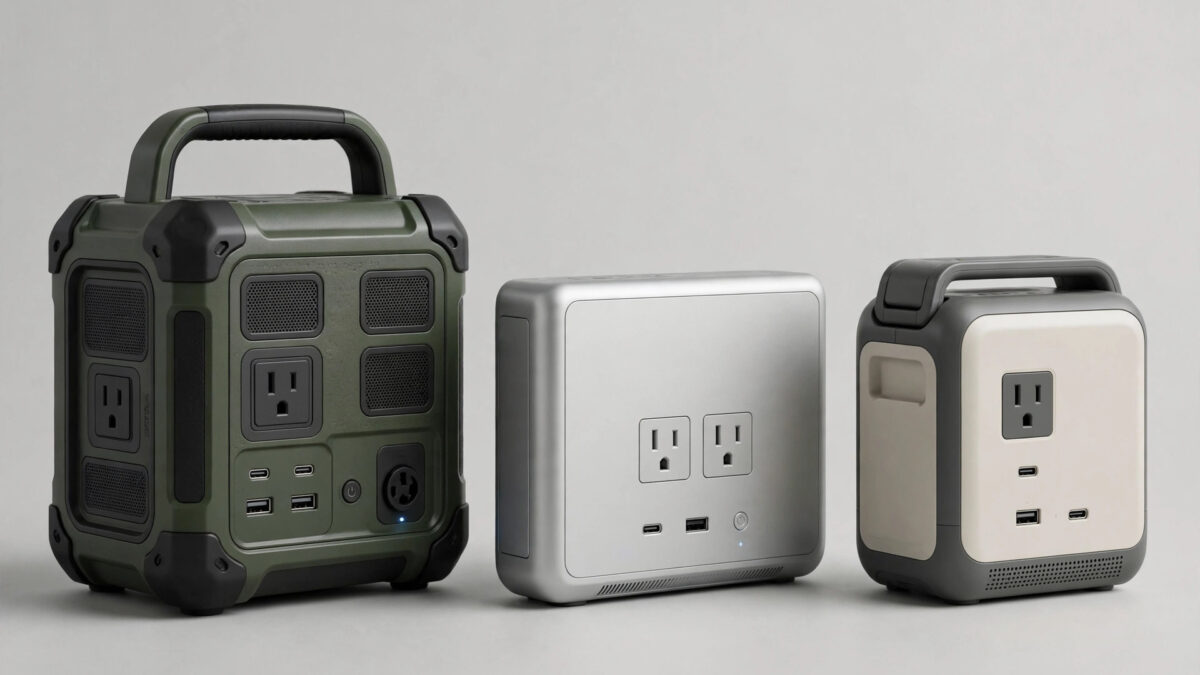
EcoFlow, Jackery, and Bluetti. If you’ve researched solar generators at all, these three names own the conversation — and for good reason. Together they account for the large majority of portable power station sales, and each has a distinct philosophy: EcoFlow chases charging speed and ecosystem depth, Jackery chases simplicity and reliability, and Bluetti chases battery longevity and value.
We’ve tracked all three brands across multiple product generations, and the 2027 lineups are the most mature the category has ever seen — every flagship below uses long-life LiFePO4, every brand offers sub-hour fast charging on at least some models, and the price gaps have narrowed considerably. That maturity is good news: it means you can choose on philosophy and fit instead of worrying about buying a lemon.
But “which brand is best?” is the wrong question. The right question is which brand is best for you — because each wins in different scenarios. In this 2027 head-to-head, we compare the three brands across the seven factors that actually decide ownership satisfaction: ecosystem, charging speed, battery chemistry, expansion, app experience, warranty, and price. Then we put their flagship products side by side — the EcoFlow DELTA Pro 3, the Jackery Explorer 1000 v2, and the BLUETTI AC200PL — plus two runners-up worth your attention.
EcoFlow: The Speed and Ecosystem Leader
EcoFlow’s identity is built on two things: the fastest charging in the industry and the deepest product ecosystem. Its X-Stream technology refills a 1kWh DELTA unit from 0-80% in about 50 minutes — roughly twice as fast as most rivals — and the flagship DELTA Pro 3 maintains that pace at 4kWh scale. If you’ve ever watched a storm forecast roll in with a dead battery, that speed is not a luxury.
The ecosystem is where EcoFlow really separates itself. Beyond power stations, EcoFlow sells transfer switches, the Smart Home Panel, portable air conditioners, electric coolers, and extra batteries that stack capacity to 48kWh on the DELTA Pro 3. X-Boost technology lets 1800W-class inverters run 2200W+ appliances by intelligently managing voltage. Everything uses LiFePO4 chemistry across the current DELTA lineup, with cycle ratings from 3,000 to 4,000+. The app is the best in the business — fast, detailed, and genuinely useful for monitoring solar input and scheduling.
The trade-offs: EcoFlow units tend to be the heaviest in their class, fans can be audible under load, and the brand’s rapid release cycle means last year’s flagship gets replaced quickly. Prices are competitive but rarely the cheapest. Buy EcoFlow if you want the fastest recharge, the biggest expansion ceiling, and a whole-home energy ecosystem rather than just a box with outlets.
Jackery: The Simplicity and Trust Leader
Jackery invented the modern portable power station category, and millions of owners later, it remains the brand non-technical buyers trust most. The philosophy is the opposite of EcoFlow’s: fewer features, fewer decisions, everything just works. Unbox it, plug things in, done. Customer support is consistently rated among the best, and the brand’s decade-long track record means parts, accessories, and community knowledge are everywhere.
Jackery’s historical weakness was battery chemistry — older models like the Explorer 500 used lithium-ion cells with ~800-cycle lifespans while rivals moved to LiFePO4. That gap is now closed on current models: the Explorer 1000 v2 and HomePower 3600 Plus both use LiFePO4 rated for 4,000-6,000 cycles, matching or beating the competition. The HomePower 3600 Plus adds manual transfer switch integration for clean home-panel backup, and Jackery’s solar panels (the SolarSaga line) remain among the most efficient portable options.
The trade-offs: Jackery’s charging speeds lag EcoFlow’s, the app is simpler (fine for most, limiting for tinkerers), and the lineup has fewer models — which is also a strength if you hate choice paralysis. Buy Jackery if you value dead-simple operation, the strongest brand trust, and support you’ll actually reach when something goes wrong.
Bluetti: The Value and Longevity Leader
Bluetti was early to LiFePO4 when rivals were still shipping lithium-ion, and that head start shows in battery longevity ratings that lead the industry — 4,000 to 6,000+ cycles on current models. The AC series built one of the largest owner communities in solar, and BLUETTI’s Power Lifting mode (which pushes extra watts to resistive loads like heaters and power tools) is a genuinely useful differentiator.
Bluetti’s real superpower is value engineering. The AC200PL delivers 2304Wh and 2400W at prices that undercut both EcoFlow and Jackery per watt-hour, and the Elite series (Elite 100 V2, Elite 200 V2) refined the formula further with faster charging, quieter operation, and lighter builds. For buyers who compare spec sheets line by line, Bluetti usually wins the math.
The trade-offs: the accessory ecosystem is thinner than EcoFlow’s, the app is good but not great, and industrial design leans utilitarian rather than premium. Buy Bluetti if you want the most battery lifespan and the most watt-hours per dollar — the rationalist’s choice.
Head-to-Head Comparison
| Factor | EcoFlow | Jackery | Bluetti |
|---|---|---|---|
| Ecosystem | Best — transfer switches, smart panels, 48kWh expansion | Good — MTS integration, SolarSaga panels | Decent — solid panels, thinner accessories |
| Charging speed | Best — 50 min to 80% (X-Stream) | Good — 1h emergency mode on v2 models | Very good — 45-60 min on Elite series |
| Battery chemistry | LiFePO4 across current lineup | LiFePO4 on current models (older models Li-ion) | LiFePO4 pioneer — 4,000-6,000+ cycles |
| Expansion | Best — up to 48kWh | Very good — up to 43kWh | Good — up to ~8.4kWh on AC200PL |
| App | Best in class | Simple and reliable | Good, improving |
| Warranty | Competitive multi-year coverage | Strong, with excellent support reputation | Competitive multi-year coverage |
| Price | Mid to premium | Mid-range | Best value per watt-hour |
The Flagships, Side by Side
Specs tell you what a brand values. Here are the three representative flagships — one from each brand — plus two runners-up that deserve a look.
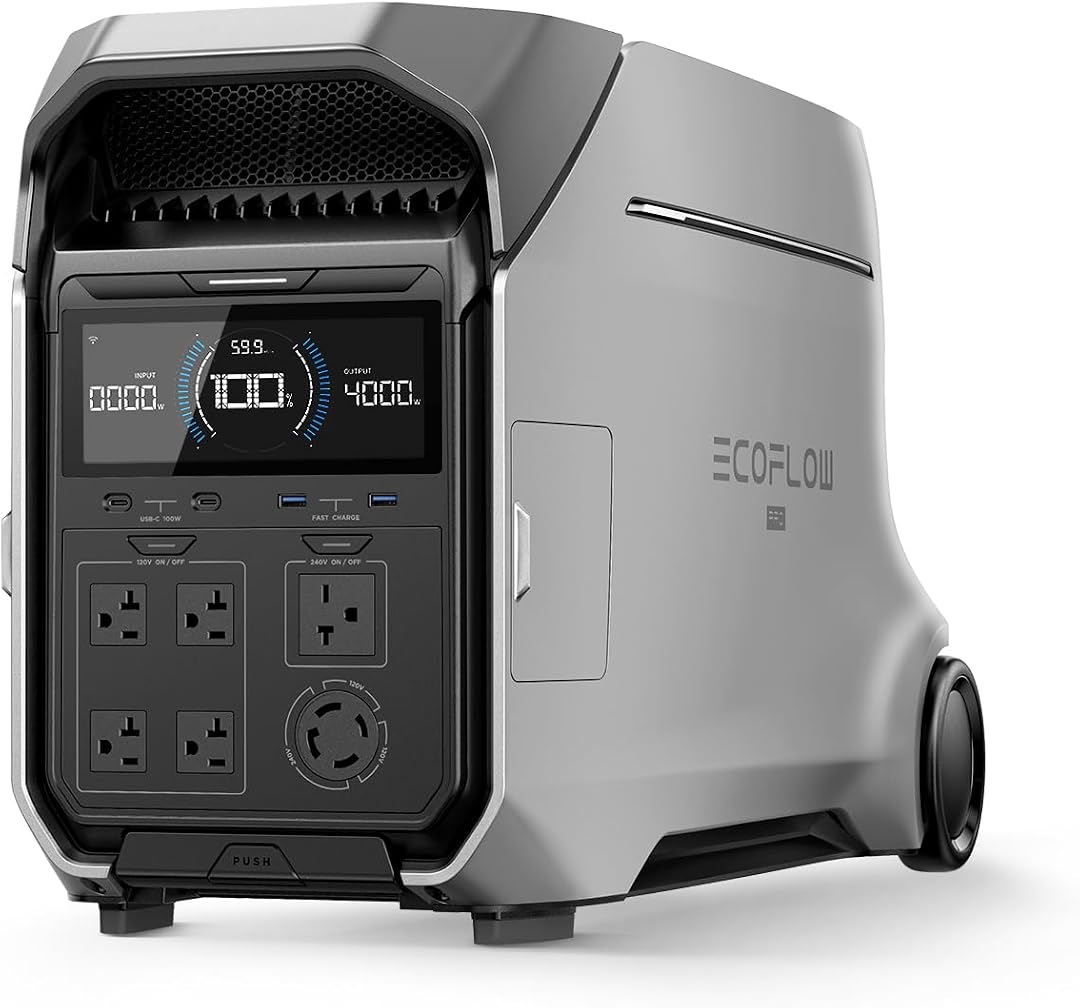
EcoFlow flagship
EcoFlow DELTA Pro 3
- 4096Wh capacity / 4000W output (120V/240V)
- Expands to 48kWh — largest ceiling in class
- LiFePO4 — 0-80% in ~50 minutes
- Deepest home-integration ecosystem
- Capacity: 4096Wh (expandable to 48kWh)
- Output: 4000W (6000W X-Boost), 120V/240V
- Battery: LiFePO4
- Recharge: 0-80% in ~50 min (AC)
- Weight: 115 lbs
As an Amazon Associate, we earn from qualifying purchases.
The DELTA Pro 3 is EcoFlow’s philosophy in a box: maximum power, maximum speed, maximum expansion. 4000W of 240V-capable output runs central AC and well pumps; 48kWh of expansion headroom turns it into a whole-home battery; 50-minute fast charging means it’s always ready. The IP65 rating and transfer-switch ecosystem complete the picture. It’s heavy (115 lbs) and premium-priced, but nothing else scales this far. Read our full take in our large solar generators guide.
Pros
- Most powerful and most expandable flagship here
- Fastest recharge at this scale
- True 240V for heavy home loads
- Best app and accessory ecosystem
Cons
- Heaviest and most expensive of the three
- Overkill if you only need 120V backup
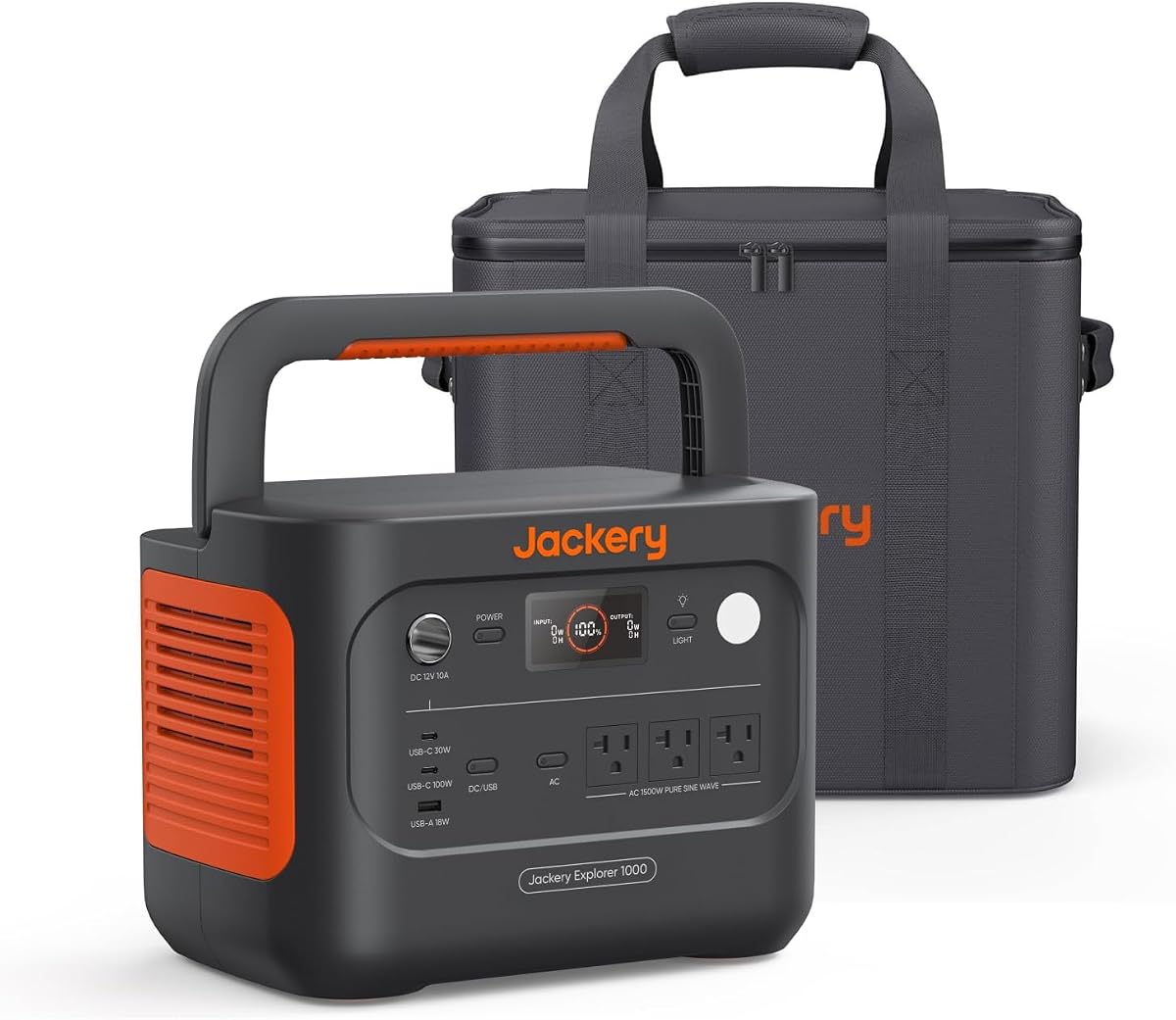
Jackery popular pick
Jackery Explorer 1000 v2
- 1070Wh capacity / 1500W output
- LiFePO4 — 4000+ cycles
- 1-hour emergency recharge mode
- Lightest in class at 23.8 lbs
- Capacity: 1070Wh
- Output: 1500W (3000W surge)
- Battery: LiFePO4, 4000+ cycles
- Recharge: 1h emergency / 1.7h standard (AC)
- Weight: 23.8 lbs
As an Amazon Associate, we earn from qualifying purchases.
The Explorer 1000 v2 is Jackery’s philosophy in a box: take the beloved original, fix the battery (LiFePO4, 4,000+ cycles), cut the weight to 23.8 lbs, and change nothing about the simplicity. 1500W runs fridges, power tools, and electric grills; the one-hour emergency mode covers storm prep. It can’t match the DELTA Pro 3’s output or the AC200PL’s capacity-per-dollar, but for camping, RVs, and moderate backup, it’s the easiest recommendation in solar. See how it compares in our budget solar generators guide.
Pros
- Dead-simple operation anyone can use
- Lightest unit here — genuinely portable
- Jackery’s trusted support and track record
- Modern LiFePO4 fixed the v1’s weakness
Cons
- 1500W output is the lowest of the three
- Smallest capacity of the three flagships
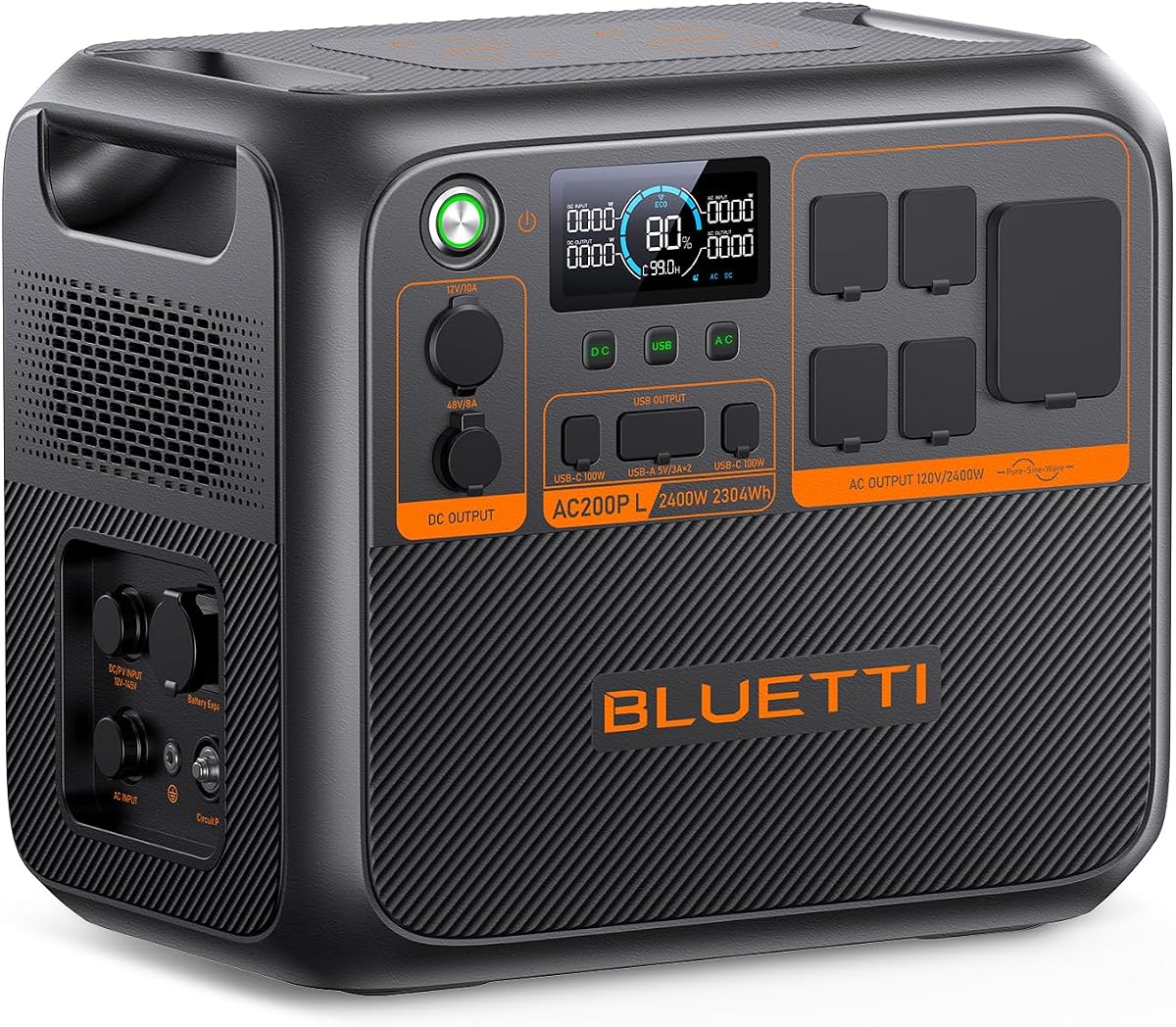
Bluetti value flagship
BLUETTI AC200PL
- 2304Wh capacity / 2400W output
- Expands to 8448Wh
- LiFePO4 — 3000+ cycles
- Best capacity-per-dollar of the three
- Capacity: 2304Wh (expandable to 8448Wh)
- Output: 2400W (3600W Power Lifting)
- Battery: LiFePO4, 3000+ cycles
- Recharge: 0-80% in ~1h (AC)
- Weight: 72 lbs
As an Amazon Associate, we earn from qualifying purchases.
The AC200PL is Bluetti’s philosophy in a box: more watt-hours per dollar than anyone else, with the battery longevity to back it up. 2304Wh and 2400W (3600W Power Lifting) cover nearly every 120V home load; expansion to 8448Wh handles multi-day outages; one-hour fast charging keeps it practical. No 240V and a 72-lb heft are the compromises. If your backup plan is “keep the essentials running for a day or two” and you’d rather not pay the flagship premium, this is the rational choice.
Pros
- Best value per watt-hour of the three
- 2400W covers nearly all 120V loads
- Large, knowledgeable owner community
- Solid 1-hour fast charging
Cons
- No 240V output
- Heavier than the Jackery by far
Two Runners-Up Worth Considering
EcoFlow runner-up
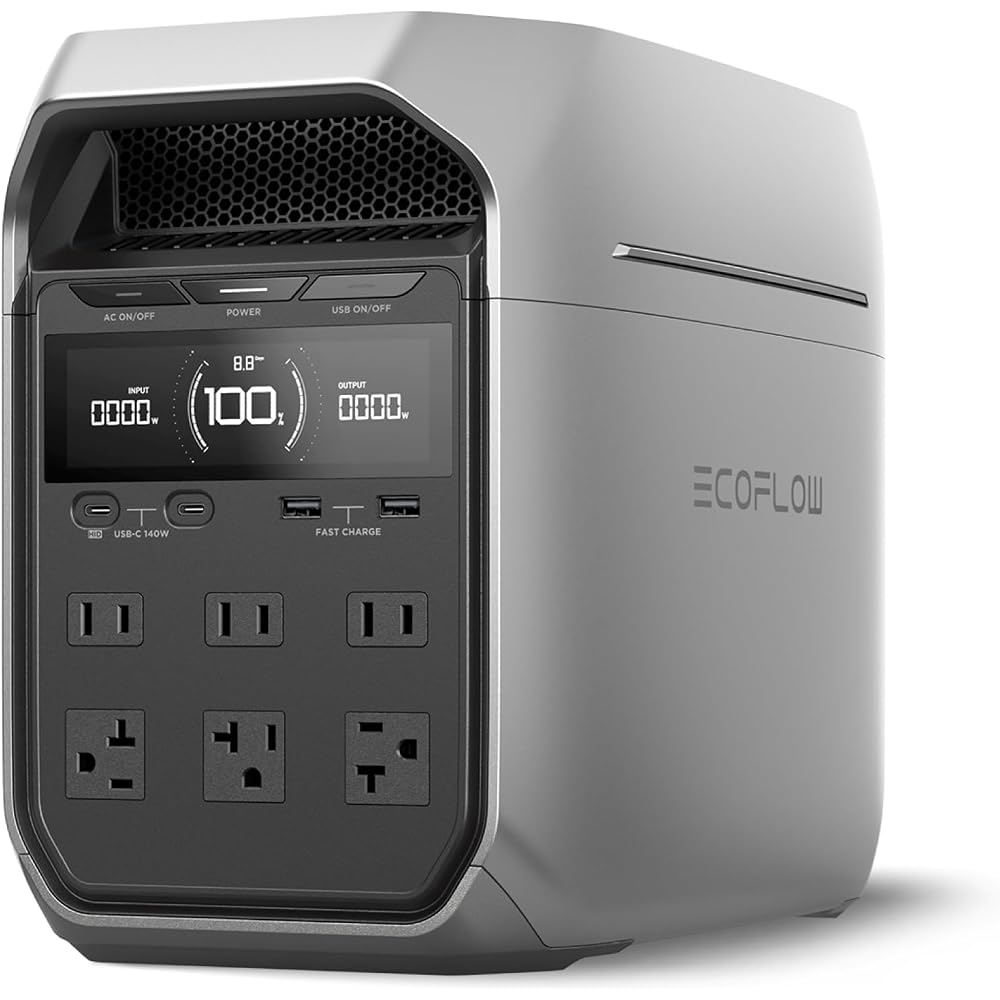
EcoFlow DELTA 3 Plus
- 1024Wh capacity / 1800W output
- LiFePO4 — 56-minute full charge
- UPS-grade 10ms switchover
- Quietest EcoFlow in its class
- Capacity: 1024Wh
- Output: 1800W (3600W surge)
- Battery: LiFePO4
- Recharge: 56 min full charge (AC)
- Weight: ~27 lbs
As an Amazon Associate, we earn from qualifying purchases.
Not everyone needs a flagship. The DELTA 3 Plus packs EcoFlow’s newest platform — 56-minute charging, true UPS switchover for sensitive electronics, whisper-quiet operation — into an affordable 1kWh unit. It’s the best way to experience the EcoFlow ecosystem without flagship money, and a perfect secondary unit for a desk, RV, or workshop.
Pros
- Newest EcoFlow platform at an accessible price
- True UPS functionality for electronics
- Very quiet
Cons
- 1024Wh limits heavy-load runtime
- Costs more than the DELTA 2
Bluetti runner-up
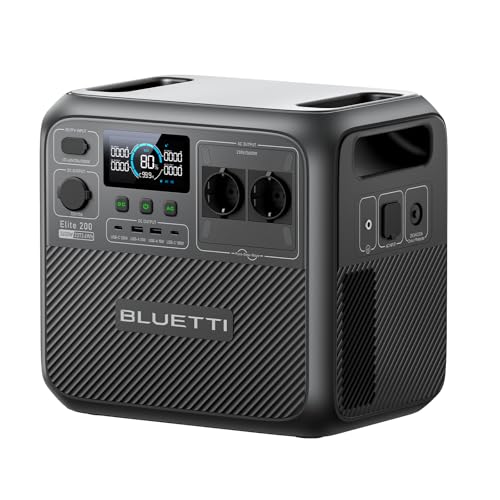
BLUETTI Elite 200 V2
- 2073.6Wh capacity / 2600W output
- LiFePO4 — 6000+ cycles
- 30dB whisper-quiet operation
- Only 53.4 lbs
- Capacity: 2073.6Wh
- Output: 2600W (3900W Power Lifting)
- Battery: LiFePO4, 6000+ cycles
- Recharge: 0-80% in ~50 min
- Weight: 53.4 lbs
As an Amazon Associate, we earn from qualifying purchases.
The Elite 200 V2 is Bluetti’s answer to everyone who wants flagship-adjacent power without flagship size, noise, or price. 2600W of output beats every other 2kWh-class unit, 6,000+ cycle cells promise a decade-plus of service, and 30dB operation means it can sit in your living room during an outage. The best Bluetti for apartments, condos, and noise-sensitive homes.
Pros
- 2600W output leads its class
- 6,000+ cycles — exceptional longevity
- Whisper-quiet and relatively light
Cons
- Smaller capacity than the AC200PL
- No 240V output
Which Brand Should You Buy?
Buy EcoFlow if…
You want the fastest charging, the deepest expansion, or a genuine whole-home energy system. EcoFlow wins for tech-forward buyers, large homes with 240V loads, and anyone building toward daily solar self-consumption. The DELTA Pro 3 is the ultimate expression of this — but even the DELTA 3 Plus gives you a taste.
Buy Jackery if…
You want the simplest, most trusted experience. Jackery wins for first-time buyers, campers, RVers, and anyone who’d rather call excellent support than read a manual. The Explorer 1000 v2 is the sweet spot; the HomePower 3600 Plus is the move for panel-integrated home backup with maximum battery longevity.
Buy Bluetti if…
You want the most watt-hours and the most cycles per dollar. Bluetti wins for value-focused buyers, long-term owners who plan to cycle daily, and quiet-home backup where the Elite 200 V2’s 30dB operation shines. The AC200PL remains the price-performance king of the mid-large class.
The Honest Truth
Here’s what three years of watching this market has taught us: all three brands now ship excellent LiFePO4 products, and the “best” brand matters less than buying the right size for your needs. An undersized EcoFlow will disappoint you more than a correctly-sized Bluetti will delight you. Size first — fridge, freezer, and must-run loads — then pick the brand whose philosophy matches yours. You can’t go badly wrong with any of the five units above.
Battery Chemistry: Why LiFePO4 Won
A decade ago, every brand on this list shipped lithium-ion (NMC) cells — the same chemistry as in laptops and early EVs. Today, all three have standardized on LiFePO4 (lithium iron phosphate) for their current lineups, and understanding why will make you a smarter buyer.
LiFePO4 trades a little energy density for a lot of everything else: 3,000-6,000+ charge cycles versus ~800 for standard lithium-ion, far better heat tolerance, and a much lower risk of thermal runaway. In practical terms, a LiFePO4 station cycled daily lasts 8-15 years; a lithium-ion one lasts 2-3. Bluetti moved first, EcoFlow followed across the DELTA line, and Jackery completed the transition with its v2 and HomePower models.
The one exception you’ll still encounter is the Jackery Explorer 500, which remains on lithium-ion shelves as the budget entry point. It’s honestly priced for what it is — but if a deal on any unit seems too good to be true, check the chemistry line in the specs. In 2027, LiFePO4 is the baseline expectation, not a premium feature.
What About Anker, Goal Zero, and the Rest?
EcoFlow, Jackery, and Bluetti dominate, but they’re not the only credible brands. Anker’s SOLIX line (like the F2600) pairs strong specs with the industry’s best standard warranty at 5 years, and Anker’s customer service pedigree from its charging-accessory days carries over. Goal Zero practically invented the category alongside Jackery and still makes rugged, well-supported units, though its prices run premium and its charging speeds lag the 2027 leaders.
Then there’s a long tail of budget brands — Pecron, Oukitel, Allpowers, and others — offering tempting specs-per-dollar. Some are genuinely good; others cut corners on battery management systems, warranty honor rates, or long-term parts availability. Our rule: if the brand doesn’t publish a cycle-life rating and doesn’t have a US/EU service presence, treat the savings as risk, not value. For most buyers, the big three (plus Anker) remain the safe zone.
How We Compare the Brands
Brand comparisons are only useful if the criteria match real ownership, so here’s exactly what we weighed. Ecosystem covers transfer switches, extra batteries, and smart-home integration — the things that determine whether a station grows with you. Charging speed is measured AC 0-80% time, because that’s the number that matters when a storm is coming. Battery chemistry is now table stakes (LiFePO4), so we score on published cycle ratings instead.
Expansion is the maximum stackable capacity, which decides whether a unit can graduate from camping gear to home backup. App experience reflects real usability — monitoring accuracy, firmware reliability, and whether features work without an account. Warranty combines the written term with each brand’s reputation for honoring claims. Price is street price per watt-hour at comparable specs, not MSRP. No single brand sweeps all seven — which is exactly why the right answer depends on your priorities, not ours.
Frequently Asked Questions
Which is better: EcoFlow, Jackery, or Bluetti?
It depends on your priorities. EcoFlow leads in charging speed and ecosystem depth, Jackery leads in simplicity and brand trust, and Bluetti leads in value per watt-hour and battery cycle life. All three use LiFePO4 batteries in their current lineups and make excellent products — size your unit to your loads first, then choose by philosophy.
Does Jackery use LiFePO4 batteries?
Current Jackery models like the Explorer 1000 v2 and HomePower 3600 Plus use LiFePO4 cells rated for 4,000-6,000 cycles. Older models such as the Explorer 500 use lithium-ion cells with shorter (~800-cycle) lifespans, so check the specific model’s specs before buying.
Which brand charges the fastest?
EcoFlow, by a clear margin. Its X-Stream technology charges 1kWh units from 0-80% in about 50 minutes, and the DELTA Pro 3 maintains similar pace at 4kWh. Bluetti’s Elite series is close (45-60 minutes), while Jackery is slower but offers a 1-hour emergency mode on v2 models.
Which solar generator brand is most reliable?
All three have strong reliability records in 2027. Jackery has the longest track record and best-regarded customer support. EcoFlow and Bluetti both offer competitive multi-year warranties. For maximum lifespan, look at cycle ratings: Jackery HomePower 3600 Plus and BLUETTI Elite 200 V2 both advertise 6,000+ cycles.
Can I mix brands — for example, Bluetti panels with an EcoFlow station?
Yes. Solar panels are largely interchangeable as long as the panel’s voltage falls within the power station’s MPPT input range and you have the right connector (usually MC4). Brand-matching is convenient but not required — buy the best panels for your budget regardless of your station’s brand.
Our verdict
There is no single best solar generator brand in 2027 — but there is a best brand for you. Choose EcoFlow for the fastest charging and the deepest whole-home ecosystem (DELTA Pro 3). Choose Jackery for unbeatable simplicity, trust, and support (Explorer 1000 v2). Choose Bluetti for the most power and longest battery life per dollar (AC200PL). Whichever philosophy fits, size the unit to your actual loads first — that’s the decision that matters most.

Related Guides
Best Solar Generator Bundles with Panels for 2027
Save money with the best solar generator bundles of 2027 — power station plus solar panel kits ready to use out of the box.

Best Solar Generators for RVs in 2027
Power your RV adventures with the best solar generators for RVs in 2027, featuring TT-30 outlets and fast solar charging.
Best Solar Generators for Camping in 2027
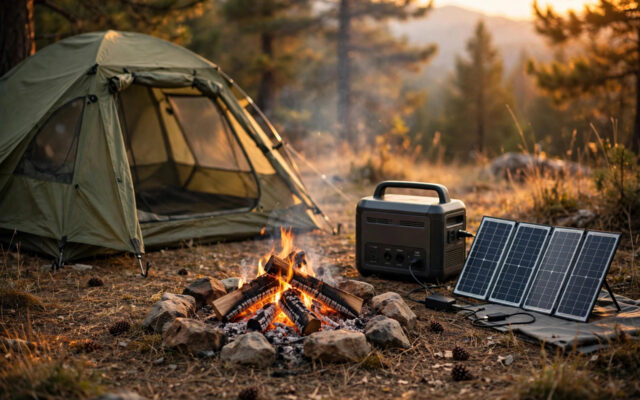
The best solar generators for camping in 2027: lightweight, quiet power stations that keep your gear charged off-grid.