


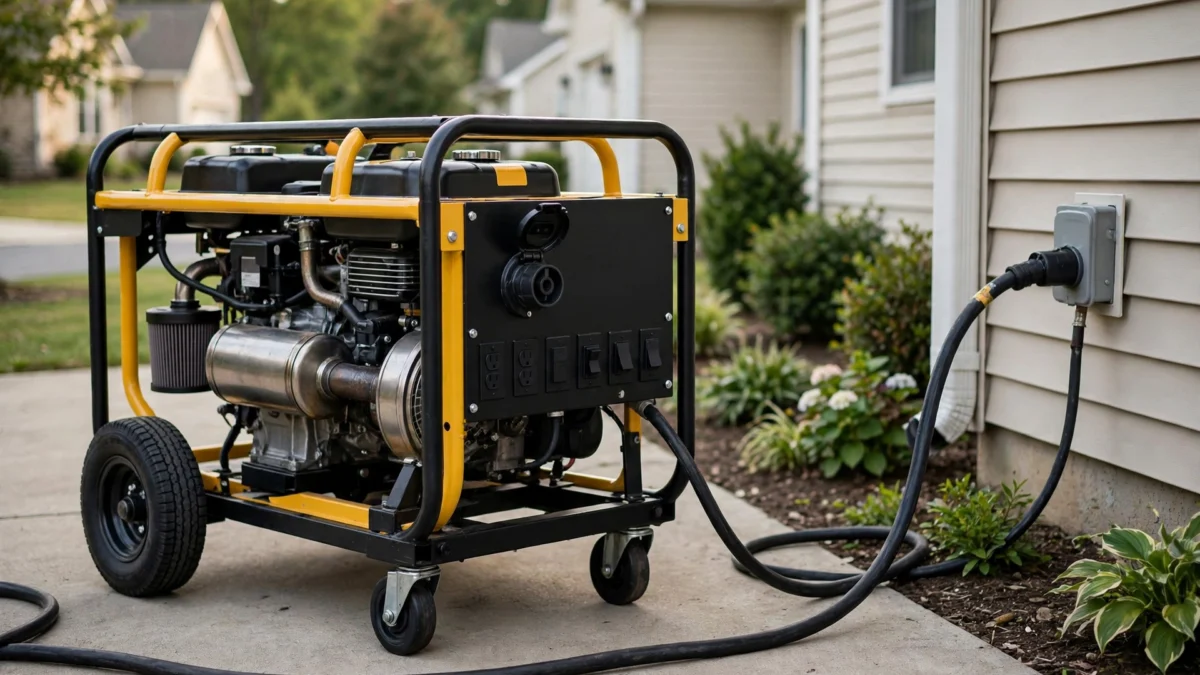
Here’s the math that makes 50-amp generators a category of their own: a 50-amp outlet at 240 volts delivers 12,000 watts. That’s the magic number where a portable generator stops being “backup for the fridge” and starts being “the whole house, including the air conditioner.”
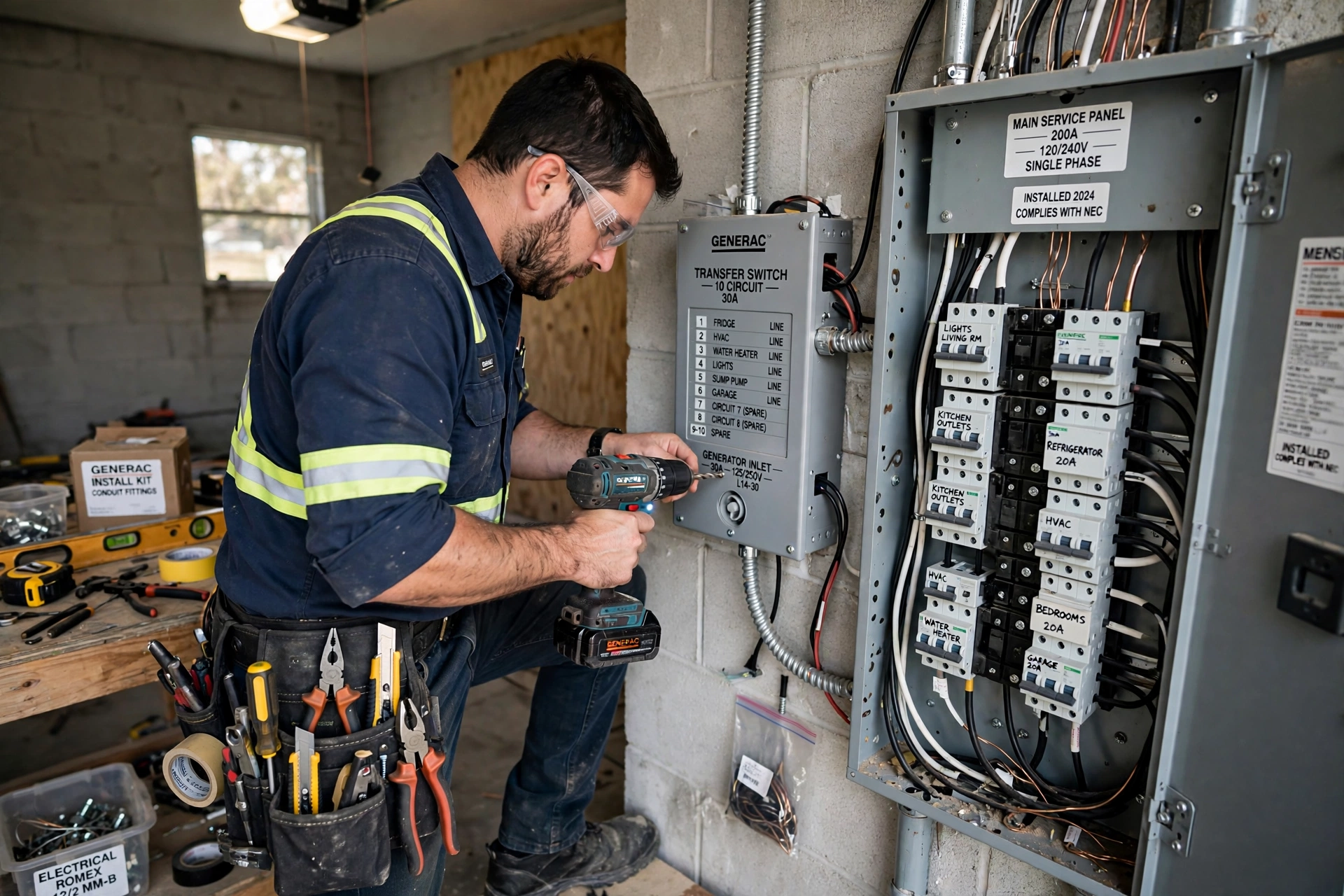
A 50-amp generator almost always means one thing about the buyer: there’s a transfer switch (or an interlock kit) involved. You’re not running extension cords — you’re backfeeding the panel, legally, through a proper connection. These are the biggest portable generators you can buy, typically 12,000 to 18,000 peak watts, and they’re the closest a portable gets to standby-generator territory.
I’ve compared six 50-amp machines below — dual-fuel and tri-fuel, from the value-packed DuroMax XP13000EH to the 18,000-watt Westinghouse monster. My top pick for most whole-home buyers is the DuroMax: it has the 50-amp outlet, dual-fuel flexibility, and costs hundreds less than the bigger names.
Key takeaways
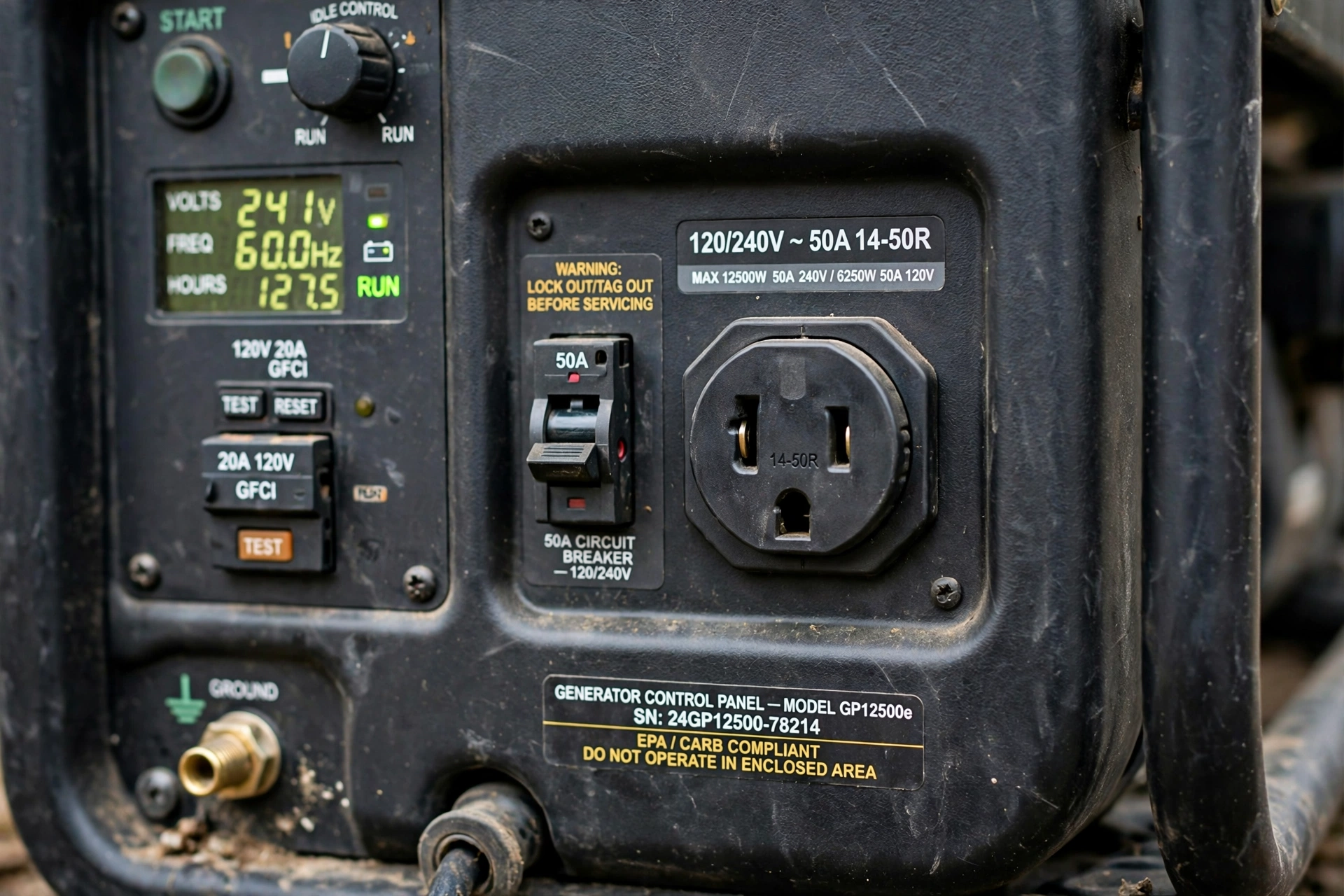
- A 50-amp (14-50R) outlet delivers up to 12,000W at 240V — enough for central AC plus household essentials.
- 50-amp generators pair with a transfer switch or interlock kit; never backfeed a panel without one (NEC Article 702).
- Dual-fuel and tri-fuel models dominate this class — propane and natural gas matter when outages last days.
- Expect 200–400 lbs of generator; plan for a wheel kit, a ramp, or a permanent pad.
Quick picks
- Best overall: DuroMax XP13000EH — 13,000W dual fuel, 50A outlet, best value in the class
- Most power: Westinghouse WGen14500TFc — 18,000W tri-fuel, the biggest portable here
- Best tri-fuel value: Westinghouse WGen14500 — 14,500W tri-fuel at a mid-range price
- Best Champion: Champion 15,000W Tri-Fuel with CO Shield — 15,000W with top-tier safety tech
- Best budget 50A: Pulsar G12KBN-SG — 12,000W dual fuel, the cheapest way into 50 amps
Best overall
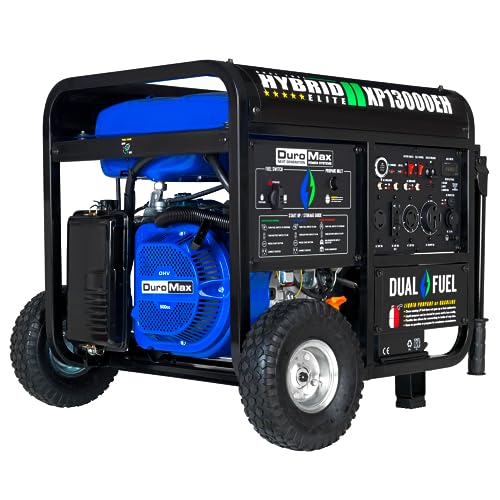
DuroMax XP13000EH Dual Fuel Portable Generator
- Running Watts: 10,500 (gas) / 9,500 (propane)
- Peak Watts: 13,000
- Runtime: 8 hrs at 50% load (gas)
- Weight: 234 lbs
As an Amazon Associate, we earn from qualifying purchases.
The XP13000EH is the generator I’d buy if my house needed whole-home portable backup tomorrow. 13,000 peak watts and 10,500 running watts from a 500cc engine, dual-fuel (gasoline or propane) out of the box, and a full outlet panel including the 120/240V 50-amp outlet this category is named for. It hits the sweet spot: enough power for central AC and the essentials, without the 300+ pound weight of the 15kW+ class.
The numbers that matter: 8 hours of runtime at 50% load on gasoline, push-button electric start, CO Alert auto-shutdown, and it’s EPA/CARB approved for all 50 states. At 234 pounds it’s still a two-person move, but the included wheel and handle kit helps.
Why it wins best overall instead of most powerful: price-to-power. The 15,000+ watt units cost 40–60% more for power most homes can’t use — your transfer switch and wiring have to handle it, and a typical 50-amp inlet maxes out at 12,000 watts anyway. The XP13000EH’s 10,500 running watts sits right at the practical ceiling of a 50-amp setup. That’s not a compromise; it’s the right size.
Pros
- Right-sized power for a 50-amp transfer switch setup
- Dual fuel out of the box
- CO Alert safety shutdown included
- Strong value — hundreds less than bigger brands
Cons
- 234 lbs — plan the move carefully
- Loud at 74+ dB — it’s an open-frame unit
- 8-hour runtime means refueling on long outages
Most power
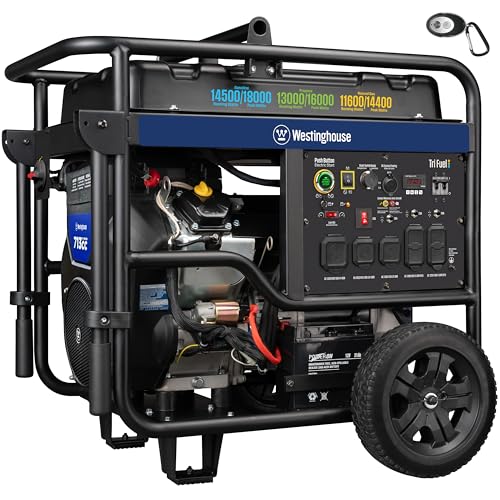
Westinghouse WGen14500TFc Tri-Fuel Generator
- Running Watts: 14,500 (gas) / 13,000 (propane) / 12,000 (NG)
- Peak Watts: 18,000
- Runtime: Up to 16 hrs at 25% load
- Weight: 348 lbs
As an Amazon Associate, we earn from qualifying purchases.
If the DuroMax is right-sized, the WGen14500TFc is the “I never want to think about load management” option. 18,000 peak watts and 14,500 running watts on gasoline, from a 713cc V-twin. It runs on gasoline, propane, or natural gas — and the natural gas option is the real story here, because a plumbed NG connection means effectively unlimited runtime during a multi-day outage.
The outlet panel is exactly what a whole-home setup needs: a 120/240V 50-amp (14-50R) outlet plus a 30-amp twist-lock, both transfer-switch ready. Remote start with a key fob, push-button electric start, CO sensor, and a VFT data center showing voltage, frequency, and hours. Runtime is up to 16 hours at 25% load on the 10.5-gallon tank.
The honest trade-offs: 348 pounds, and it’s the most expensive unit here. You also need to be realistic about whether your home’s inlet and transfer switch can use 14,500 running watts — most 50-amp inlets top out at 12,000. This generator makes sense for larger homes with 50-amp-plus service or for buyers who want headroom. Everyone else should save the money and get the DuroMax.
Pros
- Most power of any portable here — 18,000 peak watts
- Tri-fuel with natural gas for unlimited runtime
- Remote start and full data display
- CO sensor included
Cons
- 348 lbs — needs a permanent spot or a ramp
- Most expensive pick
- More power than a standard 50A inlet can use
Best tri-fuel value
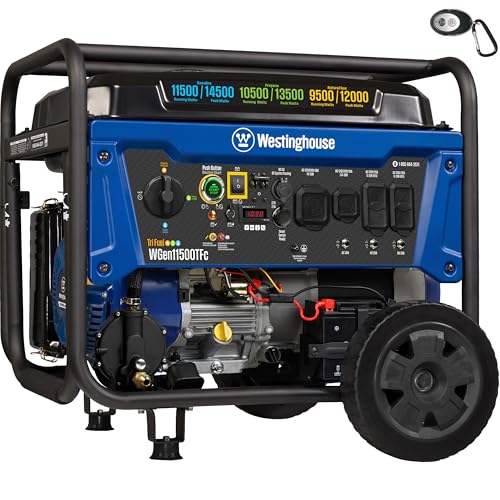
Westinghouse WGen14500 Tri-Fuel Generator
- Running Watts: 11,500 (gas) / 10,500 (propane) / 9,500 (NG)
- Peak Watts: 14,500
- Runtime: Up to 19 hrs (gas)
- Weight: ~230 lbs
As an Amazon Associate, we earn from qualifying purchases.
Don’t confuse this with the TFc above — the WGen14500 is the previous-generation 14,500-watt tri-fuel, and it’s the value play in Westinghouse’s big-generator lineup. 14,500 peak / 11,500 running watts on gasoline, stepping down to 13,500/10,500 on propane and 12,000/9,500 on natural gas, from a 550cc engine.
What you get for less money than the TFc: the same tri-fuel flexibility, the same 50-amp outlet, up to 19 hours of runtime on the 9.5-gallon tank, and low-THD power safe for electronics. What you give up: the V-twin engine, remote start, and the CO sensor (check the specific listing — some versions include it).
For a buyer who wants tri-fuel and a 50-amp outlet without paying flagship prices, this is the rational middle. The 11,500 running watts covers central AC, well pump, fridge, and lights simultaneously in most homes. Pair it with our transfer switch guide to complete the setup.
Pros
- Tri-fuel flexibility at a mid-range price
- 11,500 running watts covers most whole-home loads
- Long 19-hour runtime
- Low-THD, electronics-safe power
Cons
- No remote start (recoil/electric only)
- Verify CO sensor on your specific listing
- Single-cylinder — louder and thirstier than the V-twin TFc
Best Champion
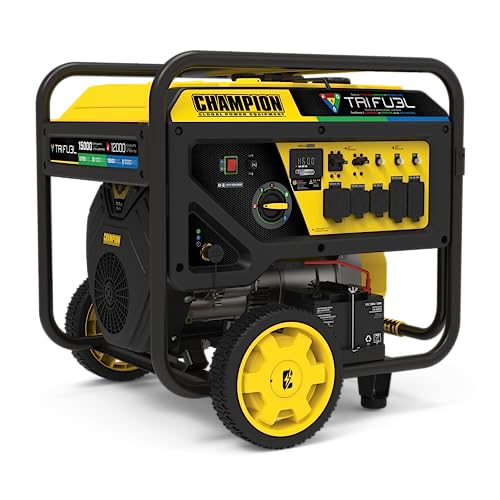
Champion 15,000-Watt Tri-Fuel Generator with CO Shield
- Running Watts: 12,000 (gas)
- Peak Watts: 15,000
- Runtime: Up to 9 hrs at 50% load
- Weight: 347 lbs
As an Amazon Associate, we earn from qualifying purchases.
Champion’s entry in the big-generator class brings two things the others don’t: tri-fuel out of the box and CO Shield, Champion’s carbon monoxide auto-shutoff system, as standard. 15,000 starting watts and 12,000 running watts from the 717cc Milwaukee Series V-twin, with a 120/240V 50-amp outlet on the panel.
The V-twin matters at this size. It runs smoother and generally quieter than a big single-cylinder working at its limit, and it handles sustained loads better — which is the whole point of a whole-home generator. Electric start with battery included, Intelligauge for monitoring, and Champion’s 3-year warranty with lifetime tech support.
At 347 pounds with an 11-gallon tank, this is a install-it-and-leave-it machine. Runtime is up to 9 hours at 50% load on gasoline — shorter than the Westinghouse, and the price sits at the top of the class. You’re paying for the V-twin, the CO Shield, and the Champion support network. For buyers who value those, it’s money well spent.
Pros
- V-twin engine — smoother under sustained load
- CO Shield included as standard
- Tri-fuel with hoses included
- Strong warranty and support network
Cons
- 347 lbs — permanent placement realistically
- 9-hour runtime is short for the class
- Premium price
Best budget 50A
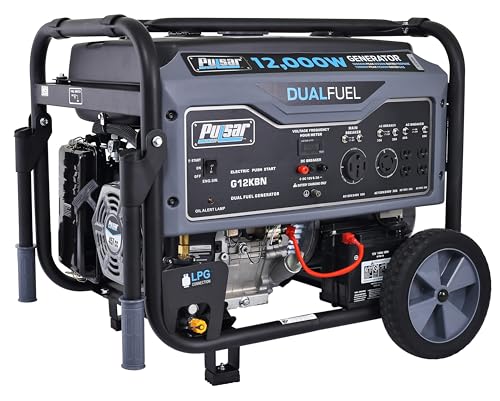
Pulsar G12KBN-SG Dual Fuel Generator
- Running Watts: 9,500 (gas) / 8,550 (propane)
- Peak Watts: 12,000
- Runtime: Up to 12 hrs at 50% load
- Weight: 214 lbs
As an Amazon Associate, we earn from qualifying purchases.
The Pulsar G12KBN-SG is the cheapest credible way to get a 50-amp outlet: 12,000 peak / 9,500 running watts on gasoline (10,800/8,550 on propane), dual-fuel, electric start, and a full panel with the 120/240V 50-amp outlet alongside a 30-amp twist-lock and four 20-amp outlets.
The 8-gallon tank delivers up to 12 hours at half load — genuinely good for the price class — and it ships with a mobility kit, propane hose, and tool kit. At 214 pounds it’s the lightest unit here, which matters if you’ll be moving it.
The trade-offs are what you’d expect at this price: a smaller dealer and support network than Champion or Westinghouse, fewer reviews to lean on, and no CO shutoff system. It’s CARB compliant and the specs are honest, but go in with eyes open — this is a value buy, not a premium one. For a budget whole-home setup with a transfer switch, though, it’s hard to argue with the math.
Pros
- Lowest price for a true 50-amp generator
- 12-hour runtime at half load
- Lightest unit in this roundup
- Full outlet panel, mobility kit included
Cons
- No CO shutoff system
- Smaller support network than major brands
- 9,500 running watts is tight for big central AC + everything else
Longest runtime
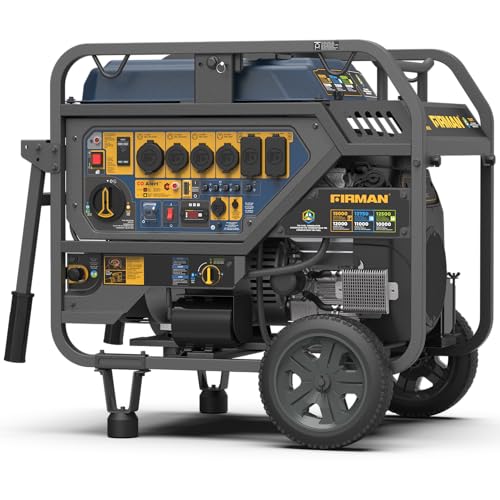
FIRMAN T12071 Tri-Fuel Generator
- Running Watts: 12,000 (gas) / 11,000 (propane) / 10,000 (NG)
- Peak Watts: 15,000
- Runtime: 11 hrs at 50% load (13.3-gal tank)
- Weight: 387–390 lbs
As an Amazon Associate, we earn from qualifying purchases.
The FIRMAN T12071 takes a different approach to the multi-day outage: a 13.3-gallon tank — the biggest here — feeding a 760cc V-twin for 11 hours at 50% load. 15,000 starting / 12,000 running watts on gasoline, tri-fuel, CO Alert shutdown, and a 14-50R 50-amp outlet. If your outage plan is “run it hard for days,” tank size matters as much as wattage, and nobody beats 13.3 gallons in this class.
The V-twin with cast iron sleeve is built for sustained duty, and power quality is clean enough (<5% THD) for electronics. It comes with a wheel kit, folding handle, and even a lift hook — thoughtful at nearly 390 pounds, because this is the heaviest generator in the roundup by a wide margin.
That weight is the whole story on the downside: 387–390 pounds means this lives where you put it. It’s also the loudest here at 81 dB. But for a semi-permanent whole-home installation on a pad, with natural gas plumbed in, the T12071 is a legitimate alternative to a standby unit at a fraction of the installed cost.
Pros
- 13.3-gallon tank — longest gasoline runtime here
- V-twin built for sustained duty
- Tri-fuel with natural gas option
- Lift hook and wheel kit included despite the weight
Cons
- Nearly 390 lbs — permanent placement only
- Loudest in the roundup at 81 dB
- Overkill unless you’ll use the capacity
50-amp generators compared
| Generator | Running W | Fuel | Runtime @50% | Weight | Best for |
|---|---|---|---|---|---|
| DuroMax XP13000EH | 10,500 | Dual | 8 hrs | 234 lbs | Best overall value |
| Westinghouse WGen14500TFc | 14,500 | Tri | 16 hrs @25% | 348 lbs | Maximum power |
| Westinghouse WGen14500 | 11,500 | Tri | 19 hrs | ~230 lbs | Tri-fuel value |
| Champion 15kW Tri-Fuel | 12,000 | Tri | 9 hrs | 347 lbs | V-twin + CO Shield |
| Pulsar G12KBN-SG | 9,500 | Dual | 12 hrs | 214 lbs | Budget 50A |
| FIRMAN T12071 | 12,000 | Tri | 11 hrs | ~390 lbs | Longest runtime |
How to choose a 50-amp generator
What 50 amps actually means
A 50-amp outlet at 240 volts delivers 12,000 watts of continuous power (50 × 240). That’s the ceiling for most residential transfer switch setups. Generators in this roundup range from 9,500 to 14,500 running watts — but anything above 12,000 running watts can’t fully flow through a standard 50-amp inlet. Bigger isn’t automatically better; matched is better.
You need a transfer switch or interlock — no exceptions
A 50-amp generator connects to your home’s electrical panel, and that connection must go through a transfer switch or a listed interlock kit installed by an electrician. This isn’t optional and isn’t a DIY suggestion: backfeeding a panel without one can kill a utility worker and is illegal under NEC Article 702. Budget $500–$1,500 for the switch plus installation. Our transfer switch cost guide breaks down what to expect.
Size it to your actual loads
Add up what you’ll run simultaneously: central AC (3,500–5,000 running watts, much higher starting), well pump, fridge, freezer, lights, and electronics. Most homes land between 8,000 and 12,000 running watts with the AC on. Our central AC sizing guide walks through the starting-watt math that trips people up.
Fuel choice matters more at this size
These generators burn 0.8–1.5 gallons of gasoline per hour at half load. On a three-day outage, that’s 60–100 gallons — which is why dual-fuel and tri-fuel dominate this class. Propane stores indefinitely and a 100-pound tank runs for days; natural gas, where available, never runs out. If you’re buying a 50-amp generator for serious outage duty, fuel flexibility is worth more than an extra 1,000 watts.
Plan for the weight
Every unit here weighs 200–390 pounds. Decide where it will live before it arrives: a concrete pad near the transfer switch inlet is ideal. You’ll need a ramp, an engine hoist, or several strong friends to get it there. Once placed, it stays — treat the location decision as permanent.
Don’t skip the CO protection
Four of the six picks here include CO auto-shutdown. At this size, the generator sits close to the house (it has to, for the inlet cable), which makes CO safety more important, not less. If your pick lacks it, add standalone CO alarms — never rely on placement alone.
Frequently asked questions
What can a 50-amp generator run?
Do I need a transfer switch for a 50-amp generator?
How many watts is a 50-amp generator?
Is dual fuel worth it on a 50-amp generator?
Can a 50-amp portable generator power a whole house?
Our verdict
Most whole-home buyers should get the DuroMax XP13000EH — it’s the right size for a 50-amp setup, dual-fuel, and priced fairly. Want maximum power and natural gas? The Westinghouse WGen14500TFc. On a budget? The Pulsar G12KBN-SG gets you a real 50-amp outlet for the least money. Whatever you choose, get the transfer switch installed by an electrician before storm season, not during it.
How we researched this: We compared manufacturer spec sheets (wattage, outlets, runtime, weight), verified 50-amp outlet presence on each panel, and checked current Amazon availability and ASINs in October 2026. Wattage claims are manufacturer-rated; we did not load-bank test these units. We did not receive free products from any manufacturer.

Related Guides
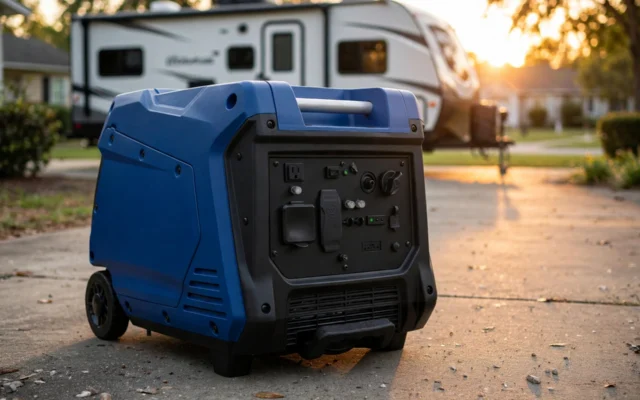
Westinghouse iGen4500DF Review: The Dual-Fuel Inverter to Beat in 2027
Westinghouse iGen4500DF review: 4,500W dual-fuel inverter, 52 dBA, remote start, RV-ready. We test the specs, noise, and value against Honda in 2027.

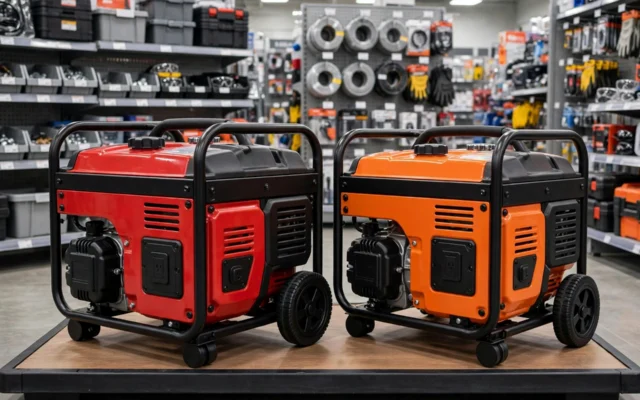
Champion vs Generac Generators: Which Brand Is Better in 2027?
Champion vs Generac: Champion wins portable value, Generac wins standby. We compare lineups, reliability, safety tech, and support to pick the right brand.
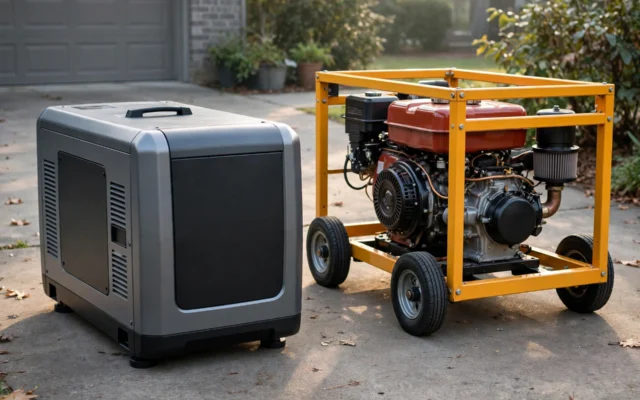
Inverter vs Conventional Generators: Which Should You Buy in 2027?
Inverter vs conventional generators: inverters win on noise, fuel use and clean power; conventional wins on watts per dollar. Here's how to choose in 2027.