


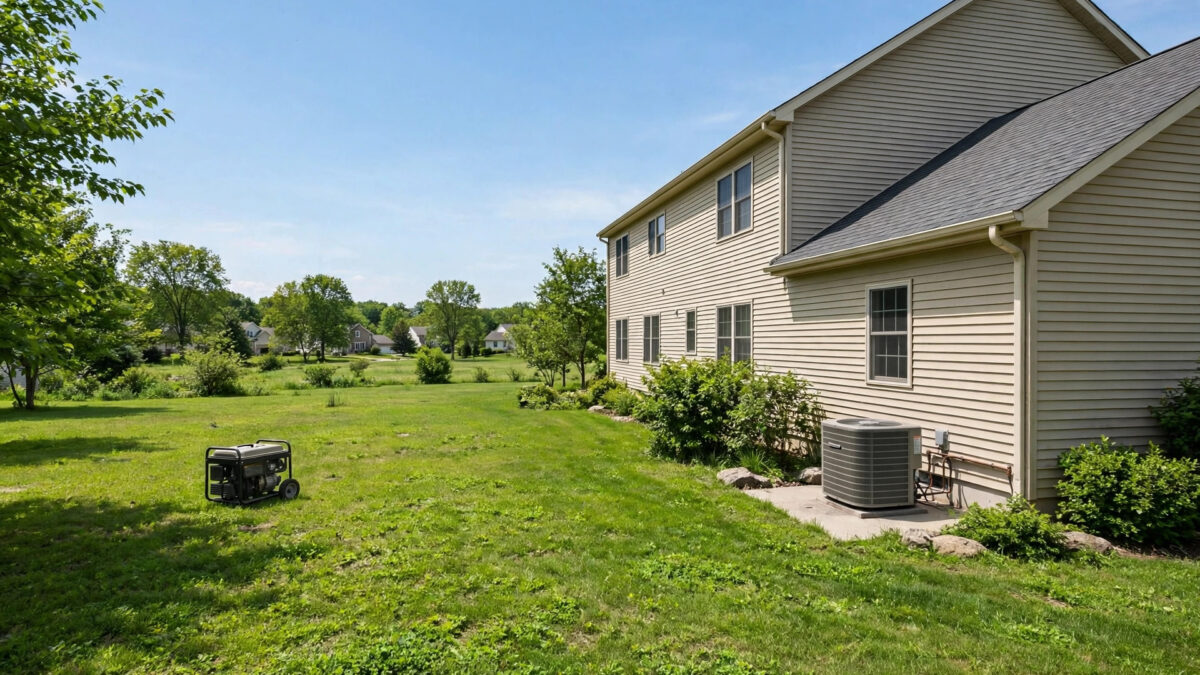
Wondering what size generator to run central AC through a summer outage? A typical 3-ton central air conditioner needs a generator in the 14,000 to 20,000-watt class — far more than the portable generator in most garages. The reason is the compressor’s locked-rotor starting current: a 3-ton unit that draws about 4,000 watts while running can demand 15,000 watts or more for the instant it starts. In this complete sizing guide, we break down central AC wattage by tonnage, show you how to read your unit’s nameplate, and explain how soft-start kits can shrink the generator you need.
Central air conditioning is the single largest electrical load in most homes — bigger than an electric water heater, bigger than a well pump. That makes it the load that most often forces a generator upgrade. Many homeowners discover during their first summer outage that their 7,500-watt portable generator runs everything in the house except the one thing they want most. This guide helps you size correctly before that happens.
Key Takeaways
- A 3-ton central AC typically draws ~4,000 running watts but needs 12,000–17,000 starting watts (approximate).
- Most central AC systems need a 14–24 kW standby generator; standard portable generators usually cannot start them.
- Read the condenser’s nameplate for RLA (running amps) and LRA (locked-rotor amps) — multiply by 240V for watts.
- A soft-start kit can cut starting current by 50–70%, often letting a smaller standby generator do the job.
- Central AC is 240V hardwired equipment — connection requires a transfer switch installed by a licensed electrician.
- Mini-splits and window units are far easier to power with a portable generator than whole-house central AC.
What Size Generator Do I Need to Run Central AC?
Most central AC systems need a generator rated for 14,000 to 24,000 watts (14–24 kW), which in practice means a permanently installed standby generator rather than a portable one. A typical 3-ton unit draws roughly 3,500 to 4,500 watts while running but demands 12,000 to 17,000 watts to start, because the compressor’s locked-rotor current is several times its running current. Smaller 1.5 to 2-ton systems may work on a large 10,000 to 12,000-watt portable generator, especially with a soft-start kit installed — but always size from your condenser’s nameplate RLA and LRA figures, not from rules of thumb.
Central AC Wattage by Tonnage: Running vs. Starting Watts
Air conditioner capacity is measured in tons, where one ton equals 12,000 BTU of cooling per hour. Most homes have 1.5 to 5-ton systems. The table below shows widely published approximate wattages — actual numbers vary by unit age, efficiency (SEER rating), and manufacturer.
| AC size | Typical running watts | Typical starting watts (LRA) | Generator class needed |
|---|---|---|---|
| 1.5 ton | 2,000–2,500 W | 7,000–9,000 W | 10–12 kW portable or standby |
| 2 ton | 2,800–3,500 W | 10,000–12,000 W | 12–14 kW standby |
| 2.5 ton | 3,200–4,000 W | 12,000–15,000 W | 14–18 kW standby |
| 3 ton (most common) | 3,500–4,500 W | 12,000–17,000 W | 14–20 kW standby |
| 4 ton | 4,500–6,000 W | 16,000–22,000 W | 18–24 kW standby |
| 5 ton | 5,500–7,500 W | 20,000–28,000 W | 22–26 kW standby |
Notice the pattern: starting watts run roughly 3 to 4 times running watts. That multiplier is what eliminates portable generators from contention for most central AC — a 7,500-watt portable’s ~9,000-watt surge simply cannot start a 3-ton compressor.
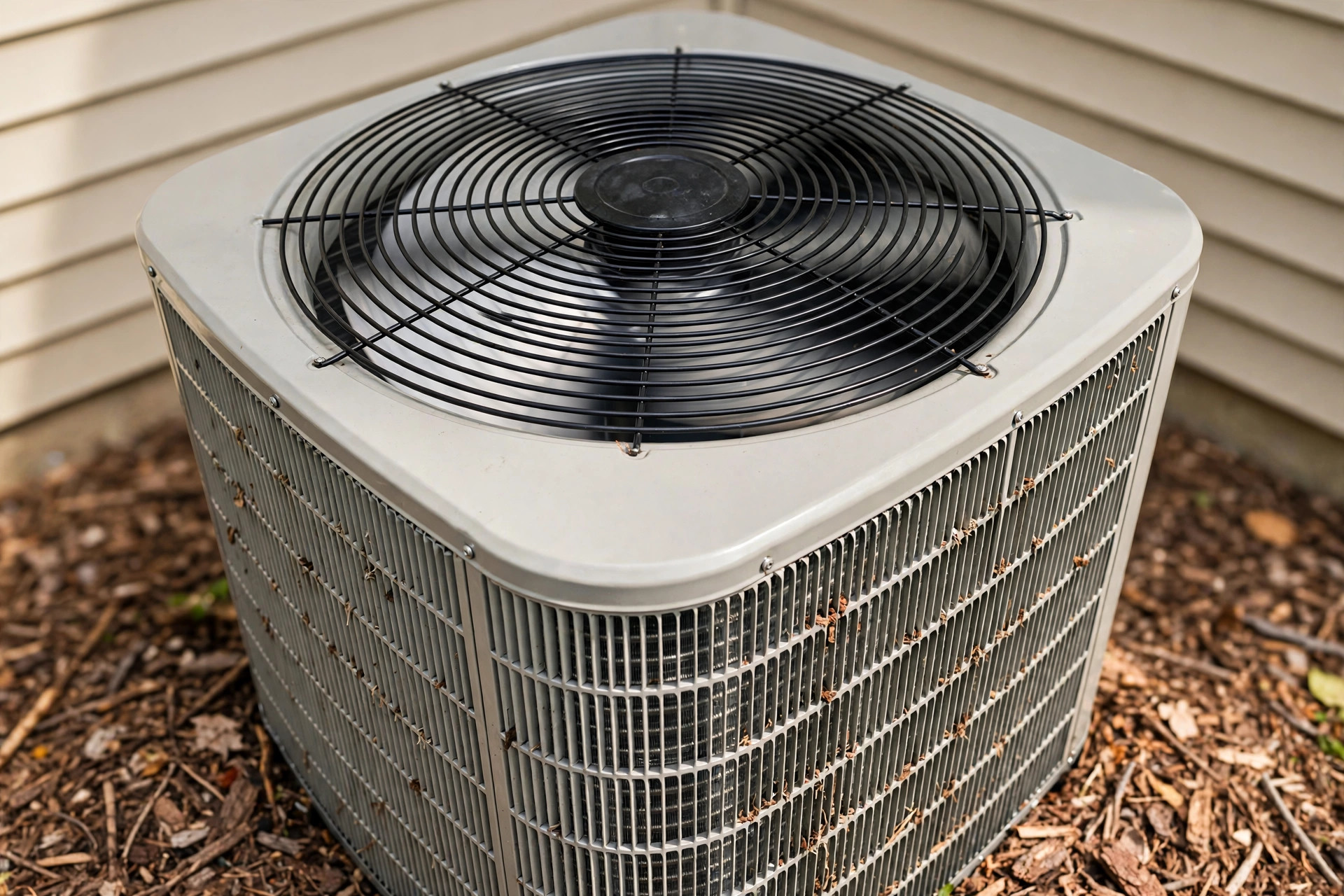
How to Read Your AC’s Nameplate: RLA and LRA
Your outdoor condenser unit has a nameplate with the two numbers that determine generator sizing. Finding them takes five minutes and beats every rule of thumb.
RLA — Rated Load Amps (running current)
RLA is the current the compressor draws while running normally. Multiply RLA by 240 volts to get running watts. Example: a compressor rated 17 RLA × 240V ≈ 4,080 running watts. Do the same for the condenser fan motor (usually 1–2 amps) and add it in.
LRA — Locked Rotor Amps (starting current)
LRA is the current drawn the instant the compressor starts — the worst-case surge your generator must survive. Multiply LRA by 240 volts for starting watts. Example: 79 LRA × 240V ≈ 18,960 starting watts. This single number is the reason central AC needs such a large generator.
Do not forget the indoor air handler
The indoor blower motor adds another 300 to 800 running watts, and the whole system is 240V hardwired. Add the blower to your running-watts total when sizing.
Why Portable Generators Usually Cannot Run Central AC
It comes down to simple math. The largest portable generators most homeowners buy top out around 12,000 running watts with 15,000 or so surge watts — and they are heavy, loud, fuel-hungry machines. A 3-ton AC needing 15,000+ starting watts leaves zero margin, and a 4 or 5-ton unit exceeds it outright. Even when the numbers look close on paper, voltage sag during a marginal start can stall the compressor, overheat the motor windings, and trip the generator’s breaker — repeatedly stressing expensive equipment.
This is why whole-house standby generators exist in the 14 to 26 kW range: they are sized precisely for the central AC plus the rest of the house, start automatically, and run on natural gas or propane without refueling. For central AC backup, a standby generator is the honest answer in most cases.
Can a Soft-Start Kit Reduce the Generator Size Needed to Run Central AC?
Yes — and this is the most useful trick in this entire guide. A soft-start kit is an electronic device wired into the condenser that ramps the compressor up gradually instead of slamming it with full locked-rotor current. Published data and extensive owner feedback indicate soft starters cut starting current by roughly 50 to 70 percent on typical residential compressors.
In practical terms, a soft starter can drop a 3-ton unit’s starting demand from ~16,000 watts to ~6,000–8,000 watts — bringing it within reach of a large portable generator or a smaller, cheaper standby unit. Many generator installers now recommend soft starters as standard practice when pairing a standby generator with central AC, because the smaller generator costs less to buy, install, and fuel.
Soft-start kits must be matched to your compressor and installed by a licensed HVAC technician or electrician. They are a well-established technology, not an experiment — but get the sizing and wiring right.
Alternatives: Mini-Splits and Window Units
If a standby generator is not in the budget, consider cooling one or two rooms instead of the whole house. A 12,000 BTU mini-split draws roughly 1,000 to 1,500 running watts with a gentle inverter-driven startup — easily handled by a 3,000-watt portable generator. A window unit is similar: 500 to 1,500 watts depending on size, with a modest surge.
This “zone cooling” strategy is how many homeowners survive summer outages on a portable generator: one mini-split or window unit in the bedroom, plus the fridge, fans, and lights. It is not whole-house comfort, but it is safe sleep on the hottest nights — at a fraction of the cost of a standby generator.
Connecting a Generator to Central AC: Transfer Switch Requirements
For portable generators, the AC circuit goes on the transfer switch panel just like the well pump or furnace. The electrician sizes the switch and inlet for the AC’s LRA — this is another reason to have those nameplate numbers handy. If your jurisdiction follows the NEC 2026 code cycle, ask your electrician about current requirements for transfer equipment and generator interconnections.
FAQs
What size generator do I need to run a 3-ton central AC?
Will a 7500-watt generator run central air?
What is LRA on an AC unit and why does it matter for generators?
Can a soft start kit let a portable generator run central AC?
Can I run a mini-split on a portable generator instead of central AC?
Do I need an electrician to connect a generator to central AC?
Conclusion
Running central AC on a generator means respecting the compressor’s starting surge: size from the nameplate LRA, expect most systems to need a 14–24 kW standby generator, and seriously consider a soft-start kit to shrink the requirement. If that is more generator than your budget allows, a mini-split or window unit on a portable generator keeps one or two rooms cool for a fraction of the cost. Either way, get the electrical connection done right by a licensed electrician.

Related Guides
Whole House Generator Installation Cost in 2027: Complete Price Guide
Whole house generator installation costs $9,000-$16,000 in 2027. Full price breakdown: equipment, labor, gas line work, permits, and costs by generator size.

Generator Transfer Switch Installation Cost in 2027: Labor & Equipment
Generator transfer switch installation costs $600-$1,800 in 2027. Compare hardware, electrician labor, permit costs, and manual vs. automatic switch pricing.
What Size Generator Do I Need for a Sump Pump?
What size generator for a sump pump? A 2,000–4,000W generator covers most 1/3–1/2 HP pumps. Wattage chart, extension cord safety, and storm-season tips inside.