


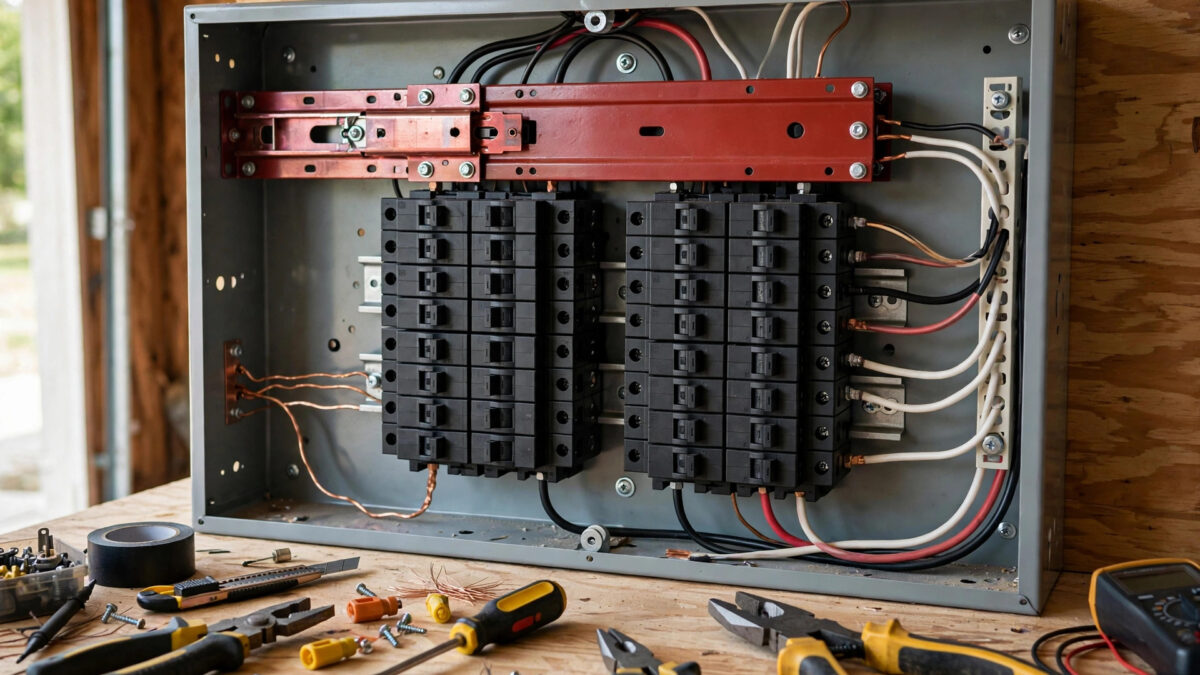
Both are legal, code-compliant ways to connect a portable generator to your house wiring — and both beat backfeeding by a mile. The short answer: a transfer switch is simpler to operate and better for households where anyone might need to run the system, while an interlock kit is cheaper and more flexible about which circuits you power. The right pick depends on your panel, your budget, and who’s home during an outage.
Key takeaways
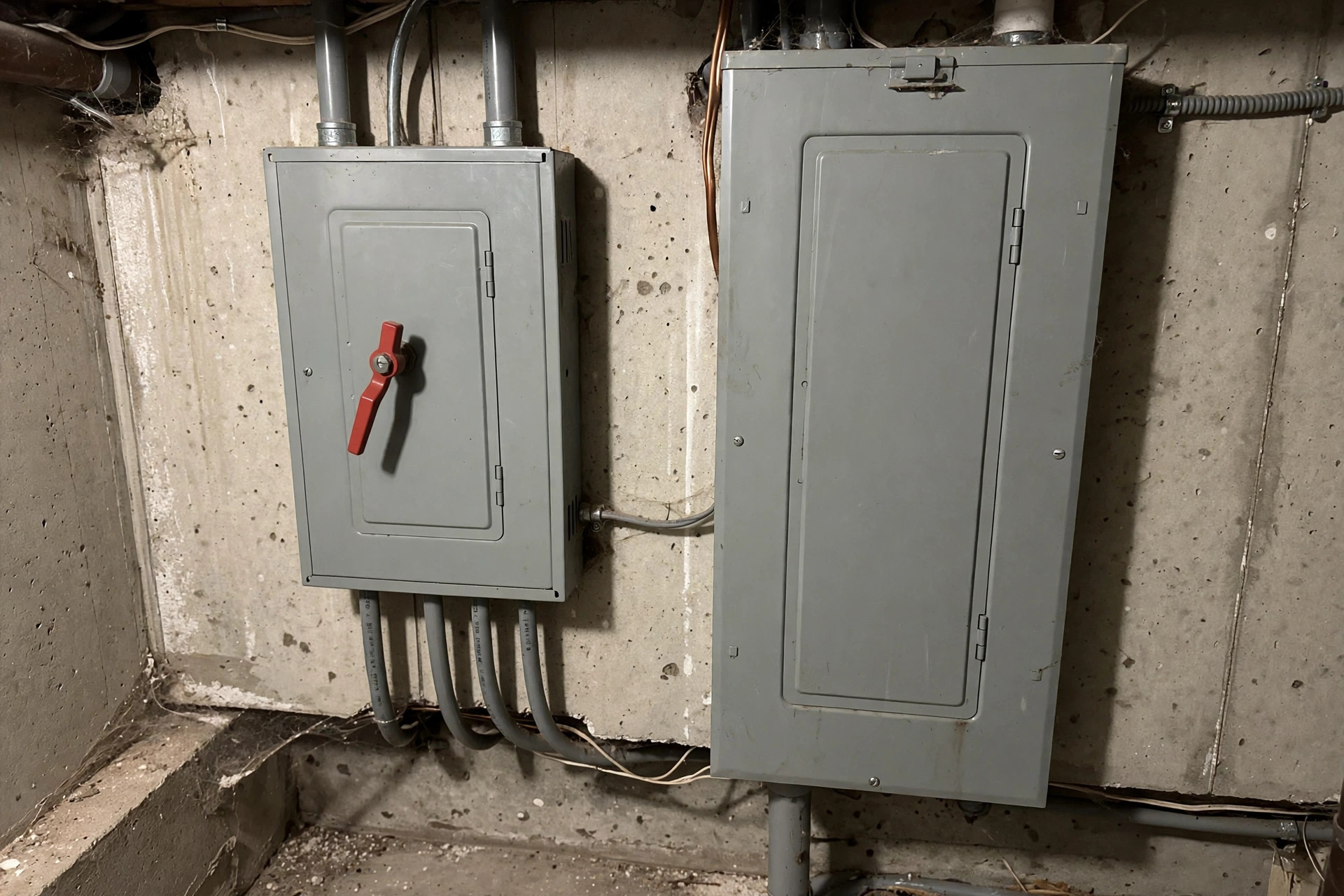
- A transfer switch isolates pre-selected circuits and switches them between grid and generator with one lever. Installed cost: roughly $400–$1,300.
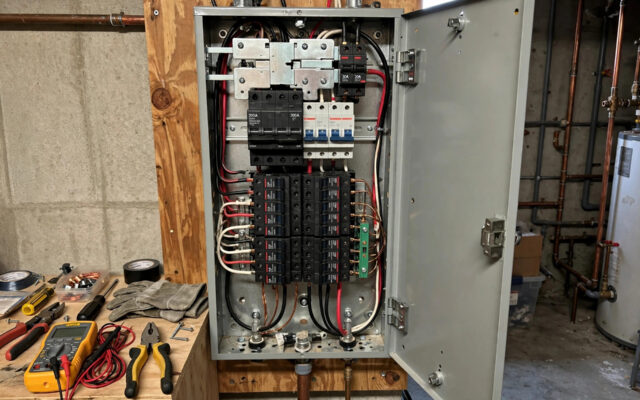
- An interlock kit is a mechanical bracket in your main panel that makes it impossible for the main breaker and generator breaker to be on simultaneously. Hardware: $50–$150; typical all-in installed cost: $400–$850.
- Interlocks let you power any circuit in the panel (within the generator’s capacity); transfer switches only power the circuits wired into them.
- Interlock kits must be listed for your specific panel brand and model — generic one-size kits are not code-compliant.
- Transfer switches are more foolproof for families and elderly users; interlocks require someone who understands load management.
- Both need a licensed electrician, a permit in most areas, and a correctly sized generator (check with our generator size calculator first).
How a transfer switch works
A manual transfer switch is a small secondary panel, usually mounted next to your main breaker panel. Your electrician wires your essential circuits — fridge, furnace blower, well pump, a few lights, maybe the microwave — through it. Each circuit has a three-position switch: LINE (utility), OFF, GEN (generator).
When the power goes out, you start the generator, plug in the inlet cable, and flip each circuit’s switch from LINE to GEN. That’s it. The switch physically disconnects those circuits from the grid before connecting them to the generator, so backfeeding is mechanically impossible. When utility power returns, you flip everything back.
Many transfer switches include built-in watt meters per circuit, which is genuinely useful — you can see in real time whether you’re about to overload the generator, instead of guessing.
How an interlock kit works
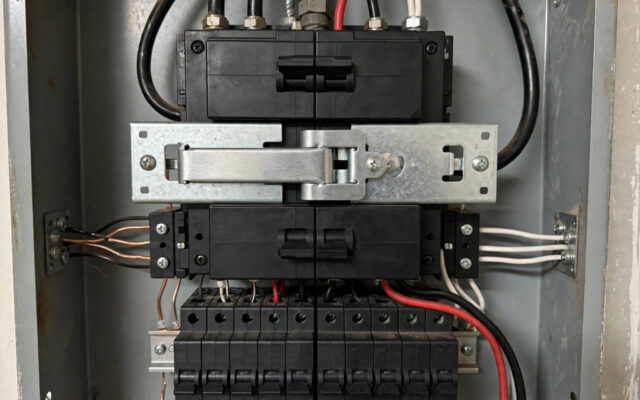
An interlock kit is a sliding metal plate mounted inside your main breaker panel cover. It sits over two breakers: your main breaker and a dedicated generator breaker (fed from an outdoor inlet box). The plate’s geometry makes it physically impossible to have both breakers ON at the same time. To switch to generator power, you turn OFF the main, slide the plate, turn ON the generator breaker — then manually switch on whichever branch circuits your generator can handle.
The elegance is in the simplicity: one mechanical device, no rewiring of individual circuits. The tradeoff is that you become the load manager. Your whole panel is energized, so you have to know that the electric water heater, the dryer, and the AC stay OFF while the fridge, lights, and furnace run.
Side-by-side comparison
| Feature | Manual transfer switch | Interlock kit |
|---|---|---|
| Hardware cost | $300–$800 | $50–$150 |
| Typical installed cost | $400–$1,300 | $400–$850 |
| Circuits powered | Only pre-wired circuits (usually 6–12) | Any circuit in the panel |
| Ease of use in outage | Flip a few labeled levers | Breaker sequence + manual load management |
| Foolproof? | Very — hard to mess up | Requires understanding of loads |
| Load monitoring | Often built-in watt meters | None — you watch the generator |
| Panel compatibility | Works with almost any panel | Must match your exact panel |
| Future flexibility | Add circuits = more wiring work | Any breaker is available instantly |
| Code status | Universally accepted | Accepted in most jurisdictions; a few restrict it |
Cost breakdown in detail
Transfer switch
The switch hardware itself runs $300–$800 depending on amperage (30A vs. 50A) and circuit count. Labor is the big variable: the electrician has to reroute each chosen circuit through the new panel, mount an inlet box outside, and run cable between them. Simple installs near the panel run toward $400–$600 all-in; complex runs (panel in the basement, inlet on the far side of the house) push past $1,000. Permits add a bit everywhere.
Interlock kit
The kit is cheap — $50–$150 for a listed kit matched to your panel. The work is a generator breaker, an outdoor inlet box, cable between them, and mounting the plate. Electricians typically charge $200–$300 for the labor on a straightforward install, putting most jobs in the $400–$850 range all-in. The price advantage is real but smaller than the hardware prices suggest, because the inlet box and wiring cost the same either way.
Which one should you choose?
Choose the transfer switch if:
- Multiple people (spouse, older parents, house-sitter) might need to run the system — labeled levers beat breaker math.
- You want built-in watt meters to see your load.
- Your panel has no listed interlock kit available, or your local inspector doesn’t accept interlocks.
- You like the “set it and forget it” approach: the essential circuits are decided once, at install time.
Choose the interlock kit if:
- Budget matters most and your panel has a listed kit available.
- You want maximum flexibility — e.g., powering the garage workshop circuit this outage and the guest-room circuit the next.
- You’re comfortable managing loads (you know what a 4,500W water heater does to a 7,500W generator).
- You may upgrade generators later — the interlock doesn’t care what size generator you plug in, as long as the breaker and inlet are rated for it.
Honestly? For most homeowners I talk to, the interlock kit wins on value — if their panel supports one and they’re willing to learn basic load management. The transfer switch wins on simplicity and family-proofing. There’s no wrong answer between the two; the only wrong answer is the suicide cord.
Automatic transfer switches: where they fit
Everything above covers manual options for portable generators, but it’s worth knowing where automatic transfer switches (ATS) sit. An ATS pairs with a standby generator: it senses the outage, disconnects you from the grid, starts the generator, and transfers the load — all without anyone touching anything. Power returns, and it switches back and cools the generator down on its own.
It’s the best experience money can buy for outage power, and it’s also a different budget universe — the switch, the standby unit, the pad, gas plumbing, and permits typically run into the thousands. For portable-generator owners choosing between manual options, the ATS isn’t really a competitor; it’s the upgrade you consider when you’re done rolling a portable out of the shed. The manual transfer switch vs. interlock decision stays the same either way.
Installation notes
- Hire a licensed electrician. This is panel work — permits, inspections, and utility coordination in some areas. It’s not a YouTube-weekend project.
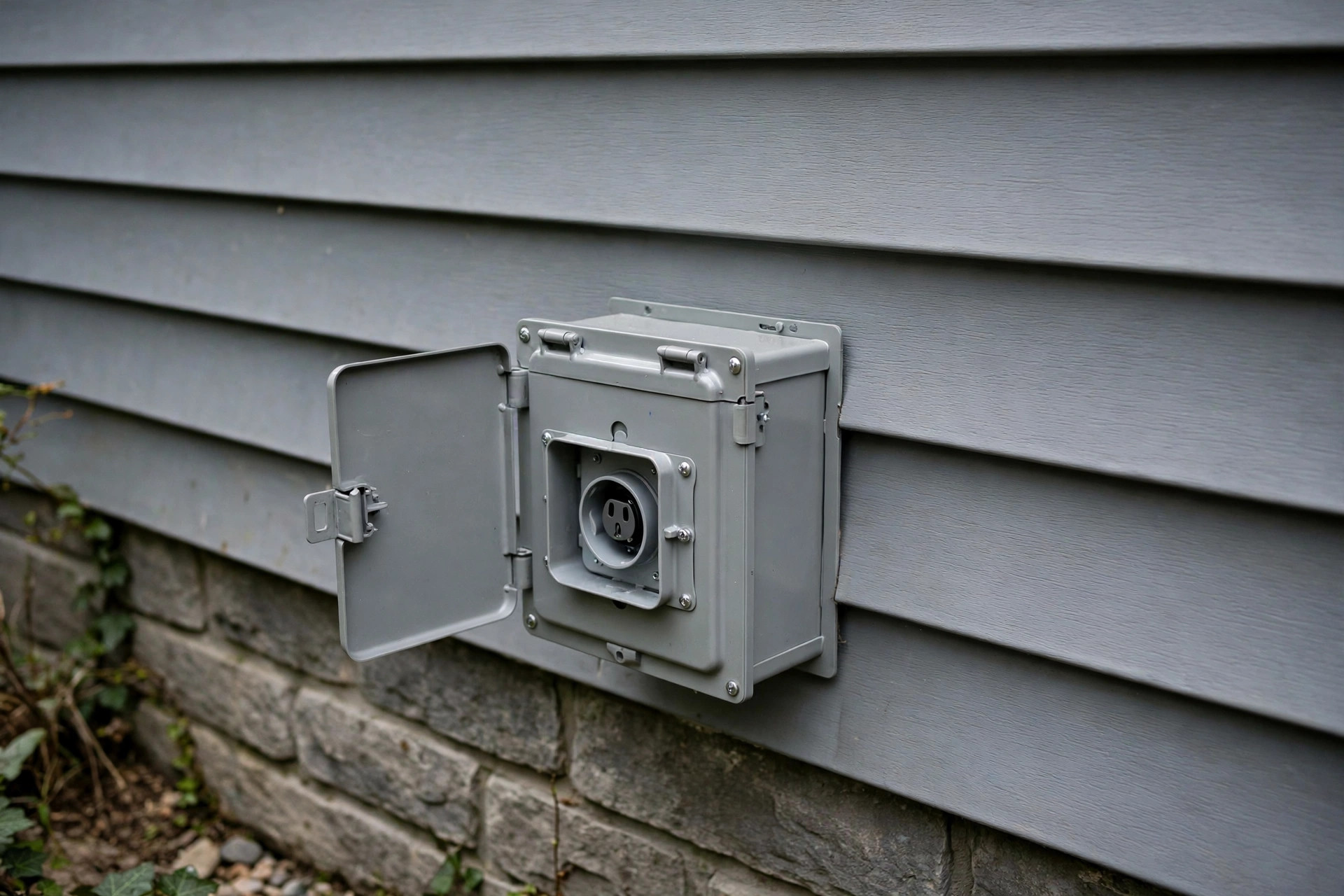
- Size the inlet and breaker to the generator. A 7,500W generator pairs with a 30A inlet and breaker; a 10,000–12,000W unit needs 50A. The breaker protects the cable — don’t oversize it.
- Check local rules first. A few jurisdictions and some insurers prefer or require transfer switches. A five-minute call to your local building department saves expensive rework.
- Test it before you need it. Run the full sequence twice a year. Discovering a stiff interlock plate or a mislabeled breaker during an actual outage is miserable.
Is an interlock kit as safe as a transfer switch?
Are interlock kits legal everywhere?
Can I install an interlock kit myself?
How much does it cost to install a transfer switch?
Can an interlock kit power my whole house?
Do I need a bigger generator for a transfer switch?
If you’re still on the fence, start with two facts: what’s your panel brand and model (check inside the door), and what size generator are you running. With those, an electrician can quote both options in one visit — and our generator calculators will make sure the generator behind the switch is sized for the circuits you choose.

Related Guides
Do You Need a Panel Upgrade for a Generator? (2027 Guide)
Do you need a panel upgrade for a generator? Usually not — an interlock kit and two free breaker spaces handle a portable. Here is when an upgrade is truly required.

How to Install a Generator Interlock Kit (Step-by-Step)
Install a generator interlock kit in 45-90 minutes: $50-$150 kit, 7 steps, panel safety warnings, and when to hire an electrician instead.
Essential Circuits to Back Up With a Generator
Back up these first: fridge, sump pump, well pump, furnace blower, lights, internet. Total: 3,000-5,000W. Full priority tiers with wattages.