


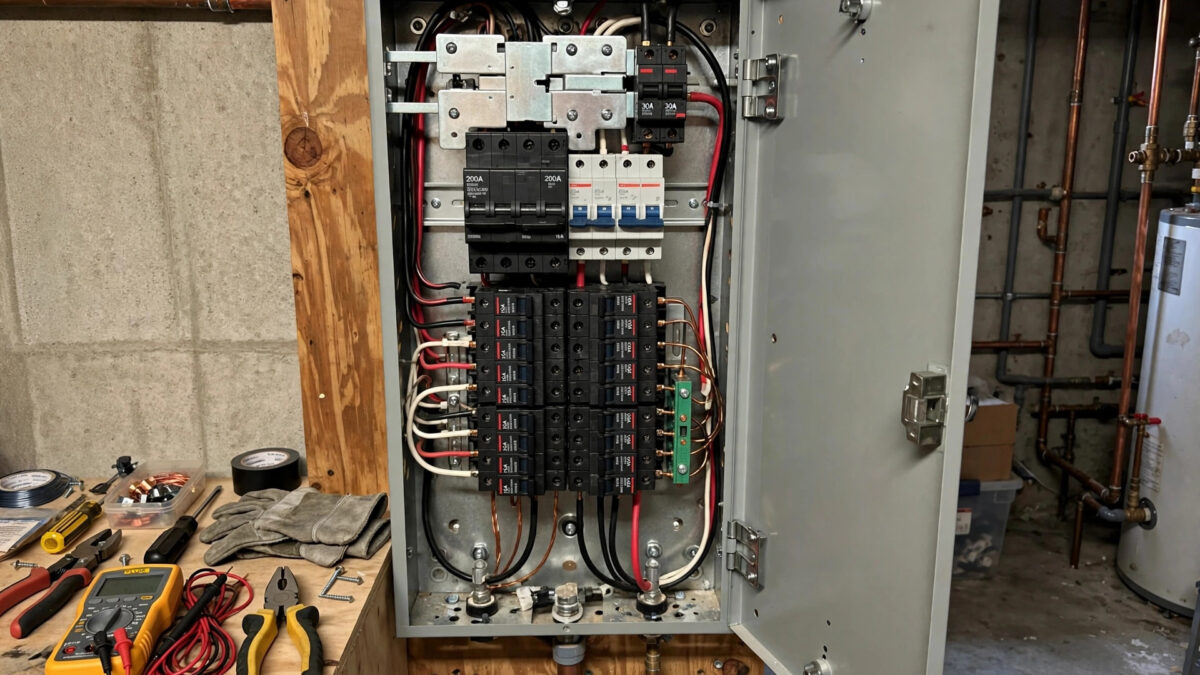
Usually, no. A portable generator connects to your home through an interlock kit and inlet breaker — not a panel upgrade. The interlock needs just two free breaker spaces at the top of your existing panel for a double-pole breaker, and an electrician can typically install the whole setup for $500-1,500. You only need an actual panel upgrade when your panel is full, damaged, or obsolete — a fuse box, a Zinsco or Federal Pacific panel, or a panel with no room to add the generator breaker.
This question comes up because people assume “generator = big electrical project.” For a whole-house standby generator, sometimes that’s true. For the portable generator most homeowners buy, the panel usually isn’t the obstacle at all. Let’s sort out which situation you’re in.
Key takeaways
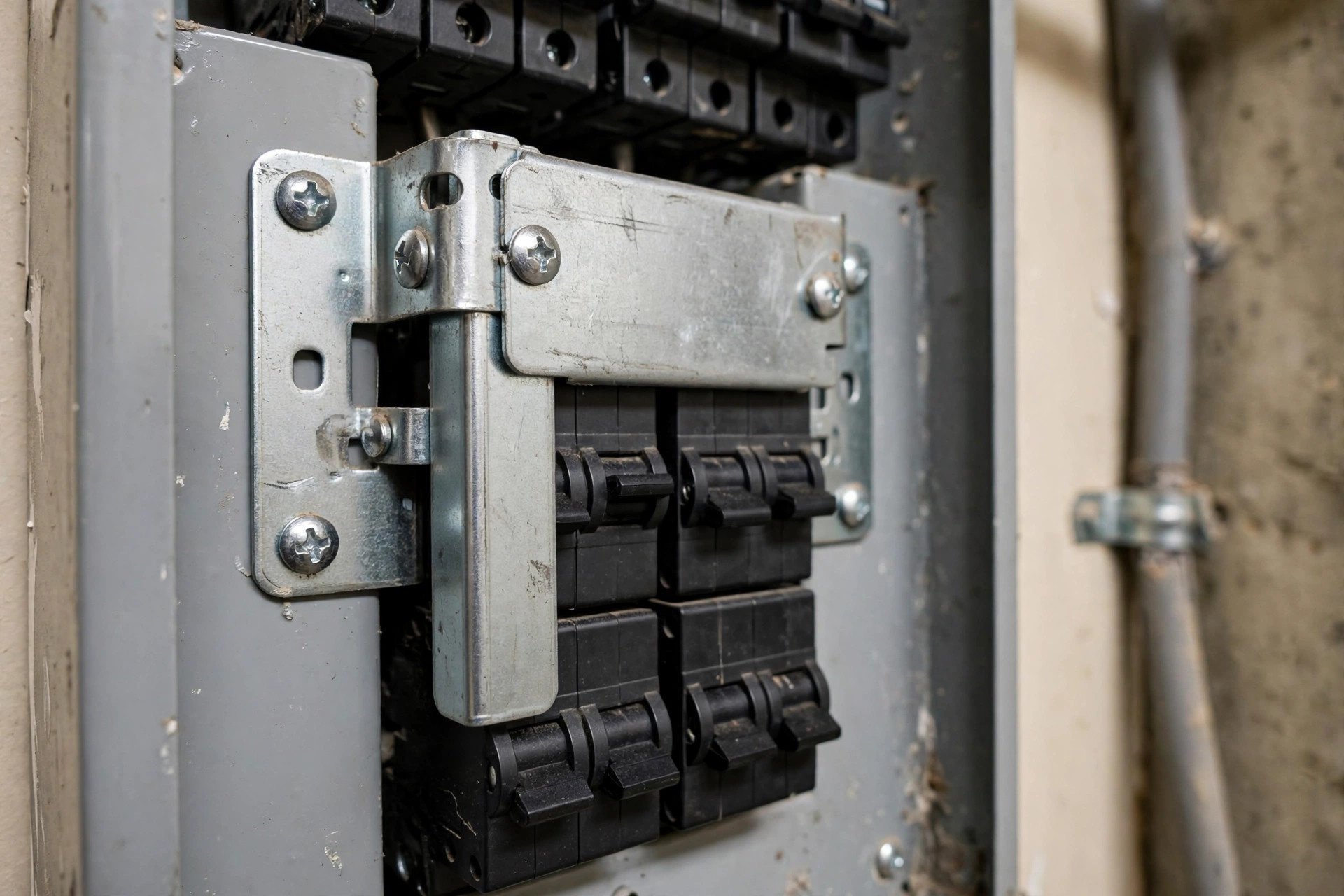
- Most portable generators need no panel upgrade — just two free breaker spaces for a 2-pole generator breaker plus a listed interlock kit.
- NEC Article 702 requires transfer equipment (interlock kit or transfer switch) that mechanically prevents the main and generator breakers from being on simultaneously — backfeeding without one is illegal and dangerous.
- You likely DO need a panel upgrade if: all breaker spaces are full, you have a fuse box, your panel is a Zinsco/Federal Pacific (fire risk), or the panel is damaged or corroded.
- A panel upgrade typically costs $2,000-4,000; an interlock kit installation on a healthy panel runs $500-1,500.
- Standby (automatic) generators are a different story — they may require a service-rated transfer switch and a load calculation, which sometimes triggers a panel or service upgrade.
What a portable generator actually needs from your panel
Here’s the standard setup an electrician installs for a portable generator:
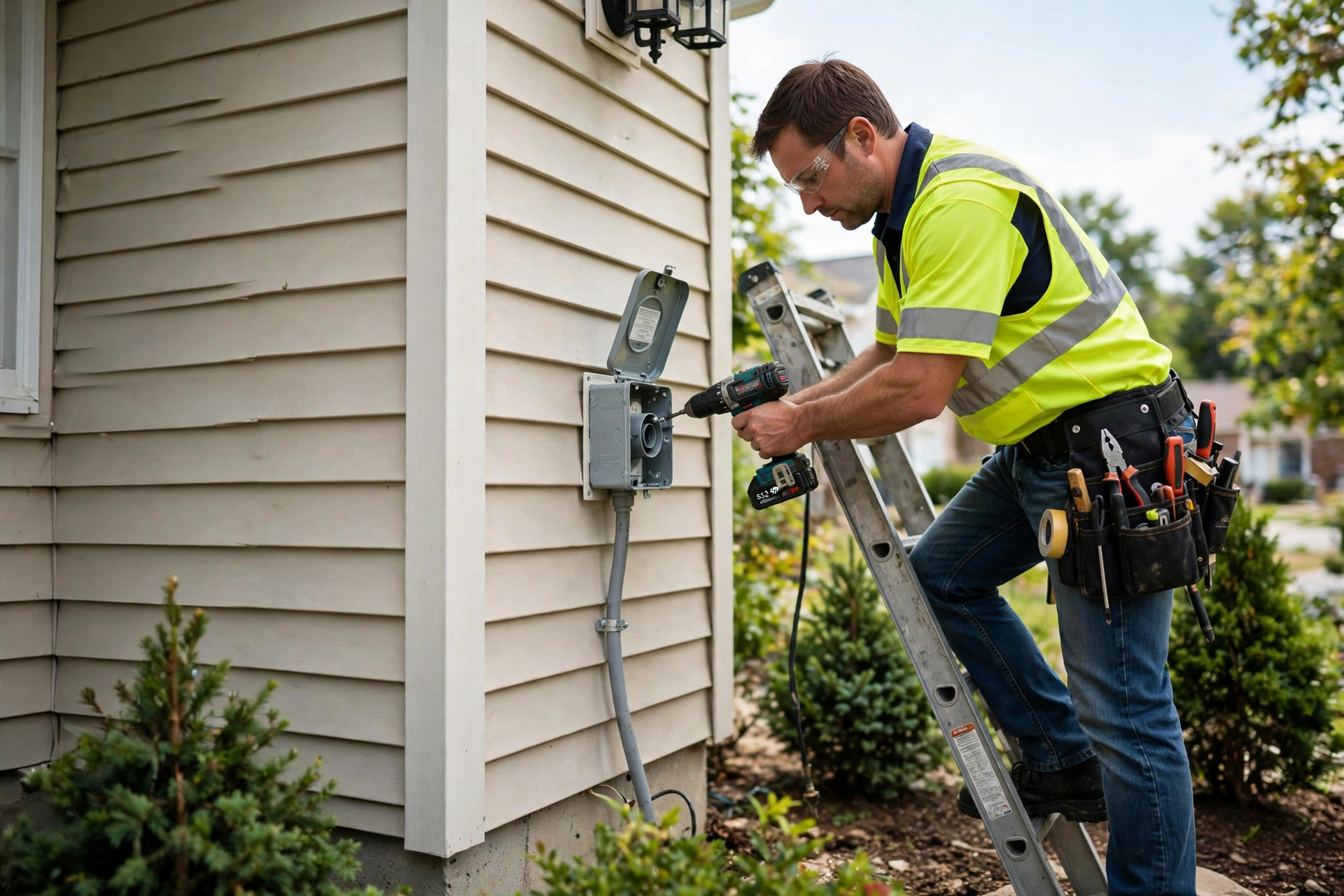
- A power inlet box mounted outside your house, wired to your panel.
- A dedicated double-pole breaker in your panel (typically 30A for most portables, 50A for larger ones), occupying two breaker spaces at the top of the panel.
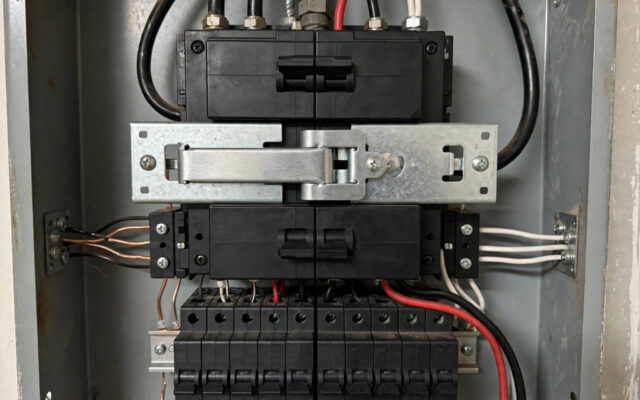
- A mechanical interlock kit — a listed metal bracket that physically prevents the main breaker and the generator breaker from being ON at the same time.
That’s it. The generator feeds the panel through the inlet; the interlock guarantees you can never backfeed the utility lines. When the power goes out, you start the generator, plug in, flip the main OFF, slide the interlock, flip the generator breaker ON — and manage your loads manually.
Notice what this does not require: a new panel, a bigger service, or rewiring the house. If your panel is modern and has two free spaces, you’re looking at a half-day electrician visit, not a panel replacement.
When you DO need a panel upgrade
1. No free breaker spaces
The interlock kit needs two adjacent spaces at the top of the panel for the generator breaker. If every space is occupied, the electrician has options short of a full upgrade: combining lightly-loaded circuits with tandem/quad breakers (if the panel is rated for them), or installing a small subpanel. But if the panel is already maxed out with tandems, a larger panel is the honest answer.
2. You have a fuse box
Screw-in fuses can’t take an interlock kit, and fuse boxes are typically 60-amp services from another era. If you’re running a generator into a fuse-box house, the panel needs to go — for the generator and for general safety.
3. Zinsco or Federal Pacific (FPE) panels
These panels have documented breaker failure rates — breakers that don’t trip when they should. Many electricians won’t even install an interlock kit on one; they’ll insist on replacement first. If you have one of these, the generator project is the perfect excuse to finally replace a genuine fire hazard. Budget $2,000-4,000 for the panel swap.
4. Damaged, corroded, or recalled panel
Water intrusion, rust, burned bus bars, or a panel under manufacturer recall — an electrician adding a generator breaker will flag these, and rightly so. You don’t want 30 amps of generator power flowing through compromised bus work.
5. Undersized service for a standby generator
This one applies to automatic whole-house standby generators, not portables. A standby install includes a load calculation; if your 100-amp service can’t support the generator’s transfer switch and your loads, the project can trigger a service upgrade to 200 amps — new meter, new panel, utility coordination, permits. That’s a $3,000-8,000 project before the generator itself.
How to check your own panel in 5 minutes
You can do this much yourself before calling an electrician:
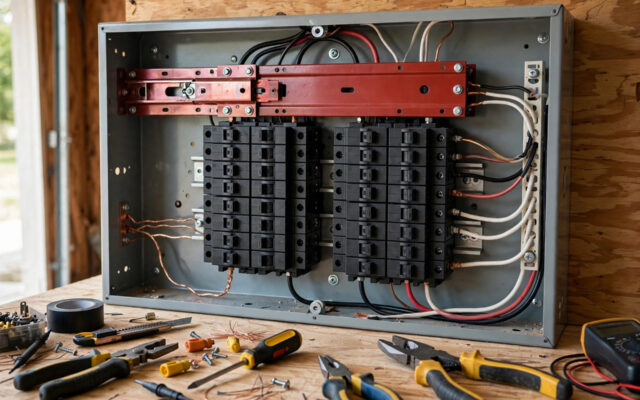
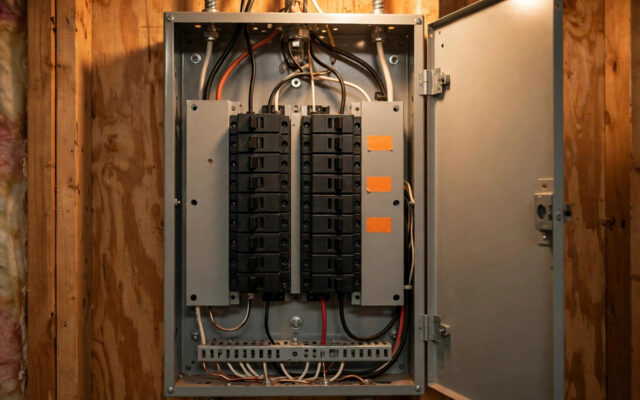
- Open the panel door (not the dead-front cover — just the door) and look for blank knockout spaces. Two adjacent empties at the top = room for the generator breaker.
- Read the label inside the door: brand, model, and amperage. Note the brand — you’ll need it for the interlock kit, which must be listed for your specific panel.
- Look for warning signs: the names Zinsco, Federal Pacific, or Stab-Lok; fuses instead of breakers; rust; scorch marks; a buzzing sound.
- Check the main breaker size: 100A or 200A is normal for modern homes. 60A suggests an older service worth evaluating.
Take a photo of the label and the full panel. Any electrician can quote the interlock job from those two photos — it saves a site visit.
What about a transfer switch instead?
The alternative to an interlock kit is a manual transfer switch or a pre-wired transfer panel (like the ones with 6-12 circuits). These cost more in equipment ($300-600 for the switch) but have advantages: the electrician pre-selects which circuits get generator power, the loads are balanced across the generator’s two legs, and there’s less for you to manage during an outage. With an interlock kit, you are the load manager — turn on the 40-amp oven during an outage and you’ll trip the generator.
Neither option requires a panel upgrade on a healthy panel. The transfer switch just wires in beside it.
The cost comparison
| Project | Typical cost | When |
|---|---|---|
| Interlock kit + inlet + 30A breaker (pro install) | $500-1,500 | Healthy panel with 2 free spaces |
| Manual transfer switch (pro install) | $800-2,000 | Want pre-selected circuits |
| Panel upgrade (100A to 200A) | $2,000-4,000 | Full, obsolete, or damaged panel |
| Full service upgrade for standby generator | $3,000-8,000+ | Standby gen + undersized service |
Before you buy the generator itself, it’s worth running the numbers on what you’ll actually power — our generator sizing calculator will tell you whether a 30-amp inlet (7,200W at 240V) covers your must-run loads or whether you’re in bigger-generator territory.
Do I need an electrician to install a generator interlock kit?
Can I install a generator interlock on a full panel?
Is a generator interlock kit legal?
Do I need a panel upgrade for a whole house generator?
What’s the difference between an interlock kit and a transfer switch?
Bottom line: for most homeowners with a modern breaker panel, a portable generator needs an interlock kit and an inlet — not a panel upgrade. Check for two free spaces and a reputable panel brand, get an electrician’s quote from a photo, and put the thousands you saved toward the generator itself. Our best portable generators roundup covers strong 30-amp, 240V-capable options that pair well with an interlock setup.

Related Guides
Transfer Switch vs Interlock Kit: Which Is Better in 2027?
Transfer switch vs interlock kit: both legally connect a generator to your house. Compare costs ($400–$1,300 vs $400–$850), flexibility, ease of use, and code rules.

How to Install a Generator Interlock Kit (Step-by-Step)
Install a generator interlock kit in 45-90 minutes: $50-$150 kit, 7 steps, panel safety warnings, and when to hire an electrician instead.
Essential Circuits to Back Up With a Generator
Back up these first: fridge, sump pump, well pump, furnace blower, lights, internet. Total: 3,000-5,000W. Full priority tiers with wattages.