


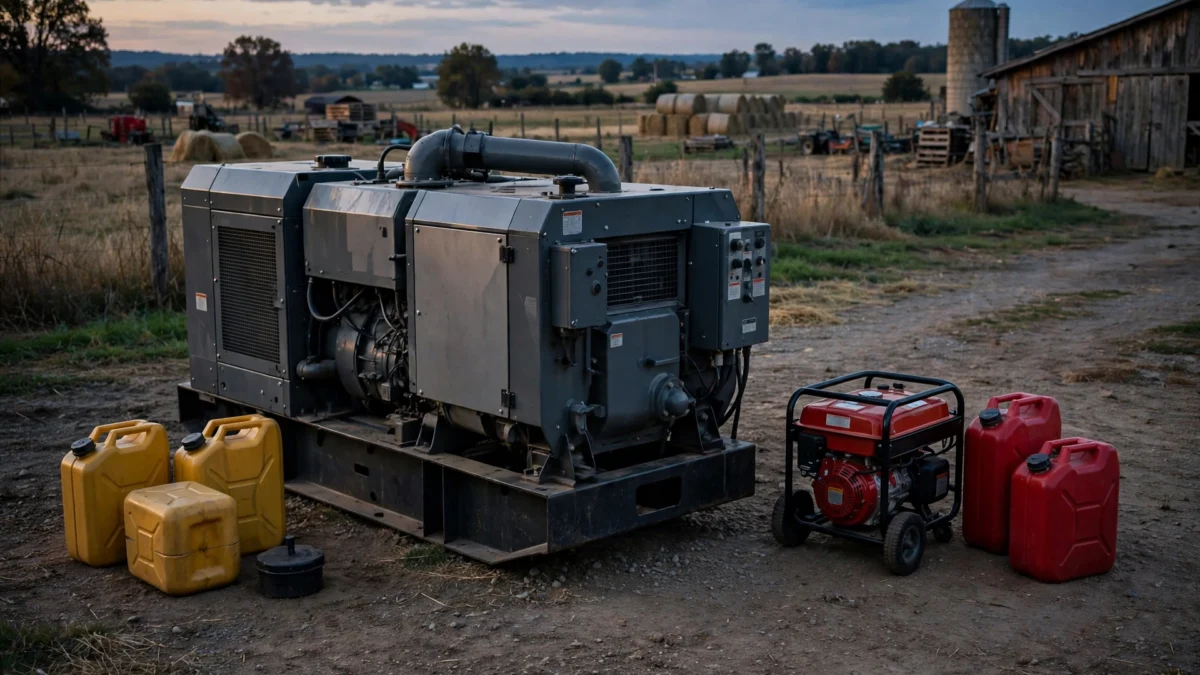
Most portable generators run on gasoline. It’s what the Honda in your neighbor’s garage burns, what every big-box store stocks, and what 95% of buyers should choose. But diesel generators exist for a reason — and if you’re running a generator for hundreds of hours a year, the math flips hard in diesel’s favor.
Here’s the direct answer: buy gasoline if you’re a typical homeowner, camper, or RV owner. Gasoline generators are cheaper, lighter, quieter at small sizes, and available everywhere. Buy diesel if you run long hours regularly (off-grid, farm, job site, commercial backup) — the fuel efficiency, engine longevity, and fuel storage advantages pay off fast at high hours.
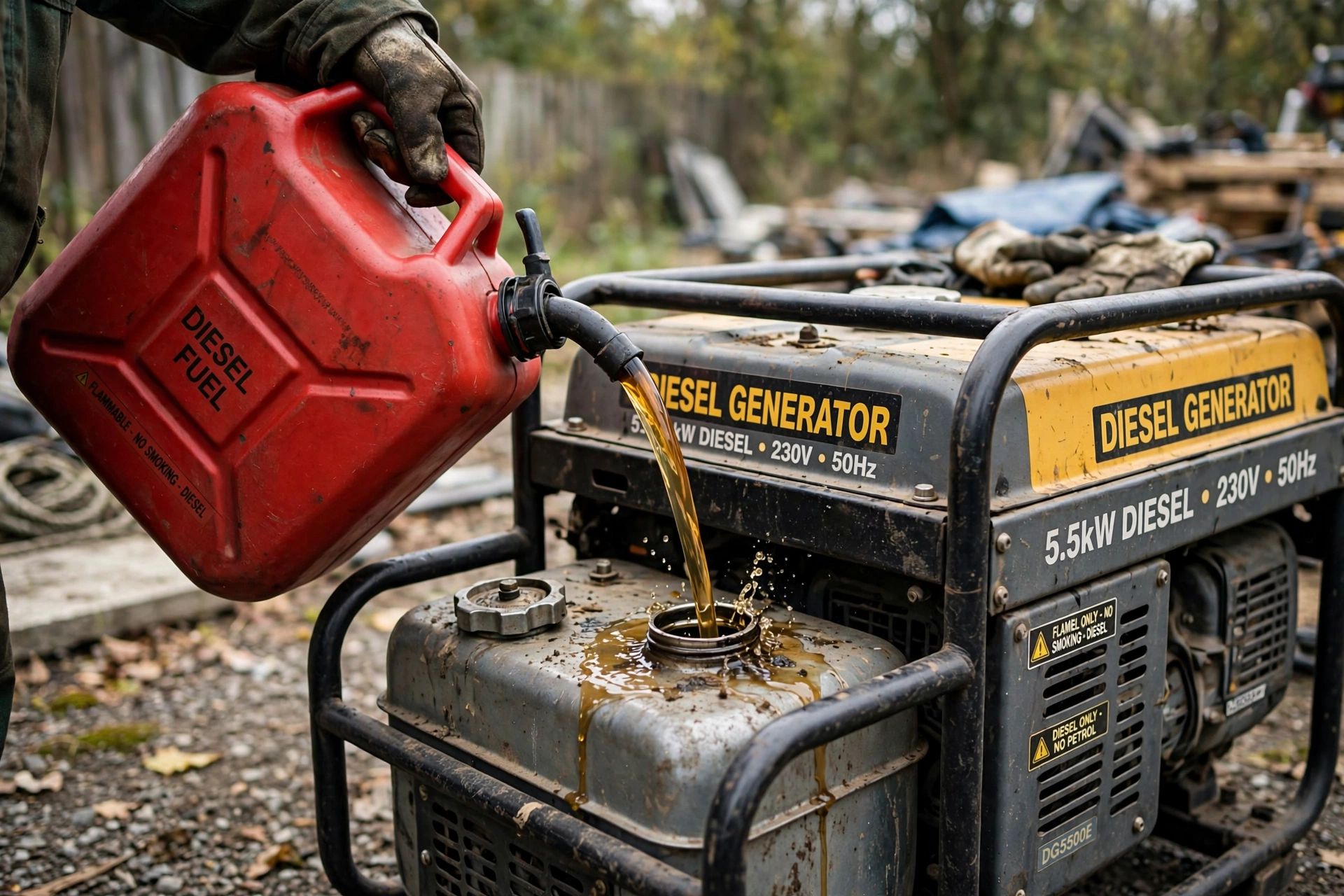
The catch: residential portable diesel generators are rare in the US market. Diesel dominates in commercial and standby sizes, while gasoline owns the portable shelf. That market reality shapes this whole comparison — and I’ll be honest about where each fuel actually makes sense.
Key takeaways
- Diesel engines last 5–10x longer than gasoline small engines (10,000+ hours vs. 1,000–2,000) and burn ~30% less fuel per kWh.
- Diesel fuel stores for 1–2 years without stabilizer; gasoline goes stale in 3–6 months.
- Gasoline generators cost far less up front, weigh less, and are available in every size from 2,000W to 18,000W.
- For typical home backup (under 200 hours/year), gasoline wins. For continuous or commercial duty, diesel wins.
Diesel vs gasoline at a glance
| Factor | Diesel | Gasoline | Winner |
|---|---|---|---|
| Fuel efficiency | ~0.4 gal/hr per 10kW — about 30% better | ~0.6 gal/hr per 10kW | Diesel |
| Engine lifespan | 10,000–30,000 hours | 1,000–3,000 hours | Diesel |
| Fuel storage life | 12–24 months untreated | 3–6 months (needs stabilizer) | Diesel |
| Upfront cost | 2–3x the price of equivalent gas | Cheapest per watt | Gasoline |
| Availability (portable) | Rare in residential sizes | Every size, every store | Gasoline |
| Weight | Heavier — denser engine block | Lighter | Gasoline |
| Cold starting | Harder — may need glow plugs/block heater | Easy | Gasoline |
Fuel efficiency: diesel’s biggest win
Diesel contains about 15% more energy per gallon than gasoline, and diesel engines convert it more efficiently — no spark plugs, higher compression, leaner burn. In practice, a diesel generator produces a kilowatt-hour on roughly 30% less fuel than a gasoline equivalent.
Put numbers on it: a 10kW gasoline generator at half load burns roughly 0.6–0.75 gallons per hour. A comparable diesel burns 0.4–0.5. Over a 72-hour outage, that’s ~50 gallons versus ~33 — 17 fewer gallons to store, transport, and pay for. Our hourly running cost guide has the full fuel math if you want to run your own numbers.
At low annual hours, the savings don’t cover diesel’s price premium. At 500+ hours a year, they absolutely do — which is why farms, construction sites, and off-grid setups run diesel.
Engine longevity: the 10x gap
This is the most underappreciated difference. A gasoline small engine — the kind in a portable generator — is typically rated for 1,000 to 3,000 hours. Run it 8 hours a day and you’re looking at a rebuild or replacement in one to two years of continuous duty.
A diesel in the same service is rated for 10,000 to 30,000 hours. That’s not a typo — diesel’s lower RPM, heavier construction, and better lubrication mean engines that run for decades. It’s why hospitals, cell towers, and data centers all run diesel: when the generator must work, it must work for years.
For a homeowner who runs 50 hours a year during outages, a gasoline engine’s 2,000-hour life is 40 years — longevity is irrelevant. For anyone running daily, it’s the whole decision.
Fuel storage: diesel’s quiet superpower
Gasoline goes stale. In 3–6 months, untreated gas forms varnish that gums up carburetors — the #1 cause of “my generator won’t start” every storm season. You can fight it with stabilizer and ethanol-free gas (see our fuel storage guide), but it’s a constant chore.
Diesel stores for 12–24 months without treatment, and with biocide and stabilizer, for years. For emergency preparedness — fuel you buy once and trust — diesel is simply better. This alone convinces a lot of serious preppers, even before the efficiency math.
Upfront cost and availability: gasoline’s moat
A diesel generator costs 2–3x the gasoline equivalent. A 5kW diesel portable (where you can find one) runs $3,000–$5,000; a 5kW gasoline portable is $600–$1,200. The premium buys the heavier engine block, the fuel system, and lower production volumes.
And “where you can find one” is doing real work in that sentence. The US residential market barely sells portable diesel generators — a handful of Yanmar-powered units and imports, mostly through specialty dealers. Walk into any store and the diesel shelf is empty. Gasoline portables, meanwhile, come in every size from 2,000W to 18,000W at every price point.
Cold weather and day-to-day realities
Gasoline starts easily in the cold — pull the cord and go. Diesel needs glow plugs or a block heater below freezing, and diesel fuel itself can gel in extreme cold without winter treatment. If your generator’s hardest job is a January ice storm, gasoline’s cold-start simplicity is a genuine advantage.
Diesel is also louder at small sizes (the characteristic clatter), heavier, and smellier to refuel. None of these matter on a farm; all of them matter in a suburban backyard.
What to actually buy
For typical home backup, camping, and RV use — buy gasoline. The market has decided this for good reasons: lower cost, lighter weight, easy starting, and endless model choice. These are proven gasoline picks:
Honda EU2200i — 2,200W inverter, 48–57 dB, CO-MINDER. The refined choice for camping, RVs, and light backup.
Champion 4500W Dual Fuel Inverter — 4,500W, dual fuel, CO Shield. More power, propane option for fuel storage, strong value.
Generac GP6500E — 8,125 starting watts, COsense. The traditional open-frame home backup pick.
For high-hour, commercial, or off-grid duty — buy diesel. Look at Yanmar-powered portables through specialty dealers, or step up to a commercial diesel standby unit. There’s no Amazon bestseller to link here — the residential portable diesel market is too thin, and I’d rather tell you that than link a random import. Talk to a commercial generator dealer; the good ones will size it properly and the price will make sense against the fuel savings.
The middle ground: if fuel storage is your real concern but diesel’s cost and rarity put you off, a dual-fuel or tri-fuel gasoline generator running on propane gets you most of diesel’s storage advantage (propane never goes stale) at gasoline prices. Our gas vs. solar cost comparison covers the other alternative worth considering.
The fuel-cost math, worked out
Let’s put real numbers on a realistic scenario: 5kW average load, 8 hours a day, 200 days a year (a serious off-grid or farm setup — 1,600 hours/year).
Gasoline: ~0.75 gal/hr at that load → 1,200 gallons/year. At $3.50/gal: $4,200/year in fuel.
Diesel: ~0.5 gal/hr → 800 gallons/year. At $3.80/gal: $3,040/year in fuel.
Annual savings: ~$1,160. A diesel unit costing $2,500 more than the gasoline equivalent pays back in just over two years — and then keeps saving for the next 15. Now run the homeowner scenario: 60 outage hours a year at 3kW. Gasoline: ~$95/year. Diesel: ~$68/year. Savings: $27/year against a $2,500 premium — a 90-year payback. Same fuels, opposite answers. Hours are everything.
Emissions and regulations
Diesel exhaust contains more particulates and NOx than gasoline exhaust, and modern diesels need particulate filters and DEF (diesel exhaust fluid) in larger sizes to meet EPA Tier 4 rules. Small portable diesels are generally exempt from the strictest tiers, but they’re still smokier and smellier than gasoline equivalents. Some air-quality districts (notably parts of California) restrict diesel generator use beyond emergency operation — check local rules before planning around diesel. Gasoline portables face no such patchwork; they’re legal everywhere for emergency use.
What diesel options actually exist for homeowners?
Honestly? Few. The residential portable diesel market in the US is a niche: Yanmar-powered units (the L-series air-cooled diesels) sold through specialty dealers, a handful of import brands, and used commercial units. Expect 5–10kW, $3,000–$7,000, and a buying process that involves phone calls rather than one-click checkout.
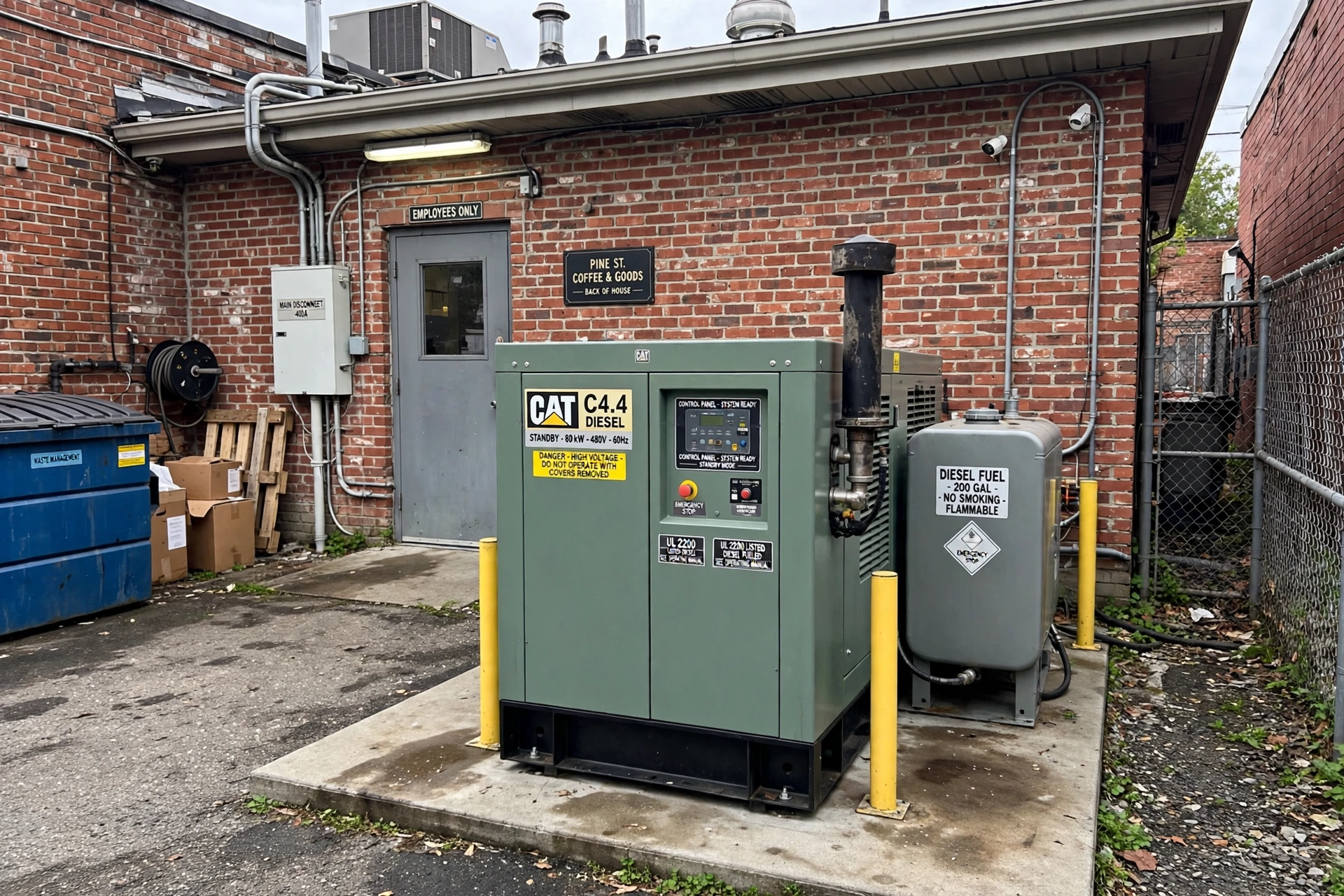
Where diesel is easy to buy is one step up: commercial standby units from 20kW to megawatts, sold and installed by generator dealers with proper sizing, concrete pads, and service contracts. If your property genuinely needs that — a large home with everything electric, a farm, a small business — skip the portable aisle entirely and get quotes from two local commercial dealers. The installed price will surprise you less than the fuel savings will please you.
Frequently asked questions
Are diesel generators better than gas generators?
How long does a diesel generator last compared to gas?
Is diesel fuel cheaper than gasoline for generators?
Can I buy a portable diesel generator for home use?
Does diesel go bad like gasoline?
Our verdict
Buy gasoline unless you have a specific reason not to. For 95% of readers — home backup, camping, RV, job site — a gasoline (or dual-fuel) portable is cheaper, lighter, easier to start, and available in exactly the size you need. Buy diesel when the hours justify it: off-grid living, farm or commercial duty, or serious multi-year preparedness where fuel storage life is the priority. The fuel is better; the question is whether you’ll use enough of it to matter.
How we researched this: We compared manufacturer fuel-consumption specs, engine life ratings, and fuel storage guidance across diesel and gasoline models, and verified Amazon availability for example gasoline models in October 2026. We could not verify a stable Amazon listing for a residential portable diesel generator and chose not to link one rather than recommend blindly.

Related Guides
Gasoline vs Propane Generators: Which Fuel Is Better in 2027?
Gasoline vs propane generators in 2027: fuel cost, runtime, storage life, and cold-weather performance compared — plus why dual-fuel wins for most buyers.

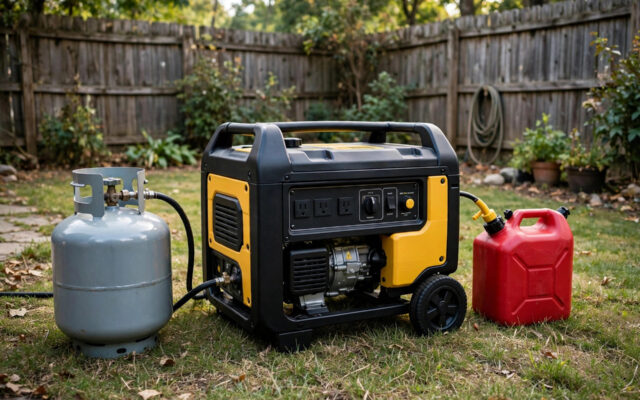
Propane vs Gasoline: Generator Fuel Cost per kWh Compared
At October 2026 prices, propane costs ~$0.48/kWh vs ~$0.65/kWh for gasoline in a generator. See the full math and when gasoline still wins.
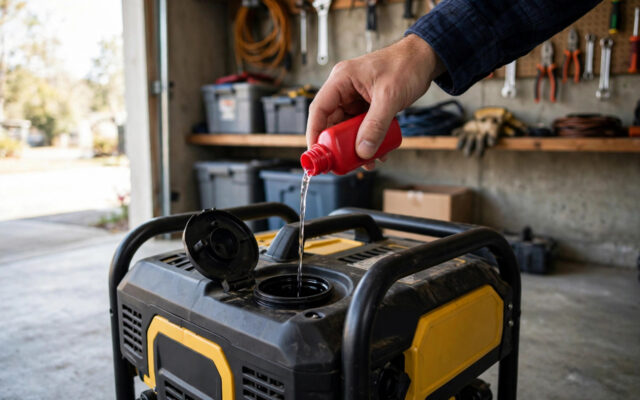
Fuel Stabilizer for Generators: How and When to Use It
Fuel stabilizer prevents the #1 generator no-start cause: gummed carburetors. Learn the 1 oz per 2.5 gallon dosing and the 5-minute rule.