


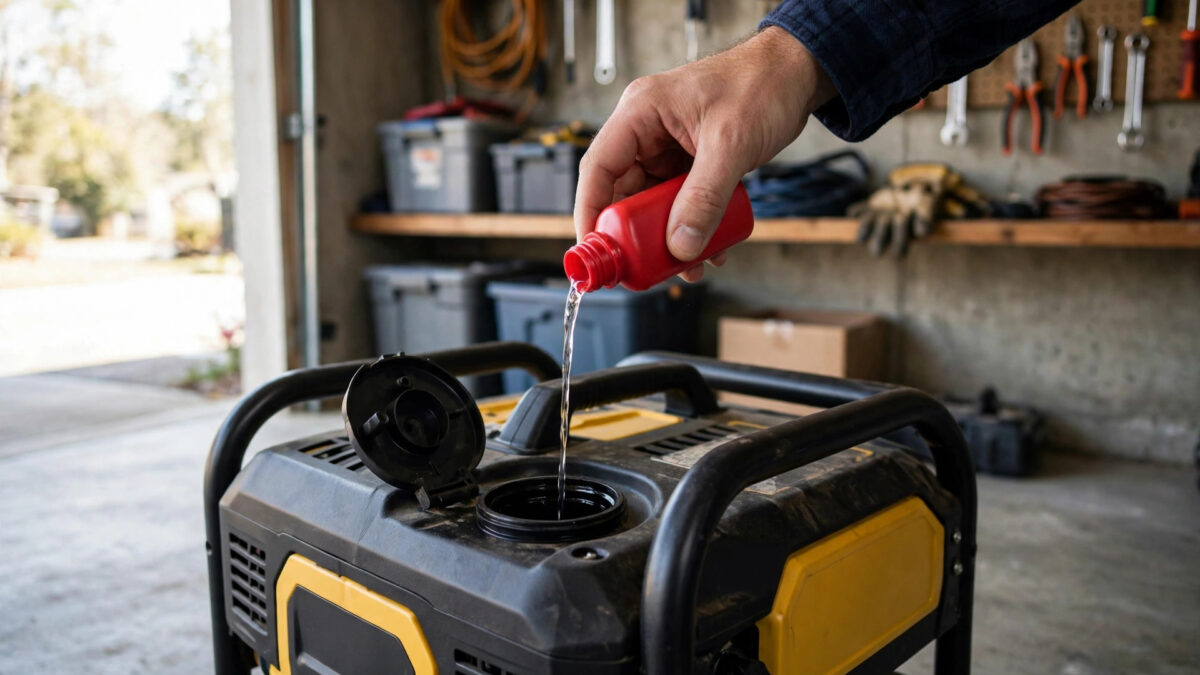
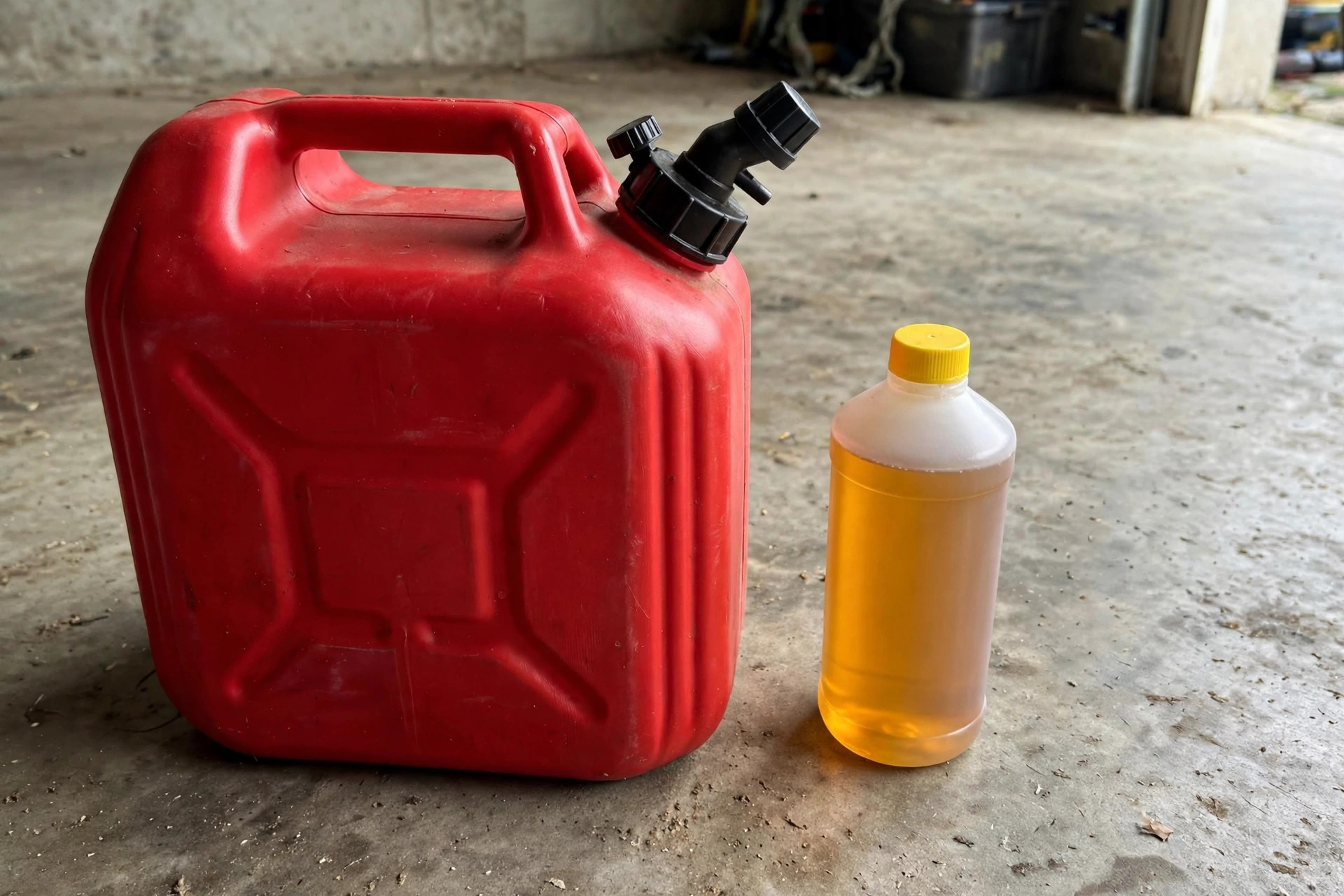
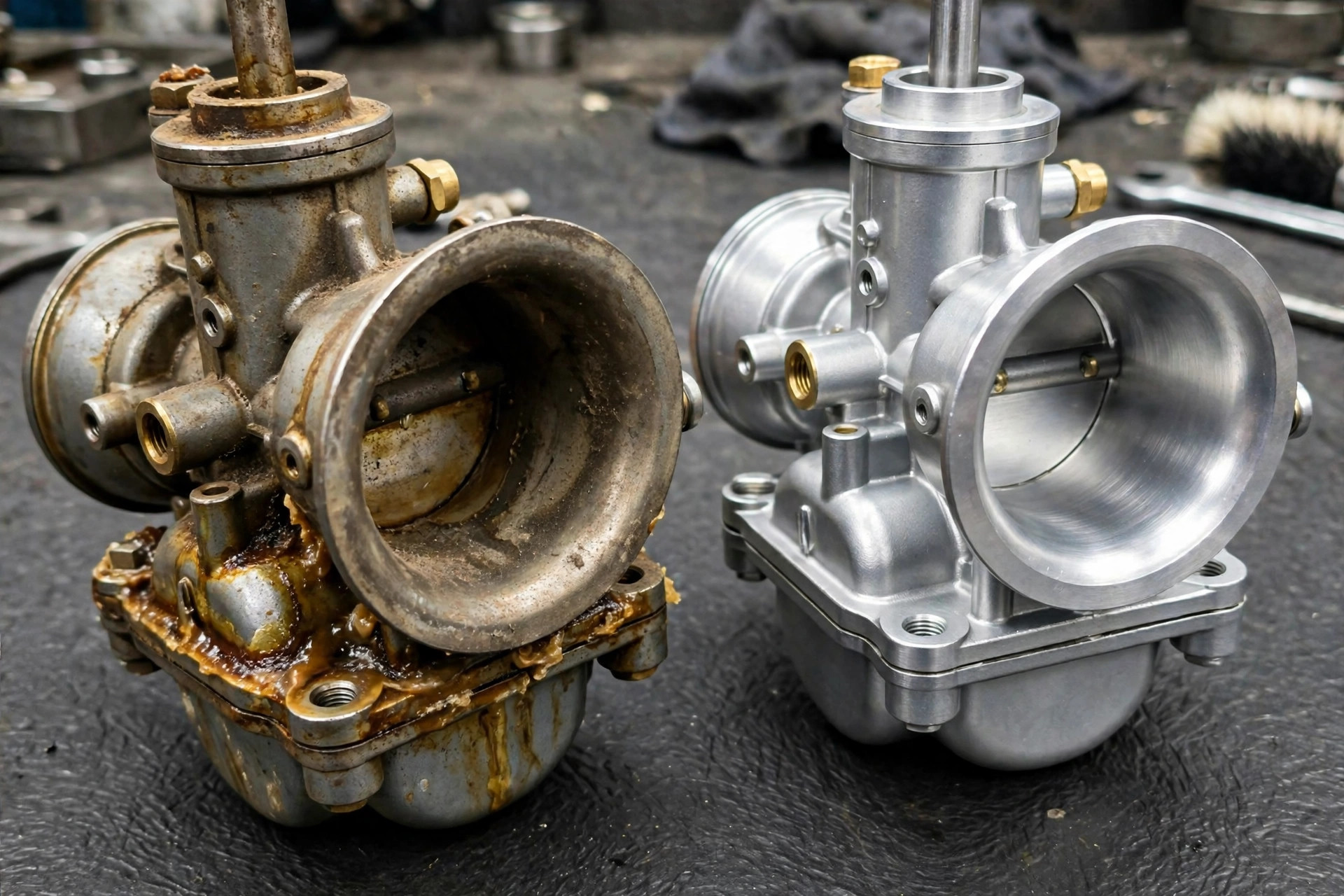
Yes — add fuel stabilizer to every drop of gasoline you store for your generator, the same day you buy it. Pump gasoline starts going stale in 30–60 days thanks to ethanol. That stale fuel turns into gum and varnish inside your carburetor, and a gummed-up carb is the single most common reason generators refuse to start after sitting in storage.
I’ve cleaned more clogged generator carbs than I can count, and almost every one came down to the same story: fresh gas went in last fall, no stabilizer, and the machine sat. Fifteen minutes of prevention would have saved a Saturday of carb cleaner and swearing.
Key takeaways
- Add stabilizer to FRESH gasoline — it cannot fix fuel that’s already gone bad.
- STA-BIL dosing: 1 oz per 2.5 gallons of gas; keeps fuel fresh up to 24 months.
- After adding stabilizer, run the generator 5 minutes so treated fuel reaches the carburetor.
- A full tank + stabilizer beats a drained tank for rust prevention; drain-or-stabilize are both acceptable, stabilizer is easier.
- Ethanol-blended (E10) fuel is the main enemy — consider ethanol-free gas for storage cans.
Why Generator Fuel Goes Bad So Fast
Almost all pump gasoline in the US is E10 — 10% ethanol. Ethanol attracts moisture from the air. Inside a vented generator fuel tank, that moisture condenses, the ethanol bonds with it, and the blend separates into layers (phase separation). The remaining gasoline oxidizes and forms gum and varnish that coats the tiny passages and jets inside the carburetor.
This starts at 30 days and gets serious by 60–90. A carburetor jet is a pinhole — it doesn’t take much varnish to plug it. The result is the classic symptom: the generator cranks, maybe fires for two seconds, and dies. Or it surges and hunts under load.
Fuel stabilizer is a blend of antioxidants and corrosion inhibitors that slows oxidation dramatically. STA-BIL Storage — the one I keep on the shelf — claims up to 24 months of freshness, and in my experience treated fuel stored through a full winter fires up like it was bought yesterday.
How to Use Fuel Stabilizer: Step by Step
1. Buy fresh gasoline
Stabilizer preserves fuel; it doesn’t resurrect it. If the gas has been sitting in a can since last summer, burn it in your car and start with fresh fuel. When in doubt, buy ethanol-free gas (often labeled REC-90 at marinas and some stations) — it stores better with or without treatment.
2. Add stabilizer BEFORE the fuel goes in
The dosing for STA-BIL Storage is 1 ounce per 2.5 gallons of gasoline. A 10 oz bottle treats 25 gallons. Pour it into the empty tank or can first, then add the gas — the filling action mixes it thoroughly. You can double the dose for storage beyond a year (the label allows it), but measure roughly; more isn’t meaningfully better.
3. Fill the tank nearly full
Fill to about 90–95% — full enough to minimize air space (air = moisture = phase separation), with a little room for expansion. A full treated tank also prevents rust inside metal tanks during storage.
4. Run the engine for 5 minutes
This is the step people skip, and it matters most. Stabilizer in the tank does nothing for the fuel already sitting in the carburetor bowl and fuel lines. Run the generator for at least 5 minutes under a light load so treated fuel circulates through the entire fuel system — tank, lines, carb, bowl.
5. Shut off the fuel valve and run the carb dry (optional but smart)
After the 5-minute run, close the fuel valve and let the generator run until it dies. This empties the carburetor bowl. Belt and suspenders: treated fuel in the tank, empty carb. I do this for any machine sitting more than 3 months.
Stabilizer vs. Draining: Which Is Better?
You have two legitimate options for storage, and both beat doing nothing:
| Fuel stabilizer | Drain the system | |
|---|---|---|
| Effort | 5 minutes | 20–40 minutes |
| Fuel freshness | Up to 24 months | N/A (no fuel to age) |
| Tank rust risk | Low (full tank) | Higher (empty tank, bare metal) |
| Start-up readiness | Starts immediately | Starts immediately |
| Common mistakes | Skipping the 5-min run | Forgetting the carb bowl drain screw |
I use stabilizer. Draining works if you do it completely — including the little drain screw on the bottom of the carb bowl that everyone forgets — but a full tank of treated fuel is simpler and leaves the machine ready to fire at a moment’s notice.
Mistakes That Waste Your Stabilizer
Adding it to old fuel. Once varnish has formed, no additive dissolves it back into good gasoline. Stabilizer is a preservative, not a cleaner.
Not running the engine afterward. The untreated fuel in the carb is exactly what will gum up. Five minutes. Do it.
Using an expired bottle. Check the date code — STA-BIL is good for about 2 years after opening, 5 years unopened. A dusty bottle from 2019 isn’t doing much.
Storing cans in the sun. Heat accelerates fuel breakdown and builds pressure. Keep fuel cans in a cool, dry spot — and never in the house. Gasoline cans belong in a garage or shed, away from living spaces and the water heater.
Storage Cans vs. the Generator Tank: A Different Strategy for Each
Here’s a distinction most guides skip: treated fuel in a sealed storage can lasts longer than treated fuel in your generator’s vented tank. A sealed can limits air exchange; a generator tank breathes through its vent cap with every temperature swing, pulling in humid air. In my experience, treated fuel in sealed cans is good for a full 18–24 months; in the generator tank, I refresh it yearly even with stabilizer.
My actual routine: I keep two 5-gallon cans, both treated at the pump. One can lives in the garage for the mower and general use. The other is the “generator can” — sealed, dated with a Sharpie, stored cool and dark. When storm season approaches, I top off the generator tank from the generator can, add the 5-minute run, and I’m ready. The dated can gets rotated into the car once a year and refilled fresh. Simple, and I never wonder how old my fuel is.
What About Ethanol-Free Gas?
If you can buy ethanol-free gasoline locally (marinas, some rural stations, and certain chains sell it as REC-90 or “pure gas”), it’s worth the premium for storage fuel — usually $0.50–$1.00 more per gallon. Ethanol is the root cause of phase separation and most fuel-system corrosion, so removing it removes the biggest problem. I still add stabilizer to ethanol-free gas — belt and suspenders — but honestly, straight ethanol-free fuel stored sealed will outlast treated E10 by a comfortable margin.
One caution: don’t run ethanol-free gas in the generator and then switch back to E10 without thinking. The ethanol in E10 actually cleans deposits that non-ethanol fuel leaves behind. Mixed use is fine; just don’t let either type sit untreated.
Which Stabilizer Should You Buy?
STA-BIL Storage is the default choice for a reason — it’s been around for decades, the dosing is simple (1 oz / 2.5 gal), and the up-to-24-month claim holds up in real storage. For storage cans, I like the 10 oz bottle with the measuring chamber.
Sea Foam is a reasonable alternative if you also want a light cleaning effect (it’s dosed differently — follow its label), and PRI-G is popular with the long-term preparedness crowd. Honestly, any name-brand stabilizer used correctly beats the wrong-brand stabilizer used wrong. The technique matters more than the brand.
How much STA-BIL do you put in a generator?
How long does gasoline last in a generator with stabilizer?
Can fuel stabilizer fix old gas?
Should I drain the gas or use stabilizer for generator storage?
Does fuel stabilizer work with ethanol gas?
Fuel stabilizer is the cheapest insurance in the generator world — a few dollars a year to guarantee your machine starts when the power dies. Add it at the pump, run the engine five minutes, and stop worrying about it. If you’re putting the machine away for the season, pair this with a proper generator storage routine (oil, battery, location) and it will be ready the next time the lights go out.

Related Guides
Diesel vs Gasoline Generators: Which Is Better in 2027?
Diesel vs gasoline generators: diesel wins on efficiency, lifespan and fuel storage; gas wins on price, weight and choice. Here's which fuel fits your use case.

Gasoline vs Propane Generators: Which Fuel Is Better in 2027?
Gasoline vs propane generators in 2027: fuel cost, runtime, storage life, and cold-weather performance compared — plus why dual-fuel wins for most buyers.
Propane vs Gasoline: Generator Fuel Cost per kWh Compared
At October 2026 prices, propane costs ~$0.48/kWh vs ~$0.65/kWh for gasoline in a generator. See the full math and when gasoline still wins.
1 Comment