


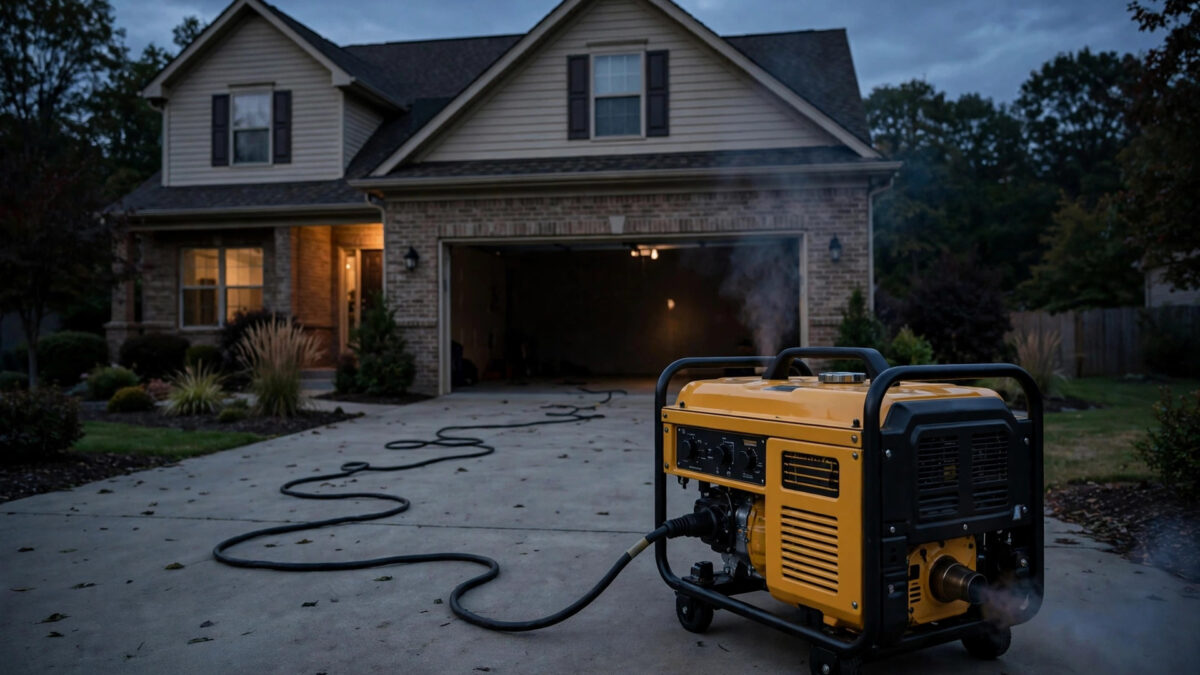
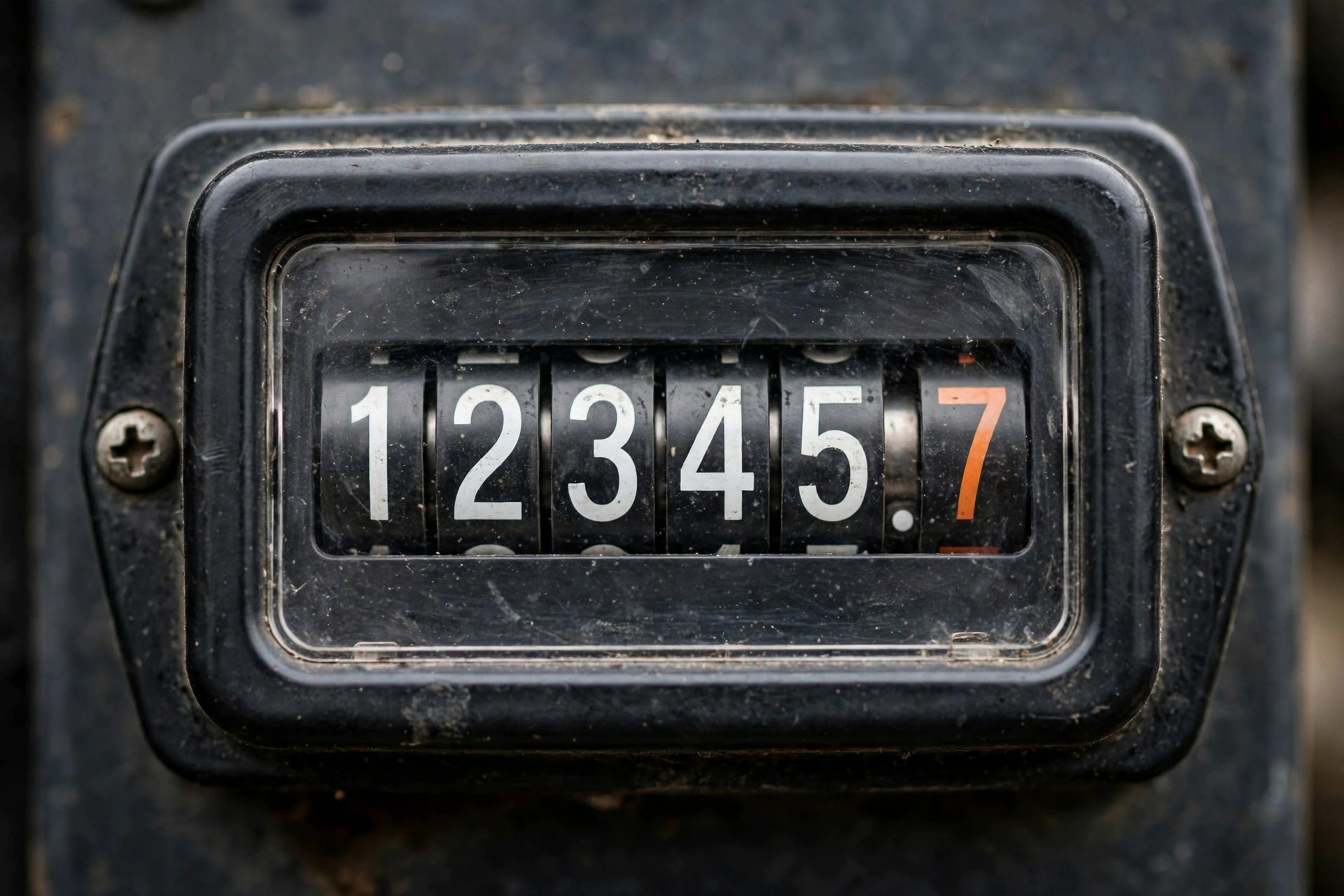
Most portable gasoline generators last 1,000–3,000 engine hours. Home standby units last around 3,000 hours for air-cooled models and 10,000–30,000+ hours for liquid-cooled diesels. In years, that works out to 10–25 years for a well-maintained portable used for storms, and 20–30 years for a standby that mostly just exercises itself.
Hours — not years — are the real unit of generator lifespan. A portable that runs 100 hours a year ages like a teenager; the same machine running 1,000 hours a year on a jobsite is middle-aged in three seasons. Let me break down what to expect by type and, more importantly, what actually kills generators early.
Key takeaways
- Portable gasoline: 1,000–3,000 hours. Air-cooled standby: ~3,000 hours. Liquid-cooled diesel: 10,000–30,000+ hours.
- Manufacturers don’t publish lifespan numbers — only warranties and maintenance schedules.
- At 100 hrs/year, a 1,500-hour portable lasts ~15 years; at 1,000 hrs/year, ~1.5 years.
- Neglect kills more generators than hours: stale fuel, old oil, dead batteries, and never exercising.
- Gaseous fuels (propane/natural gas) extend engine life vs. gasoline — cleaner burn, less carbon.
Lifespan by Generator Type
| Type | Typical engine life | At 100 hrs/yr | At 500 hrs/yr |
|---|---|---|---|
| Portable gasoline (conventional) | 1,000–3,000 hrs | 10–30 yrs | 2–6 yrs |
| Inverter gasoline | 1,000–3,000 hrs | 10–30 yrs | 2–6 yrs |
| Air-cooled standby (gas/propane) | ~3,000 hrs | 30+ yrs | 6 yrs |
| Liquid-cooled standby (diesel) | 10,000–30,000 hrs | 100+ yrs | 20–60 yrs |
The standby numbers need context. A standby generator exercises about 26 hours a year (a 10-minute weekly self-test) plus actual outage time. In a typical year with a 3-day outage, that’s under 100 hours total — which is why a 3,000-hour air-cooled standby can plausibly serve 25–30 years. The exercise cycles do most of the “aging,” and they’re the whole point: the machine proves itself weekly instead of surprising you during a storm.
Why do diesels last so much longer? Compression-ignition engines run at 1,800 RPM instead of 3,600, with heavier internals built for continuous duty. Less speed, less heat, less wear per hour. Gasoline engines in small generators are built to a consumer price point — they’re excellent machines, but they’re sprinters, not marathoners.
Fuel Type Changes the Math
The same basic engine lasts longer on gaseous fuel than on gasoline. Propane and natural gas burn cleaner — less carbon buildup on valves and pistons, less contamination of the engine oil, no ethanol to corrode the fuel system. Owners who convert portables to propane consistently report longer intervals between problems.
Gasoline, for all its convenience, is the hardest fuel on an engine: it leaves carbon deposits, its ethanol content attacks rubber fuel lines and carburetor seals, and it goes stale in 30–60 days. If you run gasoline, treat it — my guide to fuel stabilizer explains the 1 oz per 2.5 gallons routine that prevents the #1 no-start cause.
Diesel sits in the middle on cleanliness but wins on robustness — see our full diesel vs. gasoline comparison for the trade-offs.
What Actually Kills Generators Early
In my experience, generators almost never die of old age. They die of neglect, in roughly this order:
1. Stale fuel (the #1 killer). Ethanol-blended gas varnishes the carburetor in 2–3 months. The generator won’t start, the owner assumes it’s broken, and it sits for another year. Preventable with stabilizer and a 5-minute run after every fill.
2. Never exercising. A generator that sits for a year develops flat-spotted seals, a dead battery, and moisture in the oil. Run it 15–20 minutes monthly under a real load (a space heater works). Standby units do this automatically — that’s a genuine advantage, not just a convenience feature.
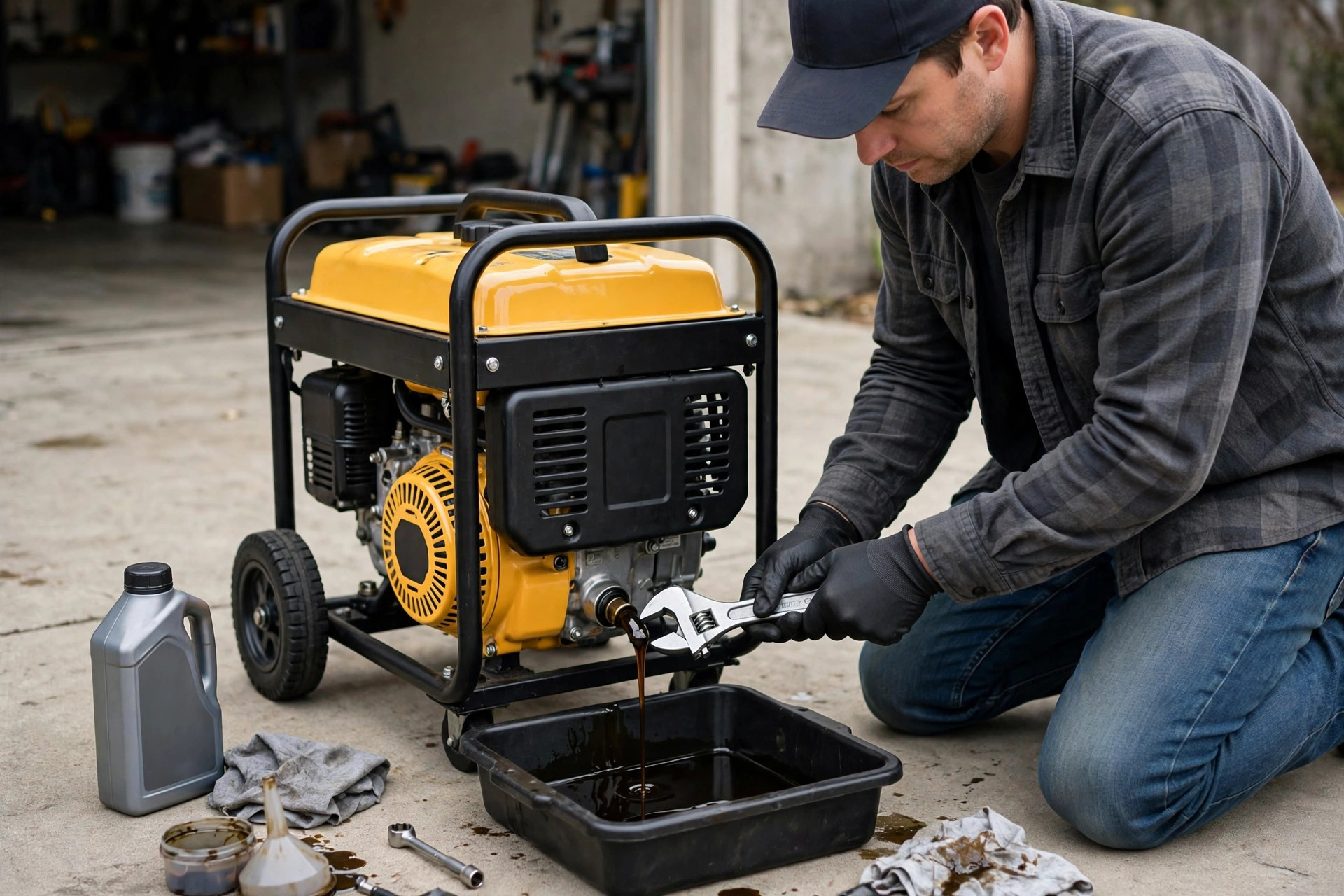
3. Skipped oil changes. Small air-cooled engines hold barely a quart of oil and run hot. Change it every 50–100 hours (check your manual — the first change is often at 25–30 hours). I’ve seen engines seize at 200 hours from oil that looked like tar.
4. Running overloaded. A generator pinned at 100%+ load runs hot, voltage sags, and the alternator cooks. Size so your normal load is 70–80% of rated watts. The NEC’s 125% rule for continuous loads exists for a reason — a 20A continuous load belongs on a 25A circuit, not a 20A one.
5. Wet, dirty storage. Rain, dust, and mice destroy the parts that hours never touch: windings, control boards, wiring insulation. Store under cover, keep rodents out, and don’t run it in the rain without a proper ventilated cover.
Signs Your Generator Is Nearing the End
Engines rarely die suddenly — they tell you first. Watch for these:
Increasing oil consumption. If you’re topping off oil between changes and there’s no visible leak, the rings are worn and oil is burning past them. Blue-tinged exhaust confirms it. On a small air-cooled engine, this is usually the beginning of the end.
Hard starting when warm. A healthy engine starts easily hot or cold. If it fires up cold but needs coaxing after a shutdown and restart, compression is fading.
Voltage sag under loads it used to handle. The alternator end wears too — brushes, bearings, windings. If the lights dim more than they used to when the well pump kicks in, the generator (not just the engine) is tired.
Metal in the oil. When you drain the oil, look at it. Fine glitter means bearing material. That’s a rebuild-or-replace decision, and on a consumer portable, replacement almost always wins economically — a short-block rebuild costs nearly as much as a new unit once you count labor.
The honest economics: a $800 portable with a worn engine at 2,000 hours isn’t worth a $400 rebuild. A $8,000 liquid-cooled standby with worn rings at 15,000 hours absolutely is. Match your repair spending to the machine’s class.
How to Get Maximum Life From Yours
The maintenance routine that actually works:
- Monthly: Start it, run 15–20 minutes under load (space heater, shop light — something that draws real watts). Check for leaks, weird noises, and mouse nests.
- Every 50–100 hours: Change the oil. Use the weight your manual specifies (usually 10W-30). Check the air filter.
- Yearly: New spark plug, fuel filter check, inspect the battery and cables, clean the cooling fins.
- Fuel: Stabilizer in every can, full tank for storage, run the carb dry if sitting more than 3 months.
- Battery (electric-start and standby): The battery dies before the engine does — 2–4 years is typical. A battery maintainer/tender doubles that.
I’ve also found that the generators lasting longest are the ones whose owners actually read the maintenance schedule once. The manual’s chart is right there. Follow it and you’re already ahead of 90% of owners.
How many hours does a portable generator last?
How long do standby generators last in years?
Why don’t manufacturers publish generator lifespan?
Does propane make a generator last longer?
What kills a generator fastest?
A final note on warranties: read the hours cap, not just the years. A “3-year warranty” limited to 500 hours is really a 500-hour warranty for anyone who actually uses the machine. Residential warranties with higher hour caps (1,000+) signal a maker that expects the engine to last — it’s the closest thing to a published lifespan number you’ll get.
Shopping for longevity? The honest hierarchy is simple: liquid-cooled diesel outlasts everything, air-cooled standby outlasts portable, and any maintained generator outlasts any neglected one. If you’re deciding between types for home backup, our portable vs. standby comparison weighs lifespan against cost and convenience — because the longest-lasting generator is only the right choice if you’ll actually maintain it.

Related Guides
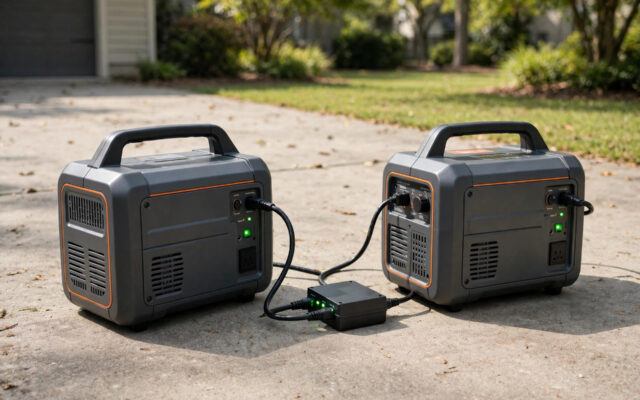
Paralleling Two Generators vs Buying a Bigger One: Which Is Better? (2027)
Paralleling two small inverter generators vs buying one bigger unit: compare cost, noise, fuel, redundancy, and the 240V catch to pick the right setup.

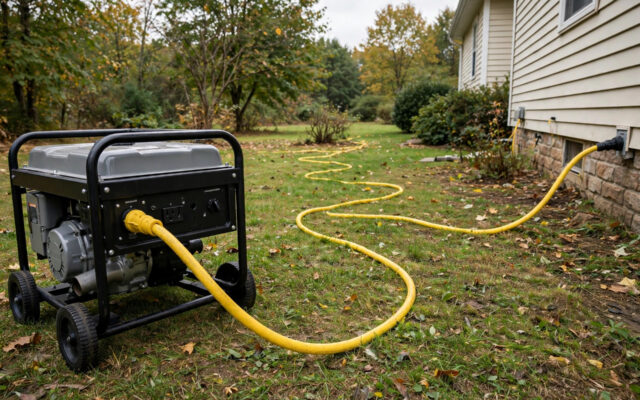
What Gauge Extension Cord Do You Need for a Generator?
Extension cord gauge depends on amps AND length: 12 AWG handles 20A to 50 ft, but you need 10 AWG at 100 ft. Chart, sizing steps, and fire-prevention rules inside.
Generator Carbon Monoxide Safety: The Complete 2027 Guide
Carbon monoxide from generators kills ~77 Americans a year. This complete guide covers symptoms, the CDC 20-foot rule, detector placement, and a pre-outage safety checklist.