
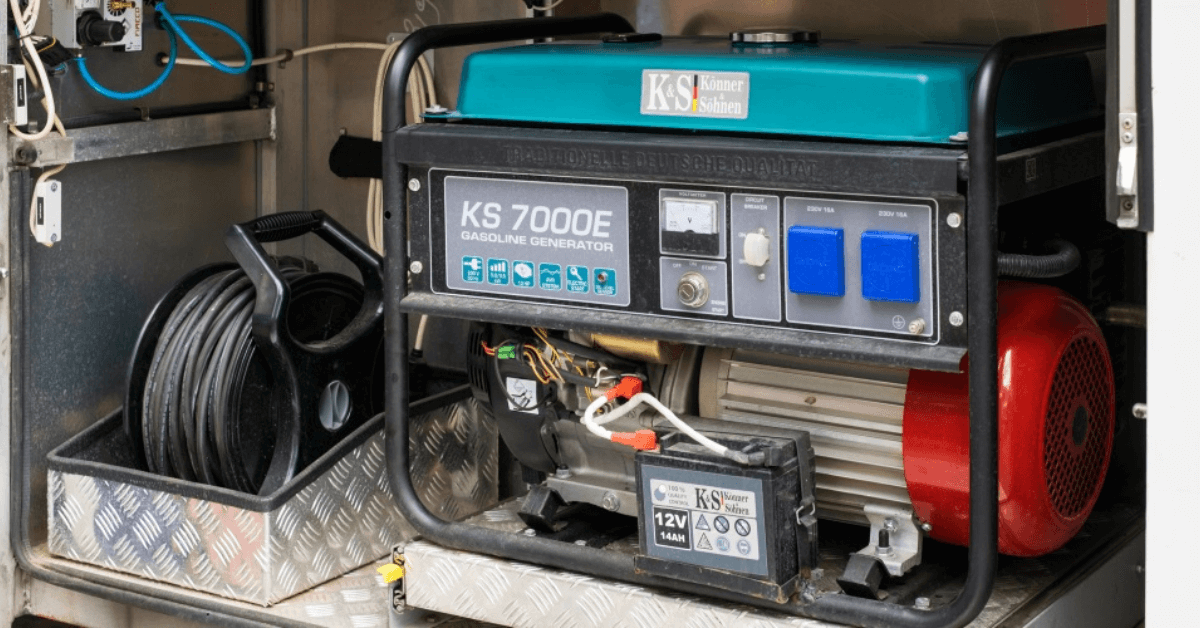
How long does gasoline last in a generator? Untreated gasoline starts degrading in 3 to 6 months, while gasoline treated with a fuel stabilizer stays usable for 12 to 24 months. Ethanol-blended fuel (E10, the standard at most pumps) goes stale faster than ethanol-free gasoline because ethanol absorbs moisture from the air. In this shelf-life guide, we break down exactly how long fuel lasts in each form, why old gas is the number one cause of generators that will not start, and how to store and rotate your fuel so it is always fresh when an outage hits.
Here is the uncomfortable truth most generator owners learn the hard way: the gasoline is more likely to fail than the generator. Small-engine repair shops consistently report that the majority of “my generator won’t start” cases trace back to stale fuel gumming up the carburetor — not to any mechanical failure. Fuel is a perishable supply, and treating it that way is the cheapest reliability upgrade you can make.
Key Takeaways
- Untreated gasoline: usable ~3–6 months. With stabilizer: ~12–24 months. Ethanol-free lasts longer than E10 in both cases (approximate).
- Ethanol blends absorb moisture and can phase-separate; ethanol-free gas stores significantly better.
- Always add stabilizer to fresh fuel at fill time, then run the engine 5–10 minutes to circulate it through the carburetor.
- Store fuel in approved containers, in a cool, dry, ventilated spot away from living spaces and ignition sources.
- Rotate your stock: label cans with the fill date and cycle fuel through your car or lawn equipment every 6 months.
- Stale fuel symptoms: sour or varnish smell, dark color, engine won’t start or surges — drain it and refill with fresh fuel.
How Long Does Gasoline Last in a Generator?
Gasoline stored in a generator’s tank or a sealed container lasts about 3 to 6 months untreated before degradation causes starting and running problems; treated with a quality fuel stabilizer at fill time, the same gasoline stays usable for roughly 12 to 24 months. Ethanol-free gasoline lasts longer than standard E10 ethanol blend in both cases — roughly 6 to 12 months untreated — because ethanol attracts water and accelerates breakdown. Heat, air exposure, and half-empty containers shorten all of these timelines, so these are approximate ranges, not guarantees. The practical rule: if you cannot remember when you filled it, assume it is stale.
Gasoline Shelf Life by Type: The Timelines
| Fuel type | Untreated shelf life (approx.) | With stabilizer (approx.) |
|---|---|---|
| E10 (10% ethanol, standard pump gas) | 3–6 months | 12 months |
| Ethanol-free gasoline | 6–12 months | 12–24 months |
| Pre-mixed canned fuel (e.g., engineered fuel) | 2–5 years sealed | Already stabilized |
| Diesel (for comparison) | 6–12 months | 12–24+ months |
| Propane (for comparison) | Indefinite | N/A — does not degrade |
Two things stand out. First, stabilizer roughly doubles to quadruples usable life — it is the highest-value few dollars in generator ownership. Second, propane never goes stale, which is a genuine long-term-storage advantage of dual-fuel generators: the propane side is always ready even if the gasoline side needs attention.
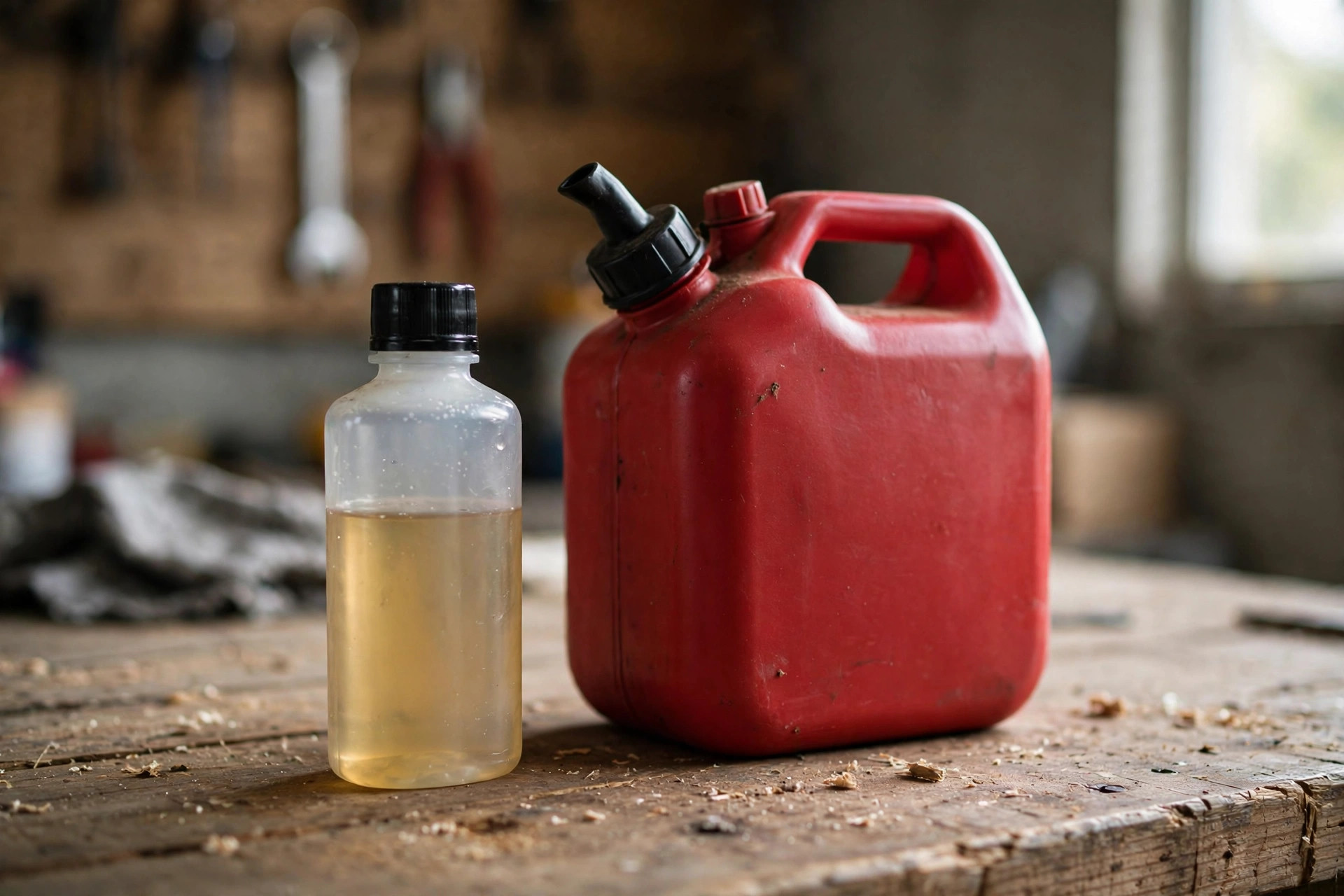
Why Gasoline Goes Bad: Oxidation, Evaporation, and Phase Separation
Gasoline degradation is chemistry, not mystery, and understanding it explains every storage rule below.
Oxidation forms gum and varnish
Oxygen reacts with gasoline’s lighter components to form sticky gum and varnish. These deposits coat carburetor jets and fuel passages — which on a generator are tiny — until fuel cannot flow. This is the classic “ran fine last year, won’t start now” failure.
Light ends evaporate
Gasoline’s most volatile components evaporate first, especially in vented containers or half-full tanks with lots of air space. Losing them makes the fuel harder to ignite — the engine cranks but never catches.
Ethanol absorbs water and phase-separates
Ethanol attracts moisture from the air. In E10, absorbed water eventually causes phase separation: the fuel splits into a water-ethanol layer and a degraded gasoline layer. An engine fed the watery layer will not run, and the corrosive mix attacks fuel-system metals and rubber. This is why ethanol-free gas is the superior storage fuel, and why E10 should never sit longer than a few months.
Fuel Stabilizer: How and When to Use It
Stabilizer works by slowing oxidation — but it cannot reverse degradation that has already happened. That timing detail is everything.
Add it to fresh fuel, at the pump
The best practice is adding stabilizer to the can the day you buy the gasoline, when the fuel is freshest. Dose per the bottle’s instructions (overdosing does not help and wastes money).
Run the engine to circulate it
After adding stabilized fuel to the generator, run the engine for 5 to 10 minutes. This pulls the treated fuel through the fuel lines and carburetor — the exact places where untreated residue would otherwise gum up. Stabilizer in the can alone does not protect a carburetor full of old untreated fuel.
Re-dose on the schedule
Most stabilizers protect for 12 months per dose; a few claim 24. Mark the treatment date on the can with a paint pen or label, and re-treat or rotate the fuel when the window expires.
Proper Fuel Storage Containers and Location
Use approved containers
Store gasoline only in containers listed for fuel — red plastic jerry cans or metal safety cans meeting ASTM/UL standards, with self-closing lids. Keep containers to 5 gallons or less each for safe handling, fill them to about 95 percent (minimizing air space slows oxidation while leaving room for expansion), and keep them tightly sealed.
Location matters as much as the container
Store cans in a cool, dry, ventilated spot out of direct sunlight — a detached shed or garage corner away from the water heater and furnace is typical. Heat accelerates degradation dramatically: fuel stored through a hot summer in a sun-baked shed ages far faster than fuel in a cool basement-adjacent storage area (but never in the basement itself). Keep cans off concrete floors on a shelf or pallet to reduce condensation.
How Much Fuel Should You Keep on Hand?
A sensible target is three days to a week of fuel, matched to how you actually plan to run the generator. A typical 5,000-watt portable generator burns roughly three-quarters of a gallon per hour at half load — about 18 gallons a day if run around the clock. Most households run the generator 8 to 10 hours a day for essentials, which cuts that to roughly 6 to 8 gallons daily. At that pace, 20 to 25 gallons covers several days of outages.
Before stockpiling, check your local fire code: many jurisdictions limit residential gasoline storage to around 25 gallons in approved containers. Stay within that limit, rotate the stock, and you will never be caught short.
Know your local limits
Fire codes limit how much gasoline a residence may store — commonly around 25 gallons in approved containers outside of special storage. Check your local code before stockpiling for a long outage season.
Fuel Rotation: The System That Guarantees Fresh Gas
Stabilizer extends life; rotation guarantees freshness. Together they are bulletproof.
Label everything with the date
Write the fill date (and whether stabilizer was added) on every can with a paint pen or adhesive label. Fuel you cannot date is fuel you cannot trust.
First in, first out — every 6 months
Twice a year — a good habit is pairing it with daylight-saving clock changes — pour the oldest can into your car’s tank (a few gallons of months-old stabilized gas diluted in a full car tank burns fine) or into lawn equipment, then refill the can with fresh stabilized fuel. Your generator fuel is then never more than 6 months old, comfortably inside every shelf-life window.
Exercise the generator monthly
Run the generator under load for 15 to 20 minutes each month. This circulates fresh stabilized fuel through the carburetor, charges the battery (if electric start), and — critically — proves the machine starts before you need it. Monthly exercise plus rotated fuel eliminates the vast majority of no-start failures.
Signs Your Gasoline Has Gone Bad
Before pouring suspect fuel into your generator, check it:
- Smell: fresh gas has a sharp petroleum odor; stale gas smells sour, like varnish or turpentine.
- Color: fresh gasoline is clear to light amber; degraded fuel darkens noticeably.
- Residue: a sticky or gummy film on the can’s spout or cap indicates varnish formation.
- Separation: visible layers or cloudiness in the fuel means water contamination or phase separation.
If fuel shows these signs, do not run it through the generator — drain the tank and carburetor, dispose of the old fuel at a household hazardous-waste facility (never pour it on the ground or down a drain), and refill with fresh stabilized gasoline. Varnish does not just clog carburetor jets — it also gums up fuel filters and degrades rubber fuel lines, turning a fuel problem into a repair bill.
How Long Does Gasoline Last in a Stored Generator?
Fuel in the generator’s tank follows the same shelf-life rules — and the carburetor is the most vulnerable part. Two accepted approaches: store it with stabilized fuel in the tank (then run the engine monthly as above), or run the carburetor dry via the fuel shutoff valve before storage and drain the tank. Either works; what fails is storing it full of untreated fuel and forgetting it for a year. For detailed long-term storage steps, see our generator storage guide.
What About Diesel, Propane, and Natural Gas?
Gasoline gets the most attention because it degrades fastest, but every fuel has its own storage profile:
- Diesel: lasts roughly 6–12 months untreated and 12–24+ months with stabilizer. Keep it at a steady, cool temperature and keep water and air out — moisture in diesel encourages microbial growth that clogs filters. A favorite for larger standby units because it is efficient and stores reasonably well.
- Propane: does not degrade — it stores indefinitely in sealed cylinders. Keep cylinders upright, outdoors, with the pressure-relief valve unobstructed. A genuine long-term-storage advantage for dual-fuel generators.
- Natural gas: needs no storage at all when piped to the house, which is why standby generators on natural gas are always “fueled.” The tradeoff is dependence on the utility supply during disasters.
Match the fuel to the machine: use the manufacturer-recommended fuel, and never mix fuel types — mixing contaminates the batch and can damage the engine.
Fuel Storage Myths Worth Forgetting
Myth: any fuel works in any generator. The wrong fuel — or a mix of fuels — can damage the engine or void the warranty. Use exactly what the manufacturer specifies.
Myth: stabilizer can revive old gas. Stabilizer only slows future degradation; it cannot undo gum and varnish that have already formed. Treat fresh fuel, and check your owner’s manual before using any additive — not every formula suits every engine.
Myth: a little contamination is harmless. Water, dirt, and microbial growth clog filters, corrode fuel-system metals, and cause the exact no-start failures proper storage is meant to prevent.
FAQs
How long does gasoline last in a generator?
Can I use 2-year-old gas in my generator?
Does fuel stabilizer really work?
Is ethanol-free gas better for generator storage?
Should I drain the gas from my generator for storage?
How do I dispose of old gasoline?
Can I mix different types of fuel in storage?
Can I store generator fuel outside?
Conclusion
Gasoline is a perishable supply: 3 to 6 months untreated, 12 to 24 months stabilized, longer if it is ethanol-free and stored cool. Build the simple system — stabilizer at fill time, dated cans, twice-yearly rotation, monthly generator exercise — and stale fuel stops being the reason your generator fails. When the outage comes, the fuel will be as ready as the machine. And when fuel finally goes bad, dispose of it at a hazardous-waste facility — never on the ground or down a drain — so one stale can does not become soil or water contamination.
Our verdict
Proper fuel storage is the difference between a generator that starts on the first pull during an outage and one that will not start at all. Use fresh fuel, add stabilizer, store in approved containers away from living spaces, and rotate your supply every 6–12 months.

Related Guides
How to Store a Generator Long-Term: Fuel, Battery & Winterization Checklist
How to store a generator long term: fuel stabilizer vs draining, oil change, fogging oil, battery care, winterization extras, plus a printable checklist.

Can You Run a Generator in the Rain? What Is Safe & What Is Not
Can you run a generator in the rain? Only under a proper cover. Learn the safe setups, the deadly mistakes to avoid, and when to shut down in severe storms.
How to Break In a New Generator: Step-by-Step First-Use Guide
How to break in a new generator: pre-start setup, the varying-load running schedule, the critical first oil change, and 5 mistakes that shorten engine life.