


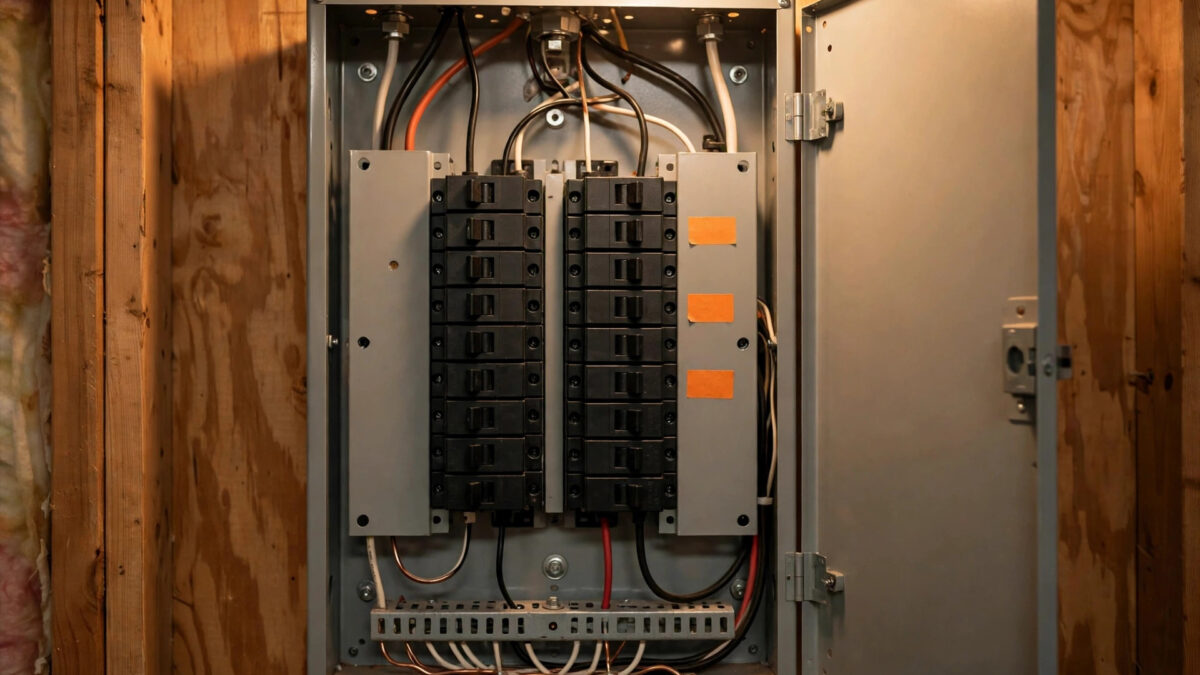
The essential circuits to back up with a generator are: refrigerator/freezer, sump pump, well pump (if you have one), furnace or boiler blower, a lighting circuit, and your internet/router setup. Those six cover food safety, water damage prevention, water supply, heat, light, and communication — everything that actually matters in an outage. Everything else is comfort, and comfort can wait its turn.
I learned this the expensive way during a 4-day outage years ago. I’d wired my transfer switch for “convenience” — kitchen outlets, living room, the works — and forgot the sump pump. Day three, the basement took on two inches of water while my TV worked perfectly. Priorities, it turns out, need to be decided before the storm, not during it.
Key takeaways
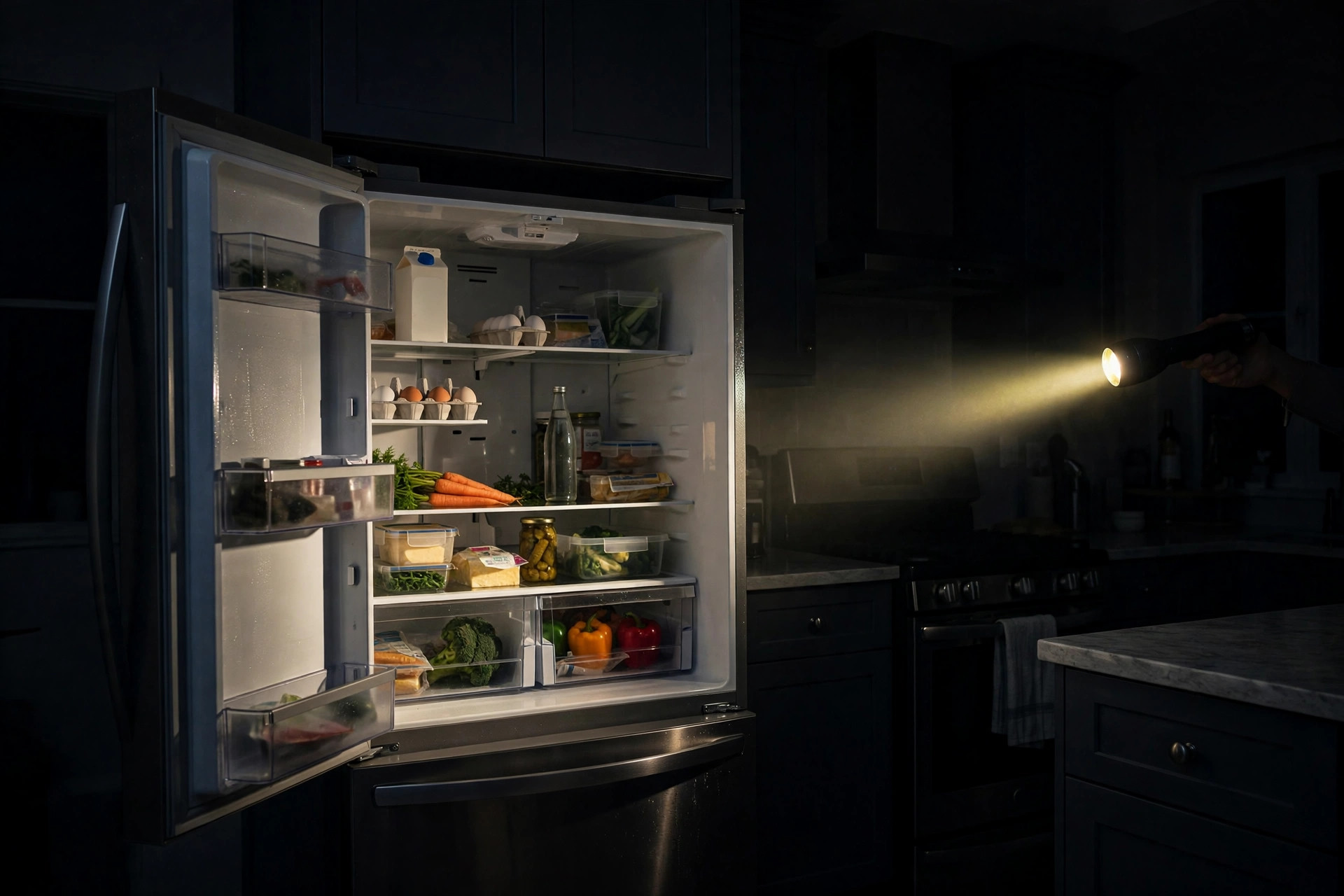
- Tier 1 (back up first): fridge/freezer, sump pump, well pump, furnace blower, lights, internet.
- Tier 2 (nice to have): microwave, selected outlets, garage door opener, security system.
- Tier 3 (manage carefully or skip): electric water heater, dryer, central AC, electric stove — huge loads.
- Total Tier 1 load is typically 3,000–5,000W — well within a 7,500W portable.
- Plan for starting watts: motors need 2–3× running watts for a few seconds.
Tier 1: The Non-Negotiables
These are the circuits that prevent damage, spoilage, or genuine hardship. If you only have 6 slots on a transfer switch, these are your six.
| Circuit | Running watts | Starting watts | Why it’s essential |
|---|---|---|---|
| Refrigerator/freezer | 700 | 2,200 | Food spoils in ~4 hrs without power |
| Sump pump (1/3 HP) | 800 | 1,300 | Basement floods without it during storms |
| Well pump (1/2 HP) | 1,000 | 2,100 | No water at all without it (rural homes) |
| Furnace/boiler blower (gas/oil) | 700–800 | 1,400–2,350 | No heat circulation without the blower |
| Lighting (LED, several rooms) | 100–200 | — | Safety and sanity |
| Internet/router + phone charging | 50–100 | — | Communication, outage updates, work |
A few notes from experience. The refrigerator number surprises people — 700W running is the conservative planning figure; modern fridges often draw 150–300W running but surge to 1,000–2,200W at compressor start. Plan for the surge.
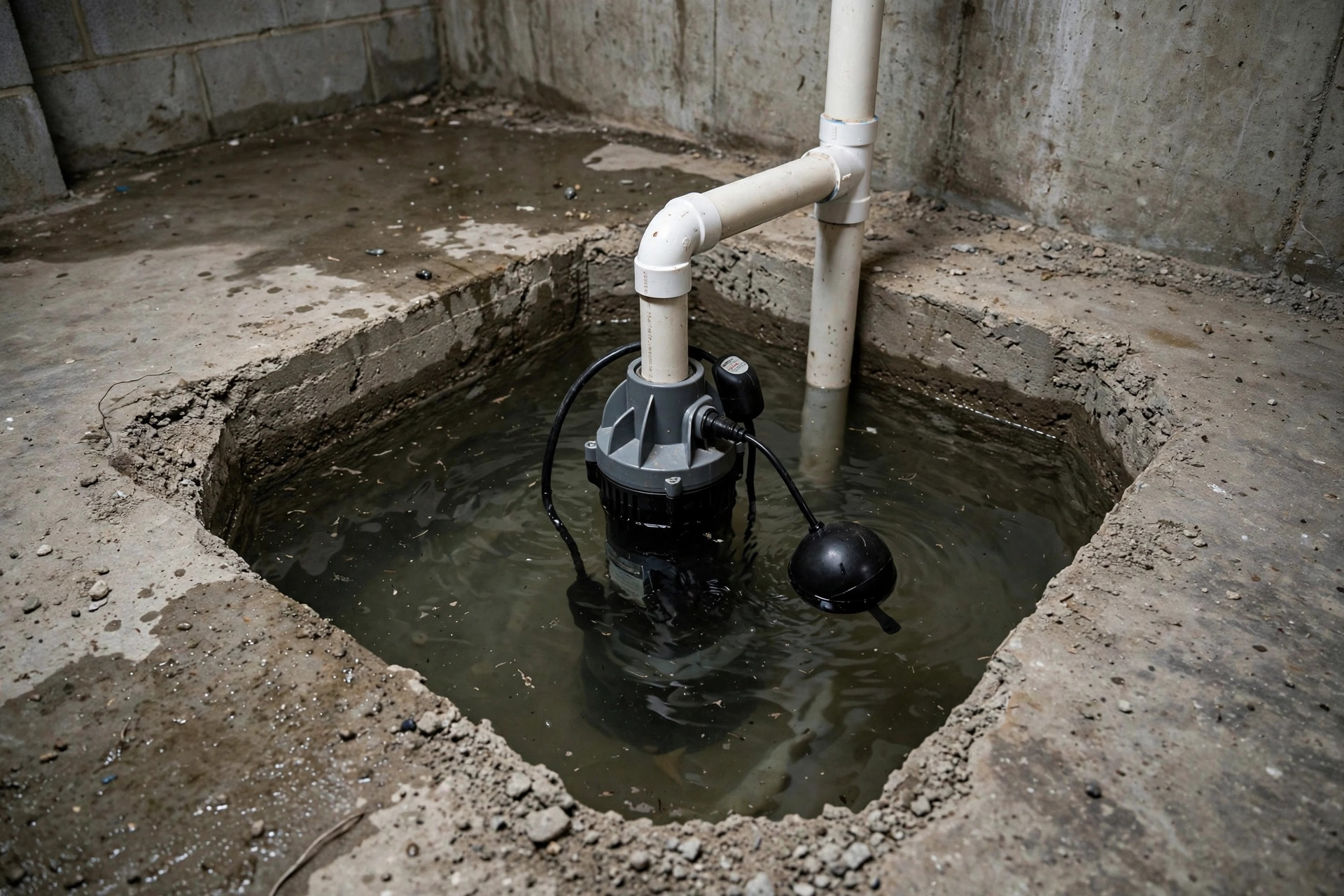
The sump pump deserves special emphasis. If you have a basement and a sump pump, that pump is the single most damage-preventing circuit in your house. A flooded basement costs $10,000–$30,000 to remediate. The pump costs 800W to run. This is not a close call.
Well pump owners: you’re entirely without water in an outage — no flushing, no drinking, no showering. The well pump is Tier 1 by necessity. City-water homes can skip it (municipal pressure usually survives short outages).
Tier 2: Comfort and Convenience
Once Tier 1 is covered and you have wattage to spare:
| Circuit | Running watts | Starting watts | Notes |
|---|---|---|---|
| Microwave | 1,000 | 1,000 | Hot food without the stove; run it alone |
| Kitchen outlets (small appliances) | varies | — | Coffee maker (1,000W), toaster (850W) |
| Garage door opener (1/2 HP) | 875 | 2,350 | Otherwise you’re lifting it manually |
| Security system | 500 | — | Cameras and alarms during an outage |
| Bedroom/bathroom outlets | varies | — | CPAP machines live here — critical for users |
CPAP users: your machine is Tier 1 for you personally (30–60W, trivial load). Make sure it’s on a backed-up circuit. Medical devices always outrank my generic tiers — oxygen concentrators, powered wheelchairs, refrigerated medications all jump to the top of your personal list.
The microwave rule: run it by itself. Turn off or unplug other big loads while it runs, then resume. This is load management, and it’s the skill that makes a 7,500W portable feel like a 12,000W one.
Tier 3: The Big Loads (Handle With Care)
| Circuit | Running watts | Verdict |
|---|---|---|
| Electric water heater | 4,000–4,500 | Run briefly, everything else off — or skip |
| Electric dryer | 5,400 | Skip on a portable; hang-dry during outages |
| Central AC (3-ton) | 3,500–5,000 | Needs 9,000–14,000W to start; usually standby-only |
| Electric range/oven | 2,100–8,000 | Use the microwave instead |
| Electric heat strips | 5,000–20,000 | No portable handles these; they’re the #1 overload cause |
Electric resistance heat is the silent generator-killer. A single 5,000W heat strip plus a fridge plus a well pump = an overloaded 7,500W portable. If you have electric heat, your generator plan needs to be built around it — usually meaning a large standby unit — or you accept being cold and focus on preventing pipe freezes with the furnace blower… which you don’t have, because it’s electric. See the problem? All-electric homes need honest sizing; start with our generator sizing calculator.
Load Management: The Skill That Doubles Your Generator
Here’s what separates generator owners who sail through week-long outages from those who trip breakers daily: load management. Your Tier 1 circuits can all run simultaneously — that’s the 3,000–5,000W baseline. Everything else takes turns.
My multi-day outage routine looks like this. Morning: everything Tier 1 on, plus the coffee maker (1,000W) for 10 minutes — the fridge compressor isn’t running at that exact moment, most likely, and even if it is, I’m within capacity. Midday: run the microwave for lunch with the well pump breaker off (nobody’s showering at noon). Evening: lights, TV, internet on; if someone needs the microwave, the water heater stays off (it’s off anyway) and I pause the dryer — oh wait, the dryer’s not on the generator at all. That’s the point.
The two rules that prevent 95% of overload trips: never start two motors at once (stagger the well pump and the furnace blower by 30 seconds), and one big resistive load at a time (microwave OR coffee maker OR hair dryer — pick one). Tape these rules inside the transfer switch cover next to your circuit list.
For longer outages, add a fuel routine to the load routine. A 7,500W portable at half load burns roughly 0.7 gallons per hour — about 17 gallons a day if run continuously. Nobody runs continuously; with overnight shutdown (8 hours of sleep, fridge stays cold if unopened) you’re looking at 10–12 gallons a day. Two 5-gallon cans plus the generator’s tank gets you through ~2 days. Plan refueling like you plan loads — before you’re empty, in daylight.
Putting It Together: A Sample 10-Circuit Plan
Here’s a realistic 10-circuit manual transfer switch layout for a 2,000 sq ft home with gas heat, well water, and a basement — paired with a 7,500W portable:
1. Refrigerator · 2. Freezer (or fridge #2) · 3. Well pump · 4. Sump pump · 5. Furnace blower · 6. Kitchen lighting + living room lights · 7. Microwave (managed) · 8. Internet/router + office · 9. Master bedroom/bath (CPAP) · 10. Garage door opener
Running total with everything on: roughly 4,500–5,500W — comfortable on a 7,500W machine with headroom for motor starts. The water heater stays on utility (off during outage) unless deliberately managed. The dryer and stove sit out entirely.
How This Connects to Your Transfer Switch
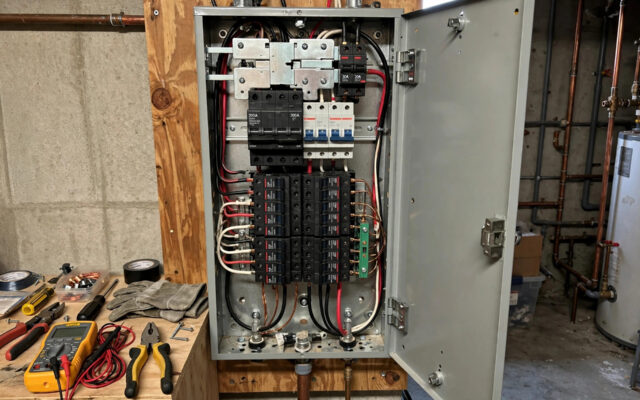
Your circuit priorities decide your transfer switch size. Six essential circuits fit a 6-circuit switch; my sample plan above needs a 10-circuit. That’s the main reason to plan circuits before buying hardware — see our guide to transfer switch sizing once your list is set.
If you’re using an interlock kit instead of a transfer switch, you get more flexibility — any circuit in the panel is available, and you manage loads with the breakers themselves. Our interlock kit installation guide covers that path.
What circuits should I put on a generator transfer switch?
How many watts do essential home circuits need?
Should I put my sump pump on the generator?
Can a generator run the furnace?
Can I run my water heater on a generator?
Decide your circuits before the storm, label them at the panel, and tape the priority list inside the transfer switch cover. When the power dies at 2 AM, you won’t be doing wattage math — you’ll be following the plan you already made. That’s the whole point.

Related Guides
Do You Need a Panel Upgrade for a Generator? (2027 Guide)
Do you need a panel upgrade for a generator? Usually not — an interlock kit and two free breaker spaces handle a portable. Here is when an upgrade is truly required.

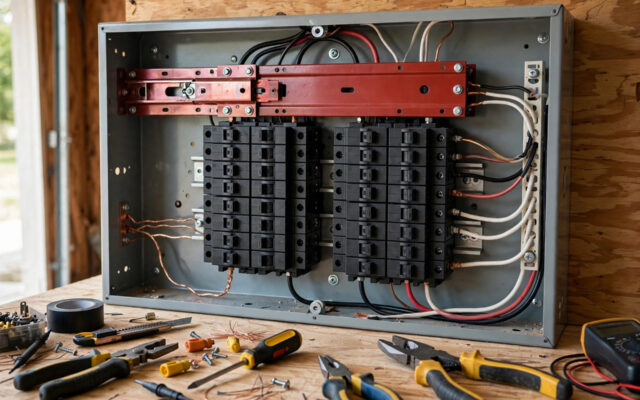
Transfer Switch vs Interlock Kit: Which Is Better in 2027?
Transfer switch vs interlock kit: both legally connect a generator to your house. Compare costs ($400–$1,300 vs $400–$850), flexibility, ease of use, and code rules.
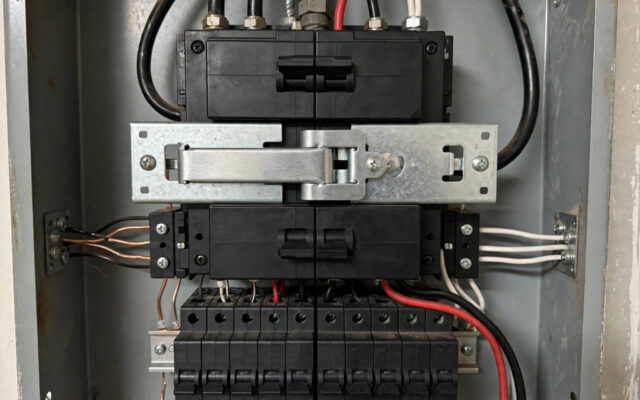
How to Install a Generator Interlock Kit (Step-by-Step)
Install a generator interlock kit in 45-90 minutes: $50-$150 kit, 7 steps, panel safety warnings, and when to hire an electrician instead.