


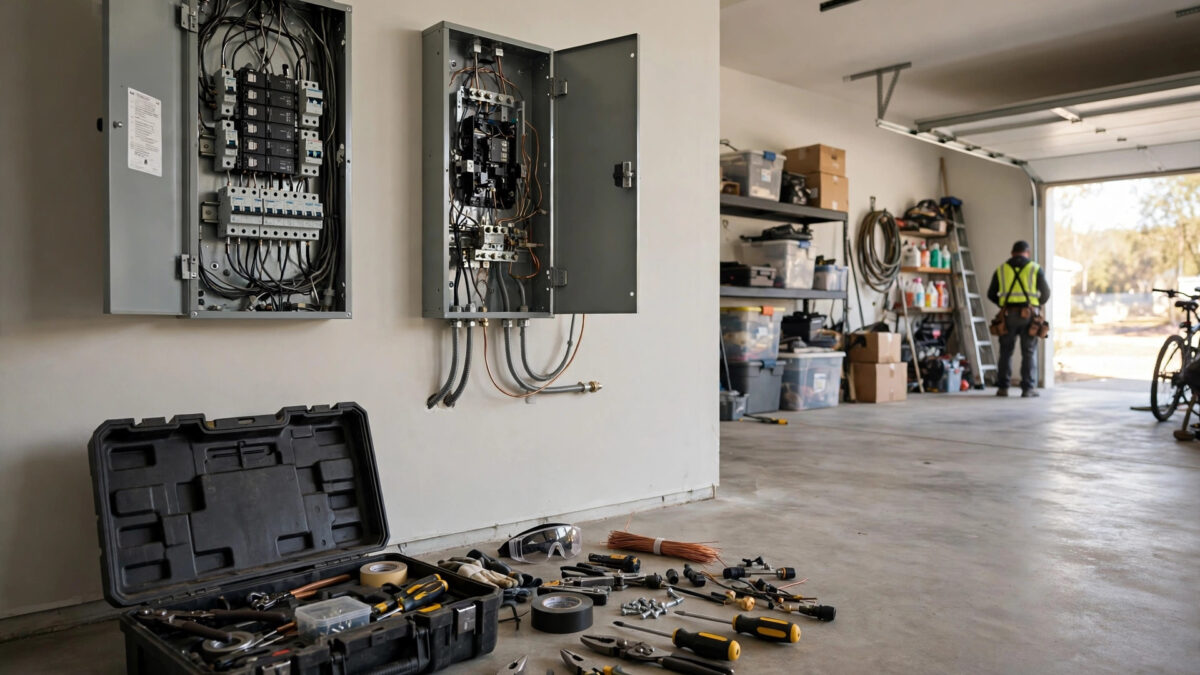
Wondering about generator transfer switch installation cost 2027 pricing? Here is the direct answer: most homeowners pay $600 to $1,800 for a professionally installed manual transfer switch, including the hardware, electrician labor, and permit. A 30-amp, 6-circuit switch lands at the lower end of that range, while a 50-amp, 10-circuit switch with longer wire runs lands at the higher end. If you want automatic operation, plan on $1,500 to $3,500 for the transfer switch side of the job, and $9,000 to $20,000+ for a full standby-generator package. These are published price ranges, not quotes, and we researched them from contractor cost data and equipment pricing — always get local quotes, because labor rates vary widely by region. A transfer switch is not a DIY project for most homeowners: it connects your generator to your home’s wiring, and the National Electrical Code requires safe, listed equipment and, in most jurisdictions, a licensed electrician and a permit.
Key Takeaways
- Manual transfer switch, installed: $600-$1,800 total (typical home).
- Hardware alone: $300-$900 for a manual 30A/50A switch kit.
- Electrician labor: roughly $500-$1,500 for 3-6 hours of work at $100-$200/hour.
- Permits typically add $50-$200; most jurisdictions require one.
- Automatic transfer switch installations run $1,500-$3,500; whole-house standby packages run $9,000-$20,000+.
- Never use a “suicide cord” to backfeed your panel — it is illegal and can kill a utility worker.
How Much Does a Transfer Switch Installation Cost in 2027?
The generator transfer switch installation cost in 2027 depends on three things: the type of switch, the amperage and number of circuits, and your local electrician’s labor rate. The hardware is the most predictable part of the bill. A quality manual transfer switch kit from a name brand like Reliance Controls or Generac HomeLink typically costs $300 to $900, depending on whether you need 30 amps and 6 circuits or 50 amps and 10 circuits.
Labor is where the range widens. Electricians charge roughly $100 to $200 per hour in most U.S. markets, and a straightforward manual transfer switch installation takes 3 to 6 hours. That puts labor at $500 to $1,500. The job gets longer — and more expensive — when the panel is far from where the generator will sit, the panel is full and needs reconfiguration, or the service needs upgrades to handle the generator input. Add a permit ($50-$200 in most areas) and miscellaneous materials like conduit, wire, and an outdoor inlet box ($50-$150), and the all-in total for a manual transfer switch installation usually lands between $600 and $1,800.
Transfer Switch Installation Cost Breakdown (2027 Ranges)
To understand what you are paying for, it helps to see the installation broken into its parts. The table below shows the typical cost ranges for each line item on a residential manual transfer switch job. These are approximate ranges compiled from published contractor cost data; your actual quote may fall outside them in high-cost metro areas or for unusually complex jobs.
| Cost item | Typical range (2027) | Notes |
|---|---|---|
| Manual transfer switch kit (30A, 6-circuit) | $300-$600 | Includes switch, wiring harness, outdoor inlet box |
| Manual transfer switch kit (50A, 10-circuit) | $500-$900 | For larger portable generators (9,000W+) |
| Electrician labor (3-6 hours) | $500-$1,500 | $100-$200/hour in most markets |
| Permit and inspection | $50-$200 | Required in most jurisdictions |
| Extra materials (conduit, wire, fittings) | $50-$150 | Higher for long wire runs |
| Total: 30A manual install | $600-$1,200 | Most common residential job |
| Total: 50A manual install | $900-$1,800 | Whole-home portable setups |
Manual vs. Automatic Transfer Switch Installation Cost
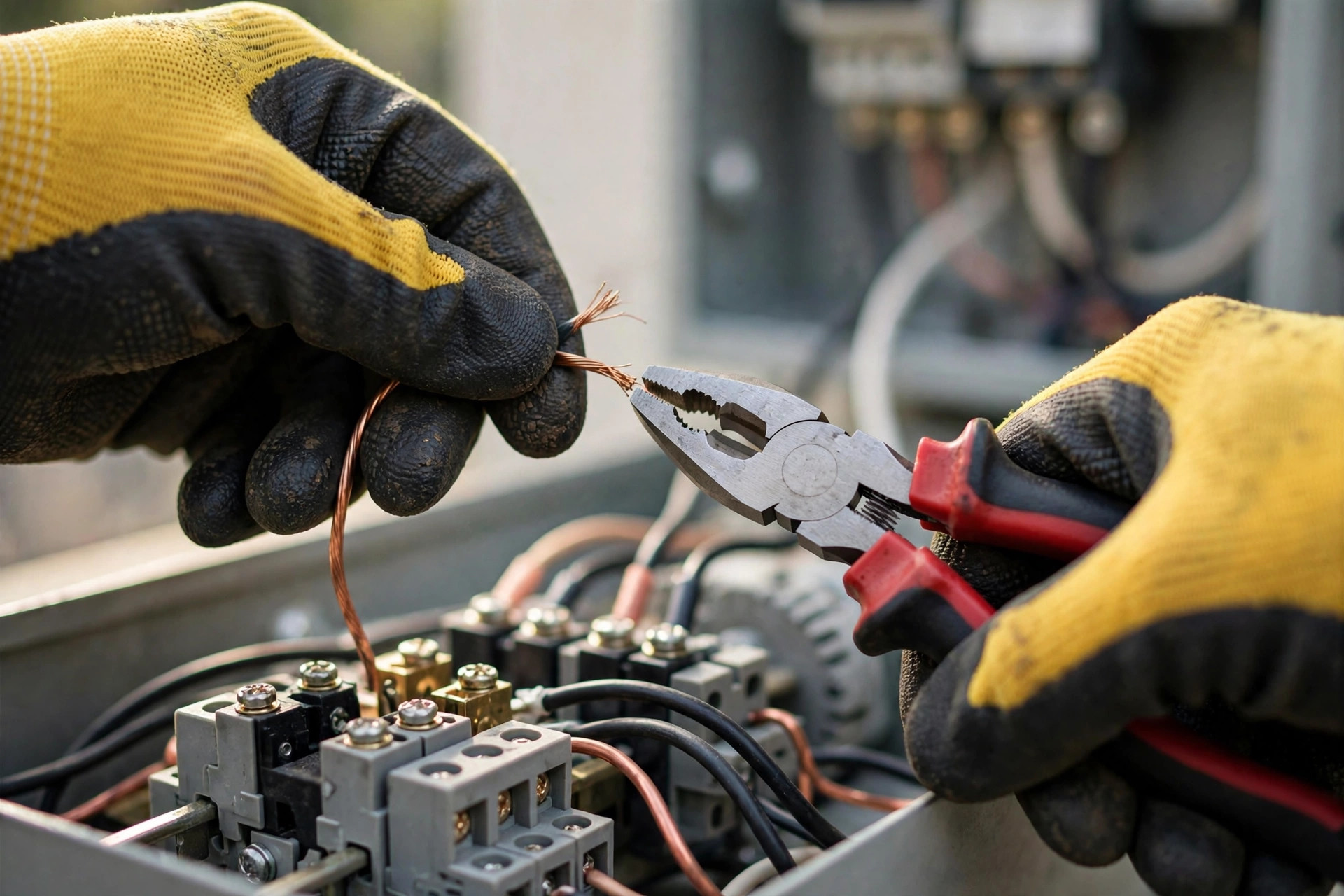
One of the biggest cost decisions is whether to install a manual or an automatic transfer switch. A manual transfer switch is what most portable-generator owners install: when the power goes out, you start the generator, connect it to the inlet box, and flip the switches yourself. An automatic transfer switch (ATS) senses the outage and starts a standby generator on its own — no one needs to be home. That convenience costs more, both in hardware and in labor, because the electrician must also wire generator start circuits and often coordinate with the gas supply.
| Switch type | Hardware | Installed total | Best for |
|---|---|---|---|
| Manual, 30A (6-circuit) | $300-$600 | $600-$1,200 | Portable generators up to ~9,000W; essential circuits |
| Manual, 50A (10-circuit) | $500-$900 | $900-$1,800 | Large portables (9,000-14,000W); near whole-home |
| Automatic (standalone, portable use) | $600-$1,200 | $1,500-$3,000 | Hands-free operation with a portable generator |
| Automatic with standby generator | $1,000-$2,500 | $9,000-$20,000+ (full package) | Whole-house standby systems |
| Interlock kit (budget alternative) | $50-$300 | $200-$500 | Cheapest legal option where code allows |
An interlock kit deserves a mention because it is the budget path many homeowners choose. Instead of a separate switch panel, a mechanical interlock mounts on your existing breaker panel and physically prevents the main breaker and the generator breaker from being on at the same time. Hardware is cheap ($50-$300), and installation often takes an electrician only an hour or two ($200-$500 total). The catch: interlock kits must be listed for your specific panel brand and model, and some local codes or inspectors do not allow them. Ask your electrician what your jurisdiction permits.
What Affects Your Transfer Switch Installation Cost?
Not every installation is a textbook job. Here are the factors that push your quote above or below the average, so you can read an estimate with informed eyes.
Amperage and circuit count
A 30-amp switch with 6 circuits is the standard pick for portable generators in the 5,000-9,000W range and powers essentials like the refrigerator, furnace blower, well pump, and a few lights. If you want to feed more of the house from a 10,000W+ portable, a 50-amp switch with 10 circuits adds several hundred dollars in hardware and sometimes an extra hour of labor. Match the switch to your generator’s largest outlet — oversizing the switch does not get you more power.
Distance between panel and generator location
The inlet box — the outdoor plug your generator connects to — should sit close to where the generator will actually run (at least 20 feet from the house, doors, and windows, per safety guidance). If that spot is far from your breaker panel, the electrician runs more conduit and wire, and long runs may require heavier-gauge wire. A panel on the opposite side of the house from the generator can add $200-$500 in materials and labor.
Panel condition and service size
Older panels may need reconfiguration, new breakers, or even a service upgrade if they are full or undersized. A panel that is already crowded adds labor; a Federal Pacific or Zinsco panel may prompt the electrician to recommend a full panel replacement ($1,500-$3,000) before they will tie in a generator. Your quote should spell out whether panel work is included.
Permits and inspections
Most cities and counties require an electrical permit for transfer switch work, usually $50-$200, plus an inspection visit. Some electricians roll this into the quote; others list it separately. If a contractor offers to skip the permit to save money, that is a red flag — unpermitted electrical work can void your homeowners insurance and cause problems when you sell the house.
Regional labor rates
Electrician rates vary enormously by market. In rural areas, $100-$125/hour is common; in major coastal metros, $175-$250/hour is not unusual. Getting three quotes is the single best way to calibrate what is fair in your area — quotes for identical work can differ by 30% or more.
Transfer Switch vs. Standby Generator: Total Project Cost
It is easy to confuse the cost of a transfer switch with the cost of a full standby system. Here is how they relate. A manual transfer switch with your existing portable generator is the entry-level path to safe whole-home backup: $600-$1,800 installed, plus whatever your portable generator cost. An automatic standby system — a permanently installed generator with an ATS, natural gas or propane hookup, and concrete pad — is a different project entirely, typically $9,000 to $20,000+ installed for a 14-24kW air-cooled unit. The transfer switch is just one component of that larger bill. If you are weighing the two paths, our breakdown of portable generators for home backup and our whole-house standby guide can help you compare what each approach actually powers.
DIY Transfer Switch Installation: Is It Worth the Risk?
Can you install a transfer switch yourself and save the labor cost? Technically, a skilled homeowner in some jurisdictions can pull a homeowner’s permit and do the work. In practice, we do not recommend it for most people. Transfer switch wiring involves working inside a live main panel, sizing conductors correctly, and understanding neutral/ground bonding rules — mistakes can damage your generator, destroy appliances, or backfeed the grid. The National Electrical Code (NEC) governs this work, and the current NEC 2026 code cycle added attention to generator connections and interlock requirements, so local inspectors are scrutinizing these installs more closely, not less.
The one DIY-friendly exception is the physical prep work: pouring or placing the generator pad location, running conduit paths, or mounting the outdoor inlet box location can be discussed with your electrician in advance. But the panel wiring itself belongs to a licensed professional. Get the permit, get the inspection, and keep the paperwork.
How to Get an Accurate Transfer Switch Quote
When you call electricians, give them the same information so the quotes are comparable: your generator’s make, model, and wattage (a photo of the data plate helps), which circuits matter most to you during an outage, where you plan to place the generator, and a photo of your breaker panel with the door open. Ask each contractor whether the quote includes the switch hardware, the permit, inspection coordination, and the outdoor inlet box. Also ask whether they recommend a 30-amp or 50-amp switch for your generator — the answer tells you whether they have sized the job properly. Three quotes, in writing, is the standard advice for a reason.
Our verdict
For most homeowners with a portable generator, budget $600-$1,200 for a professional 30-amp manual transfer switch installation, or $900-$1,800 for a 50-amp setup. That is a one-time cost that makes your generator dramatically more useful — and far safer — than extension cords. If you need hands-free operation or a permanently installed system, expect $1,500-$3,500 for the automatic switch alone or $9,000-$20,000+ for a full standby package. Get three written quotes, use a licensed electrician, and pull the permit.
How we researched this
We compiled cost ranges from published contractor pricing data, equipment retail listings, and electrician rate surveys available at the time of our research, cross-checked across multiple sources. We did not perform installations ourselves and did not solicit live quotes. Costs are presented as ranges because labor rates, permit fees, and material costs vary by region. Get written quotes from licensed electricians in your area before budgeting a project.
How much does it cost to install a generator transfer switch in 2027?
Do I need an electrician to install a transfer switch?
Is a transfer switch worth it for a portable generator?
What is cheaper: a transfer switch or an interlock kit?
How long does a transfer switch installation take?
Can I install a transfer switch myself to save money?
In 2027, a transfer switch remains one of the best upgrades a portable-generator owner can buy. The installation cost is a fraction of a standby system, the work takes half a day, and the result is a safer, more capable backup setup that powers your whole panel instead of a tangle of extension cords. If you are still sizing your generator, see our guide on what size generator you need before you size the switch — and always let a licensed electrician do the wiring.

Related Guides
Whole House Generator Installation Cost in 2027: Complete Price Guide
Whole house generator installation costs $9,000-$16,000 in 2027. Full price breakdown: equipment, labor, gas line work, permits, and costs by generator size.

What Size Generator Do I Need to Run Central AC? Complete Sizing Guide
What size generator to run central AC? Most systems need 14–24 kW standby. Tonnage wattage chart, RLA/LRA explained, soft-start savings, and safe hookup.
What Size Generator Do I Need for a Sump Pump?
What size generator for a sump pump? A 2,000–4,000W generator covers most 1/3–1/2 HP pumps. Wattage chart, extension cord safety, and storm-season tips inside.