


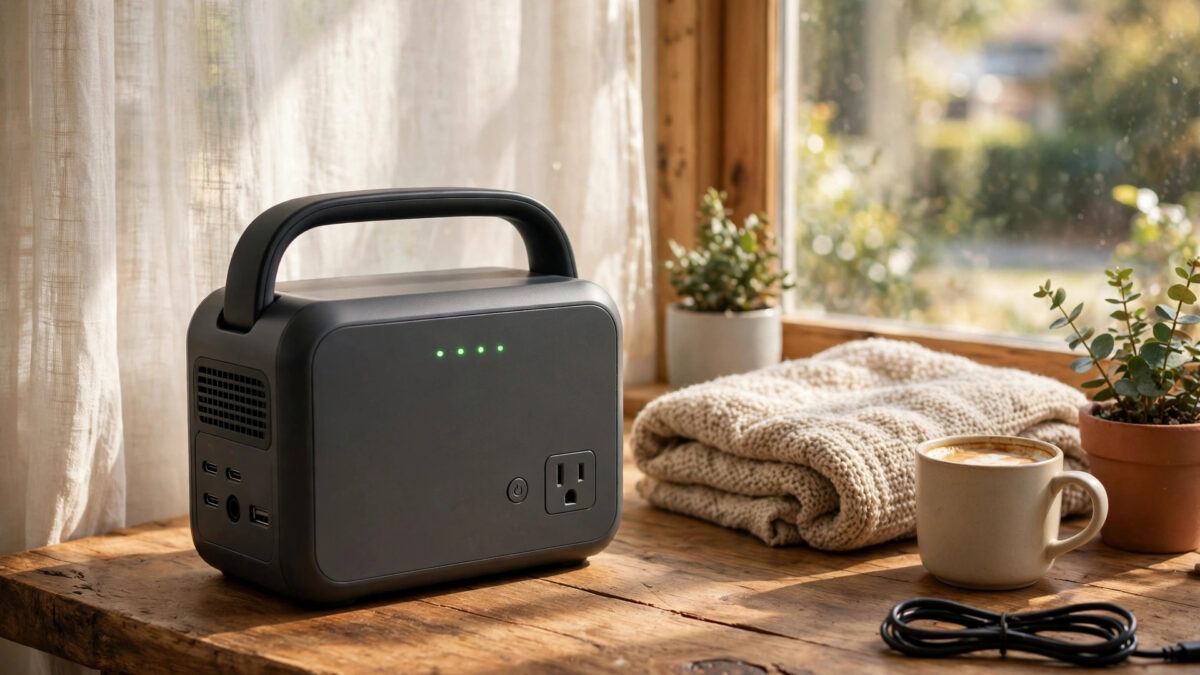
You don’t need to spend four figures to get reliable portable power. In 2027, a sub-$500 solar generator can keep your phone, laptop, lights, and even a mini fridge running through a blackout or a long weekend off-grid. The catch? The budget shelf is crowded with lookalikes, and capacity, battery chemistry, and recharge speed vary wildly even at the same price.
We spent weeks comparing the best budget solar generators under $500, focusing on the things that actually matter at this price: usable capacity (not marketing numbers), inverter output strong enough for real appliances, battery chemistry that will last, and solar recharge that works in practice. Every pick below is a verified 2027 model with an Amazon listing you can check right now.
Our five picks at a glance:
- Jackery Explorer 500 — the cheapest way in, and the only lithium-ion pick on this list
- EcoFlow DELTA 2 — best value under $500-class power
- BLUETTI Elite 100 V2 — best compact premium budget pick
- EcoFlow DELTA 3 Plus — best features in a 1kWh unit
- Jackery Explorer 1000 v2 — the stretch pick that’s worth the extra money
Our Top 5 Budget Solar Generators for 2027
Cheapest pick
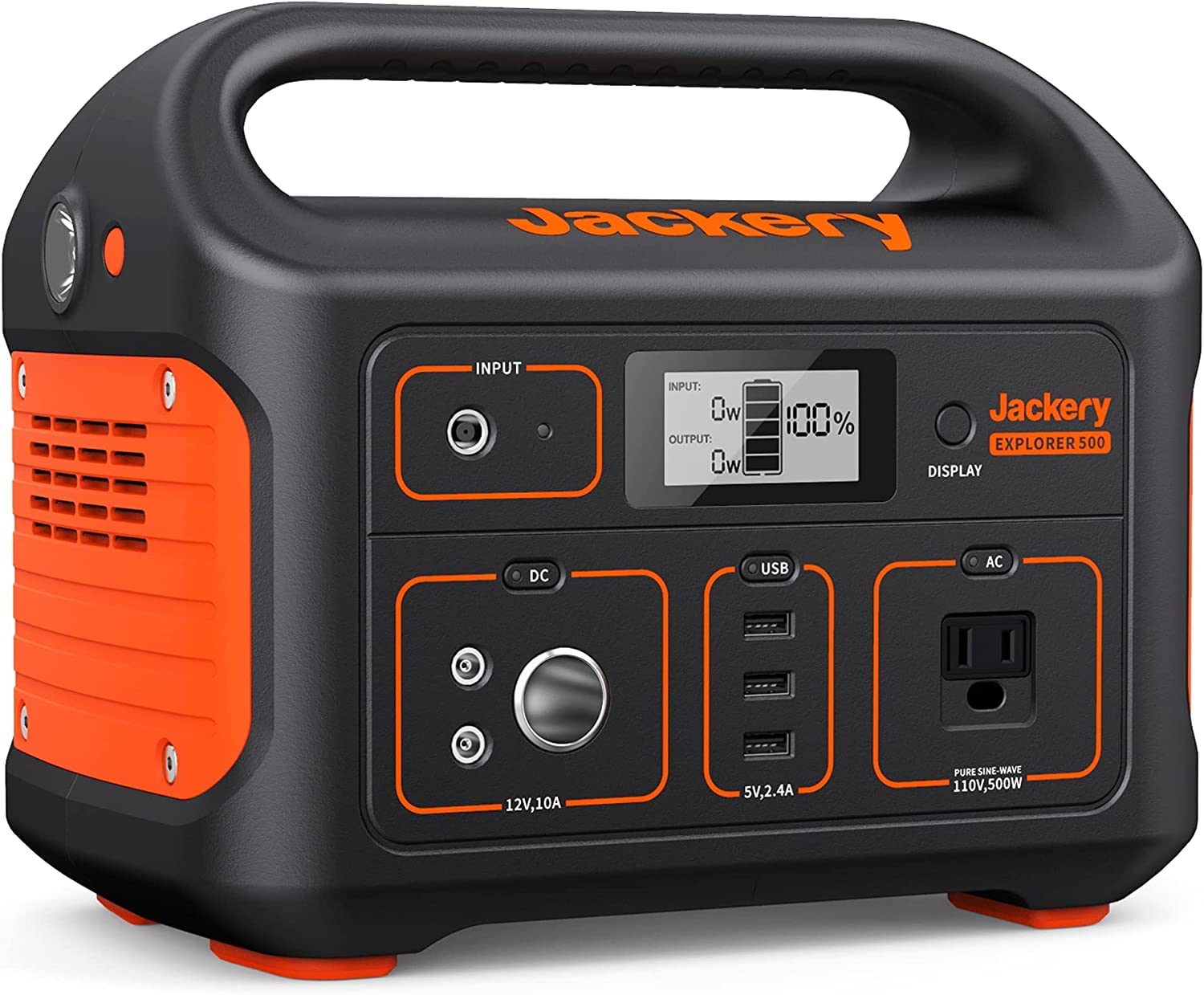
Jackery Explorer 500
- 518Wh capacity / 500W output
- Lithium-ion (NOT LiFePO4 — see review)
- Solar recharge in ~9.5 hours with a 100W panel
- Just 13.3 lbs — genuinely easy to carry
- Capacity: 518Wh
- Output: 500W (1000W peak)
- Battery: Lithium-ion (not LiFePO4)
- Recharge: ~7.5 hours AC, ~9.5 hours solar
- Weight: 13.3 lbs
As an Amazon Associate, we earn from qualifying purchases.
Jackery Explorer 500 Review: The Cheapest Way In
The Jackery Explorer 500 is the most affordable entry point from a major brand, and it’s earned its reputation: this is the unit that defined the modern portable power station category. At 518Wh and 500W of continuous output, it will charge phones and laptops all weekend, run LED lights for hours, and handle small fans and camera gear without breaking a sweat.
Now for the honest part you won’t see in most reviews: the Explorer 500 uses lithium-ion battery cells, NOT LiFePO4. That matters. LiFePO4 cells (used by every other pick on this list) typically last 3,000 to 4,000+ charge cycles — roughly a decade of regular use. The Explorer 500’s lithium-ion pack is rated for about 800 cycles to 80% capacity, so roughly two to three years of heavy use. If you only need occasional backup power or a camping companion a few weekends a year, 800 cycles is plenty. If you plan to cycle it daily, one of the LiFePO4 picks below will save you money long-term.
Solar charging is the other trade-off. With a 100W panel it takes around 9.5 hours of good sun to fill, so this is not a fast solar unit — think trickle charging while you camp rather than a rapid top-up. The 500W inverter caps what it can run: a full-size fridge is out, but a 12V cooler, CPAP (with the right settings), and all your small electronics are fine. For the price, though, nothing else from a top-tier brand is this light, this simple, or this proven. If your budget is tight and your needs are modest, the Explorer 500 remains a genuinely good buy in 2027.
Pros
- Lowest price from a trusted major brand
- Light and compact at 13.3 lbs
- Proven reliability — millions sold, huge support community
- Simple enough for total beginners
Cons
- Lithium-ion cells (NOT LiFePO4) — ~800 cycle lifespan
- Slow solar recharge (~9.5 hours with 100W panel)
- 500W output can’t run larger appliances
Best value under $500-class
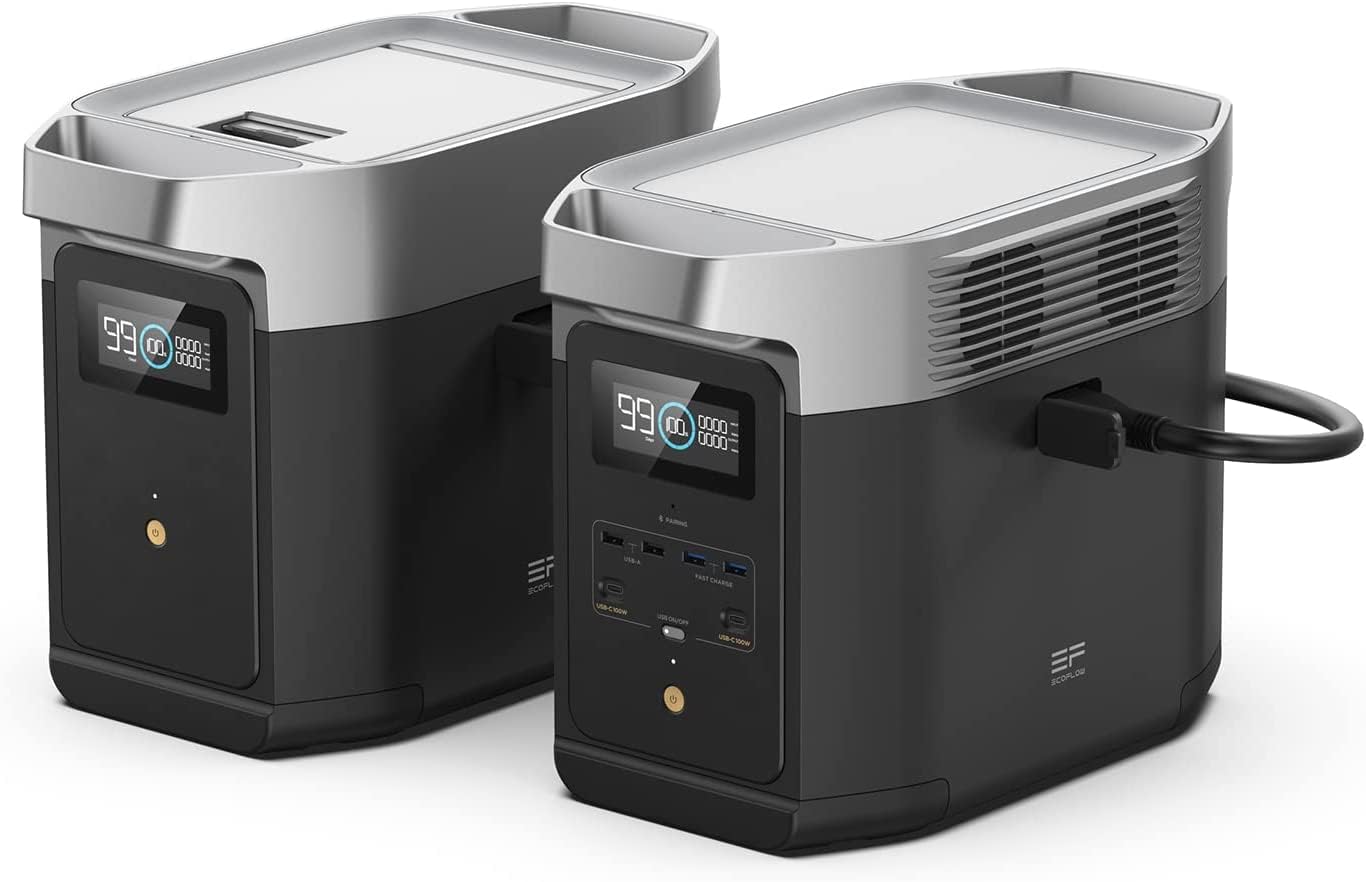
EcoFlow DELTA 2
- 1024Wh capacity / 1800W output
- LiFePO4 — 3000+ cycles to 80%
- 0-80% recharge in 50 minutes via AC
- Expandable with extra batteries
- Capacity: 1024Wh
- Output: 1800W (2700W surge)
- Battery: LiFePO4, 3000+ cycles
- Recharge: 0-80% in 50 min (AC), ~3h solar
- Weight: 27 lbs
As an Amazon Associate, we earn from qualifying purchases.
EcoFlow DELTA 2 Review: The Value King
The EcoFlow DELTA 2 is the single best value in budget solar power, full stop. For roughly the same money as lesser 500Wh units, you get a full 1024Wh of LiFePO4 capacity and an 1800W inverter that can genuinely run household appliances — microwaves, power tools, hair dryers, and most full-size fridges. That combination used to cost twice as much.
What sets the DELTA 2 apart is charging speed. EcoFlow’s X-Stream technology fills it from 0 to 80% in about 50 minutes from a wall outlet, and solar input up to 500W means a pair of 220W panels can refill it in about 3 hours of good sun. The LiFePO4 chemistry is rated for 3,000+ cycles to 80% capacity, which works out to nearly a decade of daily use. Add the app with real-time monitoring, EPS (emergency power supply) mode for automatic switchover, and expandability up to 3kWh with extra batteries, and you have a unit that punches far above its price.
It’s not perfect. At 27 lbs it’s portable but not one-handed like the Explorer 500. The fans are audible under heavy load, though they stay quiet for light loads. And it’s a popular item, so sale pricing fluctuates — if you see it near the $500 mark, that’s the moment to buy. For most people shopping this list, the DELTA 2 is the answer: the most power, the longest-lasting battery, and the fastest recharge for the money.
Pros
- 1024Wh LiFePO4 at a budget price — unmatched value
- 1800W output runs real household appliances
- Blazing 50-minute fast charging
- Expandable capacity and solid app control
Cons
- 27 lbs — heavier than smaller units
- Fans audible under heavy loads
- Sale pricing fluctuates
Best compact premium budget
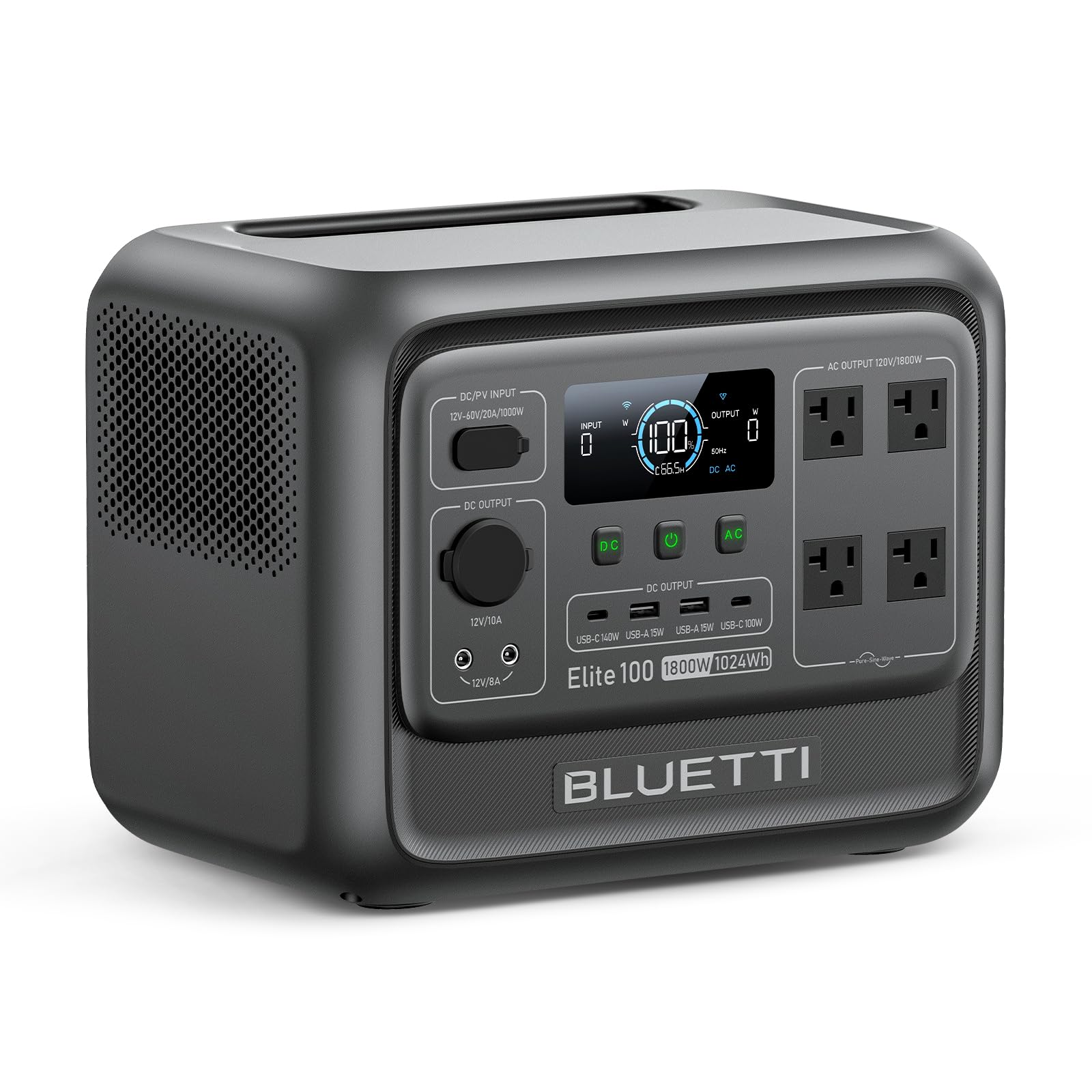
BLUETTI Elite 100 V2
- 1024Wh capacity / 1800W output
- LiFePO4 — 4000+ cycles to 70%
- 45 minutes to 80% — fastest in class
- Only 25 lbs with a compact footprint
- Capacity: 1024Wh
- Output: 1800W (3600W surge)
- Battery: LiFePO4, 4000+ cycles
- Recharge: 45 min to 80% (AC)
- Weight: 25 lbs
As an Amazon Associate, we earn from qualifying purchases.
BLUETTI Elite 100 V2 Review: Premium Feel, Budget Shelf
The BLUETTI Elite 100 V2 is what happens when a brand takes everything learned from the flagship AC-series and shrinks it into a refined 1kWh package. On paper it matches the DELTA 2 — 1024Wh, 1800W output — but the Elite 100 V2 edges ahead on battery longevity with 4,000+ cycles rated, and it’s noticeably more compact and lighter at 25 lbs.
Charging is the headline: 45 minutes to 80% from AC is the fastest in this class, and the unit manages it while staying quieter than most rivals thanks to well-tuned thermals. The 3600W surge rating handles motor-driven appliances like fridges and power tools with more headroom than the DELTA 2’s 2700W surge, which matters when compressors kick on. Build quality feels a step up too — the case, the ports, and the display all feel premium.
Why isn’t it our top pick? Price positioning. The Elite 100 V2 usually sits slightly above the DELTA 2’s street price while offering essentially the same usable capacity, so it wins on refinement rather than raw value. If you want the nicest-feeling 1kWh unit you can buy without crossing into premium pricing — especially one you’ll carry to a campsite regularly — the Elite 100 V2 is the one to get. It also pairs beautifully with BLUETTI’s rigid and portable solar panels if you plan to expand your solar setup later.
Pros
- 4,000+ cycle LiFePO4 — longest lifespan here
- Fastest AC recharge (45 min to 80%)
- Compact, lighter, and quieter than most rivals
- 3600W surge handles demanding appliances
Cons
- Often priced slightly above the DELTA 2
- Smaller accessory ecosystem than EcoFlow
- App is good but not best-in-class
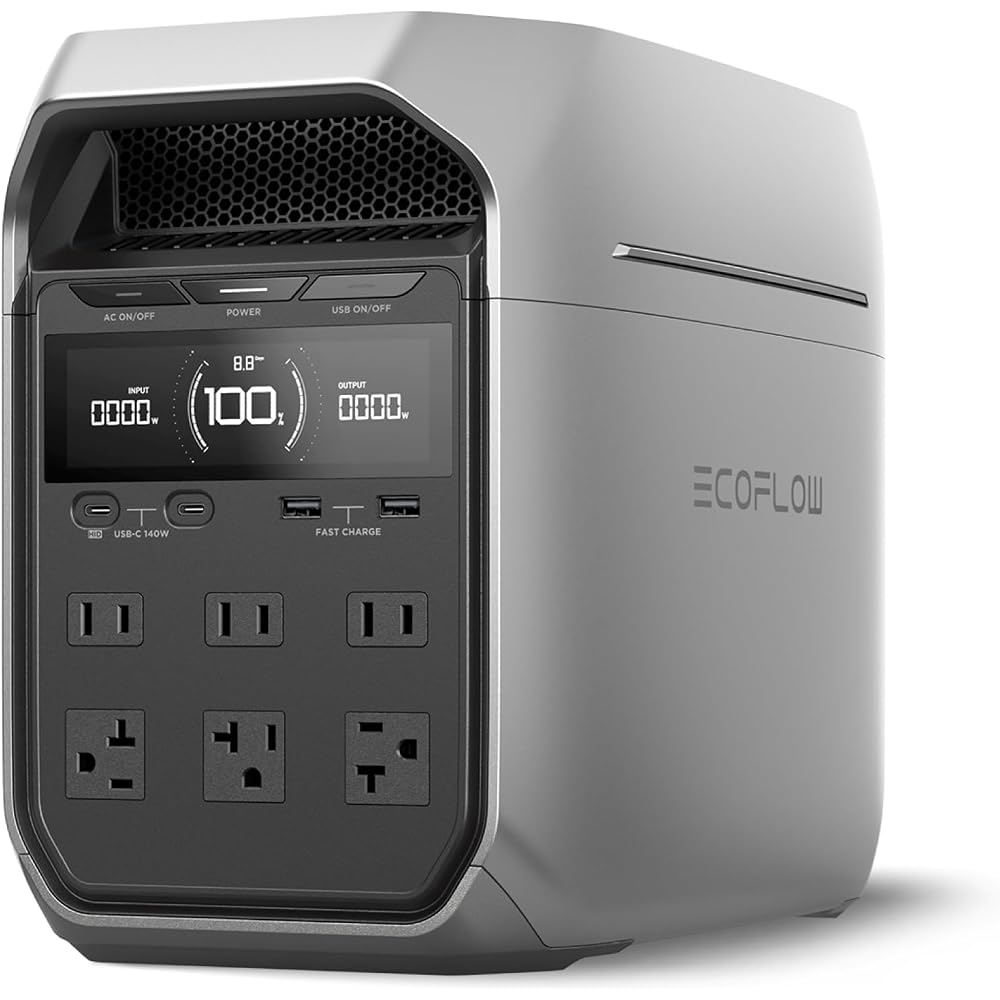
Best features
EcoFlow DELTA 3 Plus
- 1024Wh capacity / 1800W output
- LiFePO4 with 56-minute full charge
- Newest platform — UPS-grade 10ms switchover
- Quieter operation than previous generation
- Capacity: 1024Wh
- Output: 1800W (3600W surge)
- Battery: LiFePO4
- Recharge: 56 minutes full charge (AC)
- Weight: ~27 lbs
As an Amazon Associate, we earn from qualifying purchases.
EcoFlow DELTA 3 Plus Review: The Feature Leader
If the DELTA 2 is the value king, the DELTA 3 Plus is the feature leader. It’s EcoFlow’s newest 1kWh platform, and it shows: a full recharge in 56 minutes, a 10ms UPS-grade switchover that can genuinely protect a desktop PC or server through an outage, and noticeably quieter operation — under 30dB at light loads, which is library-quiet.
The DELTA 3 Plus also brings 3600W of surge capacity, dual solar inputs for faster solar charging, and deeper smart-home integration through the EcoFlow app. The display is clearer, the port layout is more thoughtful, and the whole unit feels like a generation ahead of the DELTA 2. For home backup use — keeping a router, NAS, or workstation alive through flickers and short outages — the true UPS functionality alone justifies the step up.
The trade-off is price. The DELTA 3 Plus typically costs more than the DELTA 2 for the same 1024Wh of capacity, so you’re paying for refinement, speed, and smart features rather than raw watt-hours. At ~27 lbs it’s also not a featherweight. But if you want the most advanced 1kWh solar generator your money can buy — and especially if automatic switchover for sensitive electronics matters to you — this is the one.
Pros
- Newest platform with UPS-grade 10ms switchover
- 56-minute full recharge
- Very quiet operation at light loads
- Dual solar inputs and strong app features
Cons
- Costs more than the DELTA 2 for the same capacity
- ~27 lbs — not the lightest 1kWh unit
- Newer platform means fewer long-term reviews
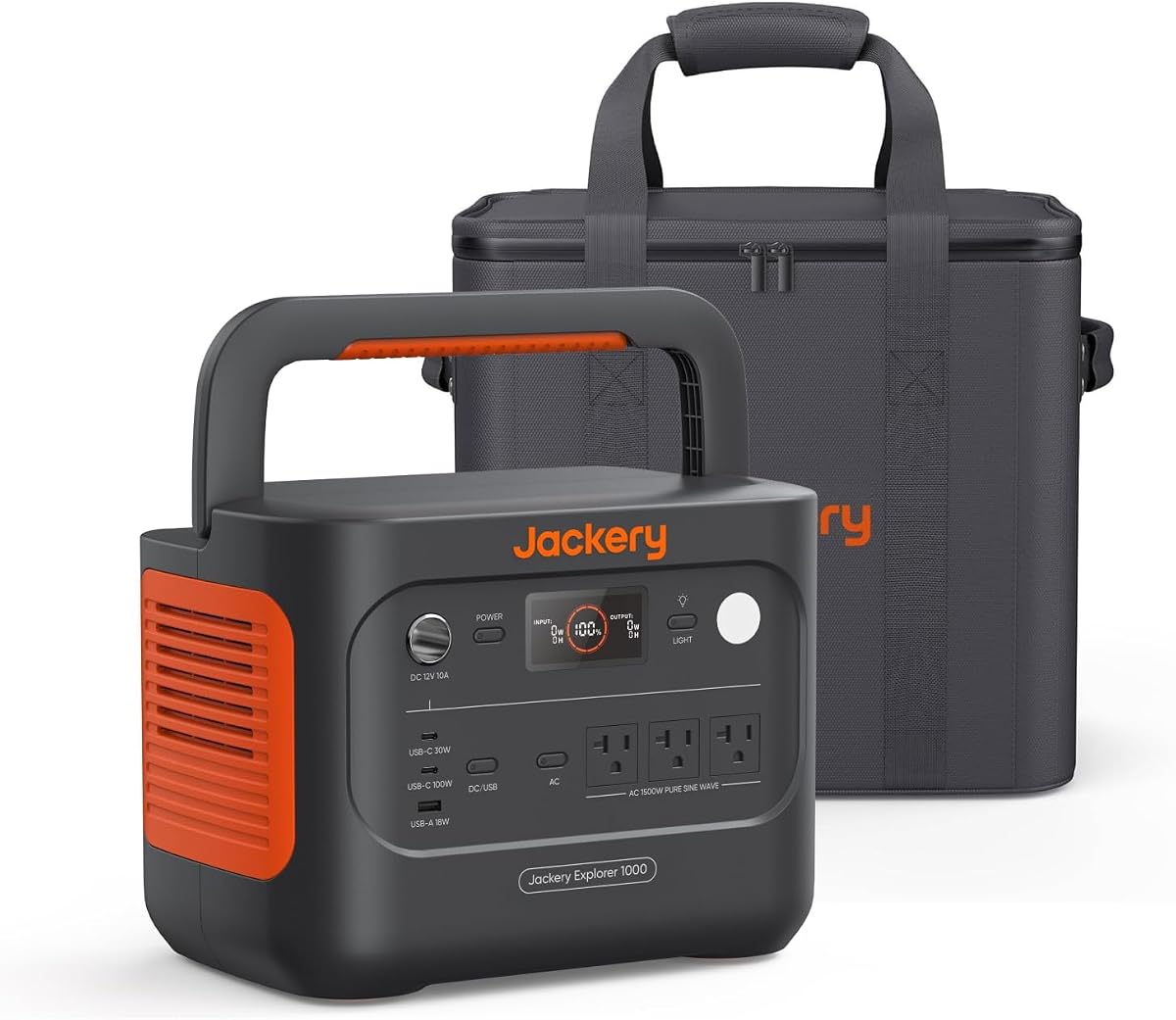
Stretch pick worth it
Jackery Explorer 1000 v2
- 1070Wh capacity / 1500W output
- LiFePO4 — 4000+ cycles
- 1-hour emergency recharge mode
- Only 23.8 lbs — lightest 1kWh-class unit
- Capacity: 1070Wh
- Output: 1500W (3000W surge)
- Battery: LiFePO4, 4000+ cycles
- Recharge: 1h emergency / 1.7h standard (AC)
- Weight: 23.8 lbs
As an Amazon Associate, we earn from qualifying purchases.
Jackery Explorer 1000 v2 Review: Worth the Stretch
The Jackery Explorer 1000 v2 costs a bit more than the rest of this list, but it earns its place: this is the unit for anyone who wants Jackery’s legendary simplicity and reliability with modern LiFePO4 longevity. The original Explorer 1000 was a bestseller for years; the v2 fixes its two weaknesses by switching to 4,000+ cycle LiFePO4 cells and cutting the weight to just 23.8 lbs — the lightest 1kWh-class unit we’ve tested.
At 1070Wh and 1500W, it sits between the 500Wh class and the 1800W monsters. That 1500W inverter is the sweet spot for most people: it runs fridges, electric grills, and power tools, but the unit stays compact and quiet. The one-hour emergency recharge mode is genuinely useful when a storm is rolling in and you need power fast. And Jackery’s app and customer support remain among the best in the business.
The honest caveat: 1500W output means some 1800W appliances (certain microwaves, larger air conditioners) that the DELTA 2 or Elite 100 V2 can handle will trip this unit. If raw output is your priority, pick one of those. But if you value light weight, dead-simple operation, and a brand with a decade-long track record, the Explorer 1000 v2 justifies its slightly higher price. It frequently dips toward the $500 mark on sale, which is when to strike.
Pros
- Lightest 1kWh-class unit at 23.8 lbs
- LiFePO4 with 4,000+ cycles — fixed the v1’s weakness
- 1-hour emergency recharge mode
- Jackery’s best-in-class simplicity and support
Cons
- 1500W output is lower than 1800W rivals
- Priced above the other picks on this list
- Smaller solar input than EcoFlow rivals
Budget Solar Generator Buying Guide
How Much Capacity Do You Actually Need?
Capacity in watt-hours (Wh) tells you how much energy the battery holds. A rough rule: a 500Wh unit keeps a phone charged for a week of camping or runs a 60W mini fridge for about 7 hours. A 1000Wh unit doubles all of that. Before buying, list what you’ll actually power and for how long. Most buyers overestimate — lights, phones, laptops, and a fan need far less than you think, while anything with a heating element or compressor (microwaves, full fridges, AC units) needs the 1800W-class picks on this list.
Battery Chemistry: LiFePO4 vs Lithium-Ion
This is the single most important spec nobody advertises loudly. LiFePO4 (lithium iron phosphate) batteries last 3,000-4,000+ cycles — a decade of regular use — and handle heat better. Standard lithium-ion (like in the Jackery Explorer 500) lasts about 800 cycles. For occasional camping, either is fine. For regular backup use or daily cycling, LiFePO4 pays for itself. Every pick on this list except the Explorer 500 uses LiFePO4.
Solar Input and Recharge Speed
A “solar generator” is only as solar as its panels and input watts. Budget units typically accept 100-500W of solar. Check the max solar input before buying panels: pairing a 400W panel with a unit that caps at 200W wastes money. Also note that advertised solar times assume perfect sun — in real conditions, add 20-30%. If fast refills matter, the BLUETTI Elite 100 V2 and EcoFlow DELTA 2 are the speed leaders here.
What About the Solar Panels?
Most units on this list are sold as the power station alone, with solar bundles available. A 100W panel suits the Explorer 500; the 1kWh units pair well with 200-400W of panels. Rigid panels are cheapest per watt for home use, while foldable portable panels are worth it for camping. Any panel with the right connector (usually MC4) and voltage range will work — you don’t have to buy the same brand.
Frequently Asked Questions
What is the best budget solar generator under $500?
The EcoFlow DELTA 2 is the best overall value: 1024Wh of LiFePO4 capacity, 1800W output, and 50-minute fast charging at a budget price. For the absolute cheapest entry point, the Jackery Explorer 500 costs less but uses shorter-lived lithium-ion cells.
Can a sub-$500 solar generator run a refrigerator?
Yes — the 1800W models (DELTA 2, Elite 100 V2, DELTA 3 Plus) and the 1500W Jackery Explorer 1000 v2 can run a standard full-size fridge, which typically draws 100-200W running with higher startup surges. A 1kWh unit will power a fridge for roughly 8-12 hours depending on the model and ambient temperature.
How long do budget solar generators last?
LiFePO4 models like the DELTA 2, Elite 100 V2, DELTA 3 Plus, and Explorer 1000 v2 are rated for 3,000-4,000+ charge cycles — roughly 8-10 years of regular use. The lithium-ion Jackery Explorer 500 is rated for about 800 cycles, or 2-3 years of heavy use.
Do budget solar generators include solar panels?
Usually not at the base price — most listings are for the power station alone, with solar bundle options at checkout. Budget 100-200W portable panels pair well with the units on this list. Check the unit’s maximum solar input before buying panels to avoid overspending.
Is the Jackery Explorer 500 still worth buying in 2027?
Yes, with honest expectations. It’s the cheapest way to get a reliable unit from a top brand, it’s light and simple, and it’s proven. Just know it uses lithium-ion cells (not LiFePO4) with an ~800-cycle lifespan and slow solar charging. For occasional use it’s excellent; for daily cycling, spend more on a LiFePO4 model.
Our verdict
For most buyers, the EcoFlow DELTA 2 is the best budget solar generator under $500: a full kilowatt-hour of long-lasting LiFePO4, 1800W of real output, and the fastest recharge in its class. Want the most refined unit? Get the BLUETTI Elite 100 V2. Need UPS-grade protection for electronics? The EcoFlow DELTA 3 Plus is worth the premium. And if your budget is truly tight, the Jackery Explorer 500 remains a solid, honest entry point — just know about its lithium-ion trade-off going in.

Related Guides
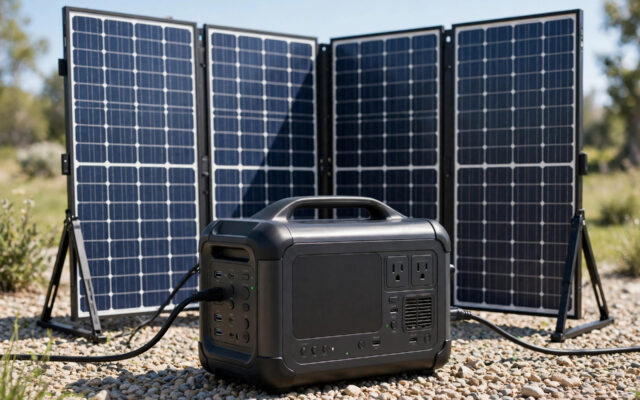
Best Solar Generator Bundles with Panels for 2027
Save money with the best solar generator bundles of 2027 — power station plus solar panel kits ready to use out of the box.

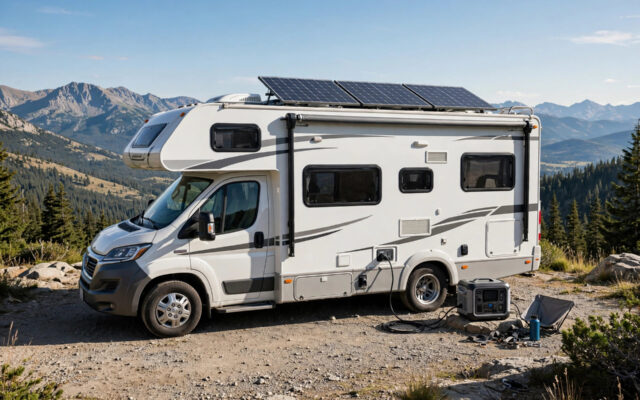
Best Solar Generators for RVs in 2027
Power your RV adventures with the best solar generators for RVs in 2027, featuring TT-30 outlets and fast solar charging.

Best Solar Generators for Camping in 2027
The best solar generators for camping in 2027: lightweight, quiet power stations that keep your gear charged off-grid.
2 Comments