


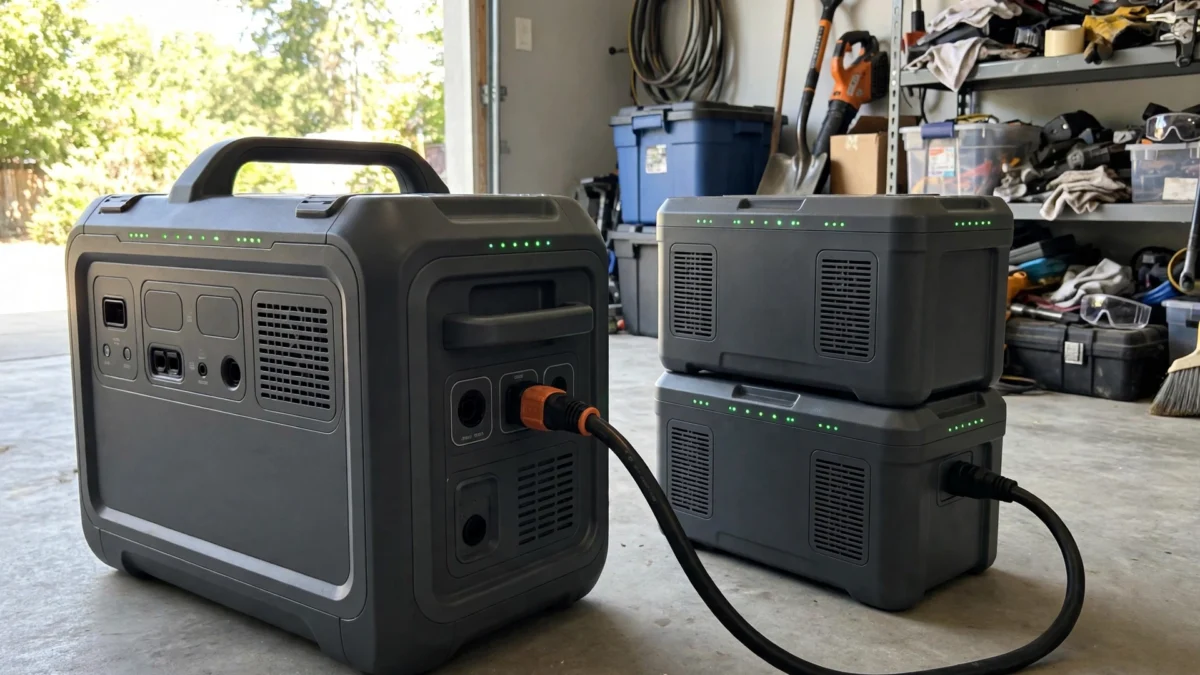
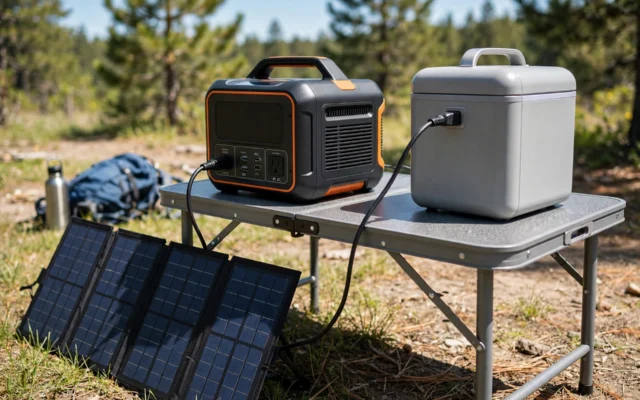
An expansion battery is a dumb battery pack with a smart cable — it plugs into your power station and adds its watt-hours to the total, with no extra inverter, no extra outlets, and no separate charging to manage. One cable, and your 3.6kWh station becomes a 7.2kWh system.
I’ve watched this category mature from clunky add-ons into genuinely well-engineered systems. Here’s how they actually work, what they cost per kWh, the gotchas, and my honest take on when they’re worth the money versus just buying a bigger station in the first place.

Key takeaways
- Expansion batteries add capacity only — no extra outlets or inverter power. Your station’s wattage rating doesn’t change.
- They connect via a proprietary cable and charge/discharge in unison with the main unit — one battery percentage for the whole system.
- Typical cost: $0.30–$0.45 per Wh — usually cheaper per kWh than buying a second power station.
- Biggest limitation: brand and model lock-in. An EcoFlow battery won’t talk to a Bluetti station.
- Worth it when: you bought a station and outgrew it, or you want modular growth. Skip it when: you haven’t bought the station yet (just size up).
How Expansion Batteries Actually Work
Pop the marketing open and an expansion battery is refreshingly simple: lithium cells, a small battery management system, and a high-current DC cable that plugs into a dedicated expansion port on the main station. There’s no inverter inside — it can’t power anything on its own. It’s a fuel tank, not an engine.
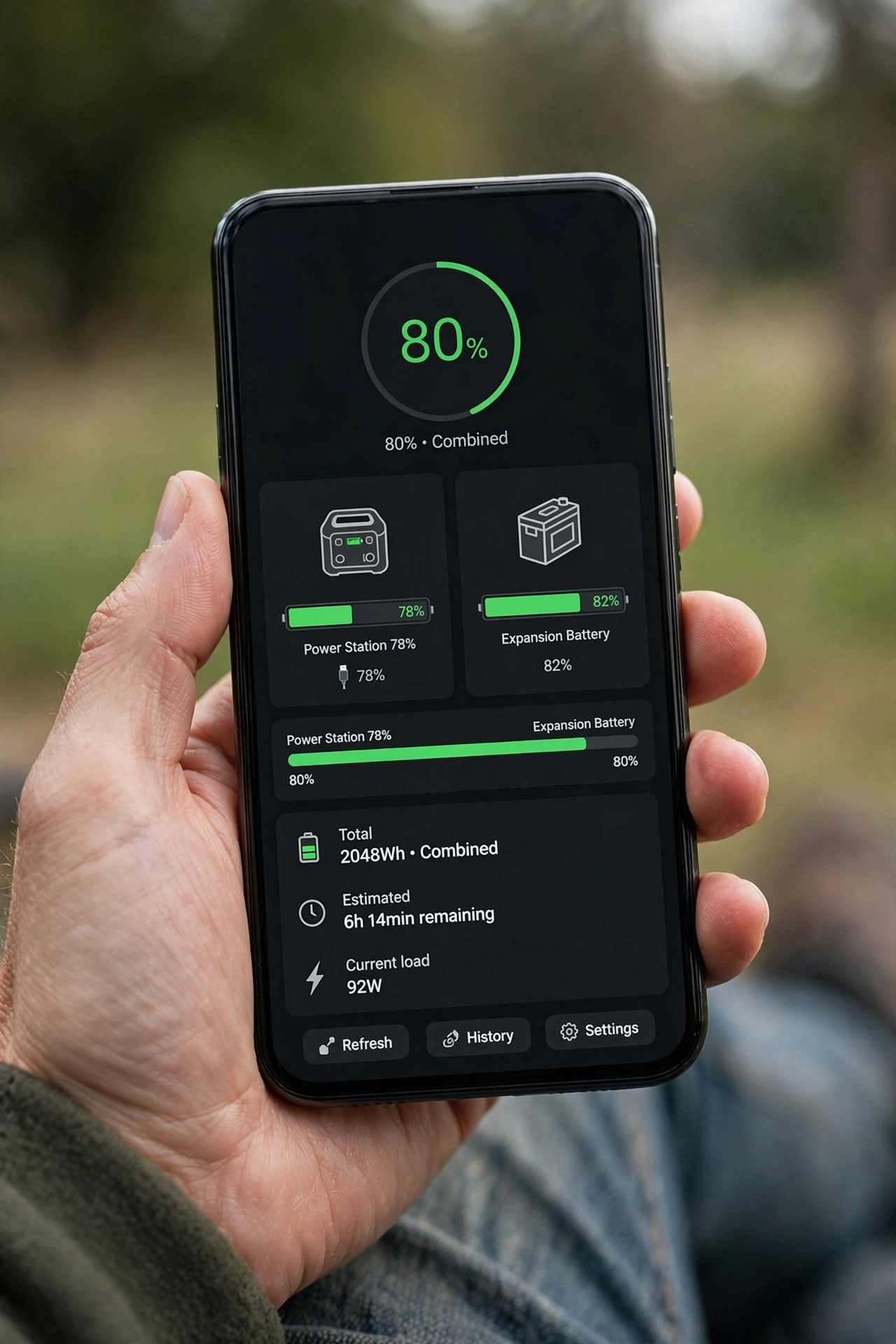
The clever part is the unison charging. Once connected, the main unit treats the extra pack as part of itself. They charge together and discharge together, holding the same state-of-charge percentage across all units. You see one battery percentage on the display and in the app — 60% means 60% everywhere. No balancing act, no “which battery is empty” math.
Most also carry their own small LCD showing the pack’s status, and they inherit the main unit’s charging options. On EcoFlow’s system, for example, the extra battery charges from anything the main station can use — wall, solar, even EV charging stations — as long as it’s connected. Some can even charge independently: EcoFlow’s Smart Extra Battery accepts a direct DC fast charge from the EcoFlow Smart Generator through a port on its back, handy if the main unit is busy elsewhere.
The Major Systems Compared
| System | Extra battery | Capacity added | Max system total | Cell chemistry |
|---|---|---|---|---|
| EcoFlow DELTA Pro | Smart Extra Battery | 3,600Wh | 10.8kWh (2 packs) | LiFePO4 |
| EcoFlow DELTA 2 Max | Smart Extra Battery | 2,048Wh | 6,144Wh (2 packs) | LiFePO4 |
| Bluetti AC300/AC500 | B300S | 3,072Wh | 12,288Wh+ (4 packs) | LiFePO4 |
| Bluetti Elite series | B300K / expansion | ~2,764Wh | Varies by model | LiFePO4 |
| Anker SOLIX F3800 | Expansion battery | 3,840Wh | Up to 26.9kWh (6 packs) | LiFePO4 |
Two things to notice. First, everything current is LiFePO4 — 3,000+ cycles to 80% capacity, roughly a decade of regular use. Second, the ceiling varies wildly: a DELTA Pro maxes at two extra packs (10.8kWh total), while Bluetti’s modular AC500 system scales to 12kWh+ and Anker’s F3800 to nearly 27kWh — genuine whole-home territory.
The Money Math: Are They Worth It?
Let’s do the arithmetic buyers actually care about — cost per watt-hour of added capacity:
- EcoFlow DELTA Pro Smart Extra Battery: 3,600Wh at around $1,199 street price ≈ $0.33/Wh
- Bluetti B300S: 3,072Wh at roughly $1,099–$1,299 ≈ $0.36–$0.42/Wh
- A second complete power station (2kWh class at ~$1,000): ≈ $0.50/Wh — plus you get a redundant inverter, which isn’t free value, but it’s capacity you pay extra for
So yes — per watt-hour of storage, the expansion battery usually wins by 20–40% over buying another station. That’s the whole economic argument, and it’s legitimate.
But run the other comparison too: expansion battery vs. buying bigger originally. If you haven’t purchased yet, a larger station is almost always cheaper per Wh than a smaller station plus an expansion pack later. The expansion battery is priced for people who already own the main unit — it’s an upgrade path, not a discount strategy. Use our solar generator size calculator to size right the first time and you may never need one.
When They’re Worth It
You outgrew your station
The #1 legitimate case. You bought a DELTA 2 for camping, then decided to back up the home fridge through outages, and 1kWh doesn’t cut it anymore. An expansion battery rescues the original purchase instead of stranding it.
Modular growth for off-grid builds
Starting a cabin or van system? Buy the station now, add a battery next season when the budget recovers. Modular beats financing.
Weight and portability
A 10.8kWh single unit would weigh 100+ lbs and be unmovable. Three separate pieces (station + two packs at ~80–100 lbs each… still heavy, but splittable) can be moved by two people in stages. For RV and cabin use, modular weight matters.
The Gotchas
Total ecosystem lock-in
This is the big one. Expansion batteries use proprietary connectors and communication protocols. An EcoFlow Smart Extra Battery is a paperweight without an EcoFlow DELTA Pro. You’re not just buying a battery — you’re marrying the brand’s roadmap. Buy the main station from a company you trust to be around in five years.
They add weight, not just capacity
A 3.6kWh LiFePO4 pack weighs roughly 80–85 lbs. Two of them plus the main unit is a 250+ lb system that lives where you put it. Plan the final location before you buy — moving it later is a two-person job.
Charging time grows too
Triple the battery, triple the recharge time from the same solar array. A 10.8kWh system fed by 400W of panels needs 25+ hours of good sun for a full recharge. Expansion batteries often force a solar array upgrade to stay practical — budget for panels, not just the pack.
Firmware and cable quirks
From owner forums: keep firmware updated on both units, use the manufacturer’s cable (third-party expansion cables are a reliability gamble), and connect the pack before powering on for the cleanest handshake. Most “my expansion battery isn’t recognized” complaints trace to one of these three.
Should you buy the expansion battery now or later?
If you’re on the fence, here’s my rule: buy it later. Prices on these packs drift downward — I’ve watched popular extra batteries fall substantially in street price since launch — and buying later means a fresher battery with less calendar aging on the shelf, plus newer firmware. The only reason to bundle on day one is a genuine package discount, and even then, run the per-Wh math first.
One more consideration: warranty. The extra battery usually carries its own warranty term (often matching the station’s 5 years on major brands), and that clock starts at purchase. Buying the pack two years after the station means two extra years of coverage on the pack. For something with a 10-year design life, that staggers your protection nicely.
Frequently Asked Questions
Can I use an expansion battery by itself?
Do expansion batteries increase the wattage output?
Can I mix expansion batteries from different brands?
Is it cheaper to buy an expansion battery or a second power station?
How many expansion batteries can I connect?
Bottom Line
Expansion batteries are the most cost-effective way to add runtime to a station you already own — around $0.33–$0.42 per Wh, with seamless unison charging and one-battery simplicity. Just go in clear-eyed: they don’t add a single watt of output power, they lock you to one brand’s ecosystem, and if you haven’t bought the station yet, sizing up from the start is cheaper. For the “buy once” crowd, that math usually wins. Browse our full calculator library to model capacity, runtime, and solar recharge before you spend.

Related Guides
Can You Leave a Solar Generator Plugged In All the Time?
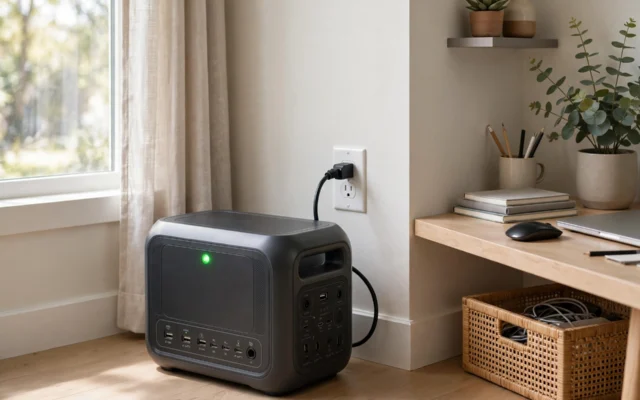
Can you leave a solar generator plugged in 24/7? Yes — the BMS prevents overcharging. But sitting at 100% shortens battery life. Here's the 80% rule and the right settings.

Can a Solar Generator Work as a UPS for Home Backup?
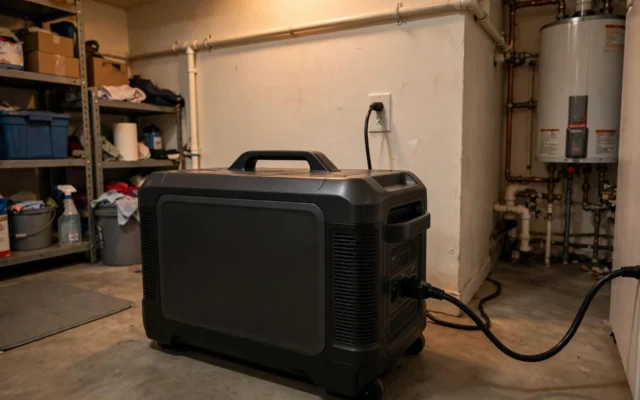
A solar generator can work like a UPS for most home backup — but it's technically EPS, not a true UPS. Switchover times, what stays on, and what doesn't.
Pass-Through Charging on Solar Generators: What It Is & Why It Matters
Pass-through charging lets you use a solar generator while it charges. Here's how it actually works on EcoFlow, Bluetti, and Jackery — and the limits nobody mentions.