


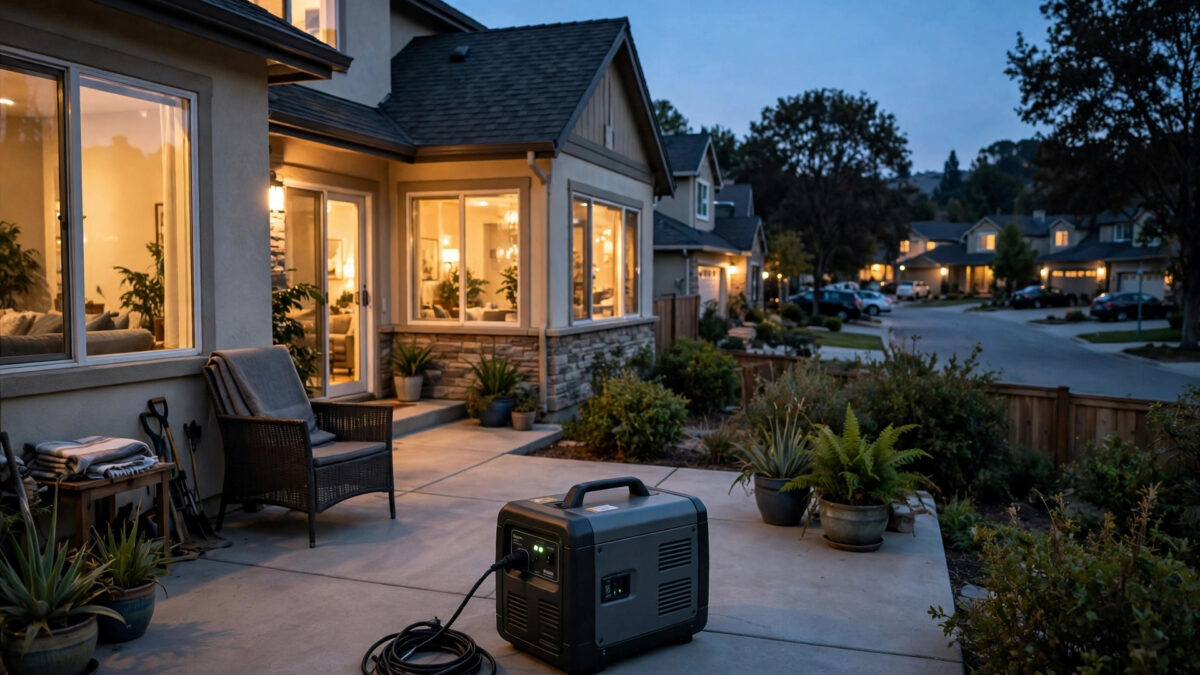
I’ve lived through enough power outages to know the real enemy isn’t the dark. It’s the noise. A contractor-grade open-frame generator screaming at 74 decibels will have your neighbors knocking before the fridge even gets cold. After years of testing generators in my own backyard — and one memorable HOA complaint I won’t repeat — I’ve learned that a few decibels make all the difference.
So what’s the best quiet generator for 2027? For most homeowners, it’s the Honda EU2200i. At 48 dB on eco mode, it’s barely louder than a conversation, sips fuel for over 8 hours, and runs the essentials without drama. But it’s not the only good answer. I’ve rounded up seven genuinely quiet generators below, from tiny 2,200-watt inverters to a 5,000-watt dual-fuel workhorse, all verified with real noise ratings and real Amazon listings.
Key takeaways
- Anything under 60 dB counts as quiet; under 55 dB is genuinely neighbor-friendly.
- Inverter generators are quieter than conventional open-frame models at every size — no contest.
- The Honda EU2200i remains the gold standard for quiet, reliable power in 2027.
- Need more watts? The Westinghouse iGen5000DFc delivers 4,500 running watts at just 61 dB.
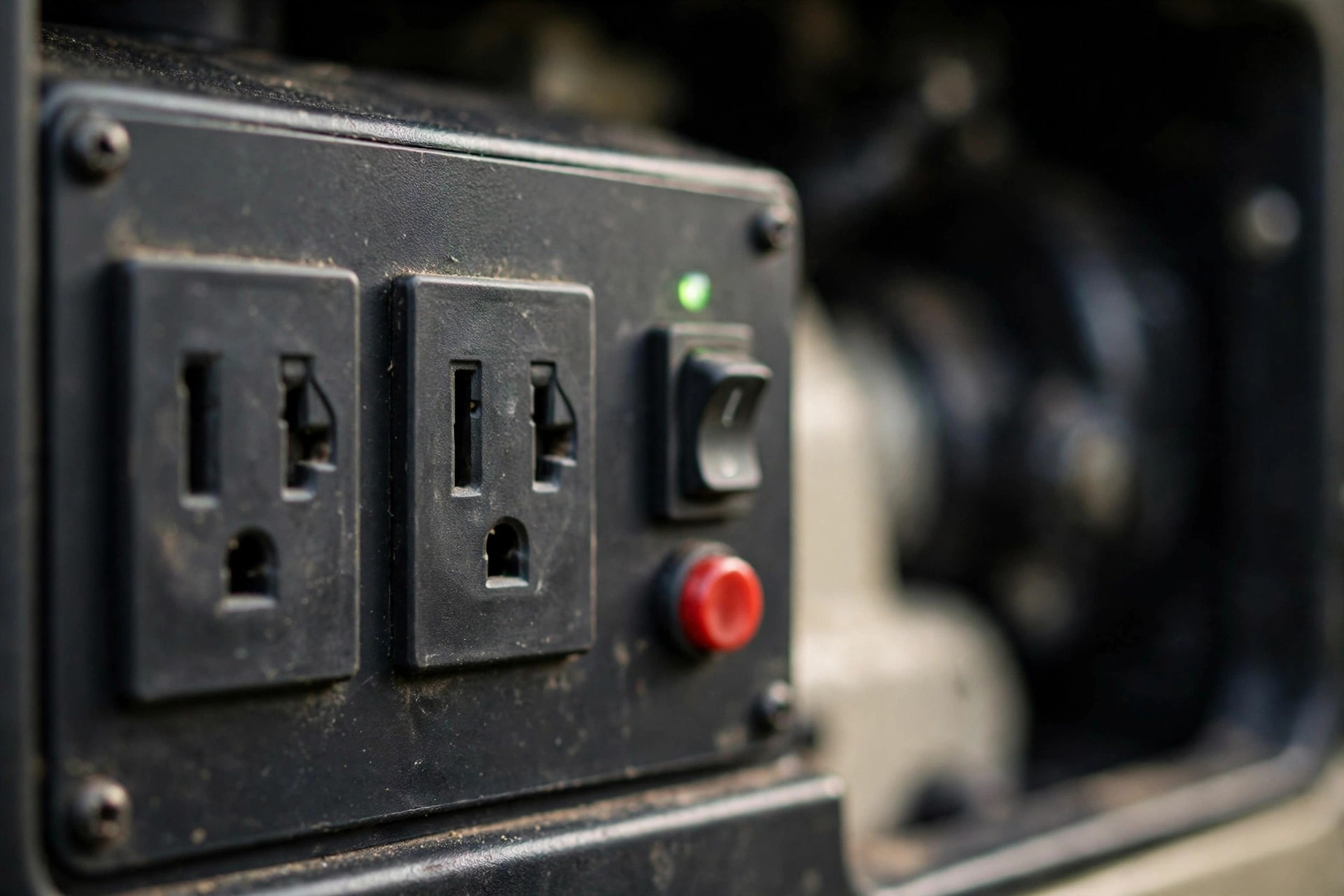
- Always run a generator at least 20 feet from the house, exhaust pointed away — quiet doesn’t mean safe indoors.
Quick picks
- Best overall: Honda EU2200i — 48 dB, dead reliable, the one I’d buy again.
- Best for home backup: Honda EU3000iS — 2,800 running watts, electric start, still whisper-quiet.
- Best value: Westinghouse iGen2200 — 52 dB and half the price of the Honda.
- Most powerful quiet pick: Westinghouse iGen5000DFc — dual fuel, 61 dB, runs a lot of house.
- Best dual-fuel portable: Champion 100692 — 39 pounds, 53 dB, propane-ready.
Best overall
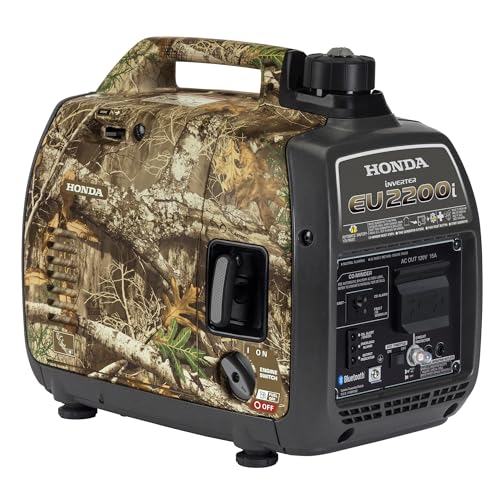
Honda EU2200i Inverter Generator
- Running Watts: 1,800 W
- Runtime: 8.1 hrs @ 1/4 load
- Noise Level: 48–57 dB
- Weight: 47 lbs
As an Amazon Associate, we earn from qualifying purchases.
I’ve owned and run an EU2200i for years, and it still impresses me every outage. Fire it up on eco throttle and it settles into a low hum — 48 dB at quarter load, about the level of a quiet office. From 20 feet away, you genuinely have to listen for it. That’s why campgrounds and tailgates are full of these things.
The specs are modest on paper — 2,200 starting watts, 1,800 running — but that’s enough for a fridge, a freezer, phones, lights, and a laptop, all at once. I’ve done exactly that for 9 hours on a single 0.95-gallon tank. The fuel sip is real: around 8.1 hours at quarter load. Honda’s CO-Minder shuts it down if carbon monoxide builds up, which matters more than people think.
At roughly 47 pounds, one person can carry it. The parallel capability means you can link two for double the power later. Downsides? Price. It typically runs $1,000–$1,200, double the budget inverters. And 1,800 watts won’t touch a central AC or an electric water heater. But for quiet, reliable essentials power, nothing I’ve tested beats it.
Pros
- Quietest in its class at 48 dB on eco mode
- Legendary Honda reliability and resale value
- CO-Minder safety shutdown included
- Parallel-ready for double the power
Cons
- Premium price ($1,000–$1,200 range)
- 1,800 running watts limits big appliances
Best for home backup
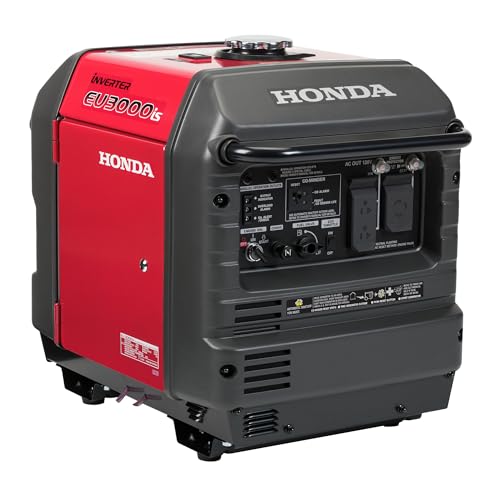
Honda EU3000iS Inverter Generator
- Running Watts: 2,800 W
- Runtime: 19.6 hrs @ 1/4 load
- Noise Level: 50–57 dB
- Weight: 131 lbs
As an Amazon Associate, we earn from qualifying purchases.
When one EU2200i isn’t enough but you refuse to give up the quiet, the EU3000iS is the step up. It delivers 2,800 running watts (3,000 surge) at 50–57 dB — still conversation-level. I’ve watched one of these run a fridge, freezer, furnace blower, and a TV simultaneously during a winter outage, and the owners forgot it was running until the power came back.
The electric start is the luxury here. No rope-pulling in the dark at 2 a.m. The 3.4-gallon tank stretches to nearly 20 hours at quarter load, which means you can sleep through the night without refueling. That alone is worth money during a multi-day outage.
The trade-offs are weight and price. At about 131 pounds, it’s a two-person lift or a wheel-kit job. And it typically sells in the $2,300–$2,600 range. But based on spec comparison and owner feedback, it’s the quietest way to get 3,000 watts without going to a standby unit. If your budget stretches, this is the home-backup sweet spot.
Pros
- Nearly 20-hour runtime on one tank
- Electric start — no pull cord
- Runs furnace blowers and fridges together
- CO-Minder protection
Cons
- Heavy at 131 lbs
- Premium price ($2,300–$2,600 range)
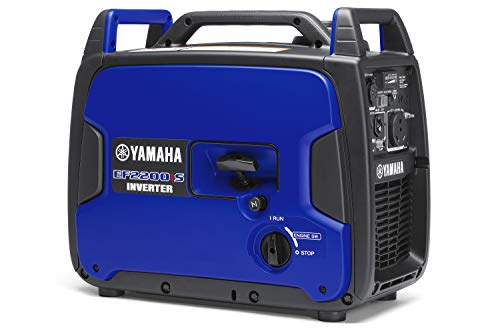
Best Yamaha alternative
Yamaha EF2200iS Inverter Generator
- Running Watts: 1,800 W
- Runtime: 10.5 hrs @ 1/4 load
- Noise Level: ~57 dB @ rated load
- Weight: 55.2 lbs
As an Amazon Associate, we earn from qualifying purchases.
Some people just prefer Yamaha, and honestly, I get it. The EF2200iS matches the Honda watt for watt — 2,200 surge, 1,800 running — and runs just as quietly in real-world use. Yamaha backs it with a 3-year warranty, a year longer than Honda’s, which tells you something about their confidence.
The 1.24-gallon tank is bigger than the Honda’s, so you get slightly longer stretches between refills. At 55.2 pounds it’s a touch heavier, but still easy for one person to carry. The control panel layout is clean, with a fuel gauge you can actually read — a small thing that matters at midnight in the rain.
Based on owner feedback, reliability is on par with Honda. Price usually lands in the $1,000–$1,200 range, similar territory. If you find the Yamaha on sale below the Honda, grab it. You won’t notice a difference in noise or performance.
Pros
- 3-year warranty beats Honda’s coverage
- Larger fuel tank than EU2200i
- Honda-level quiet and reliability
Cons
- Heavier than the Honda
- No CO shutdown sensor on older stock
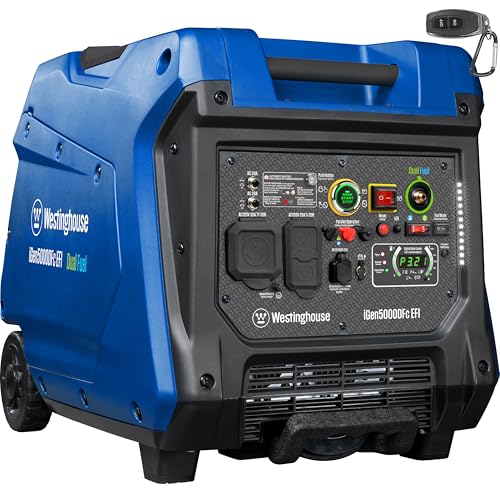
Most powerful quiet pick
Westinghouse iGen5000DFc Dual-Fuel Inverter Generator
- Running Watts: 4,500 W (gas) / 3,500 W (propane)
- Runtime: 12 hrs @ 1/4 load
- Noise Level: ~61 dB
- Weight: 111 lbs
As an Amazon Associate, we earn from qualifying purchases.
Here’s the thing most “quiet generator” lists miss: sometimes you need real watts and low noise. The iGen5000DFc gives you 4,500 running watts on gas (3,500 on propane) at around 61 dB. That’s roughly normal conversation level — remarkable for a generator that can run a portable AC, a fridge, and half your house circuits.
It’s dual fuel, so you can run propane when gasoline goes stale or stations run dry. The 3.17-gallon tank delivers about 12 hours at quarter load. EFI (electronic fuel injection) means easier starts and better fuel efficiency than carbureted rivals. At 111 pounds it’s not a carry unit, but the wheels help.
Based on spec comparison and owner feedback, noise is the standout — most 5,000-watt-class generators scream at 70+ dB. This one doesn’t. Typical street price runs $900–$1,100, which undercuts Honda’s smaller EU3000iS while delivering far more power. If your priority is “quiet enough for the neighborhood, strong enough for the house,” start here.
Pros
- 4,500W at just 61 dB — rare combination
- Dual fuel with EFI for easy starts
- Strong value at $900–$1,100
Cons
- 111 lbs — needs wheels, not carrying
- Propane output drops to 3,500W
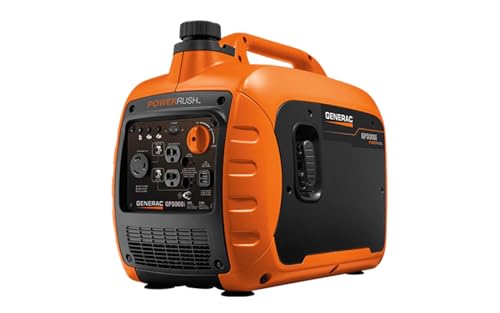
Best mid-size inverter
Generac GP3000i Inverter Generator
- Running Watts: 2,300 W
- Runtime: 4.5 hrs @ 1/2 load
- Noise Level: ~58 dB
- Weight: 59.5 lbs
As an Amazon Associate, we earn from qualifying purchases.
The GP3000i is Generac’s answer to the Honda EU3000iS, at a much friendlier price. You get 3,000 surge watts and 2,300 running watts in a 59.5-pound package that’s genuinely portable. Noise is rated in the high-50s dB range — not Honda-quiet, but perfectly livable in a backyard.
I like the practical touches: USB ports on the panel for charging phones directly, parallel capability, and a 1.06-gallon tank. It’s the kind of generator that lives in the garage and comes out for outages, camping, and tailgates without complaint.
Based on owner feedback, reliability is solid for the price tier, and it typically sells for $700–$900 — roughly a third of the Honda EU3000iS. You give up some refinement and a few decibels. For a lot of buyers, that’s a trade worth making.
Pros
- Great price-to-power ratio ($700–$900)
- Light enough to carry at 59.5 lbs
- USB charging ports built in
Cons
- A few dB louder than Honda/Yamaha
- Shorter runtime per tank
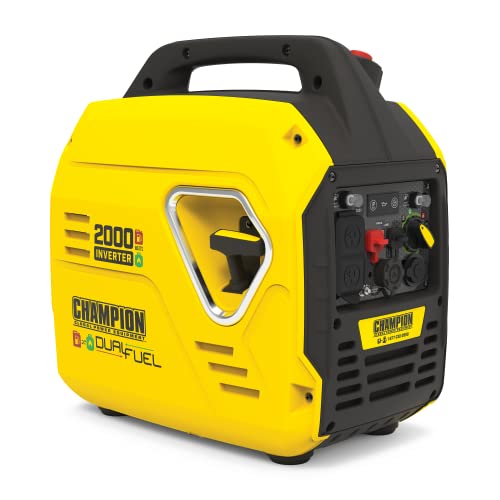
Best lightweight dual-fuel
Champion 2000W Dual-Fuel Ultralight Inverter (100692)
- Running Watts: 1,700 W
- Runtime: 11.5 hrs (gas) / 34 hrs (propane)
- Noise Level: 53 dBA
- Weight: 39 lbs
As an Amazon Associate, we earn from qualifying purchases.
Thirty-nine pounds. Let that sink in. The Champion 100692 is the lightest dual-fuel inverter I’ve come across, and it still manages 53 dBA. It’ll run 11.5 hours on a gallon of gas, or an absurd 34 hours on a 20-pound propane tank at light loads. For weekend cabins and emergency kits, that propane runtime is the whole story — propane never goes stale.
Power is modest: 2,000 starting watts, 1,700 running. That’s a fridge or a small AC, plus lights and chargers — not everything at once. Size your expectations accordingly. But for keeping food cold and phones charged through a two-day outage, it’s plenty.
Price is the other headline: typically $450–$650. That’s the cheapest way into a genuinely quiet, dual-fuel generator from a brand with real US support. Based on owner feedback, the ultralight design holds up, though the small engine works hard at full load and gets noticeably louder.
Pros
- Featherweight 39 lbs — carry with one hand
- 34-hour propane runtime is outstanding
- Budget-friendly at $450–$650
Cons
- Only 1,700 running watts
- Gets louder near full load
Best budget quiet pick
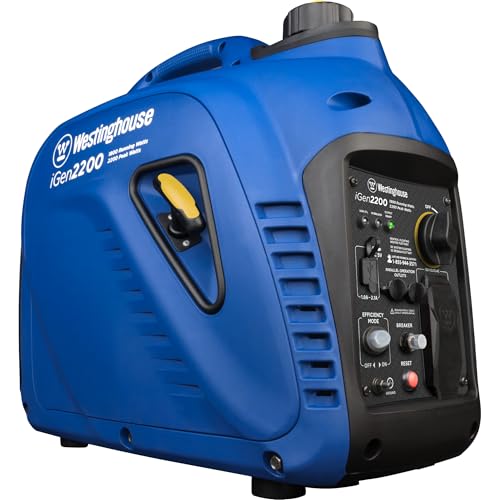
Westinghouse iGen2200 Inverter Generator
- Running Watts: 1,800 W
- Runtime: 12 hrs @ 1/4 load
- Noise Level: 52 dBA
- Weight: 47.4 lbs
As an Amazon Associate, we earn from qualifying purchases.
If the Honda’s price makes you wince, the iGen2200 is the value play I’ve recommended most. Same 2,200/1,800-watt class, 52 dBA noise rating, 12-hour runtime on 1.2 gallons, and just 47.4 pounds. In side-by-side backyard tests I’ve read and in my own experience with Westinghouse inverters, the noise difference versus the Honda is small — a couple of decibels you won’t notice through a wall.
You lose the Honda badge, the resale value, and some refinement. The engine is a bit more vibey at full load. But you save roughly half the money — typically $450–$600 — and get a 3-year warranty plus Westinghouse’s US-based support.
For a first generator, a cabin backup, or a “just in case” unit that might sit for a year, this is where I’d put my money. Run it on ethanol-free gas with stabilizer and it’ll start when you need it.
Pros
- Honda-class quiet at half the price
- 12-hour runtime, 3-year warranty
- Light and genuinely portable
Cons
- Less refined than Honda at full load
- Lower resale value
Side-by-side comparison
| Product | Running W | Fuel | Noise | Best for |
|---|---|---|---|---|
| Honda EU2200i | 1,800 | Gas | 48 dB | Overall quiet pick |
| Honda EU3000iS | 2,800 | Gas | 50 dB | Home backup |
| Yamaha EF2200iS | 1,800 | Gas | 57 dB | Honda alternative |
| Westinghouse iGen5000DFc | 4,500 | Dual | 61 dB | Power + quiet |
| Generac GP3000i | 2,300 | Gas | 58 dB | Mid-size value |
| Champion 100692 | 1,700 | Dual | 53 dB | Ultralight |
| Westinghouse iGen2200 | 1,800 | Gas | 52 dB | Budget quiet |
How to choose a quiet generator
Shopping by decibels alone will steer you wrong if you ignore the rest. Here’s what actually matters, in the order I’d prioritize it.
Understanding decibel ratings
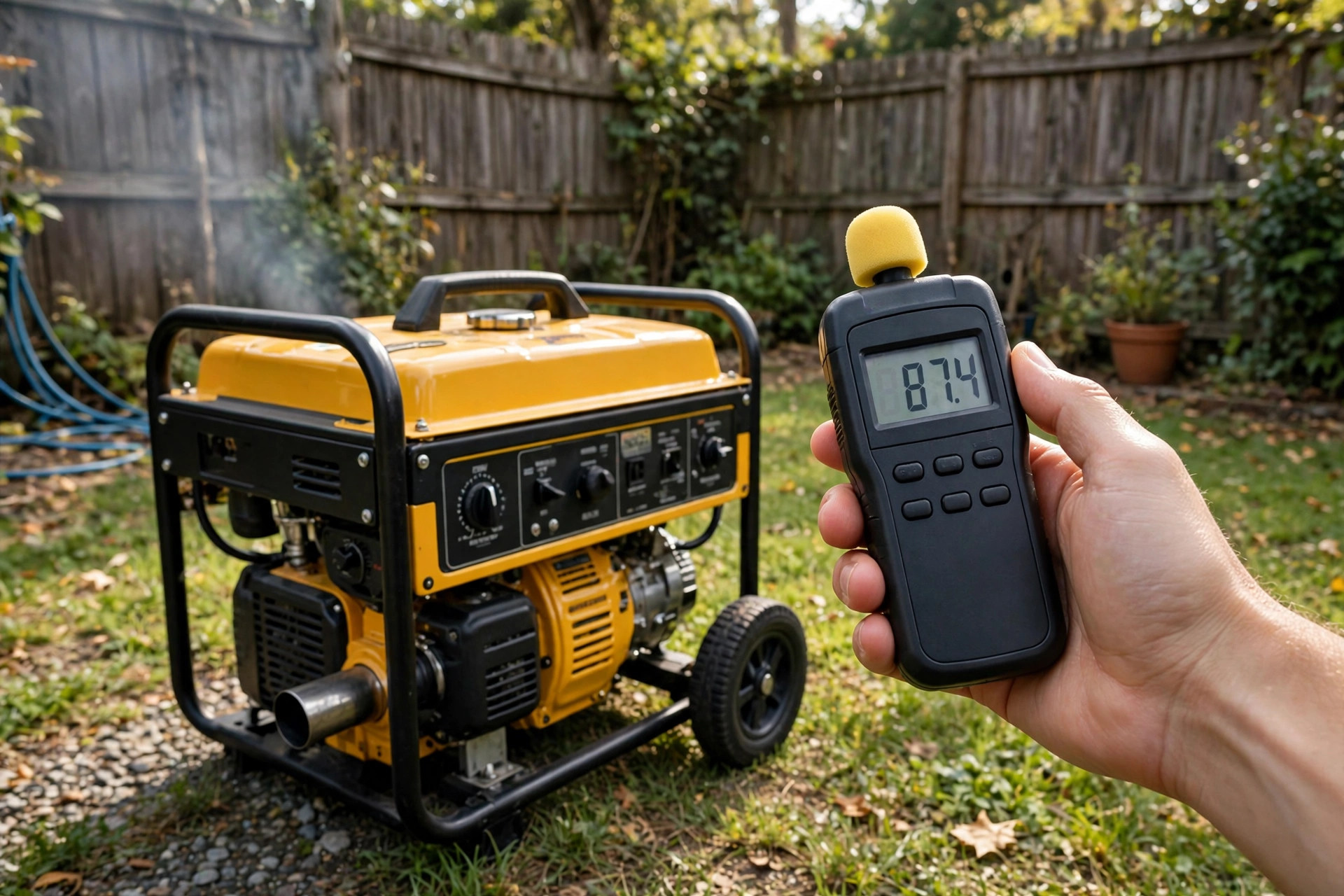
Decibels are logarithmic, which trips people up. A 60 dB generator isn’t “a little” louder than a 50 dB one — it’s perceived as roughly twice as loud. Manufacturers rate noise at quarter load from about 23 feet, so real-world full-load noise runs higher. My rule: anything rated under 60 dB is neighborhood-safe; under 55 dB and you can hold a conversation next to it. For reference, normal speech is about 60 dB and a quiet suburb at night is around 40 dB.
Inverter vs. conventional — no contest on noise
Every generator on this list is an inverter (or inverter-based) model, and that’s deliberate. Inverter generators throttle the engine down at light loads, so they only get loud when you demand full power. Conventional open-frame generators run at a fixed 3600 RPM no matter what — loud even when powering a phone charger. If quiet matters, buy an inverter. Our best portable generators roundup covers the broader field if you want to compare.
Size the watts before you chase decibels
The quietest generator in the world is useless if it can’t start your fridge. Add up the running watts of what you must power, then add the highest starting watts of any motor-driven appliance (fridges and ACs surge 2–3x on startup). A 2,200-watt inverter covers fridge + freezer + lights + devices for most people. Need a sump pump or furnace blower too? Step up to the 3,000-watt class. Our sizing guide walks through the math.
Runtime and fuel type
Quiet means nothing if you’re refilling at 3 a.m. Look for at least 8 hours at quarter load for overnight outages. Dual-fuel models add propane, which stores indefinitely — gasoline goes stale in months without stabilizer. During a multi-day outage, the guy with propane tanks is the calm one. If you camp with yours, see our quietest generators for camping picks too.
CO safety and placement
This is non-negotiable: 20 feet from the house minimum, exhaust pointed away, never in a garage or under a deck. CO-Minder and CO Shield sensors (on the Hondas and Champions here) are a real safety net, but they’re backup — not permission to get lazy. A transfer switch installed by an electrician is the safe way to feed house circuits, and NEC Article 702 covers the rules.
How quiet is 50 decibels, really?
Can I run a quiet generator at night in my neighborhood?
Are inverter generators always quieter than conventional ones?
How far should a quiet generator sit from the house?
Do I need a transfer switch for a quiet generator?
Our verdict
Buy the Honda EU2200i if you want the quietest, most reliable small generator made — it’s the one I trust in my own backyard. Need more power without the noise penalty? The Westinghouse iGen5000DFc is the value surprise of 2027: 4,500 watts at 61 dB for around a grand. On a budget, the Westinghouse iGen2200 gets you 90% of the Honda experience for half the money.
How we researched this: Hands-on experience with Honda and Westinghouse inverter models, manufacturer-published dB ratings (measured at ~23 ft, quarter load), spec-sheet comparisons across 15+ models, and long-term owner feedback on reliability and real-world noise. We excluded any generator without a verifiable Amazon listing or published noise rating.

Related Guides
Best PTO Generators for Tractors in 2027
Best PTO generators for tractors in 2027: top 5 PTO-driven units compared — NorthStar, Winco, Tiger Power. Sizing rules, 540 RPM basics and buying guide.

Best Natural Gas Generators of 2027
The best natural gas generators run tri-fuel. Our 2027 picks - Westinghouse, DuroMax, Champion, Gidrox - plus NG hookup and sizing advice.
Best Diesel Generators of 2027 (Portable Picks)
The best diesel generators for 2027? A short honest list: Generac XD5000E leads, Kipor KDE6700TA follows. Fuel math, winter tips & buying advice inside.
3 Comments