


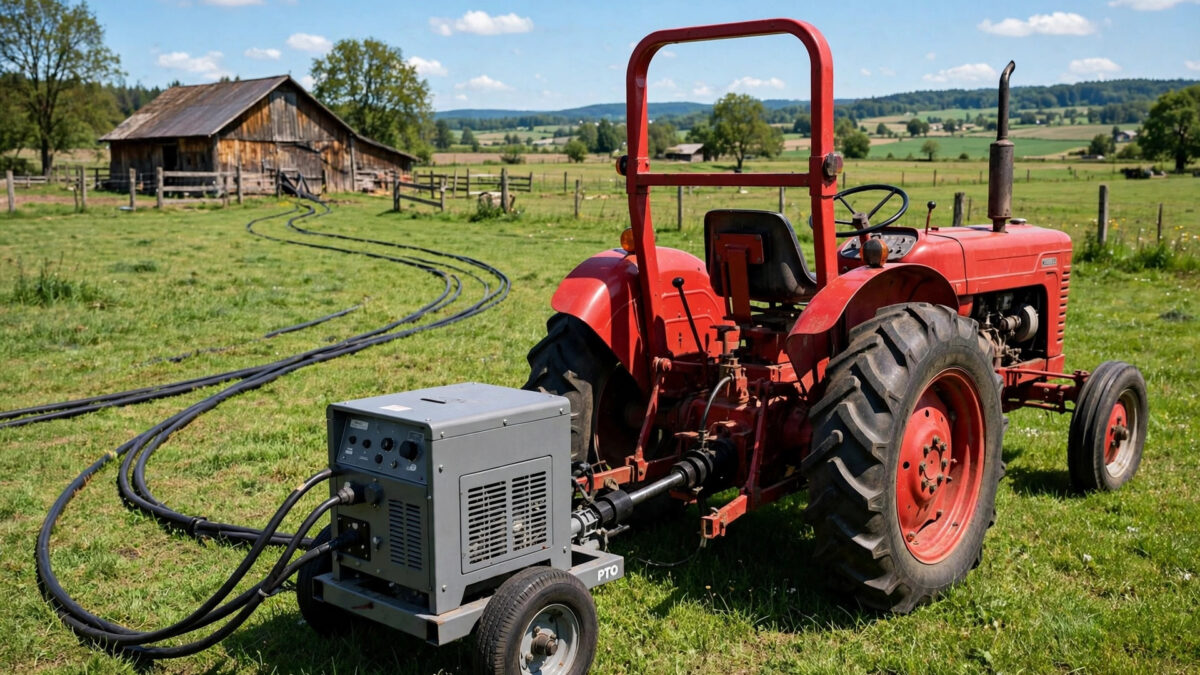
If you own a tractor, you already own half a generator. A PTO generator bolts onto your tractor’s power take-off shaft and turns the engine you already maintain into a backup power plant — no second engine to service, no stale fuel, no dead battery in February. For farms, ranches, and rural homesteads, it’s the most cost-effective whole-property backup there is.
I’ve dug through TractorByNet threads, dealer specs, and owner reports to sort out which PTO generators are worth your money in 2027. The short answer: the NorthStar 12,000-watt PTO generator is the best pick for most tractor owners — it hits the sweet spot of output, build quality, and availability, and it’s the one you can actually buy on Amazon. But PTO sizing has rules that don’t apply to regular generators, so read the buying guide before you buy anything.
Key takeaways
- A PTO generator needs roughly 2 PTO horsepower per kilowatt — a 12kW unit needs a 24-HP PTO, not just any tractor with a hitch.
- The NorthStar 12kW (13,000 surge watts, 540 RPM, ~$1,500–$1,900) is the best all-around pick and the easiest to buy.
- Look for AVR (automatic voltage regulation) if you’ll run well pumps, computers, or modern appliances — capacitor-regulated units have wilder voltage swings.
- PTO generators are a dealer/direct market — most brands aren’t on Amazon, so expect to buy from farm supply stores or the manufacturer.
Quick picks: Best overall — NorthStar 12kW PTO Generator. Best for compact tractors — NorthStar 7.2kW PTO Generator. Best for large operations — Tiger Power 30kW PTO Generator. Best voltage regulation — BaumaLight PTO Generator with AVR. Best mid-size — Winco 10kW PTO Generator.
Best overall
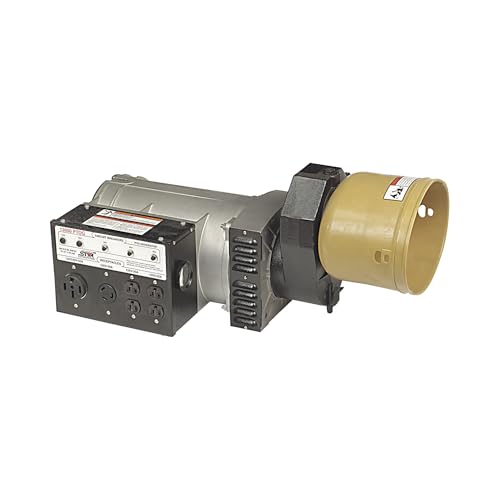
NorthStar PTO Generator — 13,000 Surge / 12,000 Rated Watts
- Running Watts: 12,000
- Weight: 125 lbs
- Fuel Type: Tractor PTO (540 RPM)
- Required Pto Hp: 24 HP minimum
As an Amazon Associate, we earn from qualifying purchases.
NorthStar (Northern Tool’s house brand) has been the default recommendation on tractor forums for years, and the 12kW unit is why. 13,000 surge watts and 12,000 continuous watts from a standard 540-RPM PTO shaft, requiring 24 PTO horsepower or more. That’s enough for a whole farmhouse plus the barn: well pump, freezers, lights, and then some.
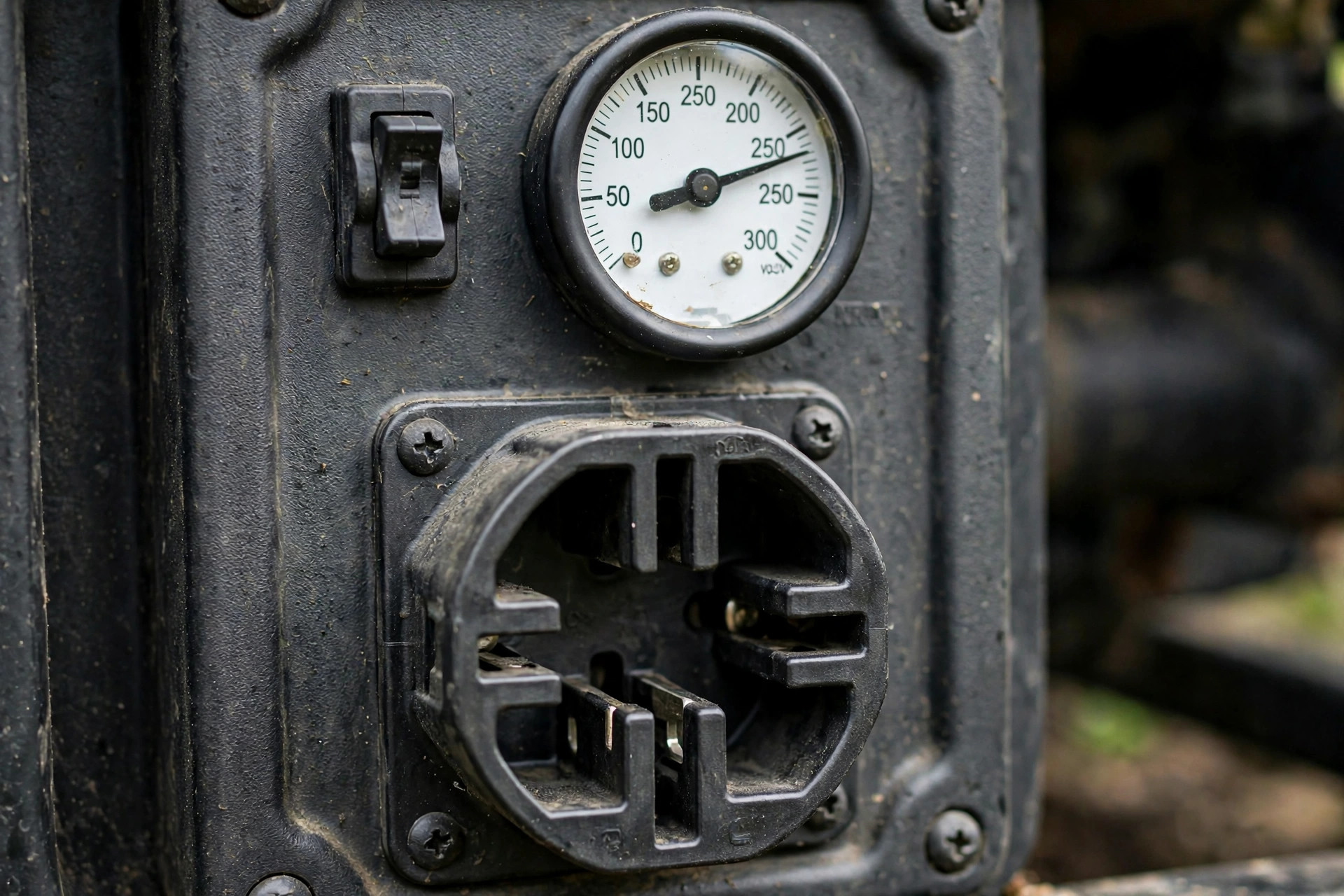
The outlet panel is properly equipped — four 120V 20-amp receptacles, a 120V 30-amp locking outlet, and a 50-amp 240V receptacle for a transfer switch, plus a voltmeter and push-button circuit breakers. At 125 pounds it’s light enough for one strong person to position, and the 1-3/8″ 6-spline input shaft fits the industry-standard driveline (sold separately — budget $150–$250 for a proper PTO shaft).
What I like most: it’s the rare PTO generator with genuine retail availability and a real warranty behind it. Most PTO units are special-order from a dealer three states away. This one you can order today.
Pros
- 12,000 continuous watts runs a whole farmhouse
- Full outlet panel including 50A 240V for transfer switch
- Actually available at retail with warranty support
- 125 lbs — manageable for one person
Cons
- PTO driveline sold separately
- Needs a 24-HP PTO — too much for sub-compact tractors
- No AVR on the base configuration

Best for compact tractors
NorthStar 7,200-Watt PTO Generator
Available through authorized dealers.
Got a sub-compact or compact tractor in the 15–25 HP range? The 12kW unit above will lug it down and you’ll never see rated output. NorthStar’s 7.2kW PTO generator needs roughly 14–15 PTO horsepower, which matches Kubota BX, John Deere 1-series, and similar machines. 7,200 watts runs the essentials — well pump or furnace, fridge, freezer, lights — just not everything at once.
The tradeoff is real: at this size you’re managing loads, not ignoring them. But a generator your tractor can actually drive at full output beats a bigger one it can’t. Match the generator to the tractor you own, not the tractor you wish you owned.
Pros
- Sized for compact and sub-compact tractors
- Enough for essential circuits
- Lighter and cheaper than 12kW units
Cons
- Won’t run central A/C or whole-house loads
- Dealer/direct purchase — not on Amazon
Best for large operations
Tiger Power 30kW PTO Generator
Available through authorized dealers.
When 12kW isn’t enough — dairy barns, irrigation pumps, grain dryers — Tiger Power’s larger PTO units go up to 30kW and beyond. These are serious machines with heavy copper windings and industrial frames, built for continuous agricultural duty. A 30kW unit needs roughly 60 PTO horsepower, so we’re talking utility tractors, not compacts.
Tiger Power sells through dealers and direct, and their reputation on farm forums is solid for the price class. If you’re powering a working farm rather than a farmhouse, start here and size up from your biggest motor load.
Pros
- 30kW handles barns, pumps, and dryers
- Built for continuous agricultural duty
- Good value per kilowatt at this size
Cons
- Needs a 60-HP tractor
- Dealer purchase, freight shipping
- Overkill for a house alone
Best voltage regulation
BaumaLight PTO Generator (AVR models)
Available through authorized dealers.
Here’s something most PTO generator listings gloss over: voltage regulation. Cheap PTO generators use capacitor regulation, which lets voltage swing with load changes. That’s fine for lights and heaters, but well pump controllers, computers, and modern appliances prefer stable voltage. BaumaLight’s PTO generators use AVR (automatic voltage regulation), holding output tight — and they’re built in North America with proper dealer support.
BaumaLight offers a range of sizes, so you can match your tractor. You pay more than the NorthStar, but for anyone running sensitive equipment off PTO power, AVR is worth it.
Pros
- AVR holds voltage stable for sensitive loads
- North American build and support
- Wide size range
Cons
- Premium pricing
- Dealer/direct only
Best mid-size proven pick
Winco 10kW PTO Generator
Available through authorized dealers.
Winco has been building PTO generators in the USA for decades, and their 10kW unit is the “buy it for life” option in the mid-size class. 10,000 watts needs about 20 PTO HP — right in the wheelhouse of 30–40 HP utility tractors, the most common size on small farms. Winco’s reputation is for conservative ratings and long service life; these are the units that get handed down.
You won’t find Winco on Amazon. Buy through a Winco dealer or farm equipment supplier, and expect to pay for quality — but also expect it to still be running in 20 years.
Pros
- Decades-long reputation for durability
- Conservative, honest ratings
- Made in USA with parts support
Cons
- Premium price
- Dealer-only purchase
| Generator | Running W | Min PTO HP | Regulation | Best for |
|---|---|---|---|---|
| NorthStar 12kW | 12,000 | 24 | Capacitor | Best overall |
| NorthStar 7.2kW | 7,200 | ~15 | Capacitor | Compact tractors |
| Winco 10kW | 10,000 | ~20 | AVR (check model) | Buy-it-for-life |
| Tiger Power 30kW | 30,000 | ~60 | AVR (check model) | Farm operations |
| BaumaLight AVR | Varies | 2 HP/kW | AVR | Sensitive loads |
How to choose a PTO generator
Match the generator to your tractor’s PTO horsepower
This is the rule that matters: you need roughly 2 PTO horsepower per kilowatt of generator output. A 12kW generator needs 24 PTO HP. Check your tractor’s PTO rating (not engine HP — PTO HP is lower, usually 85–90% of engine HP). Undersize the tractor and the generator can’t reach rated output; the engine lugs, frequency drops, and motors overheat. When in doubt, buy the generator one size smaller than your tractor’s max.
540 RPM is the standard — verify yours
Nearly all PTO generators are geared for the standard 540-RPM PTO shaft. Most tractors have a 540 setting; some larger ones also offer 1000 RPM. Run the wrong speed and you’ll get the wrong frequency (60 Hz depends on exact shaft speed). Set the tractor to 540, verify 60 Hz on the generator’s meter under load, and mark the throttle position.
AVR vs. capacitor regulation
Capacitor-regulated generators are cheaper and fine for resistive loads (lights, heaters, basic tools). AVR (automatic voltage regulation) holds voltage within a few percent as loads change — important for well pumps with electronic controllers, computers, and anything with a circuit board. If your loads are all “dumb,” save the money. If not, get AVR.
Don’t forget the driveline — and the safety rules
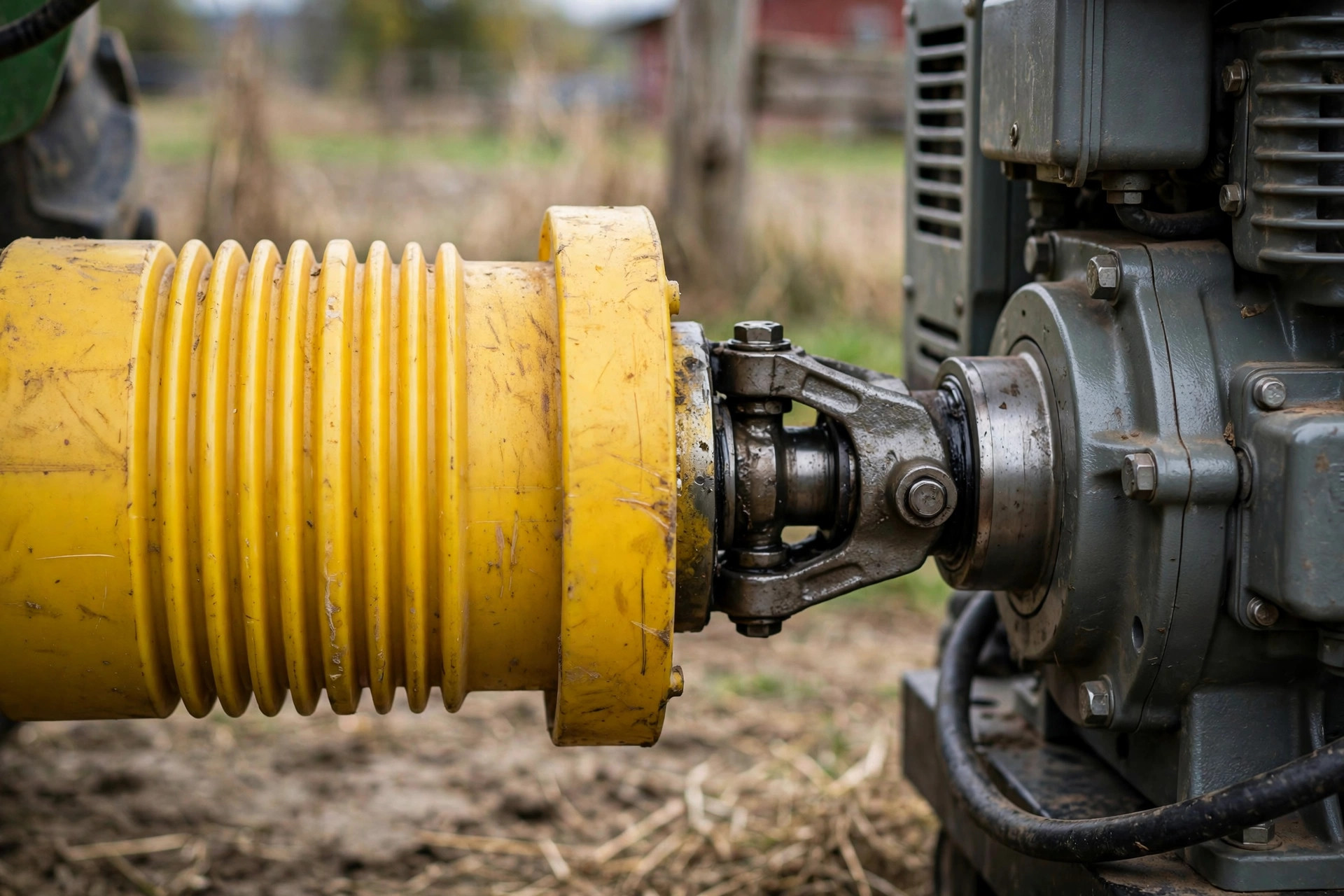
The PTO shaft (driveline) is usually sold separately ($150–$300). It must have proper shielding — an unshielded spinning PTO shaft is one of the most dangerous things on a farm, full stop. Never step over a running PTO shaft, keep the shield in place, and shut the tractor down before connecting or adjusting anything.
Think about how you’ll actually use it
A PTO generator ties up your tractor for the duration of the outage. That’s fine for a day. For a week, it gets old — you can’t use the tractor for anything else, and you’re burning diesel at partial load (inefficient). Many farms pair a PTO generator for heavy loads with a small portable for overnight essentials. Our portable generator roundup covers the overnight side of that equation.
What size PTO generator do I need for my tractor?
Are PTO generators better than standalone generators?
Can a PTO generator run a house?
Do PTO generators need AVR?
Where can I buy a PTO generator?
Our verdict
If you own a tractor with 24+ PTO horsepower, the NorthStar 12kW is the obvious pick — real power, real availability, fair price. Size down for smaller tractors, size up (and go AVR) for farm operations. And whatever you buy, budget for the driveline, the transfer switch, and an electrician’s afternoon. The generator is only half the system.
PTO vs. portable vs. standby: picking your backup strategy
Tractor owners actually have three options, and the right one depends on how you use the property. A PTO generator is cheapest per kilowatt and has no second engine to maintain — but it ties up the tractor. If an ice storm knocks out power for three days and you also need the tractor to clear the driveway, you’re choosing between heat and plowing. A standalone portable (see our portable picks) costs more per watt but leaves the tractor free. A standby unit costs $10,000+ installed but starts itself whether you’re home or not.
My honest framework: if the farm is your livelihood and the tractor is the backup plan, PTO wins on economics — a 12kW PTO setup (generator + driveline + transfer switch) typically runs $2,500–$4,000 all-in, versus $2,000–$3,000 for an equivalent standalone portable plus the maintenance of a second engine. If you travel and need power to stay on for freezers or livestock waterers while you’re gone, neither PTO nor portable works — that’s standby territory, because nothing else starts itself. And many farms end up with both: PTO for the heavy lifting, a small inverter portable for overnight essentials so the tractor isn’t idling at 2 a.m. burning diesel at 20% load.
Connecting a PTO generator to your house or barn
The electrical side is identical to a standalone generator: you need a transfer switch or interlock kit on the panel, sized for the generator’s output, installed by an electrician. A 12kW PTO unit wants a 50-amp inlet and transfer switch — the same hardware as a 12kW portable. Budget $300–$800 for parts plus labor.
Two PTO-specific wrinkles: first, frequency. Your house power must be 60 Hz, and 60 Hz depends on the PTO spinning at exactly 540 RPM. Set the tractor throttle to the marked 540 PTO speed, verify with the generator’s voltmeter/frequency meter under load, and don’t touch the throttle afterward. Lugging the engine under heavy load drops RPM, which drops frequency, which overheats motors — watch the meter when big loads kick in. Second, grounding: the generator frame should be bonded per the manufacturer’s instructions and local code, just like a portable. Your electrician will know the drill.
Buying used: what to check on a secondhand PTO generator
PTO generators show up used on farm auctions and classifieds regularly, often at half the new price — and they’re simpler machines with less to go wrong than engine-driven units. Still, check three things before money changes hands. First, spin the shaft by hand (disconnected, obviously): it should turn smoothly with no grinding or catching, which would indicate bearing wear. Second, look at the windings through the vents — they should be clean copper color, not blackened or smelling burnt, which signals overheating. Third, if possible, test under load: hook it to your tractor, run it up to 540 PTO RPM, and check voltage on all outlets with a multimeter under a real load like a heater. Voltage should hold within about 5% of 120/240V. A used NorthStar or Winco that passes these checks is usually a better buy than a new no-name unit — these things are built to last decades, and there’s no engine to wear out.
One more used-market tip: match the driveline series to the generator. PTO drivelines come in series (4, 5, 6…) rated for different torque — a 12kW generator wants a Series 5 or 6 shaft, and running an undersized driveline is how shear bolts become shrapnel. If the used generator doesn’t include the shaft, budget $150–$300 for the correct series with a proper shield. The shield isn’t optional; it’s the difference between a tool and a hazard.
How we researched this: Manufacturer specifications, TractorByNet forum sizing discussions, and dealer catalog data. Only the NorthStar 12kW was verified with a live Amazon listing; other PTO brands sell through dealers and farm supply channels. We did not bench-test any unit.

Related Guides
Best Natural Gas Generators of 2027
The best natural gas generators run tri-fuel. Our 2027 picks - Westinghouse, DuroMax, Champion, Gidrox - plus NG hookup and sizing advice.

Best Diesel Generators of 2027 (Portable Picks)
The best diesel generators for 2027? A short honest list: Generac XD5000E leads, Kipor KDE6700TA follows. Fuel math, winter tips & buying advice inside.
Best Quiet Generators of 2027 (Low-Decibel Picks)
Looking for the best quiet generators for home backup? These 7 low-decibel picks (48-64 dB) keep the peace without sacrificing real power.