


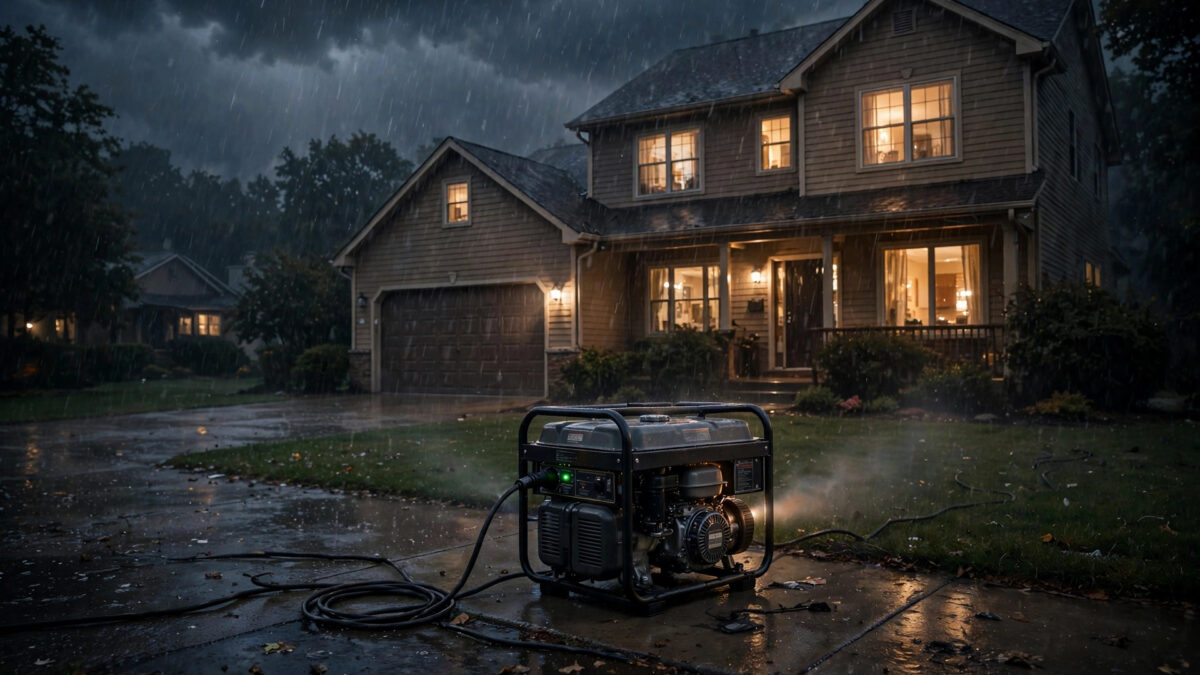
The worst time to buy a generator is during the outage — and 2027’s storm season will be no different. Shelves empty, prices spike, and you’re choosing from whatever’s left — ask anyone who shopped during the 2021 Texas freeze. I write this every storm season: buy the generator on a sunny day, test it on a Saturday, and be the calm house on the street when the grid fails.
Emergency generators aren’t quite the same as general home-backup units. The priority stack is different: fuel flexibility (gas stations go dark too), long runtime between refuels, easy starting at 2 a.m., and enough power for heat, food safety, and communications over days, not hours. The Westinghouse WGen9500DF is my top emergency pick for 2027 — 9,500 running watts, dual fuel, 12-hour runtime, around a grand. Here’s the full storm-prep short list.
Key takeaways
- Buy and test your generator before storm season — never during the outage.
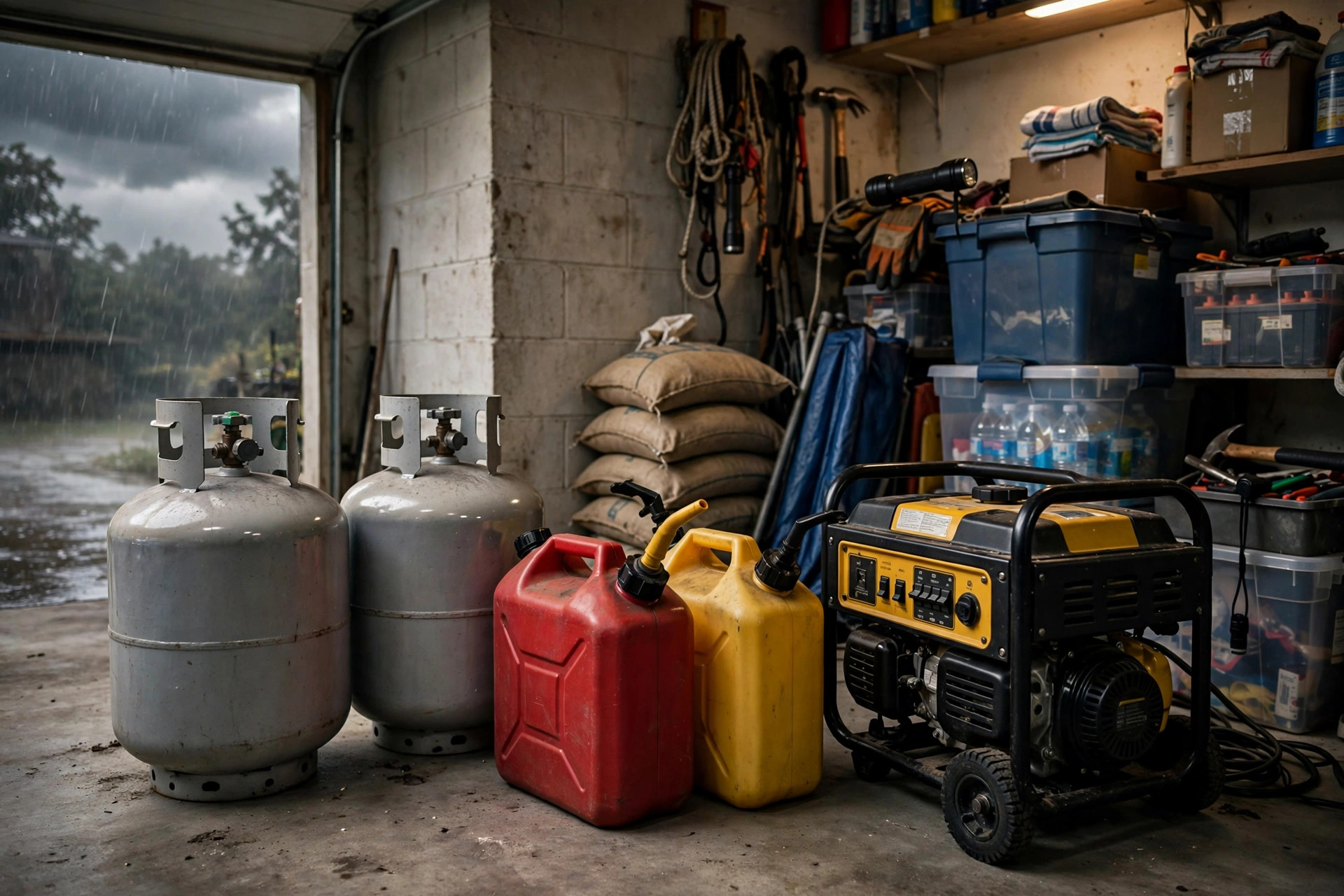
- Dual fuel is the emergency superpower: propane stores forever; gas stations need power to pump.
- Size for heat + food + water: fridge, freezer, furnace blower or space heaters, well pump, phones.
- A manual transfer switch (NEC Article 702) is the safe, legal way to power home circuits.
- Store fuel now: stabilized gas rotated every 6 months, plus propane tanks that never expire.
Quick picks
- Best overall: Westinghouse WGen9500DF — 9,500W dual fuel, 12-hour runtime, unbeatable value.
- Best for whole-home: DuroMax XP12000EH — 12,000W, dual fuel, runs central AC.
- Best 9kW dual-fuel: Champion 100165 — 9,375W, electric start, trusted support.
- Best mid-size: Generac GP6500E — 6,500W, electric start, COsense.
- Best 7.5kW value: Westinghouse WGen7500DFc — 9,500W surge dual fuel, CO sensor.
- Best 8kW mainstream: Generac GP8000E — 8,000W, PowerRush, huge service network.
Best overall
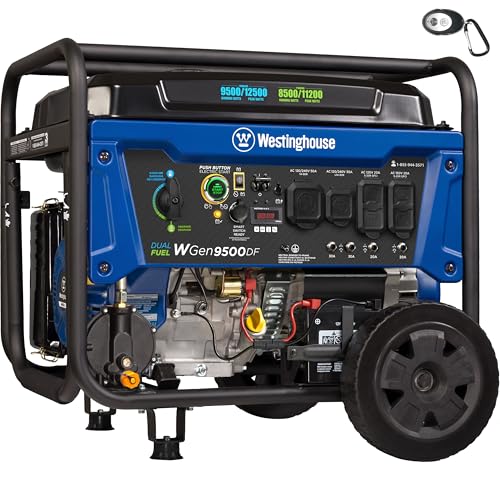
Westinghouse WGen9500DF Dual-Fuel Portable Generator
- Running Watts: 9,500 W
- Runtime: 12 hrs @ 1/2 load
- Noise Level: ~74 dB
- Weight: 210 lbs
As an Amazon Associate, we earn from qualifying purchases.
If I could only recommend one emergency generator, this is it. The WGen9500DF delivers 12,500 peak watts and 9,500 running watts — enough for a fridge, freezer, furnace blower, well pump, lights, and devices simultaneously — runs on gasoline or propane, and typically costs $1,000–$1,300. That combination is why it keeps showing up on storm-prep lists.
The emergency credentials are strong: 6.6-gallon tank for 12 hours at half load (overnight without refueling), push-button electric start for bleary 2 a.m. startups, and propane capability for when gas stations are dark. The digital hour meter helps you track the 100-hour oil change interval during extended outages.
Based on spec comparison and owner feedback, reliability in sustained multi-day use is solid. It’s loud (open-frame 74 dB), so position it 20+ feet out. But for keeping a family safe and fed through a week-long outage, the watts-per-dollar here are unmatched.
Pros
- 9,500W covers full emergency loads
- Dual fuel — propane when gas runs out
- 12-hour runtime, electric start
- Outstanding value at $1,000–$1,300
Cons
- Loud open-frame design
- 210 lbs — wheel it, don’t carry it
Best for whole-home
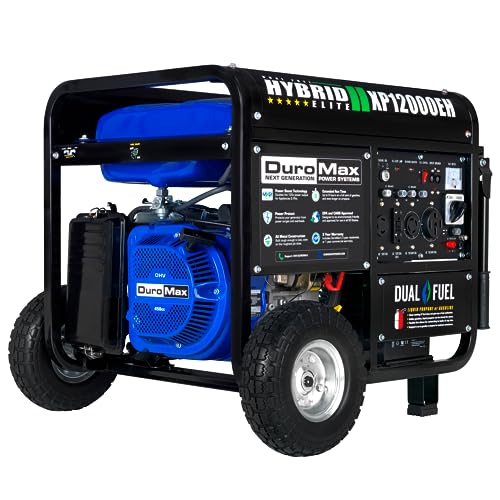
DuroMax XP12000EH Dual-Fuel Portable Generator
- Running Watts: 9,500 W
- Runtime: 8 hrs @ 1/2 load
- Noise Level: 74 dB
- Weight: 224 lbs
As an Amazon Associate, we earn from qualifying purchases.
When the goal is “run the whole house,” the XP12000EH brings 12,000 peak watts and 9,500 running watts on gas from a 457cc engine, dual-fuel, typically $1,500–$1,900. That’s central-AC territory — a 3-ton unit plus everything else — through a manual transfer switch.
The 8.3-gallon tank gives about 8 hours at half load; at lighter emergency loads (fridge + furnace + lights ≈ 3,000W), you’ll stretch well past 12 hours. DuroMax’s MX2 technology lets you pull full power from the 120V outlets — handy for high-draw 120V appliances. The 3-year warranty and CO shutdown are included.
At 224 pounds and 74 dB, it’s a position-it-and-leave-it machine. Based on owner feedback, the XP12000EH is a proven multi-day outage performer. If your emergency plan includes air conditioning (medical needs, southern heat), this is the minimum class I’d buy.
Pros
- 12,000W surge handles central AC startup
- Dual fuel with MX2 full-power 120V
- 3-year warranty
Cons
- 8-hour tank needs refueling on long days
- Heavy and loud
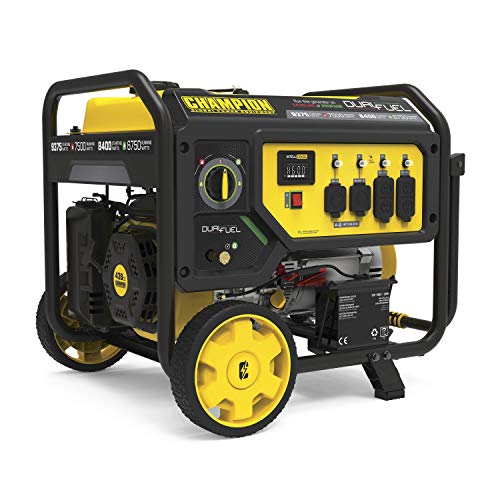
Best 9kW dual-fuel
Champion 9,375W Dual-Fuel Generator (100165)
- Running Watts: 7,500 W (gas)
- Runtime: ~10 hrs @ 1/2 load
- Noise Level: 74 dB
- Weight: ~200 lbs
As an Amazon Associate, we earn from qualifying purchases.
Champion’s 100165 delivers 9,375 starting watts and 7,500 running watts on gasoline (8,400/6,750 on propane) from a 439cc engine with electric start, typically $900–$1,200. It’s the slightly smaller sibling to the Westinghouse pick above — same emergency logic, a bit less money, and Champion’s excellent US-based support.
The emergency case: dual fuel, electric start, and enough watts for fridge, freezer, furnace blower, sump pump, and lights with headroom. Champion’s CO Shield is included. Based on owner feedback, cold-weather starting is a strong point — relevant when the outage is a blizzard, not a hurricane.
If the Westinghouse is out of stock (it happens every storm season), this is the interchangeable backup choice. Buy whichever is available; the capability overlap is nearly total.
Pros
- Strong cold-weather starting
- CO Shield + electric start
- Great support network
- Competitive price
Cons
- Less surge headroom than 12kW units
- Open-frame loud
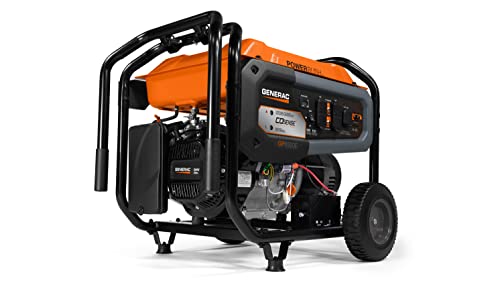
Best mid-size
Generac GP6500E Portable Generator (7713)
- Running Watts: 6,500 W
- Runtime: ~10 hrs @ 1/2 load
- Noise Level: ~72 dB
- Weight: 182 lbs
As an Amazon Associate, we earn from qualifying purchases.
Not every emergency needs 9,500 watts. The GP6500E’s 9,100 surge / 6,500 running watts cover the true essentials — fridge, freezer, furnace blower, lights, phones, and a sump pump — in a 182-pound package with electric start, typically $900–$1,100.
Generac’s PowerRush gives extra starting current for motor loads (your sump pump will thank you), and COsense shutdown is built in. The 6.9-gallon tank stretches runtime past 10 hours at half load. For smaller homes, apartments with balcony-safe placement, or tighter budgets, 6,500W is the honest minimum I’d recommend — anything smaller and you’re choosing which essentials to sacrifice.
Based on spec comparison and owner feedback, the GP6500E is the mainstream safe choice with the deepest service network behind it. Generac parts are everywhere, which matters when the storm has passed and something needs fixing.
Pros
- Right-sized for essential loads
- PowerRush for motor starting
- COsense + electric start
- Huge service network
Cons
- Gasoline only — no propane fallback
- Won’t run central AC
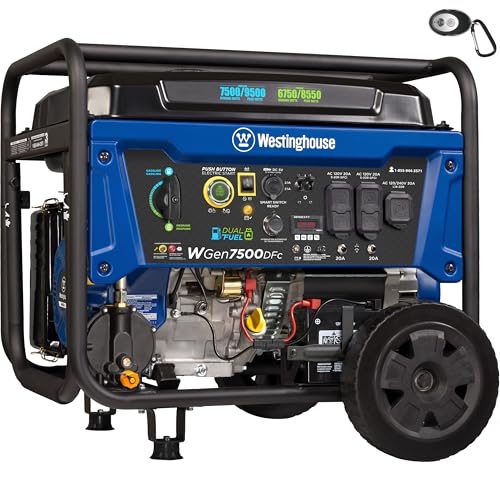
Best 7.5kW value
Westinghouse WGen7500DFc Dual-Fuel Generator
- Running Watts: 7,500 W
- Runtime: 11 hrs @ 1/2 load
- Noise Level: ~72 dB
- Weight: ~195 lbs
As an Amazon Associate, we earn from qualifying purchases.
The WGen7500DFc is the updated, CO-sensor-equipped version of Westinghouse’s popular 7,500-watt dual-fuel platform: 9,500 peak watts, 7,500 running watts on gas, 6.6-gallon tank, 11-hour runtime, typically $900–$1,100.
For emergency use, the math works: 7,500 running watts handles fridge + freezer + furnace + well pump + lights with margin. The “c” in DFc denotes the integrated CO sensor with automatic shutdown — a meaningful safety upgrade for a generator that’ll run overnight near a sleeping family. Push-button start, remote start key fob, and a data center display round it out.
Based on owner feedback, this is the sweet spot for buyers who want dual-fuel security without the 200+ pound weight class of the 9.5kW units. If your essentials fit under 6,000W continuous, save the money and the back strain.
Pros
- CO sensor with auto-shutdown
- Remote start key fob included
- 11-hour runtime, dual fuel
- Good watts for the weight
Cons
- Not enough for central AC
- Still loud at 72 dB
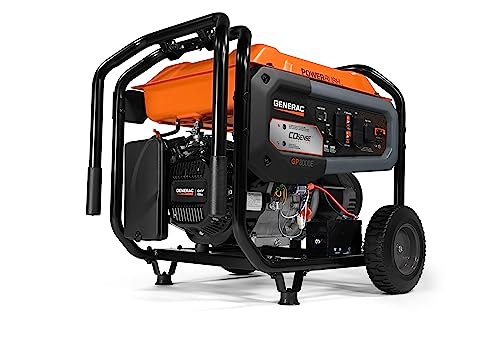
Best 8kW mainstream
Generac GP8000E Portable Generator (7715)
- Running Watts: 8,000 W
- Runtime: ~11 hrs @ 1/2 load
- Noise Level: ~74 dB
- Weight: 214 lbs
As an Amazon Associate, we earn from qualifying purchases.
The GP8000E closes the list as the mainstream 8,000-watt option: 10,000 surge watts, electric start, 7.9-gallon tank, COsense, typically $1,100–$1,400. PowerRush technology helps with motor starting surges — well pumps and sump pumps start easier.
Emergency-wise it’s gasoline-only, which is its one real weakness here — pair it with stabilized fuel storage and a rotation schedule. Otherwise it’s a proven multi-day performer with the best parts availability in the business.
Choose the GP8000E if you trust the Generac name and want maximum serviceability. Choose the Westinghouse WGen9500DF above it if you want dual fuel and more watts for less money. Both are defensible; the dual-fuel edge is why Westinghouse takes the top spot.
Pros
- Proven multi-day reliability
- Best parts/service availability
- PowerRush motor starting
Cons
- Gasoline only
- Costs more per watt than Westinghouse
Side-by-side comparison
| Product | Running W | Fuel | Noise | Best for |
|---|---|---|---|---|
| Westinghouse WGen9500DF | 9,500 | Dual | 74 dB | Overall emergency pick |
| DuroMax XP12000EH | 9,500 | Dual | 74 dB | Whole-home + AC |
| Champion 100165 | 7,500 | Dual | 74 dB | Cold-weather reliability |
| Generac GP6500E | 6,500 | Gas | 72 dB | Essential loads |
| Westinghouse WGen7500DFc | 7,500 | Dual | 72 dB | 7.5kW value |
| Generac GP8000E | 8,000 | Gas | 74 dB | Mainstream 8kW |
How to choose an emergency generator
Storm prep is a system, not a product. The generator is one piece.
Size for the emergency load list
Write down what must run: fridge (700W running / 2,200W starting), freezer (700/2,200), furnace blower (800/2,500) or portable heaters (1,500 each — ouch), well pump (2,000/4,000+), sump pump (1,000/3,000), lights and devices (500). Most families land at 5,000–7,500 running watts with one big motor starting at a time. That’s why this list clusters at 6,500–9,500W. Our sizing guide has the full worksheet.
Dual fuel is the emergency superpower
Gas stations need electricity to pump gas. In a regional outage, they’re dark — and the lines at the working ones are legendary. Propane doesn’t care: your 20-lb tanks sit ready for years. A dual-fuel generator lets you burn stored propane while everyone else hunts gasoline. I keep two 20-lb propane tanks plus 10 gallons of stabilized gas; that covers my essentials for 4–5 days. For more on fuel strategy, see our dual-fuel generator guide.
The transfer switch decision
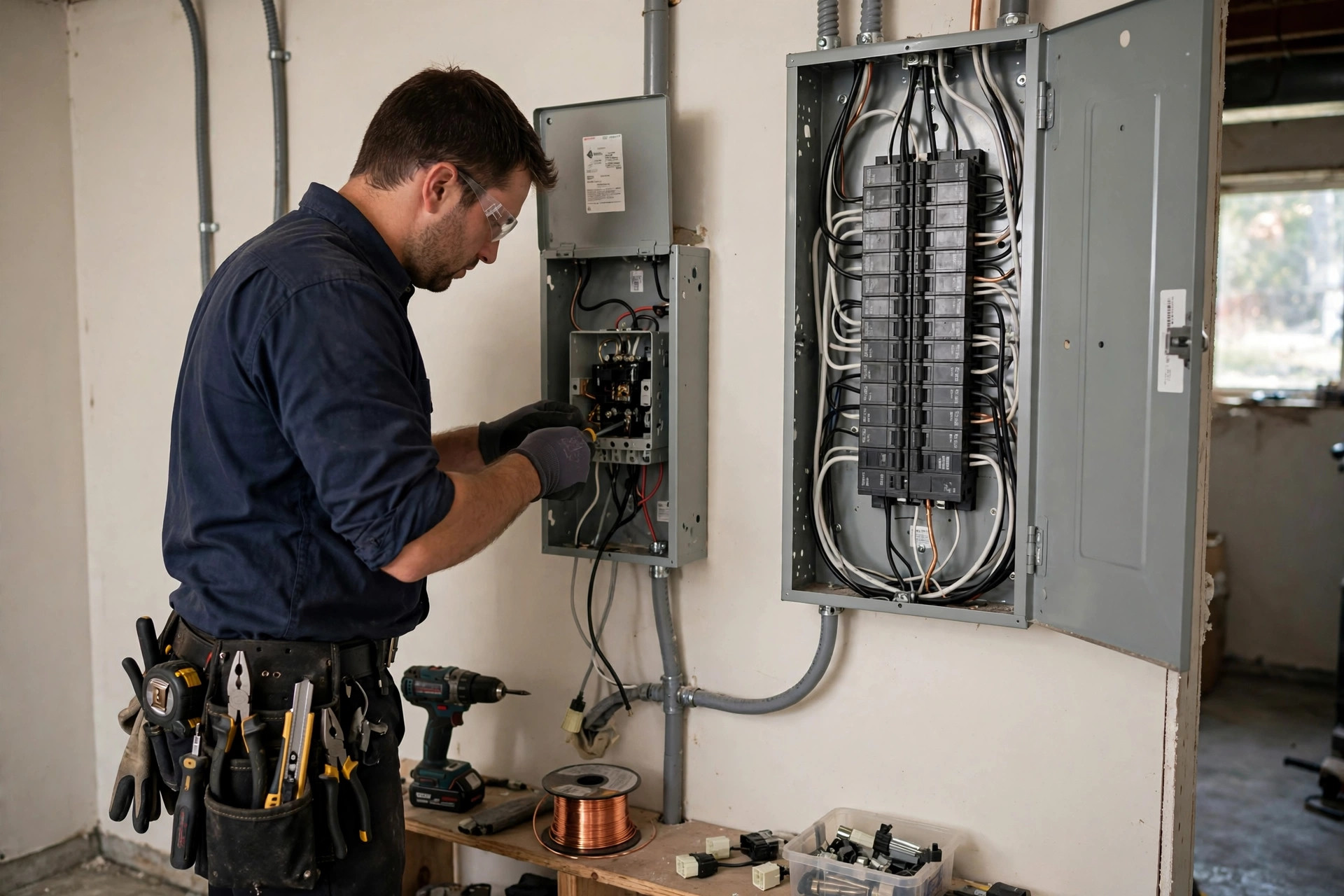
Extension cords work for a fridge and some lights. But furnaces, well pumps, and sump pumps are hardwired — reaching them requires a manual transfer switch or interlock kit installed by an electrician, per NEC Article 702. Budget $500–$1,500 installed. If anyone in your home depends on powered medical equipment, this moves from “nice” to “essential” — extension cords across a dark house are a trip hazard you don’t need. Our transfer switch guide covers the options.
Build the storm kit, not just the generator
The generator is useless without: fresh oil + a spare quart and filter, a spare spark plug, stabilized fuel (rotate every 6 months), heavy-duty 12-gauge extension cords, a battery tender for electric-start models, and a CO detector with fresh batteries for the house. Test-run the generator every 3 months — 15 minutes under load. A generator that hasn’t run in two years will not start when you need it. Ask me how I know.
Placement and CO: the 20-foot rule
Every year, people die running generators in garages “with the door open” or under deck overhangs. Twenty feet from the house, exhaust pointed away, never in any enclosed space. CO-sensor models (all six here have CO shutdown) are a backup, not a plan. If you want quieter overnight operation, our quiet generator picks run 10+ dB softer — worth it if the generator sits near bedrooms.
The pre-season drill: test everything in spring
Every April, I run the same drill, and I’d urge you to steal it. Pull the generator out, check the oil, and start it — on the fuel you’ll actually use in an outage. Plug in your actual emergency loads (fridge via extension cord, a space heater standing in for the furnace blower) and run it for 30 minutes under load. You’re checking three things: it starts, it holds voltage under load, and you remember how everything connects.
Then walk the checklist: fuel rotated (gas older than 6 months goes in the car, fresh stabilized gas goes in the cans), propane tanks full, extension cords untangled and undamaged, CO detector batteries fresh, transfer switch tested with the electrician’s instructions handy. Fifteen minutes of spring maintenance beats a 2 a.m. discovery that the spark plug fouled over winter. The families who sail through outages aren’t lucky — they’re the ones who drilled.
When to consider a standby instead
If outages hit multiple times a year, someone needs powered medical equipment, or you’re just done with the drill — price a standby unit. A 14–18kW automatic standby with an automatic transfer switch runs $8,000–$12,000 installed but starts itself, runs on NG or propane, and exercises weekly. The portables on this list are the right answer up to ~5 outage-days a year; beyond that, do the standby math.
What size generator do I need for a power outage?
How much fuel should I store for emergencies?
Can I plug my generator into a wall outlet to power my house?
How long can a portable generator run continuously?
Should I get a dual-fuel generator for emergencies?
Our verdict
The Westinghouse WGen9500DF is the best emergency generator for 2027: 9,500 dual-fuel watts, 12-hour runtime, and a price around a grand. Need central AC? Get the DuroMax XP12000EH. On a tighter budget or smaller load list, the Generac GP6500E covers the true essentials. Buy it on a sunny day, test it monthly, and store fuel now.
How we researched this: Emergency-focused spec comparison (runtime, fuel flexibility, starting systems, CO safety) across 12+ models, storm-prep best practices, NEC Article 702 requirements, and owner feedback on multi-day outage performance. Every pick has a verified Amazon listing and CO shutdown protection.

Related Guides
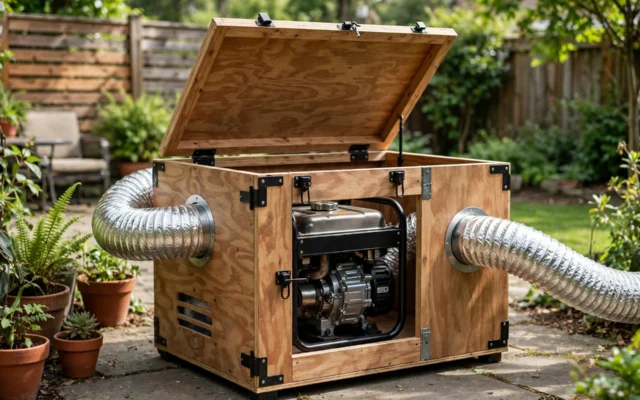
DIY Generator Quiet Box: How to Build a Noise-Reduction Enclosure
A DIY generator quiet box can cut noise 10–20 dB — but ventilation and CO safety are the whole project. Materials, baffle design, fan sizing, and the mistakes to avoid.

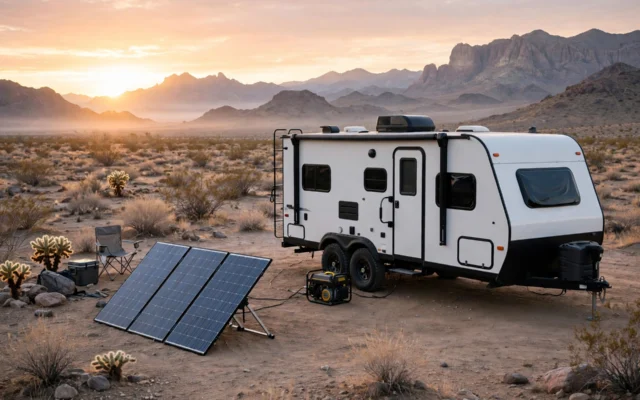
Boondocking Power Setup: Generator + Solar for Off-Grid Camping
The ideal boondocking power setup pairs solar with a generator and battery bank. Real daily load math, sizing tiers, and the generator run strategy that sips fuel.
RV Generator Quiet Hours & Campground Etiquette Guide
RV generator quiet hours are usually 10pm–8am, with limited daytime generator windows in national parks. The rules, the unwritten etiquette, and how to stay neighborly.
2 Comments