


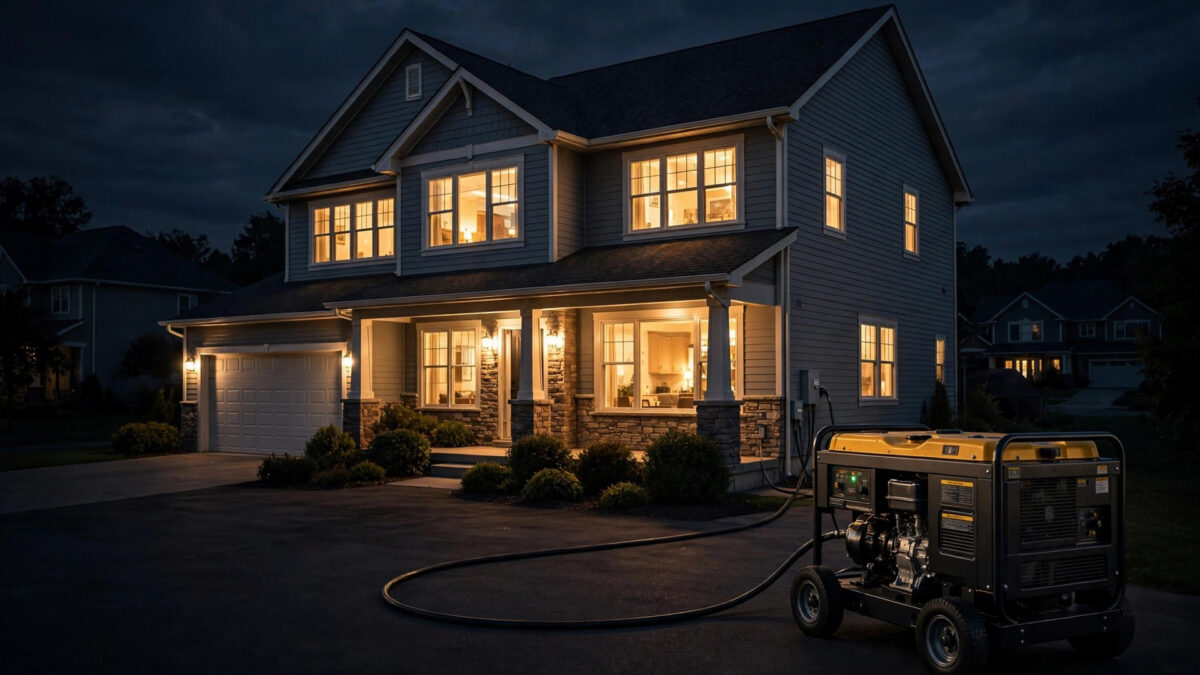
Ten thousand watts is where portable generators start acting like whole-home backup. It’s the threshold where central air conditioning enters the picture, where a 50-amp transfer switch makes sense, and where the question changes from “what stays on?” to “what can’t I run?” For a lot of families, the answer is: not much.
The 2027 field is led by DuroMax’s one-two punch — the XP10000E (gasoline workhorse) and XP10000HX (dual-fuel, 5-year warranty) — with the Generac GP15000E towering above for buyers who want maximum portable watts. The Champion 100416 tri-fuel and Westinghouse WGen9500DF round out the value end. All real specs, all verified listings.
Key takeaways
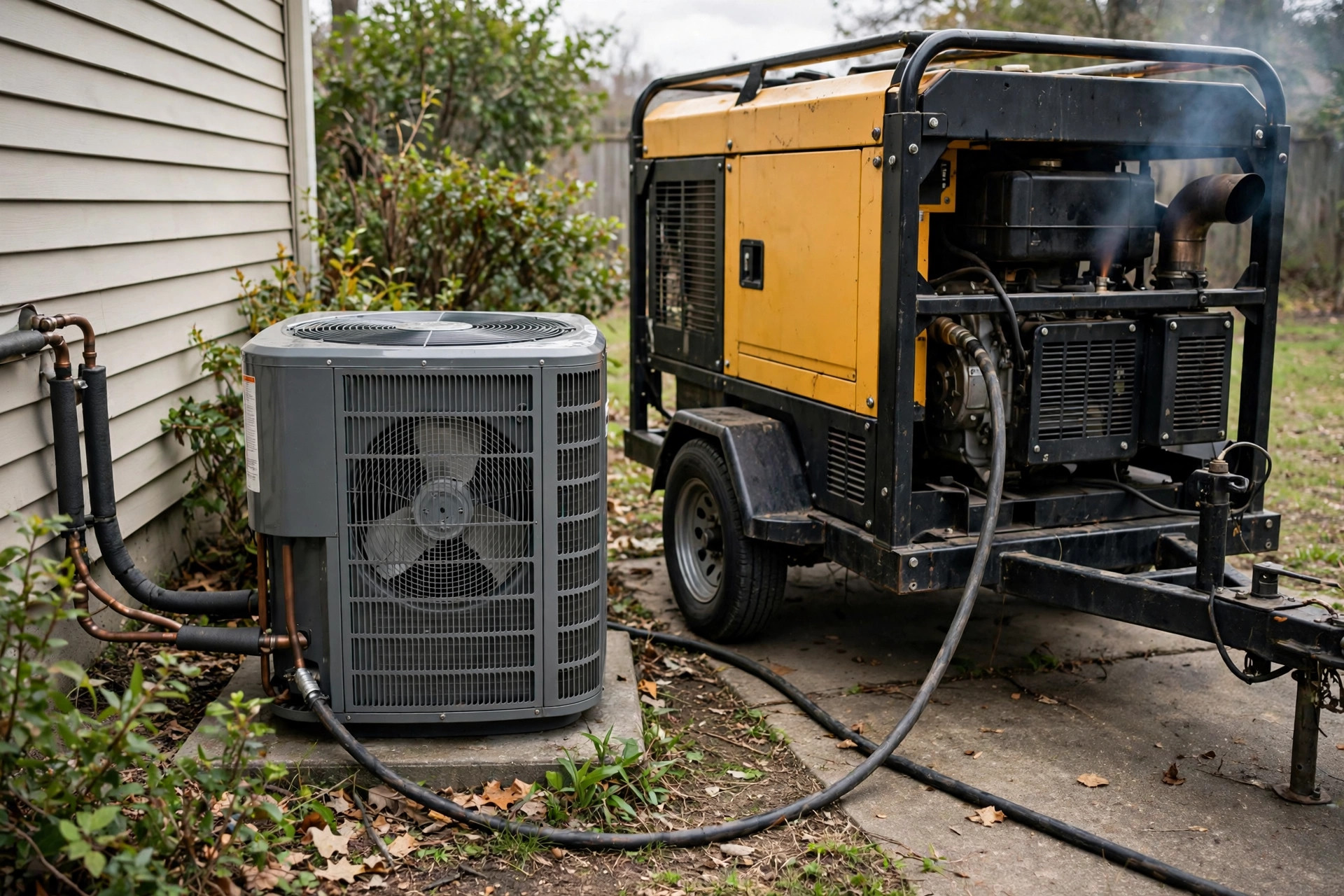
- 10,000W is the whole-home threshold: central AC, well pump, and all essentials can run together.
- The DuroMax XP10000HX is the class value leader — dual fuel, 10,000W, 5-year warranty.
- Pair with a 50-amp manual transfer switch installed by an electrician (NEC Article 702).
- Fuel burn is real at this size: ~1 gallon/hour at half load. Plan storage accordingly.
- These are 200+ pound machines — position once, preferably near the transfer switch.
Quick picks
- Best overall: DuroMax XP10000HX — 10,000W dual fuel, 5-year warranty, the value king.
- Best gasoline: DuroMax XP10000E — 10,000W gas workhorse, MX2 full-power outlets.
- Best maximum watts: Generac GP15000E — 15,000 running watts for the biggest loads.
- Best tri-fuel: Champion 100416 — gas/propane/natural gas flexibility.
- Best value: Westinghouse WGen9500DF — 9,500W dual fuel near the 10kW line for less.
Best overall
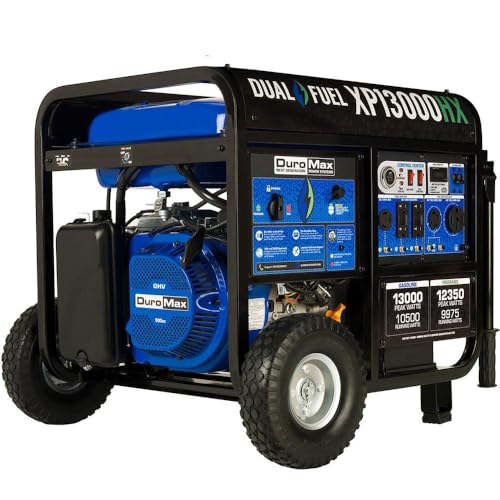
DuroMax XP10000HX Dual-Fuel Generator
- Running Watts: 8,000 W
- Runtime: ~8 hrs @ 1/2 load
- Noise Level: ~74 dB
- Weight: 228 lbs
As an Amazon Associate, we earn from qualifying purchases.
The XP10000HX is the generator I’d buy for my own whole-home setup: 10,000 peak watts, 8,000 running watts, dual fuel, and a 5-year DuroMax warranty — typically $1,300–$1,600. The 439cc engine is the proven heart of DuroMax’s lineup, and the HX trim adds the modern touches: push-button start, CO Alert, digital display.
On 8,000 running watts you can hold a 3-ton central AC (with managed loads), well pump, fridge, freezer, and lights simultaneously. The dual-fuel propane option covers extended outages without gasoline logistics. At 228 pounds it’s a two-person position job — put it where it’ll live.
Based on spec comparison and owner feedback, the XP10000HX is the most-recommended 10kW-class portable among prepared homeowners, and the 5-year warranty is unmatched in the class. It’s the default answer for a reason.
Pros
- Best value per watt in the class
- 5-year warranty, longest available
- Dual fuel + CO Alert
- Proven 439cc platform
Cons
- 8,000W running — size AC carefully
- 228 lbs, loud open-frame
Best gasoline
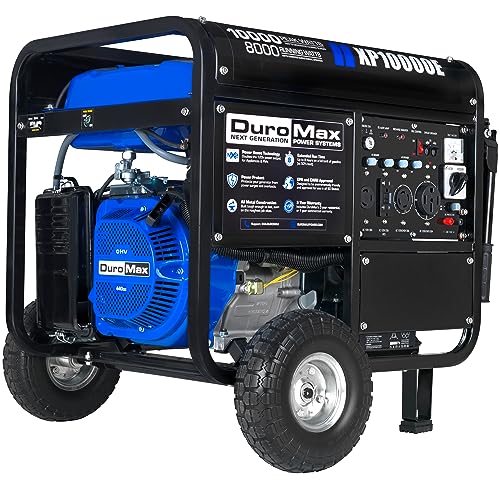
DuroMax XP10000E Portable Generator
- Running Watts: 8,000 W
- Runtime: ~8 hrs @ 1/2 load
- Noise Level: ~74 dB
- Weight: ~220 lbs
As an Amazon Associate, we earn from qualifying purchases.
The XP10000E is the gasoline-only sibling — same 10,000/8,000-watt output from the 439cc engine, typically $1,000–$1,300, a couple hundred less than the HX. DuroMax’s MX2 technology delivers full power from the 120V outlets, which matters for high-draw 120V appliances.
Buy the E over the HX if you’ll only ever run gasoline and want the lowest buy-in to the 10kW class. You lose propane flexibility and the HX’s 5-year warranty (the E carries 3 years), but the core generator is the same proven machine.
Based on owner feedback, the XP10000E is a long-running favorite — it’s been in DuroMax’s lineup for years with a deep parts base. For gasoline-only whole-home backup on a budget, it’s the rational choice.
Pros
- Lowest price into the 10kW class
- MX2 full-power 120V outlets
- Years-proven platform, deep parts
Cons
- Gasoline only — no propane fallback
- 3-year warranty vs. HX’s 5-year
Best maximum watts
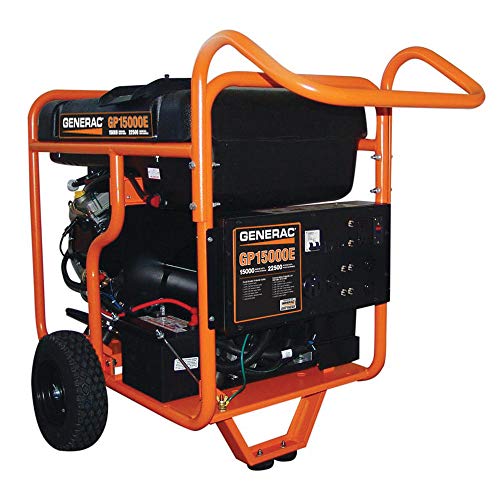
Generac GP15000E Portable Generator (5734)
- Running Watts: 15,000 W
- Runtime: ~10 hrs @ 1/2 load
- Noise Level: ~76 dB
- Weight: 373 lbs
As an Amazon Associate, we earn from qualifying purchases.
The GP15000E is the portable ceiling: 15,000 running watts, 22,500 surge, from a 992cc V-twin. That’s not just whole-home — that’s whole-home with a 5-ton AC, electric dryer, and workshop running at once. If your load list broke every 10kW generator, this ends the discussion.
The 16-gallon tank, electric start, and Generac’s service network come standard. At 373 pounds, it needs a trailer or a permanent pad — this is “portable” in the legal sense only. One caution on 15kW ownership: the 992cc V-twin at light loads is inefficient — running a 15,000W generator to power 3,000W of essentials burns nearly as much fuel as running it at half load. If your typical outage draw is small, the big Generac wastes fuel compared to a right-sized 10kW unit. Buy the GP15000E for the loads you actually have, not the ones you imagine.
Typical pricing runs $2,800–$3,400. Based on spec comparison and owner feedback, it’s overkill for most families — be honest about your loads before buying 15,000 watts. But for large homes, small farms, or buyers who never want to think about load management again, it’s the definitive answer. Our emergency generator guide can help sanity-check whether you truly need this much.
Pros
- 15,000W — runs everything, no management
- V-twin built for sustained loads
- Deepest service network
Cons
- Overkill for most homes
- 373 lbs, thirsty, loud
Best tri-fuel
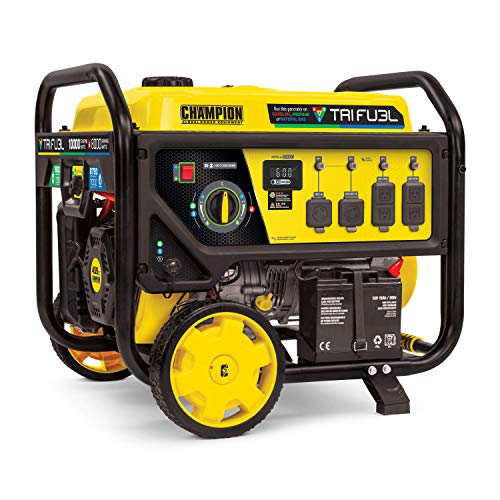
Champion 100416 Tri-Fuel Portable Generator
- Running Watts: 8,000 W (gas)
- Runtime: ~10 hrs @ 1/2 load (gas)
- Noise Level: 74 dB
- Weight: ~210 lbs
As an Amazon Associate, we earn from qualifying purchases.
The Champion 100416 brings something none of the others do: natural gas. As a tri-fuel 10,000/8,000-watt unit (typically $1,100–$1,400), it can run off your home’s gas line indefinitely — the ultimate extended-outage fuel — with propane and gasoline as backups.
The 459cc engine, electric start, and CO Shield are standard Champion fare. On natural gas, expect roughly 7,000 running watts after the NG derate — still enough for essentials plus a smaller AC. The 8.5-gallon gasoline tank covers portable use away from the gas line.
Based on owner feedback, the 100416 is the pick for buyers with a natural gas hookup who want whole-home capability without fuel logistics. Have a plumber install the NG quick-connect and verify meter capacity first — see our natural gas generator guide for the full walkthrough.
Pros
- Natural gas = unlimited outage fuel
- Tri-fuel flexibility
- CO Shield + electric start
- Strong value
Cons
- NG output derates ~10–15%
- Needs plumber-installed hookup
Best value
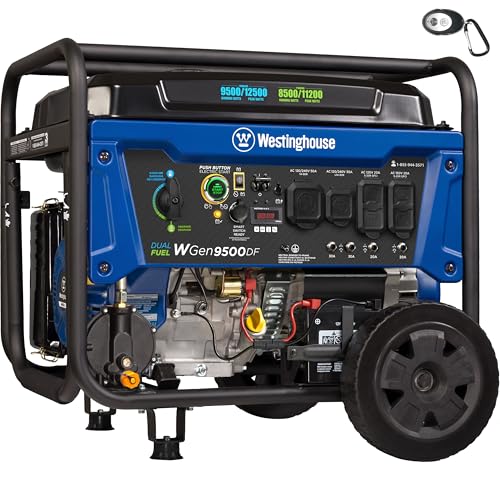
Westinghouse WGen9500DF Dual-Fuel Generator
- Running Watts: 9,500 W
- Runtime: 12 hrs @ 1/2 load
- Noise Level: ~74 dB
- Weight: 210 lbs
As an Amazon Associate, we earn from qualifying purchases.
The WGen9500DF sneaks in just under the 10kW line — 12,500 peak, 9,500 running watts — but at typically $1,000–$1,300 it’s the cheapest way to get within spitting distance of whole-home power. Dual fuel, 12-hour runtime, electric start.
The honest assessment: 9,500 running watts runs a 3-ton AC plus essentials in most homes. You’re giving up 500W versus the DuroMax pair and gaining $300+ in savings. For buyers whose load math fits, that’s a smart trade.
Based on spec comparison and owner feedback, the WGen9500DF is the value alternative for the 10kW shopper — nearly the capability, meaningfully less money. If your AC is 3 tons or smaller and your essentials are standard, this is all the generator you need.
Pros
- Near-10kW power at the lowest price
- Dual fuel, 12-hour runtime
- Electric start, hour meter
Cons
- 9,500W — just under the 10kW line
- Loud open-frame
Side-by-side comparison
| Product | Running W | Fuel | Noise | Best for |
|---|---|---|---|---|
| DuroMax XP10000HX | 8,000 | Dual | 74 dB | Overall value |
| DuroMax XP10000E | 8,000 | Gas | 74 dB | Gasoline budget |
| Generac GP15000E | 15,000 | Gas | 76 dB | Maximum watts |
| Champion 100416 | 8,000 | Tri-fuel | 74 dB | Natural gas option |
| Westinghouse WGen9500DF | 9,500 | Dual | 74 dB | Value near-10kW |
How to choose a 10000-watt generator
At this size, the decisions are about infrastructure, not just the generator.
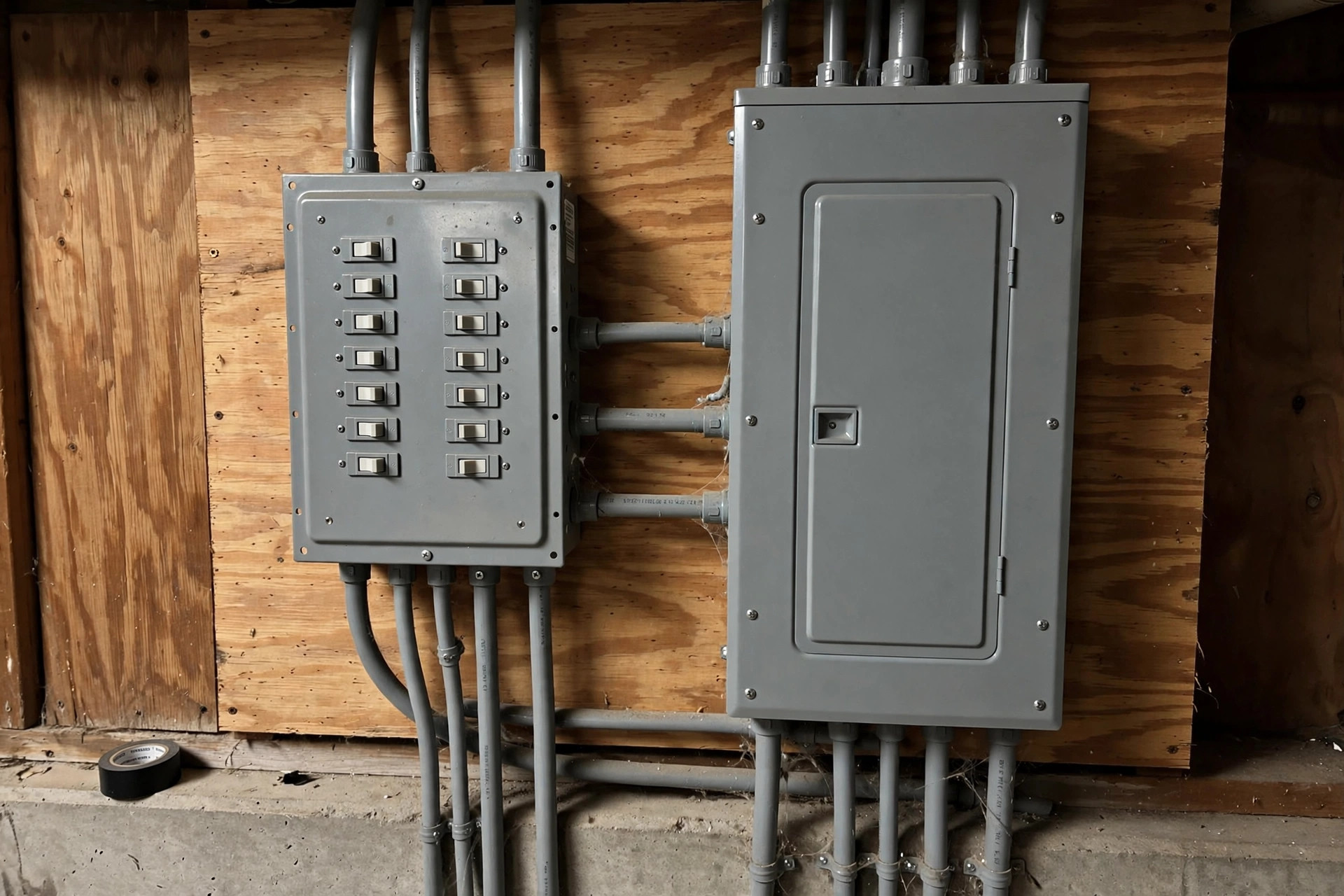
The 50-amp transfer switch
10,000W-class generators pair with 50-amp manual transfer switches (or interlock kits on 200-amp panels), installed by an electrician per NEC Article 702. Budget $800–$2,000 for the switch plus installation — at this wattage, the install is a bigger job with heavier-gauge wire. Walk your panel with the electrician: with 8,000–9,500 running watts, most homes can back up everything except the electric range and dryer running simultaneously. Our transfer switch guide has the details.
Will it run my central AC?
The defining question. A 3-ton central AC draws ~3,500W running with a 10,000W+ starting surge — which is why surge ratings matter enormously here. The DuroMax pair (10,000W surge) and Westinghouse (12,500W surge) handle 3-ton units with other loads managed. A 4–5 ton AC needs the Generac GP15000E’s 22,500W surge, or a soft-start kit on the AC (highly recommended — it can cut starting surge by 60–70% and costs a few hundred installed). Size the AC first, then the generator.
Fuel burn: do the storage math
Big watts drink fuel: roughly 0.9–1.1 gallons per hour at half load. A 3-day outage at moderate loads needs 40–60 gallons of gasoline — that’s a serious storage commitment (and rotation schedule). This is why dual-fuel and tri-fuel dominate the class: propane stores forever, natural gas never runs out. If you’re buying 10kW for storm prep, fuel logistics deserve as much thought as the generator. Our emergency generator guide covers the full prep system.
Noise and neighbor reality
Every 10kW-class portable is an open-frame ~74 dB machine — there’s no quiet option at this wattage in the portable world (the Honda EU7000iS tops out at 7,000W). Position it as far from bedrooms and neighbors as the 20-foot minimum allows, exhaust downwind. For longer outages, some owners build sound-dampening enclosures — keep 3+ feet of clearance on all sides and never restrict airflow, or you’ll cook the engine.
Portable vs. standby: the honest crossover
At $1,300–$3,400 for the generator plus $800–$2,000 for the switch install, you’re in $2,100–$5,400 territory — approaching standby money. A 14kW automatic standby runs $8,000–$12,000 installed but starts itself, exercises weekly, and runs on NG/propane with zero intervention. If outages are frequent, someone needs medical equipment powered, or you travel — price the standby. The portables here win on upfront cost and flexibility; standbys win on everything else. Our best portable generators roundup frames the broader choice.
Will a 10000-watt generator run my whole house?
How much fuel does a 10000W generator use?
Do I need a soft-start kit for my AC with a 10000W generator?
Can I run a 10000W generator on natural gas?
Portable 10kW or automatic standby generator?
The fuel-storage reality of 10kW ownership
Let me put the fuel math where you can’t ignore it, because this is where 10kW dreams meet reality. At half load, a 10,000-watt-class generator burns roughly a gallon of gasoline per hour. A 24-hour outage day: ~20 gallons at moderate loads. A week: 120+ gallons. That’s not a couple of red cans — that’s a drum, a rotation schedule, and a serious conversation with your local fire code.
Practical gasoline storage tops out around 25–30 gallons for most homeowners (six 5-gallon cans), which covers roughly a day and a half of continuous moderate use. Beyond that, you’re either refueling during the outage (gas stations may be dark) or you’ve planned ahead with better fuels. This is the strongest argument for the dual-fuel and tri-fuel picks in this roundup: two 20-lb propane tanks add ~9 gallons of indefinite-storage fuel, and a natural gas hookup (Champion 100416) removes the question entirely.
My recommended 10kW fuel system: 25 gallons of stabilized gasoline rotated every 6 months (pour the old into your car, refill the cans — the “rotation” people never do is the one that matters), two full 20-lb propane tanks, and — if you have gas service — the plumber-installed NG quick-connect. That stack covers a week-long outage without leaving the property. The generator is the cheap part of this system; the fuel discipline is the actual investment.
One more thing: at this size, buy a battery tender for the electric-start battery and keep it plugged in. A dead starter battery on day three of an outage is a special kind of misery, and it’s the most common “my generator won’t start” call I hear about. Twenty dollars of prevention.
Our verdict
The DuroMax XP10000HX is the best 10,000-watt generator for 2027 — dual-fuel versatility, proven platform, and a 5-year warranty at a value price. Gasoline-only buyers should save with the XP10000E. If your loads laugh at 10kW, the Generac GP15000E ends the argument. And natural-gas homes should look hard at the Champion 100416. Budget the 50-amp transfer switch install and a real fuel-storage plan alongside the generator itself — at this size, the machine is only half the system. Get all three pieces in place — generator, switch, fuel — and the next outage becomes an inconvenience instead of a crisis.
How we researched this: Whole-home load analysis (central AC starting surges, 50A transfer switch compatibility), spec comparison across the 10kW class, fuel-consumption math for multi-day outages, and owner feedback on sustained high-load use. Every pick has a verified Amazon listing and CO shutdown protection. We verified surge ratings against real 3-ton AC startup demands rather than taking marketing peaks at face value.

Related Guides
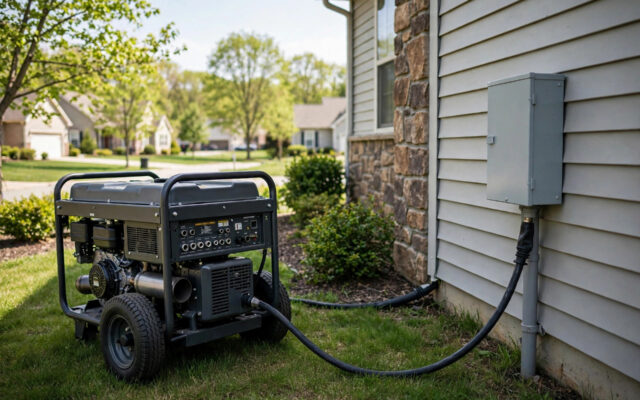
Best 12000 Watt Generators of 2027
Best 12000 watt generators of 2027: 6 whole-home portables compared — tri-fuel vs dual fuel, real specs, transfer switch guidance and fuel planning.

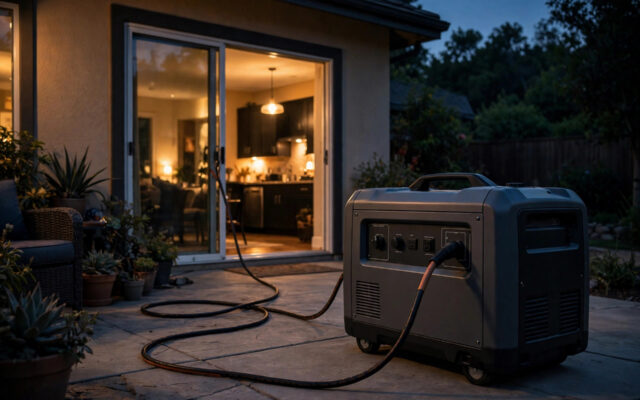
Best 3500 Watt Generators of 2027
Best 3500 watt generators of 2027: 5 top picks compared — inverter vs conventional, dual fuel options, real running-watt specs and buying guide.
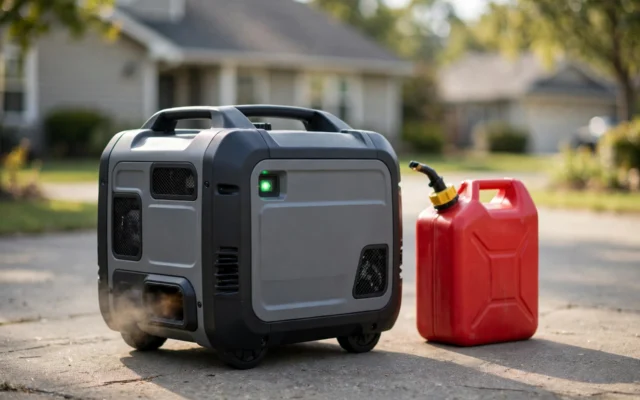
How Much Electricity Does a Generator Make Per Gallon of Gas?
A typical portable gas generator makes 4–7 kWh of electricity per gallon. We break down kWh per gallon by load, size, and fuel type so you can plan fuel for any outage.
1 Comment