


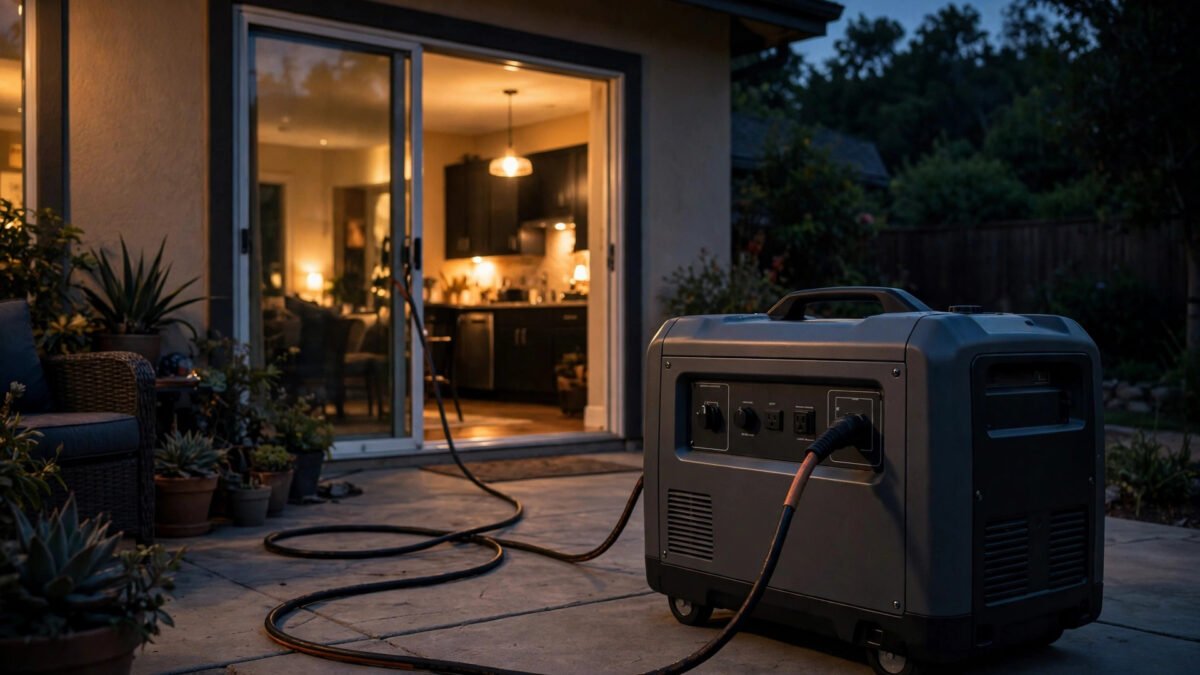
The 3,500-watt class is the most useful size most people never think about. It’s the sweet spot between “runs the fridge and some lights” and “costs as much as a used car.” A good 3,500-watt generator runs a refrigerator, a freezer, lights, phones, a TV, and a microwave (one at a time) — basically everything that matters in an outage — while staying portable enough for one person to move and quiet enough not to start a neighborhood war.
It’s also the most confusing class to shop, because “3,500 watts” means different things: 3,500 starting watts on an inverter with 3,000 running, or 3,500 running watts on a conventional with 4,375 starting. Same number on the box, very different generators. I’ve sorted through the class for 2027, and here’s what’s actually worth buying.
Key takeaways
- Check whether “3,500W” means starting or running watts — it changes what the generator can actually power by 500–1,000 watts.
- The Generac iQ3500 is the best all-around pick: quiet inverter power, electric start, and 3,000 running watts for ~$1,300–$1,600.
- Need dual fuel? The Champion 201181 gives you 3,500 running watts on gasoline or propane for less money.
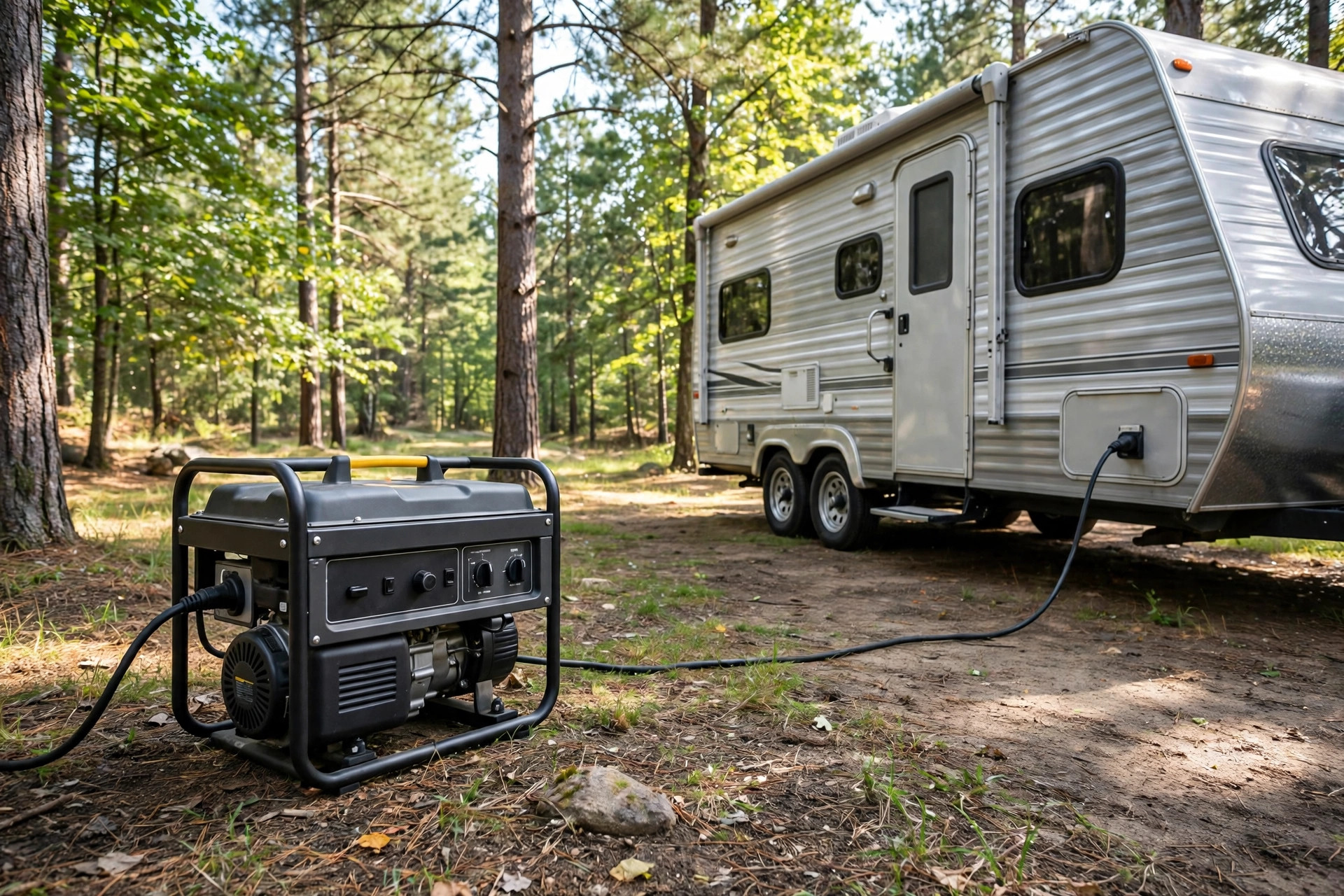
- For RVs and campgrounds, prioritize noise (under 65 dB) and CO safety sensors — all our inverter picks qualify.
Quick picks: Best overall — Generac iQ3500. Best dual-fuel value — Champion 201181. Best open-frame inverter — Champion 4250 Dual Fuel. Best for camping — Champion 4500 Inverter. Best premium — Honda EU3200i.
Best overall
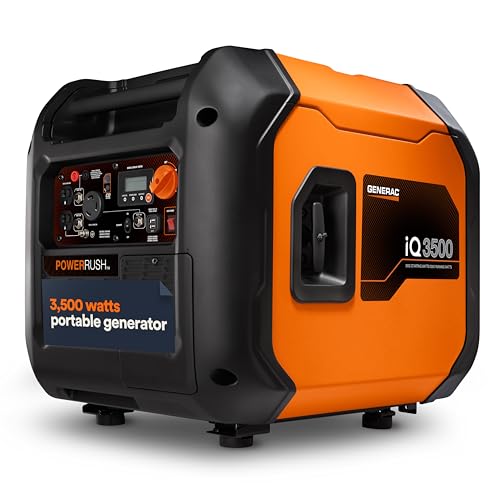
Generac iQ3500 Inverter Generator
- Running Watts: 3,000
- Runtime: Up to ~7 hours at 50% load
- Noise Level: ~50 dB (light load)
- Weight: 109 lbs
As an Amazon Associate, we earn from qualifying purchases.
The iQ3500 keeps winning this category because it nails the fundamentals: 3,500 starting / 3,000 running watts of clean inverter power, genuinely quiet operation (~50 dB at light load), electric start with the clever PowerDial (start/run/stop in one dial), and 109 pounds — heavy enough to be stable, light enough to load solo with the built-in handle and wheels.
Generac’s PowerRush technology gives it about 50% more starting capacity than its rating suggests, which matters in this class — it’s the difference between starting a fridge compressor and tripping. The CO sensor auto-shutdown is standard on current models. For the money (roughly $1,300–$1,600), it’s the generator I recommend to most people who ask for “something for outages and camping.”
Pros
- Quiet inverter power safe for electronics
- Electric start with intuitive PowerDial
- Strong starting surge for the class
- Fair price
Cons
- Gasoline only
- 120V only — no 240V loads
- 109 lbs is a solo lift but not a carry
Best dual-fuel value
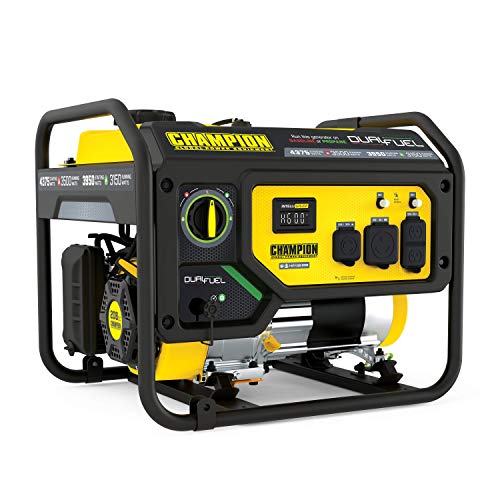
Champion 201181 Dual Fuel Generator (4,375 / 3,500W)
- Running Watts: 3,500 (gas) / 3,150 (propane)
- Runtime: Up to 14 hours (gas) / 10.5 hours (propane) at 50%
- Noise Level: 68 dB
- Weight: ~105 lbs
As an Amazon Associate, we earn from qualifying purchases.
Note the rating carefully: 4,375 starting / 3,500 running watts — a genuine 500 more continuous watts than the Generac. The 201181 runs on gasoline or propane, stretches to 14 hours on its 4.7-gallon gas tank (10.5 hours on a 20-lb propane tank), and includes Champion’s Intelligauge, Volt Guard surge protection, and Cold Start technology. At 68 dB it’s louder than the inverter picks — this is a conventional open-frame machine — but for the price (often under $800) the watts-per-dollar is outstanding.
The RV-ready outlet panel (TT-30R plus household outlets) makes it a favorite for travel trailers. If you want maximum power for minimum money and don’t mind the noise, this is it.
Pros
- 3,500 true running watts — most in class
- Dual fuel with great propane runtime
- Excellent price
- RV-ready outlets
Cons
- 68 dB — too loud for quiet campgrounds
- Conventional power, not inverter-clean
- Recoil start only
Best open-frame inverter
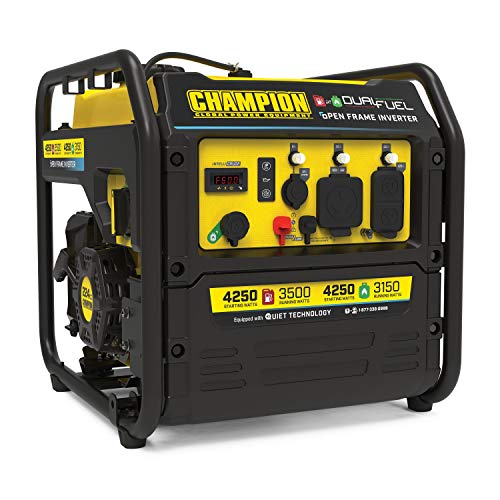
Champion 4250-Watt Dual Fuel Open Frame Inverter
- Running Watts: 3,500
- Runtime: Up to 22 hours (gas) at 25% load
- Noise Level: ~64 dB
- Weight: ~92 lbs
As an Amazon Associate, we earn from qualifying purchases.
This one splits the difference cleverly: an open-frame design (lighter, cheaper, better cooling) with inverter electronics (clean power, quiet-ish operation). 4,250 starting / 3,500 running watts on gasoline or propane, with up to 22 hours of runtime on gas — the longest in this roundup by far. Champion claims it’s 50% quieter than a traditional 3,500-watt conventional, and owner reports back that up.
If you want inverter-clean power and dual-fuel flexibility without the enclosed-inverter price premium, this is the most interesting generator in the class. The 4-gallon tank and 22-hour rating make it a genuine multi-day outage machine.
Pros
- Inverter-clean power + dual fuel — rare combo
- Outstanding 22-hour runtime
- Quieter than conventional 3500s
Cons
- Open frame is louder than enclosed inverters
- Less refined than the Generac/Honda
Best for camping
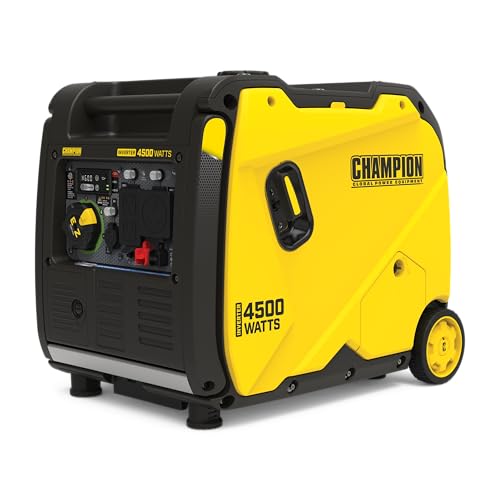
Champion 4500-Watt Inverter Generator with CO Shield
- Running Watts: 3,500
- Runtime: Up to 14 hours at 25% load
- Noise Level: 61 dBA
- Weight: ~97 lbs
As an Amazon Associate, we earn from qualifying purchases.
For campgrounds and RVs, noise rules everything, and the Champion 4500 runs at 61 dBA — conversation level. 4,500 starting / 3,500 running watts from a 212cc engine, 14 hours of runtime at quarter load on 2.3 gallons, and CO Shield auto-shutdown standard. The EZ Start dial, cold start technology, and covered outlets show Champion thought about actual camping use, not just spec sheets.
It’s the generator I’d hand to someone who says “I need power at the campsite and I don’t want to be that neighbor.” For more RV-specific picks, see our RV generator guide.
Pros
- 61 dBA — campground friendly
- CO Shield safety
- Long runtime, easy starting
Cons
- Gasoline only
- Heavier than smaller inverters
Best premium
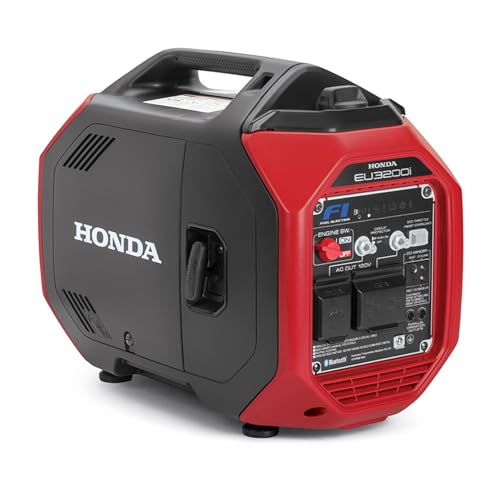
Honda EU3200i Inverter Generator
- Running Watts: 2,600
- Runtime: Up to 8.6 hours at quarter load
- Noise Level: 54–58 dB
- Weight: ~60 lbs
As an Amazon Associate, we earn from qualifying purchases.
The EU3200i is the premium answer: 3,200 peak / 2,600 running watts, fuel injection, 54–58 dB, and Honda build quality throughout. Yes, it’s 400 fewer running watts than the Generac and costs roughly twice as much. What you get is the generator that starts on the first pull after sitting for six months, holds its value better than anything in the class, and will still be running in 15 years. For buyers who’ve been burned by a cheap generator dying mid-outage, that reliability has a price — and this is it.
Pros
- Fuel injection — flawless starting
- Honda reliability and resale
- Light and quiet
Cons
- 2,600 running watts — least in this roundup
- Premium price
| Generator | Running W | Fuel | Noise | Best for |
|---|---|---|---|---|
| Generac iQ3500 | 3,000 | Gas | ~50 dB | Best overall |
| Champion 201181 | 3,500 | Dual fuel | 68 dB | Max watts/price |
| Champion 4250 DF inverter | 3,500 | Dual fuel | ~64 dB | Runtime + clean power |
| Champion 4500 inverter | 3,500 | Gas | 61 dBA | Camping |
| Honda EU3200i | 2,600 | Gas (EFI) | 54–58 dB | Premium reliability |
How to choose a 3,500-watt generator
Starting watts vs. running watts — read the fine print
This class is where the distinction matters most. “3,500W” on an inverter usually means 3,500 starting / 3,000 running. On a conventional, it often means 3,500 running / 4,375 starting. That’s a 500-watt real-world difference — the difference between running the microwave and the fridge at the same time. Always buy on running watts.
What 3,000–3,500 running watts actually powers
A realistic outage load: refrigerator (200W) + freezer (150W) + lights (200W) + TV and Wi-Fi (250W) + phone chargers (50W) = under 1,000 watts. Add a microwave (1,000W) or a space heater (1,500W) one at a time and you’re at 2,500. That’s the whole use case — this class covers it with headroom. What it won’t do: central A/C, electric water heaters, well pumps (marginal), or electric dryers. For those, see our 12,000-watt roundup.
Inverter vs. conventional in this class
Inverters are quieter, more fuel-efficient, and safe for electronics — worth it if you camp, have close neighbors, or run the generator often. Conventionals give you more running watts per dollar and simpler maintenance. The Champion 4250 open-frame inverter is the interesting middle ground: inverter power without the enclosed-inverter price.
Dual fuel is worth considering
A 20-pound propane tank runs the Champion 201181 for 10.5 hours, and propane never goes stale. If your generator sits between outages, dual fuel eliminates the #1 failure mode (gummed carburetor). Our dual-fuel generator guide covers the category in depth.
Don’t forget the break-in
Whatever you buy, change the oil after the first 20–25 hours (many manuals say 30; earlier is better), then every 100 hours. Most “my generator died” stories trace back to skipped break-in maintenance, not bad manufacturing.
What can a 3500-watt generator run?
Is 3500 starting watts the same as 3500 running watts?
How long will a 3500-watt generator run on a tank of gas?
Can a 3500-watt generator run a refrigerator and freezer?
Inverter or conventional 3500-watt generator?
Our verdict
The Generac iQ3500 is the best 3,500-watt generator for most people in 2027 — quiet, electric start, fairly priced. Value shoppers should grab the Champion 201181 dual fuel; campers, the Champion 4500; and buy-it-for-life folks, the Honda EU3200i. Match the generator to your noise tolerance and fuel situation, and you can’t go far wrong in this class.
Three real outage scenarios
Summer storm, 8 hours: fridge (200W), freezer (150W), lights (200W), Wi-Fi and phones (100W), TV (250W), plus a fan or two (150W). Total: ~1,050W — barely a third of any generator here. The Generac iQ3500 on Eco mode sips about 0.3 gal/hr; you’ll burn 3 gallons all day. This is the scenario 90% of outages actually are, and it’s why the quiet inverters win for most people.
Winter ice storm, 3 days: everything above plus a space heater (1,500W) cycling half the time and a microwave (1,000W) for meals. Realistic sustained load: 1,500–2,500W with the heater cycling. Any 3,000–3,500 running-watt unit handles it; fuel becomes the constraint — roughly 8–12 gallons per day on a conventional, 6–9 on an inverter. This is where the Champion 4250’s 22-hour runtime and the 201181’s 14-hour tank earn their keep.
Heat wave, 2 days: everything in scenario one plus a portable A/C (1,200W running, 2,000W+ surge) or window units. Now you’re at 2,500–3,000W sustained with hard surges — the edge of this class. It works, but there’s no headroom left, and a second window A/C trips the breaker. If multi-day A/C is the requirement, that’s the signal to step up to the 12,000-watt class instead of fighting the limit.
Parallel kits: doubling up later
Three of the five picks here (both Champions and the Generac) are parallel-ready: buy one now, add a second identical unit later with a parallel kit ($70–$150) for double the power. Two iQ3500s give you 6,000 running watts — enough for a small window A/C plus everything else. It’s a smart growth path if your needs might expand, and two smaller generators are easier to move, quieter at light load (run one), and give you redundancy if one fails mid-outage. The catch: both units must be the same model, and you’re buying two generators eventually — do the total math before committing.
The maintenance schedule that prevents 90% of failures
Most generator failures aren’t manufacturing defects — they’re maintenance that didn’t happen. The schedule that keeps a 3,500-watt generator alive for a decade: change the oil after the first 20–25 hours (break-in), then every 100 hours or annually. Check the air filter every 50 hours; replace yearly or when dirty. Replace the spark plug every 200 hours or every two years — it’s a $4 part. Inspect the fuel lines yearly for cracking, especially with ethanol fuel. Exercise the generator under load (at least 50% load, not idling) for 20–30 minutes every month — this burns off moisture, keeps seals pliable, and proves it’ll start when you need it.
The monthly exercise run is the one everyone skips and the one that matters most. A generator that hasn’t run in eight months is a generator you don’t actually own — you own a hope. Put a recurring reminder on your phone. Twenty minutes, once a month, with a space heater plugged in as a load. That’s the whole religion.
Carbon monoxide: the rule that overrides everything
Every year, people die running generators too close to the house — usually in garages or under windows during outages. The rule is simple and absolute: 20 feet minimum from any building, exhaust pointed away, never in a garage, basement, or enclosed space — even with the door open. CO is colorless and odorless; by the time you feel sick, you’re in trouble. Place the generator so prevailing wind carries exhaust away from doors and windows, and put battery-powered CO alarms on every floor of the house (not just near the generator — CO drifts). The CO shutdown sensors on modern units (CO Shield, CO Alert, CO-MINDER, COsense) are excellent backup systems, but they’re the airbag, not the seatbelt. Distance is the seatbelt.
What about refurbished or open-box units?
If the budget is tight, factory-refurbished generators from the manufacturer (Generac and Champion both sell them) can save 20–30% with a real warranty — usually 1 year instead of 3. What I’d avoid: third-party “refurbished” units with no warranty, and any used generator you can’t test under load before buying. A used generator that starts and idles fine can still have a fried AVR or worn rings that only show up at full load. If you buy used, bring a space heater or two as a test load and run it hard for 15 minutes. No test, no sale.
How we researched this: Manufacturer specifications, retail owner-review analysis, and load-math verification against typical household appliances. We did not bench-test these units.

Related Guides
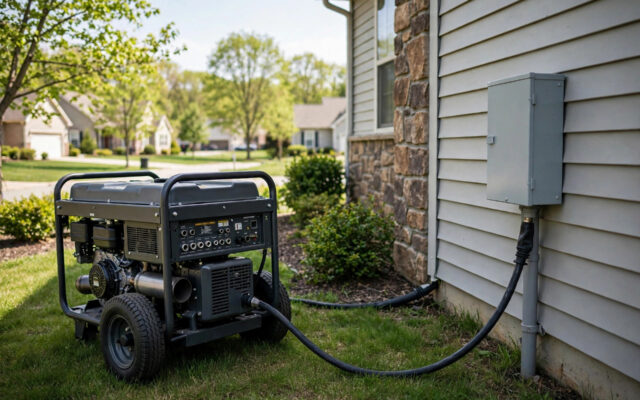
Best 12000 Watt Generators of 2027
Best 12000 watt generators of 2027: 6 whole-home portables compared — tri-fuel vs dual fuel, real specs, transfer switch guidance and fuel planning.

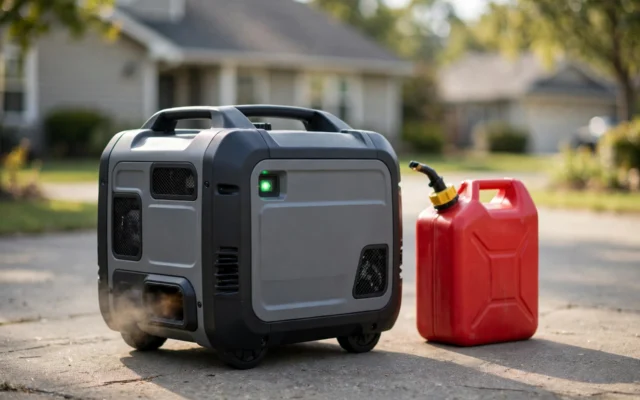
How Much Electricity Does a Generator Make Per Gallon of Gas?
A typical portable gas generator makes 4–7 kWh of electricity per gallon. We break down kWh per gallon by load, size, and fuel type so you can plan fuel for any outage.
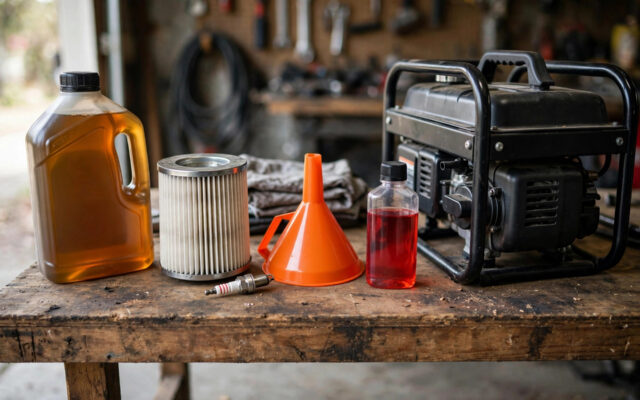
How Much Does Generator Maintenance Cost Per Year? (2027)
How much does generator maintenance cost per year? About $30-60 DIY or $80-150 pro for portables; $150-300 pro for standby units. Full breakdown inside.