


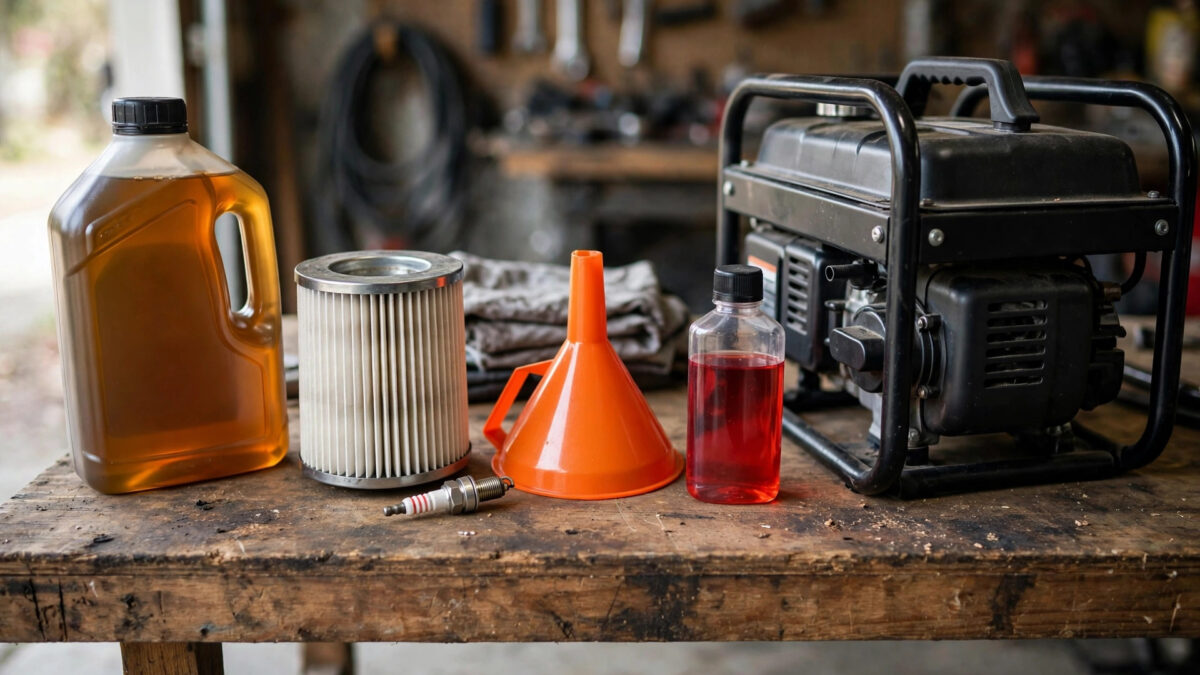
For a typical portable generator used as home backup, budget $30-60 a year if you do the maintenance yourself, or $80-150 a year for a professional tune-up. Whole-house standby generators cost more: roughly $100-200 a year DIY or $150-300 a year for a professional service visit, with dealer maintenance plans running $300-800 a year. The exact number depends on how many hours you run it — a generator that sits in the garage needs far less than one powering a jobsite daily.
People ask me this when they’re comparison-shopping generators, and it’s a smart question. The purchase price is only the beginning. But I’ve also seen the opposite mistake: owners who skip $30 worth of maintenance and end up with a $200 carburetor replacement. Let’s put real numbers on both sides.
Key takeaways
- DIY maintenance on a portable generator costs roughly $30-60/year for a backup-only unit: oil, filter, spark plug, and fuel stabilizer.
- A professional portable generator tune-up runs $80-150 per visit — worth it if you won’t do it yourself.
- Whole-house standby generators cost $150-300/year for professional service; skipping it can void the warranty.
- The biggest cost driver is operating hours: heavy users (jobsites, off-grid) may spend 3-5x more on consumables than occasional backup users.
- Neglect is the most expensive option — a varnished carburetor replacement ($100-200+) dwarfs a decade of stabilizer and oil changes.
What generator maintenance actually involves
Before the costs, the task list. For a portable gas generator, a year of ownership looks like this:
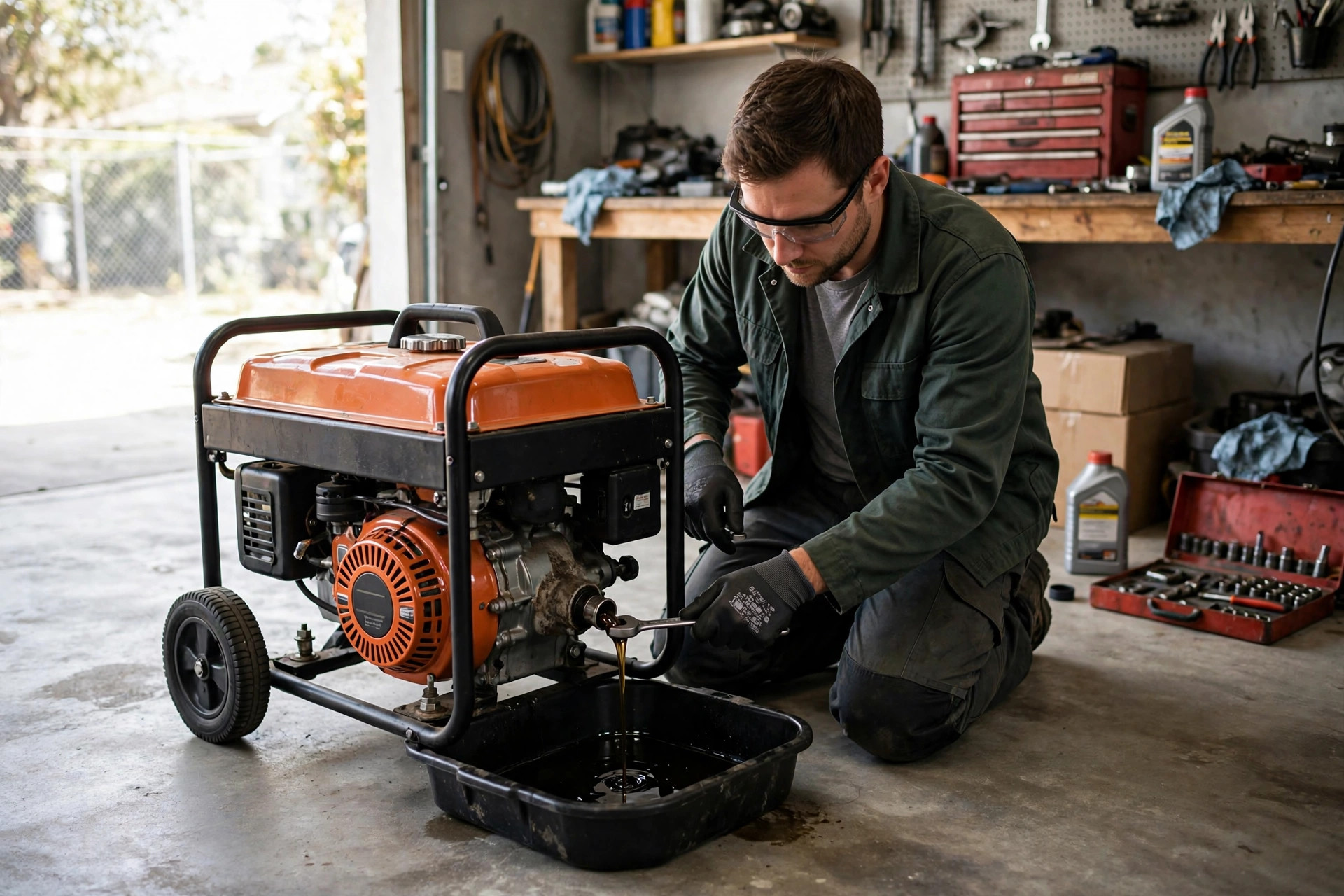
- Oil change: every 50-100 hours of operation, or once a year minimum. Most portables take 0.6-1.1 quarts.
- Air filter: inspect every 25 hours; clean (foam) or replace (paper) yearly.
- Spark plug: inspect yearly, replace every 100-200 hours or when worn.
- Fuel system: stabilizer in every tank of stored fuel; drain or run dry before long storage.
- Exercise run: 15-30 minutes under load monthly — free, but the fuel it burns counts.
- Battery (electric-start models): keep on a maintainer; replace every 3-5 years.
Whole-house standby units add: oil filter changes, valve adjustment checks, battery replacement every 2-3 years, transfer switch testing, and the weekly exercise cycle’s fuel.
DIY costs: the parts breakdown
Doing it yourself, here’s what the consumables actually cost at 2027 prices:
| Item | Typical cost | Frequency (backup use) | Annual cost |
|---|---|---|---|
| Engine oil (synthetic 10W-30, 1 qt) | $8-12 | 1-2 changes/year | $8-24 |
| Air filter (paper) | $8-15 | Yearly | $8-15 |
| Spark plug | $3-8 | Yearly | $3-8 |
| Fuel stabilizer (treats 20+ gal) | $6-10 | Yearly bottle | $6-10 |
| Exercise-run fuel (~0.5 gal/month) | ~$3.50/gal | Monthly | ~$20 |
| Total DIY (light backup use) | $30-60 |
That’s it. Under $60 a year to keep a portable generator healthy if you do the work yourself — and the “work” is a 20-minute oil change plus a monthly 15-minute exercise run. If you want the full routine, our oil change guide and air filter guide walk through both jobs.
Professional service costs
If you’d rather pay someone, here’s the market:
- Portable generator tune-up: $80-150 per visit at a small-engine shop. Typically covers oil and filter change, spark plug, air filter, fuel system check, and a load test. Some shops charge labor (~$80) plus parts.
- Whole-house standby service: $150-300 per visit is the common range, with a national average around $270. Covers oil and filter, air filter, plug check, battery test, transfer switch test, and an exercise/load test.
- Dealer maintenance plans: $300-800/year depending on coverage — usually two visits plus priority service and sometimes parts discounts.
For standby generators, there’s an extra incentive to pay for service: most manufacturers require documented professional maintenance to keep the warranty valid. A $25,000 standby with a voided warranty over skipped service is a painful lesson.
How usage changes the math
The tables above assume a backup generator that runs maybe 20-50 hours a year. Heavy use multiplies consumable costs:
| Owner profile | Hours/year | DIY cost/year | Pro service/year |
|---|---|---|---|
| Backup only, few outages | 10-30 | $30-60 | $80-150 |
| Storm-prone backup, frequent outages | 50-150 | $50-100 | $150-250 |
| Jobsite / contractor daily use | 500-1,000 | $150-300 | $400-800 |
| Off-grid primary power | 1,000-2,000+ | $250-500+ | $800-1,500+ |
| Whole-house standby (exercise + outages) | 30-100 | $100-200 | $150-300 |
The jobsite and off-grid rows surprise people, but the math is straightforward: oil every 100 hours means 5-10 oil changes a year instead of one, plus filters, plugs, valve adjustments, and eventually top-end work. At 2,000 hours a year, you’re also budgeting for a rebuild or replacement every few years — that’s a capital cost, not maintenance, but heavy users should know it’s coming.
The hidden costs people forget
- Battery replacement (electric-start portables and all standbys): $30-60 for a portable, $100-200+ for a standby, every 2-5 years. A battery maintainer ($25-40, one-time) doubles battery life.
- Fuel stabilization mistakes: skip stabilizer and you’ll eventually pay $100-200+ for a carburetor cleaning or replacement. The $8 bottle of stabilizer is the highest-ROI purchase in generator ownership.
- Valve adjustment: DIY is free with a $10 feeler gauge set; a shop charges $60-100. Needed roughly every 100-200 hours on portables.
- Exercise fuel: standby generators run a weekly 10-15 minute exercise cycle — a few gallons a year, plus the monthly loaded run you should be doing on a portable.
- Repairs from neglect: this is the big one. A generator that sits for two years with untreated fuel doesn’t need “maintenance” — it needs resurrection. Budget $150-300 at a shop, or a weekend of your time.
First-year costs are higher
One more thing for new owners: the first year costs a bit more than the steady state. Most manufacturers specify a break-in oil change at 20-25 hours (or the first month), which means two oil changes in year one. You’ll also buy the one-time kit: a funnel, the correct oil, a spare filter and plug, stabilizer, and possibly a battery maintainer and a quality cover. Budget an extra $40-80 in one-time supplies on top of the annual numbers above.
Is a maintenance plan worth it?
For portable generators, usually not — the DIY numbers are so low that a plan can’t save you much. For whole-house standby units, the math is closer: a $400/year dealer plan that includes two visits, priority storm response, and a battery replacement every few years can beat pay-as-you-go service, and it keeps your warranty documentation tidy. If you’re the type who won’t do maintenance without an appointment on the calendar, the plan pays for itself in reliability alone.
Want to see the other half of ownership costs — what the generator burns while running? Check our fuel consumption calculator to estimate your real cost per hour at your typical load.
Does fuel type change maintenance costs?
Slightly. Dual-fuel and propane generators tend to cost less to maintain over time — propane burns cleaner, so there’s less carbon buildup, the oil stays cleaner longer, and there’s no gasoline varnish threatening the carburetor during storage. Many propane users stretch oil changes a bit further (still follow the manual). Diesel generators go the other direction: more expensive oil, fuel filters, and parts, but much longer service intervals and engine life. For most homeowners on gasoline, the numbers in this article are the ones that apply.
How much does it cost to maintain a portable generator per year?
How much does whole house generator maintenance cost per year?
How often should you change generator oil?
What happens if you don’t maintain a generator?
Are generator maintenance plans worth the money?
So the honest answer to “how much does generator maintenance cost per year”: less than a tank of gas for your truck, if you do it yourself — and the alternative, neglect, costs ten times more. Put the oil change on your calendar the day you buy the generator, and you’ll never think about this number again.

Related Guides
Best 12000 Watt Generators of 2027
Best 12000 watt generators of 2027: 6 whole-home portables compared — tri-fuel vs dual fuel, real specs, transfer switch guidance and fuel planning.

Best 3500 Watt Generators of 2027
Best 3500 watt generators of 2027: 5 top picks compared — inverter vs conventional, dual fuel options, real running-watt specs and buying guide.
How Much Electricity Does a Generator Make Per Gallon of Gas?
A typical portable gas generator makes 4–7 kWh of electricity per gallon. We break down kWh per gallon by load, size, and fuel type so you can plan fuel for any outage.