


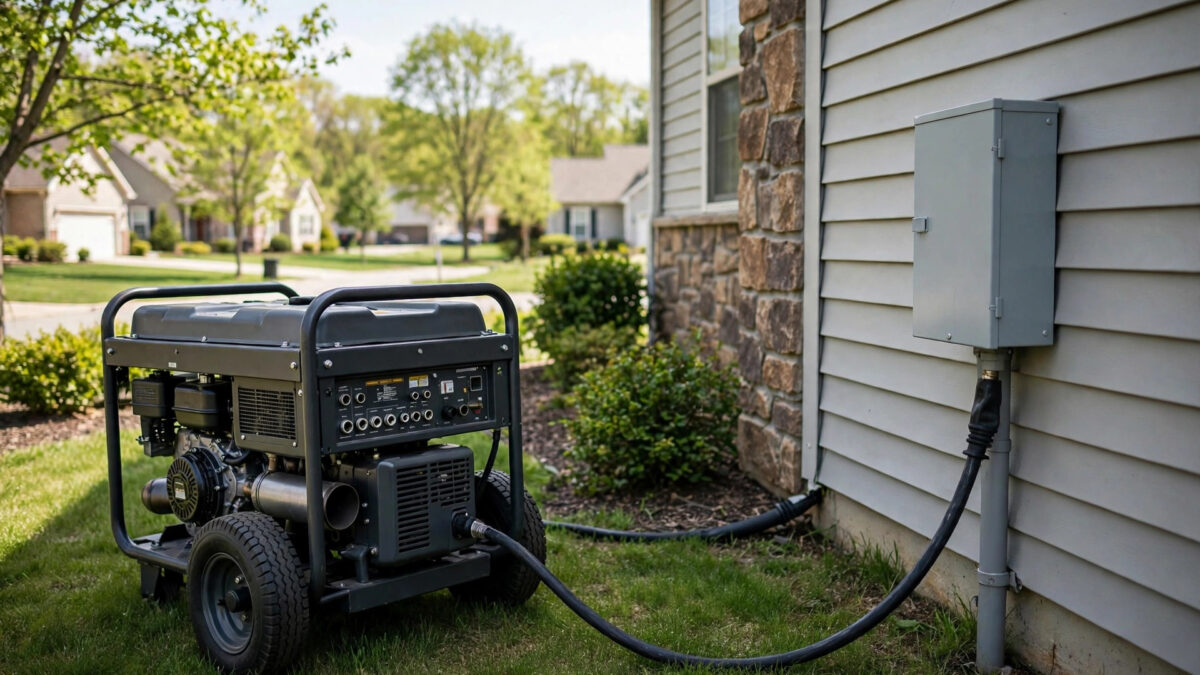
Twelve kilowatts is the line in the sand. Below it, you’re managing loads and making choices during an outage. At 12kW, you’re running the central A/C, the well pump, the fridge, the freezer, and the lights — all at once, without thinking about it. It’s the biggest class of portable generator before you cross into standby territory, and for whole-home backup on a budget, it’s the sweet spot.
I’ve compared the 12kW class for 2027 on the things that actually differentiate these machines — because at this size, they all make similar power. What separates them is fuel flexibility, noise, weight, warranty, and how the power panel is laid out. Here’s the honest ranking.
Key takeaways
- 12,000 running watts covers a 3–4 ton central A/C plus a full house — the practical ceiling for portable whole-home backup.
- The Champion 15,000/12,000W tri-fuel is the best overall: most power, V-twin smoothness, tri-fuel flexibility, CO Shield.
- Tri-fuel (gas/propane/natural gas) is the standout feature in this class — natural gas means unlimited runtime from a home gas line.
- Budget around $1,300–$3,000; every pick here needs a transfer switch or interlock installed by an electrician for house connection.
Quick picks: Best overall — Champion 15,000W Tri-Fuel. Best tri-fuel value — DuroMax XP13000HXT. Best dual fuel — DuroMax XP12000HX. Best budget — Pulsar G12KBN. Cheapest gas — A-iPower SUA12000E. Best for job sites — DuroMax XP12000EH.
Best overall
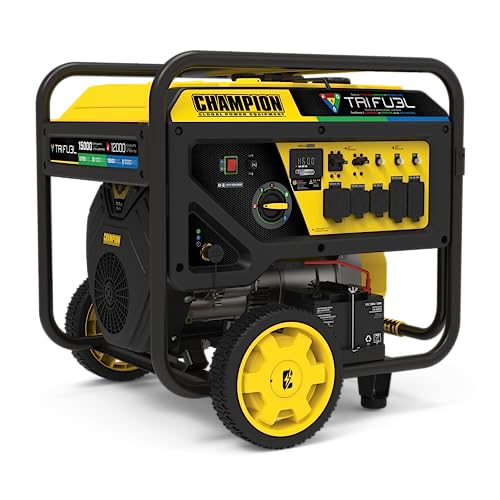
Champion 15,000-Watt Tri-Fuel Generator with CO Shield
- Running Watts: 12,000
- Runtime: Up to 9 hours at 50% load (gasoline, 11-gal tank)
- Noise Level: 78 dB
- Weight: 347 lbs
As an Amazon Associate, we earn from qualifying purchases.
Champion’s 12kW-class flagship brings 15,000 starting / 12,000 running watts from a 717cc Milwaukee Series V-twin — and the V-twin matters. It runs smoother and quieter under sustained load than the big singles in this class, with less vibration shaking the frame apart over hundreds of hours. Tri-fuel out of the box (gasoline, propane, natural gas with hoses included), CO Shield auto-shutdown, Intelligauge monitoring, and electric start round out a genuinely complete package.
At 78 dB and 347 pounds it’s the loudest and heaviest here — the price of the V-twin and the extra 1,500 running watts over the DuroMax. But if your A/C is a 4–5 ton unit, those watts are the difference between comfort and a tripped breaker. For whole-home backup where power comes first, this is the pick.
Pros
- Most running watts in the class
- V-twin smoothness under sustained load
- Tri-fuel with hoses included
- CO Shield, Intelligauge, 3-year warranty
Cons
- 78 dB — loudest here
- 347 lbs — plan placement carefully
- Premium price in class
Best tri-fuel value
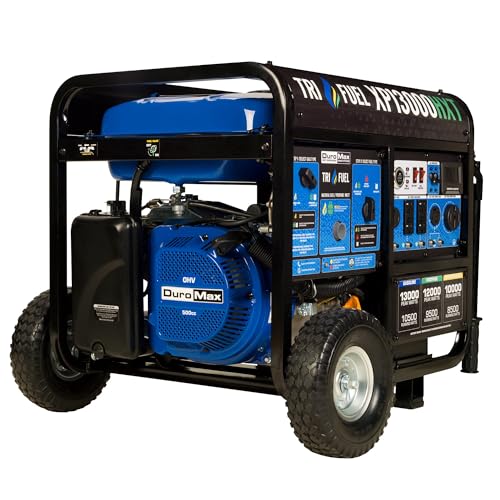
DuroMax XP13000HXT Tri-Fuel Generator
- Running Watts: 10,500
- Runtime: 8.5 hours at 50% load (gasoline)
- Noise Level: 74 dB
- Weight: 240 lbs
As an Amazon Associate, we earn from qualifying purchases.
The XP13000HXT gives you tri-fuel flexibility and 13,000 peak / 10,500 running watts for several hundred dollars less than the Champion. The 500cc single is a proven workhorse, CO Alert and remote start come standard, and the 5-year warranty doubles Champion’s. You give up 1,500 running watts and the V-twin’s smoothness, but for 3–4 ton A/C systems, 10,500 watts is plenty.
This is the value king of the class — and the one I’d buy with my own money for whole-home backup. Our full XP13000HXT review covers it in depth.
Pros
- Tri-fuel at a value price
- 5-year warranty
- Remote start, CO Alert
- 100+ lbs lighter than the Champion
Cons
- 1,500 fewer running watts than Champion
- Single-cylinder vibration under load
Best dual fuel
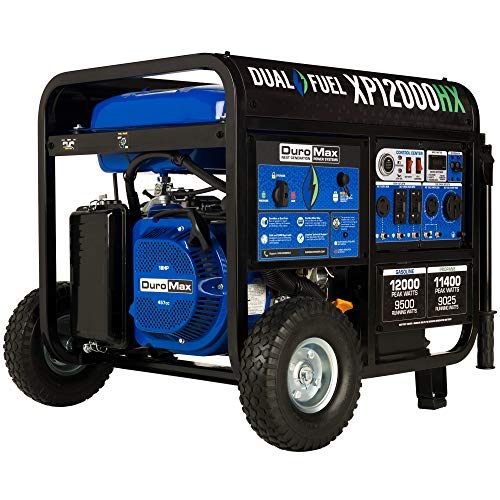
DuroMax XP12000HX Dual Fuel Generator
- Running Watts: 9,500
- Runtime: ~8.5 hours at 50% load (gasoline)
- Noise Level: 74 dB
- Weight: 230 lbs
As an Amazon Associate, we earn from qualifying purchases.
Don’t need natural gas? The XP12000HX is the same HX-series platform as the HXT above — 12,000 peak / 9,500 running watts, 460cc engine, CO Alert, push-button start, full outlet panel with a 50-amp transfer-switch receptacle — minus the third fuel and about $300–$500 off the price. Gasoline and propane cover 95% of owners’ needs; natural gas is a nice-to-have, not a must-have, unless you have the line.
Pros
- Strong value — full features, lower price
- Dual fuel covers most needs
- Transfer-switch-ready 50A outlet
Cons
- No natural gas option
- 1,000 fewer peak watts than the HXT
Best budget
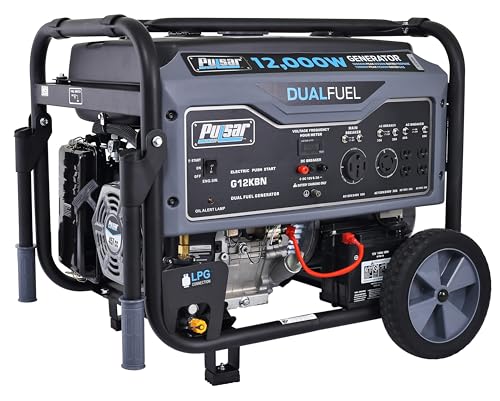
Pulsar G12KBN Dual Fuel Generator
- Running Watts: 9,500
- Runtime: Up to 12 hours at 50% load (8-gal tank)
- Noise Level: ~74 dB
- Weight: 214 lbs
As an Amazon Associate, we earn from qualifying purchases.
The G12KBN is how you get 12,000 peak / 9,500 running watts for the least money: a 457cc engine, dual fuel, electric start, and a 50-amp outlet, typically priced several hundred below the DuroMax equivalents. The standout spec is runtime — 12 hours at half load from the 8-gallon tank, the longest here. For extended outages where refueling is a chore, that matters.
The tradeoff is brand depth: Pulsar’s support network is thinner than DuroMax’s or Champion’s. Buy this if you maintain your own equipment and want maximum watts per dollar.
Pros
- Lowest price in the class
- Best runtime (12 hours at half load)
- Full outlet panel with 50A receptacle
Cons
- Thinner support network
- Shorter warranty than DuroMax
Cheapest gas-only
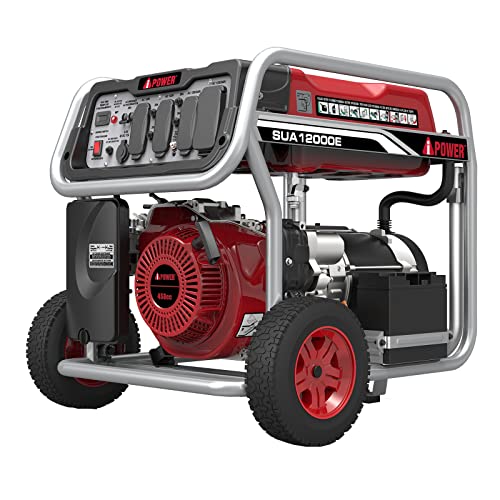
A-iPower SUA12000E Portable Generator
- Running Watts: 9,000
- Runtime: ~9 hours at 50% load (7-gal tank)
- Noise Level: ~76 dB
- Weight: ~210 lbs
As an Amazon Associate, we earn from qualifying purchases.
If you want 12kW-class surge for the absolute minimum money and don’t care about propane, the SUA12000E delivers 12,000 starting / 9,000 running watts from a 459cc engine with electric start. It’s a basic machine — gas only, basic panel, ~76 dB — but the core job (big power, cheap) it does fine. Best suited as a workshop or barn generator where it lives in one place and fuel choice doesn’t matter.
Pros
- Lowest price for 12kW surge
- Electric start
Cons
- Gasoline only — no propane option
- Basic features, limited support
Best for job sites
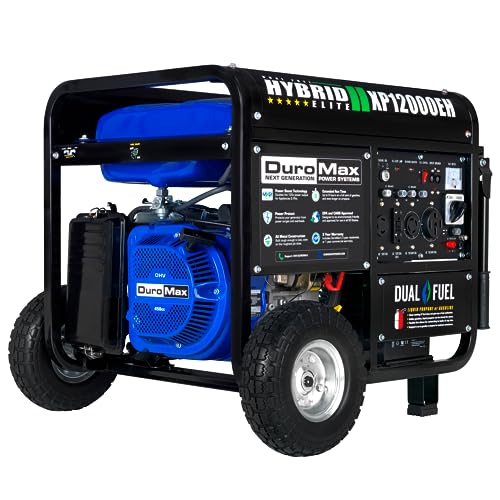
DuroMax XP12000EH Dual Fuel Generator
- Running Watts: 9,500
- Runtime: 8 hours at 50% load (8.3-gal tank)
- Noise Level: 74 dB
- Weight: 224 lbs
As an Amazon Associate, we earn from qualifying purchases.
The XP12000EH earns its spot with the MX2 switch — a DuroMax exclusive that lets you pull the generator’s full power through the 120V outlets when you’re not using 240V. On a job site running 120V tools, that effectively doubles your usable 120V amperage versus competitors. 12,000 peak / 9,500 running watts, dual fuel, electric start, CO Alert, and idle control for fuel savings between tasks. For contractors, it’s the smartest 12kW pick; our power tool generator guide has the full reasoning.
Pros
- MX2 switch maximizes 120V tool power
- Dual fuel, idle control
- 3-year warranty, CO Alert
Cons
- No natural gas option
- 74 dB
| Generator | Running W | Fuel | Noise | Best for |
|---|---|---|---|---|
| Champion 15kW tri-fuel | 12,000 | Tri-fuel | 78 dB | Best overall |
| DuroMax XP13000HXT | 10,500 | Tri-fuel | 74 dB | Tri-fuel value |
| DuroMax XP12000HX | 9,500 | Dual fuel | 74 dB | Dual fuel pick |
| Pulsar G12KBN | 9,500 | Dual fuel | ~74 dB | Budget |
| A-iPower SUA12000E | 9,000 | Gas | ~76 dB | Cheapest |
| DuroMax XP12000EH | 9,500 | Dual fuel | 74 dB | Job sites |
How to choose a 12,000-watt generator
Confirm 12kW actually covers your loads
Run the numbers: 3–4 ton central A/C (3,500W running, up to 9,000W surge) + well pump (2,000/4,000) + fridge and freezer (400/2,400) + lights and electronics (800) ≈ 6,700 running watts with surges handled by the 13,000–15,000W peak ratings. That fits comfortably. But a 5-ton A/C, electric water heater, and electric dryer together will exceed even 12,000 watts — at that point you’re looking at load management or a standby unit. Our sizing guide has the full worksheet.
Tri-fuel vs. dual fuel vs. gas-only
Tri-fuel is the premium option and worth it if you have natural gas — unlimited runtime changes outage life completely. Dual fuel (gas + propane) covers almost everyone else: propane stores forever and burns clean. Gas-only saves a few hundred dollars upfront but leaves you dependent on fresh gasoline, which goes stale in months. For a backup generator that sits idle, fuel flexibility is worth more than an extra 500 watts.
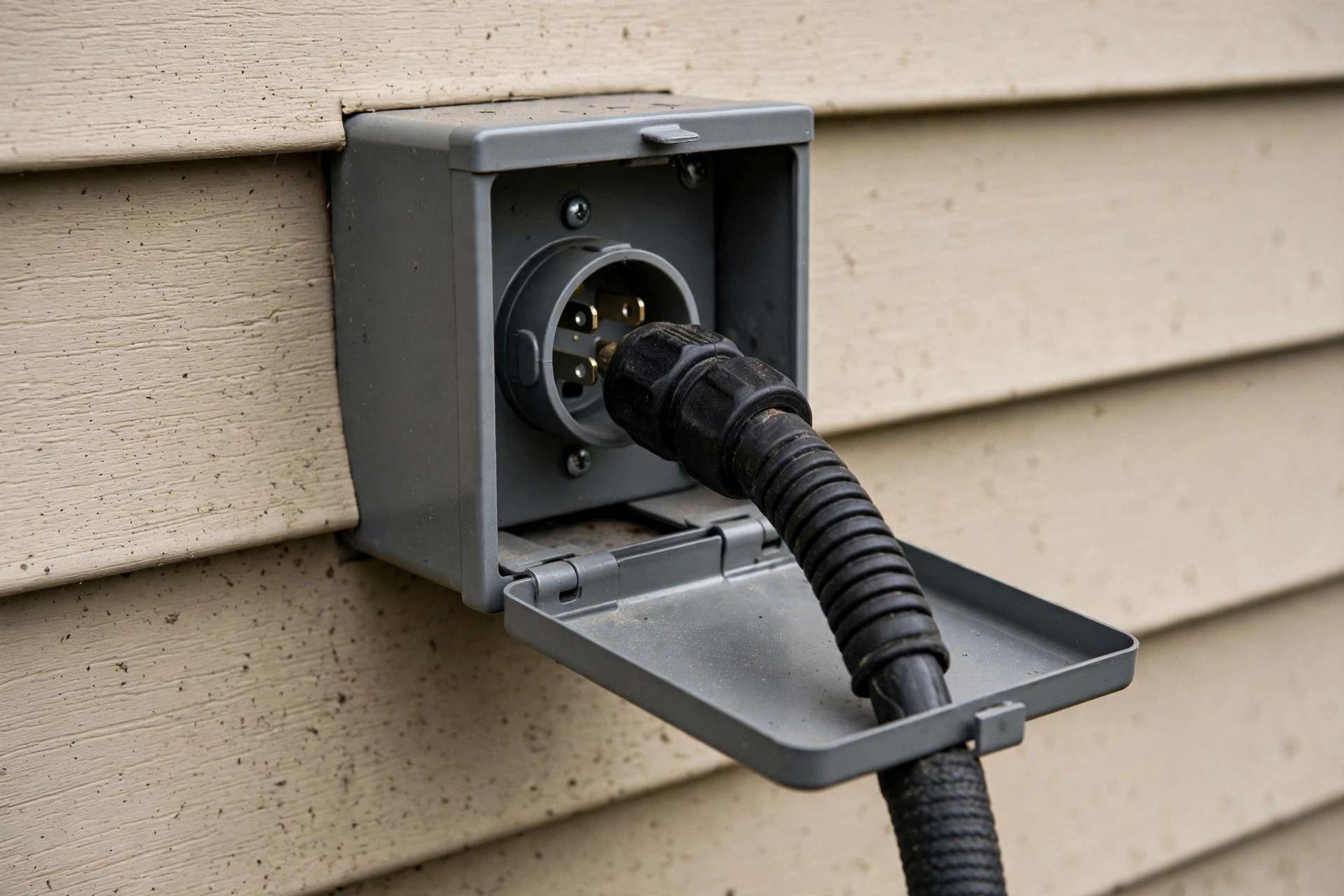
The transfer switch is not optional
Every generator here has a 240V 30A or 50A outlet for a reason — they’re designed to feed a house through a transfer switch or interlock kit. Budget $300–$800 for the hardware plus an electrician’s time. It’s the only safe, code-compliant way to power house circuits, and it’s what makes a 12kW generator actually useful instead of an extension-cord octopus. See our transfer switch guide for options.
Noise and placement
These are all 74–78 dB machines — loud. Plan for 20+ feet from the house (50 is better), exhaust pointed away from buildings, and check local noise ordinances before you buy. A simple three-sided sound barrier with the open side facing away from neighbors takes the edge off without restricting airflow.
Think about total fuel logistics
At half load, these generators burn roughly 1 gallon of gasoline per hour — that’s 100+ gallons over a 5-day outage. Nobody stores that much fresh gasoline. This is the practical argument for propane (large tanks) or natural gas (unlimited): the generator is only as good as your fuel plan. Size your propane tank for your realistic outage duration, not the generator’s tank.
Will a 12000-watt generator run a whole house?
How much fuel does a 12000-watt generator use?
What’s the quietest 12000-watt generator?
Do I need a transfer switch for a 12000-watt generator?
Tri-fuel or dual-fuel 12000-watt generator?
Our verdict
The Champion 15kW tri-fuel is the best 12,000-watt generator for most whole-home buyers — max power, V-twin smoothness, every fuel. The DuroMax XP13000HXT is the value pick I’d buy myself, and the Pulsar G12KBN is the budget play. Whichever you choose, pair it with a transfer switch, a fuel plan bigger than the gas tank, and an electrician’s phone number.
12kW portable vs. standby: the honest math
The question everyone asks at this size: why not just get a standby generator? Fair question. Here’s the math for 2027: a 12kW portable setup runs $1,500–$3,000 for the generator plus $500–$1,200 for a transfer switch and electrician — call it $2,500–$4,000 all-in. A 14–18kW standby unit runs $4,000–$6,000 for the hardware plus $3,000–$6,000 for installation (gas line, concrete pad, electrical, permits) — $8,000–$12,000 all-in, and you’re hiring it all out.
What the standby buys you: automatic startup (it starts itself when the power dies, even if you’re on vacation), quieter operation in an enclosure, and no refueling on natural gas. What the portable buys you: $6,000+ in savings, portability (take it to the job site, the cabin, the RV), and no permits or gas-plumbing project. The break-even is lifestyle: if outages are frequent and you’re often away, standby wins. If outages are a few times a year and you’re home, the portable wins by a mile. Most buyers in this class are making the right call — just go in with eyes open about what you’re giving up, which is automation, not power.
Installation checklist: from delivery to first outage
A 12kW generator is a project, not a purchase. Here’s the order of operations: 1. Site prep: pick a level spot 20+ feet from the house (check local setback codes — some jurisdictions require 5 feet from property lines), ideally on a concrete pad or compacted gravel. These units weigh 210–350 pounds; you won’t be repositioning them casually. 2. Transfer switch: have an electrician install a 50-amp transfer switch or interlock kit before the generator arrives. This is the long-lead item — schedule it first. 3. Fuel: if going propane, get the tank placed and plumbed by your propane company; if natural gas, have a plumber install a quick-connect fitting sized for the generator’s BTU demand (a 12kW unit needs roughly 200,000+ BTU/hr at full load — an undersized gas line starves it). 4. Break-in: run the generator for 5 hours at varying loads, then change the oil — factory oil is for break-in, not for life. 5. Test: simulate an outage — kill the main breaker, start the generator, switch over, and run your actual loads including the A/C. Discover problems on a sunny Saturday, not during a storm.
One big generator or two smaller ones in parallel?
Worth asking: instead of one 12kW unit, why not two 6–7kW inverter generators in parallel? The parallel route gives you redundancy (one fails, you still have half your power), quieter operation at light loads (run one unit on eco), and easier transport (two 150-pound units beat one 300-pound unit). The downsides: two engines to maintain, two fuel tanks to manage, higher total cost (two quality 6kW inverters run $4,000–$6,000), and parallel kits add complexity. For most whole-home buyers, one big conventional 12kW is simpler and cheaper. The parallel-inverter approach wins for people who also want portable quiet power for camping or job sites — buy the pair once, use them separately or together. Different tools for different lives.
A final thought on timing: buy the generator before storm season, not during it. Prices spike and inventory vanishes when a hurricane is in the forecast — the worst time to buy is when everyone else is buying. Late winter and early spring typically bring the best prices and full stock. Your future self, watching the storm track in August with a tested generator already wired in, will be grateful.
How we researched this: Manufacturer specifications, retail owner-review analysis, and load-math verification against typical whole-home scenarios. We did not bench-test these units.

Related Guides
Best 3500 Watt Generators of 2027
Best 3500 watt generators of 2027: 5 top picks compared — inverter vs conventional, dual fuel options, real running-watt specs and buying guide.

How Much Electricity Does a Generator Make Per Gallon of Gas?
A typical portable gas generator makes 4–7 kWh of electricity per gallon. We break down kWh per gallon by load, size, and fuel type so you can plan fuel for any outage.
How Much Does Generator Maintenance Cost Per Year? (2027)
How much does generator maintenance cost per year? About $30-60 DIY or $80-150 pro for portables; $150-300 pro for standby units. Full breakdown inside.