


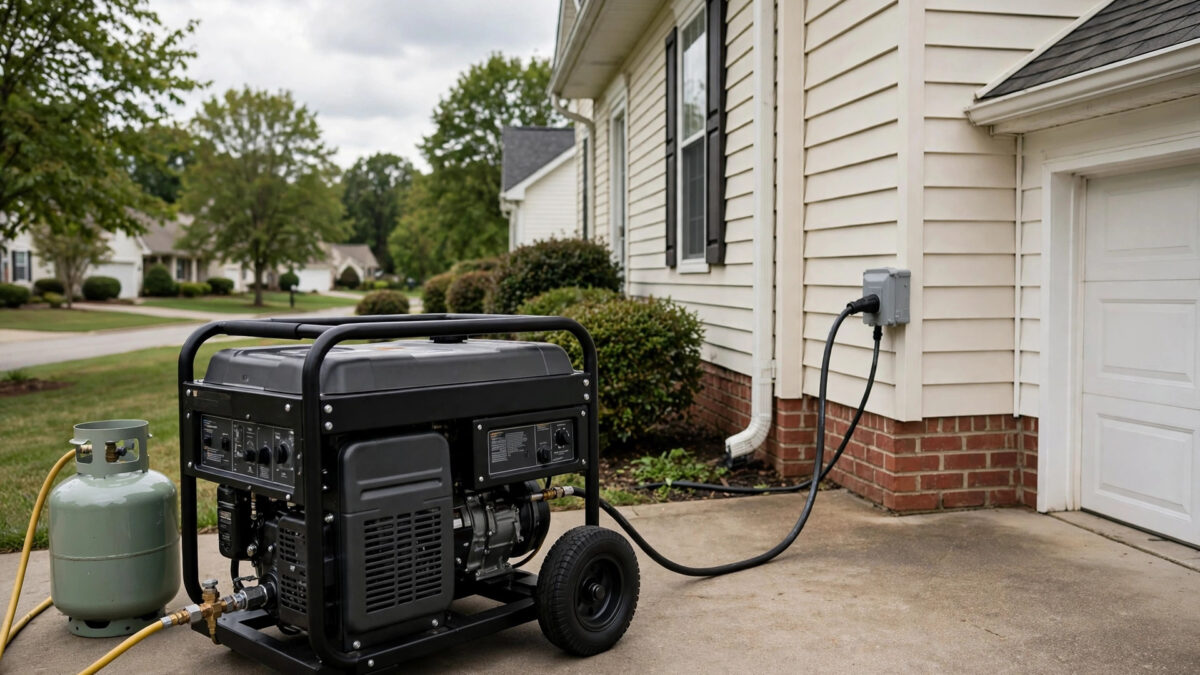
The 7,500-watt class is where portable generators get serious about transfer switches. It’s the most popular size for manual transfer-switch installations — enough for nearly every essential circuit in a typical home, short of central air conditioning. Electricians wire more 7,500W-class generators into homes than any other size.
For 2027, the class has a clear value leader: the Westinghouse WGen7500DFc — 9,500 surge watts, dual fuel, CO sensor, remote start, around a grand. The Honda EU7000iS sits at the opposite end: 7,000W of whisper-quiet inverter power at four times the price. And the Champion 100165 and Generac GP7500E fill the middle. Here’s the full breakdown.
Key takeaways
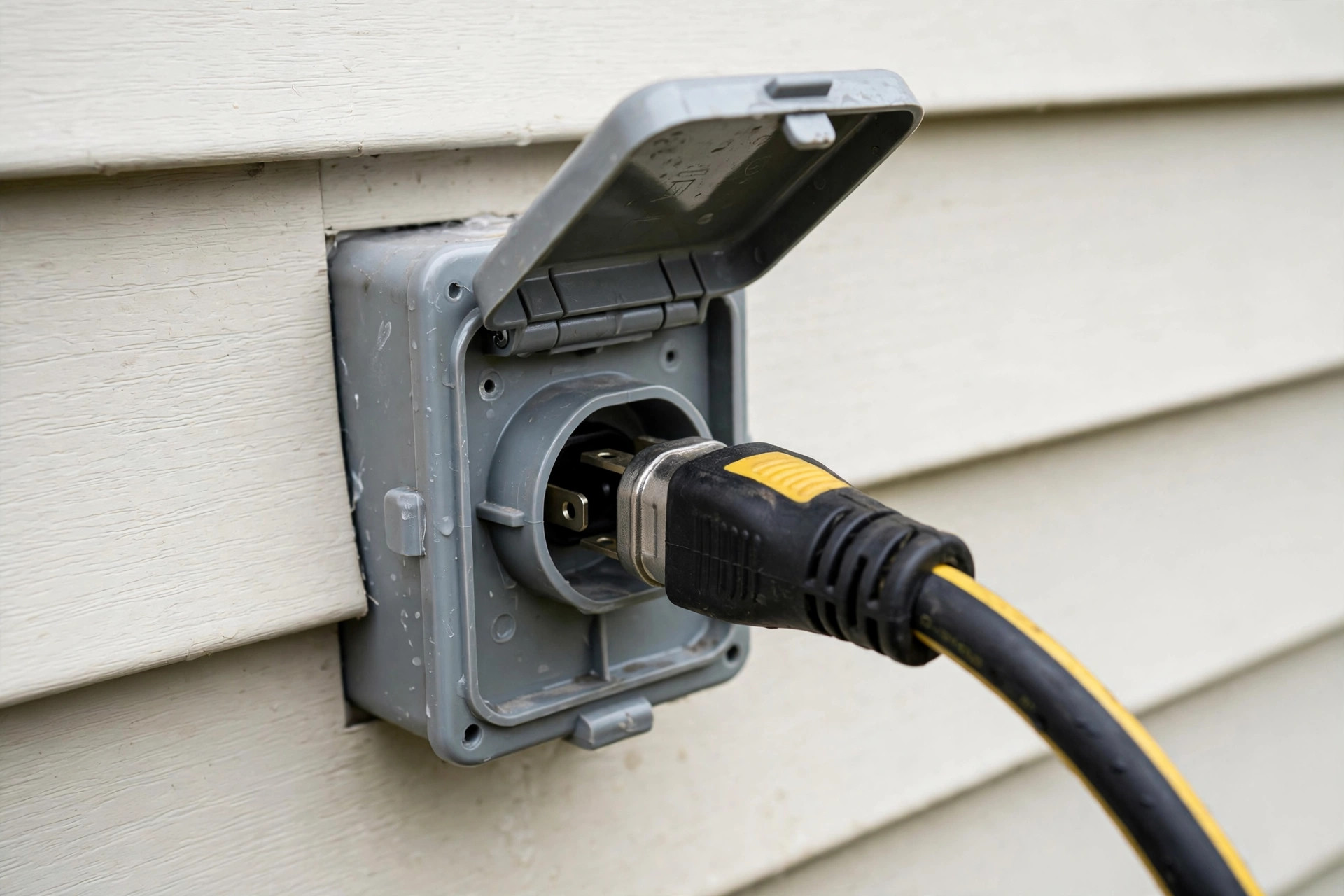
- 7,500W is the transfer-switch sweet spot: powers nearly all essential home circuits except central AC.
- The Westinghouse WGen7500DFc is the value king — dual fuel, CO sensor, remote start, ~$1,000.
- The Honda EU7000iS is the quiet premium choice: 52–58 dB inverter power at 4x the price.
- Dual-fuel models dominate this class for good reason — propane storage is the storm-prep edge.
- Budget 30-amp transfer switch installation ($500–$1,500) into your total cost.
Quick picks
- Best overall: Westinghouse WGen7500DFc — 9,500W surge, dual fuel, CO sensor, unbeatable value.
- Best dual-fuel alternative: Champion 100165 — 9,375W, electric start, cold-weather strong.
- Best quiet premium: Honda EU7000iS — 7,000W inverter, 52 dB, fuel-injected.
- Best Generac: Generac GP7500E — 9,400W surge, dual fuel, COsense.
- Best step-up: Generac GP8000E — 10,000W surge for a small premium.
Best overall
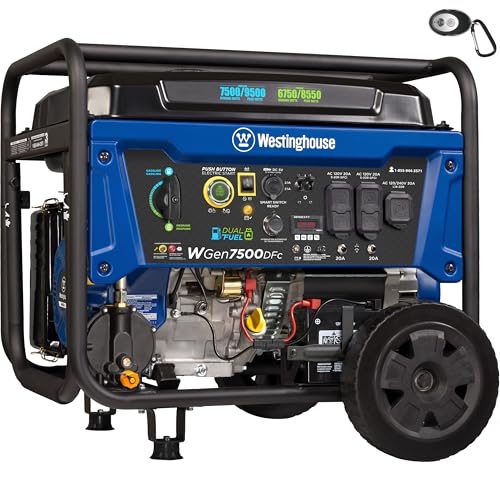
Westinghouse WGen7500DFc Dual-Fuel Portable Generator
- Running Watts: 7,500 W (gas)
- Runtime: 11 hrs @ 1/2 load
- Noise Level: ~72 dB
- Weight: ~195 lbs
As an Amazon Associate, we earn from qualifying purchases.
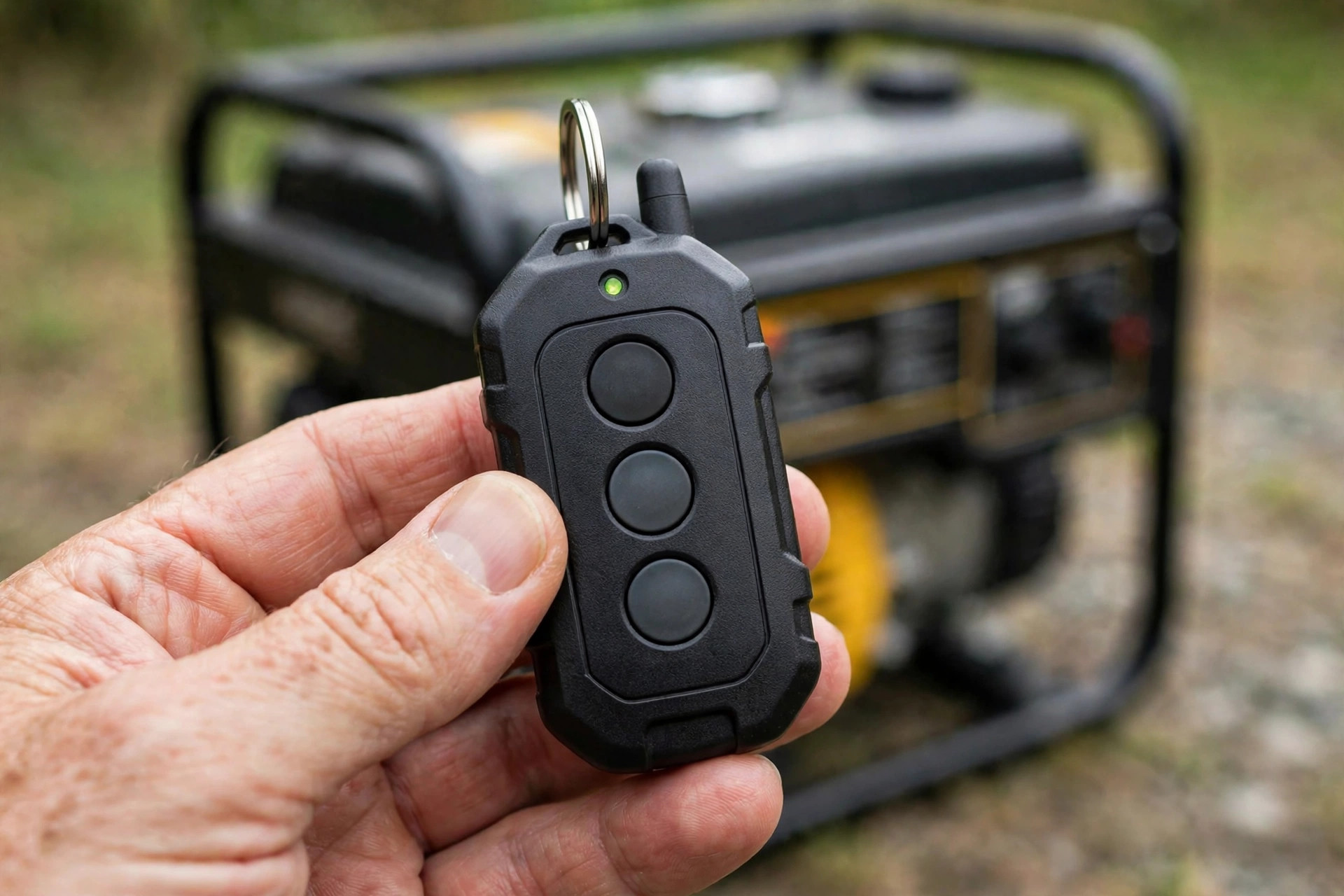
The WGen7500DFc keeps winning this class because the package is so complete: 9,500 peak watts, 7,500 running watts on gasoline, dual-fuel, a CO sensor with automatic shutdown, remote start key fob, and a 6.6-gallon tank delivering 11 hours of runtime — typically $900–$1,100.
The 420cc engine is proven across Westinghouse’s line. The data-center display shows voltage, frequency, and hours — genuinely useful for managing loads through a transfer switch. On propane, output drops to about 6,750W, still plenty for essentials.
Based on spec comparison and owner feedback, this is the generator electricians most often see paired with 30-amp manual transfer switches, and for good reason: the wattage matches the switch rating, the price leaves budget for installation, and reliability in multi-day outages is well documented. It’s loud (open-frame), but at this value, that’s an acceptable trade.
Pros
- Complete package: dual fuel, CO sensor, remote start
- 11-hour runtime covers overnight
- Ideal match for 30A transfer switches
- Outstanding value
Cons
- Open-frame loud
- Propane output drops ~10%
Best dual-fuel alternative
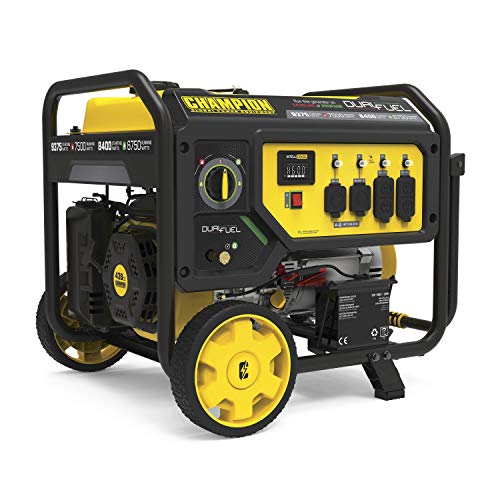
Champion 9,375W Dual-Fuel Generator (100165)
- Running Watts: 7,500 W (gas)
- Runtime: ~10 hrs @ 1/2 load
- Noise Level: 74 dB
- Weight: ~200 lbs
As an Amazon Associate, we earn from qualifying purchases.
Champion’s 100165 goes head-to-head with the Westinghouse: 9,375 starting watts, 7,500 running watts on gas (8,400/6,750 on propane), 439cc engine, electric start, typically $900–$1,200. Pick your brand loyalty — capability is nearly identical.
Where Champion edges ahead: cold-weather starting (a real factor for northern outages) and a support network owners consistently rate highly. CO Shield shutdown is standard. The 8.5-gallon-class tank gives long runtimes at emergency loads.
Based on owner feedback, the 100165 is a storm-season staple — it sells out regularly before hurricanes, which tells you what prepared buyers choose. If the Westinghouse is unavailable, buy this without hesitation.
Pros
- Proven storm-season performer
- Strong cold-weather starting
- CO Shield + electric start
- Excellent support reputation
Cons
- Sells out before major storms
- Open-frame loud
Best quiet premium
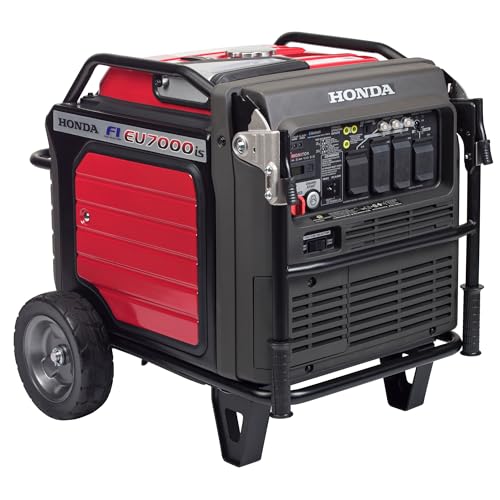
Honda EU7000iS Inverter Generator
- Running Watts: 5,500 W
- Runtime: ~16 hrs @ 1/4 load
- Noise Level: 52–58 dB
- Weight: 270 lbs
As an Amazon Associate, we earn from qualifying purchases.
The EU7000iS is the generator you buy when noise is non-negotiable and budget is flexible: 7,000 starting watts, 5,500 running watts of fuel-injected inverter power at 52–58 dB. That’s quieter than most 2,000-watt conventional generators — at more than triple the output.
The specs read like a wish list: electronic fuel injection (no carburetor to gum up), electric start, 5.1-gallon tank for ~16 hours at quarter load, Bluetooth monitoring via Honda’s app, and CO-Minder. It’ll run a 30-amp transfer switch’s worth of essentials while the neighbors wonder if you even own a generator.
The price is serious: typically $4,500–$5,200, and at 270 pounds it’s the heaviest here. Note the running watts (5,500) trail the conventional 7,500W models — you’re trading watts for silence and refinement. Based on spec comparison and owner feedback, it’s the finest portable generator in this class and priced accordingly. For noise-restricted neighborhoods or buyers who keep things for 15 years, the math works.
Pros
- 52 dB — absurdly quiet for 7,000W
- Fuel injection, no carburetor issues
- Bluetooth monitoring + CO-Minder
- 16-hour runtime
Cons
- Very expensive ($4,500–$5,200)
- 5,500W running — less than rivals
- 270 lbs
Best Generac pick
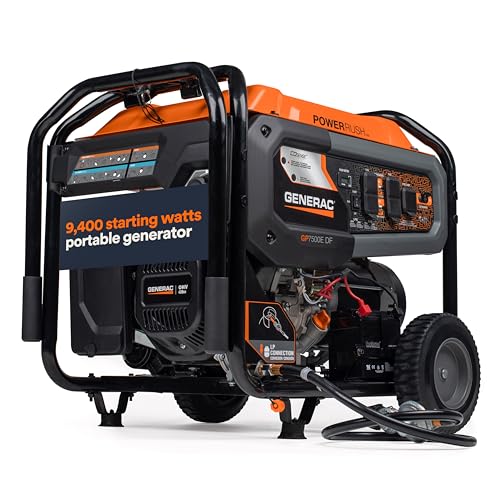
Generac GP7500E Dual-Fuel Generator (80112)
- Running Watts: 7,500 W (gas)
- Runtime: ~11 hrs @ 1/2 load
- Noise Level: ~74 dB
- Weight: 204 lbs
As an Amazon Associate, we earn from qualifying purchases.
Generac’s dual-fuel entry in the class: 9,400 starting watts, 7,500 running watts on gas, 420cc engine, 7.9-gallon tank, COsense shutdown, typically $1,000–$1,300. It’s the Generac loyalist’s answer to the Westinghouse and Champion above.
You get the deep Generac service network, electric start, and hour meter. Runtime is competitive. The 204-pound weight is manageable with the wheel kit.
Based on spec comparison, it trades blows evenly with the Westinghouse DFc and Champion 100165 — buy on price, availability, or brand preference. There’s no wrong answer among the three; the Honda is the only fundamentally different choice here.
Pros
- Dual fuel with Generac’s service network
- COsense + electric start
- Large 7.9-gal tank
Cons
- Slightly pricier than Westinghouse/Champion
- Open-frame loud
Best step-up
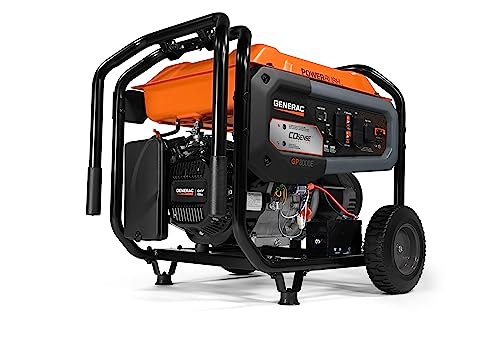
Generac GP8000E Portable Generator (7715)
- Running Watts: 8,000 W
- Runtime: ~11 hrs @ 1/2 load
- Noise Level: ~74 dB
- Weight: 214 lbs
As an Amazon Associate, we earn from qualifying purchases.
The GP8000E is the “while I’m at it” upgrade: 10,000 surge watts, 8,000 running watts — 500 more running watts than the 7,500W class nominal — for typically $1,100–$1,400, just a small step above the class price. PowerRush aids motor starting, COsense is included, electric start is standard.
That extra 500W is genuinely useful: it’s the margin that lets a well pump start while the furnace runs, or keeps the transfer switch from tripping when the fridge compressor kicks in. The 439cc engine and 7.9-gallon tank are proven.
The trade-off is gasoline-only — no propane option. If dual fuel matters to you, stick with picks 1, 2, or 4. If maximum conventional watts per dollar is the goal, the GP8000E is the class ceiling before the 10,000W tier. See our 10,000-watt roundup if you’re tempted to keep climbing.
Pros
- 8,000W — most running watts here
- Small price step over 7,500W models
- PowerRush + COsense
Cons
- Gasoline only
- Loud open-frame
Side-by-side comparison
| Product | Running W | Fuel | Noise | Best for |
|---|---|---|---|---|
| Westinghouse WGen7500DFc | 7,500 | Dual | 72 dB | Overall value |
| Champion 100165 | 7,500 | Dual | 74 dB | Storm-season proven |
| Honda EU7000iS | 5,500 | Gas | 52 dB | Quiet premium |
| Generac GP7500E | 7,500 | Dual | 74 dB | Generac network |
| Generac GP8000E | 8,000 | Gas | 74 dB | Max watts per dollar |
How to choose a 7500-watt generator
The 7,500W decision tree, in order.
Start with the transfer switch plan
Most 7,500W buyers end up with a 30-amp manual transfer switch — the generator’s L14-30 outlet and the switch are made for each other. Get the electrician’s quote before buying the generator: $500–$1,500 installed, per NEC Article 702. The switch determines which circuits get power, so walk through your panel with the electrician and prioritize: furnace, well/septic, fridge, freezer, sump, lights. Our transfer switch guide covers the details.
The three-way race: Westinghouse vs. Champion vs. Generac
Let’s be blunt: picks 1, 2, and 4 are 90% interchangeable — 7,500 running watts, dual fuel, ~74 dB, ~$1,000, electric start, CO shutdown. The differences are brand support (Champion and Generac edge ahead), included extras (Westinghouse’s remote start fob), and availability (all three sell out before hurricanes). Buy whichever is in stock at the best price when you’re ready. Don’t agonize — agonizing is how you end up shopping during the outage.
When the Honda EU7000iS makes sense
Four times the price needs justification: noise-restricted neighborhoods or HOAs, nightly use where 74 dB would be miserable, fuel-injection reliability (no carburetor varnish, ever), and 15-year ownership horizons where Honda longevity pays off. Note you’re getting 5,500 running watts, not 7,500 — size your transfer switch circuits accordingly. For the quiet-at-any-size argument, see our quiet generator roundup.
What 7,500W runs — and what it doesn’t
Runs: everything on the essentials list (fridge, freezer, furnace, well pump, sump, lights, devices) simultaneously, plus a microwave or small window AC with management. Doesn’t run: central AC (needs 10,000W+), electric water heater + range together, or a 5HP shop compressor. The honest upgrade path is our 10,000-watt roundup — but most families never need it.
A practical note on load management, since this is where 7,500W ownership actually lives: with a transfer switch, you’ll develop a rhythm — microwave or well pump, not both at once; dryer off when the pump runs. It sounds annoying, but after the first day it becomes second nature, and the family adapts fast. The generators that trip breakers are almost always victims of two big loads starting simultaneously, not sustained overload. Stagger your motor starts (wait for the well pump to finish before microwaving) and 7,500W feels bigger than it is. This is also why the electrician’s circuit prioritization during transfer-switch install matters so much — put the big intermittent loads on circuits you can shed.
Fuel strategy for the class
Three of five picks are dual-fuel — that’s the market telling you something. Keep two 20-lb propane tanks full (they store forever) plus 10 gallons of stabilized gasoline rotated every 6 months. That covers 4–5 days of essentials. During extended outages, run propane first (no carburetor fouling) and save gasoline for when propane runs out. Our emergency generator guide has the full storm-prep checklist.
Will a 7500-watt generator run my whole house?
What size transfer switch do I need for a 7500W generator?
Is the Honda EU7000iS worth it over a Westinghouse WGen7500DFc?
Can a 7500W generator run a well pump and furnace together?
How long will a 7500W generator run on propane?
7500W vs. 10000W: where’s the line?
Sooner or later every 7,500W shopper wonders about 10,000W. The line between them is exactly one appliance: central air conditioning. A 3-ton central AC needs ~3,500W running and 10,000W+ starting surge — it simply doesn’t fit in the 7,500W class, while 10,000W-class units (like the DuroMax XP10000HX) handle it with managed loads.
Everything else — furnace, well pump, fridge, freezer, sump, lights, devices, microwave — fits comfortably in 7,500W. So the question is really: “do I need central AC during an outage?” In the northern US, the honest answer is usually no — a summer outage is uncomfortable, not dangerous, and window fans plus a cool basement get you through. In the South, where a week without AC in August is a health issue, 10,000W starts looking like a necessity rather than a luxury.
The cost of stepping up is real: 10kW-class generators run $1,300–$1,600 (vs. ~$1,000 here), weigh 210–230 lbs, burn ~1 gallon per hour, and need a 50-amp transfer switch instead of a 30-amp one. That’s a bigger install bill too. My advice: if AC isn’t medically necessary, buy the 7,500W, install the 30-amp switch, and put the $1,000+ savings toward fuel storage. If it is necessary, skip straight to our 10,000-watt roundup — don’t buy twice.
A note on the used market
One more consideration: 7,500W-class generators are the most common size on the used market, and they hold value well — especially Hondas and Generacs. If budget is tight, a 3-year-old GP7500E or WGen7500DF with verified low hours can save 30–40%. Check the hour meter (under 200 hours is lightly used), look for clean oil, and start it under load before paying. But never buy a used generator without hearing it run — a scored cylinder or fried AVR turns a bargain into a parts donor.
Our verdict
The Westinghouse WGen7500DFc is the best 7,500-watt generator for 2027 — the complete dual-fuel package at a price that leaves room for the transfer switch. The Champion 100165 is the interchangeable runner-up (buy whichever’s in stock). And the Honda EU7000iS is the no-compromise quiet choice for buyers where noise matters more than money. Get the 30-amp transfer switch quoted before you buy the generator — the install timeline, not the purchase, is what determines whether you’re ready before storm season. Book the electrician first; buy the generator second. Future you will be grateful.
How we researched this: Head-to-head spec comparison of the 7,500W class’s big three (Westinghouse, Champion, Generac) plus the premium Honda outlier, transfer-switch compatibility analysis, fuel-consumption math, and owner feedback on multi-day outage use. Every pick has a verified Amazon listing and CO shutdown. We treated transfer-switch pairing as a scoring factor, since most buyers in this class install one.

Related Guides
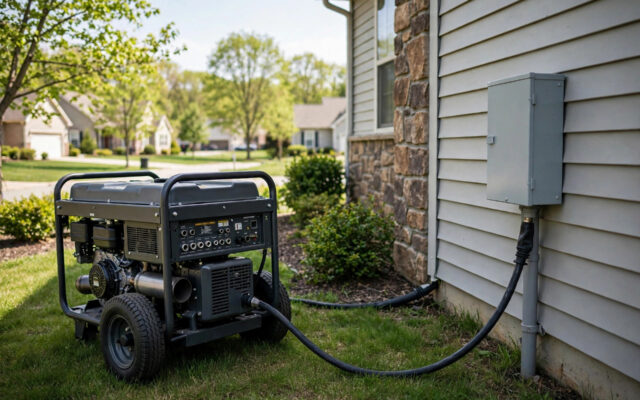
Best 12000 Watt Generators of 2027
Best 12000 watt generators of 2027: 6 whole-home portables compared — tri-fuel vs dual fuel, real specs, transfer switch guidance and fuel planning.

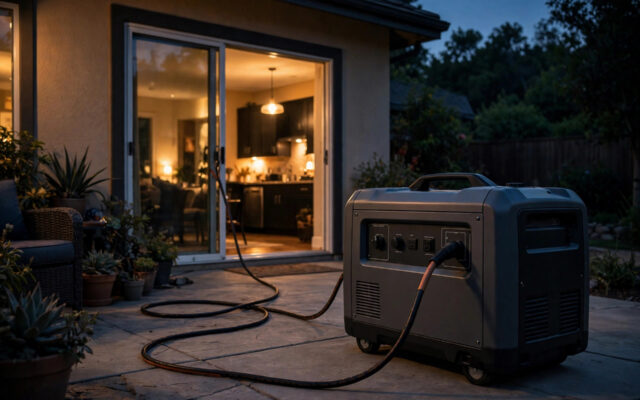
Best 3500 Watt Generators of 2027
Best 3500 watt generators of 2027: 5 top picks compared — inverter vs conventional, dual fuel options, real running-watt specs and buying guide.
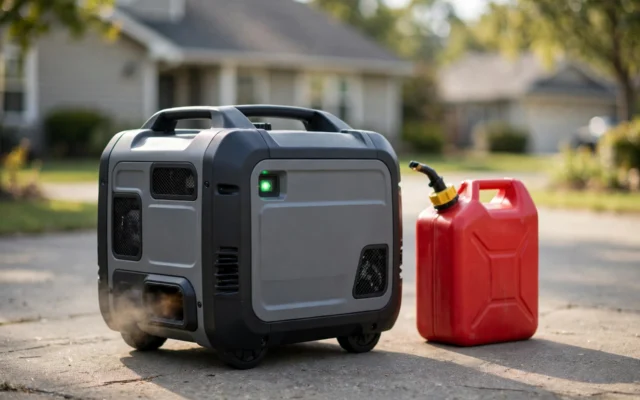
How Much Electricity Does a Generator Make Per Gallon of Gas?
A typical portable gas generator makes 4–7 kWh of electricity per gallon. We break down kWh per gallon by load, size, and fuel type so you can plan fuel for any outage.