


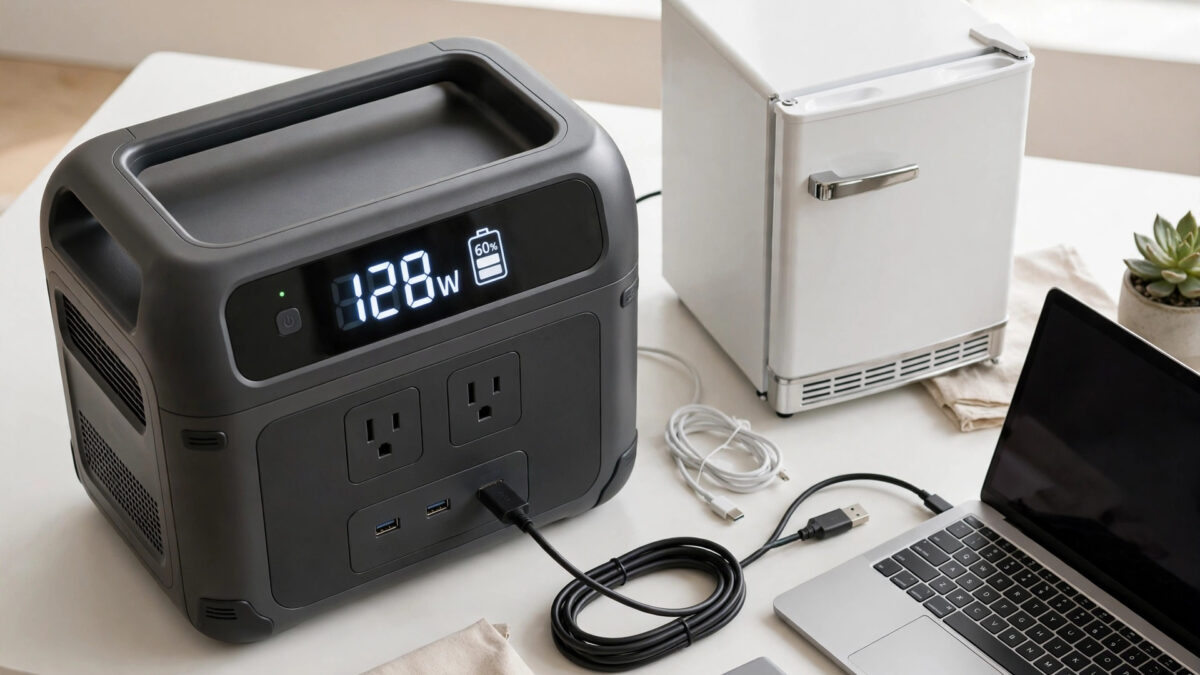
Buying the wrong size solar generator is the most common and most expensive mistake in this category. Too small and it shuts off mid-outage when your fridge compressor kicks in. Too big and you have paid for capacity you will never use and now have to lug around. This guide shows you exactly how to size a solar generator for your actual needs — with real numbers, not guesswork.
Watts vs. Watt-Hours: The Two Numbers That Matter
Every solar generator is defined by two specs, and confusing them is where most sizing mistakes begin:
- Watts (W) measure power — how much electricity the unit can deliver at one moment. This is the inverter rating. It decides what you can run. An 1,800W inverter can run an 1,800W hair dryer but not a 2,000W space heater.
- Watt-hours (Wh) measure energy — how much electricity the battery stores. This decides how long you can run things. A 1,000Wh battery can run a 100W device for roughly 10 hours.
Think of watts as the width of a pipe and watt-hours as the size of the water tank. You need a wide enough pipe for your biggest device and a big enough tank to last as long as you need.
Step-by-Step: Calculate Your Needs
Grab a notepad. This takes five minutes and beats every online calculator because it uses your devices, not averages.
Step 1: List everything you want to power, with its running watts. Check the label on each device or the manual. The table of common appliances below fills the gaps.
Step 2: Add up the watts of everything you will run at the same time. This is your peak power need. Your generator’s inverter rating must exceed this number — with headroom for surges (more on that below).
Step 3: Estimate hours per device, per day. Be honest. A fridge is plugged in 24 hours but its compressor only cycles about a third of the time. A laptop might run 4 hours.
Step 4: Multiply watts by hours for each device and add them up. This gives your daily watt-hour need. Then add a 20 percent buffer for inverter losses and the unexpected.
The formula: (watts x hours) for each device, summed, x 1.2 = watt-hours needed.
Example: a 60W laptop for 4 hours (240Wh) plus a 10W phone charger for 3 hours (30Wh) plus a 10W LED lamp for 5 hours (50Wh) = 320Wh x 1.2 = 384Wh. A compact 500Wh unit covers this comfortably.
Common Appliances and Their Power Draw
Use these typical figures when a device label is hard to find. Actual draw varies by model and age.
- Phone charger: 10–20W
- Laptop: 45–90W
- LED lamp: 8–15W
- Wi-Fi router: 10–20W
- Box fan: 40–75W (150W surge)
- CPAP machine: 30–60W
- 50-inch LED TV: 60–150W
- Mini fridge: 50–100W (300–500W surge)
- Full-size refrigerator: 100–200W (800–1,200W surge)
- Microwave: 800–1,200W
- Coffee maker: 800–1,200W
- Hair dryer: 1,200–1,800W
- Space heater: 1,200–1,500W
- Circular saw: 1,200–1,800W (2,000W+ surge)
Sizing Examples for Real Situations
Weekend camping: phones, lights, laptop
Load: around 100W peak. Daily energy: 300–400Wh. Recommended: 500Wh, 500W+ inverter. Small, light, and cheap — check the best budget solar generators under $500.
Home outage: fridge plus essentials
A full-size fridge draws 100–200W running with an 800W+ startup surge, and cycles about a third of the day — roughly 800–1,200Wh per day. Add phones, a lamp, and a router and you need about 1,200–1,500Wh of usable energy. Recommended: 1,000–1,500Wh, 1,800W+ inverter to clear the compressor surge. A 1,024Wh unit like the BLUETTI Elite 100 V2 (1,800W output, 3,600W surge) is the practical minimum here — its surge rating swallows a compressor startup with room to spare.
RV and van life
Fridge, lights, fan, laptop, water pump, occasional microwave: peak loads of 1,000–1,500W and 1,500–2,500Wh per day. Recommended: 2,000Wh+, 2,400W+ inverter. See our best solar generators for RV picks.
Whole-home backup
Fridge, freezer, sump pump, lights, internet, and a few comfort loads: 2,000–3,000W peak and 4,000Wh+ per day. Recommended: 4,000Wh+, 4,000W+ inverter, ideally 240V output. This is flagship territory — units like the EcoFlow DELTA Pro 3 (4,096Wh, 4,000W output, expandable to 48kWh) are built for exactly this. Compare the big units in our whole-home backup guide.
Do Not Forget Surge Watts
Motors and compressors — in fridges, freezers, power tools, pumps, and air conditioners — draw a brief spike of 2 to 4 times their running watts when they start. A fridge that runs at 150W may demand 900W for a split second at compressor startup.
Two rules:
- Your inverter’s continuous rating must exceed your total simultaneous running watts.
- Your inverter’s surge rating must exceed the biggest single startup spike.
Most quality inverters handle double their continuous rating in surge (for example, 1,800W continuous / 3,600W surge). If you plan to run motor-driven appliances, confirm the surge spec before buying — it is the number that decides whether your fridge actually starts.
Size Your Solar Input Too
Capacity is only half the equation. A big battery that cannot recharge is a one-use device. As a rule of thumb, your solar array should refill a day’s consumption in 4 to 6 hours of good sun:
Panel watts needed = daily watt-hours / 5.
Using 1,200Wh per day? You want roughly 240W of panels minimum, and 400W gives comfortable margin for cloudy stretches. Also check the station’s maximum solar input — there is no point buying 800W of panels for a unit capped at 400W. Our EcoFlow vs. Jackery vs. BLUETTI comparison shows how the major brands’ bundles and input specs stack up.
Can You Expand Later?
Many mid-size and large units accept expansion batteries that stack extra watt-hours onto the same inverter — growing a 2,000Wh unit to 6,000Wh or more, for example. If you are between sizes, buying the smaller unit from a brand with an expansion ecosystem is often smarter than overbuying upfront. Just note that expansion batteries add storage, not output: your inverter wattage stays the same.
What size solar generator do I need to run a refrigerator?
A minimum of 1,000Wh with an 1,800W inverter to handle the compressor’s startup surge. For a full day of fridge runtime plus phones and lights, 1,500 to 2,000Wh is more comfortable.
Is a bigger solar generator always better?
No. Oversized units cost more, weigh more, and take longer to recharge. Size to your calculated needs plus a 20 percent buffer — and consider a model with expansion batteries if your needs might grow.
What size solar generator do I need for camping?
For phones, lights, and a laptop, 300 to 500Wh is plenty. Add a 12V camping fridge and step up to 1,000Wh. Campers running a portable fridge plus cooking gear should look at 1,000 to 1,500Wh.
Can a solar generator run a CPAP machine all night?
Easily. A CPAP draws 30 to 60W, so 8 hours uses roughly 240 to 480Wh. Even a 500Wh unit covers a full night, and using a 12V DC adapter instead of AC stretches it further.
How many solar panels do I need for my solar generator?
Divide your daily watt-hour consumption by 5 to get a minimum panel wattage. For 1,000Wh of daily use, aim for at least 200W of panels — 400W is better for cloudy-day margin. Never exceed the station’s maximum solar input rating.
Our verdict
Sizing comes down to two numbers: the inverter watts must clear your peak simultaneous load including surges, and the battery watt-hours must cover your daily energy use plus a 20 percent buffer. Run the five-minute calculation above before you shop — then browse our best solar generators of 2027 to find the right capacity at the right price.

Related Guides
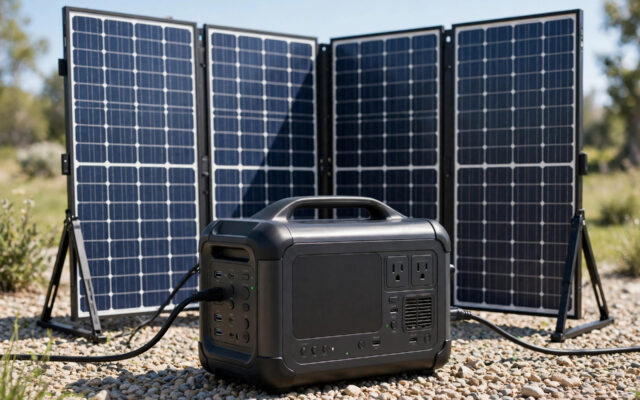
Best Solar Generator Bundles with Panels for 2027
Save money with the best solar generator bundles of 2027 — power station plus solar panel kits ready to use out of the box.

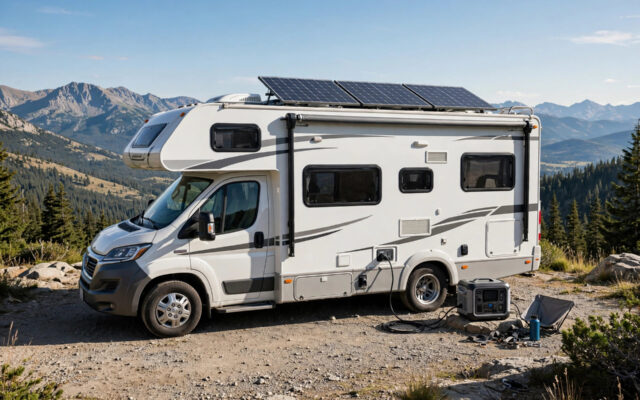
Best Solar Generators for RVs in 2027
Power your RV adventures with the best solar generators for RVs in 2027, featuring TT-30 outlets and fast solar charging.
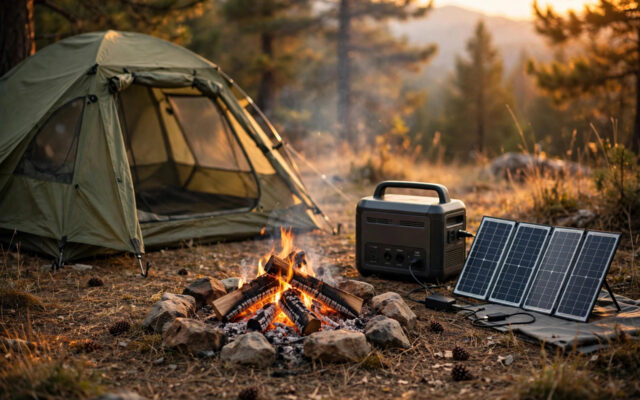
Best Solar Generators for Camping in 2027
The best solar generators for camping in 2027: lightweight, quiet power stations that keep your gear charged off-grid.