


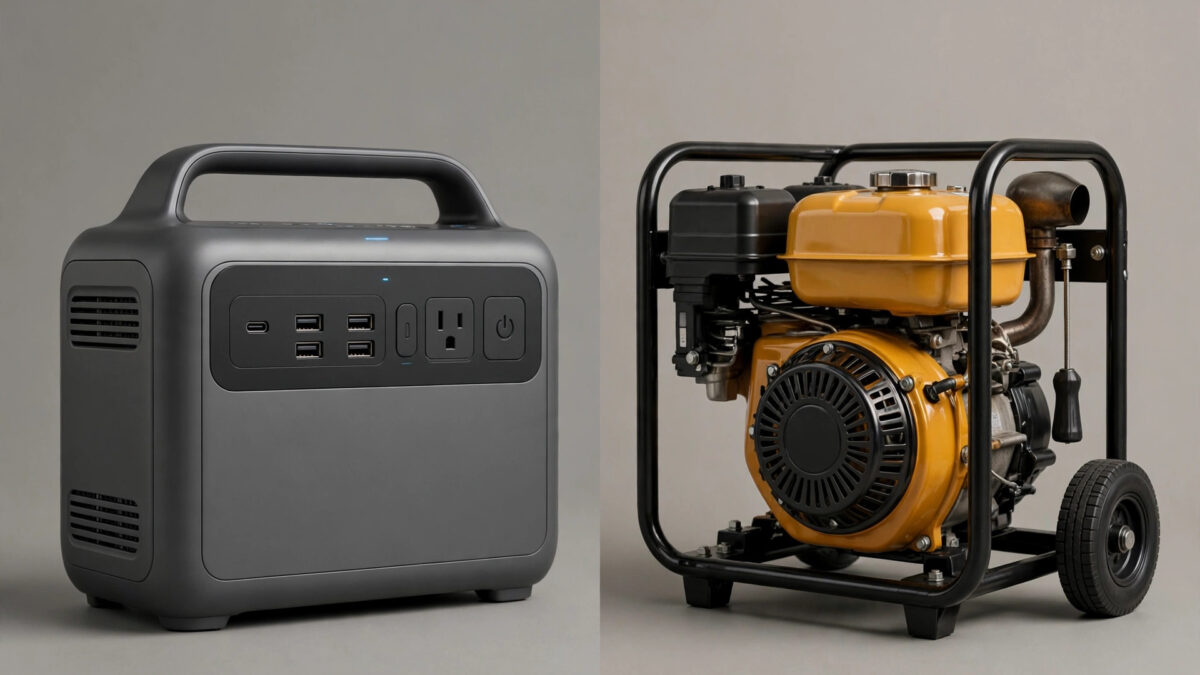
Solar generator or gas generator? It is one of the most common questions in backup power, and most answers are suspiciously one-sided — usually written by someone selling one of them. Here is the honest comparison: where each one wins, where each one loses, and how to pick the right one for your situation.
How Each One Works (in 30 Seconds)
A gas generator burns gasoline, propane, or diesel to spin an engine, which drives an alternator that produces electricity on demand. As long as you have fuel, you have power.
A solar generator stores electricity in a LiFePO4 battery and releases it through an inverter. It recharges from solar panels, a wall outlet, or your car. No combustion, no fuel — but a finite tank that must be refilled.
That single difference — making power versus storing power — explains nearly every tradeoff below. For a deeper explainer, see how solar generators work.
Power Output: Gas Wins on Raw Muscle
Gas generators simply make more power for less money. A $1,000 portable gas generator delivers 3,500 to 4,500 running watts without breaking a sweat — enough for a well pump, power tools, and multiple major appliances at once.
Solar generators top out lower per dollar. High-capacity models like the EcoFlow DELTA Pro 3 (4,096Wh, 4,000W output) can match mid-size gas units on watts, but at several times the price. If your must-run list includes central air conditioning, an electric water heater, or a 240V well pump running for hours, gas currently wins on pure economics.
For typical household essentials — fridge, freezer, lights, phones, internet, TV — a 2,000W-class solar generator is plenty. Most outages do not require 7,000 watts; they require the right 2,000 watts, quietly.
Runtime: Gas Runs as Long as You Have Fuel
This is gas’s biggest advantage. A gas generator with a 5-gallon tank runs 8 to 12 hours; with jerry cans stockpiled, it runs indefinitely. Refueling takes two minutes.
A solar generator’s runtime is its battery capacity divided by your load. A 2,000Wh unit running 500W of loads lasts about 3.5 hours — then needs hours of sun or wall power to refill. With enough panels connected, daytime loads can run indefinitely, but nighttime is always on battery.
Verdict on runtime: for multi-day outages with heavy loads, gas. For overnight outages and moderate loads, solar is fine — especially paired with panels.
Noise: Solar Wins by a Mile
A gas generator produces 60 to 75 decibels at typical loads — roughly a vacuum cleaner running outside your window, all day and night. Inverter gas generators are quieter (50–60 dB) but still unmistakable.
A solar generator produces essentially zero noise. The only sound is small cooling fans under heavy load, quieter than a laptop. This matters more than people expect: during extended outages, generator noise strains neighbor relations, violates some HOA rules and campground quiet hours, and makes sleeping near the unit unpleasant.
Indoor Use and Safety: Solar Wins Decisively
This one is not close. Gas generators produce carbon monoxide and must never run indoors, in garages, or near windows — CO poisoning kills hundreds of people per year, many during storm outages. They also store flammable fuel and get hot enough to burn.
Solar generators produce no emissions, no fumes, and no CO. They run safely inside your home, in an apartment, next to a hospital bed running a CPAP. For anyone who cannot safely operate machinery outdoors — apartment dwellers, elderly users, families with kids — this alone settles the debate.
Fuel and Running Costs
Gas generators have an ongoing fuel bill: roughly 0.5 to 1 gallon per hour at moderate load, plus oil changes every 50–100 hours of runtime. At $3.50/gallon, a three-day outage can easily cost $150–$250 in fuel.
Solar generators cost nothing to run. Sunlight is free; wall-outlet charging costs pennies per kilowatt-hour. Over years of occasional use, the total cost of ownership narrows considerably — though gas still wins on upfront watts per dollar.
Maintenance
Gas generators demand real maintenance: oil changes, air filters, spark plugs, fuel stabilizer, and periodic test runs — because stale fuel gums up carburetors and a neglected generator famously refuses to start exactly when you need it.
Solar generators need almost nothing: keep the battery between 40–60 percent in storage, top it up every few months, keep it cool and dry. No oil, no filters, no pull cords, no stale fuel. It starts instantly, every time, with a button press. Our guide on solar generator lifespan covers the full care routine.
Upfront Cost
Watt for watt, gas is cheaper upfront — often 3 to 5 times cheaper per watt of output. A 3,500W gas generator costs less than a 1,000Wh solar generator.
But compare systems, not just boxes: a solar generator needs no fuel stockpile, no transfer-switch electrician visit for basic use, and no maintenance supplies. And prices have fallen steadily — solid 1,000Wh LiFePO4 units now sell for what 500Wh NMC units cost three years ago. Check current pricing in our best solar generators of 2027 roundup.
The Environment
Gas generators emit CO2, carbon monoxide, nitrogen oxides, and particulates — comparable to running a car engine for hours. Solar generators emit nothing in operation. If you recharge from the grid, the footprint depends on your local power mix; recharged from panels, it is as clean as energy gets.
When Each One Wins
Choose a solar generator when:
- You need backup for essential loads (fridge, phones, internet, medical devices) through outages of hours to a couple of days
- You live in an apartment or cannot run a generator outdoors
- You camp, RV, or tailgate where quiet hours apply
- You want zero maintenance and instant, push-button power
- You power a CPAP or other medical device overnight — silent, indoor-safe, reliable
Choose a gas generator when:
- You need 5,000+ watts continuously for heavy loads (central AC, well pump, electric heat)
- You face multi-day outages regularly and cannot rely on sun
- You run a job site with power tools all day
- Upfront budget is the binding constraint and you need maximum watts per dollar
Consider both: many serious preppers pair them — a gas generator for fast bulk charging and heavy loads, a solar unit like the BLUETTI Elite 200 V2 for silent overnight power. Run the gas unit an hour in the evening, then shut it off and coast on battery. Best of both worlds.
Can a solar generator fully replace a gas generator?
For light-to-moderate loads — fridge, electronics, lights, medical devices — yes. For sustained heavy loads like central air conditioning or a well pump over multiple days, no: gas still delivers more watts per dollar and refuels in minutes.
Which is cheaper in the long run: solar or gas generator?
Gas wins on upfront cost per watt by a wide margin. But solar has zero fuel and near-zero maintenance costs, so for occasional outage use the lifetime cost gap is smaller than the sticker prices suggest. Heavy, frequent users still come out ahead with gas.
Can you use a solar generator indoors?
Yes — safely. Solar generators produce no carbon monoxide, fumes, or exhaust, so indoor use is completely safe. Gas generators must never run indoors, in garages, or near open windows due to deadly CO.
Which is better for home backup: solar or gas?
For keeping essentials (fridge, phones, internet, lights) running through typical outages of hours to a day or two, solar is quieter, safer, and maintenance-free. For whole-house backup including HVAC and well pumps across multi-day outages, gas remains the practical choice.
Which is better for camping: solar or gas generator?
Solar, in most cases. Campgrounds enforce quiet hours that gas generators violate, solar units are lighter and need no fuel runs, and panels recharge you for free. Gas only makes sense for powering heavy tools at a base camp.
Our verdict
Neither wins outright — they solve different problems. Solar generators win on silence, indoor safety, zero maintenance, and running costs; gas generators win on raw watts per dollar and indefinite runtime with fuel on hand. Most households are better served by solar for the outages they actually experience. Start with our best solar generators of 2027 to find the right size, and size it properly with our sizing guide.

Related Guides
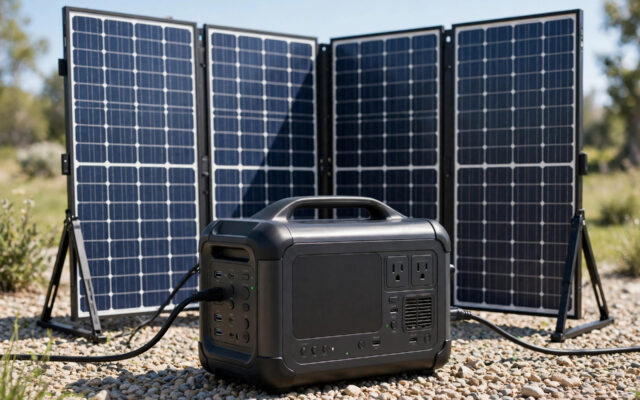
Best Solar Generator Bundles with Panels for 2027
Save money with the best solar generator bundles of 2027 — power station plus solar panel kits ready to use out of the box.

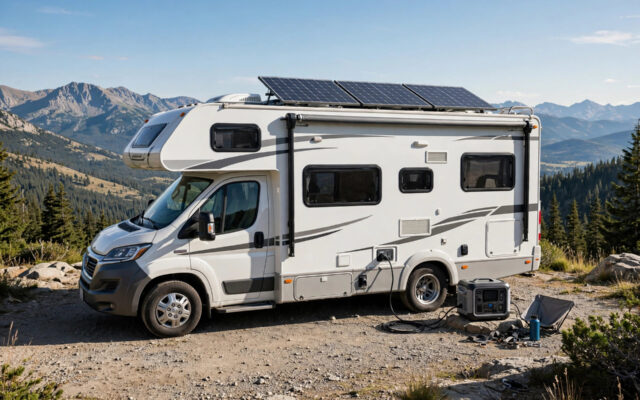
Best Solar Generators for RVs in 2027
Power your RV adventures with the best solar generators for RVs in 2027, featuring TT-30 outlets and fast solar charging.

Best Solar Generators for Camping in 2027
The best solar generators for camping in 2027: lightweight, quiet power stations that keep your gear charged off-grid.