


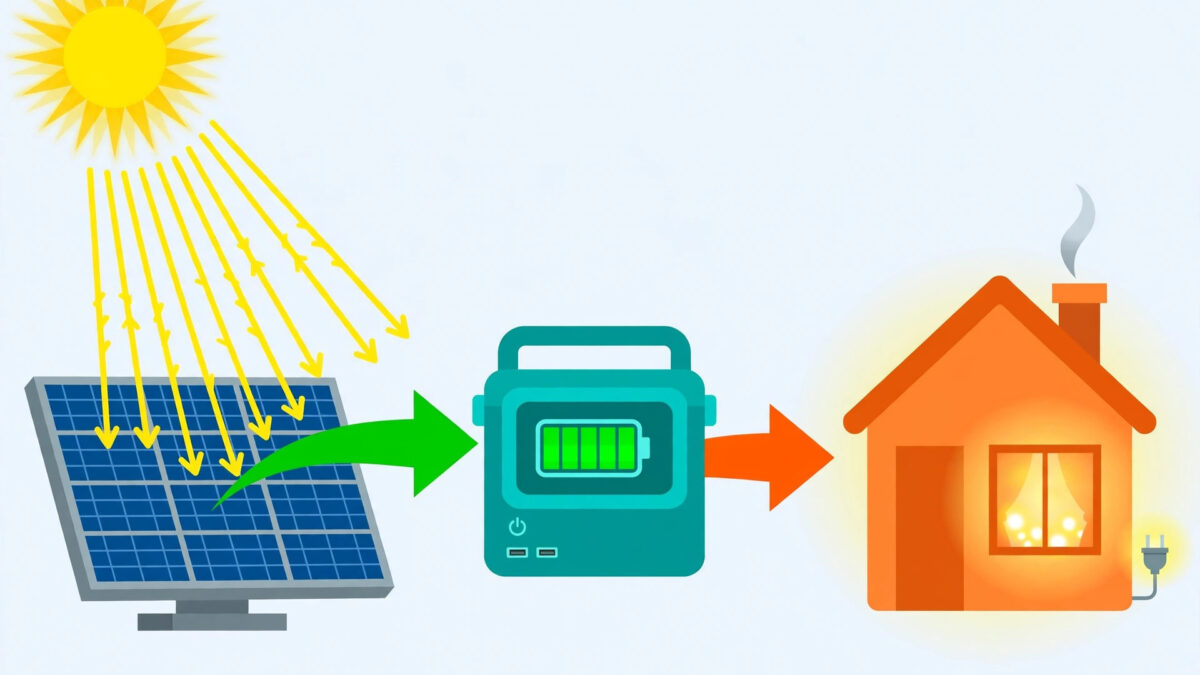
A solar generator sounds like it should work the way a gas generator does: fuel goes in, electricity comes out. It does not. A solar generator makes no electricity at all on its own. It is a rechargeable battery with a smart inverter and a set of solar panels that refill it. Once you understand that single idea, everything else about these devices falls into place.
This guide walks through exactly how solar generators work, piece by piece, in plain English. No engineering background required.
What a Solar Generator Actually Is
The name is a little misleading. A “solar generator” is really two products sold as a system:
- A portable power station — a box containing a battery, an inverter, a charge controller, and a set of AC and DC outlets.
- Solar panels — which convert sunlight into electricity and feed it into the power station.
Unlike a gas generator, which burns fuel to spin an alternator and create electricity on demand, a solar generator only stores electricity and releases it later. Think of it less like a generator and more like a giant rechargeable battery with wall outlets built in. The “solar” part just describes its favorite way of recharging.
Take the Jackery Explorer 1000 v2 as a typical example: it packs a 1,070Wh lithium iron phosphate battery and a 1,500W pure sine wave inverter into a 23.8-pound box. Connect solar panels and you have a complete solar generator; plug it into a wall outlet and it recharges the same way your phone does.
The Four Core Components
Every solar generator, from a pocket-size 300Wh unit to a whole-home 4,000Wh system, contains the same four building blocks.
1. Solar Panels
Solar panels are made of photovoltaic (PV) cells, usually silicon. When photons from sunlight strike the cell, they knock electrons loose and create a flow of direct current (DC) electricity. This is called the photovoltaic effect, and it is the only part of the system that actually harvests energy from the environment.
Panel output is rated in watts. A 100W panel produces up to 100 watts in perfect laboratory conditions; in the real world, expect 70 to 80 percent of that on a clear day. Monocrystalline panels are the most efficient common type, with premium N-type cells converting around 23 to 26 percent of sunlight into electricity.
2. Charge Controller (MPPT)
Raw panel output is messy. Voltage swings with sunlight intensity, and dumping that straight into a battery would damage it. The charge controller sits between the panels and the battery and regulates the flow.
Modern solar generators use MPPT (Maximum Power Point Tracking) controllers. An MPPT controller constantly adjusts the electrical load on the panels to squeeze out the maximum available power as conditions change — clouds pass, the sun angle shifts, temperature rises. Compared with older PWM controllers, MPPT typically harvests 20 to 30 percent more energy from the same panels. It is one of the most important specs to check, and virtually every quality unit made after 2023 includes one.
3. Battery
The battery is the heart of the system. It stores energy as chemical potential and releases it as DC electricity on demand. Nearly all solar generators sold in 2026 and 2027 use LiFePO4 (lithium iron phosphate) chemistry, which lasts 3,000 to 6,000+ full charge cycles and is far more thermally stable than the lithium-ion cells in older models and most laptops.
Battery size is measured in watt-hours (Wh). A 1,000Wh battery can theoretically deliver 1,000 watts for one hour, or 100 watts for ten hours. Usable capacity is slightly less because the inverter wastes some energy as heat — figure on about 85 percent efficiency in practice.
4. Inverter
Your battery stores DC electricity, but your fridge, laptop charger, and lamps all run on AC (alternating current) — the kind that comes out of wall outlets. The inverter converts DC to AC, and its wattage rating is the single biggest limit on what you can plug in.
A 1,500W inverter can run any combination of devices drawing up to 1,500 watts continuously. Quality inverters produce “pure sine wave” AC, which is clean enough for sensitive electronics like CPAP machines and modern refrigerators. Cheap modified-sine-wave inverters can make motors buzz and may damage delicate gear, so pure sine wave is worth insisting on.
How Energy Flows, Step by Step
Here is the complete journey of a single watt, from sunlight to your phone charger:
- Sunlight hits the panels. Photovoltaic cells convert light into DC electricity.
- The MPPT charge controller optimizes the flow. It adjusts voltage and current hundreds of times per second to pull maximum power from the panels.
- Energy is stored in the battery. The controller feeds regulated DC into the LiFePO4 cells, where it waits as chemical energy.
- You plug in a device. The battery management system (BMS) releases DC power while monitoring temperature, voltage, and current to protect the cells.
- The inverter converts DC to AC. For AC devices, DC becomes 120V pure sine wave electricity at the wall-style outlets. For USB and 12V car-port devices, DC passes through with only voltage regulation.
The whole chain runs silently, with no combustion, no fumes, and no moving parts except small cooling fans that kick in under heavy loads.
AC vs. DC Outputs: What Plugs Into What
Most solar generators offer three kinds of output, and using the right one matters for efficiency:
- AC outlets — standard wall-style plugs for household devices. Convenient, but every watt passes through the inverter and loses roughly 10 to 15 percent as heat.
- USB ports (USB-A and USB-C) — for phones, tablets, and laptops. These skip the inverter entirely, so they are more efficient for small electronics.
- 12V DC outputs — car-style ports and DC barrel jacks for 12V appliances, camping fridges, and CPAP machines with DC adapters. Also bypass the inverter.
Rule of thumb: if a device can run on DC, use the DC port. You will stretch your battery noticeably further.
Types of Solar Generators
The same four components show up in three common form factors:
- Portable power stations plus panels — the classic setup. A 500 to 2,000Wh box paired with 100 to 400W of folding panels. Ideal for camping, road trips, and short outages. See our roundup of the best solar generators of 2027 for current picks.
- Bundled kits — manufacturers sell matched station-plus-panel packages so you do not have to guess about compatibility. Our guide to the best solar generator bundles compares the strongest options.
- Whole-home systems — 3,000Wh-plus units (often expandable to tens of kilowatt-hours) that tie into a home sub-panel for multi-day backup. These overlap with the best portable power stations at the top end of the range.
How Fast Can a Solar Generator Recharge?
Recharge speed depends on the input source and the battery size:
- Solar: divide the battery’s watt-hours by the panels’ real-world wattage. A 1,000Wh station fed by 400W of panels (producing around 320W in good sun) recharges in roughly 3 to 3.5 hours of strong sunlight.
- Wall outlet: the fastest method. Modern units accept 1,000 to 1,800W from AC and can go from empty to 80 percent in under an hour.
- Car 12V outlet: the slowest, typically 100 to 120W — fine for trickle-charging on a road trip, not for a fast refill.
You can also use the station while it charges. This is called pass-through charging, and every major brand supports it, though heavy simultaneous use slows the recharge.
Solar Generator vs. Portable Power Station: Is There a Difference?
Almost none. “Portable power station” is the box; “solar generator” is the box plus solar panels. Marketers use the terms interchangeably, and a power station becomes a solar generator the moment you connect panels to it. If you see both terms while shopping, treat them as the same product category.
Do solar generators work at night?
The panels do not produce power at night, but the battery does not care what time it is. A charged solar generator runs your devices all night; it simply cannot recharge until the sun comes up.
Do solar generators work on cloudy days?
Yes, at reduced output. Panels still harvest diffuse light through clouds, typically producing 10 to 30 percent of their rated wattage under heavy overcast. Charging takes much longer, but it does not stop entirely.
Can you use a solar generator while it is charging?
Yes. This is called pass-through charging and all major brands support it. Just know that running heavy loads while charging slows the recharge, since part of the incoming power goes straight to your devices.
How long does it take to charge a solar generator with solar panels?
Divide battery watt-hours by real-world panel wattage. A 1,000Wh unit with 400W of panels in good sun takes about 3 to 3.5 hours. Doubling the panels roughly halves the time, up to the station’s maximum solar input.
Are solar generators worth it?
For camping, RV life, and short-to-medium power outages, yes — silent operation, zero fuel cost, and indoor-safe use are genuine advantages. For running heavy loads like central AC for days, a gas generator still wins on raw output and runtime.
Our verdict
A solar generator is a battery with an inverter and solar panels, not a fuel-burning engine. Sunlight becomes DC electricity in the panels, an MPPT controller feeds it efficiently into a LiFePO4 battery, and the inverter turns it back into household AC when you need it. Understand those four components and you can evaluate any model on the market — start with our best solar generators of 2027 roundup to see how the specs compare in practice.

Related Guides
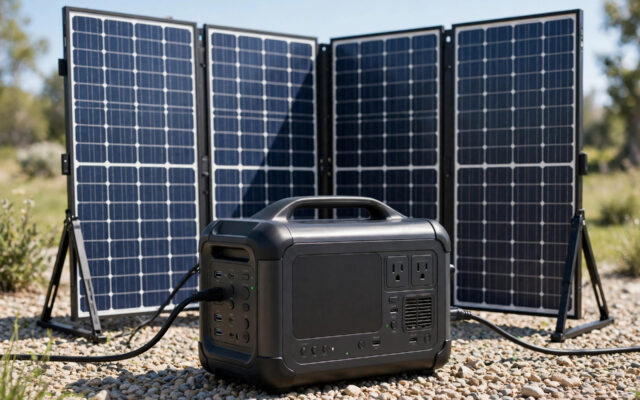
Best Solar Generator Bundles with Panels for 2027
Save money with the best solar generator bundles of 2027 — power station plus solar panel kits ready to use out of the box.

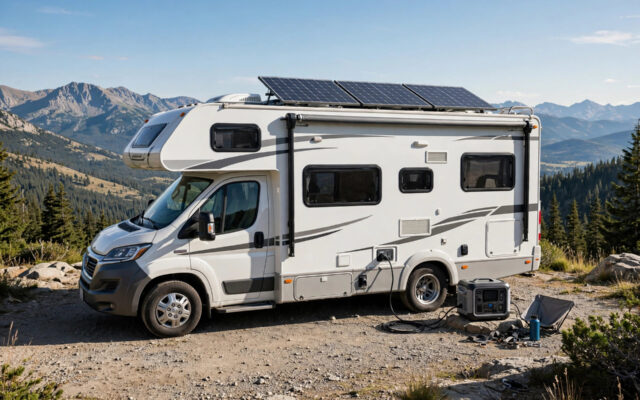
Best Solar Generators for RVs in 2027
Power your RV adventures with the best solar generators for RVs in 2027, featuring TT-30 outlets and fast solar charging.

Best Solar Generators for Camping in 2027
The best solar generators for camping in 2027: lightweight, quiet power stations that keep your gear charged off-grid.
1 Comment