


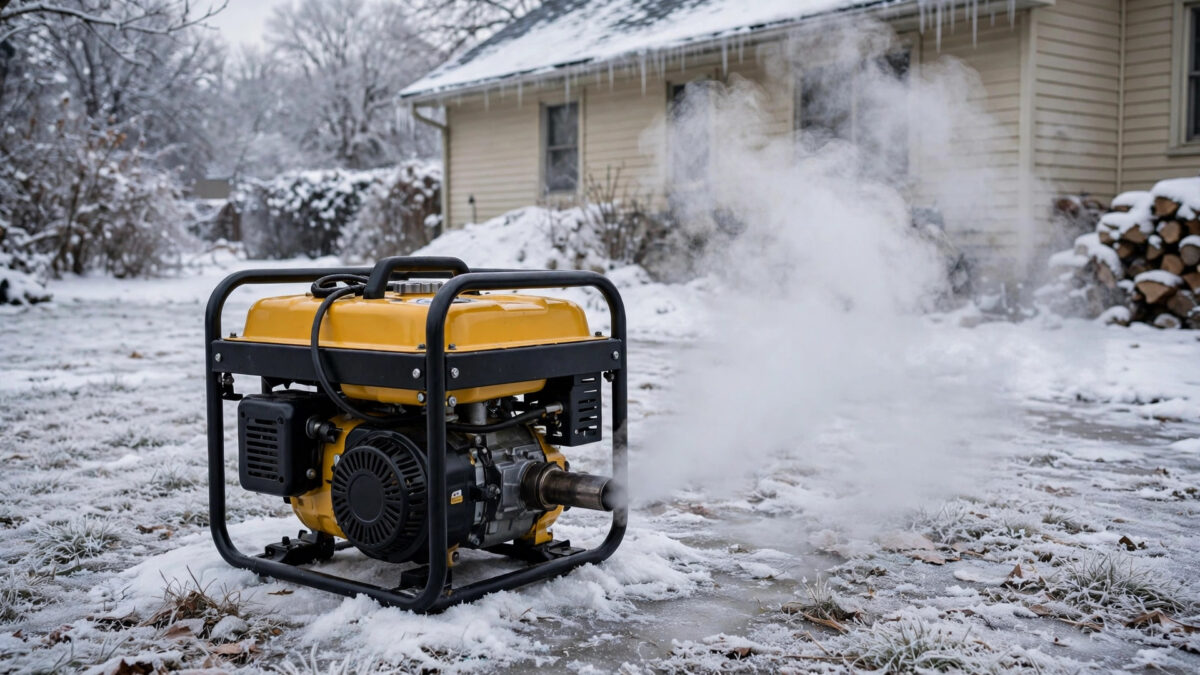
When the temperature drops and your generator just cranks without catching, the culprit is almost always one of three things: oil too thick to let the engine spin fast enough, a cold-weakened battery, or stale fuel that won’t vaporize. Fix those three and most generators will start in weather that makes you question your life choices.
I’ve started generators at 5°F before coffee, and I’ve also stood in a driveway at 15°F yanking a recoil cord until my shoulder gave out. The difference between those two mornings wasn’t luck — it was preparation. Here are the eight things that actually work, in order of impact.
Key takeaways
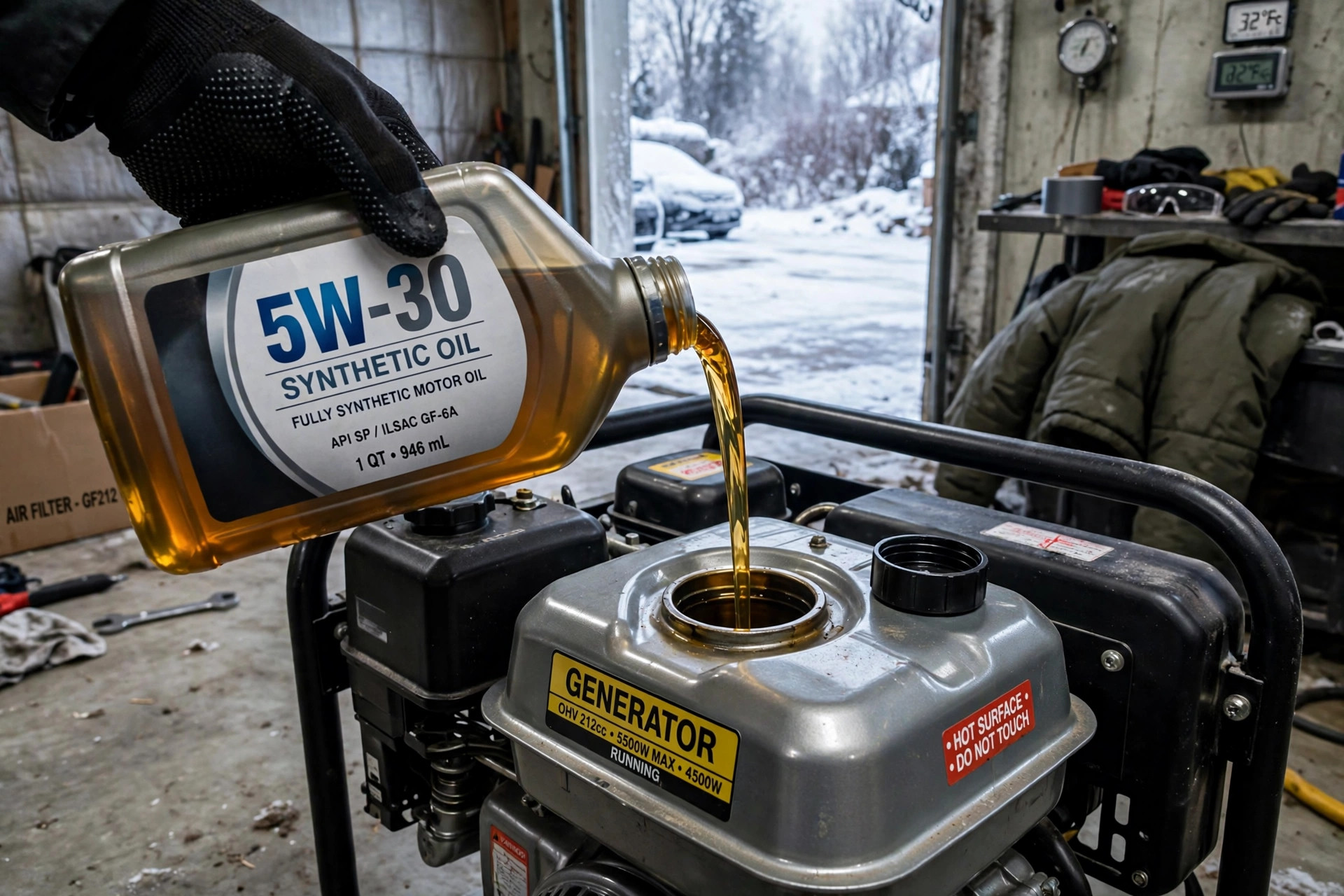
- Switch to 5W-30 full synthetic oil before winter — it’s the single biggest cold-start improvement you can make.
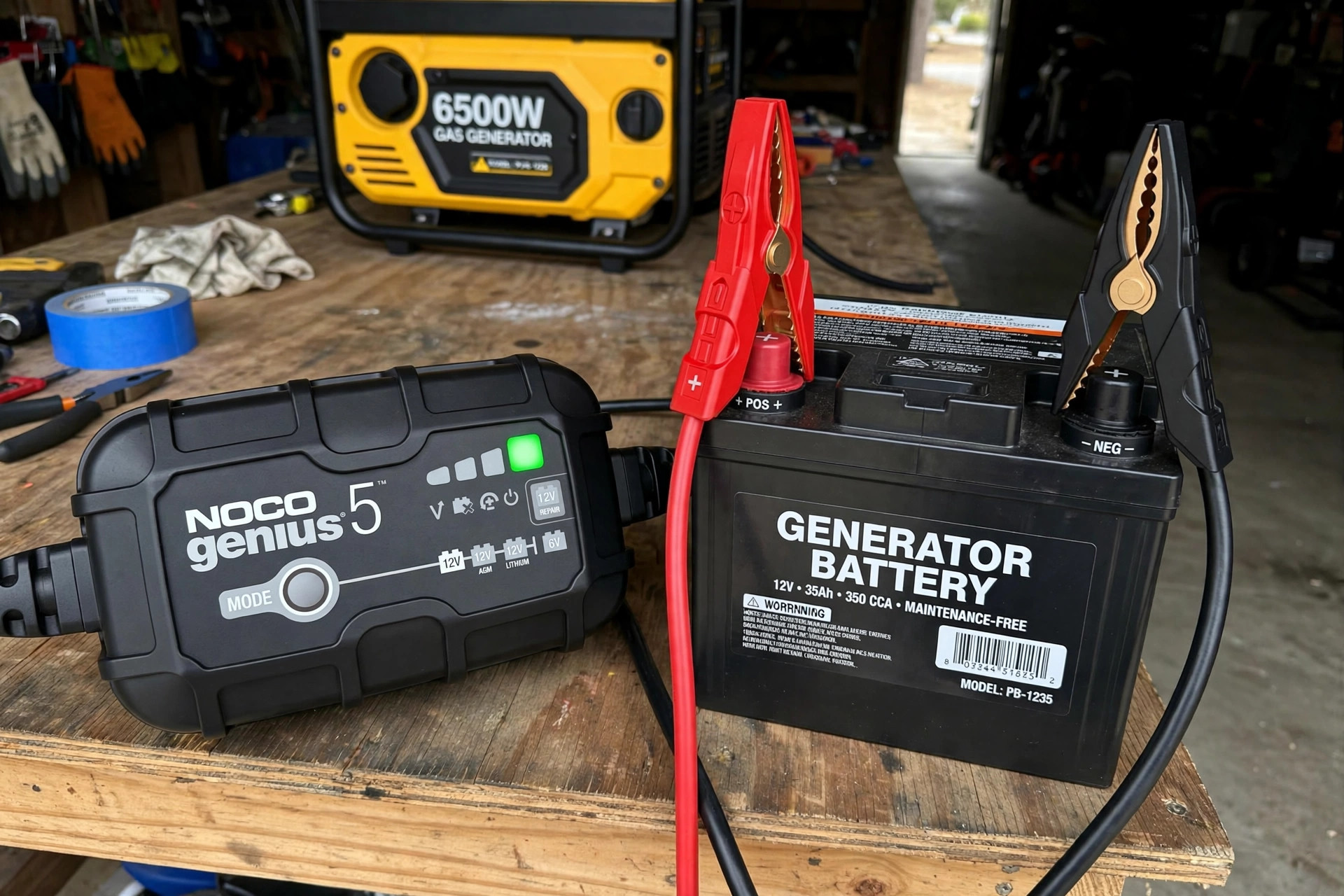
- Cold saps batteries: a battery can lose 30–60% of its cranking power in deep cold. Keep it on a smart maintainer.
- Use full choke on a cold engine, and don’t touch the throttle — then ease the choke off as it warms.
- Fresh, stabilized fuel matters more in winter because cold gasoline vaporizes poorly.
- For standby generators, a cold-weather kit (battery warmer + oil heater) is worth every penny below 0°F.
1. Switch to Winter-Weight Oil (Do This First)
This is the highest-impact change and it costs about fifteen bucks. The “W” in 5W-30 stands for winter — it describes how the oil flows when cold. A 10W-30 conventional oil that’s fine in July turns to molasses at 10°F, and your little engine can’t spin fast enough through that drag to generate spark and compression.
5W-30 full synthetic is the winter answer for almost every portable generator. Synthetic oil doesn’t thicken nearly as much in the cold — it’s been shown to stay fluid well below -20°F where conventional oil gives up. In truly brutal climates (regular -20°F and below), 0W-30 synthetic is even better. Check your manual’s temperature/viscosity chart, but for most owners in the northern US and Canada, 5W-30 synthetic from November through March is the move.
I change mine in late fall as part of winter prep — fresh oil, winter weight, done. If you want the full procedure, our generator oil change guide walks through it step by step.
2. Keep the Battery Warm and Maintained
Electric-start generators live or die by their batteries in winter, and cold is brutal on them — a lead-acid battery can lose roughly half its cranking power at -20°F compared to room temperature. A battery that cranks enthusiastically in October will groan in January.
Three things help:
- A smart battery maintainer, plugged in all winter. I keep a NOCO Genius1 connected to my generator’s battery from November to April. It holds a full charge without overcharging, and a fully charged battery resists freezing (a dead battery’s electrolyte can actually freeze and crack the case).
- Bring the battery indoors if the generator sits in an unheated shed and you don’t have power for a maintainer. A warm battery has dramatically more cranking power — old-timers in farm country have done this forever.
- Clean terminals. Corrosion adds resistance, and in cold weather you can’t afford to waste a single amp. A wire brush and five minutes in the fall.
3. Use Full Choke — Correctly
The choke richens the fuel mixture for cold starts, and cold engines need a rich mixture because cold gasoline doesn’t vaporize well. The procedure:
- Full choke, no throttle. Don’t touch the throttle — most generator chokes are designed to work at the normal start position.
- Crank in short bursts — 5 seconds on, 15 seconds off to let the starter cool.
- The moment it catches, ease the choke off gradually over 30–60 seconds. Leaving full choke on once it’s running floods the engine with fuel, fouls the plug, and you’ll be back to cranking.
If it sputters and dies twice on full choke, try half choke on the third attempt — you may have over-choked it. Our guide on what the choke actually does explains the mechanics if you’re curious why this works.
4. Fresh, Stabilized Fuel — Non-Negotiable in Winter
Two winter fuel problems stack on top of each other: last summer’s gas has already started degrading, and cold gasoline vaporizes poorly even when fresh. Old fuel + cold air = a no-start.
- Start winter with fresh fuel. If the gas in the tank is more than 30–60 days old, drain it and refill.
- Dose every can with stabilizer. I add STA-BIL (1 oz per 2.5 gallons) the day I fill my cans. Stabilized fuel stays fresh up to 24 months.
- Ethanol-free gas if you can get it. Ethanol attracts moisture, and moisture + cold = phase separation and ice crystals in the fuel system. Worth the extra cost for a machine that sits all winter.
Our fuel storage guide (how long gasoline lasts in a generator) covers shelf life in detail.
5. Shelter It From the Wind
You can’t run a generator indoors — ever — but you can absolutely give it a windbreak. Wind strips heat from the engine block faster than anything, and a generator that’s been sitting in a 20-mph wind at 10°F is far colder than the thermometer says.
What works: park it on the leeward side of the house or garage (still outdoors, still 20+ feet from any door or window), or set up a simple three-sided windbreak. I throw a tarp over mine between uses — not while running — to keep wind and snow off the block. Even a few degrees of retained warmth makes the oil noticeably thinner at startup.
6. Consider a Block or Oil-Pan Heater
For standby generators in serious winter climates, a cold-weather kit is the professional answer. Generac and others sell kits with a battery warmer pad and an oil filter/block heater that keep the engine near starting temperature around the clock. They draw modest power (a couple hundred watts) and mean the difference between a standby that starts at -20°F and one that just clicks.
For portables, stick-on oil pan heater pads exist too — silicone pads that adhere to the crankcase and plug into a wall outlet. If your portable lives in an unheated shed with power available, a pad plus a battery maintainer is a poor man’s cold-weather kit that works surprisingly well. Our cold weather kit roundup compares the options.
7. Diesel Owners: Mind the Glow Plugs (and the Fuel)
If you’re running a diesel generator, winter has an extra layer: diesel fuel gels. Use winter-blend diesel or an anti-gel additive before the cold hits, and cycle the glow plugs 2–3 times (key on, wait for the light to go out, key off, repeat) before cranking. A diesel that won’t start in January is almost always gelled fuel, not a dead engine.
8. Warm It Up Gently — Then Work It
Once it catches, resist the urge to immediately slam a load on. Let it run 3–5 minutes unloaded (longer in deep cold), ease the choke off, and then apply load gradually. Cold oil doesn’t lubricate well until it warms, and a sudden full load on a stone-cold engine is how you accelerate wear.
Then — and this matters — run it under real load for a good 20–30 minutes, just like your monthly exercise run. A 5-minute cold start that never reaches operating temperature just pumps condensation into the crankcase. If you’re going to start it in winter, commit to the full warm-up.
FAQs
What oil should I use in my generator in winter?
Why won’t my generator start in cold weather?
Should I use starting fluid on my generator?
Can I keep my generator in the garage in winter?
Do standby generators need a cold weather kit?
The Bottom Line
Cold-weather starting isn’t mysterious — it’s just physics. Thin oil, a strong battery, fresh fuel, full choke, and a windbreak will get almost any generator started in almost any weather you’ll actually face. Do the prep in October, not in January at midnight during an outage. Future you, standing in a warm house with the lights on, will be grateful.

Related Guides
Why Does My Generator Backfire? Causes and Fixes (2027)
Why does your generator backfire? An exhaust bang means unburned fuel in the muffler; a pop through the carb means lean mixture or valve trouble. Here are the fixes.

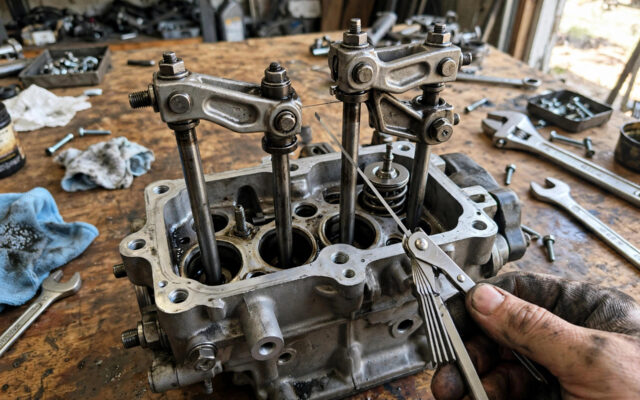
Generator Valve Adjustment: How to Set Valve Lash (2027 Guide)
Generator valve adjustment: 0.006" intake, 0.008" exhaust on Honda GX engines. Tools, TDC procedure, and symptoms of bad valve lash explained.

How to Clean and Replace a Generator Air Filter (2027 Guide)
How to clean a generator air filter: wash foam filters in soapy water and re-oil; tap out paper filters, never wash them. Full steps inside.