


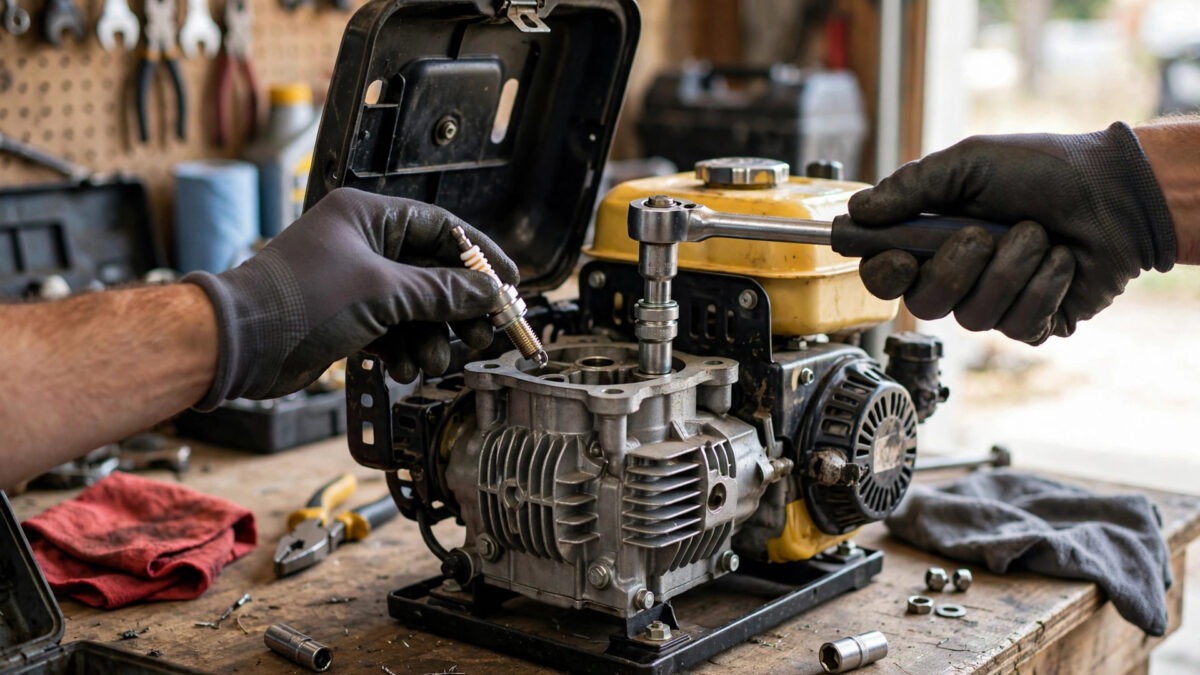
A fouled spark plug is the single most common reason a generator that ran fine last season will not start this season. The fix costs about $4 and takes 15 minutes: pull the old plug, check the gap on the new one (usually 0.028–0.031 inches / 0.7–0.8 mm for small generator engines), thread it in, reconnect the boot. I do this every spring as part of recommissioning, and it has solved more “dead generator” mysteries for friends than any other single step.
Replace the plug every 100 hours of run time or once a year, whichever comes first — and check it any time you get hard starting, surging under load, or a sudden drop in power. Here is the full when-and-how.
Key takeaways
- Interval: inspect yearly, replace every 100 hours or annually. A $4 plug is not worth nursing along.
- Gap: typically 0.028–0.031 in (0.7–0.8 mm) for small generator engines — but always confirm in your manual, since some models differ.
- Symptoms of a bad plug: hard starting, rough idle, surging, misfires under load, black smoke, higher fuel consumption.
- Tools: spark plug socket (usually 13/16″ or 5/8″), ratchet, feeler gauge, and the correct replacement plug from your manual.
When to change it
The calendar interval (yearly) matters more than most people think, because plugs corrode and gaps erode even sitting on a shelf in an engine. But watch for these symptoms between scheduled changes:
- Hard starting — cranks (or pulls) fine but takes many tries to catch, especially when it used to fire right up.
- Surging or hunting under load — RPM wavering up and down is often ignition-related.
- Misfires or sputtering when a load kicks in, like a well pump or air conditioner.
- Black, sooty exhaust or a plug that comes out black and oily — incomplete combustion.
- Noticeably higher fuel consumption for the same loads — weak spark wastes fuel.
I keep a spare plug taped inside the generator’s maintenance pouch. During an outage, a plug swap is a 10-minute fix that beats a dead generator at midnight.
What you need
- The correct replacement plug — your manual lists the exact part number (common ones: NGK BPR6ES, Champion RN12YC, Torch F7RTC on budget units — match your manual, not this list)
- Spark plug socket: 13/16″ for most standard plugs, 5/8″ for some smaller ones
- Ratchet with extension
- Feeler gauge or wire-type gap tool
- Clean rag
Step-by-step replacement
- Let the engine cool completely. Pulling a plug from a hot aluminum head risks stripping the threads. Wait at least 30 minutes after running.
- Pull the spark plug boot. Grip the boot (not the wire) and twist-pull it off. If it is stuck, a gentle twist breaks it free — yanking the wire can damage the ignition lead.
- Clean around the plug. Wipe away dirt and debris from the plug well with a rag. You do not want grit falling into the cylinder when the plug comes out.
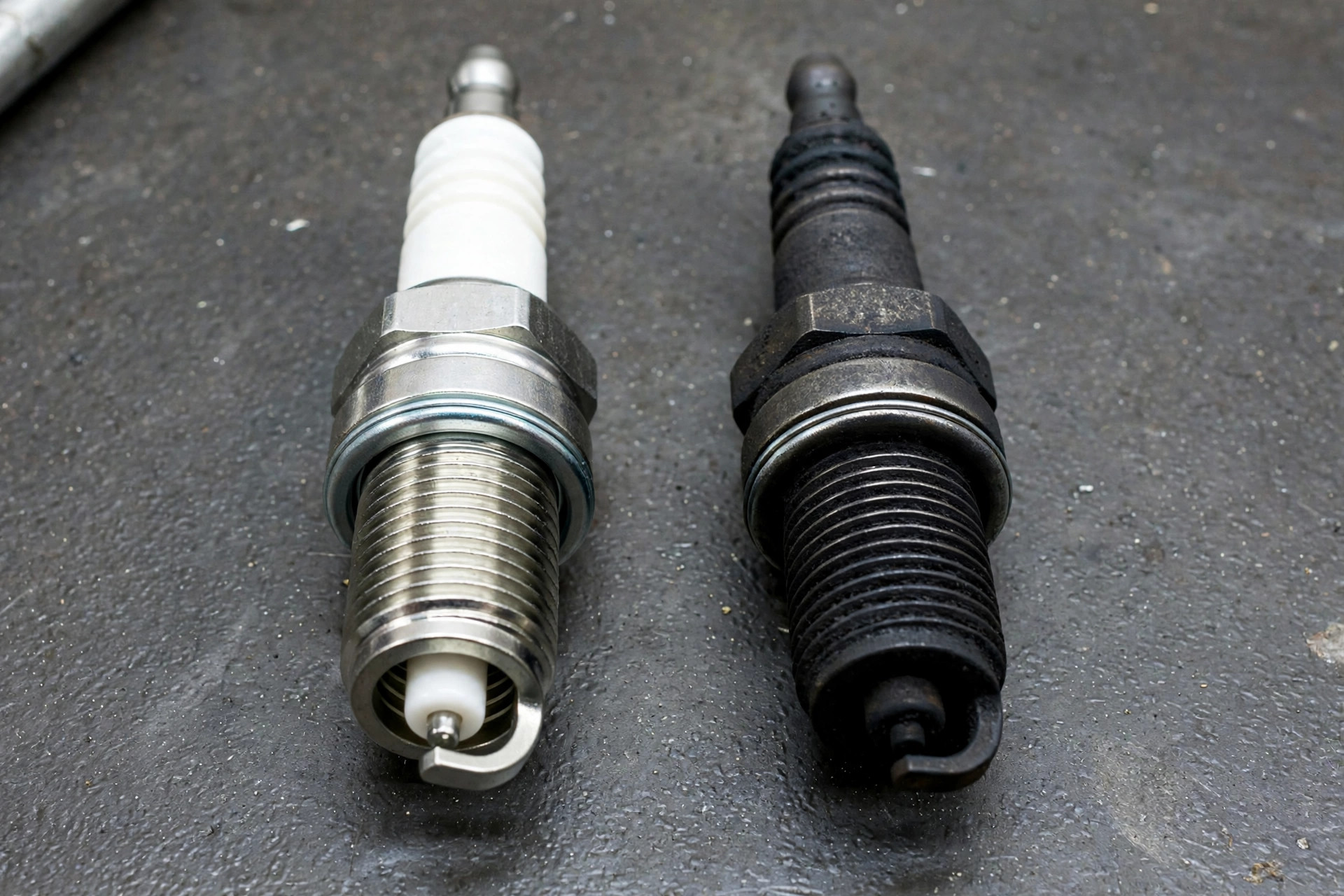
- Remove the old plug. Fit the spark plug socket, loosen counterclockwise, and lift it out. Note how it looks — the deposits tell a story (see the chart below).
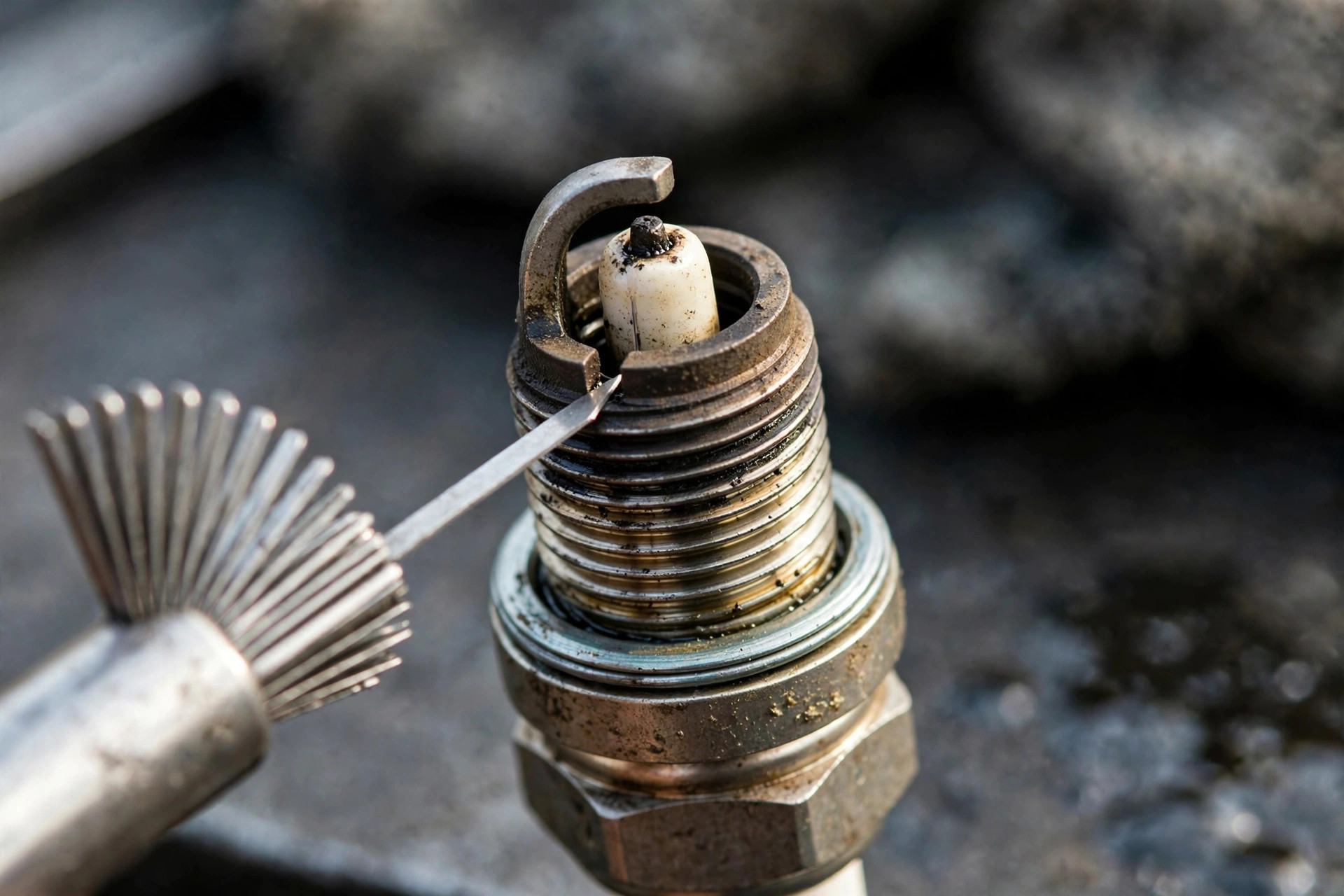
- Check and set the gap on the new plug. Even “pre-gapped” plugs get knocked around in shipping. Slide the correct feeler gauge (usually 0.030″) between the electrodes — it should drag lightly. If the gap is too wide, tap the ground electrode gently on a hard surface; if too narrow, carefully pry it open with the gap tool. Never pry against the center electrode.
- Thread the new plug in by hand first. This is the step that prevents cross-threading. Turn it clockwise with just the socket and extension, no ratchet, until it seats. It should turn smoothly — any resistance means back it out and restart.
- Tighten properly. Once finger-tight, give it about a half to two-thirds turn more with the ratchet (for a new plug with a crush gasket). If your manual gives a torque spec (often around 15–20 ft-lb for these engines), use a torque wrench. Snug, not gorilla-tight — stripped plug threads in an aluminum head are an expensive repair.
- Reconnect the boot. Push it on until it clicks or seats firmly. Start the generator and confirm smooth running.
Reading the old plug
The old plug is a diagnostic tool. Here is what the deposits mean:
| What you see | What it means | What to do |
|---|---|---|
| Tan or light gray deposits | Normal, healthy combustion | Replace on schedule; nothing wrong |
| Black, dry, sooty | Carbon fouling — rich mixture, weak spark, or too-cold heat range | Replace plug; check air filter and choke operation |
| Black, wet, oily | Oil fouling — worn rings/valve seals or overfilled crankcase | Replace plug; check oil level; if it recurs, the engine is wearing |
| White or blistered insulator | Overheating — lean mixture or too-hot heat range | Replace plug; check for air leaks and correct heat range |
| Worn, rounded electrodes | Normal end of life — gap has eroded wider | Replace; this is why plugs are consumables |
Gap specs: the numbers
Most small air-cooled generator engines spec a gap between 0.028 and 0.031 inches (0.7–0.8 mm), with 0.030″ the most common single number. But “most” is not “yours” — I have seen manuals spec 0.024″ and 0.035″ on specific models. The spec is usually printed on an emissions label on the engine shroud and always in the manual. When in doubt, 0.030″ is the safe middle for a small 4-stroke generator engine — but verify.
Why the gap matters: too wide and the ignition coil cannot reliably jump it, especially under compression — you get misfires under load. Too narrow and the spark is weak and small — hard starting and incomplete combustion. A $3 feeler gauge and 30 seconds of checking eliminates both problems.
Copper vs. platinum vs. iridium: does it matter?
Walk into an auto parts store and you will see three tiers of plugs. For a generator, here is the honest breakdown:
- Copper/nickel (standard): what your generator shipped with. Cheapest ($3–5), perfectly good conductivity, and the electrodes wear at a normal rate. Since you are replacing the plug yearly anyway, this is what I buy for all my generators.
- Platinum: harder electrode, slower wear. Makes sense in a car where plugs live 100,000 miles; in a generator you replace annually, you are paying extra for longevity you will never use.
- Iridium: finest electrode, most expensive ($8–12+). Excellent in high-performance engines. In a small air-cooled generator engine, the ignition system was designed around a standard plug, and you will not see a performance difference worth the premium.
My rule: buy the exact standard plug your manual specifies, in copper. Spend the savings on a spare plug for the maintenance pouch. The one exception is if your manual specifically calls for a platinum or iridium plug — some newer inverter models do, and then you match it.
One more buying note: counterfeit plugs are a real problem on large marketplaces. A fake “NGK” with the wrong heat range or poor insulators can cause misfires out of the box. Buy from a reputable seller or your local parts store, and be suspicious of prices that are dramatically below normal.
While you are in there
A plug change is a natural moment for the rest of the 15-minute tune-up: check the oil level (top up or change per our oil interval chart), tap out the air filter, and eyeball the fuel lines for cracking. These three checks plus a fresh plug resolve the large majority of no-start complaints I get asked about. Pair it with fresh fuel first — stale gas plus a fouled plug is the classic double-fault. And if you are doing this as part of seasonal prep, our winterizing guide has the full fall routine.
How often should you change a generator spark plug?
What is the spark plug gap for a generator?
Can a bad spark plug keep a generator from starting?
Should I use anti-seize on a generator spark plug?
What spark plug does my generator take?
Fifteen minutes, one $4 plug, a feeler gauge check — and the most common no-start cause in the book is off the table. Put a spare plug in the generator’s pouch and you will thank yourself at midnight during the next outage.
How we researched this: Manufacturer tune-up schedules and plug specs (Honda, Generac, Champion, Predator), NGK technical guidance on gapping and anti-seize, and hands-on plug service across multiple generator engines.

Related Guides
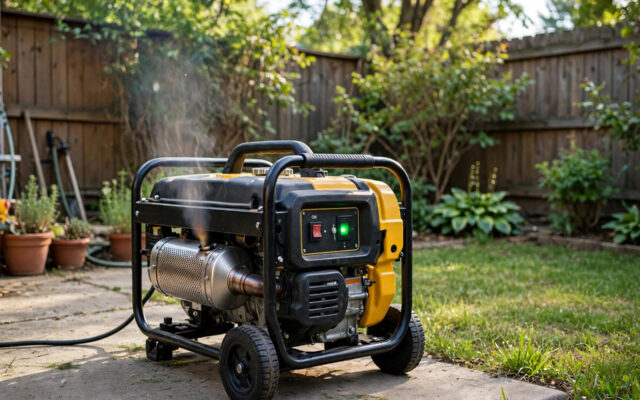
Why Does My Generator Backfire? Causes and Fixes (2027)
Why does your generator backfire? An exhaust bang means unburned fuel in the muffler; a pop through the carb means lean mixture or valve trouble. Here are the fixes.

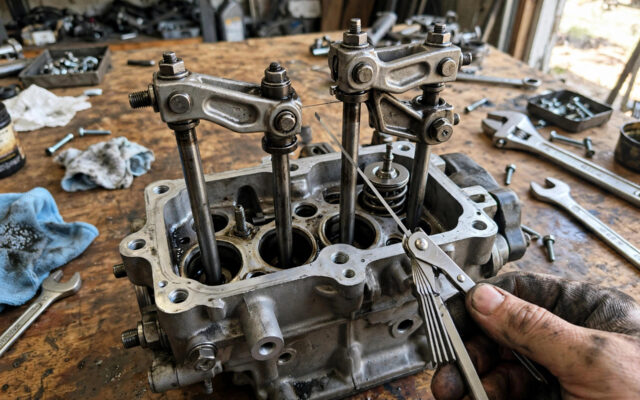
Generator Valve Adjustment: How to Set Valve Lash (2027 Guide)
Generator valve adjustment: 0.006" intake, 0.008" exhaust on Honda GX engines. Tools, TDC procedure, and symptoms of bad valve lash explained.

How to Clean and Replace a Generator Air Filter (2027 Guide)
How to clean a generator air filter: wash foam filters in soapy water and re-oil; tap out paper filters, never wash them. Full steps inside.