


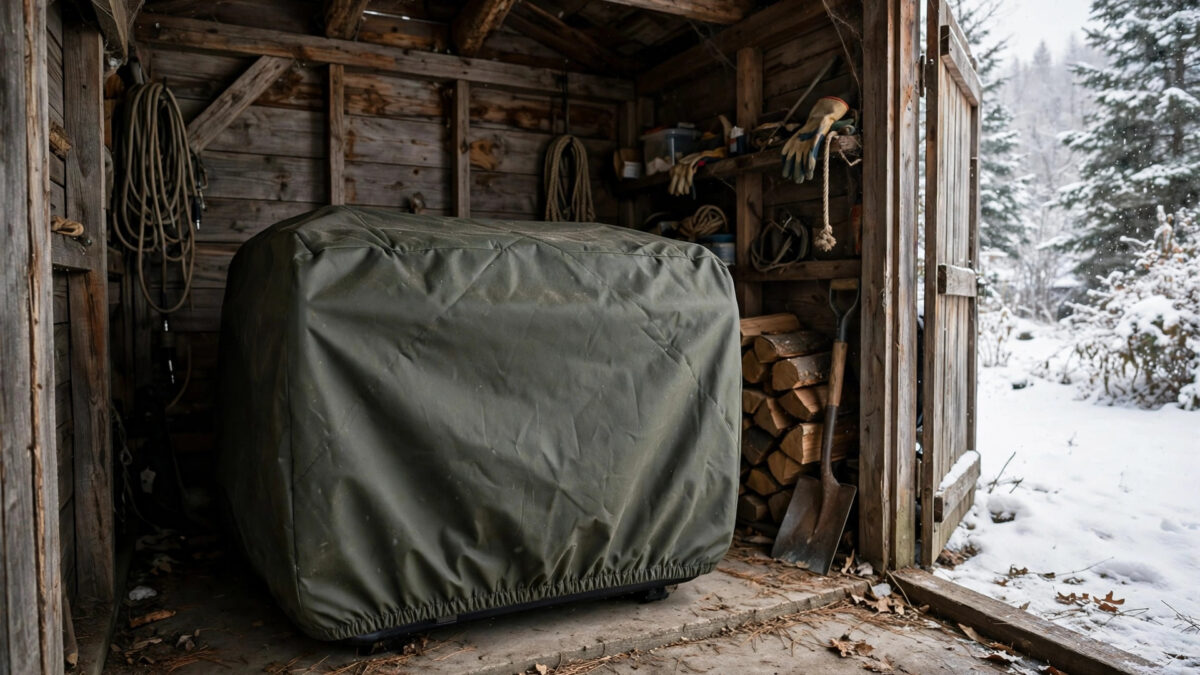
Winterizing a portable generator means two different things depending on your plan: prepping it for winter storage (fuel, oil, battery, clean and covered) or prepping it for winter operation (right oil weight, fresh fuel, and a storm-ready setup). Most “my generator won’t start” spring stories I hear trace back to skipping this 30-minute job in the fall. Here is the full procedure for both tracks.
I live where winters are real, and I have made the classic mistake: parked a generator in October with a half tank of untreated gas, then spent a Saturday in January rebuilding a varnished carburetor in a cold garage. Never again. The winterizing routine below is what I do every fall now, and my generators start on the first or second pull every spring.
Key takeaways
- Fuel is the #1 winter killer. Untreated gasoline goes stale in about 30 days; either stabilize it (1 oz STA-BIL per 2.5 gallons, run 10 minutes) or drain the tank and carburetor bowl completely.
- Switch to 5W-30 oil for winter — cold 10W-30 turns to molasses and makes starting miserable.
- Battery: fully charge it, then keep it on a smart maintainer or charge it monthly. A dead battery in January is the most avoidable no-start there is.
- Storage: clean, dry, covered, fuel valve off, stored upright — never in the house or an attached garage with fuel in it.
Track 1: Winterizing for storage
If the generator is going to sit from roughly November to March, do all of these. Budget 30–45 minutes.
1. Deal with the fuel (the critical step)
You have two good options. Pick one — do not half-do both.
Option A — Stabilize: Add STA-BIL Storage fuel stabilizer (1 ounce per 2.5 gallons of gas) to a full tank, then run the generator for about 10 minutes so treated fuel reaches the carburetor and fuel lines. STA-BIL claims up to 24 months of protection; in my experience, 6–9 months of winter storage is well within its comfort zone. A full tank also minimizes air space and condensation.
Option B — Drain completely: Turn the fuel valve off, run the engine until it stalls, then drain the carburetor bowl (there is usually a small drain screw at the bottom of the bowl — put a rag underneath). Some fuel always remains after stalling, so the bowl drain is the step people skip and regret. Drained dry, there is nothing to varnish.
I stabilize when the generator might be needed mid-winter (storm country), and drain when it is truly done for the season (camping-only units). Both work. What does not work is a half tank of untreated gas — that is a carburetor rebuild waiting to happen.
2. Change the oil
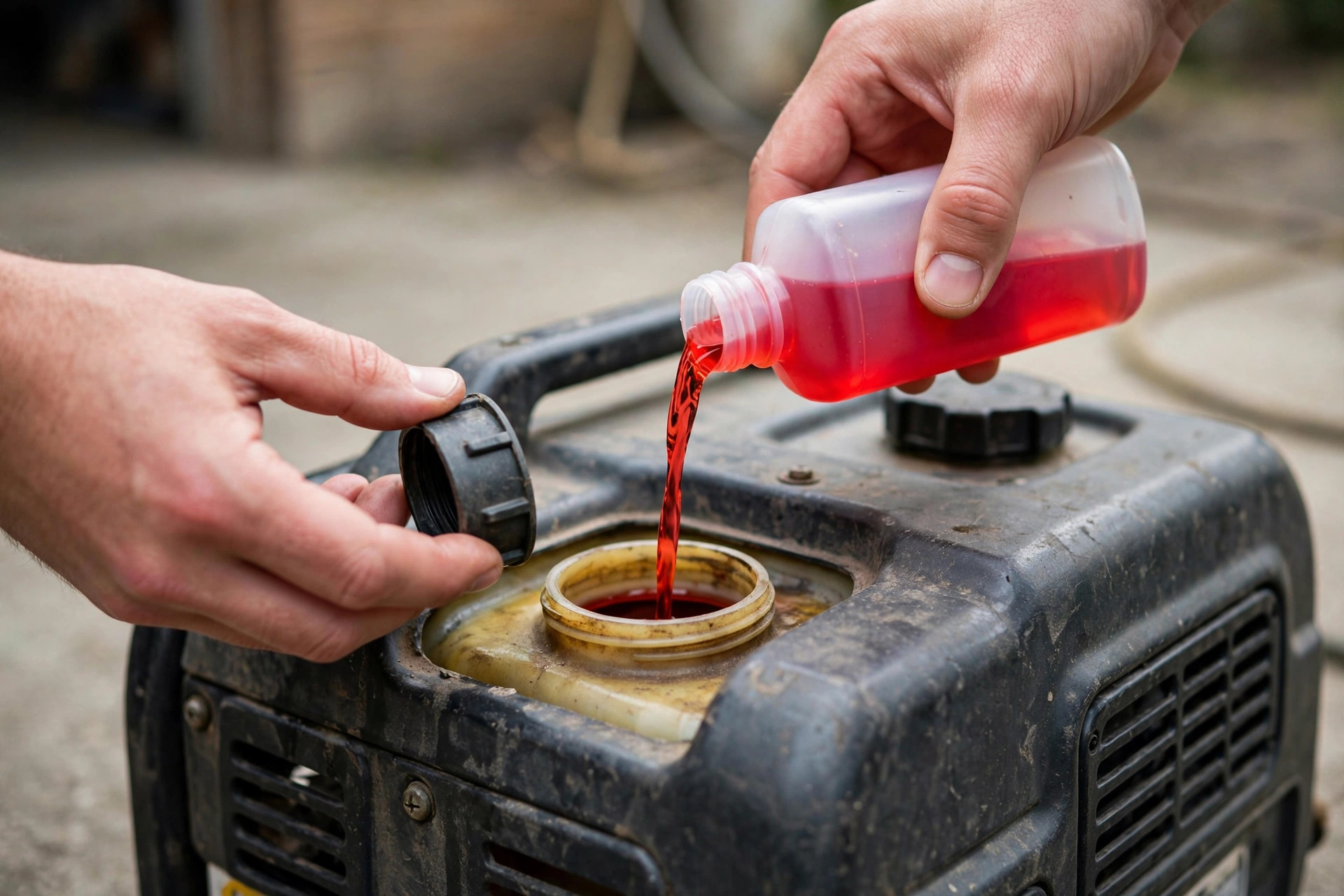
Change it before storage, not after. Used oil contains acids and moisture from combustion; letting the engine sit for months on dirty oil etches bearings. Drain it warm, refill with fresh oil — and if the generator will see any winter use at all, make it 5W-30 instead of 10W-30. Our oil change interval guide has the full schedule, but the winter rule is simple: thinner oil starts easier in the cold.
3. Service the air filter
Pull it, tap out the dust, wash foam elements in warm soapy water, dry completely, and re-oil lightly if it is a foam type. A clogged filter makes cold starting noticeably harder.
4. Protect the battery
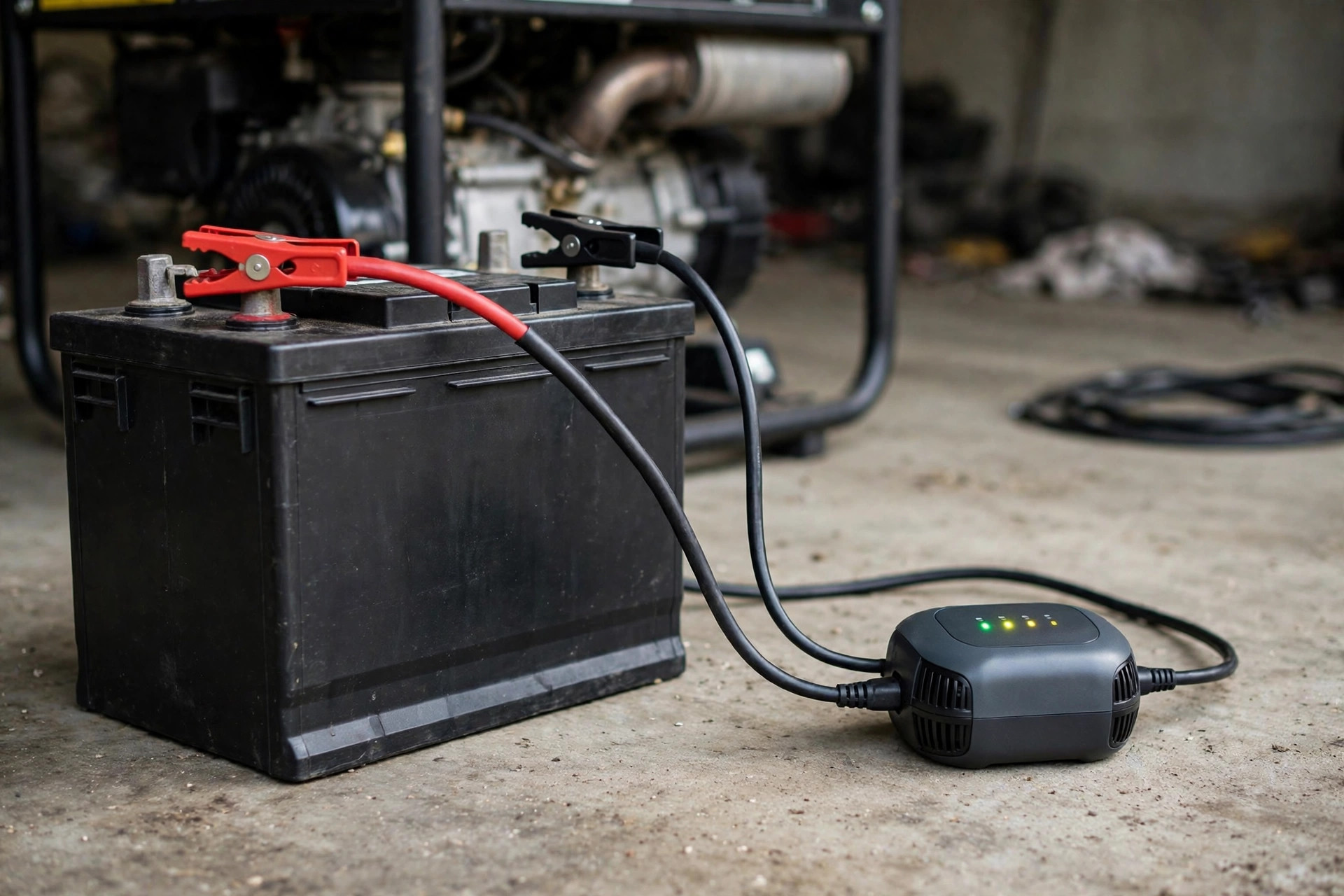
Electric-start models: fully charge the battery, clean the terminals (baking soda and water, then a light coat of dielectric grease or petroleum jelly), and either connect a smart battery maintainer for the winter or plan to charge it monthly. Cold slows the chemical reactions in a lead-acid battery and increases self-discharge — a battery that held a charge all summer can be flat by February. I keep a maintainer on mine all winter; it is the single most reliable no-start prevention I know.
5. Fog the cylinder (optional but smart)
Pull the spark plug, squirt a short burst of fogging oil into the cylinder, and pull the recoil slowly a few times to coat the bore. Then reinstall the plug. This prevents surface rust on the cylinder wall during months of disuse. It takes two minutes. I do it on every unit I store longer than three months.
6. Close everything up
Fuel valve OFF. Choke off. Clean the exterior — mouse nests in the cooling shroud are a real spring surprise; I stuff a rag in the exhaust outlet and the air intake to discourage tenants (remove them before starting, obviously — I tie a bright ribbon on mine as a reminder). Store the generator upright, covered, in a dry, ventilated spot: a shed or detached garage is ideal.
Track 2: Winterizing for winter operation
If your generator is your storm backup and might run in January, winterizing means making sure it starts in January:
- 5W-30 oil, fresh. Cold oil is the #1 cause of hard winter starts. If your manual allows 5W-30 (most do), switch for the season.
- Fresh, treated fuel. Fill with fresh gasoline plus stabilizer now, not in the middle of a storm. Ethanol-blended fuel older than 30 days is suspect; I date my gas cans with a marker. Size your winter stockpile with our fuel storage planning guide so you are not hunting for gas mid-blizzard.
- Monthly test runs. Start it on the first Saturday of every month, run 15–20 minutes under a moderate load (a space heater works). This charges the battery, circulates oil, and — most importantly — proves it starts before you need it.
- Stage the setup. Know exactly where the generator will sit: outdoors, at least 20 feet from doors, windows, and vents per CDC guidance, exhaust pointed away from the house. Keep a long, heavy-gauge extension cord or your inlet cable accessible — not buried behind the Christmas decorations.
- Cold-start technique. Full choke, no load, and give it 2–3 minutes of warm-up before plugging anything in. Cold engines stumble under sudden load; a brief warm-up prevents the stall-surge-stall dance.
Propane and dual-fuel units
Winter is where propane earns its reputation. Propane does not go stale, varnish carburetors, or care about 30-day shelf life — it stores indefinitely. If you run a dual-fuel generator, winter is the season to favor the propane side: fill the gas tank with stabilized fuel as a backup, but plan to run on propane. One caveat: in very cold weather, small 20-lb cylinders can struggle to vaporize enough propane for a big generator under heavy load — the tank gets cold, pressure drops, and the generator starves. If you heat with propane anyway, a larger tank solves this; for portables, keep the cylinder out of the wind and do not expect full rated output from a frosty 20-lb tank.
Spring recommissioning (2 minutes)
When winter ends: remove the exhaust/intake rags, check the oil level, confirm the fuel valve opens, and start it up. If you stabilized, the fuel is fine. If you drained, fill with fresh gas. Run it 10 minutes under load. Done — this is the payoff for the fall work.
Should I run my generator out of gas before storing it for winter?
What oil weight should I use in my generator in winter?
How long does stabilized fuel last in a generator?
Should I disconnect the battery for winter storage?
Can I store my generator in the garage over winter?
Thirty to forty-five minutes in the fall — fuel handled, fresh winter-weight oil, battery on a maintainer, unit cleaned and covered — is the difference between a generator that fires up on the first pull in March and one that eats your Saturday. Do it once, make it a habit, and winter stops being generator-killing season.
How we researched this: Manufacturer winter storage procedures (Honda, Harbor Freight, Generac), fuel stabilizer product data, CDC generator placement guidance, and years of personal fall-winter generator routines.

Related Guides
Why Does My Generator Backfire? Causes and Fixes (2027)
Why does your generator backfire? An exhaust bang means unburned fuel in the muffler; a pop through the carb means lean mixture or valve trouble. Here are the fixes.

Generator Valve Adjustment: How to Set Valve Lash (2027 Guide)
Generator valve adjustment: 0.006" intake, 0.008" exhaust on Honda GX engines. Tools, TDC procedure, and symptoms of bad valve lash explained.
How to Clean and Replace a Generator Air Filter (2027 Guide)
How to clean a generator air filter: wash foam filters in soapy water and re-oil; tap out paper filters, never wash them. Full steps inside.