


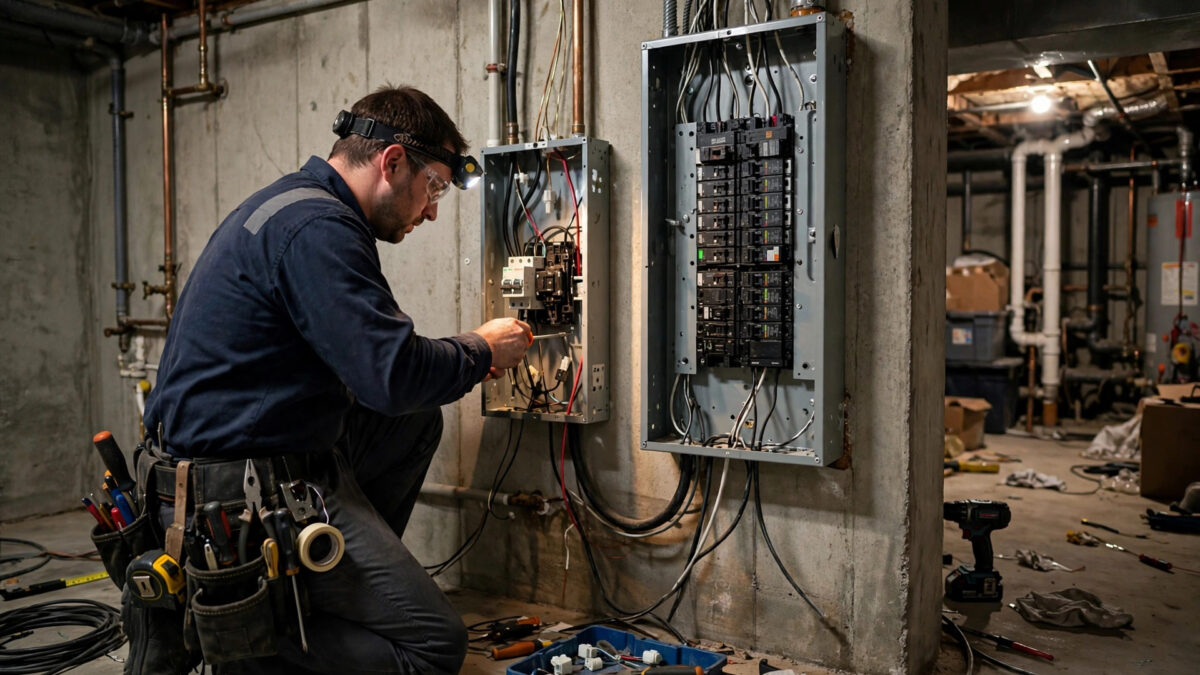
A manual transfer switch costs $250–$400 for the hardware and requires you to start the generator and flip switches yourself during an outage. An automatic transfer switch starts at around $1,000, senses the outage, starts a standby generator, and transfers the load on its own — typically within 10–30 seconds. Choose manual for occasional outages with a portable generator; choose automatic for whole-house standby coverage or if you’re often away.
I ran a manual 10-circuit switch with a portable for years. It worked fine — for me, a person who was home, awake, and willing to go flip breakers in the rain. The day I watched my neighbor’s automatic system kick in while he was on vacation (keeping his sump pump and freezer alive through a 2-day outage), I understood exactly what the extra money buys: protection when you’re not there to flip anything.
Key takeaways
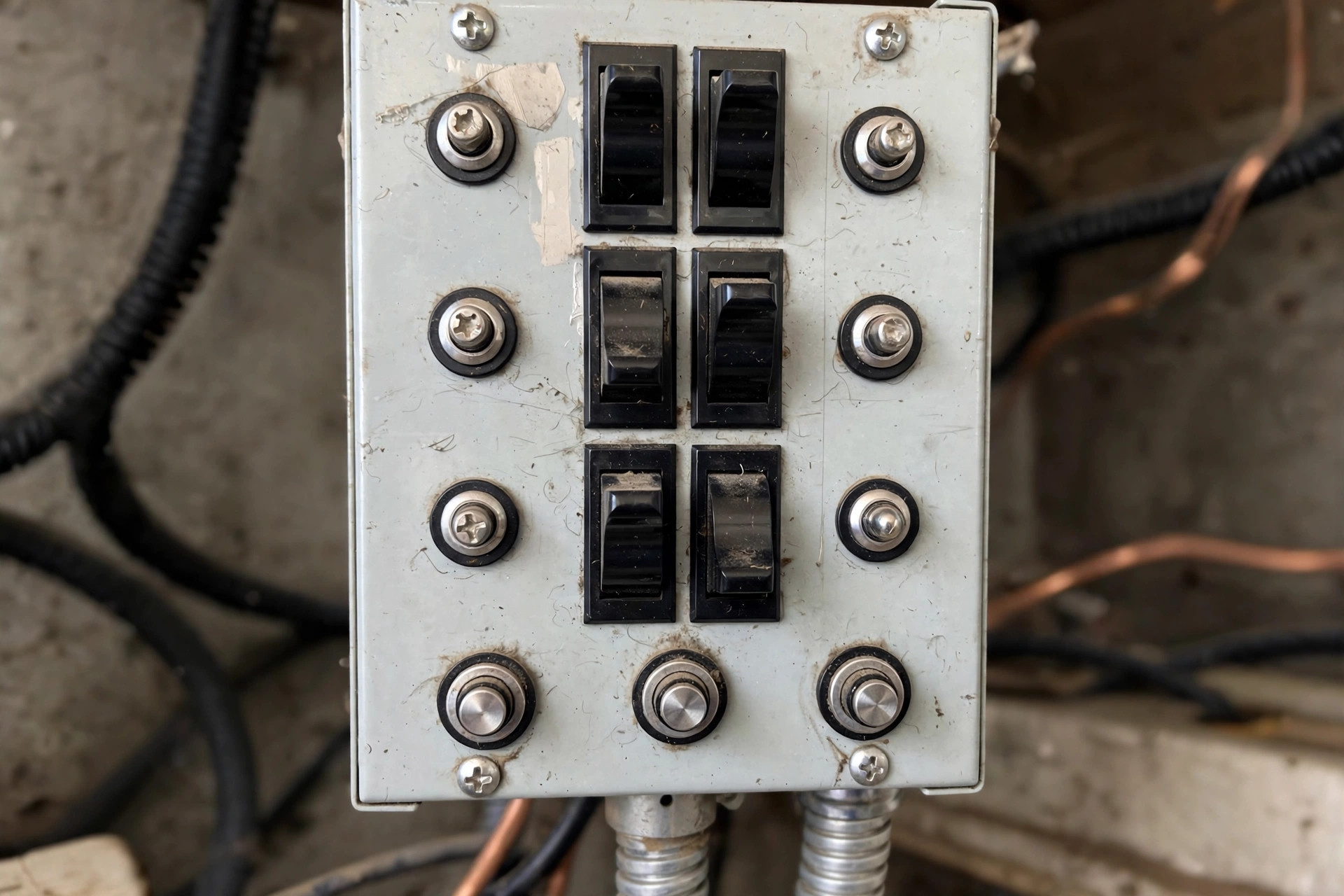
- Manual transfer switch (MTS): $250–$400 hardware; you flip the switches. Pairs with portable generators.
- Automatic transfer switch (ATS): $1,000+ hardware ($1,500–$2,500+ for 200A whole-house); switches in 10–30 seconds with no human action.
- ATS requires a standby generator with auto-start capability and control wiring between the two.
- MTS covers selected circuits (typically 6–10); ATS can cover selected circuits or the whole house.
- Both satisfy NEC Article 702’s requirement that the generator be isolated from the grid — never backfeed.
How They Work (and Why It Matters)
Both devices do the same core job: safely connect your home’s circuits to the generator while physically preventing generator power from flowing back into the utility lines. That backfeed prevention is the whole point — a generator feeding the grid can electrocute a lineworker repairing “dead” wires. NEC Article 702 (optional standby systems) requires listed transfer equipment for exactly this reason.
Manual transfer switch: A panel (usually with 6–10 circuit toggles) wired next to your main breaker panel. Outage happens → you wheel out the generator, start it, plug the cord into the inlet box, go inside, flip the transfer switch from LINE to GEN, then flip each circuit toggle to GEN one by one. Reverse the process when utility power returns. Total effort: 10–15 minutes of hands-on work, in the dark, possibly in weather.
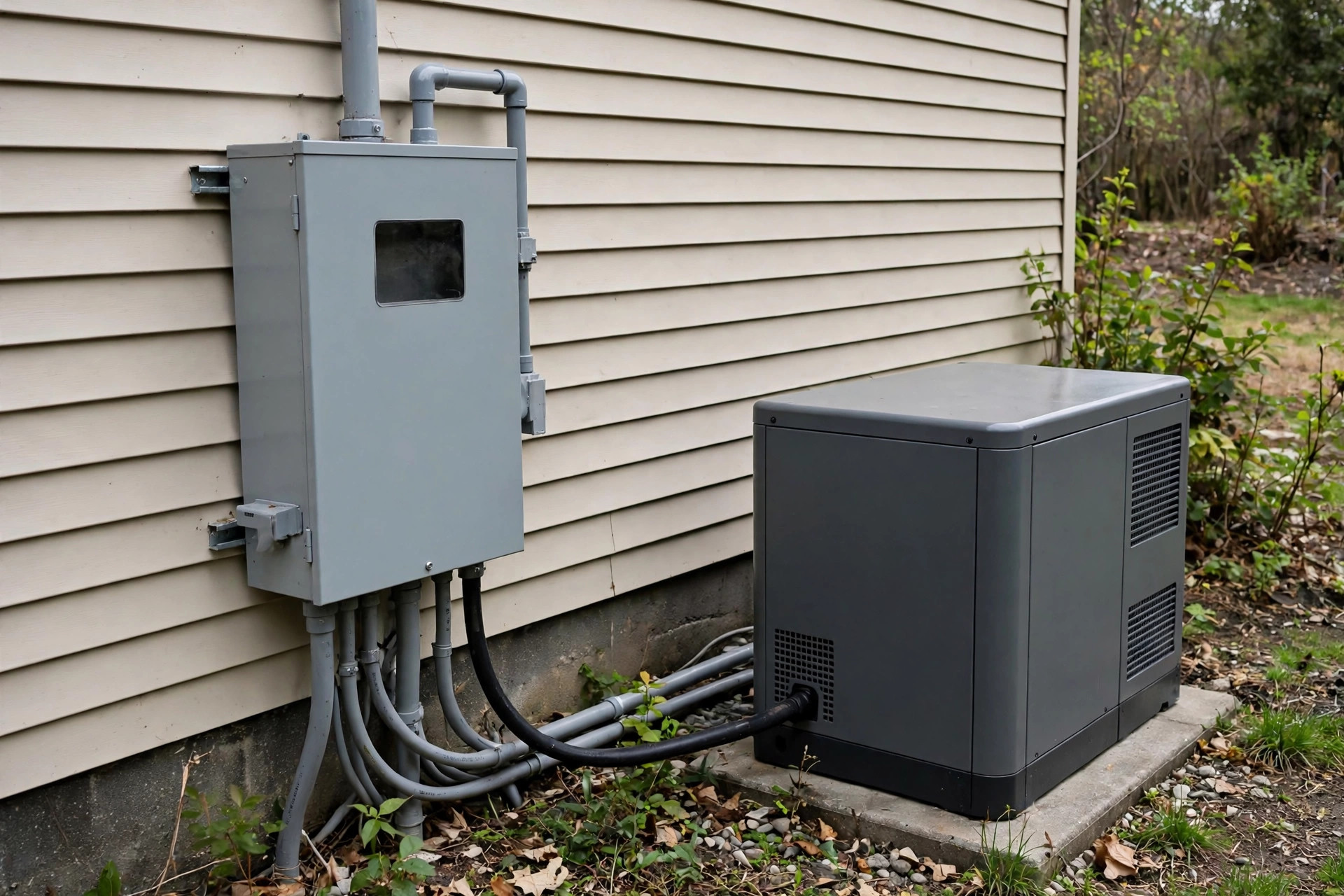
Automatic transfer switch: Senses the outage, signals the standby generator to start, waits for it to stabilize (~10 seconds), transfers the load automatically, and transfers back when utility power returns — then runs the generator through a cool-down. You do nothing. It also exercises the generator weekly on its own.
Head-to-Head Comparison
| Manual transfer switch | Automatic transfer switch | |
|---|---|---|
| Hardware cost | $250–$400 | $1,000–$2,500+ |
| Installed cost (typical) | $500–$900 | $2,000–$4,000+ |
| Generator pairing | Portable (any) | Standby with auto-start |
| Switchover time | 10–15 min (you) | 10–30 sec (automatic) |
| Works when you’re away | No | Yes |
| Circuit coverage | 6–10 selected circuits | Selected circuits or whole house |
| Maintenance | Almost none | Periodic testing, control wiring |
| Installation | Electrician (or skilled DIY where allowed) | Licensed electrician required |
Manual Transfer Switch: The Honest Pros and Cons
Pros: Cheap. Simple — almost nothing to fail. Works with any portable generator. You control exactly which circuits get power, which is genuinely useful for load management (turn the water heater off, microwave on, then switch back). Installation is straightforward for an electrician: typically a half-day job.
Cons: You’re the automation. Nighttime outage? You’re up, outside, in the rain, dragging out the generator. Traveling? Your freezer, sump pump, and pipes are on their own. And during an extended outage, you’re refueling and managing loads manually every few hours. Fine at 35, less fun at 70.
MTS also caps you at the circuits you pre-wired — typically 6–10. If you didn’t put the garage door opener on the transfer panel, you’re lifting it by hand during the outage. Choose your circuits carefully; our guide to essential circuits to back up helps prioritize.
Automatic Transfer Switch: The Honest Pros and Cons
Pros: True set-and-forget protection. Works while you sleep, while you’re at work, while you’re on vacation. The weekly self-exercise means the generator proves itself constantly instead of surprising you. Transfer back to utility is automatic too — no remembering to flip switches when the lights come on at 3 AM.
Cons: Cost — the switch alone can exceed an entire manual setup, and it only makes sense paired with a standby generator ($5,000–$15,000 installed). More complexity means more to maintain: control wiring, sensing circuits, and periodic service. And there’s a subtle NEC gotcha: an ATS can’t transfer the generator onto a load bigger than the generator’s rating (NEC 702.4(B)), so load calculations matter — your installer must size the protected load to the generator, not the other way around.
Can You Start Manual and Upgrade Later?
Yes — and this is a sensible path many homeowners take. Install a manual transfer switch with your portable generator now ($500–$900 installed). Years later, when you upgrade to a standby, the electrician replaces the MTS with an ATS and adds control wiring. The inlet box, conduit runs, and circuit planning mostly carry over.
One thing to plan for: have your electrician run an extra empty conduit from the panel to the outside wall during the manual install. It costs almost nothing while the walls are open and saves real money when the ATS needs control wiring later. Future-you will appreciate past-you’s foresight.
The reverse — downgrading from automatic to manual — basically never happens. Once you’ve lived with automatic backup, going back to dragging a generator out in the rain feels like a punishment.
A Note on GenerLink and Meter-Mounted Switches
You may run across GenerLink — a transfer switch that mounts behind your electric meter, installed by your utility in about 30 minutes with no panel work. It’s a neat product for the right situation: no electrician inside your house, works with portable generators up to 9,600W, and some utilities install it for a few hundred dollars.
The catches: your utility has to offer and approve it (many don’t), it requires a compatible meter base, and it won’t work with generators that have a full GFCI-protected panel (the neutral-ground bond trips the GFCI). Check with your utility first — if they support it, it’s the fastest path to safe portable connection. If they don’t, you’re back to a transfer switch or interlock kit.
Which Should You Choose?
Get a manual transfer switch if: you have (or will buy) a portable generator, outages are occasional and short, you’re home most of the time, and the budget matters. This covers most suburban homeowners, and honestly it’s the right answer for most of you reading this.
Get an automatic transfer switch if: you’re installing a standby generator anyway (most come bundled with a matched ATS), you travel or work away from home, you have medical equipment, a sump pump that can’t wait, or freeze-prone pipes — anything where “nobody home to flip a switch” is a real risk.
Consider neither (use an interlock kit) if: your panel supports it and your local code allows. It’s cheaper than an MTS and more flexible on circuit selection. But it’s still manual — same “you’re the automation” trade-off.
Is a manual or automatic transfer switch better?
Can I use a manual transfer switch with a standby generator?
How much does it cost to install a transfer switch?
Does a transfer switch need a permit?
How fast does an automatic transfer switch work?
Once you’ve decided manual vs. automatic, the next question is size: a 30A or 50A switch for a portable, or a 100A/200A service-rated ATS for a standby. Get the sizing right and the rest of the installation is straightforward.

Related Guides
Do You Need a Panel Upgrade for a Generator? (2027 Guide)
Do you need a panel upgrade for a generator? Usually not — an interlock kit and two free breaker spaces handle a portable. Here is when an upgrade is truly required.

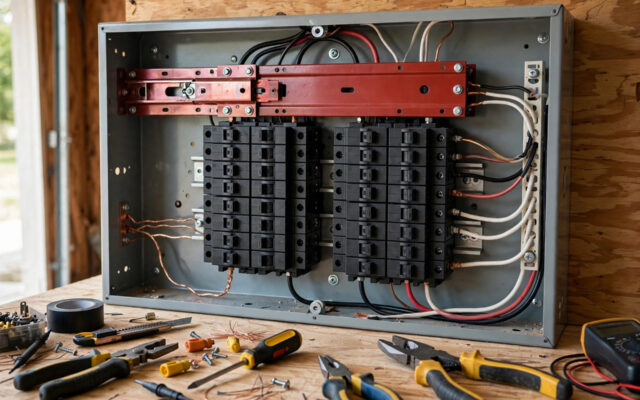
Transfer Switch vs Interlock Kit: Which Is Better in 2027?
Transfer switch vs interlock kit: both legally connect a generator to your house. Compare costs ($400–$1,300 vs $400–$850), flexibility, ease of use, and code rules.
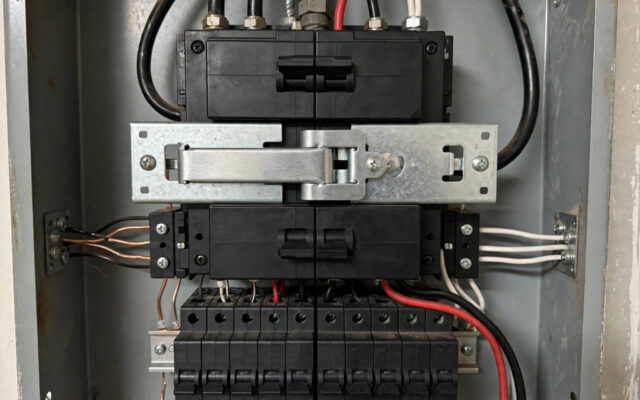
How to Install a Generator Interlock Kit (Step-by-Step)
Install a generator interlock kit in 45-90 minutes: $50-$150 kit, 7 steps, panel safety warnings, and when to hire an electrician instead.
1 Comment