


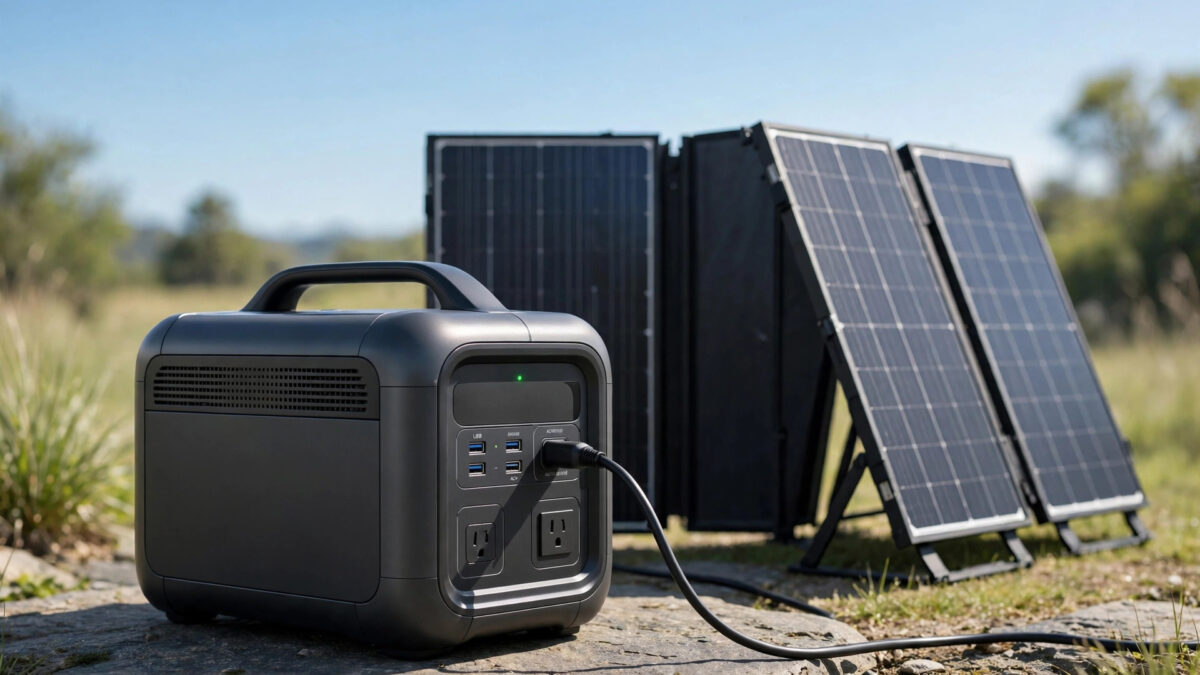
Solar generators have become the backup power option of choice for 2027, and it is not hard to see why. A good solar generator stores power in a big rechargeable battery, runs whisper-quiet, produces zero fumes, and can recharge from the wall, your car, or the sun. No fuel runs, no maintenance headaches, and no carbon monoxide risk.
But the market is crowded, and the differences that matter are not always obvious. Two units with the same “1000Wh” label can differ wildly in real output, charge speed, battery lifespan, and whether they can actually run your fridge during an outage. We dug into the specs, real-world performance, and long-term value of the leading models to find the best solar generators you can buy in 2027.
Every model below uses long-life battery technology, supports solar charging, and earned its place through genuine strengths, not marketing. Whether you need whole-home backup or a camping companion, there is a pick here for you.
Our Top Picks for 2027
- Best overall: EcoFlow DELTA Pro 3 — 4096Wh, 4000W output, massive expansion
- Best for camping / mid-size: Jackery Explorer 1000 v2 — 1070Wh, 1500W, only 23.8 lbs
- Best 1kWh value: EcoFlow DELTA 3 Plus — 1024Wh, 1800W, 56-minute full charge
- Best for home backup (new): Jackery HomePower 3600 Plus — 3584Wh, 3600W, 240V capable
- Best mid-size value: BLUETTI AC200PL — 2304Wh, 2400W, expandable to 8448Wh
- Best compact: BLUETTI Elite 100 V2 — 1024Wh, 1800W, 80% charge in 45 minutes
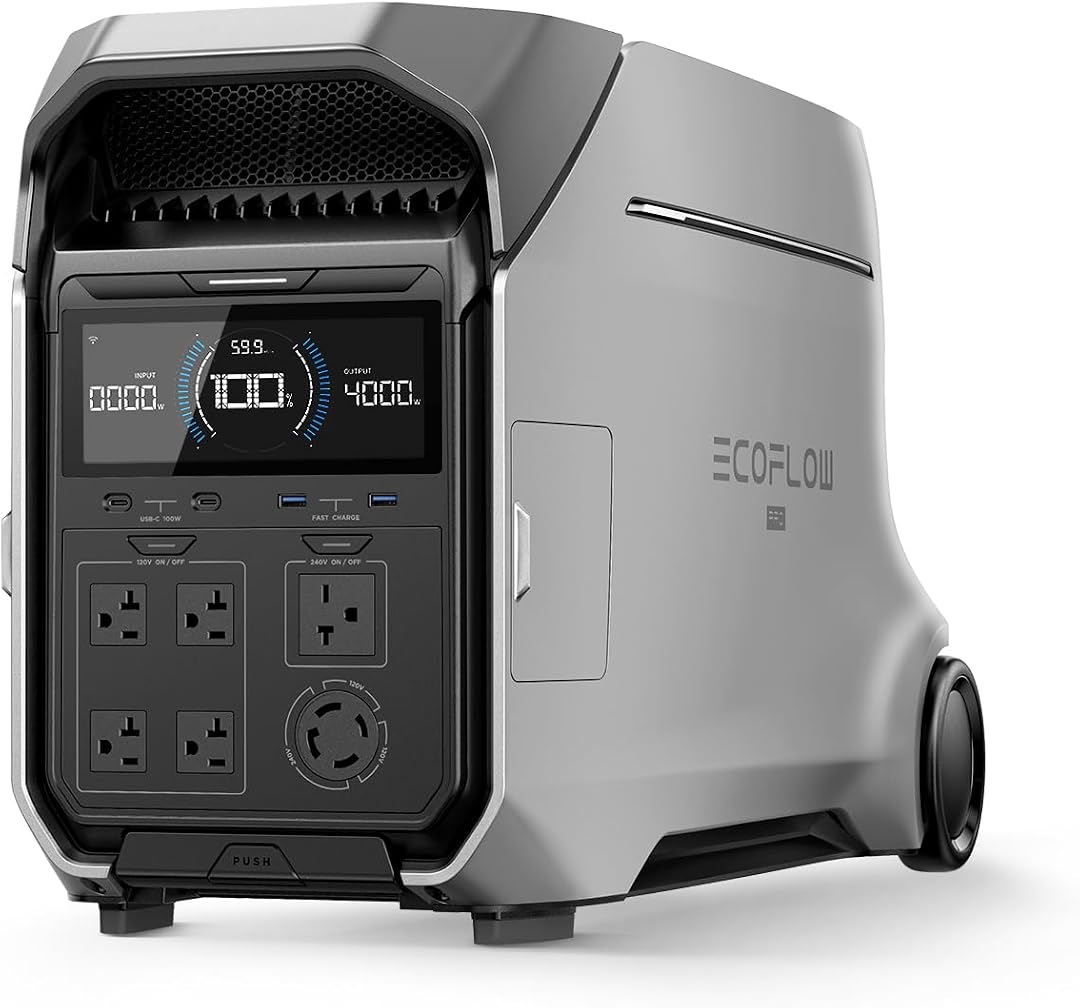
Best overall
EcoFlow DELTA Pro 3
- 4096Wh capacity / 4000W output (6000W X-Boost)
- LiFePO4 battery, expandable to 48kWh
- 0-80% recharge in about 50 minutes
- 115 lbs
- Capacity: 4096Wh (expandable to 48kWh)
- Output: 4000W (6000W X-Boost, 120V/240V)
- Battery: LiFePO4
- Recharge: 0-80% in about 50 minutes
- Weight: 115 lbs
As an Amazon Associate, we earn from qualifying purchases.
EcoFlow DELTA Pro 3 Review — Best Overall Solar Generator for 2027
The EcoFlow DELTA Pro 3 is the closest thing to a whole-home power plant you can buy without calling an electrician. With 4096Wh of LiFePO4 storage and a 4000W inverter (6000W with X-Boost), it runs heavy appliances that smaller stations cannot touch: central AC on 240V, electric dryers, well pumps, and multiple major loads at once. For home backup, nothing else on this list is in the same league.
What sets it apart is scalability. You can expand it all the way to 48kWh with extra batteries, which is genuinely enough to carry a household through multi-day outages. Charging is equally serious: 0 to 80 percent in roughly 50 minutes from the wall, and up to 2600W of solar input for fast off-grid refills. The 120V/240V dual voltage output means it integrates with a manual transfer switch for partial-home backup, a setup that used to require a gas generator and a lot of compromise.
The trade-offs are real but predictable at this class. At 115 lbs it is a “place it once” unit, not something you carry to a campsite. And it is priced like the flagship it is. But if your goal is serious outage protection for your home, the DELTA Pro 3 is the benchmark everything else is measured against in 2027.
Pros
- Massive 4096Wh capacity, expandable to 48kWh
- 4000W output with 240V support runs heavy appliances
- Charges 0-80% in about 50 minutes
- LiFePO4 battery rated for thousands of cycles
Cons
- Heavy at 115 lbs — not portable
- Premium price point
- Overkill if you only need camping or light backup power
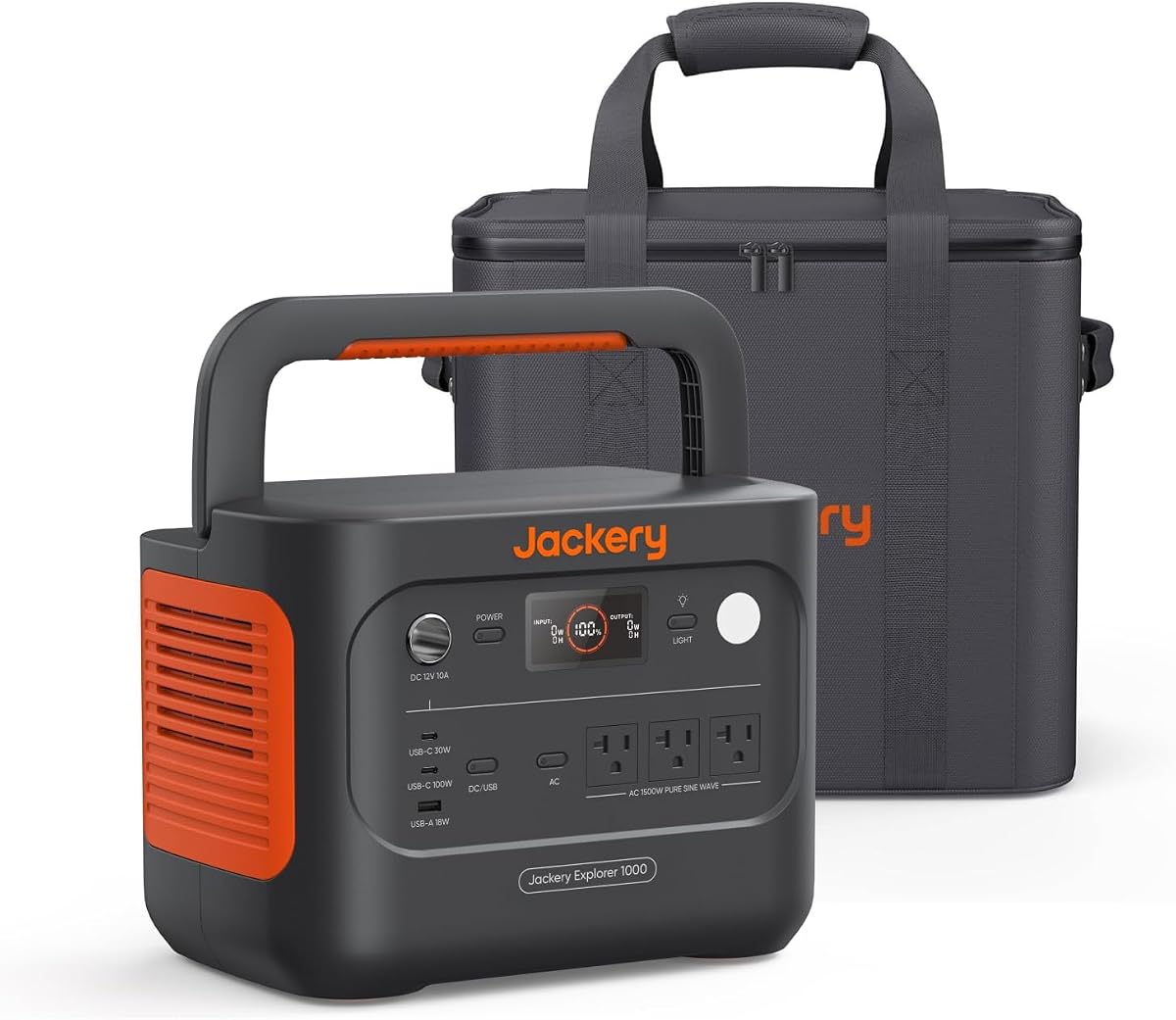
Best for camping / mid-size
Jackery Explorer 1000 v2
- 1070Wh capacity / 1500W output (3000W surge)
- LiFePO4 battery, 4000+ cycles
- 1.7-hour standard recharge (1h emergency mode)
- 23.8 lbs
- Capacity: 1070Wh
- Output: 1500W (3000W surge)
- Battery: LiFePO4, 4000+ cycles
- Recharge: 1.7h standard, 1h emergency mode
- Weight: 23.8 lbs
As an Amazon Associate, we earn from qualifying purchases.
Jackery Explorer 1000 v2 Review — Best Mid-Size Pick for Camping and Everyday Backup
The Jackery Explorer 1000 v2 hits the sweet spot that most buyers actually need: enough capacity and output for real appliances, in a package light enough to carry with one hand. At 1070Wh and 1500W of continuous output (3000W surge), it runs fridges, power tools, CPAP machines, laptops, and most kitchen appliances without breaking a sweat.
Jackery rebuilt this generation around LiFePO4 cells rated for 4000+ cycles, which is roughly ten years of regular use — a huge upgrade over the older lithium-ion version. The weight is the other headline: 23.8 lbs makes it one of the lightest 1kWh-class stations available, and the fold-flat handle means it tucks neatly into a car trunk or RV compartment. Emergency charge mode fills it in about an hour when you are in a hurry.
It is not the cheapest 1kWh station, and the solar input caps out lower than some rivals, but for the combination of proven reliability, light weight, and brand support, the Explorer 1000 v2 is our top recommendation for camping, road trips, and moderate home backup.
Pros
- Excellent balance of capacity, output, and portability
- LiFePO4 battery with 4000+ cycle lifespan
- Very light at 23.8 lbs for a 1kWh station
- Trusted brand with strong customer support
Cons
- Solar input is modest compared to some rivals
- Not expandable with extra batteries
- Priced above some competing 1kWh models
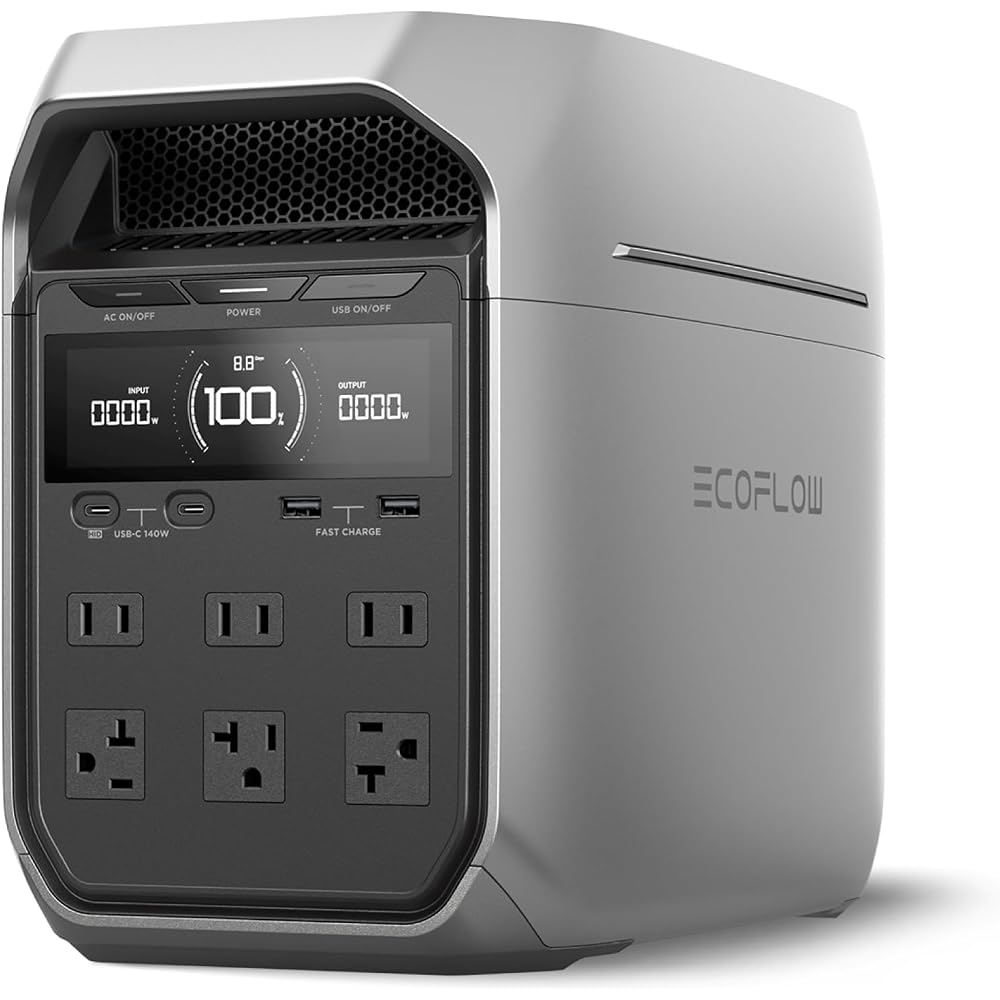
Best 1kWh value
EcoFlow DELTA 3 Plus
- 1024Wh capacity / 1800W output (3600W surge)
- LiFePO4 battery
- Full recharge in just 56 minutes
- About 27 lbs
- Capacity: 1024Wh
- Output: 1800W (3600W surge)
- Battery: LiFePO4
- Recharge: 56 minutes (full charge)
- Weight: About 27 lbs
As an Amazon Associate, we earn from qualifying purchases.
EcoFlow DELTA 3 Plus Review — The Fastest-Charging 1kWh Value Pick
The EcoFlow DELTA 3 Plus makes a simple argument: more power, charged faster, for less money. Its 1800W inverter outmuscles most 1kWh rivals, and the 3600W surge handles motor-driven appliances like fridges and power tools that trip weaker stations. The headline feature is charging speed — a full 0 to 100 percent in just 56 minutes from a wall outlet, which is genuinely best in class.
In real use, that speed changes how you treat the unit. Instead of nursing the battery and planning recharges, you can top it up during a lunch stop or between outage waves. EcoFlow’s app is also one of the better ones in the category, with useful controls for charge speed, discharge limits, and scheduling. The 1024Wh LiFePO4 battery keeps the long-life promise that matters for a daily-use station.
The fan can be audible under heavy load, and EcoFlow’s X-Boost mode (which pushes beyond the rated output for resistive loads) does not work with every appliance type. But on pure value — watts, watt-hours, and charge speed per dollar — the DELTA 3 Plus is hard to beat in 2027.
Pros
- Blazing 56-minute full recharge
- Strong 1800W output with 3600W surge
- Excellent price-to-performance ratio
- Good companion app with smart controls
Cons
- Fans can be noticeable under heavy loads
- X-Boost mode is limited to resistive loads
- Slightly heavier than the lightest 1kWh rivals
Best for home backup (new)
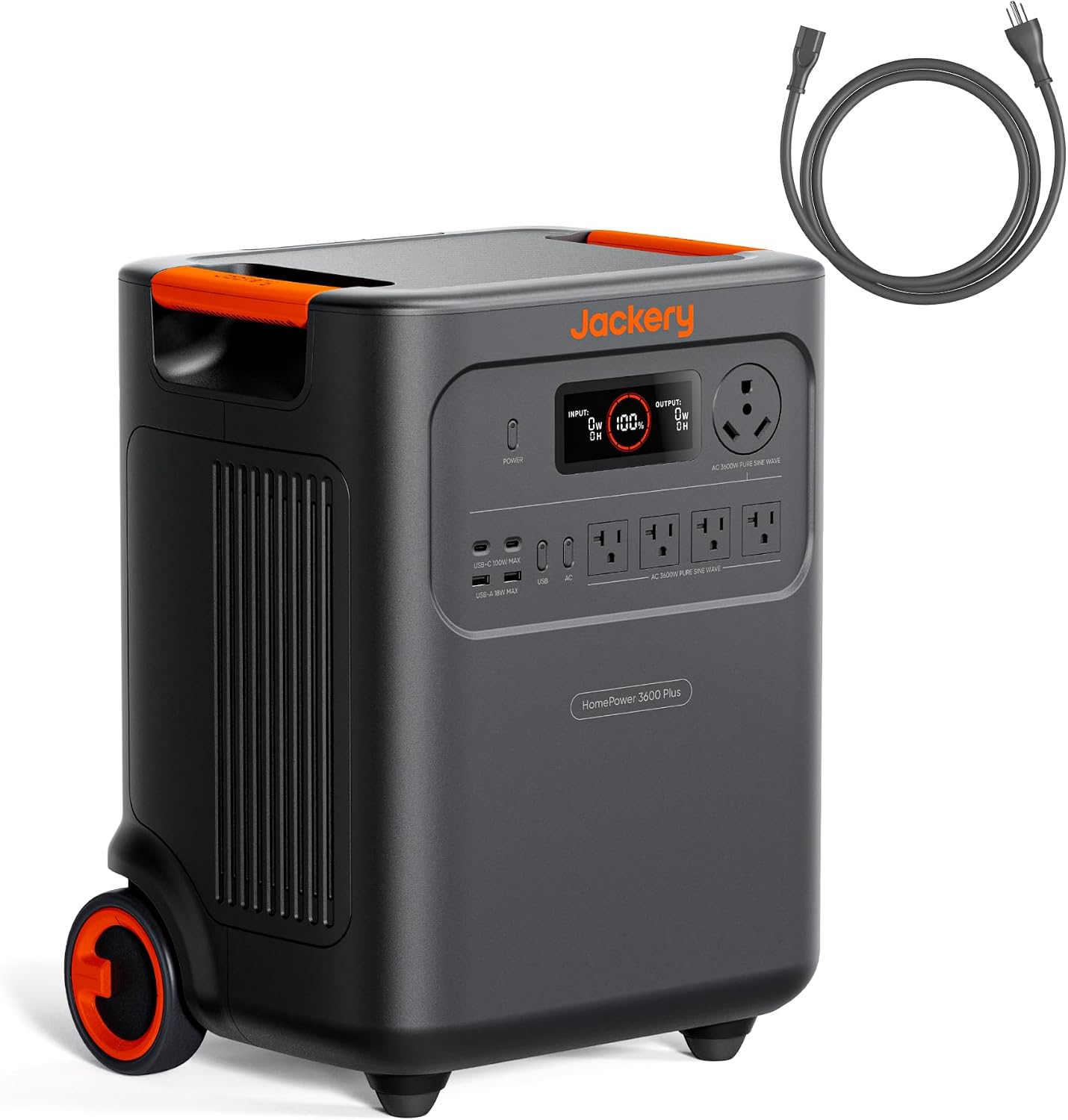
Jackery HomePower 3600 Plus
- 3584Wh capacity / 3600W output (7200W surge)
- LiFePO4 battery, 6000 cycles, expandable to 43kWh
- 0-100% AC recharge in 2.5 hours
- 77.2 lbs
- Capacity: 3584Wh (expandable to 43kWh)
- Output: 3600W (7200W surge, 120V/240V)
- Battery: LiFePO4, 6000 cycles
- Recharge: 0-100% in 2.5h via AC
- Weight: 77.2 lbs
As an Amazon Associate, we earn from qualifying purchases.
Jackery HomePower 3600 Plus Review — The New Home Backup Contender
The Jackery HomePower 3600 Plus is Jackery’s answer to the home-backup heavyweights, and it is a strong one. With 3584Wh of storage and a 3600W inverter delivering both 120V and 240V, it handles the appliances that define real outage comfort: refrigerators, sump pumps, microwaves, and even 240V loads with the right configuration. Expansion to 43kWh puts genuine multi-day backup within reach.
Two things stand out. First, the battery is rated for 6000 cycles — one of the longest lifespans in the category, which matters when a home backup unit sits ready for years and cycles hard during storm season. Second, the 2.5-hour full AC recharge means you can refill between outage windows instead of rationing power for days. At 77.2 lbs it is substantially lighter than the biggest competitors, with wheels and a telescoping handle for positioning.
It is still a major purchase, and the solar input, while generous, needs a large panel array to match the wall-charging speed. But for buyers who want Jackery’s reliability in a true home-backup form factor, the HomePower 3600 Plus is the 2027 model to beat.
Pros
- 3600W output with 120V/240V for heavy home loads
- Exceptional 6000-cycle battery lifespan
- Expandable to 43kWh for multi-day outages
- Wheels and handle make 77 lbs manageable
Cons
- Premium pricing for the capacity class
- Still heavy to lift into vehicles
- Needs a large solar array for fast solar charging
Best mid-size value
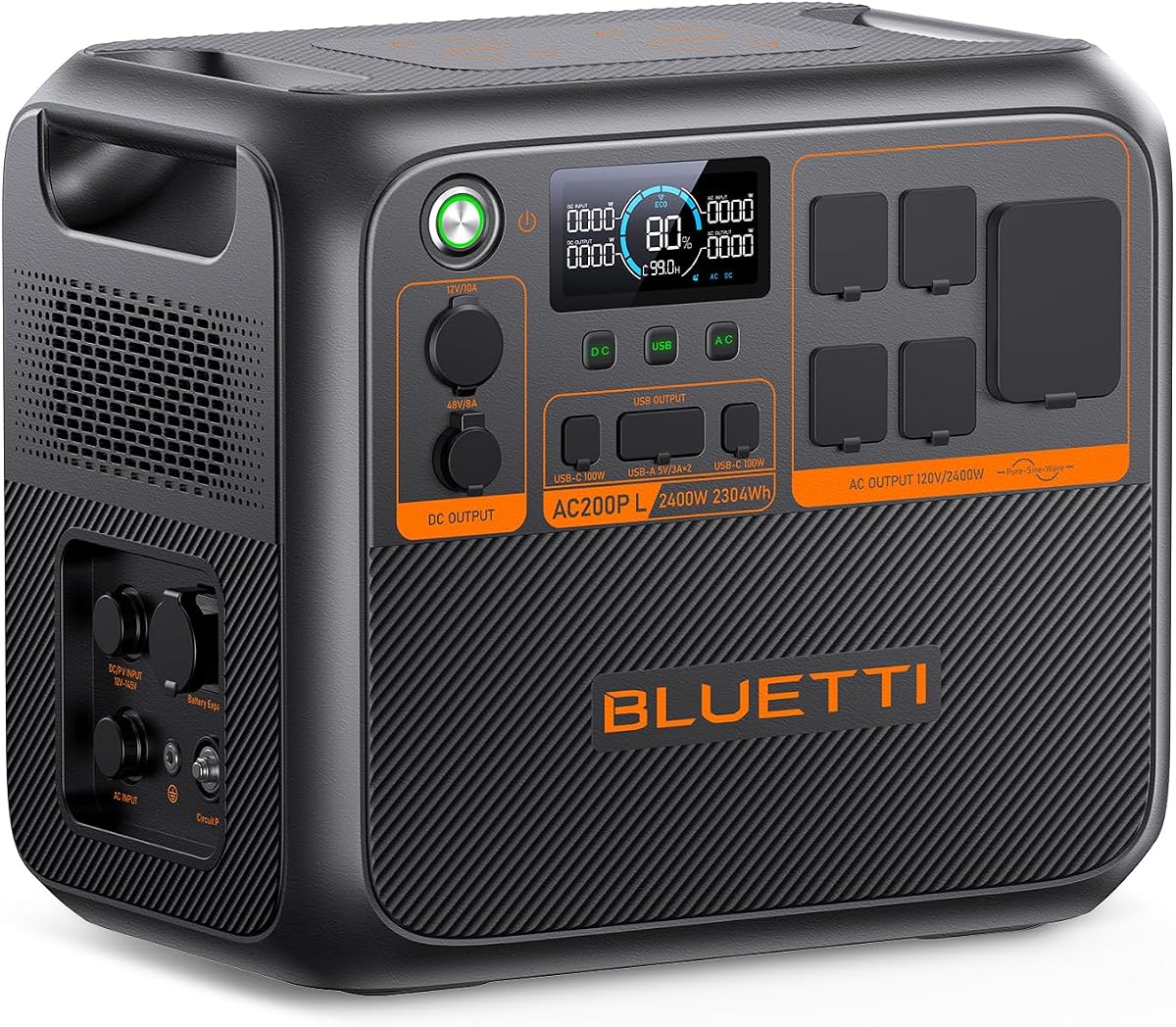
BLUETTI AC200PL
- 2304Wh capacity / 2400W output (3600W Power Lifting)
- LiFePO4 battery, 3000+ cycles, expandable to 8448Wh
- 0-80% recharge in about 1 hour
- 72 lbs
- Capacity: 2304Wh (expandable to 8448Wh)
- Output: 2400W (3600W Power Lifting)
- Battery: LiFePO4, 3000+ cycles
- Recharge: 0-80% in about 1 hour
- Weight: 72 lbs
As an Amazon Associate, we earn from qualifying purchases.
BLUETTI AC200PL Review — Maximum Mid-Size Value
The BLUETTI AC200PL is the value play in the 2kWh class. You get 2304Wh of LiFePO4 storage and a 2400W inverter — enough for full-size fridges, power tools, and most home essentials — at a price that undercuts the big-brand flagships. The Power Lifting mode pushes resistive loads up to 3600W, so kettles, heaters, and hair dryers are all fair game.
Expansion is where the AC200PL really earns its keep: add BLUETTI expansion batteries to reach 8448Wh, turning a mid-size station into a serious home backup system over time. That upgrade path is rare at this price point. The 0-80% recharge in about an hour keeps downtime short, and the 1200W solar input means a modest panel setup refills it well within a sunny day.
At 72 lbs it is a two-person lift, and the app experience is functional rather than polished. But if you want the most watt-hours and watts per dollar with a real expansion path, the AC200PL is the smart buy.
Pros
- Outstanding capacity-per-dollar in the 2kWh class
- Expandable to 8448Wh with add-on batteries
- 2400W output with 3600W Power Lifting mode
- Fast 1-hour recharge to 80%
Cons
- 72 lbs — needs two people to move safely
- App is basic compared to rivals
- No 240V output for the heaviest appliances
Best compact
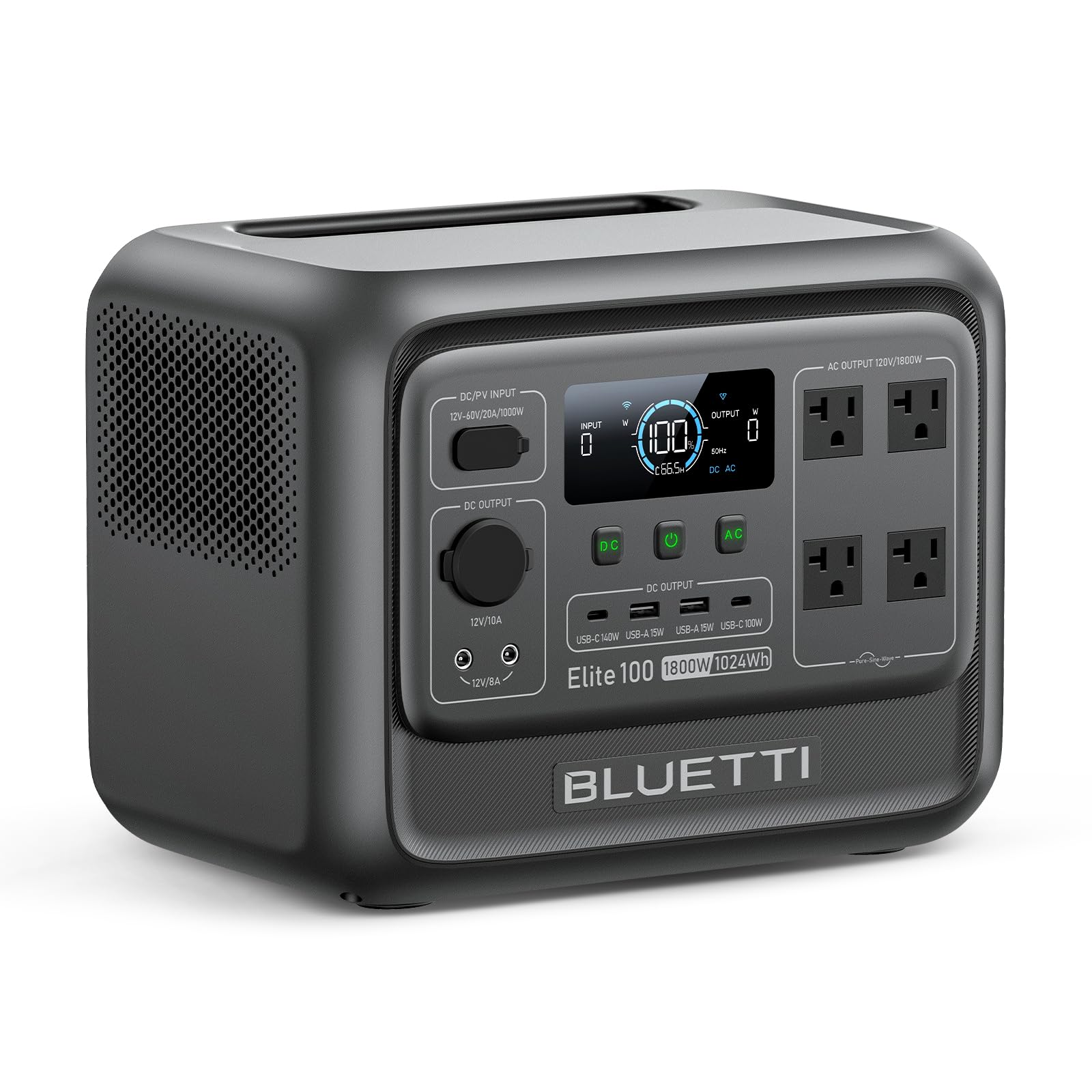
BLUETTI Elite 100 V2
- 1024Wh capacity / 1800W output (3600W surge)
- LiFePO4 battery, 4000+ cycles
- 45 minutes to 80% charge
- 25 lbs
- Capacity: 1024Wh
- Output: 1800W (3600W surge)
- Battery: LiFePO4, 4000+ cycles
- Recharge: 45 minutes to 80%
- Weight: 25 lbs
As an Amazon Associate, we earn from qualifying purchases.
BLUETTI Elite 100 V2 Review — Big Power in the Smallest 1kWh Package
The BLUETTI Elite 100 V2 proves that 1kWh does not have to mean bulky. Packing 1024Wh and a full 1800W inverter into a 25-lb unit, it is one of the most power-dense stations you can buy. The 3600W surge rating means it starts motor-driven appliances confidently, and the 4000+ cycle LiFePO4 battery promises a decade of service.
Charging is a highlight: 80 percent in 45 minutes from the wall, which is among the fastest in the class. That matters for anyone who uses their station daily — van lifers, mobile workers, frequent campers — because the battery is ready again before you are. The compact footprint also fits where bigger stations do not: under a desk, in a crowded trunk, or on an RV shelf.
The smaller chassis means fewer outlets than some rivals, and heavy 1800W loads will drain the 1024Wh battery in about half an hour — physics no brand can dodge. But as a grab-and-go power station that punches far above its size, the Elite 100 V2 is the compact pick of 2027.
Pros
- Exceptional power density — 1800W in a 25-lb unit
- 45-minute recharge to 80%
- LiFePO4 battery rated for 4000+ cycles
- Compact footprint fits tight spaces
Cons
- Fewer outlets than some larger 1kWh rivals
- 1024Wh drains quickly under full 1800W load
- Not expandable with extra batteries
How We Evaluate Solar Generators
Every pick on this list earned its place against the same criteria. Real usable capacity comes first — we look at tested runtime, not just the watt-hour label, because inverter efficiency varies. Honest output ratings matter next: a 1500W inverter should sustain 1500W without overheating or shutting down, and surge ratings should handle real motor startups.
Charge speed is the most underrated spec in the category. A station that refills in under an hour gets used constantly; one that takes all day becomes a chore. We weight fast AC charging and generous solar input heavily. Battery lifespan follows: LiFePO4 chemistry with 3000+ cycles is the 2027 baseline, and we disclose it plainly when a model uses older cells.
Finally, we consider portability honesty — whether the weight matches the use case — and value: what you get per dollar, including expansion options that protect your investment. No pick on this list is here because of brand name alone.
Quick Comparison: All 6 Picks Side by Side
- EcoFlow DELTA Pro 3: 4096Wh / 4000W / 115 lbs — whole-home backup king
- Jackery Explorer 1000 v2: 1070Wh / 1500W / 23.8 lbs — the all-rounder
- EcoFlow DELTA 3 Plus: 1024Wh / 1800W / ~27 lbs — fastest charging value
- Jackery HomePower 3600 Plus: 3584Wh / 3600W / 77.2 lbs — new home backup star
- BLUETTI AC200PL: 2304Wh / 2400W / 72 lbs — mid-size value with expansion
- BLUETTI Elite 100 V2: 1024Wh / 1800W / 25 lbs — compact power density
If you are torn between two models, decide by use case, not specs: home backup favors capacity and 240V output, camping favors weight, and daily use favors charge speed and cycle life.
Solar Generator Buying Guide for 2027
Capacity: how much storage do you actually need?
Capacity, measured in watt-hours (Wh), determines how long your devices run. A 1000Wh station powers a 100W mini fridge for roughly 8-10 hours after efficiency losses. For camping and light backup, 500-1000Wh is plenty. For home backup covering a full-size fridge, lights, and devices through an outage, look at 2000Wh and up — and consider expandable models so you can grow later.
Output: can it run what you own?
Output, measured in watts (W), is the maximum power the station can deliver at once. Check the running watts of your most demanding appliance — a microwave needs 1000-1500W, a full-size fridge surges to 800-1200W on startup, and power tools vary widely. Buy an inverter rated comfortably above your biggest load, and pay attention to surge ratings for anything with a motor or compressor.
Battery chemistry: LiFePO4 is the 2027 standard
Lithium iron phosphate (LiFePO4) batteries last 3000-6000 charge cycles — roughly 8-15 years of regular use — versus 500-800 cycles for older lithium-ion. Every top pick on this list except the budget option uses LiFePO4. It is also more thermally stable, which matters for a device that lives in your garage or car.
Charging speed and solar input
Fast wall charging (under an hour to 80%) changes how useful a station is day to day. For solar, check the maximum solar input in watts: 400W of input refills a 1kWh station in about 2.5-3 hours of good sun. Match your panel wattage to the station’s input limit — oversized panels are wasted money.
Ports, expandability, and weight
Count the outlets you will actually use: AC outlets, USB-C with high wattage for laptops, USB-A, 12V car ports, and RV-specific TT-30 outlets if you camp in a trailer. Expandability (add-on batteries) future-proofs a home backup purchase. And be honest about weight: a 70+ lb station is fine for home backup but miserable for camping.
Frequently Asked Questions
What is the best solar generator for 2027?
The EcoFlow DELTA Pro 3 is our best overall pick for 2027, with 4096Wh of capacity, 4000W of output, and expansion to 48kWh. For most buyers, the Jackery Explorer 1000 v2 or EcoFlow DELTA 3 Plus offer the best balance of power, portability, and price.
How long do solar generators last?
Modern LiFePO4 solar generators are rated for 3000-6000 charge cycles, which translates to roughly 8-15 years of regular use before capacity drops to 80%. The battery will keep working beyond that, just with gradually reduced runtime.
Can a solar generator run a refrigerator?
Yes. A full-size refrigerator draws about 100-200W running with 800-1200W startup surges. Any 1kWh+ station with at least 1500W of output and a strong surge rating — like every mid-size pick on this list — can run a fridge for 8-15 hours depending on capacity.
How many solar panels do I need for a solar generator?
Match panel wattage to your station’s maximum solar input. For a 1kWh station with 400-800W of solar input, 200-400W of panels refills it in 3-6 hours of good sun. For whole-home stations like the DELTA Pro 3, 1000W+ of panels makes solar refills practical.
Are solar generators worth it compared to gas generators?
For most home backup and recreational use, yes. Solar generators are silent, need no fuel, produce no fumes, and require almost no maintenance. Gas still wins for multi-day, high-wattage continuous use, but battery stations now cover the vast majority of outage and camping scenarios.
Can you use a solar generator indoors?
Yes — this is one of their biggest advantages over gas generators. Solar generators produce no carbon monoxide or fumes, so they are safe to use and charge indoors with normal ventilation.
Our verdict
The EcoFlow DELTA Pro 3 is the best solar generator of 2027 for buyers who want maximum capability, with 4096Wh, 4000W output, and expansion to 48kWh. Most people will be happier with the Jackery Explorer 1000 v2 for its light weight and proven reliability, or the EcoFlow DELTA 3 Plus for the best value and fastest charging in the 1kWh class. Match capacity to your biggest appliance, insist on LiFePO4, and buy the fastest charging you can afford — you will use it more than you expect.

Related Guides
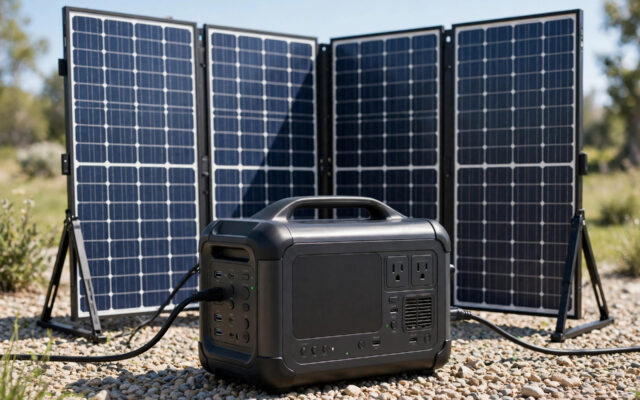
Best Solar Generator Bundles with Panels for 2027
Save money with the best solar generator bundles of 2027 — power station plus solar panel kits ready to use out of the box.

Best Solar Generators for RVs in 2027
Power your RV adventures with the best solar generators for RVs in 2027, featuring TT-30 outlets and fast solar charging.
Best Solar Generators for Camping in 2027
The best solar generators for camping in 2027: lightweight, quiet power stations that keep your gear charged off-grid.
2 Comments