


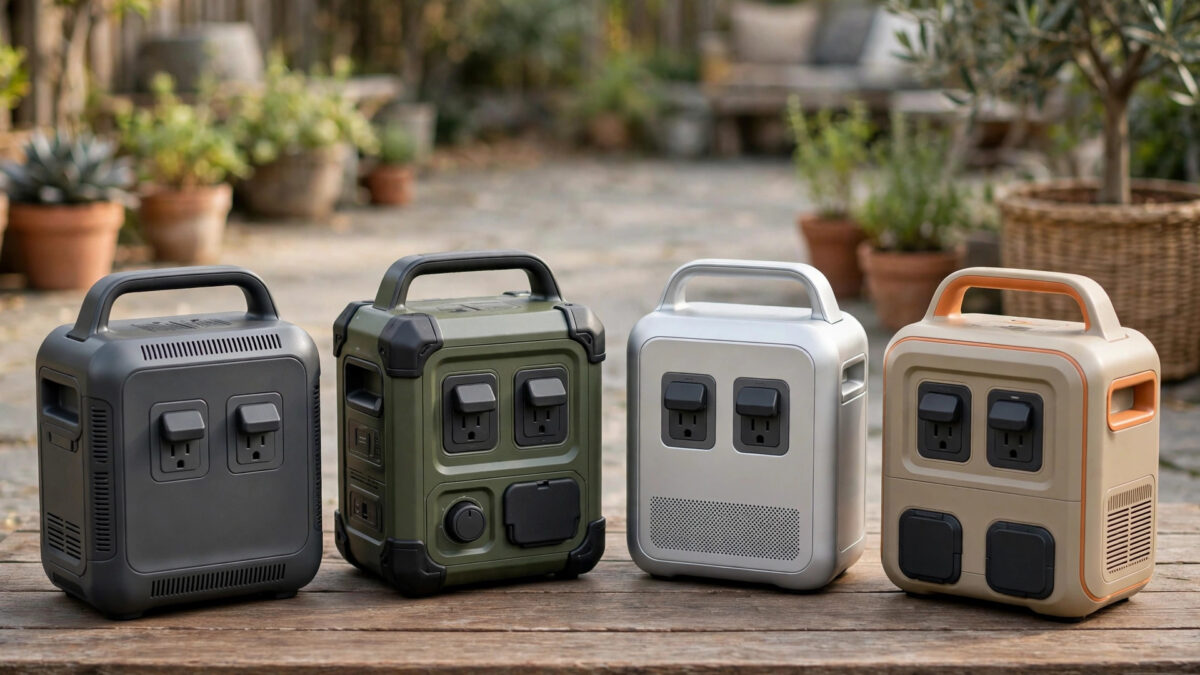
Jackery vs EcoFlow vs Bluetti vs Anker — which power station brand is best? Our direct answer after comparing their lineups: EcoFlow is the best for charging speed and tech features, Bluetti is the best for battery longevity and value, Anker is the best for build refinement and warranty confidence, and Jackery is the best for simplicity and brand trust — with one important chemistry caveat explained below. All four sell legitimate, well-supported portable power stations, but they have genuinely different philosophies on battery chemistry, charging speed, and ecosystem. We compared published specifications, warranty terms, and aggregated owner feedback; we did not test units hands-on.
Key Takeaways
- EcoFlow: fastest AC charging in the industry (under 1 hour for 1kWh units), strong app, expandable ecosystems.
- Bluetti: longest cycle life (up to 6,000+ cycles), excellent value per watt-hour, deep expansion options.
- Anker (SOLIX): refined industrial design, HyperFlash fast charging, strong warranty terms, quiet operation.
- Jackery: simplest to use, most recognized brand, but older models (Explorer 500) still use NMC chemistry — check before buying.
- Chemistry matters: LiFePO4 (LFP) lasts 3-4x longer than older NMC lithium-ion. All four brands’ current flagships are LFP.
Jackery vs. EcoFlow vs. Bluetti vs. Anker: Brand Overview
| Brand factor | Jackery | EcoFlow | Bluetti | Anker (SOLIX) |
|---|---|---|---|---|
| Current flagship chemistry | LiFePO4 (newer models) | LiFePO4 | LiFePO4 | LiFePO4 |
| Older models to watch | Explorer 500/1000 v1: NMC | Original DELTA: NMC | Older AC series: mixed | Older 521/535: NMC |
| Signature strength | Simplicity, brand trust | Charging speed, tech | Cycle life, value | Design, warranty |
| Fastest 1kWh recharge | ~1-1.7 hrs (1000 v2) | ~56 min (DELTA 3 Plus) | ~45-80 min (Elite 100 V2) | ~49 min (C1000 Gen 2) |
| Max cycle life (claimed) | 4,000+ (1000 v2) | 3,000-4,000 | 6,000+ (Elite 200 V2) | 3,000+ |
| Whole-home scale option | HomePower 3600 Plus | DELTA Pro 3 | AC200PL / expandable | SOLIX F3800 |
| UPS switchover | ~20ms (model dependent) | ≤10-20ms | ≤10ms | ~20ms (model dependent) |
| Best for | First-time buyers, gifting | Tech enthusiasts, fast turnaround | Maximum lifespan per dollar | Premium feel, reliability focus |
Battery Chemistry: The Honest Breakdown
This is the most important section of this comparison, because chemistry determines how long your power station lasts — and older listings can mislead you. The two chemistries in play:
LiFePO4 (LFP / lithium iron phosphate) is the current standard for quality power stations: 3,000-6,000+ charge cycles (roughly 10 years of regular use), better thermal stability, and safer chemistry. Every current flagship from all four brands — the Jackery Explorer 1000 v2, EcoFlow DELTA 3 Plus, BLUETTI Elite 200 V2, and Jackery Explorer 1000 v2 — uses LiFePO4.
NMC (lithium nickel manganese cobalt) is the older chemistry: typically 500-800 cycles, meaning noticeably shorter lifespan. Here is the honesty flag: the Jackery Explorer 500 — still widely sold and often discounted — uses older NMC chemistry, not LiFePO4. It is a fine unit for light, occasional use, but do not buy it expecting a decade of service. Similarly, do not confuse the Jackery Explorer 1000 v1 (1,002Wh, NMC, older listing) with the 1000 v2 (1,070Wh, LiFePO4) — they are different products, and the v2 is the one to buy. Always verify the chemistry on the specific listing before purchasing any power station, from any brand.
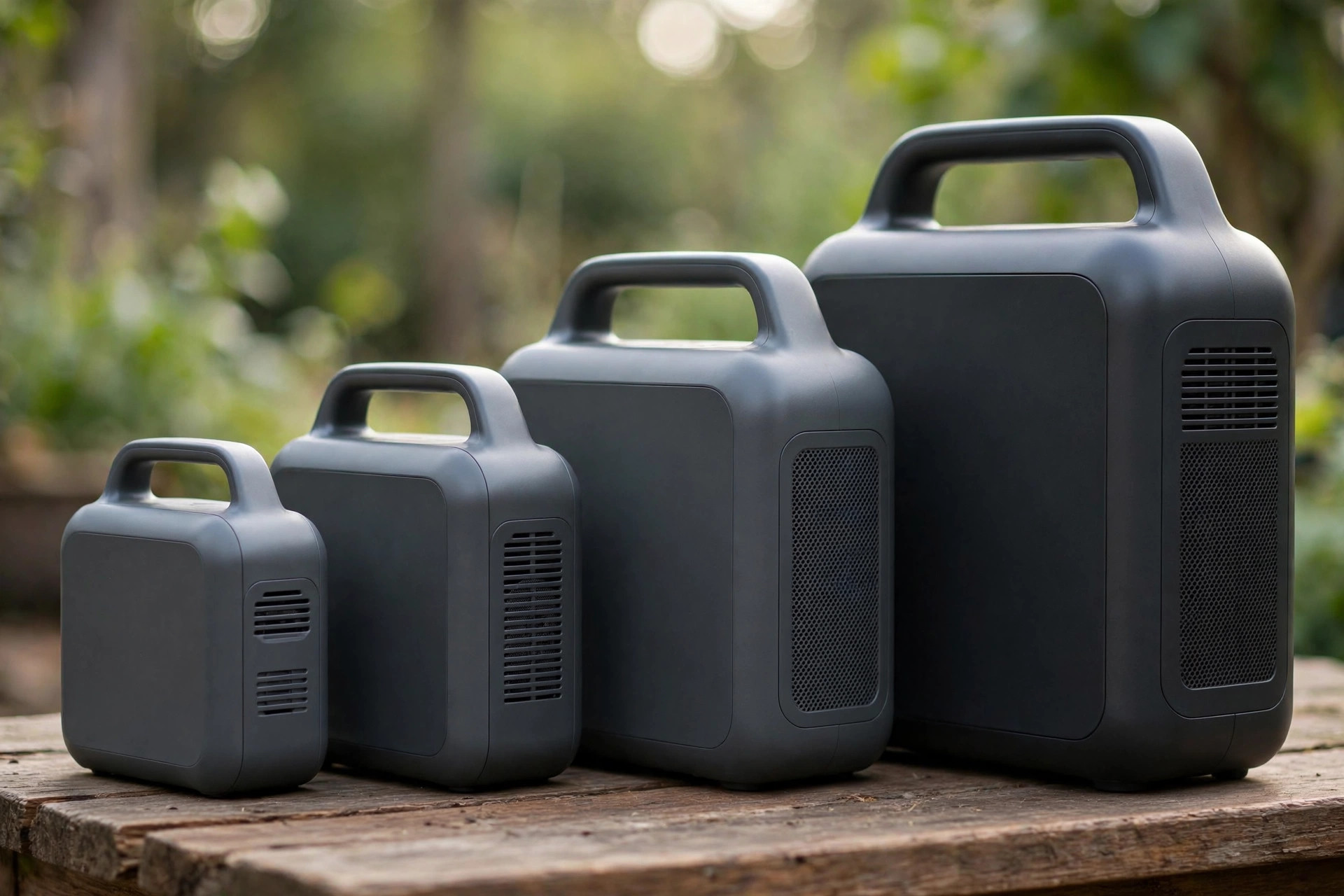
Jackery: The Simplest Choice
Jackery invented the modern portable power station category and remains the most recognized name in it — the brand people buy for parents and recommend to non-technical friends. The current lineup is anchored by the Explorer 1000 v2 (1,070Wh LiFePO4, 1,500W output, 4,000+ cycles) and the newer HomePower 3600 Plus (3,584Wh LFP, 3,600W output, 120/240V) for whole-home backup. Jackery’s strengths are dead-simple operation, clean industrial design, and a mature solar panel ecosystem (SolarSaga panels pair seamlessly).
The weaknesses: Jackery charges slower than EcoFlow and Anker flagships, the app experience is more basic, and the brand’s back catalog of NMC models (Explorer 500, 1000 v1, 1500 v1) still circulates at tempting discounts — fine for light use, but a trap for buyers expecting LFP longevity. Buy current-generation (v2 / Plus / Pro) models and you get a genuinely good product; buy the old names on clearance and you get old chemistry.
EcoFlow: The Speed and Tech Leader
EcoFlow’s identity is speed — both charging speed and product development speed. The DELTA 3 Plus (1,070Wh LFP) recharges fully in about 56 minutes on AC, the fastest in the 1kWh class, and the DELTA Pro 3 (4,096Wh, expandable to 48kWh) is the most ambitious single-unit home backup ecosystem of any brand here. X-Boost handles surge loads gracefully, the app is the most feature-rich in the category, and ≤10-20ms UPS switchover makes EcoFlow units credible as computer/nas backup.
The trade-offs: EcoFlow’s rapid product cadence means models supersede each other quickly (Gen 1 vs. Gen 2 vs. Plus naming can confuse buyers), and the feature-rich app and faster charging come at a price premium over Bluetti’s value positioning. For tech enthusiasts who want the fastest recharge and the deepest ecosystem, EcoFlow is the pick — just double-check you are buying the current generation.
Bluetti: The Longevity and Value King
Bluetti’s calling card is cycle life: the Elite 200 V2 claims 6,000+ cycles to 80% capacity — roughly double the industry standard — in a 2,073Wh package that frequently streets at the best price per watt-hour of any brand here. The AC200PL (2,304Wh, expandable to 8,448Wh) extends the value story to mid-size home backup, and the Elite 100 V2 brings ≤10ms UPS and 4,000+ cycles to the 1kWh class.
Bluetti’s weakness relative to EcoFlow is charging speed on some models and a less polished app experience; relative to Anker, the industrial design is more utilitarian. But if your priority is maximum years of service per dollar — the power station equivalent of buying a Toyota — Bluetti is the strongest answer. Note that some Bluetti Amazon listings are station-plus-solar-panel bundles; verify whether you are buying the standalone unit or the bundle.
Anker (SOLIX): The Premium Refinement Pick
Anker’s SOLIX sub-brand brings the company’s consumer-electronics polish to power stations: refined design, quiet operation, and HyperFlash fast charging (the C1000 Gen 2 hits full charge in about 49 minutes). The SOLIX F3800 (4,096Wh LFP, 4,000W output, 120/240V, expandable to 26.9kWh) is a serious whole-home contender with dual-voltage output and an EV charging port. Anker’s warranty terms are among the most generous in the category, and owner feedback consistently praises build quality and low noise.
The trade-off is price: Anker typically sits at the premium end of each capacity class. You are paying for refinement, warranty confidence, and the Anker support infrastructure — worth it for buyers who want the Apple-like experience of the category, less compelling for pure watts-per-dollar shoppers (who should look at Bluetti).
Head-to-Head: 1kWh Class Flagships
The 1kWh class is where most first-time buyers land — enough for a fridge for several hours, phones and laptops for days, or a CPAP overnight. Here is how the current flagships compare on published specs.
| Model | Capacity | Output | Chemistry / cycles | AC recharge | Weight |
|---|---|---|---|---|---|
| Jackery Explorer 1000 v2 | 1,070Wh | 1,500W | LiFePO4 / 4,000+ | ~1.7 hrs (1 hr emergency) | 23.8 lbs |
| EcoFlow DELTA 3 Plus | 1,070Wh | 1,800W | LiFePO4 | ~56 min | ~27.6 lbs (per listing) |
| BLUETTI Elite 100 V2 | 1,070Wh | 1,800W | LiFePO4 / 4,000+ | ~45 min to 80% | 25 lbs |
| Jackery Explorer 1000 v2 | 1,070Wh | 1,500W | LiFePO4 | ~49 min | Per listing |
All four are excellent; the differences are in emphasis. EcoFlow and Anker win on recharge speed, Bluetti on cycle life and UPS switchover, Jackery on simplicity and brand familiarity. Any of them will serve a first-time buyer well — which is why the chemistry warning matters more than the brand choice: a current-generation unit from any of these brands beats a discounted NMC unit from any of them.
Which Power Station Brand Should You Choose?
Choose EcoFlow if charging speed and smart features top your list — the DELTA 3 Plus’s sub-hour recharge and the DELTA Pro 3’s expandable ecosystem are genuinely best-in-class for tech-forward buyers.
Choose Bluetti if you want the longest-lasting battery for the money — 6,000+ cycle claims and aggressive pricing make the Elite series the value-and-longevity champion.
Choose Anker SOLIX if you want premium build quality, quiet operation, and strong warranty backing — the refined, confidence-inspiring pick.
Choose Jackery if you want the simplest, most recognizable option — ideal for first-time buyers and gifting — but stick to current-generation LiFePO4 models (1000 v2 and newer) and avoid discounted NMC units like the Explorer 500 unless you understand the trade-off.
Our verdict
There is no single “best” brand — only the best brand for your priorities: EcoFlow for speed and tech, Bluetti for longevity and value, Anker for premium refinement, Jackery for simplicity. The more important decision is chemistry: buy LiFePO4, verify it on the listing (especially with Jackery’s older NMC models still in circulation), and buy the current generation. Do that, and any of these four brands will serve you well for years.
How we researched this
We compared manufacturer-published specifications (capacity, output, chemistry, cycle life, recharge times, weight), warranty terms, and aggregated owner feedback across the four brands’ current lineups. All Amazon ASINs were verified against live listings during our research; several listings are station-plus-solar-panel bundles, which we note where relevant. We did not test any power stations hands-on. Cycle-life figures are manufacturer claims; real-world longevity varies with usage patterns and environment.
Which power station brand is best: Jackery, EcoFlow, Bluetti, or Anker?
Is the Jackery Explorer 500 LiFePO4?
What is the difference between LiFePO4 and NMC batteries?
Which power station charges the fastest?
Can a portable power station run a refrigerator?
Are portable power stations safe to use indoors?
Jackery vs. EcoFlow vs. Bluetti vs. Anker is a four-way race with no loser — just different strengths. Pick your priority (speed, longevity, refinement, or simplicity), verify LiFePO4 chemistry on the exact listing, and buy the current generation. For model-level recommendations, see our best portable power stations of 2027 and our in-depth Jackery Explorer 1000 v2 review and EcoFlow DELTA 3 Plus review.

Related Guides
Best Time to Buy a Generator: 2027 Price & Sales Calendar
The best time to buy a generator is Black Friday, with 10-30% off typical. 2027 price and sales calendar: clearance windows, pre-season deals, and timing tips.

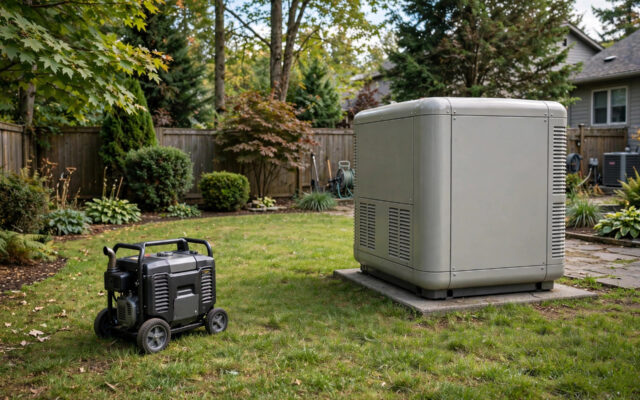
Portable vs Standby Generator: Cost, Runtime, Maintenance & Pros/Cons
Portable vs standby generator: $1,100-$5,000 vs $9,000-$20,000+ installed. Compare costs, runtime, maintenance, pros and cons, and which type wins for you.
Champion vs Westinghouse vs DuroMax: Which Generator Brand Is Best?
Champion vs Westinghouse vs DuroMax compared on warranty, lineup breadth, CO safety tech, and value. Find which generator brand is best for your needs.