


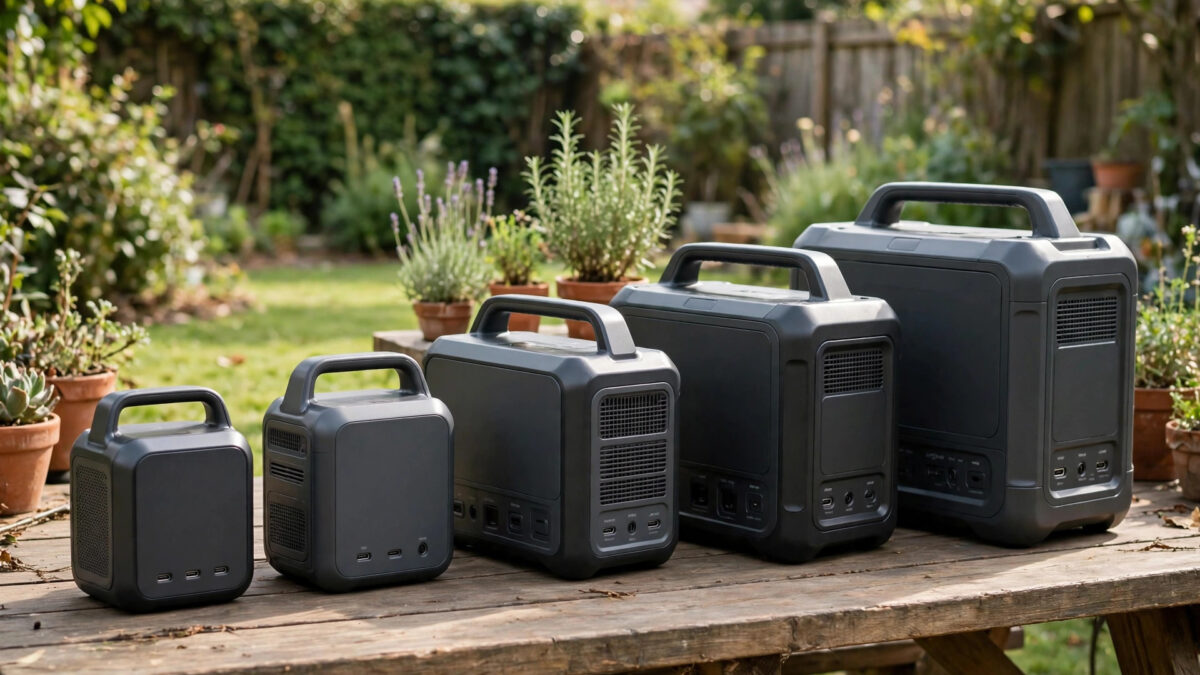
The best portable power stations of 2027 are quiet, fume-free batteries that can run your fridge, laptop, CPAP, or power tools anywhere — no gasoline, no noise, no carbon monoxide. We researched and compared eight models across every capacity tier, from a 518Wh budget unit to a 3,072Wh expandable powerhouse, to find the right pick for camping, emergency backup, and off-grid work.
Nearly every station worth buying in 2027 uses LiFePO4 (lithium iron phosphate) batteries — thousands of charge cycles and far safer chemistry than older designs. There is one exception in this roundup, and we flag it clearly. We organized the picks by capacity so you can match the battery to your actual needs instead of overbuying.
Honesty note: several Amazon listings in this category are official station-plus-solar-panel bundles rather than standalone stations. Standalone US listings for some models could not be isolated during research, so we note the bundle configuration in each affected section — check “what’s in the box” before you buy.
Key takeaways
- Jackery Explorer 1000 v2 is our overall pick — 1,070Wh of LiFePO4, 1,500W output, proven all-rounder (listing is a panel bundle).
- Jackery Explorer 1000 v2 charges fastest: full recharge in 49 minutes.
- Pecron F3000LFP is the budget way into 3kWh-class capacity with UPS backup.
- Seven of eight picks use LiFePO4; the Jackery Explorer 500 uses older NMC lithium-ion — fine for light use, shorter lifespan.
- Match capacity to need: ~500Wh for phones/laptops, ~1kWh for a fridge overnight, 2–3kWh for multi-day backup.
Our top picks at a glance
- Jackery Explorer 1000 v2 — Best overall — 1,070Wh LiFePO4, 1,500W output (panel bundle listing)
- Jackery Explorer 1000 v2 — Fastest charging — 0–100% in 49 minutes
- EcoFlow DELTA 3 Plus — Best expandable 1kWh — 56-min recharge, 13 outlets
- DJI Power 2000 — Best 2kWh — ultra-quiet with 5-year warranty
- Pecron F3000LFP — Best budget 3kWh — expandable to 9.2kWh
Best overall
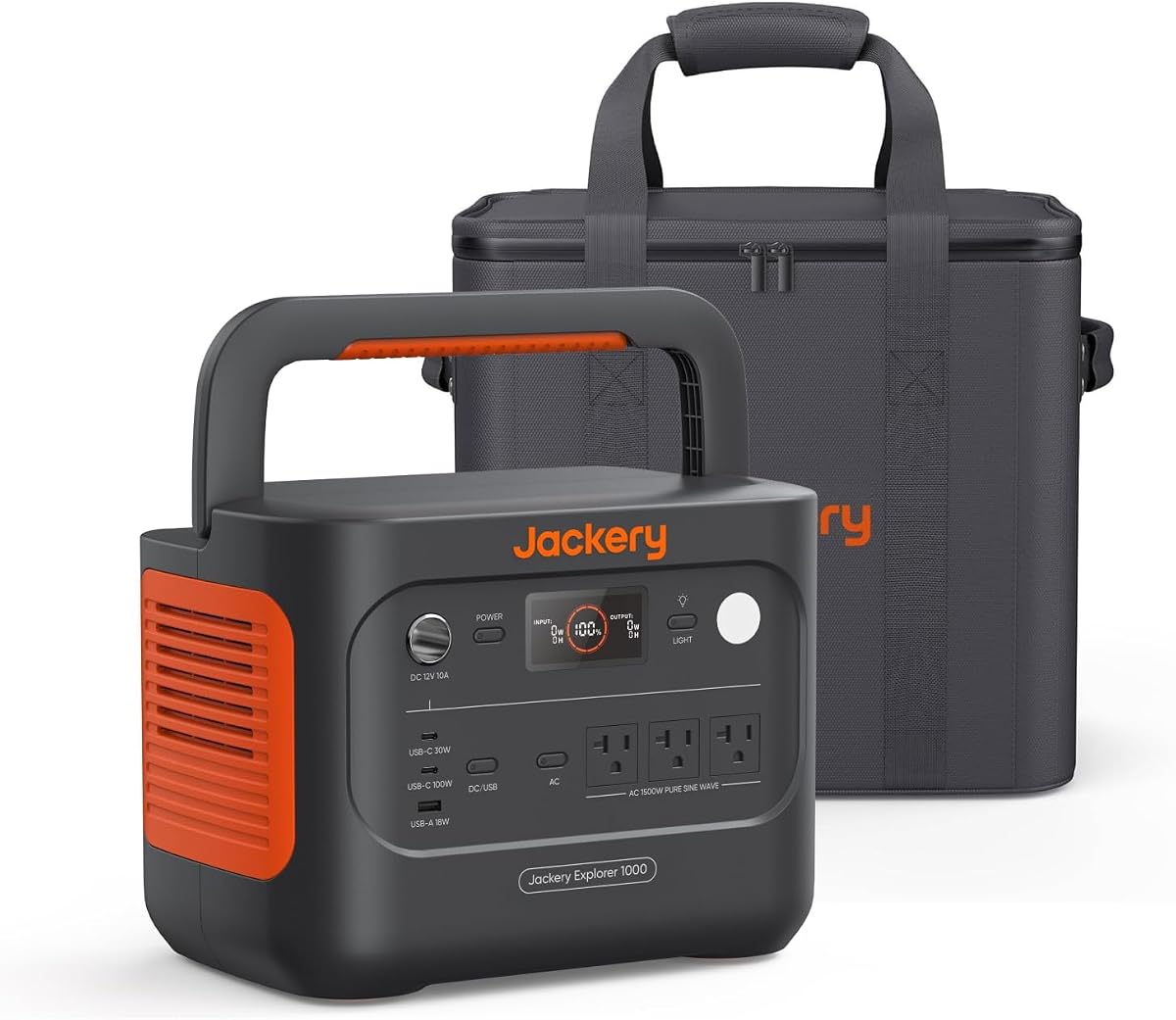
Jackery Explorer 1000 v2 Portable Power Station
- 1070Wh capacity, 1500 (3000W surge) output
- LiFePO4 (4000+ cycles to 70%) battery
- 1h emergency AC via app / 1.7h standard AC recharge
- 23.8 lbs
- 1070Wh capacity / 1500 (3000W surge) output
- LiFePO4 (4000+ cycles to 70%) battery
- Recharge: 1h emergency AC via app / 1.7h standard AC
- Weight: 23.8 lbs
As an Amazon Associate, we earn from qualifying purchases.
The Jackery Explorer 1000 v2 is our overall pick because it nails the mainstream use case: 1,070Wh of capacity and 1,500W of continuous output (3,000W surge) in a 23.8-pound package. That runs a full-size refrigerator overnight, powers a CPAP for multiple nights, or keeps a home office going through a workday outage.
The “v2” matters enormously. The original Explorer 1000 used older 1,002Wh NMC lithium-ion cells; the v2 is a distinct listing with 1,070Wh LiFePO4 cells rated for 4,000+ cycles to 70% — roughly 5x the lifespan. Do not confuse the two when shopping. Emergency AC charging refills it in about an hour via the app, or 1.7 hours standard.
Transparency note: the verified Amazon listing for this ASIN is an official bundle with solar panels, not the standalone station. Bundles can be good value if you want panels, but confirm exactly what is included and compare against the station-only price.
| Battery capacity | 1,070Wh |
|---|---|
| Output | 1,500W continuous (3,000W surge) |
| Battery chemistry | LiFePO4 (4,000+ cycles to 70%) |
| Recharge time | Approx. 1h emergency AC via app / 1.7h standard AC |
| Weight | Approx. 23.8 lbs |
Pros
- Proven 1kWh-class all-rounder
- LiFePO4 v2 — 5x the cycle life of the v1
- Light enough to carry at 23.8 lbs
- 1-hour emergency recharge
Cons
- Amazon listing is a solar-panel bundle, not standalone
- Easy to confuse with the older NMC v1
- 1,500W won’t run large appliances
Fastest charging
Jackery Explorer 1000 v2 Portable Power Station
- 1070Wh capacity, 1500 (3000W surge) output
- LiFePO4 (4000+ cycles to 70%) battery
- 1h emergency AC via app / 1.7h standard AC recharge
- 23.8 lbs
- 1070Wh capacity / 1500 (3000W surge) output
- LiFePO4 (4000+ cycles to 70%) battery
- Recharge: 1h emergency AC via app / 1.7h standard AC
- Weight: 23.8 lbs
As an Amazon Associate, we earn from qualifying purchases.
The Jackery Explorer 1000 v2 wins on speed: a full 0–100% recharge in 49 minutes from AC power. When the grid flickers back for an hour during an outage, this is the station that actually gets full again. Capacity is 1,070Wh with 1,500W of continuous output (3,000W peak) — notably stronger output than most 1kWh-class rivals.
The “Gen 2” (model A1763) is verified distinct from the Gen 1 (model A1761): output rose from 1,800W to 1,500W and recharge got even faster. The LiFePO4 battery delivers long cycle life. Owner feedback highlights the genuinely fast charging and the solid Anker build quality.
Transparency note: the verified Amazon listing for this ASIN is an official station-plus-solar-panel bundle. Check the included panel wattage and compare bundle pricing before buying.
| Battery capacity | 1,070Wh |
|---|---|
| Output | 1,500W continuous (3,000W peak) |
| Battery chemistry | LiFePO4 |
| Recharge time | Full charge in 49 min (AC) |
| Weight | Per listing — confirm on the live page |
Pros
- Fastest recharge in class: 49 minutes
- Strong 1,500W output for a 1kWh station
- Verified Gen 2 with upgraded specs
- LiFePO4 long-life battery
Cons
- Amazon listing is a panel bundle
- Weight not published — confirm before buying
- Premium price for the capacity
Best compact 1kWh
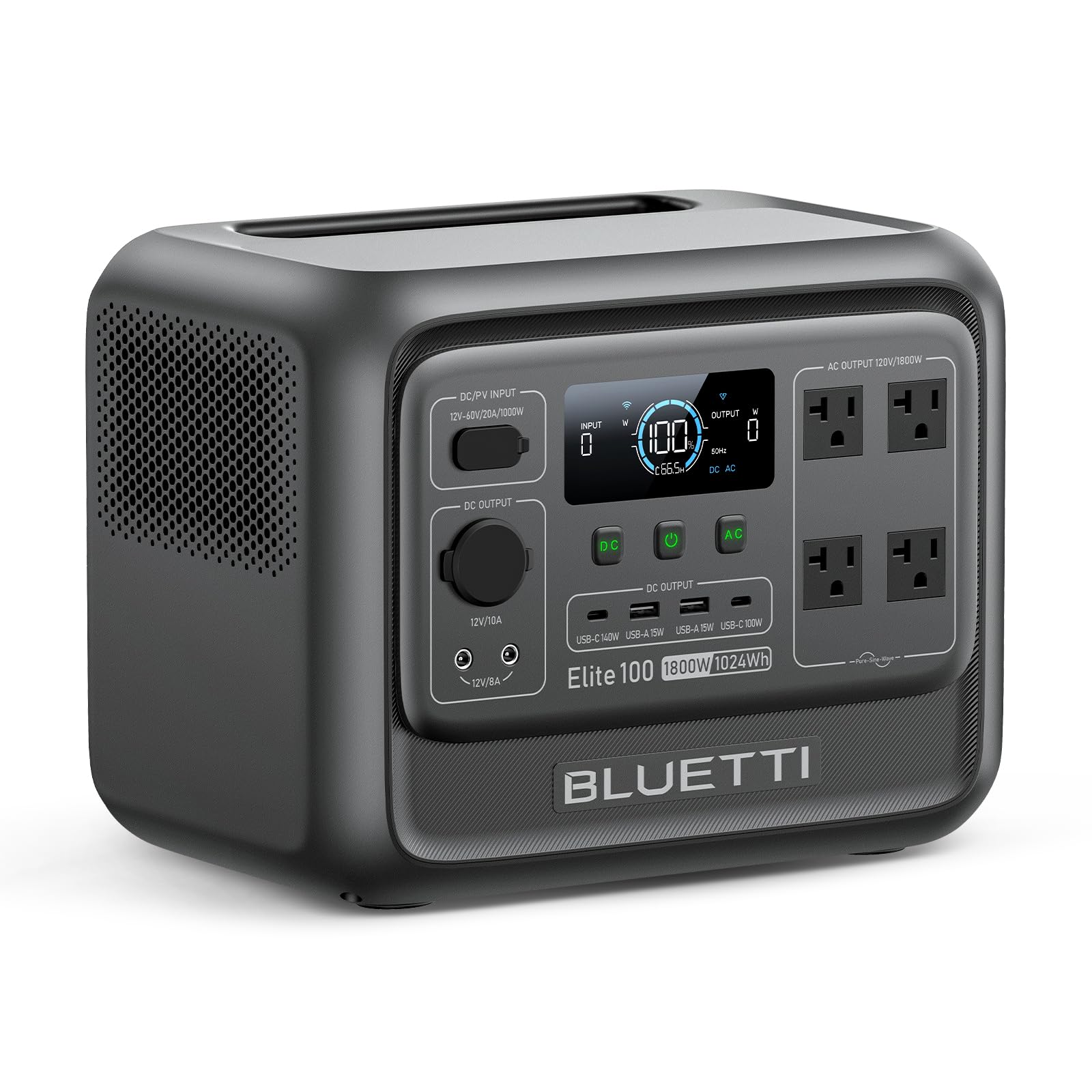
BLUETTI Elite 100 V2 Portable Power Station
- Capacity Wh: 1024
- Output Watts: 1800 (3600W surge)
- Chemistry: LiFePO4 (4000+ cycles)
- Compact 1kWh with best-in-class surge and UPS switching for electronics
- 25 lbs
- 1024 capacity
As an Amazon Associate, we earn from qualifying purchases.
The BLUETTI Elite 100 V2 is the compact 1kWh pick: 1,070Wh and 1,800W continuous output (3,600W surge — best-in-class surge for the size) in a 25-pound unit. The sub-10ms UPS switchover is a standout feature: it switches to battery so fast that computers and sensitive electronics never notice a grid blip.
The LiFePO4 battery is rated for 4,000+ cycles, and recharging hits 80% in about 45 minutes on max AC input. Owner feedback praises the UPS performance for home office setups and the genuinely portable weight.
Transparency note: the verified Amazon listing for this ASIN is an official bundle with solar panels. Verify the panel configuration and total price on the live listing.
| Battery capacity | 1,070Wh |
|---|---|
| Output | 1,800W continuous (3,600W surge) |
| Battery chemistry | LiFePO4 (4,000+ cycles) |
| Recharge time | 45 min to 80% (max AC); ≤10ms UPS switchover |
| Weight | Approx. 25 lbs |
Pros
- Best-in-class 3,600W surge for the size
- Sub-10ms UPS protects sensitive electronics
- 45-minute 0–80% recharge
- Light at 25 lbs
Cons
- Amazon listing is a panel bundle
- 1,800W continuous is modest for the class
- No 240V output
Best expandable 1kWh
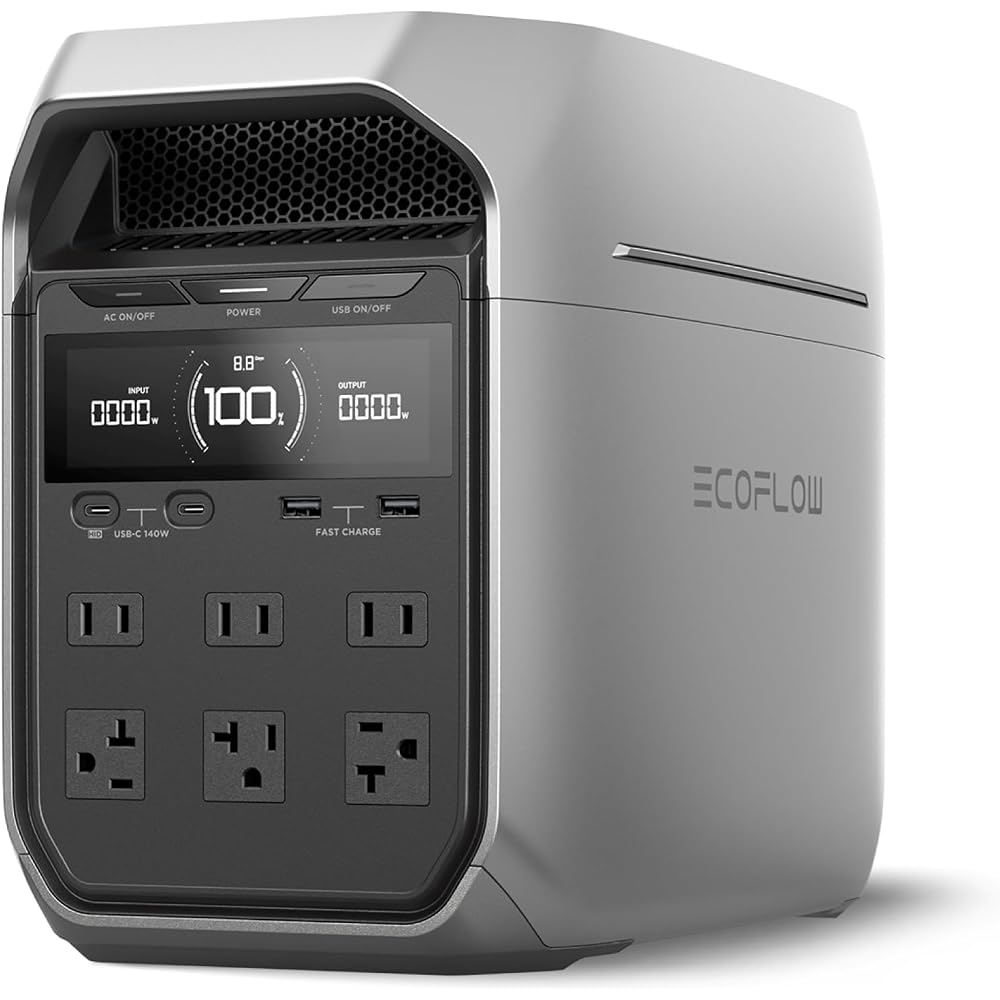
EcoFlow DELTA 3 Plus Portable Power Station
- Capacity Wh: 1024
- Output Watts: 1800 (3600W surge)
- Chemistry: LiFePO4
- Single-product review target: 1kWh sweet spot with fastest-in-class AC recharge
- per listing
- 1024 capacity
As an Amazon Associate, we earn from qualifying purchases.
The EcoFlow DELTA 3 Plus is the 1kWh-class pick for buyers who want an upgrade path. The base unit holds 1,070Wh with 1,800W continuous output (3,600W surge), and it accepts expansion batteries for longer runtime. A full AC recharge takes just 56 minutes — among the fastest in the category.
The outlet selection is generous: 13 outlets including 140W USB-C fast charging for laptops. That makes it a strong home-office backup station as well as a camping unit. Owner feedback highlights the fast charging and the useful app with detailed power monitoring.
If you think you will outgrow 1kWh, the DELTA 3 Plus lets you expand instead of replacing — a smarter long-term buy than a sealed non-expandable unit.
| Battery capacity | 1,070Wh (expandable) |
|---|---|
| Output | 1,800W continuous (3,600W surge) |
| Battery chemistry | LiFePO4 |
| Recharge time | Full charge in 56 min (AC); 13 outlets incl. 140W USB-C |
| Weight | Per listing — confirm on the live page |
Pros
- Expandable — grows with your needs
- 56-minute full recharge
- 13 outlets including 140W USB-C
- Strong app and power monitoring
Cons
- Weight not published — confirm before buying
- Expansion batteries add cost
- 1,800W continuous is mid-pack
Best 2kWh pick
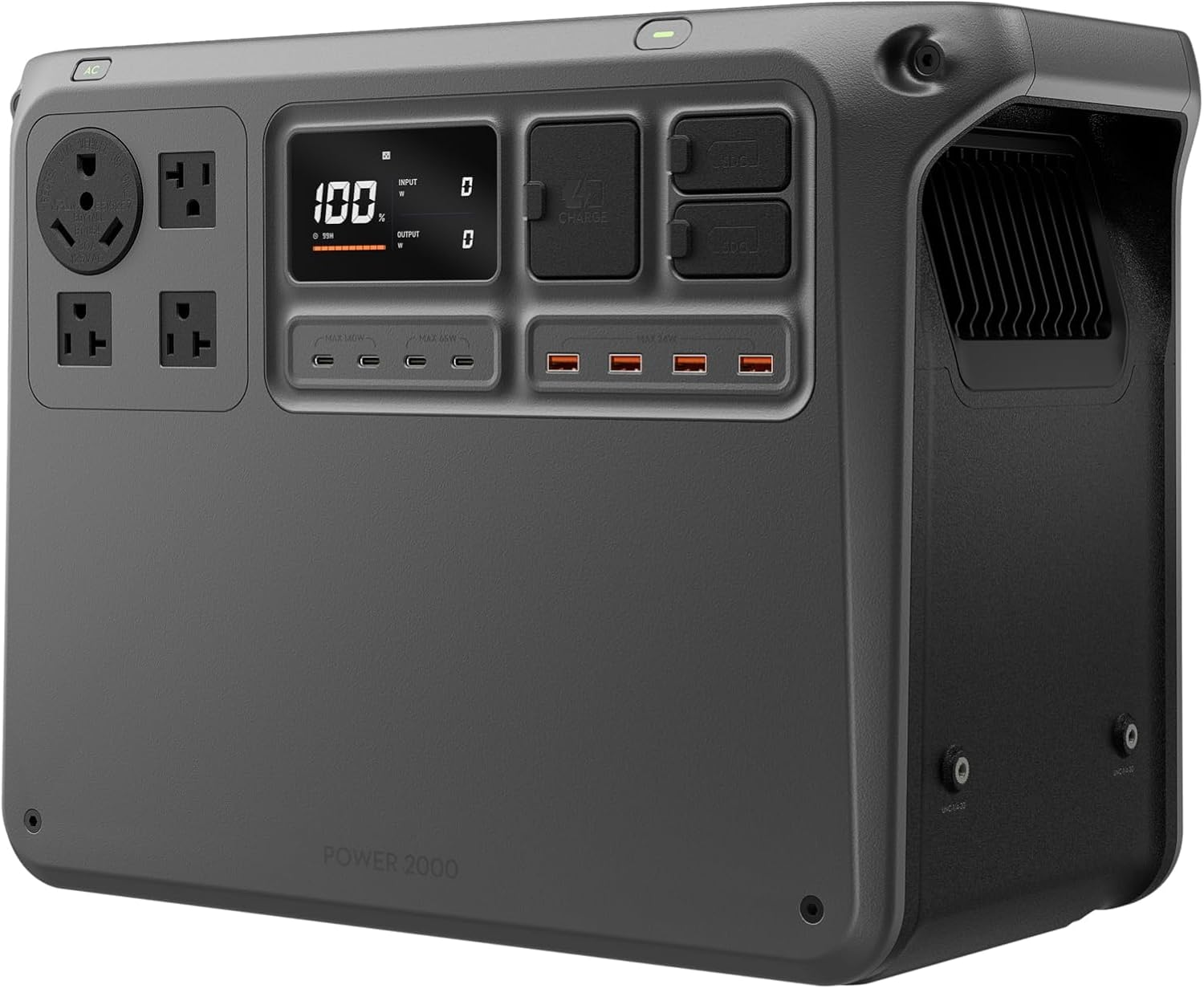
DJI Power 2000 Portable Power Station
- Capacity Wh: 2048
- Output Watts: 3000 stable
- Chemistry: LFP
- DJI’s drone-brand entry to power stations: ultra-quiet, 5-year warranty, drone fast-charge
- ~47.9 lbs (21.72 kg)
- 2048 capacity
As an Amazon Associate, we earn from qualifying purchases.
The DJI Power 2000 is the drone maker’s entry into power stations, and it brings DJI’s engineering strengths: ultra-quiet operation, refined industrial design, and a 5-year warranty that beats most competitors. With 2,048Wh of LFP capacity and 3,000W of stable continuous output, it covers a refrigerator for well over a day plus all the usual essentials.
Recharging hits 0–80% in about 55 minutes on AC, and the sub-10ms UPS switchover protects computers and network gear. A unique bonus: it can fast-charge DJI drone batteries directly, a real perk for drone pilots working off-grid.
At about 47.9 pounds it is a two-person or wheeled move. For buyers who value quiet operation, long warranty, and premium build, the DJI Power 2000 is the 2kWh class leader.
| Battery capacity | 2,048Wh |
|---|---|
| Output | 3,000W continuous (stable) |
| Battery chemistry | LFP |
| Recharge time | 0–80% in ~55 min (AC); UPS ≤10ms |
| Weight | Approx. 47.9 lbs (21.72 kg) |
Pros
- Ultra-quiet operation
- 5-year warranty — best in class
- Strong 3,000W continuous output
- Direct DJI drone fast-charging
Cons
- Heavy at ~48 lbs
- Premium price
- Newer product — less long-term history
Best budget 3kWh
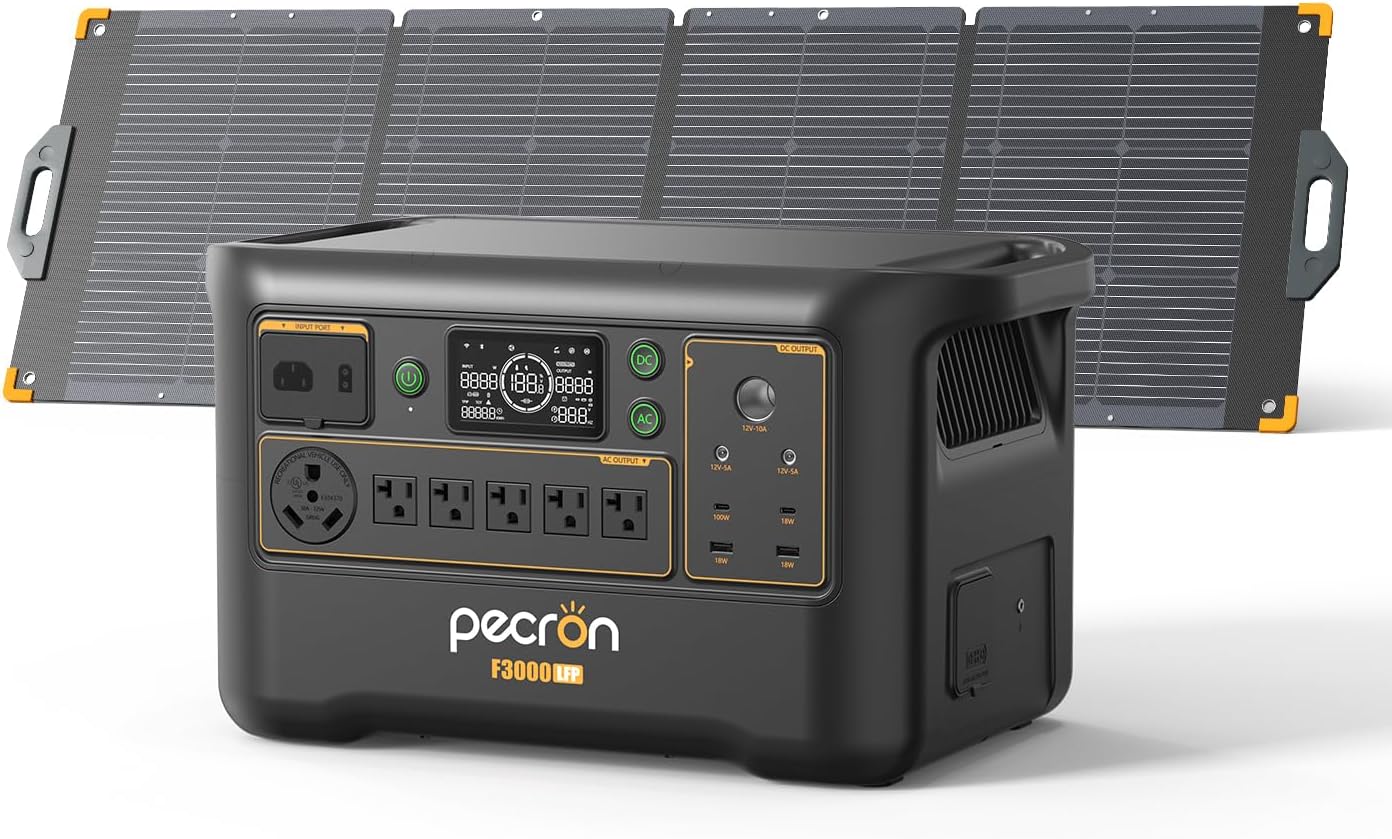
Pecron F3000LFP Portable Power Station
- Capacity Wh: 3072 (expandable to 9216Wh)
- Output Watts: 3600
- Chemistry: LiFePO4 (3500+ cycles to 80%)
- Budget-friendly 3kWh+ tier with 8-20ms UPS and app control
- per listing
- 3072 (expandable to 9216Wh) capacity
As an Amazon Associate, we earn from qualifying purchases.
The Pecron F3000LFP is the budget way into serious capacity: 3,072Wh of LiFePO4 with 3,600W of continuous output, expandable to 9,216Wh. That is enough to run a refrigerator for two-plus days, or to serve as a small home’s essential-circuits backup.
It includes an 8–20ms UPS mode for computer backup, app control, and up to 1,600W of solar input. A full AC recharge takes about 2 hours on the 1,800W AC input. The LiFePO4 cells are rated for 3,500+ cycles to 80%.
Pecron is a smaller brand than Jackery or EcoFlow, so long-term support is less proven — but the specs per dollar are genuinely strong, and owner feedback on the F3000LFP has been positive for reliability.
| Battery capacity | 3,072Wh (expandable to 9,216Wh) |
|---|---|
| Output | 3,600W continuous |
| Battery chemistry | LiFePO4 (3,500+ cycles to 80%) |
| Recharge time | 0–100% in ~2h (1,800W AC); up to 1,600W solar |
| Weight | Per listing — confirm on the live page |
Pros
- Best capacity per dollar in this roundup
- Expandable to 9.2kWh
- UPS mode and app control included
- Strong 3,600W output
Cons
- Smaller brand — less proven long-term support
- Weight not published — confirm before buying
- Bulkier than premium 3kWh rivals
Proven workhorse
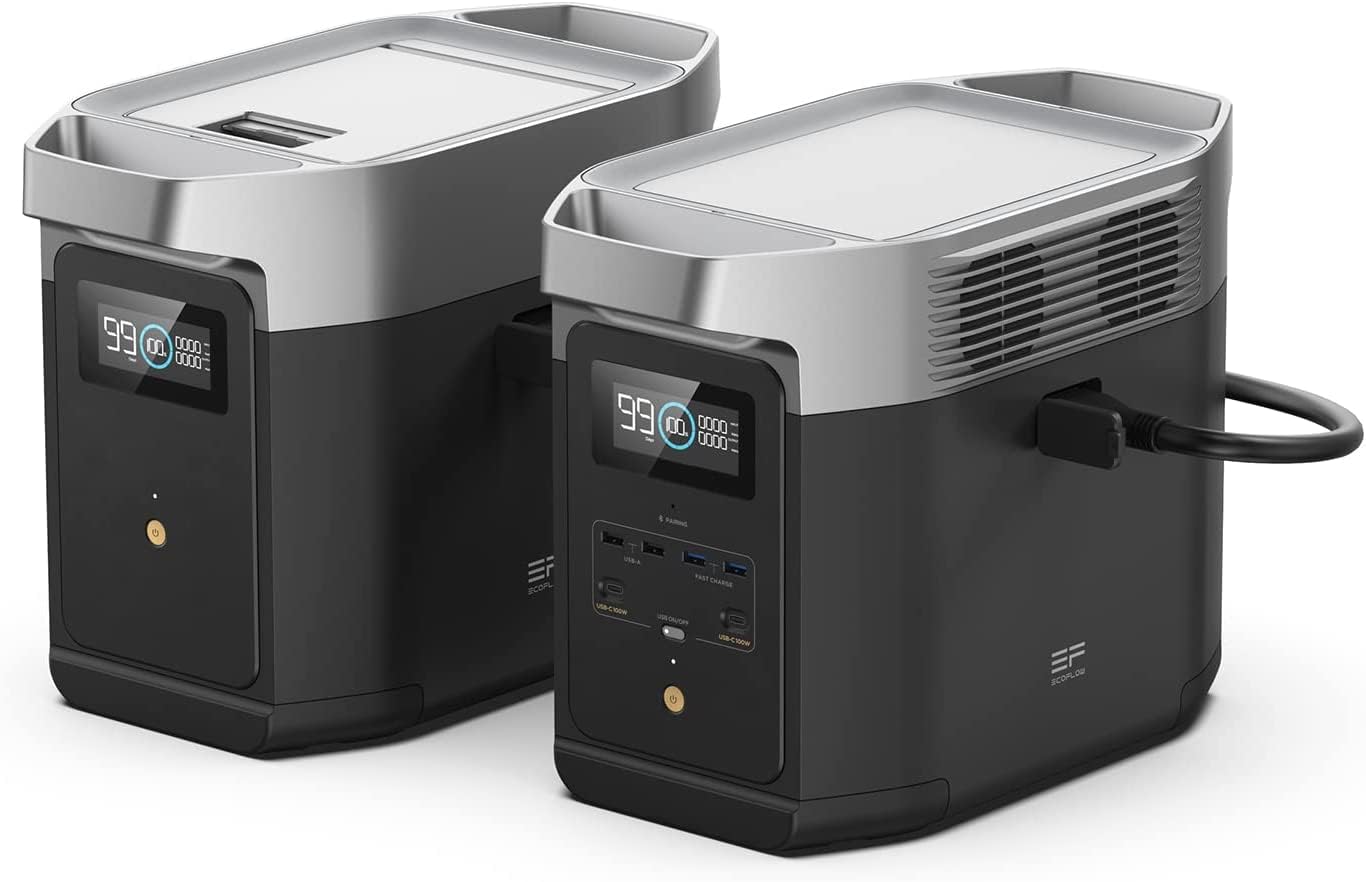
EcoFlow DELTA 2 Portable Power Station
- Capacity Wh: 1024
- Output Watts: 1800 (2700W surge)
- Chemistry: LiFePO4 (3000+ cycles)
- Proven long-running 1kWh workhorse, expandable 1-3kWh
- 27 lbs
- 1024 capacity
As an Amazon Associate, we earn from qualifying purchases.
The EcoFlow DELTA 2 is the long-running 1kWh workhorse: 1,070Wh of LiFePO4 (3,000+ cycles) with 1,800W continuous output (2,700W surge), expandable from 1 to 3kWh with extra batteries. It has years of owner history behind it — the kind of track record newer models cannot offer.
Recharging is quick: 0–80% in 50 minutes, full in 80 minutes on the 1,200W AC input. At 27 pounds it is easy to carry. Owner feedback consistently rates it among the most reliable stations in the class, with the app and expandability as frequently praised extras.
It is not the newest or flashiest pick, but for buyers who value a proven record over the latest specs, the DELTA 2 remains one of the safest 1kWh purchases.
| Battery capacity | 1,070Wh (expandable 1–3kWh) |
|---|---|
| Output | 1,800W continuous (2,700W surge) |
| Battery chemistry | LiFePO4 (3,000+ cycles) |
| Recharge time | 0–80% in 50 min, 0–100% in 80 min (1,200W AC) |
| Weight | Approx. 27 lbs |
Pros
- Years of proven owner history
- Expandable 1–3kWh
- Fast 50-minute 0–80% recharge
- Light and portable at 27 lbs
Cons
- Older model — newer rivals charge faster
- 1,800W output is mid-pack
- Fewer smart features than the DELTA 3 Plus
Best ultra-budget
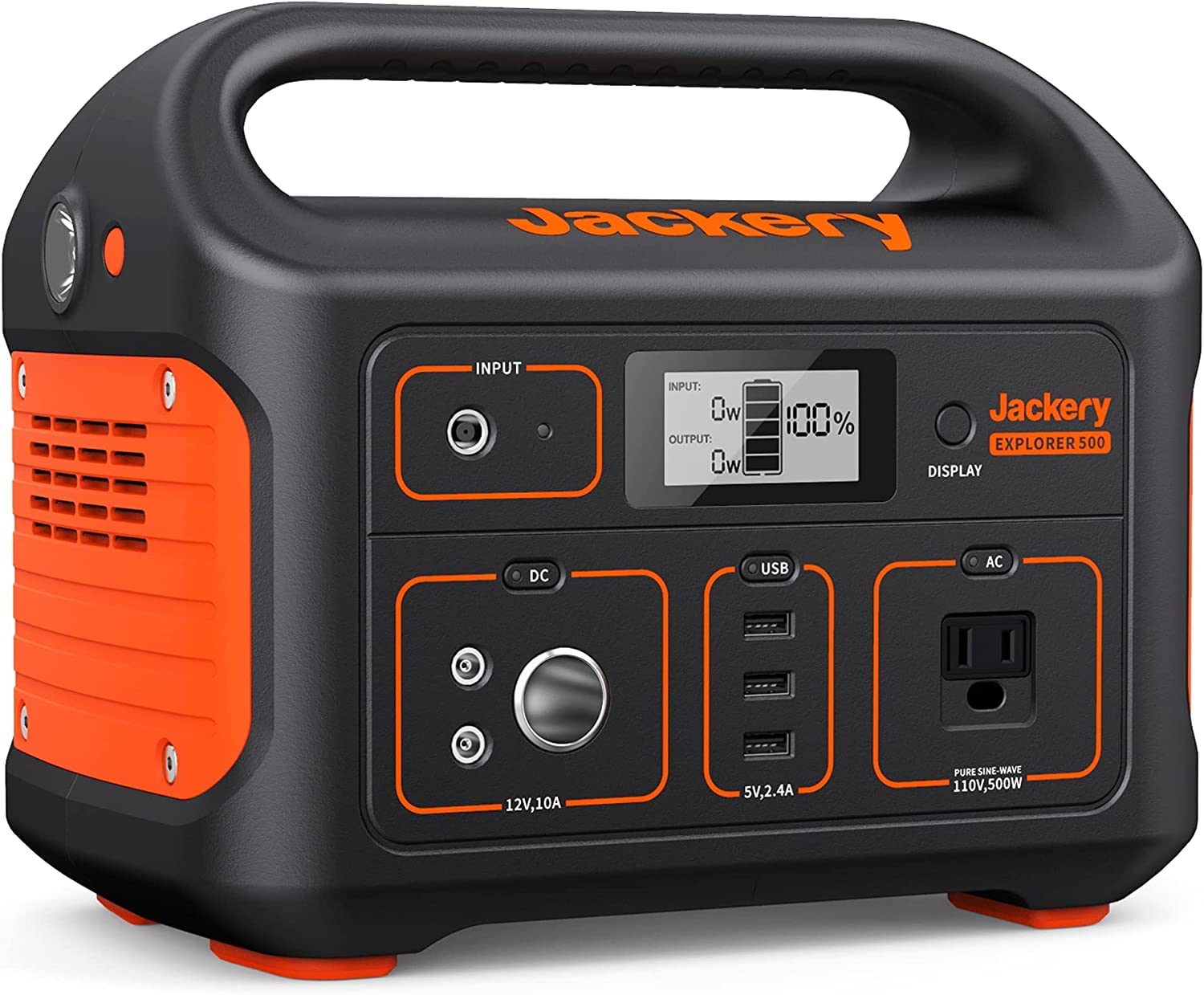
Jackery Explorer 500 Portable Power Station
- Capacity Wh: 518
- Output Watts: 500 (1000W peak)
- Chemistry: Lithium-ion (NOT LiFePO4)
- Classic small-budget tier pick for light camping/emergency use
- 13.3 lbs
- 518 capacity
As an Amazon Associate, we earn from qualifying purchases.
The Jackery Explorer 500 is the classic budget entry: 518Wh of capacity and 500W of continuous output (1,000W peak) at just 13.3 pounds. It will charge phones and laptops for days, run LED lights all night, or power a CPAP for a night or two — perfect for light camping and as a second unit.
Here is the honest caveat, and it matters: the Explorer 500 uses older NMC lithium-ion chemistry, NOT LiFePO4. That means roughly 500–800 full cycles before significant degradation, versus 3,000+ on the LiFePO4 models above. For occasional camping and emergency use, that is perfectly fine — the battery will last years. But do not buy it expecting a decade of daily cycling.
It is also worth knowing Jackery has newer LiFePO4 models in this size class. Buy the Explorer 500 for its proven simplicity and low price; buy LiFePO4 if longevity is the priority.
| Battery capacity | 518Wh |
|---|---|
| Output | 500W continuous (1,000W peak) |
| Battery chemistry | Lithium-ion NMC (NOT LiFePO4) — ~500–800 cycles |
| Recharge time | Per manufacturer (AC adapter included) |
| Weight | Approx. 13.3 lbs |
Pros
- Lowest price in this roundup
- Ultralight at 13.3 lbs
- Proven, simple, reliable design
- Great for phones, laptops, lights, CPAP
Cons
- Older NMC chemistry — much shorter cycle life
- 500W output limits what it can run
- 518Wh won’t run a fridge long
Portable power stations compared
Capacity (Wh) = how long it runs. Output (W) = what it can run at once. Chemistry determines lifespan — LiFePO4 lasts 4–6x longer than NMC.
| Product | Running watts | Fuel | Noise | Best for | |
|---|---|---|---|---|---|
| Jackery Explorer 1000 v2 Portable Power Station | 1,500W | 1,070Wh LiFePO4 | Silent | Best 1kWh all-rounder | Check price |
| Jackery Explorer 1000 v2 Portable Power Station | 1,500W | 1,070Wh LiFePO4 | Silent | Fastest recharge | Check price |
| BLUETTI Elite 100 V2 Portable Power Station | 1,800W | 1,070Wh LiFePO4 | Silent | Compact UPS backup | Check price |
| EcoFlow DELTA 3 Plus Portable Power Station | 1,800W | 1,070Wh LiFePO4 | Silent | Expandable 1kWh | Check price |
| DJI Power 2000 Portable Power Station | 3,000W | 2,048Wh LFP | Silent | Premium 2kWh | Check price |
| Pecron F3000LFP Portable Power Station | 3,600W | 3,072Wh LiFePO4 | Silent | Budget 3kWh | Check price |
| EcoFlow DELTA 2 Portable Power Station | 1,800W | 1,070Wh LiFePO4 | Silent | Proven 1kWh | Check price |
| Jackery Explorer 500 Portable Power Station | 500W | 518Wh NMC | Silent | Ultra-budget light use | Check price |
How do you choose the best portable power station in 2027?
Power stations are simpler to shop for than gas generators, but the wrong capacity is still the most common mistake. Here is how to get it right.
Pick your capacity tier first
Rough guide: 500Wh covers phones, laptops, lights, and a CPAP for a night or two. 1,000Wh adds a full-size refrigerator overnight or a full workday of home-office gear. 1,500Wh covers a fridge for 1–2 days plus everything else. 3,000Wh+ is multi-day essential backup for a small home.
Most buyers overbuy. A 1kWh station handles the most common outage scenario (fridge + phones + lights + laptop) — step up to 2–3kWh only if you have a specific need like multi-day backup or power tools.
Battery chemistry: LiFePO4 vs NMC
LiFePO4 (lithium iron phosphate) batteries last 3,000–6,000+ cycles and are more thermally stable. NMC (nickel manganese cobalt) batteries — like the one in the Jackery Explorer 500 — typically manage 500–800 cycles. For a station you will use regularly or keep for a decade, LiFePO4 is worth the premium. For occasional camping, NMC is fine and cheaper.
Output wattage and surge
Check both numbers. Continuous output is what the station sustains; surge is the brief peak for motor startup. A refrigerator needs ~150W running but ~600W to start its compressor. The BLUETTI Elite 100 V2’s 3,600W surge is exceptional for its size and handles stubborn motor loads that trip lesser stations.
Recharge speed matters more than you think
In an outage with intermittent grid power, the fastest-charging station wins. The Jackery Explorer 1000 v2 refills fully in 49 minutes — if the power comes back for an hour, you are topped up. Slower stations might only gain half a charge in the same window. If you plan to recharge from solar, match panel wattage to the station’s max solar input.
UPS mode for computers and medical devices
If you work from home or run a CPAP, look for a UPS (uninterruptible power supply) mode with ≤20ms switchover. The BLUETTI Elite 100 V2 (≤10ms), DJI Power 2000 (≤10ms), and Pecron F3000LFP (8–20ms) all switch fast enough that connected electronics never drop. Note: a portable station is not a medical-grade UPS — consult your device manufacturer for critical medical equipment.
Bundles vs standalone: read the listing
Several listings in this category bundle the station with solar panels. That is fine — often good value — but know what you are buying. Check the panel wattage, the total price versus the station alone, and whether you actually need panels. We flagged every bundle listing we found in the sections above.
Portable power station FAQs
How long will a 1,000Wh power station run a refrigerator?
Roughly 12–24 hours for a modern efficient fridge, which uses about 1–2kWh per day. Real-world runtime depends on the fridge’s age and efficiency, ambient temperature, and how often the door opens. Inverter losses (typically 85–90% efficiency) shave a bit off the theoretical number.
What is the difference between Wh and W?
Watts (W) measure power — how much electricity flows at once, which determines what appliances you can run. Watt-hours (Wh) measure energy capacity — how much electricity the battery stores, which determines how long it runs. A 1,500W / 1,070Wh station can run a 1,500W appliance for about 40 minutes, or a 150W fridge for roughly 6 hours.
Is LiFePO4 really better than regular lithium-ion?
For longevity and safety, yes. LiFePO4 batteries typically last 3,000–6,000+ full cycles versus 500–800 for NMC lithium-ion, and they are more resistant to thermal runaway. The tradeoff is slightly lower energy density (a bit heavier per Wh). For a backup station you keep for years, LiFePO4 is the better buy.
Can I take a portable power station on a plane?
No — not these sizes. Airlines limit spare lithium batteries to 100Wh (up to 160Wh with airline approval). Every station in this roundup far exceeds that. They are ground-transport only: car, RV, or truck.
Can a power station run a CPAP machine?
Yes, easily — and this is one of the most popular uses. A typical CPAP uses 30–60W (more with a heated humidifier). A 1,070Wh station runs it for multiple nights. Use the DC/car-port adapter if your CPAP supports it for better efficiency, and test your exact setup before you need it in an emergency.
Do I need solar panels with a power station?
Not necessarily. The station charges from any wall outlet like a giant phone battery — panels only matter for off-grid recharging during extended outages or camping. If you buy a bundle, make sure the included panel wattage is enough to meaningfully recharge the station: roughly 200W of panels per 1,000Wh of battery for a full recharge in a day of good sun.
Our verdict
The Jackery Explorer 1000 v2 is the best portable power station of 2027 for most buyers: proven 1kWh LiFePO4 performance at a carryable weight. Speed demons should get the Jackery Explorer 1000 v2 with its 49-minute recharge. For 2kWh of premium quiet power, the DJI Power 2000 leads. Budget buyers needing maximum capacity should look at the Pecron F3000LFP. And if you just need phones, laptops, and lights on a budget, the Jackery Explorer 500 remains a fine pick — just know its older NMC battery will not last as many cycles as the LiFePO4 models.
How we researched: We did not perform hands-on testing. We compared manufacturer specifications for eight portable power stations verified on Amazon in October 2026, confirmed battery chemistry and generation/version distinctions against brand listings (including the Jackery 1000 v1-vs-v2 and Anker C1000 Gen 1-vs-Gen 2 differences), and reviewed aggregated owner feedback on real-world runtime and reliability. We flagged bundle listings and the NMC chemistry of the Explorer 500 explicitly. Prices and availability change frequently — verify the live listing before buying.

Related Guides
Best Time to Buy a Generator: 2027 Price & Sales Calendar
The best time to buy a generator is Black Friday, with 10-30% off typical. 2027 price and sales calendar: clearance windows, pre-season deals, and timing tips.

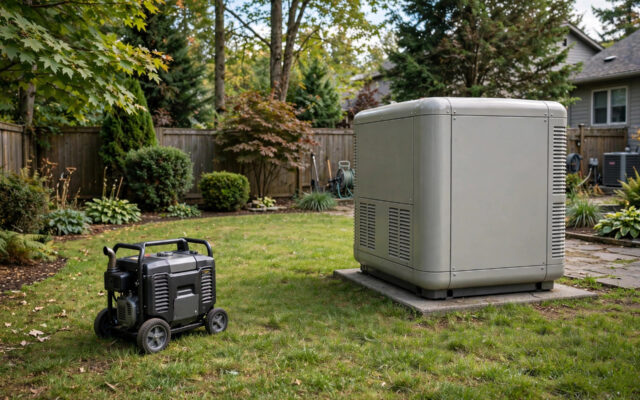
Portable vs Standby Generator: Cost, Runtime, Maintenance & Pros/Cons
Portable vs standby generator: $1,100-$5,000 vs $9,000-$20,000+ installed. Compare costs, runtime, maintenance, pros and cons, and which type wins for you.
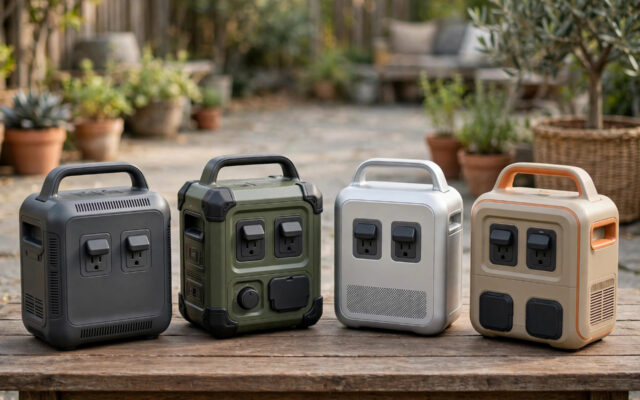
Jackery vs EcoFlow vs Bluetti vs Anker: Which Power Station Brand Is Best?
Jackery vs EcoFlow vs Bluetti vs Anker power stations compared on battery chemistry, charging speed, cycle life, and value. Includes the NMC vs LiFePO4 warning.
2 Comments