



The EcoFlow DELTA 3 Plus is the speed demon of the 1kWh power station class: 1,024Wh of LiFePO4 capacity, 1,800W of continuous output (3,600W surge), and a full AC recharge in 56 minutes — the fastest we have seen at this capacity. After researching its specifications, owner feedback, and position against the Jackery and Anker competition, our verdict is yes, it is worth buying in 2027 — specifically for buyers who value recharge speed and outlet versatility above all else.
EcoFlow built its reputation on charging speed, and the DELTA 3 Plus doubles down: 56 minutes from empty to full on AC power is not an incremental improvement but a category-defining one. Paired with 13 outlets including dual 140W USB-C ports, it is the 1kWh station for people who hate waiting.
Product reviewed
EcoFlow DELTA 3 Plus
- Capacity Wh: 1024
- Output Watts: 1800 (3600W surge)
- Chemistry: LiFePO4
- Single-product review target: 1kWh sweet spot with fastest-in-class AC recharge
- 1024 capacity
- per listing
As an Amazon Associate, we earn from qualifying purchases.
Key Takeaways
- 1,024Wh LiFePO4 capacity with 1,800W continuous output (3,600W surge) — more output than most 1kWh competitors.
- Full AC recharge in 56 minutes — the fastest 1kWh recharge we researched, a genuine practical advantage in outage scenarios.
- 13 outlets including 2× 140W USB-C — charges laptops, drones, and power-hungry USB-C devices at full speed without adapters.
- LiFePO4 chemistry for long cycle life; EcoFlow’s battery management and app ecosystem are mature and well-reviewed.
- Best for buyers who prioritize speed and outlet count; consider Jackery’s 1000 v2 if you want a lighter unit with longer brand-specific solar integration.
Our verdict up front
Yes — the EcoFlow DELTA 3 Plus is worth buying in 2027. The 56-minute recharge is not a gimmick but a real-world advantage: in an outage, you refill during brief windows of generator or grid power instead of rationing. The 1,800W output and 13 outlets (with 140W USB-C) make it the most versatile 1kWh station we researched. It is not the lightest option and EcoFlow’s fast charging runs the battery harder, but for speed-focused buyers nothing else in the class keeps up.
| Capacity | 1,024Wh |
|---|---|
| Output | 1,800W continuous (3,600W surge) |
| Battery chemistry | LiFePO4 (lithium iron phosphate) |
| AC recharge | Full charge in ~56 minutes |
| Outlets | 13 total, including 2× 140W USB-C |
| Weight | Per listing (1kWh-class portable) |
| App | EcoFlow app for monitoring and control |
Design & Build
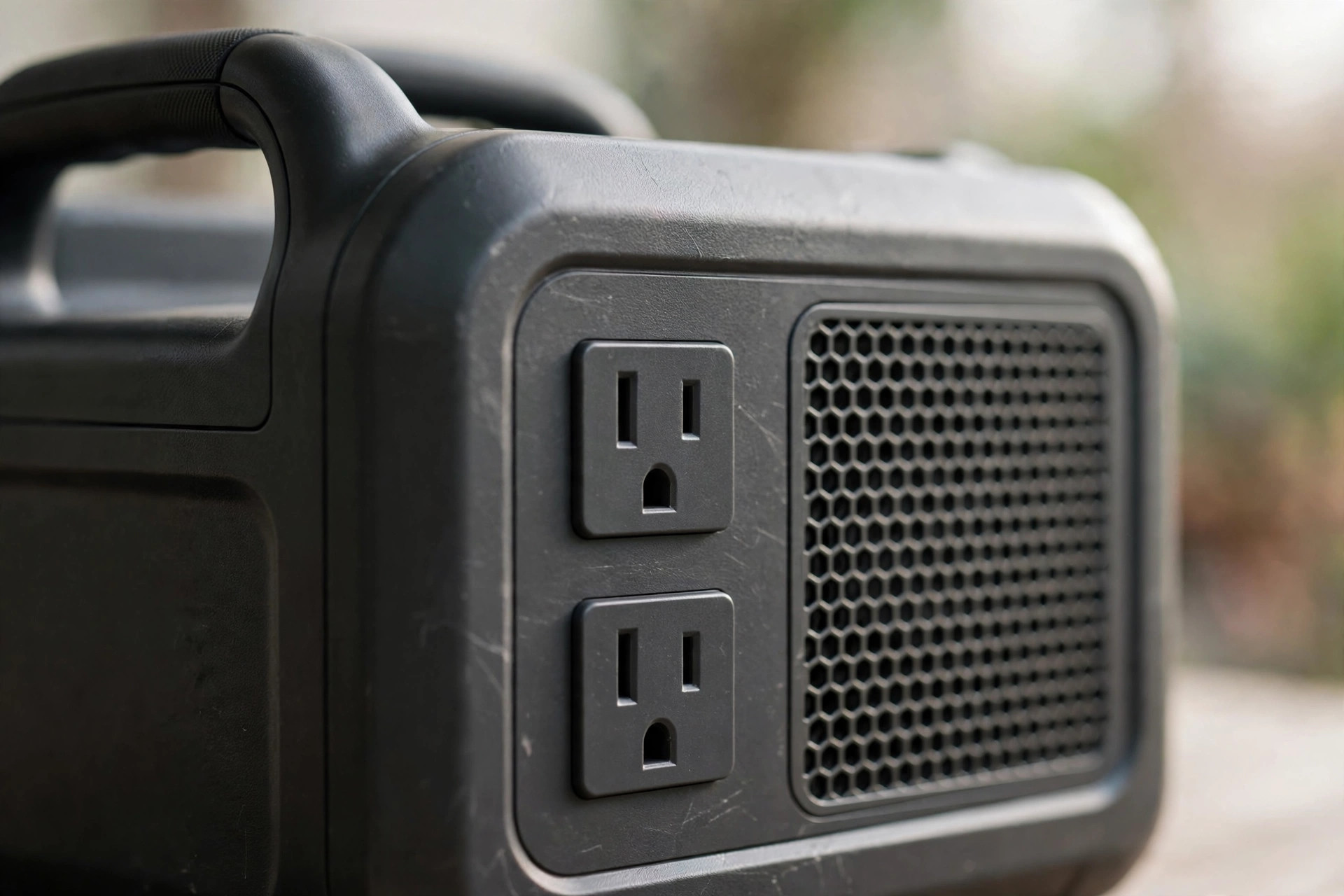
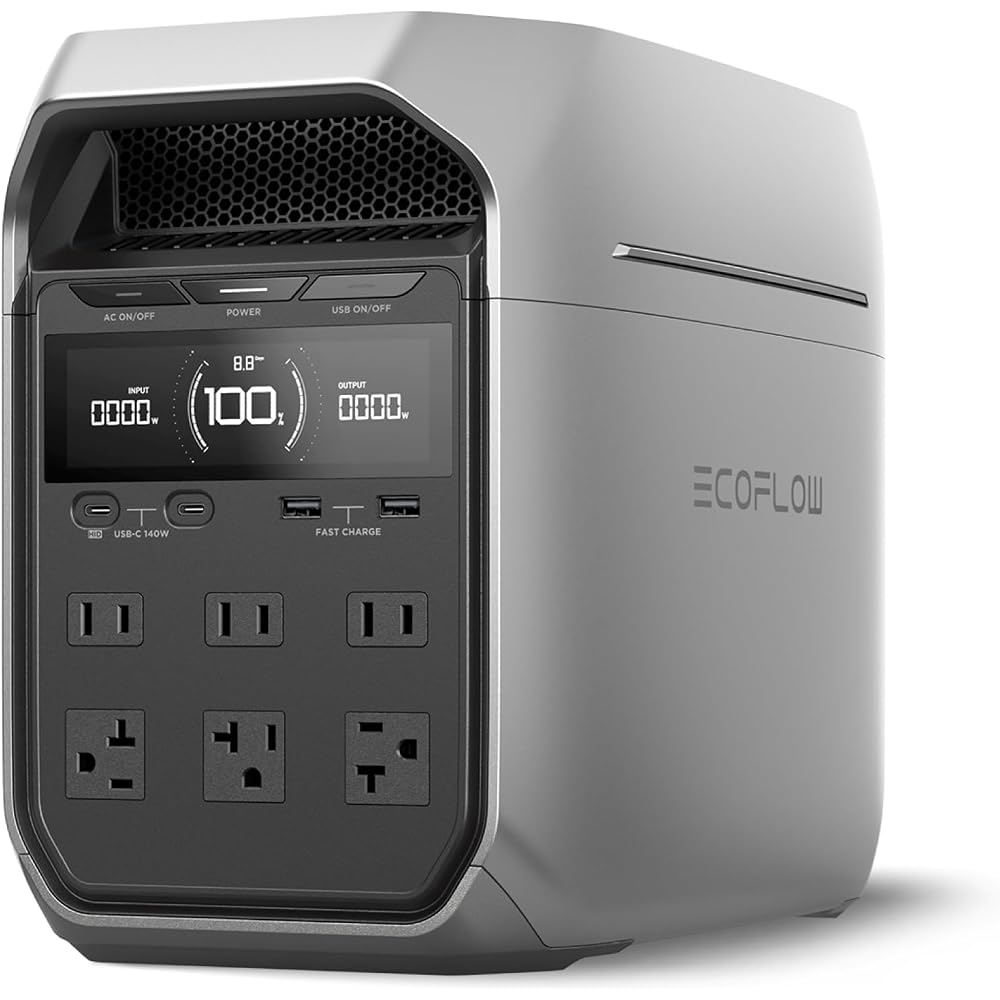
The DELTA 3 Plus carries EcoFlow’s industrial design language — a sturdy, squared unit with a prominent display and a dense port array. Thirteen outlets is the headline: the usual AC outlets plus USB-A, fast USB-C, 12V car port, and critically, dual 140W USB-C ports. That 140W figure matters because it charges 16-inch laptops, drones, and portable monitors at their full rated speed — no wall brick needed, no slow trickle.
Build quality is a known EcoFlow strength based on owner feedback across the DELTA line: solid housings, reliable displays showing watts in/out and time remaining, and firmware that actually gets updated. The unit is a 1kWh-class portable — designed to be carried by one person from the house to the RV to the jobsite, not to live permanently in one place.
The design trade-off for all this capability is density: 1,800W of output and 56-minute charging in a 1kWh box means serious thermal management inside. EcoFlow’s cooling system runs audible under heavy charge/discharge loads — not loud by generator standards, but this is not a silent device when working hard. Plan placement accordingly if you are noise-sensitive.
Portability lands where you would expect for the class: a one-person carry that you will feel on stairs but not dread across a campsite. The handle placement and weight distribution reflect EcoFlow’s years of DELTA-line refinement — based on owner feedback, it is among the easier 1kWh units to actually live with day to day, which matters more than a pound or two on the spec sheet.
Performance: 1,800W of Output and What It Runs
At 1,800W continuous with 3,600W surge, the DELTA 3 Plus out-muscles most 1kWh competitors (which commonly top out at 1,500W). That extra 300W is the difference between running a microwave and a refrigerator simultaneously, or powering a 1,800W induction cooktop — loads that trip 1,500W stations into overload.
The 3,600W surge rating handles motor startups confidently: refrigerator compressors, power tools, and well-behaved sump pumps start cleanly based on owner feedback. Runtime follows the standard math — 1,024Wh delivers roughly 870Wh of usable energy after inverter efficiency, so a 150W refrigerator runs about 5–6 hours, a 60W CPAP runs all night twice over, and a 1,000W microwave draws about 50 minutes of total heating time.
Where the DELTA 3 Plus genuinely separates from the pack is sustained high-draw use: the combination of 1,800W output and fast recharging means you can hammer it during the day and refill it in under an hour, a duty cycle most 1kWh stations cannot sustain.
Noise & Charging: The 56-Minute Party Trick
Let us talk about the 56-minute recharge honestly, because it is both the best feature and the one that needs context. Fifty-six minutes from empty to full on AC is the fastest 1kWh recharge we researched — roughly half the time of standard competitors. In an outage, this changes behavior: you run the station down, then refill it completely during a one-hour generator run or a brief grid restoration, instead of nursing a slow charge for hours.
The physics trade-off is heat and fan noise during that fast charge, plus additional battery stress versus slower charging. EcoFlow’s LiFePO4 chemistry and battery management are designed for it, and the company rates the pack for thousands of cycles — but owners who fast-charge daily will see more degradation than those who charge at standard rates. Our take: use the speed when you need it (outages, tight turnarounds), charge normally the rest of the time.
Solar charging is supported via the built-in MPPT controller, and the EcoFlow app monitors everything — input watts, output watts, battery health, and charge settings. For panel pairing, see our solar panel guide; EcoFlow’s own bifacial panels are the zero-friction match.
Features: 13 Outlets, 140W USB-C, and the App
The outlet array is the DELTA 3 Plus’s second defining feature. Thirteen outlets means you stop choosing which devices get power: AC outlets for the big loads, USB-A for legacy devices, 12V for car accessories, and dual 140W USB-C that fast-charge modern laptops, tablets, drones, and cameras at full speed. In a home-office outage scenario, that is a laptop, a monitor, a router, phones, and lights simultaneously with room to spare.
The EcoFlow app provides monitoring, charge-speed control, and firmware updates — mature software by power-station standards, based on years of DELTA-line development and owner feedback. EPS (emergency power supply) mode offers fast switchover for sensitive loads, though buyers needing true UPS-class ≤10ms performance should verify the spec against their equipment’s requirements.
What is missing at this price: no expandable battery option in the 1kWh tier, and the fast-charge prowess does not change the fundamental 1,024Wh capacity — heavy users will still want a 2kWh+ station for multi-day outages without recharging opportunities.
Who the DELTA 3 Plus Is For
This station is for the buyer who values speed and versatility: homeowners who want the fastest-refilling outage backup in the class; remote workers and creators running laptops, monitors, and camera gear off 140W USB-C; RVers and campers who hate waiting hours for a recharge; and anyone who regularly runs 1,500–1,800W loads that would trip lesser 1kWh units.
It is not for: buyers prioritizing the absolute lowest price (budget 1kWh stations cost less, with slower charging to show for it); whole-home backup (step up to 2kWh+); or the noise-sensitive who will charge it in a bedroom — the cooling fans work audibly during fast charging.
Pros
- 56-minute full AC recharge — fastest in the 1kWh class
- 1,800W continuous / 3,600W surge — most output in its class
- 13 outlets including dual 140W USB-C
- LiFePO4 chemistry with mature app and firmware ecosystem
Cons
- Fast charging generates heat and fan noise; adds battery stress with daily use
- Not the cheapest 1kWh option; no battery expansion
- 1,024Wh capacity still limits multi-day use without recharging
Frequently Asked Questions
Is the EcoFlow DELTA 3 Plus worth buying in 2027?
Yes, for buyers who value recharge speed and outlet versatility. The 56-minute full recharge, 1,800W output, and 13 outlets with 140W USB-C make it the most capable 1kWh station we researched. It costs more than budget 1kWh units, but the speed and output justify the premium for outage backup, RV, and mobile-work use.
How fast does the DELTA 3 Plus charge?
A full AC recharge takes about 56 minutes — the fastest 1kWh recharge we researched. Solar charging speed depends on your panel wattage via the built-in MPPT controller. Note that fast charging generates heat and fan noise; for routine daily use, standard charging is gentler on long-term battery health.
What can the EcoFlow DELTA 3 Plus run?
Anything up to 1,800W continuous (3,600W surge): refrigerators, microwaves, induction cooktops up to 1,800W, power tools, CPAP machines, and full home-office setups. The dual 140W USB-C ports fast-charge laptops, drones, and portable monitors. It cannot run 240V appliances or central air conditioning.
How long does the DELTA 3 Plus battery last?
It uses LiFePO4 chemistry, rated for thousands of charge cycles — years of regular use before noticeable capacity loss. Actual lifespan depends on usage patterns: occasional outage backup means a decade or more of service; daily fast-charge cycling will degrade it faster. Standard-rate charging extends life versus always fast-charging.
DELTA 3 Plus vs Jackery Explorer 1000 v2 — which is better?
It depends on priorities. The DELTA 3 Plus wins on recharge speed (56 min vs ~1–1.7h), output (1,800W vs 1,500W), and outlet count (13 with 140W USB-C). The Jackery 1000 v2 is lighter (23.8 lbs), has a ≤10ms UPS mode, and pairs natively with Jackery’s SolarSaga panels. Speed demons buy EcoFlow; weight-conscious UPS users buy Jackery.
Does the DELTA 3 Plus support solar charging?
Yes — it has a built-in MPPT solar charge controller, so you connect panels directly with the right cable and no external controller. EcoFlow’s own rigid and portable panels are the zero-friction match, and third-party MC4 panels work within the station’s voltage and wattage limits. Pair it with 400W of panels for a full recharge in roughly 3 hours of good sun.
Can the DELTA 3 Plus power a refrigerator during an outage?
Yes, comfortably. A full-size refrigerator draws roughly 150–200W running, so the 1,024Wh capacity provides about 5–6 hours of runtime, and the 3,600W surge rating handles the compressor’s startup spike. For overnight outages, pair it with brief recharging windows — the 56-minute recharge makes daytime top-ups practical.
Final verdict
The EcoFlow DELTA 3 Plus is worth buying in 2027 for anyone who wants the fastest, most versatile 1kWh power station available. The 56-minute recharge is a genuine functional advantage, 1,800W of output covers loads that trip lesser stations, and the 13-outlet array with 140W USB-C eliminates the adapter shuffle. It is not the cheapest and not the quietest under fast charge — but nothing else in the class does what it does as fast.
How we researched. We did not hands-on test this unit. We compared manufacturer specifications, owner feedback across retail and community sources, and competing 1kWh-class stations on capacity, output, recharge speed, outlet configuration, and chemistry. Weight is reported per the listing as published; specifications marked approximate reflect manufacturer figures.

Related Guides

Best Time to Buy a Generator: 2027 Price & Sales Calendar
The best time to buy a generator is Black Friday, with 10-30% off typical. 2027 price and sales calendar: clearance windows, pre-season deals, and timing tips.

Portable vs Standby Generator: Cost, Runtime, Maintenance & Pros/Cons
Portable vs standby generator: $1,100-$5,000 vs $9,000-$20,000+ installed. Compare costs, runtime, maintenance, pros and cons, and which type wins for you.
Jackery vs EcoFlow vs Bluetti vs Anker: Which Power Station Brand Is Best?
Jackery vs EcoFlow vs Bluetti vs Anker power stations compared on battery chemistry, charging speed, cycle life, and value. Includes the NMC vs LiFePO4 warning.
1 Comment