


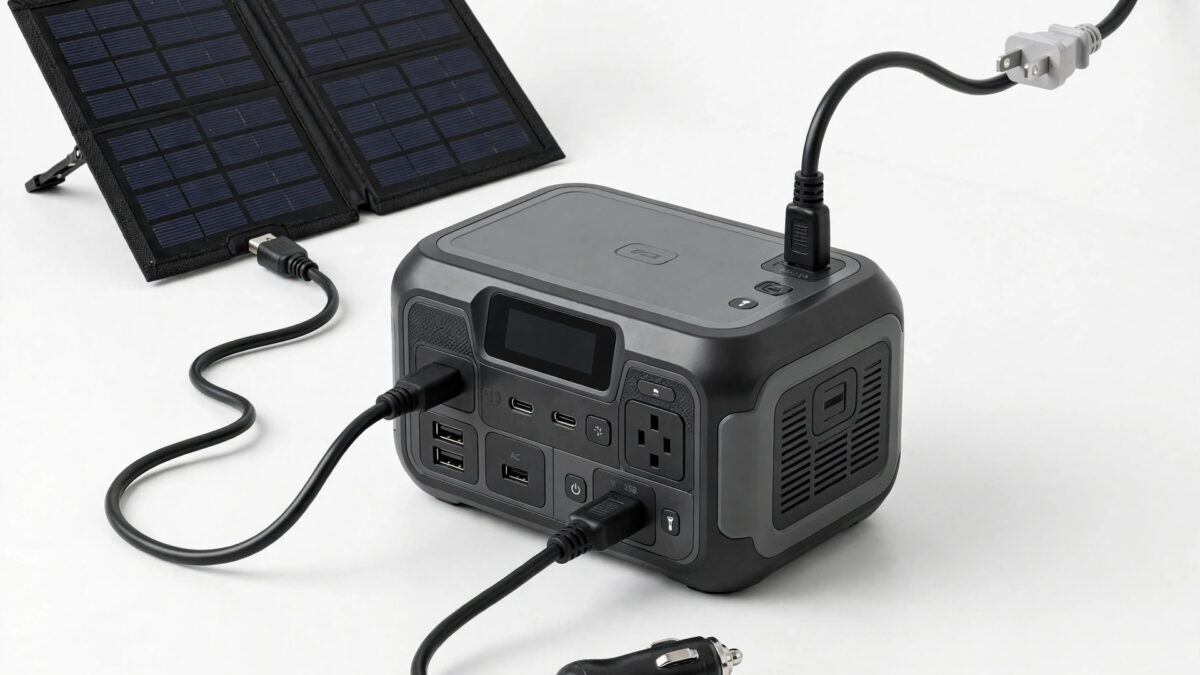
One of the best things about a solar generator is that you are not limited to one way of charging it. Sunshine is the headline method, but wall outlets, your car, and even a gas generator all work — each with very different speeds. Here are the four charging methods explained, how fast each one really is, and the mistakes to avoid.
Method 1: Solar Panels
The signature method: unfold panels, point them at the sun, and let the MPPT charge controller do the rest. It is free, silent, and works anywhere with daylight — which is exactly why solar generators shine for camping, RV life, and extended outages.
Speed: divide battery watt-hours by real-world panel wattage. A 1,000Wh station with 400W of panels (producing ~320W in good sun) recharges in about 3 to 3.5 hours. Expect 70–80 percent of a panel’s rated wattage in real conditions.
What matters:
- Match panels to the input limit. Every station has a maximum solar input (watts and volts). Buying 800W of panels for a 400W-max station wastes money — and exceeding the voltage limit can damage the controller. Check both numbers.
- Angle and orientation. Tilt panels toward the sun; even a 30-degree misalignment costs meaningful output. Reposition them midday if you can.
- Shade is the enemy. A small shadow across one section can disproportionately cut output, especially with panels wired in series.
- Bifacial panels help. Panels like the EcoFlow 220W Bifacial panel capture reflected light on their rear face too — up to 25 percent extra in bright, reflective conditions like snow, sand, or light concrete. Its N-type cells run at about 25 percent efficiency, near the top of the portable panel market.
Solar is the slowest method per dollar of equipment, but the fuel is free forever. For off-grid trips, it is the whole point. Our solar generator bundles guide covers matched station-plus-panel kits that remove the compatibility guesswork.
Method 2: Wall Outlet (AC Charging)
Plug the station into any standard wall outlet, exactly like a giant phone. This is the fastest charging method for nearly every model.
Speed: modern stations accept 1,000 to 1,800W from AC. Flagship units go from empty to 80 percent in 45–60 minutes and to full in about an hour. Even mid-size units typically finish in 1.5 to 2 hours.
When to use it: topping up before a trip, recharging between outage days when the grid flickers back, or anytime speed matters more than off-grid purity. There is no shame in wall-charging a “solar” generator — think of solar as the field method and AC as the home base.
Tip: many units offer a quiet or standard charge mode alongside turbo mode. Turbo is fast but loud (fans) and generates more heat; standard mode is gentler on the battery for routine top-ups.
Method 3: Car 12V Outlet
Plug into your car’s 12V cigarette-lighter socket with the included car charging cable. The station trickle-charges while you drive.
Speed: slow — typically 96 to 120W, limited by the car’s 10A socket fuse. A 1,000Wh station needs 8 to 10 hours of driving for a full charge. It is a top-up method, not a refill method.
Rules:
- Run the engine. Charging with the engine off drains your starter battery, and a dead starter battery in the backcountry is a serious problem.
- It is ideal for road trips. Eight hours on the highway puts meaningful energy into the station before you even reach camp. Many RVers arrive with a full battery without trying.
- Some trucks and EVs offer more. Certain EVs and trucks with high-power 12V or USB-C outputs charge faster — and some large stations can charge from EV charging stations via adapters.
See our best solar generators for RV guide for units that make the most of vehicle charging.
Method 4: Gas Generator (and Dual Charging)
Yes, you can charge a solar generator from a gas generator — and during extended outages, it is a legitimate strategy. Run the gas generator for an hour to slam 1,500W into the station, then shut the noisy thing off and run silent battery power for the next several hours. You get the gas generator’s fast refueling with a fraction of the runtime, noise, and fumes.
Dual charging takes this further: many stations accept AC and solar input simultaneously. A unit pulling 1,500W from the wall plus 400W from panels charges at 1,900W combined — the fastest possible refill. Some flagship models even combine AC with an EV charger or second AC input.
Pass-through charging is related but different: it means using the station’s outputs while it charges from any source. All major brands support it. Just note that heavy loads slow the recharge since incoming power splits between the battery and your devices.
What Affects Charging Speed?
Five variables decide how fast any method refills your unit:
- The station’s input limit. A 1,000Wh unit capped at 800W input cannot charge faster than 800W no matter what you plug in.
- Battery size. Bigger batteries take longer at the same wattage — a 2,000Wh unit needs twice the energy of a 1,000Wh one.
- The charge curve. Lithium batteries charge fastest from 0–80 percent, then slow down for the final stretch to protect the cells. That last 20 percent can take as long as the first 50.
- Temperature. Cold batteries charge slower; extreme cold triggers low-temperature protection that pauses charging entirely.
- Simultaneous loads. Running devices while charging diverts incoming watts.
Charging Mistakes to Avoid
- Exceeding the voltage limit. The single most damaging mistake. Panel voltage (Voc) must stay under the station’s max solar voltage — in series strings, voltages add up. When in doubt, wire panels in parallel.
- Mixing wildly different panels. Panels of different wattages or voltages in one string drag each other down to the weakest panel’s level. Matched panels perform best.
- Charging a frozen battery. Below 0°C (32°F), lithium charging can cause permanent plating damage. Let the unit warm up; quality stations block charging automatically until it is safe.
- Storing at 100% for months. Great for outage readiness, not great for longevity. For storage, 40–60 percent with a quarterly top-up is the sweet spot — see our guide on how long solar generators last.
- Ignoring the app. Most 2026–2027 units let you set charge speed limits, 80-percent caps, and scheduled charging from the app. Five minutes of setup pays off for years.
Can you use a solar generator while it is charging?
Yes — this is called pass-through charging and every major brand supports it. Be aware that running heavy loads while charging slows the recharge, since incoming power splits between your devices and the battery.
How many solar panels do I need to charge my solar generator?
Enough wattage to refill your daily use in 4 to 6 hours of sun: divide daily watt-hours by 5 for a minimum panel wattage. For 1,000Wh of daily consumption, 200W of panels is the floor and 400W is comfortable. Never exceed the station’s voltage or wattage input limits.
Can I mix different brands of solar panels?
Electrically, yes, as long as voltages are compatible and you stay under the station’s input limits. But mismatched panels in one string perform at the weakest panel’s level, so matched panels — or a manufacturer bundle — give better results.
Is it bad to charge a solar generator with a gas generator?
Not at all — it is a smart outage strategy. Run the gas generator briefly at high output to fast-charge the station, then shut it off and enjoy silent battery power. Use the gas generator’s AC outlet just like a wall outlet.
Why is my solar generator charging so slowly?
The usual culprits: partial shade on panels, poor panel angle, the battery being in its slow final 20 percent of the charge curve, cold temperatures, or devices drawing power simultaneously. Check panel positioning first — it fixes most slow-charging complaints.
Our verdict
You have four ways to charge a solar generator: solar panels for free off-grid refills, wall outlets for the fastest top-up, your car for road-trip trickle charging, and a gas generator or dual input for maximum speed. Match the method to the moment — and whatever you choose, respect the voltage limits and keep the battery cool. For more on keeping your unit healthy for a decade or more, read how long solar generators last.

Related Guides
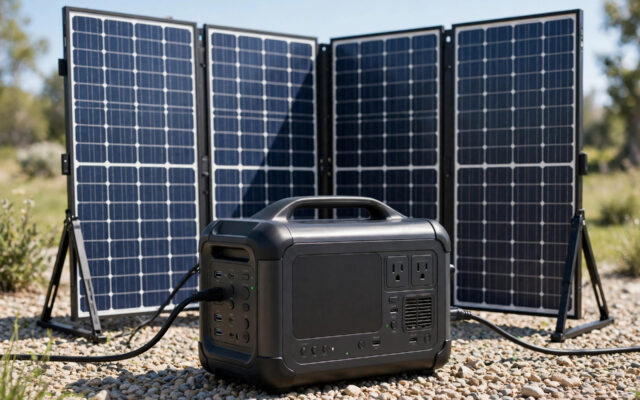
Best Solar Generator Bundles with Panels for 2027
Save money with the best solar generator bundles of 2027 — power station plus solar panel kits ready to use out of the box.

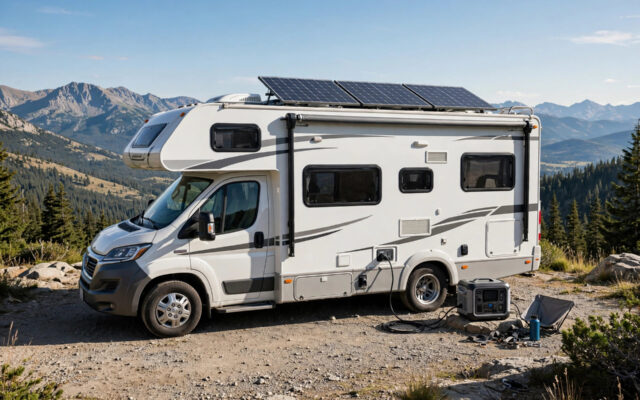
Best Solar Generators for RVs in 2027
Power your RV adventures with the best solar generators for RVs in 2027, featuring TT-30 outlets and fast solar charging.

Best Solar Generators for Camping in 2027
The best solar generators for camping in 2027: lightweight, quiet power stations that keep your gear charged off-grid.