


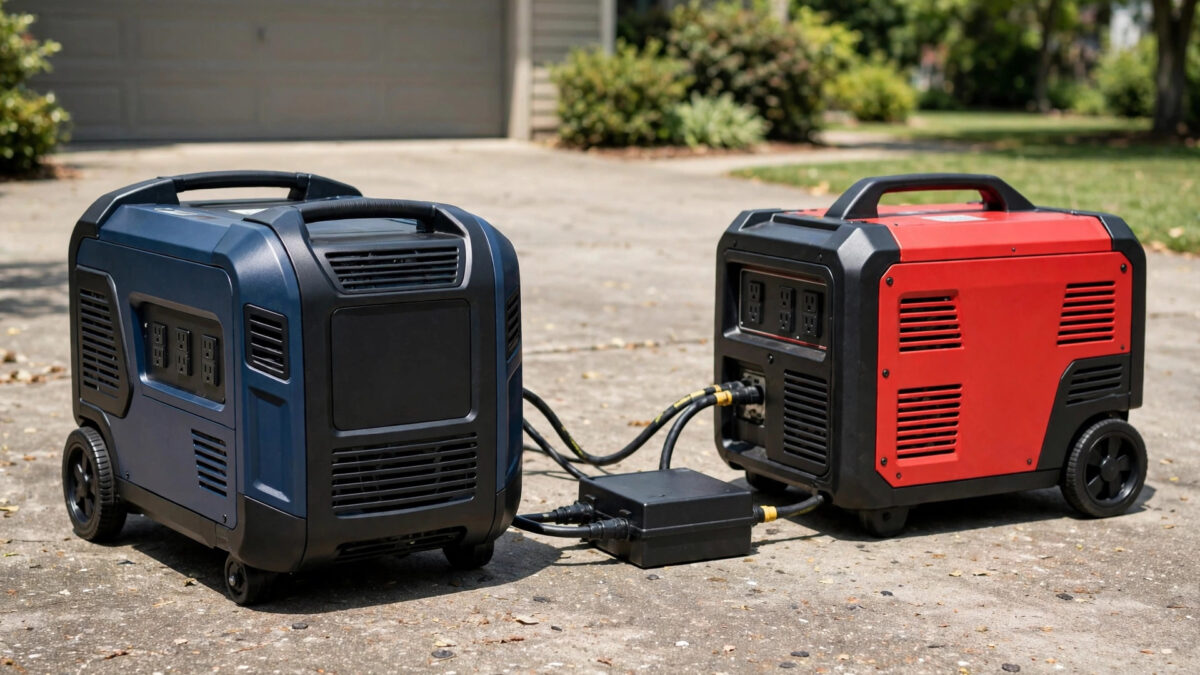
The short answer: yes, you can physically parallel two different inverter generators, but no manufacturer officially approves it. Honda’s own documentation warns that connecting two generators that are not the same model can cause a low voltage output, which can damage your tools and appliances. That said, plenty of people do it, and I have run a mismatched pair myself on a job site. It worked — with limits I will explain below.
Paralleling means linking two generators so they share one load, effectively doubling (or nearly doubling) your available power. Two 2,000-watt inverters become roughly a 3,600 to 4,000-watt power source. It is popular with RVers and storm-prep folks who started with one small unit and do not want to buy a big one. Before you grab a parallel cable and a buddy’s generator, you need to understand what has to match — and what goes wrong when it does not.
Key takeaways
- Only inverter generators can be paralleled. Conventional open-frame generators cannot sync with each other — do not try.
- Every manufacturer (Honda, Champion, Westinghouse, Predator) only supports paralleling two identical models with their own parallel kit.
- Mixing brands or wattages is physically possible if both units output 120V at 60Hz, but the smaller unit caps the pair, sync can drop out, and you lose warranty coverage.
- Never connect or disconnect parallel cables while a generator is running — that is an instant warranty-killer and can fry electronics.
What paralleling actually requires
For two generators to share a load, their electrical output has to line up in three ways: identical voltage (120V in North America), identical frequency (60Hz), and matched phase angle — the two sine waves have to rise and fall together. If they are out of phase, the units fight each other instead of sharing the load.
This is why only inverter generators qualify. A conventional generator’s output frequency is tied to engine speed, which wanders. An inverter generator’s electronics synthesize a clean sine wave regardless of small engine-speed changes, and the inverter constantly monitors and adjusts. When you link two parallel-ready inverters, one unit effectively reads the other’s waveform and clocks itself to it. I have watched the process on an oscilloscope at a buddy’s shop — the second unit hunts for about a second, then locks in. It is genuinely impressive, and it is also exactly why you cannot do this with two old-school generators.
The three pairing scenarios
| Pairing | Works? | What happens |
|---|---|---|
| Two identical models (e.g., two Champion 2500-watt inverters) | Yes — officially supported | Clean sync, full combined wattage, warranty intact, use the brand’s parallel kit |
| Same brand, different wattages (e.g., a 2200W and a 3500W Honda) | Sometimes — not supported | They sync, but the smaller unit overloads first and the connection can drop; total output is less than the simple sum |
| Different brands (e.g., Honda + WEN, Predator + Firman) | Sometimes — never supported | Can work if both are 120V/60Hz inverter units; quality and sync electronics differ, results vary unit to unit |
| Inverter + conventional generator | No | Conventional unit cannot sync; do not attempt |
| Two 120/240V split-phase units | No (via parallel ports) | Consumer parallel kits combine 120V outputs only; paralleling 240V needs engineered equipment, not a cable kit |
Why the smaller generator runs the show
Here is the part most YouTube videos gloss over. When two mismatched inverters sync, the inverter in the smaller unit is doing the same phase-locking work, but it has less headroom. The pair splits the load roughly proportionally, and the moment the smaller unit hits its limit, the whole connection can drop out — the parallel link trips and both units go into protection.
I learned this the hard way at a tailgate years ago. We paired a 2,000-watt unit with a 3,500-watt unit to run two induction cookers. The math said 5,500 watts of capacity. In practice, the pair held about 4,000 watts before the smaller unit’s overload light came on and the link dropped. The two cookers went dark mid-breakfast. We ended up moving one cooker to the bigger unit alone, which ran it happily by itself. That experience matches what experienced owners report: a mismatched pair gives you meaningfully less than the sticker sum, and the smaller unit is always the weak link.
Rule of thumb I use now: a mismatched pair reliably delivers about 80% of the combined running wattage, and you should plan loads so the smaller unit never exceeds its own rating.
The brand-compatibility question, honestly
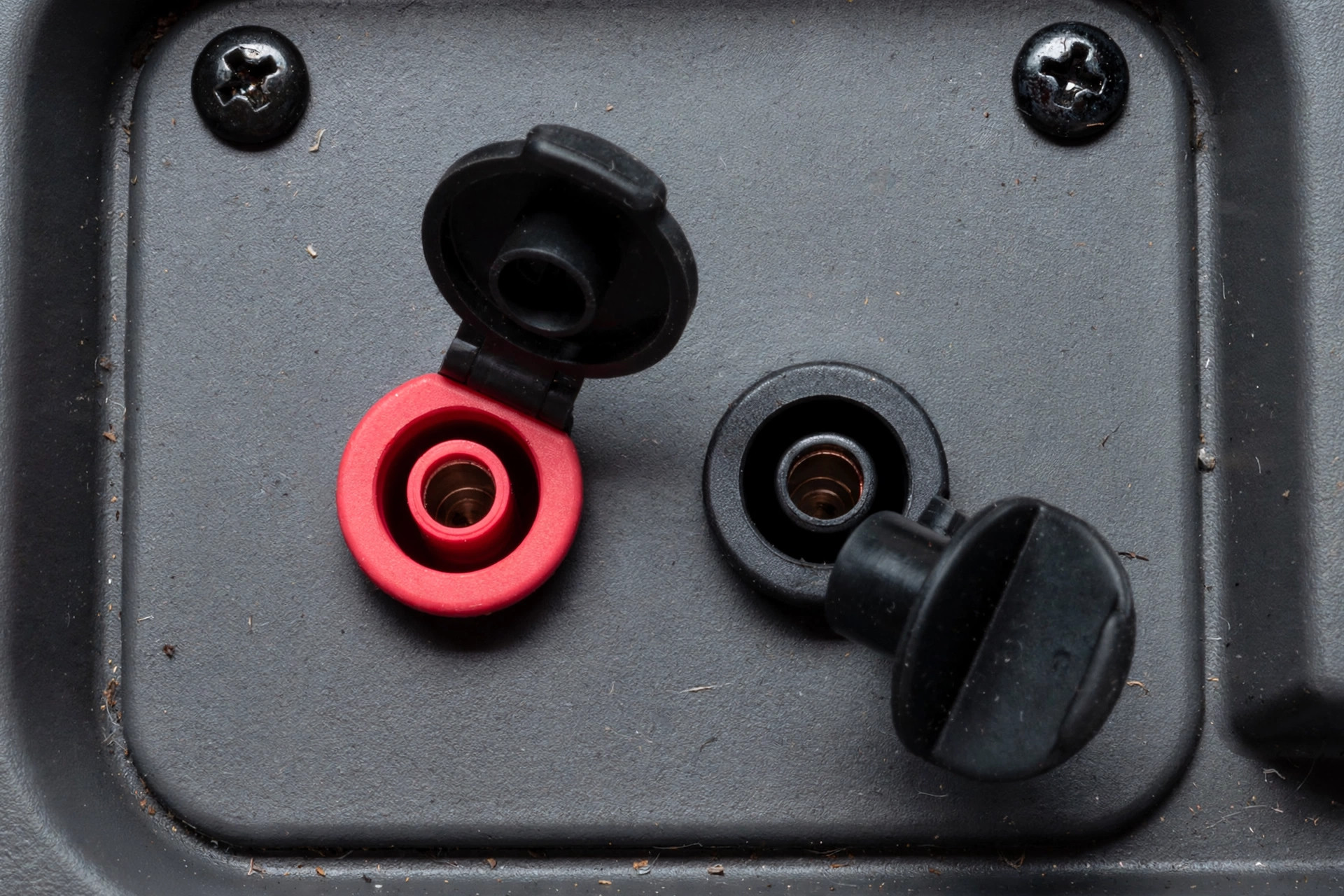
Mechanically, what connects the two units is just the parallel kit — a pair of cables between the parallel terminals, usually landing in a box with a 30-amp or 50-amp RV-style outlet. The red/black terminals on most inverter generators are wired straight into the 120V outlet circuit; the ports are a convenience, not magic. So physically, a cable kit fits any two generators with those terminals.
The real question is whether the syncing electronics play nicely. Honda builds its parallel system to talk to Honda. Champion’s 50-amp RV Ready Parallel Kit is designed for Champion inverters 2800 watts and up. When you cross brands, you are relying on the fact that both inverters’ phase-lock loops are well-behaved enough to lock onto a standard 120V/60Hz waveform. Often they are. Sometimes they are not, and there is no spec sheet that will tell you in advance.
Owner reports I have seen span the whole range: a Honda EU2200i paired with a Predator 3500 holding steady for an RV air conditioner all weekend, and also reports of pairs that sync fine at idle but drop the moment a compressor kicks in. Compressor startup surge is the classic stress test. If you are going to try a mixed pair, test it with your actual heaviest loads before you depend on it — not during the outage.
If you are going to do it anyway, do it right
I am not going to pretend nobody does this. If you have a mismatched pair and want to try, here is the procedure that minimizes risk:
- Confirm both are inverter generators. Check the manual for the word “inverter” and parallel ports. If either is a conventional open-frame unit, stop.
- Confirm both are 120V/60Hz. Do not mix a 120V unit with a 240V-only unit.
- Start both generators and let them warm up for a couple of minutes before connecting anything.
- With both units OFF, connect the parallel cables to the parallel terminals. Never connect or disconnect cables while a unit is running — manufacturers are explicit that this causes permanent damage not covered under warranty.
- Start the larger unit first, then the smaller. Let them sync (give it 30-60 seconds), then apply loads gradually.
- Size your load to the pair conservatively. Keep the total at about 80% of combined running watts, and make sure no single load profile can push the smaller unit past its rating when a motor surges.
- Watch the overload lights. If the smaller unit’s overload trips, the link will drop. Back off the load immediately.
The smarter alternatives
If you are reading this because you already own two different generators, the steps above are your honest path. But if you are shopping, the math almost always favors matched pairs. Two identical 2,500-watt inverters with the brand’s parallel kit give you a clean 5,000 watts, full warranty, one manual, and interchangeable parts. That is why I recommend matched pairs in our step-by-step guide to paralleling two inverter generators.
The other alternative: sell the smaller unit and buy the single larger generator you actually need. One 4,500-watt inverter is simpler than a mixed pair — one fuel tank, one oil change, one pull cord, no syncing drama. Before deciding, figure out exactly how many watts your loads need with our generator size calculator — many people discover they need less than they think. Paralleling shines when you want flexibility (one unit for camping, two for home backup), not when you just want more watts. If raw watts are the goal, a single bigger unit wins on simplicity every time.
Can you parallel a Honda generator with a Predator?
Can you parallel two different wattage generators?
Can you parallel a 120V and a 240V generator?
Do parallel kits work across brands?
Is it better to buy a second matching generator or a bigger one?
Bottom line for 2027: mismatched paralleling is a real thing that real people do successfully — I have done it myself. But it is an off-label use. Keep the smaller unit as the limiting factor, test before the storm, and if you are buying new, buy a matched pair or a single bigger unit instead of planning a mix.
How we researched this: Manufacturer parallel-kit manuals and warranty statements (Champion, Honda), inverter synchronization fundamentals, and owner reports from generator forums — plus hands-on experience running a mismatched pair.

Related Guides
Why Does My Generator Backfire? Causes and Fixes (2027)
Why does your generator backfire? An exhaust bang means unburned fuel in the muffler; a pop through the carb means lean mixture or valve trouble. Here are the fixes.

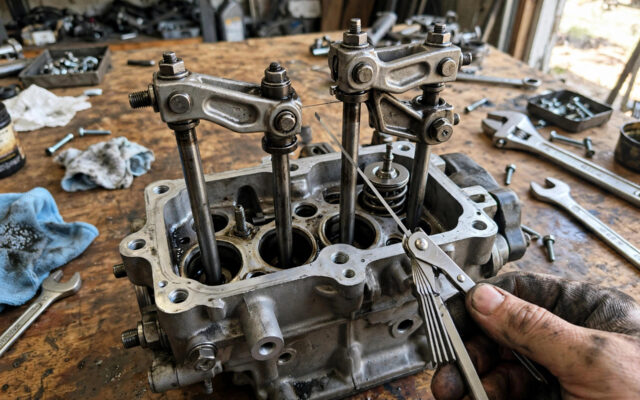
Generator Valve Adjustment: How to Set Valve Lash (2027 Guide)
Generator valve adjustment: 0.006" intake, 0.008" exhaust on Honda GX engines. Tools, TDC procedure, and symptoms of bad valve lash explained.
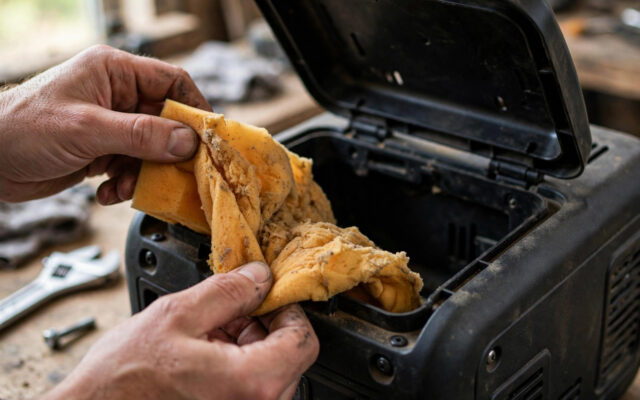
How to Clean and Replace a Generator Air Filter (2027 Guide)
How to clean a generator air filter: wash foam filters in soapy water and re-oil; tap out paper filters, never wash them. Full steps inside.