


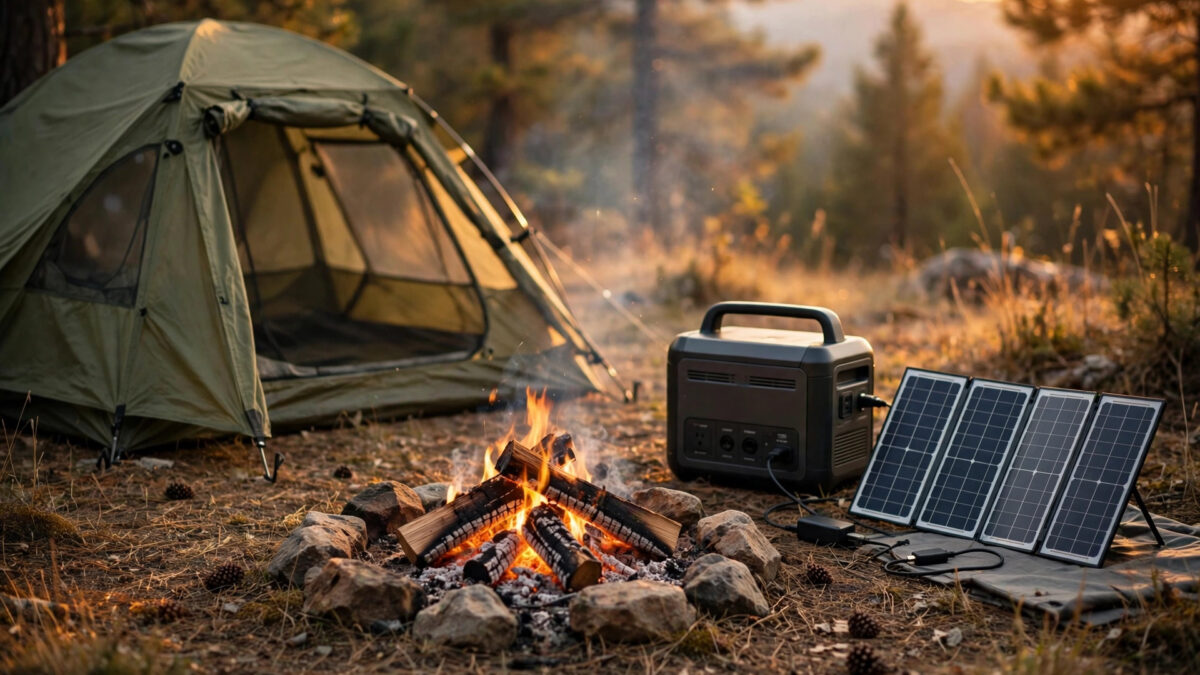
Camping in 2027 does not mean roughing it. A solar generator keeps the cooler cold, the lights on, the coffee hot, and every device charged — silently, with no fumes and no 6 a.m. fuel runs. But camping has its own demands: weight matters, size matters, and the station has to survive dust, bumps, and weather.
We picked the five best solar generators for camping based on the camping-specific criteria: portability first, then usable capacity, output for camp appliances, solar recharge speed, and durability. From featherweight budget options to a 1kWh do-everything station, here is what to bring on your next trip.
One note on scope: this guide covers car camping, RV-adjacent camping, and basecamps — scenarios where you can carry 13-27 lbs of power station. Ultralight backpackers should stick to small power banks; even the lightest station here is overkill when every ounce counts.
Our Top Camping Picks for 2027
- Best overall: Jackery Explorer 1000 v2 — 1070Wh, 1500W, 23.8 lbs
- Most compact: BLUETTI Elite 100 V2 — 1024Wh, 1800W, 25 lbs
- Best value: EcoFlow DELTA 2 — 1024Wh, 1800W, expandable
- Budget light use: Jackery Explorer 500 — 518Wh, 500W, 13.3 lbs
- Fast recharge: EcoFlow DELTA 3 Plus — 1024Wh, 1800W, 56-min full charge
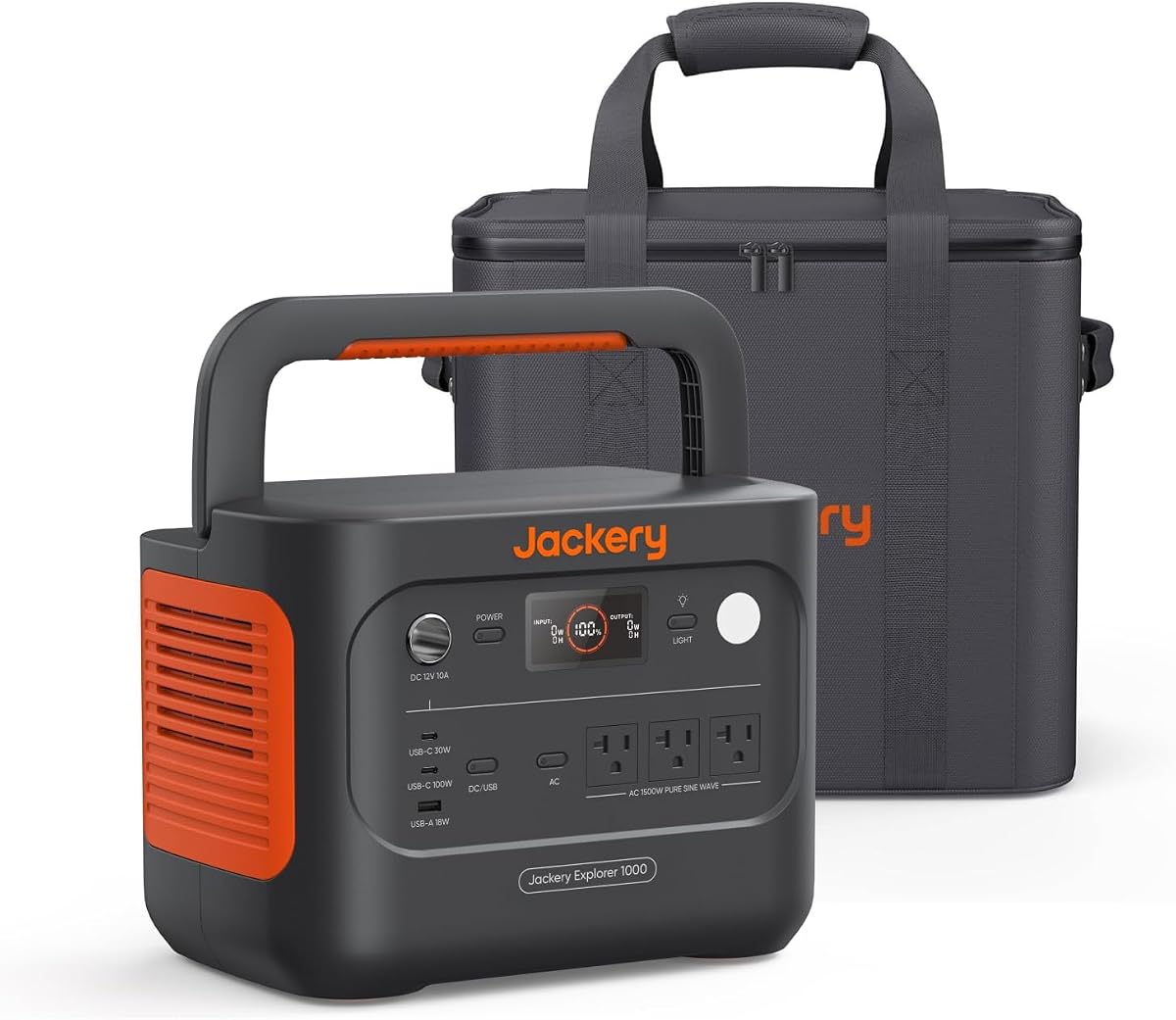
Best overall
Jackery Explorer 1000 v2
- 1070Wh capacity / 1500W output (3000W surge)
- LiFePO4 battery, 4000+ cycles
- 1.7-hour standard recharge (1h emergency mode)
- 23.8 lbs
- Capacity: 1070Wh
- Output: 1500W (3000W surge)
- Battery: LiFePO4, 4000+ cycles
- Recharge: 1.7h standard, 1h emergency mode
- Weight: 23.8 lbs
As an Amazon Associate, we earn from qualifying purchases.
Jackery Explorer 1000 v2 Review — The Camp Powerhouse
For car camping, the Jackery Explorer 1000 v2 is the one-station answer. Its 1070Wh runs a 12V camping fridge for 2-3 days, powers an electric kettle or induction cooktop for camp cooking, and still has room for lights, phones, and a laptop. The 1500W inverter means you do not have to think about what you plug in — it handles camp cooking appliances that trip smaller stations.
At 23.8 lbs with a fold-flat handle, it is easy to carry from car to campsite with one hand, and the compact footprint leaves trunk space for actual gear. The LiFePO4 battery shrugs off the partial charge cycles of solar camping — top up from panels by day, run the fridge by night, repeat for years. Jackery’s SolarSaga panels pair seamlessly if you want a matched set.
It is the priciest camping pick here, but it replaces the most gear: cooler ice runs, separate battery packs, and campsite power anxiety. For weekend warriors and week-long campers alike, it is the best camping solar generator of 2027.
Pros
- Runs camp cooking appliances plus a fridge for days
- Light and easy to carry at 23.8 lbs
- LiFePO4 battery built for years of solar cycling
- Pairs perfectly with Jackery solar panels
Cons
- Highest price among the camping picks
- Overkill for tent campers who only charge devices
- Not expandable
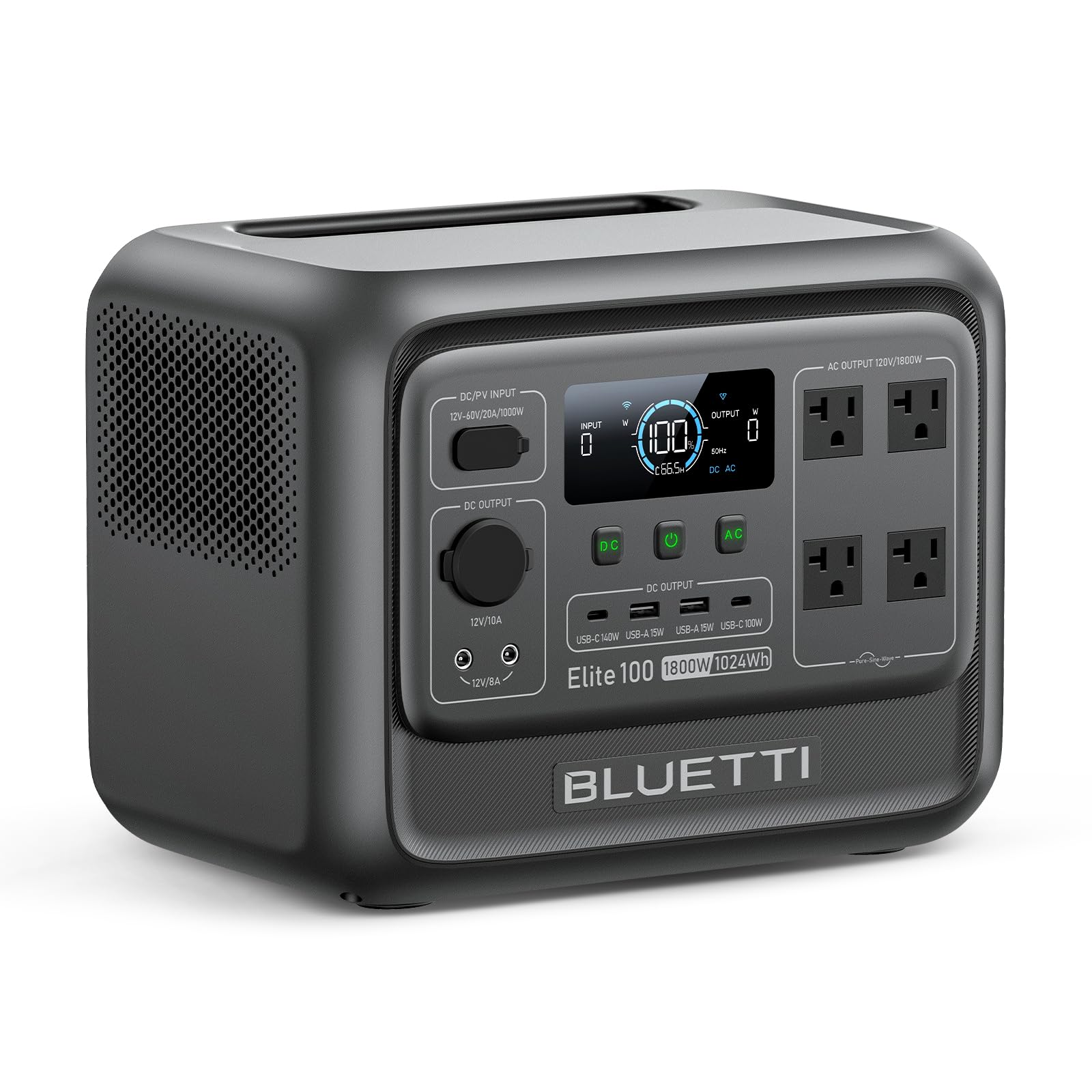
Most compact
BLUETTI Elite 100 V2
- 1024Wh capacity / 1800W output (3600W surge)
- LiFePO4 battery, 4000+ cycles
- 45 minutes to 80% charge
- 25 lbs
- Capacity: 1024Wh
- Output: 1800W (3600W surge)
- Battery: LiFePO4, 4000+ cycles
- Recharge: 45 minutes to 80%
- Weight: 25 lbs
As an Amazon Associate, we earn from qualifying purchases.
BLUETTI Elite 100 V2 Review — Big Camp Power, Small Footprint
Space is the ultimate camping currency, and the BLUETTI Elite 100 V2 spends it wisely. Despite a compact 25-lb chassis, it delivers 1800W of continuous output — more than the Jackery above — so electric griddles, kettles, and even a small microwave are all on the menu. The 3600W surge rating is the strongest in the 1kWh class, which matters for compressor fridges that spike on startup.
The 45-minute sprint to 80% charge is a camper’s dream: plug in at a coffee stop on the way home and arrive with a nearly full battery. Its small footprint fits in crowded trunks, rooftop cargo boxes, and small RV compartments where bigger stations will not go.
Fewer outlets than some rivals means packing a small power strip for big groups, but for couples and small families who pack light and cook electric, the Elite 100 V2 is the most power-dense camping option available.
Pros
- 1800W output in the smallest 1kWh chassis
- Strongest surge rating (3600W) for compressor fridges
- 45-minute fast charging between trips
- Fits tight trunks and RV compartments
Cons
- Fewer built-in outlets than larger models
- 1024Wh limits multi-day heavy cooking
- Not expandable
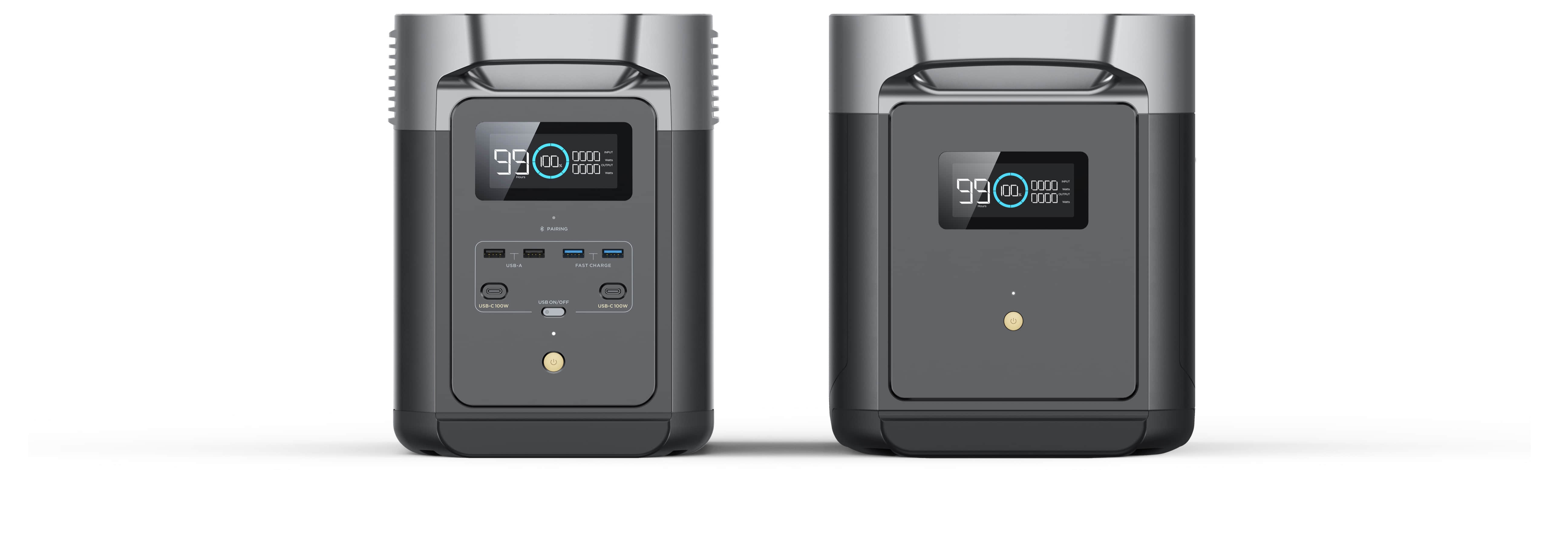
Best value
EcoFlow DELTA 2
- 1024Wh capacity / 1800W output (2700W surge)
- LiFePO4 battery, 3000+ cycles, expandable
- 0-80% recharge in 50 minutes
- 27 lbs
- Capacity: 1024Wh
- Output: 1800W (2700W surge)
- Battery: LiFePO4, 3000+ cycles
- Recharge: 0-80% in 50 minutes
- Weight: 27 lbs
As an Amazon Associate, we earn from qualifying purchases.
EcoFlow DELTA 2 Review — The Value Camper’s Workhorse
The EcoFlow DELTA 2 is the camping pick for buyers who want 1800W of cooking power without the flagship price. It runs everything the pricier 1kWh stations run — induction cooktops, electric kettles, fridges, fans, lights — and its frequent discounts make it the best watts-per-dollar in the camping category.
The expandability is a unique camping advantage: start with 1024Wh for weekend trips, then add an extra battery for week-long basecamps or overlanding without buying a second station. The 50-minute fast charge to 80% means quick turnarounds between adventures, and the 500W solar input pairs well with a 400W panel setup for true off-grid refills.
At 27 lbs it is a touch heavier than the newest models, and the design shows its age. But proven durability across countless camping seasons and a price that leaves budget for panels make the DELTA 2 the smart value choice.
Pros
- Best price-to-performance in the camping category
- Expandable for longer trips and overlanding
- 1800W output handles electric camp cooking
- Proven durability over many camping seasons
Cons
- Slightly heavier than newer rivals at 27 lbs
- Older design and display
- 2700W surge trails the newest models
Budget light use
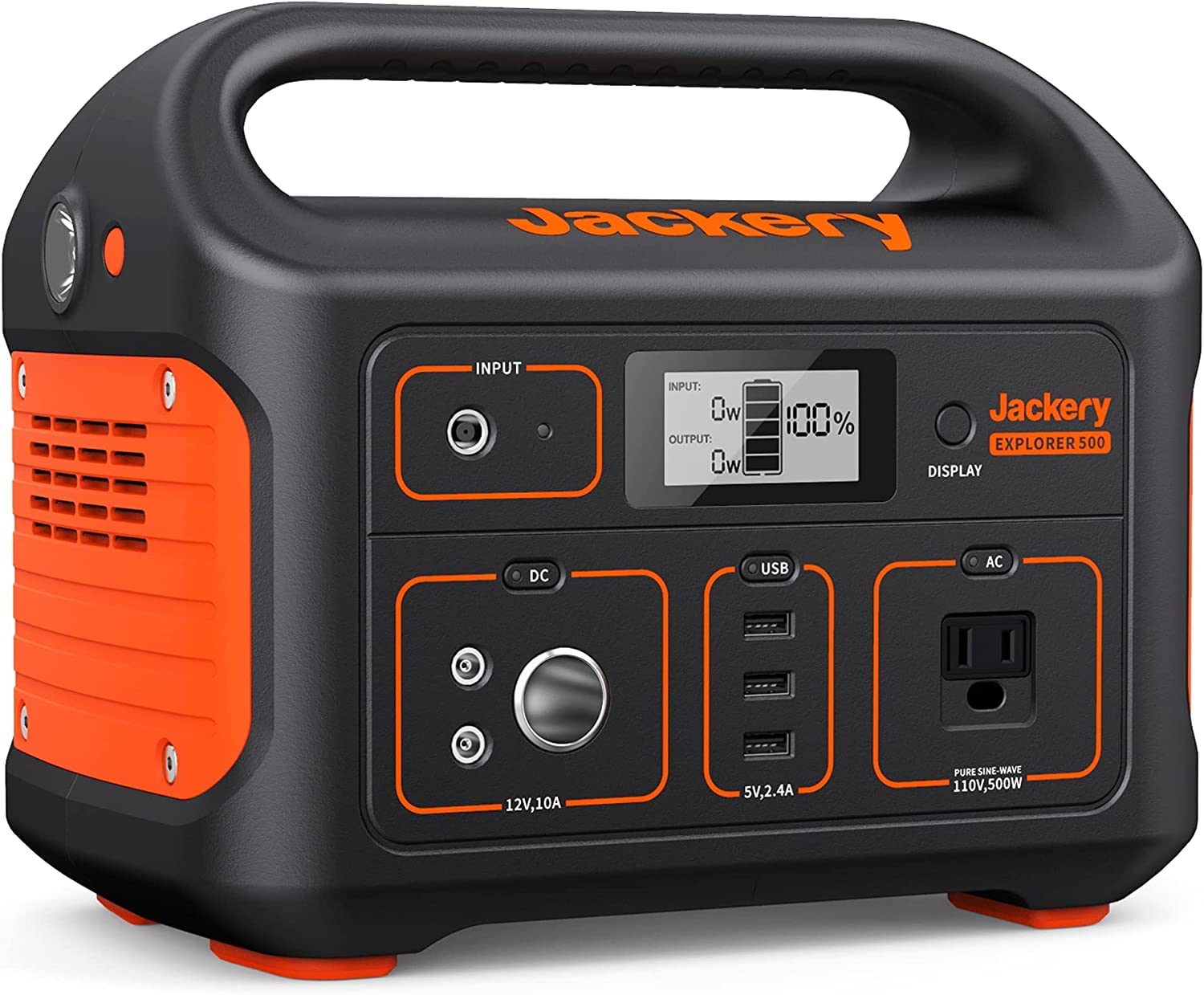
Jackery Explorer 500
- 518Wh capacity / 500W output (1000W peak)
- Lithium-ion battery (not LiFePO4)
- About 7.5-hour recharge
- 13.3 lbs
- Capacity: 518Wh
- Output: 500W (1000W peak)
- Battery: Lithium-ion (not LiFePO4)
- Recharge: About 7.5 hours
- Weight: 13.3 lbs
As an Amazon Associate, we earn from qualifying purchases.
Jackery Explorer 500 Review — The Lightweight Budget Camper
Not every camper needs a kilowatt. If your camping power needs are phones, cameras, a laptop, LED string lights, and a small fan, the Jackery Explorer 500 delivers all of it at 13.3 lbs and a fraction of the price. It is the easiest station here to toss in a daypack or carry to a tent site.
The honest disclosure: this is the only pick on this list with older lithium-ion (NMC) chemistry instead of LiFePO4, rated for about 800 cycles versus 3000+. For a few weekend trips a year, that is years of service. For full-time van life, it is not. The 500W output also rules out cooking appliances — this is a device-charging station, not a kitchen replacement — and the 7.5-hour recharge needs an overnight plug, not a lunch stop.
Buy it for light, occasional camping where weight and price matter most. If you camp monthly or want to cook electric, the LiFePO4 models above are worth the step up.
Pros
- Featherweight 13.3 lbs — easiest to carry
- Very affordable entry into portable power
- Handles all device charging with room to spare
- Simple, proven, reliable
Cons
- Lithium-ion battery: only ~800 cycles (not LiFePO4)
- 500W output cannot run cooking appliances
- Slow 7.5-hour recharge
Fast recharge
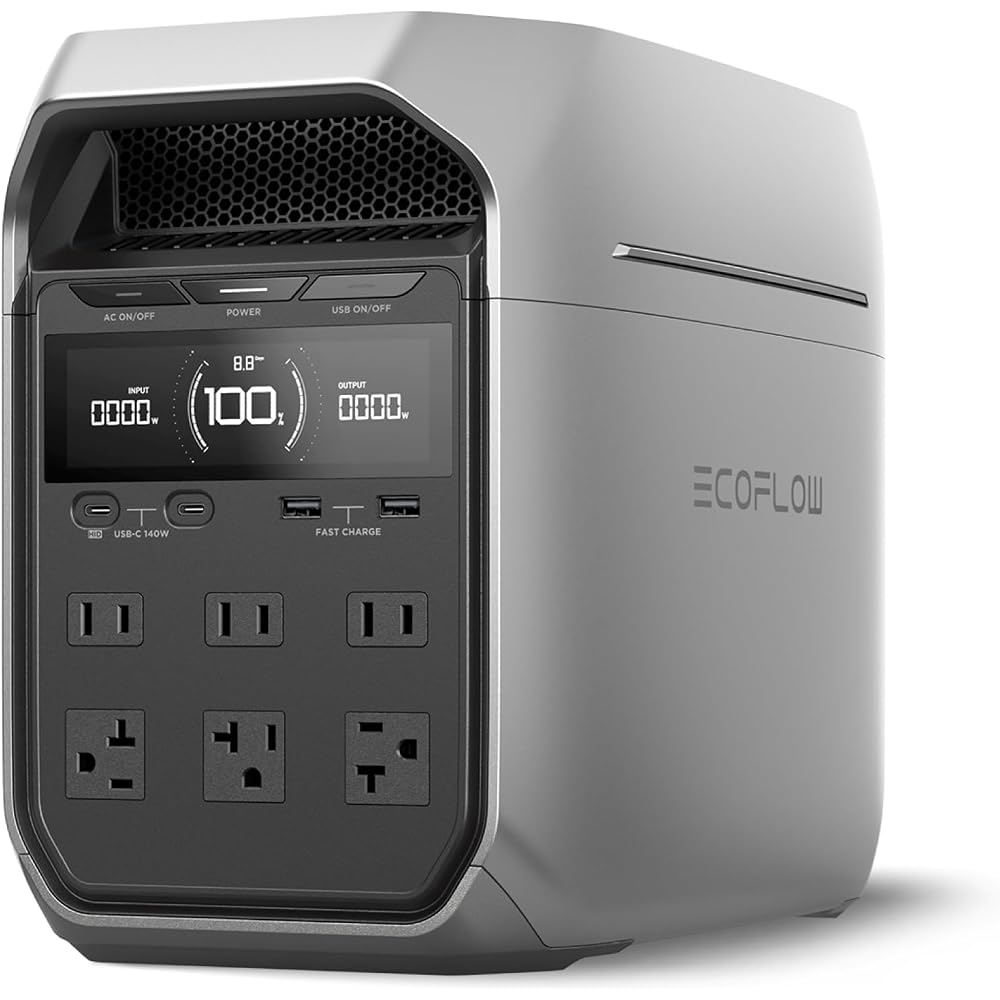
EcoFlow DELTA 3 Plus
- 1024Wh capacity / 1800W output (3600W surge)
- LiFePO4 battery
- Full 0-100% recharge in just 56 minutes
- About 27 lbs
- Capacity: 1024Wh
- Output: 1800W (3600W surge)
- Battery: LiFePO4
- Recharge: 56 minutes (full charge)
- Weight: About 27 lbs
As an Amazon Associate, we earn from qualifying purchases.
EcoFlow DELTA 3 Plus Review — For Campers Who Hate Waiting
The DELTA 3 Plus is the camping pick for back-to-back trips and impatient planners. Its 56-minute full recharge means you can drain it all weekend, plug in while unpacking the car, and head out again the next morning with a full battery. No other camping station turns around this fast.
On the campsite itself, it is a full-capability 1kWh station: 1800W for electric cooking, 3600W surge for compressor fridges, and enough capacity for 2-3 days of fridge-plus-devices use. Pair it with 400W of solar panels and it refills itself in about 3 hours of good sun — a genuinely self-sustaining camp setup.
The fans are audible when fast-charging, so do the 56-minute sprint before quiet hours. Otherwise, this is the most capable fast-turnaround camping station of 2027.
Pros
- 56-minute full recharge — fastest turnaround
- 1800W output with 3600W surge for camp cooking and fridges
- Excellent solar pairing for off-grid refills
- Strong value for the performance
Cons
- Fans audible during fast charging
- About 27 lbs — not the lightest
- No expansion battery option
Camping Power Budgets: Three Sample Setups
Weekend car camper (devices + lights): Phones, headlamps, a laptop, and string lights use roughly 200-300Wh per day. The Jackery Explorer 500 covers a full weekend with room to spare, and a 100W panel keeps it topped up indefinitely.
Family basecamp (fridge + cooking): A 12V fridge (about 800Wh/day in summer), electric kettle and induction cooking (300-500Wh/day), plus devices and lights (200Wh) totals around 1500Wh daily. A 1kWh station with 200-400W of solar panels handles this comfortably — the panels refill daytime use while the battery covers the night.
Overland week-long expedition: Fridge, Starlink or comms gear, lighting, camera batteries, and occasional cooking push 1500-2500Wh daily. Here you want a 1kWh station with 400W of panels minimum, or step up to an expandable station like the DELTA 2 with an extra battery. Redundancy matters when the nearest town is a day away.
The golden rule of camp power
Size your battery for the night and your panels for the day. The battery must cover everything between sunset and sunrise with 20% headroom; the panels must replace a full day’s consumption in 4-6 hours of sun. When both sides of that equation balance, your camp runs forever.
Camping Solar Generator Buying Guide
How much capacity does camping actually need?
A 12V camping fridge draws 30-60W, so 1000Wh runs it for 2-3 days. Add phones, lights, and a laptop and you are still comfortable at 1kWh for a long weekend. Electric cooking changes the math: an induction cooktop at 1500W drains 1kWh in under an hour of cooking, so plan meals accordingly or step up in capacity.
Weight and size: the trunk test
Measure your trunk or cargo area before buying. Under 25 lbs is the sweet spot for car camping — easy to carry to the site with one hand. Over 50 lbs belongs in RVs and overlanding rigs, not tent camping. Fold-flat handles and compact footprints matter more than spec sheets suggest.
Solar charging on the move
A 200-400W portable panel setup refills a 1kWh station in 3-6 hours of good sun — enough to run a fridge indefinitely in sunny weather. Check the station’s maximum solar input and voltage range before buying panels; mismatched panels waste money. Bifacial panels add 10-20% yield when set up over reflective ground.
Durability and weather
Camping means dust, bumps, and the occasional rain scare. Look for solid build quality, a sturdy handle, and protected ports. No portable station is fully waterproof, so plan to shelter it — but good build quality survives years of trunk life.
Noise: the silent advantage
Unlike gas generators, all of these run silently — the only sound is cooling fans under heavy load. That means no quiet-hour violations, no annoyed neighbors, and no fumes around the tent. It is the single biggest quality-of-life upgrade over gas for camping.
Camp Power Etiquette: Leave No Trace (and No Noise)
Solar generators make you the best neighbor in the campground — but only if you use them thoughtfully. Panel placement: set up panels where they catch sun without blocking trails or neighboring sites. Never string cables across walkways; route them along your site’s edge and secure them so nobody trips at night.
Light discipline: your station can run string lights all night, but in dark-sky campgrounds, keep lighting modest and pointed down. Fellow campers came for the stars. Charging courtesy: if you are sharing a group site, offer a USB port to neighbors — camp goodwill is worth more than a few watt-hours.
Pack it in, pack it out applies to power gear too: bring all cables, adapters, and panel stakes home, and wipe down panels before packing so grit does not scratch the cells. A well-kept station and panel set will power a decade of trips.
Frequently Asked Questions
What is the best solar generator for camping in 2027?
The Jackery Explorer 1000 v2 is our best overall camping pick — 1070Wh, 1500W output, and just 23.8 lbs. For tighter spaces, the BLUETTI Elite 100 V2 packs 1800W into 25 lbs, and the Jackery Explorer 500 is the best budget option for light device charging.
What size solar generator do I need for camping?
For device charging and lights: 500Wh is enough. For a 12V fridge plus devices over a long weekend: 1000Wh. For electric cooking or week-long trips: 1000Wh with solar panels, or 2000Wh. Most car campers are happiest at 1kWh.
Can a solar generator run a camping fridge?
Yes — easily. A 12V camping fridge draws 30-60W, so a 1000Wh station runs one for 2-3 days. Add a 200W solar panel and the setup runs indefinitely in sunny weather.
How long does it take to charge a solar generator with solar panels?
Divide the station’s capacity by your panels’ real-world output. A 1kWh station with 400W of panels recharges in about 3 hours of strong sun; with 200W of panels, about 6 hours. Clouds, angle, and heat all reduce real output.
Are solar generators allowed in campgrounds?
Yes — unlike gas generators, which many campgrounds restrict to certain hours or ban entirely, silent battery stations are welcome everywhere. They produce no fumes and virtually no noise.
Can I leave a solar generator in a hot car?
Avoid it when possible. Extreme heat degrades lithium batteries faster and can trigger thermal protection shutdowns. Park in shade, crack windows, or bring the station into the tent — LiFePO4 models handle heat better than older lithium-ion.
Our verdict
The Jackery Explorer 1000 v2 is the best solar generator for camping in 2027 — enough power for fridges and electric cooking, light enough to carry one-handed, and a battery built for years of trips. Pack light? The BLUETTI Elite 100 V2 squeezes 1800W into 25 lbs. On a budget for device charging only? The Jackery Explorer 500 at 13.3 lbs is all you need. Whichever you choose, add a 200W solar panel and your campsite becomes energy-independent.

Related Guides
Best Solar Generator Bundles with Panels for 2027
Save money with the best solar generator bundles of 2027 — power station plus solar panel kits ready to use out of the box.

Best Solar Generators for RVs in 2027
Power your RV adventures with the best solar generators for RVs in 2027, featuring TT-30 outlets and fast solar charging.
Best Portable Power Stations for 2027
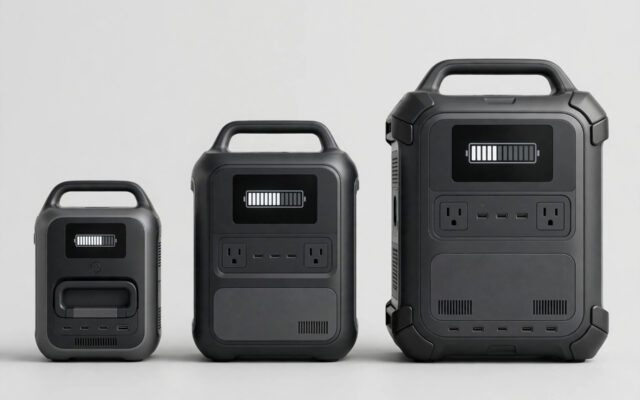
Compare the best portable power stations of 2027 by capacity, output, charging speed, and battery life to find your perfect match.