


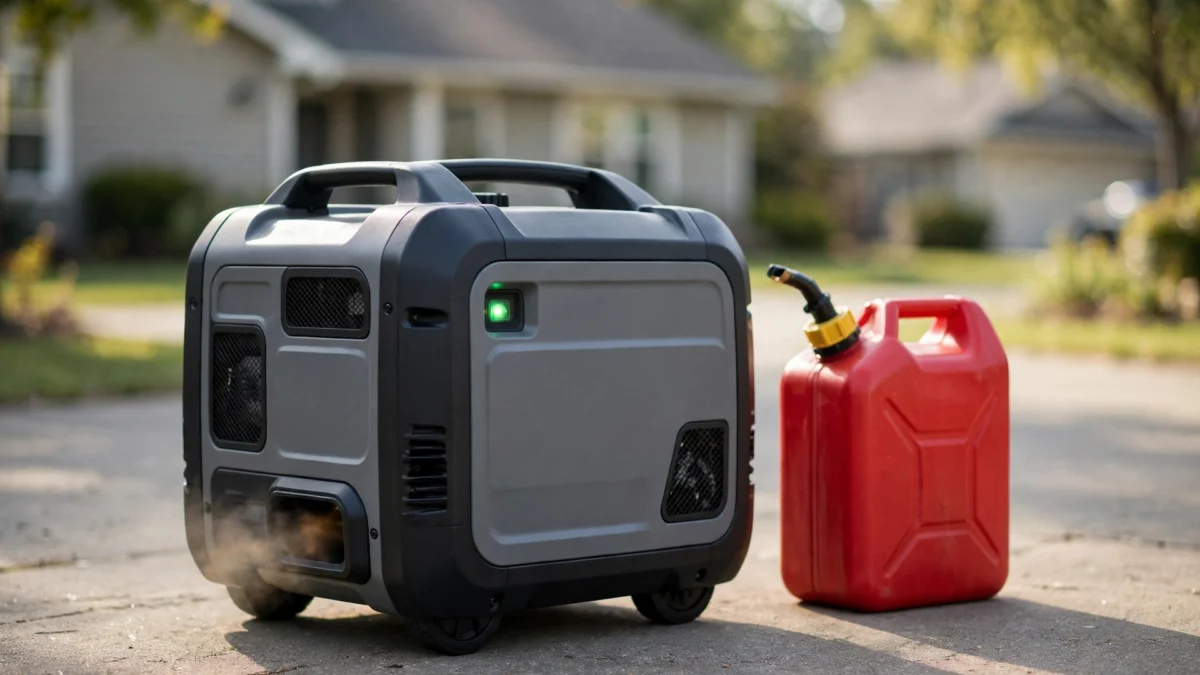
A typical portable gasoline generator makes 4 to 7 kilowatt-hours (kWh) of electricity per gallon of gas. That’s the short answer. A small inverter generator running a healthy load lands around 6 kWh per gallon, a big open-frame unit loafing at 25% load might only manage 4, and a large diesel can stretch past 13.
I’ve logged enough runtime on my own units to know the number on the spec sheet is only half the story. How hard the generator is working matters more than the brand on the side. Let me walk you through the real numbers, the simple math behind them, and how to figure out exactly what your generator delivers — so you can plan fuel for an outage instead of guessing.
Key takeaways
- Small gasoline portables: 4–7 kWh per gallon, depending on load.
- A gallon of gasoline holds about 33.4 kWh of raw energy — a generator only converts ~15–22% of it into electricity.
- Load is everything: most generators are most efficient at 50–80% of rated output.
- Diesel beats gasoline per gallon (10–14 kWh/gal on larger units); propane trails gasoline.
- Measure your own unit with a plug-in watt meter and a fuel log — it takes one tank to learn your number.
The Short Answer, With Real Numbers
Here are figures I’ve verified from spec sheets, published test data, and owner-reported fuel logs. Treat them as realistic ranges, not laboratory promises:
| Generator type | Typical load | kWh per gallon |
|---|---|---|
| Small inverter (2,000W class, e.g. Honda EU2200i) | 50–80% | 5.5–6.5 |
| Mid-size inverter (3,000–3,500W) | 50–75% | 4.5–6.5 |
| Open-frame portable (7,500W) | 50% | 5–6 |
| Large open-frame (15kW) at 80% load | 80% | 7–7.5 |
| Same large unit at light load | 25% | 4–4.5 |
| Diesel, 10kW+ (1800 rpm, liquid-cooled) | 75–80% | 10–14 |
| Propane portable | 50% | 3.5–5* |
*Propane is measured per gallon of liquid propane, which carries less energy than gasoline — more on that below.
The Honda EU2200i is a useful anchor point because so many people own one. It holds 0.95 gallons and runs about 3.2 hours at a 1,800W load. That’s 5.76 kWh from 0.95 gallons — just over 6 kWh per gallon. In eco mode at lighter loads, owners report similar or slightly lower efficiency because the engine is barely working.
Why One Gallon Doesn’t Equal a Fixed Number of kWh
A gallon of gasoline contains roughly 33.4 kWh of chemical energy (per the U.S. Energy Information Administration). If a generator were 100% efficient, one gallon would power your whole house for a day. It isn’t — not even close. A small air-cooled generator engine converts about 15–22% of that energy into electricity. The rest becomes heat, noise, and exhaust.
That conversion efficiency swings with four things:
1. Load percentage (the big one)
A conventional 3600-rpm generator spins at full speed whether it’s powering a phone charger or a table saw. At 25% load, most of the fuel is just keeping the engine turning — one owner measured his 15kW Generac burning half a gallon per hour with no load at all, and only reaching about 7.5 kWh per gallon at 80% load. At 25% load the same machine dropped to roughly 4.5 kWh per gallon.
Inverter generators handle light loads better because they throttle the engine down (eco mode), but they still have a sweet spot: 50–80% of rated output is where nearly every generator does its best work per gallon.
2. Inverter vs. conventional
Inverter models win at light and moderate loads because the engine speed follows the demand. A conventional open-frame unit at quarter load is basically idling expensively. At full load, the gap narrows — both are working hard and efficiently.
3. Engine size and design
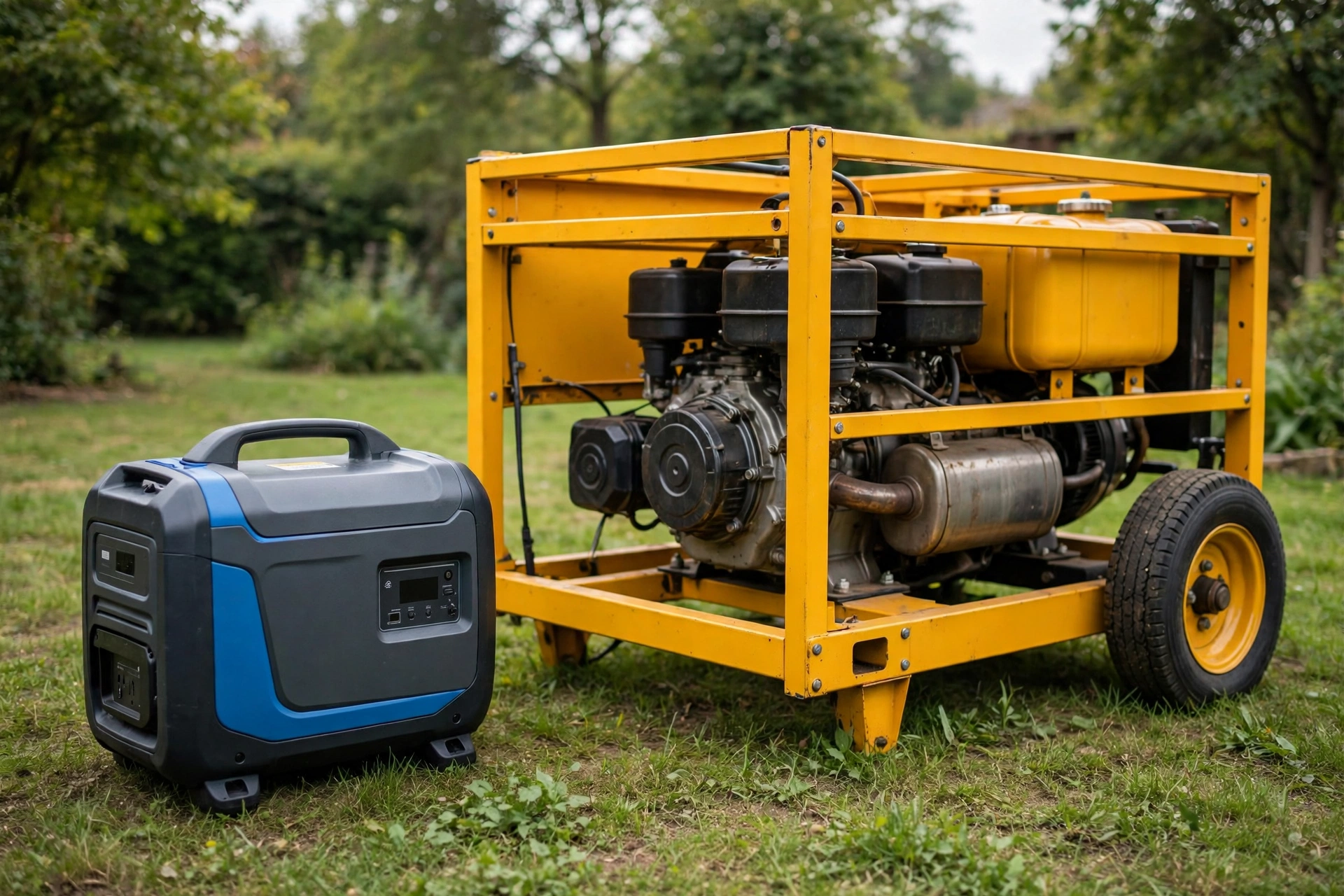
Bigger, slower engines (1800-rpm liquid-cooled diesels) squeeze more electricity from each gallon than small 3600-rpm air-cooled screamers. That’s why a 100kW diesel at 75% load can hit nearly 14 kWh per gallon while a 2kW gas portable tops out around 6.5.
4. Fuel type
Energy per gallon, per EIA figures: diesel ~137,500 BTU, gasoline ~120,000 BTU, propane ~91,500 BTU. Diesel starts with more energy in the jug and burns it in a more efficient engine — a double advantage. Propane starts behind and stays behind on a per-gallon basis, though it wins on storage life and clean burning.
Gasoline vs. Diesel vs. Propane: kWh Per Gallon Compared
Putting it together for a mid-size portable running at half load:
| Fuel | Energy in one gallon | Realistic kWh per gallon | Efficiency |
|---|---|---|---|
| Gasoline | ~33.4 kWh | 4–7 | ~12–21% |
| Diesel | ~40.3 kWh | 10–14 (larger units) | ~25–35% |
| Propane | ~26.8 kWh | 3.5–5 | ~13–19% |
Two practical notes. First, small diesel generators (under 10kW) don’t hit the 13–14 figures — those belong to bigger 1800-rpm machines; a small air-cooled diesel lands more like 6–10 kWh per gallon. Second, propane’s lower per-gallon output is partly offset by the fact that a standard 20 lb grill tank holds about 4.6 gallons and propane never goes stale. For standby use where the generator sits for months, that trade often wins.
If you’re choosing between fuels for a dual-fuel unit, our fuel consumption calculator lets you punch in your generator and load to compare gallons per hour side by side.
How to Measure Your Own Generator’s kWh Per Gallon
Spec-sheet math is fine, but your actual number takes one tank and a $30 plug-in watt meter. Here’s the method I use:
Step 1. Fill the tank to a marked level and note the exact gallons added.
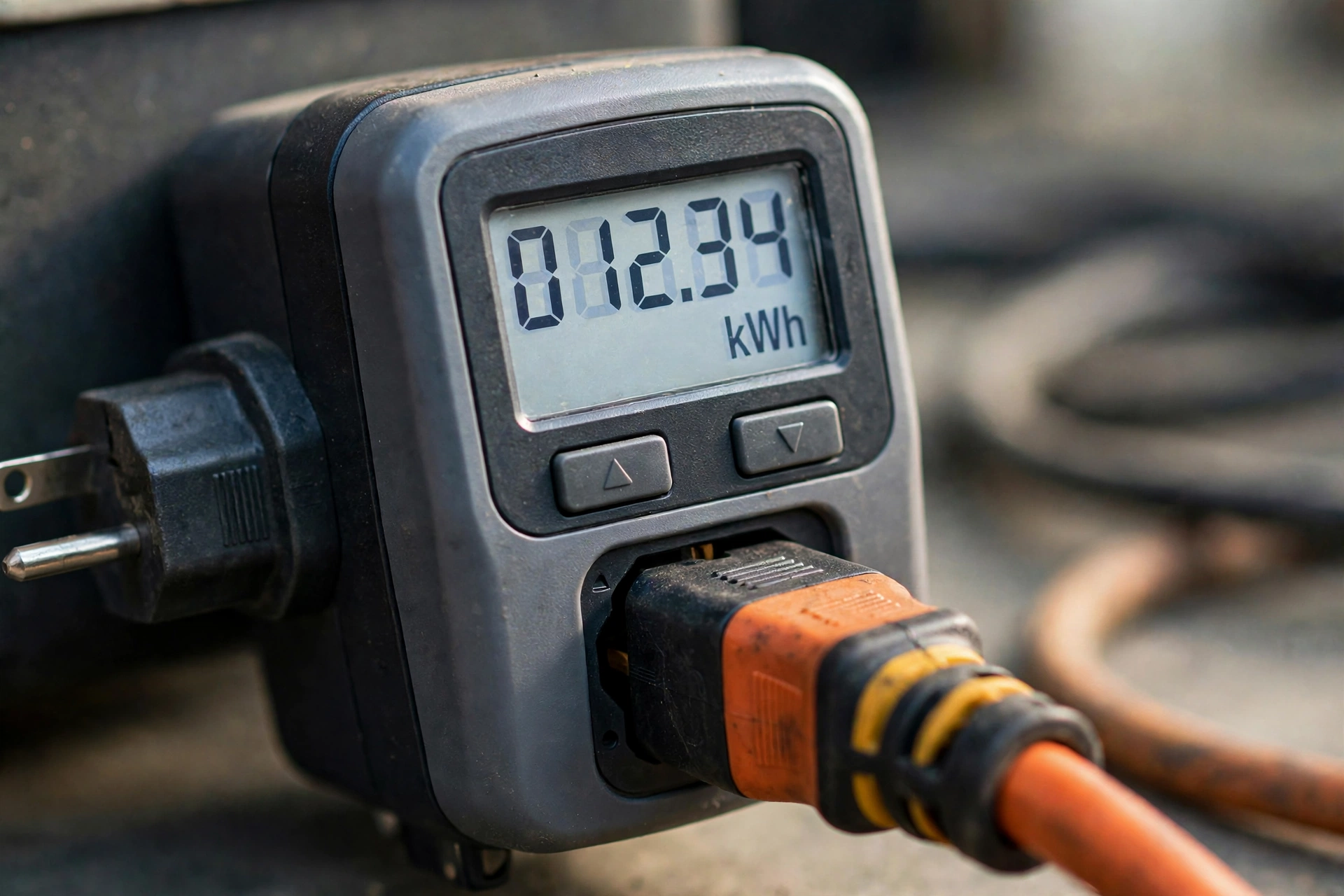
Step 2. Run your normal outage loads through a plug-in meter (a Kill A Watt or similar) and log the kWh it records. If you don’t have a meter, add up the running watts of everything plugged in and multiply by hours — less precise, but close enough.
Step 3. Run until the generator dies or you shut it down. Refill to the same marked level and note gallons used.
Step 4. Divide kWh produced by gallons burned. That’s your number at that load mix.
Do it once at your typical outage load and once with just the essentials. The difference will tell you more about your setup than any review. Most people discover they’re running at 25–35% load — and that consolidating loads or choosing a smaller generator would cut fuel use noticeably. Our generator size calculator helps you match the machine to the load instead of the other way around.
What This Means for Outage Planning
Let’s make it concrete. Say a storm knocks out power for 3 days and your essentials — fridge, freezer, a few lights, phone chargers, and the furnace blower in winter — average about 800W around the clock. That’s 19.2 kWh per day, or roughly 58 kWh over the outage.
At 5.5 kWh per gallon (a mid-size inverter at decent load), you need about 10.5 gallons — two 5-gallon cans plus what’s in the tank. At 4 kWh per gallon (oversized generator loafing at light load), you need 14.5 gallons. That 4-gallon gap is the price of running too much generator for the job, and it’s why sizing matters as much as the machine itself.
For a deeper cost picture — dollars per hour, per day, per outage — see our portable vs. standby generator cost comparison, which works through fuel math for both types.
Frequently Asked Questions
How many kWh are in a gallon of gasoline?
Why does my generator use more fuel per kWh at low loads?
Is diesel really more efficient than gasoline per gallon?
How many gallons of gas do I need for a 3-day power outage?
Does propane produce fewer kWh per gallon than gasoline?
Bottom Line
Plan on 5 kWh per gallon for a gasoline portable at reasonable load, adjust up toward 6–7 if you’re running an inverter near its sweet spot, and down toward 4 if your generator is oversized for the job. Diesel earns its reputation at 10+ kWh per gallon on larger units. And whatever the spec sheet says, one tank with a watt meter will tell you the number that actually matters — yours.

Related Guides
Best 12000 Watt Generators of 2027
Best 12000 watt generators of 2027: 6 whole-home portables compared — tri-fuel vs dual fuel, real specs, transfer switch guidance and fuel planning.

Best 3500 Watt Generators of 2027
Best 3500 watt generators of 2027: 5 top picks compared — inverter vs conventional, dual fuel options, real running-watt specs and buying guide.
How Much Does Generator Maintenance Cost Per Year? (2027)
How much does generator maintenance cost per year? About $30-60 DIY or $80-150 pro for portables; $150-300 pro for standby units. Full breakdown inside.