


A dead battery is one of the top three reasons an electric-start generator will not start when you need it — right up there with stale fuel and a fouled plug. The frustrating part: it is almost entirely preventable. A generator battery does not die from old age most of the time; it dies from sitting discharged for months, which sulfates the plates and permanently kills capacity.
The fix is boring and cheap: keep it charged. Run the generator monthly, or keep a smart maintainer on it, and test the voltage twice a year. I have a 7-year-old generator battery still cranking strong on this routine, and I have replaced 18-month-old batteries that sat neglected. Here is the complete maintenance playbook.
Key takeaways
- Monthly exercise: run the generator 15–20 minutes under load once a month. This recharges the battery and proves the unit starts.
- Smart maintainer beats a dumb trickle charger. A maintainer (like the Battery Tender Junior) charges fully, then floats — a constant trickle charger can overcharge and boil a battery dry.
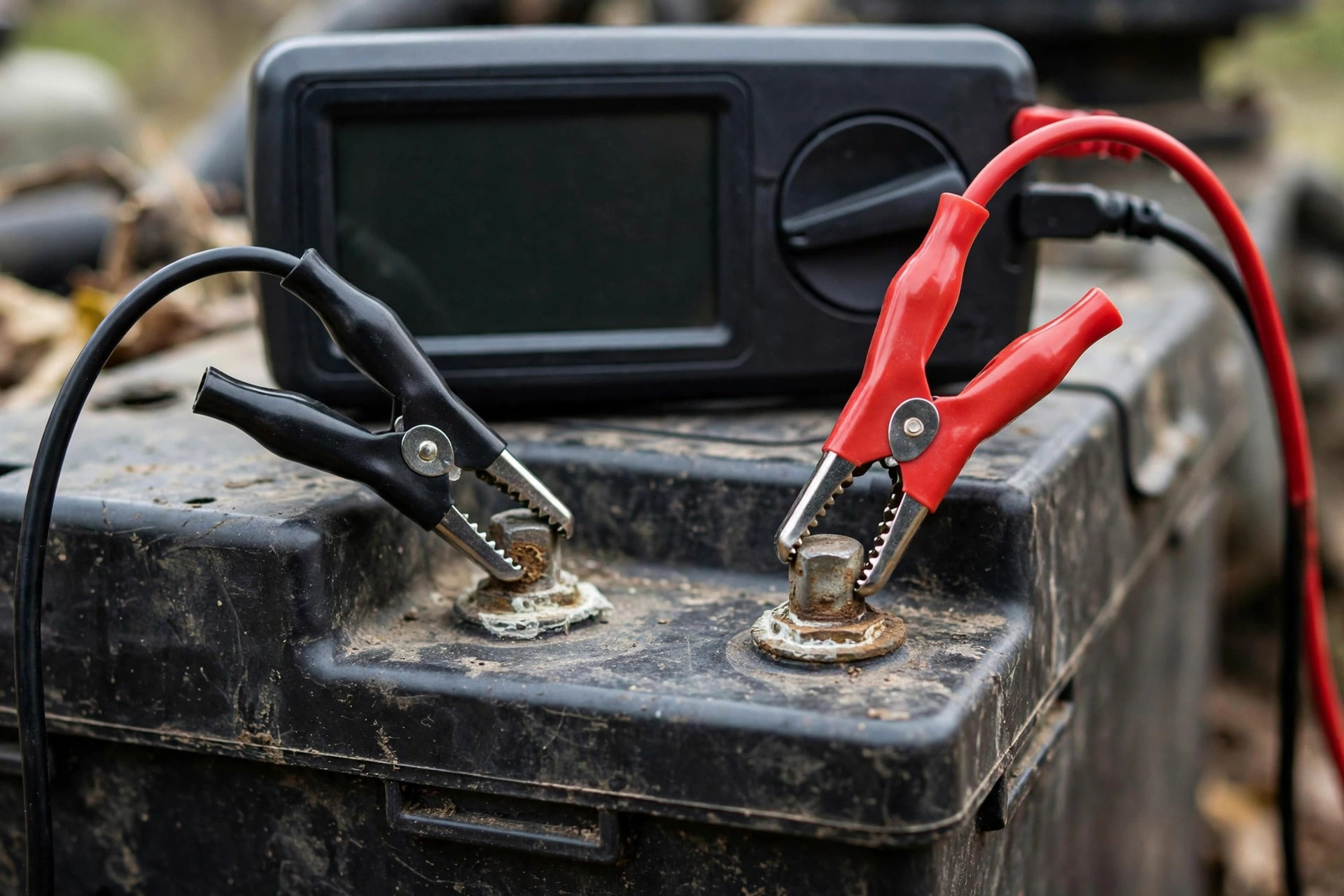
- Voltage check: 12.6V+ at rest = healthy; 12.0V = ~25% charged; below 11.9V = deeply discharged, may not recover.
- Replace every 2–3 years as preventive maintenance, or sooner if it fails a load test. Batteries are cheap; a no-start during an outage is not.
Why generator batteries die
Most portable generators with electric start use a small 12V sealed lead-acid battery. Three things kill them:
- Self-discharge. All lead-acid batteries lose charge sitting — roughly 3–5% per month at room temperature, faster in heat. Six months of sitting takes a full battery to half or less.
- Parasitic draws. Some generators have small standby draws (clocks, CO-sensor modules, remote-start receivers). These sip milliamps 24/7 and can flatten a small battery in weeks.
- Sulfation. When a lead-acid battery sits partially discharged, lead sulfate crystals harden on the plates. Light sulfation reverses with charging; hardened sulfation is permanent capacity loss. This is the actual mechanism of “it sat all winter and now it won’t hold a charge.”
Cold makes everything worse: a battery at 0°F delivers roughly half the cranking power it does at 80°F, while the engine is harder to turn over. That is why dead-battery season is January.
Diagnosing a suspect battery
Before buying anything, figure out whether the battery is the problem:
- Try the recoil starter. If the generator starts fine on the pull cord but not on electric start, the battery (or its connections) is the prime suspect.
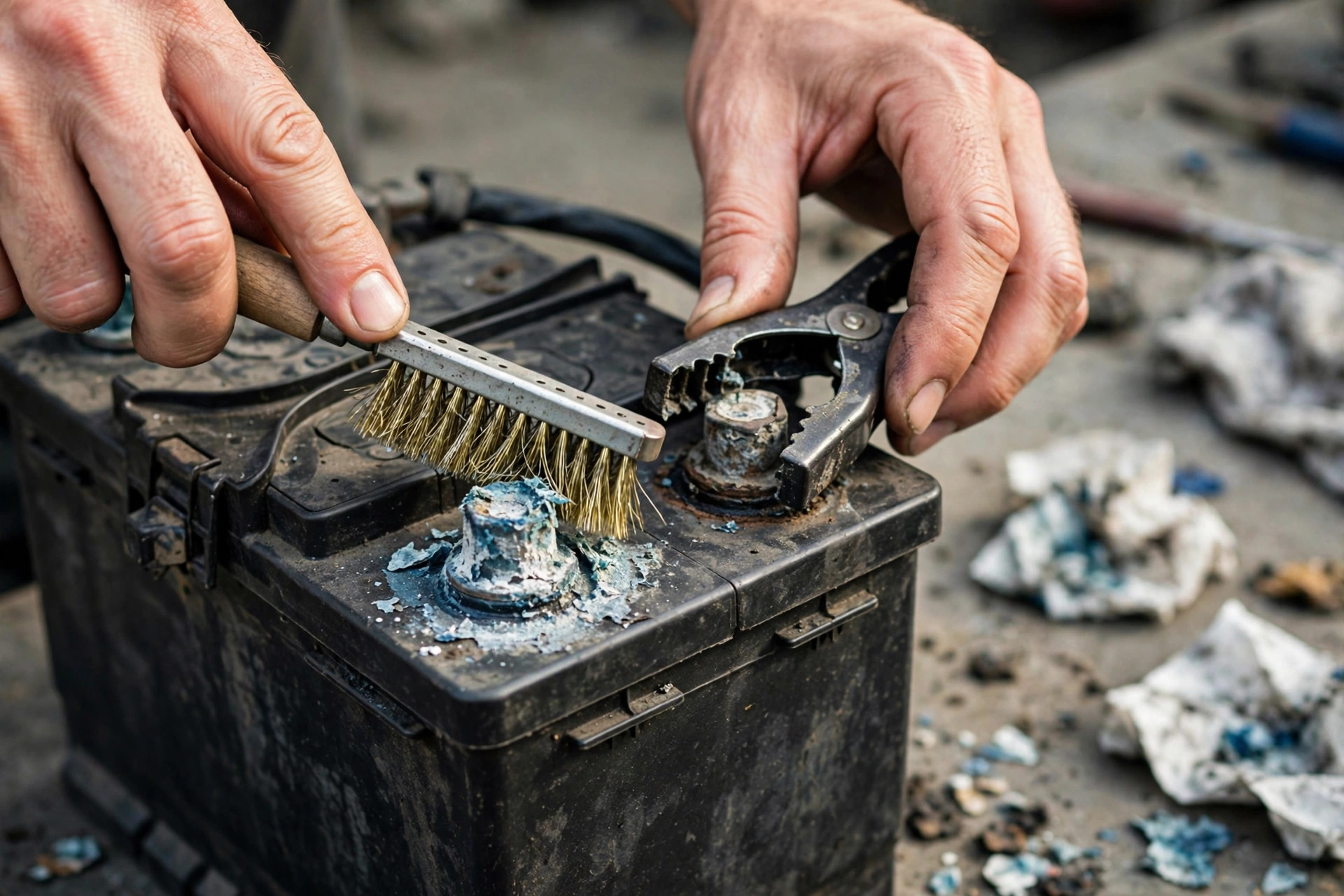
- Check the terminals. Corrosion — white/green crust — creates resistance that mimics a dead battery. Clean with baking soda and water, tighten, and retest before condemning the battery.
- Measure resting voltage. Charge the battery fully, let it sit disconnected for a few hours, then measure:
Resting voltage State of charge What it means 12.6–12.8V 100% Healthy 12.4V ~75% OK, but recharge 12.2V ~50% Recharge soon; do not leave here 12.0V ~25% Sulfation risk — charge immediately Below 11.9V Discharged May not recover; load-test after charging - Load-test it. A voltmeter alone can lie — a sulfated battery can show 12.6V and collapse under load. Auto parts stores load-test batteries free. If it drops below ~9.6V under load, replace it.
- Check for parasitic draw. If a new battery goes flat in weeks, something is sipping power. Disconnect the negative cable, set your multimeter to DC amps, and connect it between the cable and the terminal. Anything more than a few milliamps on a stored generator is worth investigating — CO-sensor modules and remote-start receivers are the usual suspects. I found a 40mA draw on one unit that flattened its battery in under a month; disconnecting the negative terminal during storage solved it completely.
Smart maintainer vs. trickle charger
People use the terms interchangeably, but they are different devices with different outcomes:
- Dumb trickle charger: pushes a small constant current forever. Fine for a weekend top-up; left connected for months, it overcharges, boils off electrolyte, and warps plates. This is how “the charger was on all winter and the battery still died” happens.
- Smart maintainer: runs a multi-stage program — bulk charge, absorption, then float. It brings the battery to full, then holds it at a safe float voltage indefinitely, waking up only when voltage sags. You can leave it connected for the entire off-season.
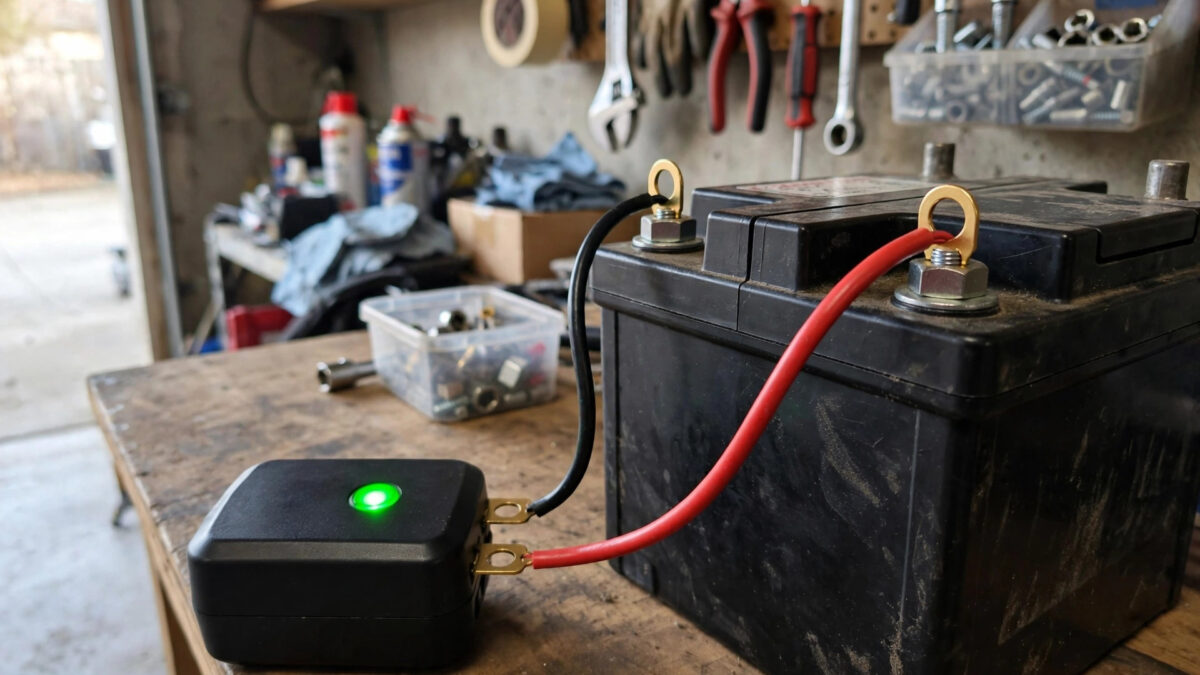
For generator duty, a smart maintainer is the right tool. The Battery Tender Junior is the classic choice: 750mA, fully automatic, spark-proof, with ring terminals you can leave bolted to the battery so connecting is a 5-second plug-in. I have one permanently mounted on each of my electric-start units. They cost less than a single replacement battery and pay for themselves the first winter.
The storage routine
For winter or any storage longer than a month:
- Fully charge the battery before storage — never store a lead-acid battery partially discharged.
- Clean the terminals and coat lightly with dielectric grease or petroleum jelly.
- Connect the smart maintainer and leave it. Check the indicator light monthly — green means floating, which is exactly where you want it.
- If you cannot use a maintainer (no outlet near the shed), disconnect the negative terminal to kill parasitic draws, and bring the battery to a full charge monthly with a regular charger. Or simpler: run the generator 20 minutes monthly, which charges the battery through the unit’s own charging coil.
- Store cool, not freezing. A fully charged battery will not freeze until around -70°F, but a discharged one can freeze near 20°F — and a frozen battery is a dead battery. Keep it charged and temperature is a non-issue.
When to replace
Even perfect maintenance does not make batteries immortal. Plan on 2–3 years for a small generator battery, 4 at the absolute outside. Replace immediately if:
- It fails a load test after a full charge.
- Resting voltage will not hold above 12.4V.
- The case is swollen, cracked, or leaking.
- It is more than 3 years old and your generator is storm-critical — preventive replacement is cheap insurance.
Match the replacement spec: same voltage (12V), same or higher amp-hour rating, and terminals in the same orientation. Take the old battery to the parts store — they will match it and recycle the old one (there is usually a core charge refund).
Solar maintainers for shed storage
If your generator lives in a shed with no outlet nearby, a small solar maintainer panel is a solid alternative to monthly charging sessions. A 5–10 watt panel with a built-in charge controller, laid on the shed roof or propped in a sunny spot and wired to the battery, trickles in enough to offset self-discharge. I run one on a unit stored at a remote cabin — two winters now, battery still strong, zero visits required.
The key detail: it must have a charge controller, even at these tiny wattages. An unregulated panel can overcharge a small battery over months of unattended connection. Most purpose-built solar maintainers include the controller; if you are DIY-ing with a bare panel, add a cheap PWM controller between the panel and battery. Size-wise, 5 watts is plenty for maintenance — you are replacing self-discharge, not recharging a dead battery.
Battery maintenance pairs naturally with the rest of the seasonal routine: fresh oil on schedule, stabilized fuel, and a monthly test run that exercises the battery, circulates oil, and proves the whole system works. For the full cold-season procedure, see our winterizing guide. Do all of it and the generator starts when the lights go out — which is the entire point of owning one.
Can I leave a trickle charger on my generator battery all winter?
How often should I run my generator to keep the battery charged?
What voltage should a generator battery read?
How long do generator batteries last?
My generator starts with the pull cord but not electric start. Is it the battery?
The whole program fits on an index card: monthly run, maintainer in winter, voltage check twice a year, replace at 3 years. Do that and the electric start works every time you press it — including the time it matters most.
How we researched this: Battery manufacturer charging guidance, smart-charger product specifications, small-engine service experience, and long-term personal battery maintenance across multiple electric-start units.

Related Guides
Why Does My Generator Backfire? Causes and Fixes (2027)
Why does your generator backfire? An exhaust bang means unburned fuel in the muffler; a pop through the carb means lean mixture or valve trouble. Here are the fixes.


Generator Valve Adjustment: How to Set Valve Lash (2027 Guide)
Generator valve adjustment: 0.006" intake, 0.008" exhaust on Honda GX engines. Tools, TDC procedure, and symptoms of bad valve lash explained.

How to Clean and Replace a Generator Air Filter (2027 Guide)
How to clean a generator air filter: wash foam filters in soapy water and re-oil; tap out paper filters, never wash them. Full steps inside.