


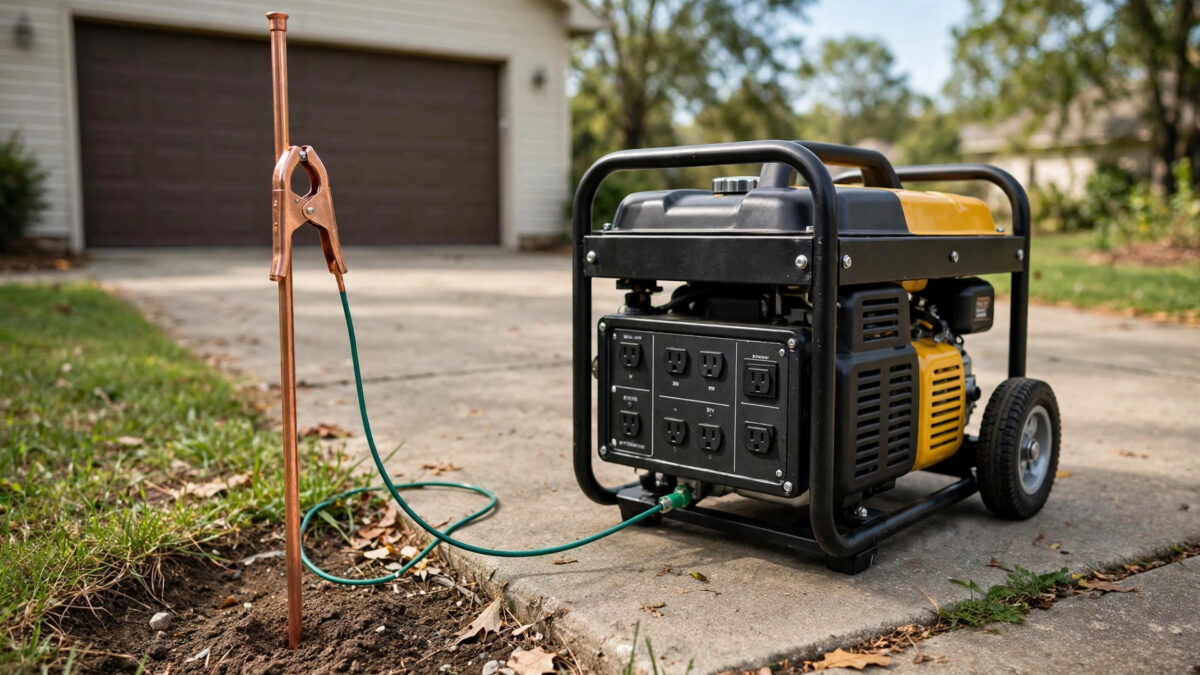
Here is the short answer most people want: if you are plugging extension cords or tools directly into the outlets on your portable generator, the National Electrical Code (NEC 250.34) does not require you to drive a ground rod. The frame of the generator acts as the ground, as long as the receptacles are bonded to it — which they are on every unit I have ever tested.
But “usually not” is not “never.” The moment you wire that generator into your house through a transfer switch or inlet box, the grounding rules change, and getting them wrong is a genuine safety issue — and a failed-inspection issue. I have wired transfer switches for friends, and the bonding-vs-grounding question comes up every single time. Let me lay out exactly when a ground rod is required and when it is pointless.
Key takeaways
- Cord-and-plug use (extension cords into the generator’s own outlets): no ground rod required under NEC 250.34(A), as long as the receptacles are bonded to the generator frame.
- House backup via transfer switch: depends on whether the neutral is switched. A 3-pole transfer switch (switched neutral) makes the generator a separately derived system — grounding electrode required. A 2-pole switch (solid neutral) uses the house’s existing ground rod.
- A ground rod protects against lightning and voltage surges — it does almost nothing to trip a breaker on a ground fault. The equipment grounding conductor (the ground wire in your cords) is what saves you from shock.
- When in doubt, ask your local inspector (AHJ). They have the final say.
The easy case: cords plugged straight into the generator
NEC 250.34(A) is written for exactly this scenario. It says the frame of a portable generator does not have to be connected to a ground rod when two conditions are met:
- The generator supplies only equipment mounted on the generator, cord-and-plug-connected equipment through receptacles on the generator, or both.
- The metal parts of the equipment and the grounding terminals of the receptacles are connected to the generator frame.
On a typical portable generator, condition 2 is satisfied from the factory — the receptacle ground screws are wired to the frame internally. So running a fridge off an extension cord, power tools at a job site, or a fan at a tailgate: no ground rod needed. This is why almost nobody you have ever seen using a portable generator is pounding in a rod.
Why is it safe without a rod? Because the critical safety path is the equipment grounding conductor — the third wire in your extension cord, tied from the tool’s metal housing back to the generator frame. If a hot wire touches a metal housing, fault current races back to the generator through that ground wire and trips the breaker. That loop works with zero connection to the earth. A ground rod into dirt, which is actually a poor conductor, would not trip the breaker at all. The rod’s real job is different: dissipating lightning strikes and high-voltage surges.
When you connect to a house: it depends on the neutral
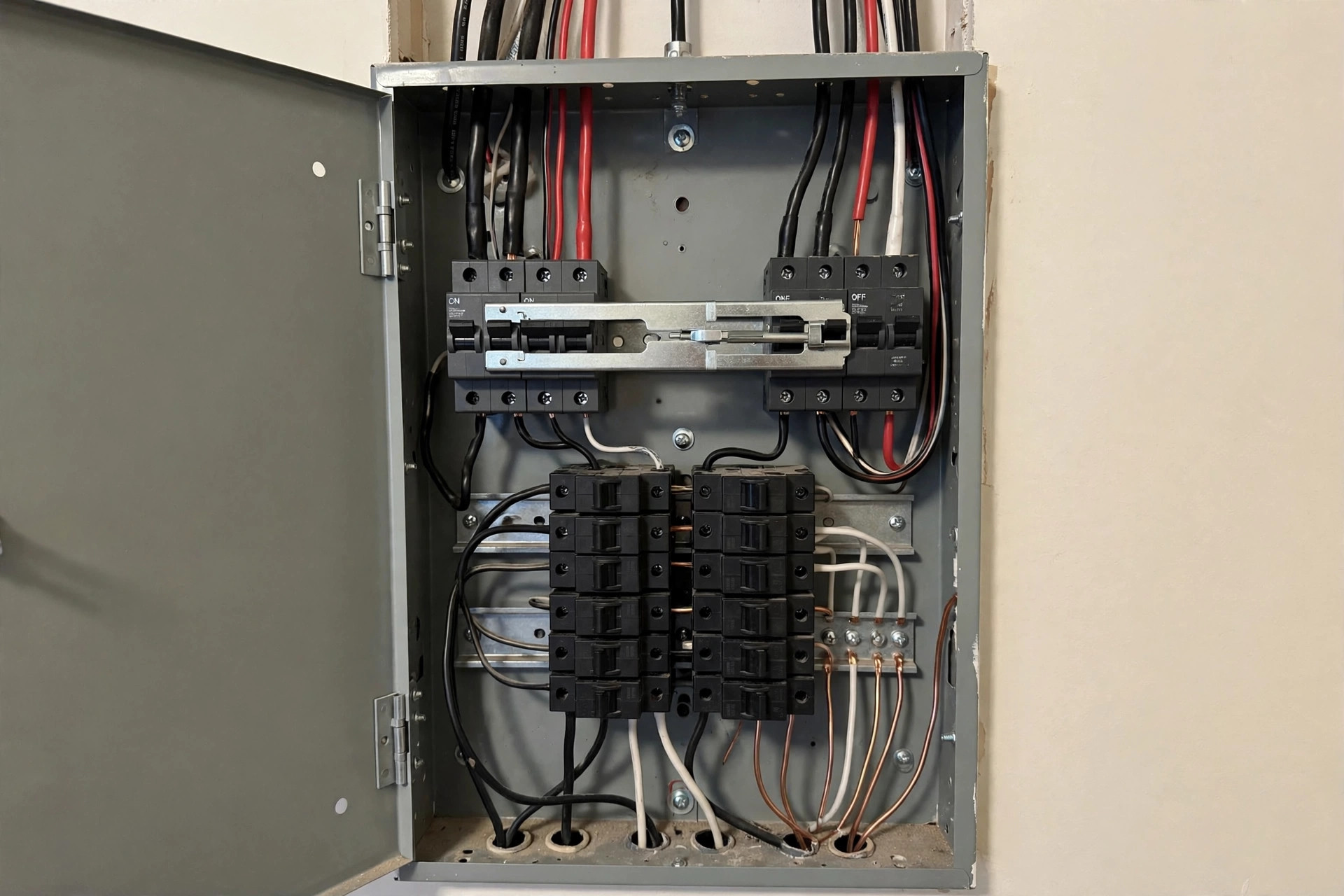
This is the part that trips people up, and honestly it tripped me up the first time I wired an inlet box. Whether you need a grounding electrode system (a ground rod, or connection to the house’s existing electrodes) at the generator depends on whether your setup is a separately derived system. In plain English: does the transfer switch break the neutral wire, or leave it connected?
| Setup | Neutral | Ground rod at generator? |
|---|---|---|
| Extension cords into generator outlets only | N/A | No (NEC 250.34(A)) |
| 2-pole transfer switch or interlock kit (most common home setup) | Solid — not switched | No separate rod — the house’s grounding electrode system serves the generator through the ground wire in the inlet cable |
| 3-pole transfer switch (switches the neutral) | Switched | Yes — the generator is a separately derived system and needs its own grounding electrode system per NEC 250.30 |
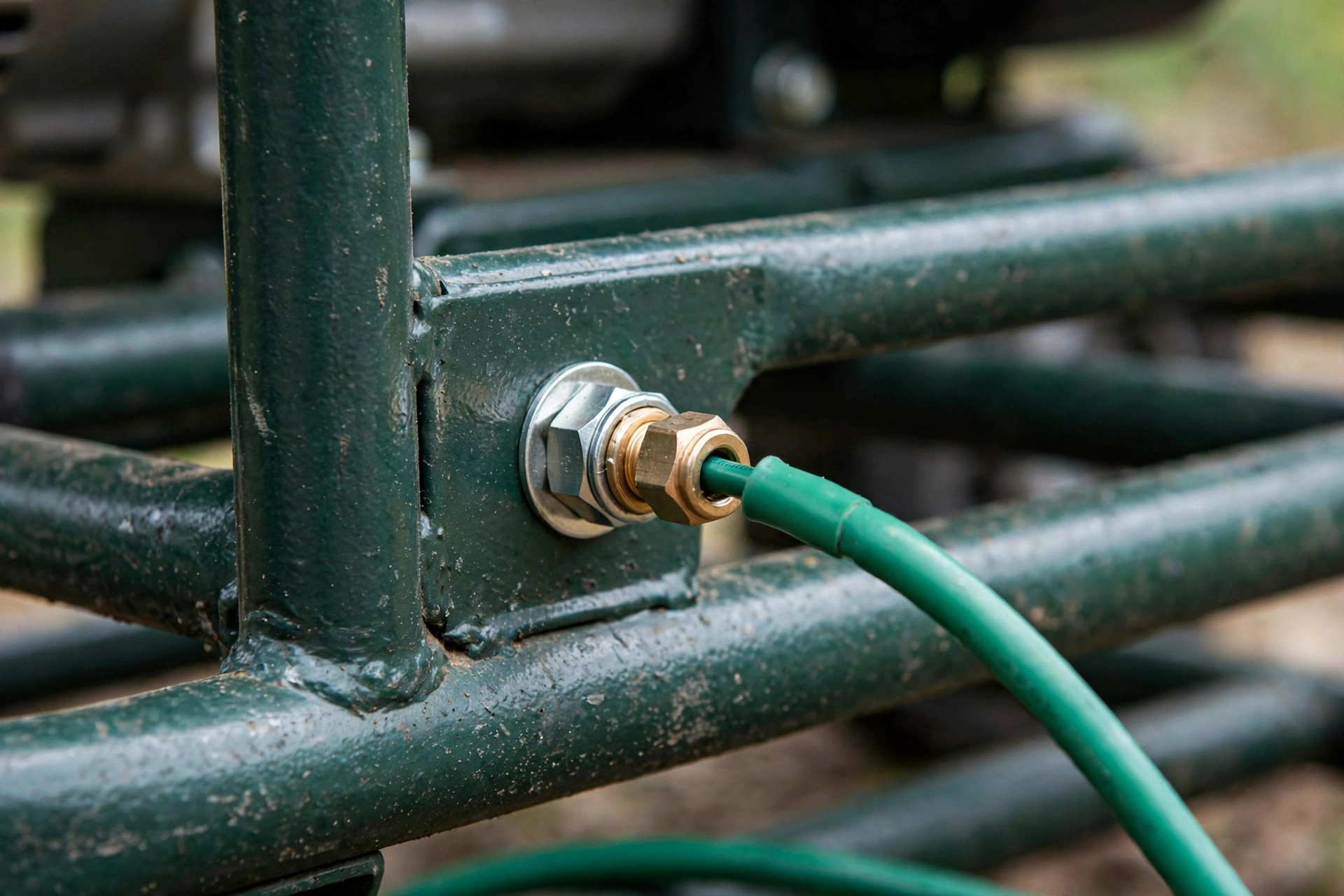
Most residential setups I have seen use a 2-pole transfer switch or a breaker interlock kit, where the neutral stays solidly connected to the house panel. In that case the neutral-to-ground bond stays at your main panel (there should only ever be ONE bond), and the ground wire in your generator inlet cord ties the generator frame to the house’s grounding electrode system. Driving a second rod at the generator does not add safety — and in some configurations it can create ground loops.
The 3-pole switched-neutral setup is less common in homes but shows up where the generator is bonded neutral from the factory and cannot be unbonded, or where an inspector requires the generator as a fully separate system. Then the generator genuinely needs its own electrode: typically one or two 8-foot ground rods (NEC requires a second rod if the first tests above 25 ohms to ground — in practice, electricians just drive two).
Bonded vs. floating neutral: the 30-second version
You cannot get grounding right without knowing which kind your generator is. A bonded-neutral generator has the neutral wire connected to the frame internally (common on larger portables with 240V outlets). A floating-neutral generator does not (common on small inverter units). Your manual will state which yours is — or you can check with a multimeter, neutral slot to the ground lug, power off.
The rule is simple: there must be exactly one neutral-to-ground bond in the system. House panel already has one. So if you connect a bonded-neutral generator to a house with a solid neutral (2-pole switch), you have two bonds — and that double bond is exactly what causes the maddening GFCI tripping I cover in our generator GFCI troubleshooting guide. Fix it by floating the generator’s neutral (many manufacturers publish a bulletin for this — Champion’s, for example, takes about 9 minutes) or by using a 3-pole switch. For a deeper dive, see our bonded vs. floating neutral explainer.
What inspectors actually care about
In my experience, when an inspector looks at a home generator hookup, the grounding electrode is rarely the first thing they check. They check for the transfer switch or interlock (backfeeding the grid is the big danger), the inlet wiring size, and the single-bond question. But if your setup is a separately derived system and you skipped the electrode, they will flag it.
A few practical realities:
- Portable, temporary storm use with an interlock kit and an inlet cord: the house ground rod covers you. No extra rod.
- Permanent standby generators are a different world — they are installed as separately derived systems with their own electrodes by the installer. Not DIY territory.
- Jobsite/OSHA use has its own rules (29 CFR 1926.404). If you are running a business, follow OSHA’s grounding requirements for the site, not just the NEC’s homeowner logic.
- Your local code can be stricter than the NEC. The Authority Having Jurisdiction (AHJ) — your city or county inspector — has the final word.
Do not forget the bigger safety rule
Grounding arguments are academic if the generator kills someone with carbon monoxide. The CDC is unambiguous: run generators outdoors, at least 20 feet from doors, windows, and vents, with the exhaust pointed away from the house. I keep a 50-foot heavy-gauge cord set staged with my generator so the 20-foot rule is easy to honor even when the good spot is far from the inlet box.
Does a portable generator need to be grounded to a ground rod?
Do I need a ground rod if my generator is connected to my house?
Can I just drive a ground rod anyway to be safe?
What is the grounding lug on my generator for?
Is a ground rod or a transfer switch more important for safety?
The bottom line for 2027: cords into the generator — no rod. House hookup — match the grounding to the neutral switching, keep exactly one neutral-ground bond, and let the transfer switch do the life-saving work.
How we researched this: NEC Articles 250.34, 250.30, and 702, manufacturer neutral-bonding technical bulletins, and hands-on experience wiring residential transfer-switch and interlock-kit setups.

Related Guides
Why Does My Generator Backfire? Causes and Fixes (2027)
Why does your generator backfire? An exhaust bang means unburned fuel in the muffler; a pop through the carb means lean mixture or valve trouble. Here are the fixes.

Generator Valve Adjustment: How to Set Valve Lash (2027 Guide)
Generator valve adjustment: 0.006" intake, 0.008" exhaust on Honda GX engines. Tools, TDC procedure, and symptoms of bad valve lash explained.

How to Clean and Replace a Generator Air Filter (2027 Guide)
How to clean a generator air filter: wash foam filters in soapy water and re-oil; tap out paper filters, never wash them. Full steps inside.
1 Comment