


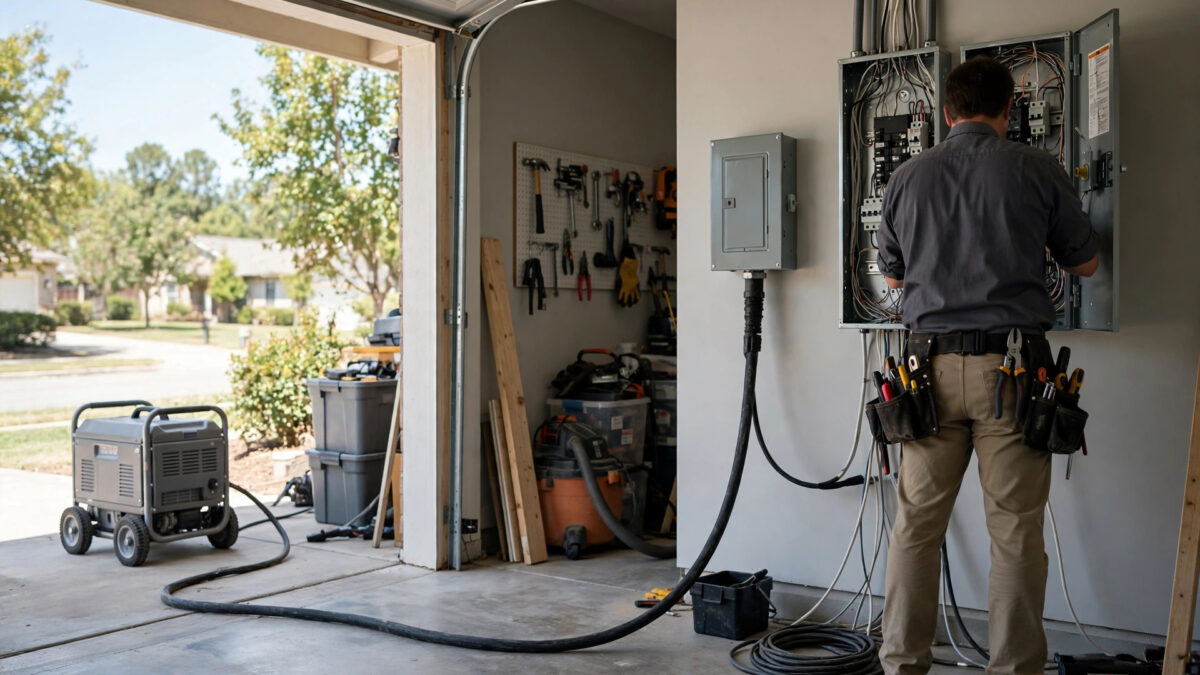
Bonded vs. floating neutral describes whether a generator’s neutral wire is connected (bonded) to the generator’s frame and ground, or left unconnected (floating). A bonded neutral ties neutral to ground at the generator; a floating neutral keeps them separate. Which one you need depends entirely on how the generator is used: standalone with extension cords usually calls for bonded, while connecting to home wiring through a transfer switch usually calls for floating. Using the wrong configuration can trip GFCI outlets, create shock hazards, or fail inspection — so this is worth understanding before you wire anything.
Key Takeaways
- A bonded neutral connects the generator’s neutral to its frame/ground; a floating neutral leaves the neutral unconnected to the frame.
- Electrical code generally requires exactly one neutral-to-ground bond per system — most homes already have it in the main panel.
- Standalone use (extension cords, no connection to house wiring) typically uses a bonded-neutral generator.
- Connecting to home wiring through a transfer switch typically requires a floating-neutral generator, because the house panel already provides the bond.
- The wrong setup causes GFCI tripping, potential shock hazards, and inspection failures — have an electrician verify the configuration for hard-wired installs.
Bonded vs Floating Neutral: What Is a Bonded Neutral?
In a bonded-neutral generator, the neutral conductor is electrically connected to the generator’s metal frame, which serves as the equipment ground. This creates a complete fault path within the generator itself: if a hot wire faults to the frame, current flows through the bonded neutral-ground connection and trips the generator’s breaker. It is the same arrangement your home’s main panel uses — neutral bonded to ground at one point, the service entrance.
Bonded neutral is the correct configuration when the generator is the only source in its own standalone electrical system — that is, when you are running extension cords directly from the generator’s outlets to your appliances, with no connection to the house wiring. In that setup, the generator is effectively its own little “service,” and it needs its own neutral-ground bond for fault protection to work. Many portable generators ship bonded from the factory for exactly this reason: out of the box, most buyers use them standalone.
Bonded vs Floating Neutral: What Is a Floating Neutral?
In a floating-neutral generator, the neutral conductor is not connected to the frame — it “floats” electrically isolated from ground. The generator still has a grounding system (the frame connects to the equipment grounding conductor), but there is no neutral-to-ground bond at the unit. On its own, a floating-neutral generator powering extension cords lacks the internal fault path a bonded unit has — which is fine and intended when the generator is not the system’s grounding point.
Floating neutral is the correct configuration when the generator connects to premises wiring that already has its own neutral-ground bond — which is nearly every American home, where the bond lives in the main service panel. The code rule is simple and strict: one system, one neutral-ground bond. Adding a second bond at the generator creates parallel neutral current paths, which is where the trouble starts.

Bonded vs. Floating Neutral: Side-by-Side Comparison
| Bonded neutral | Floating neutral | |
|---|---|---|
| Neutral-to-frame connection | Connected | Not connected (isolated) |
| Correct for standalone use (extension cords) | Yes — generator is its own system | Acceptable in many cases, but bonded is the standard |
| Correct for home connection via transfer switch | Usually no — creates a second bond | Yes — house panel provides the single bond |
| GFCI behavior when misapplied | Nuisance tripping when connected to house wiring | Possible protection gaps when used standalone without proper grounding |
| How to identify | Manual states “neutral bonded to frame”; continuity between neutral slot and frame | Manual states “floating neutral”; no continuity between neutral slot and frame |
The table’s core message: neither configuration is universally “right.” Each is right for its use case and wrong for the other. Problems arise when a bonded generator is wired into a house, or sometimes when a floating generator is used standalone in applications (like jobsites under OSHA rules) that require a bonded neutral with ground-fault protection.
Why It Matters: The One-Bond Rule
The National Electrical Code requires the neutral to be bonded to ground at one point — and only one point — in each electrical system. Your home’s bond is at the main service panel (or the service disconnect). That single bond gives fault current exactly one low-resistance path back to the source, so breakers trip decisively when something goes wrong.
What goes wrong with two bonds
Connect a bonded-neutral generator to house wiring and you now have two neutral-ground bonds: one in the panel, one at the generator. Neutral current splits between the neutral conductor and the grounding conductor, so the equipment ground — which should normally carry no current — now carries some. That stray current on the ground path is a shock hazard, can energize metal generator frames and appliance chassis, and routinely causes GFCI devices to trip, because GFCIs work by detecting exactly this kind of current imbalance. Owners often misdiagnose it as “my generator’s GFCI outlets are defective” when the real problem is a bonding mismatch.
What goes wrong with zero bonds
Use a floating-neutral generator standalone with no bond anywhere and a ground fault may not trip a breaker at all — the fault has no low-resistance return path, so the frame can sit energized without anything detecting it. For simple cord-and-plug use this risk is modest (the generator’s own breakers still protect against overloads), but for jobsite use, OSHA-aligned practice generally calls for bonded neutral plus GFCI protection, and some generator makers ship jobsite-oriented models bonded for this reason.
How to Tell Which One Your Generator Has
Check these sources in order:
Step 1: Read the owner’s manual
The manual states the neutral configuration explicitly — look for “neutral bonded to frame,” “bonded neutral,” or “floating neutral” in the specifications or grounding section. This is the authoritative answer for your unit.
Step 2: Check the spec sheet or manufacturer’s website
Most manufacturers list neutral configuration in the online specifications. When we compared specifications for our 2027 roundups, this detail was consistently published — it is a standard line item, not trivia.
Step 3: Test with a multimeter (generator off)
With the generator fully off and cool, set a multimeter to continuity mode and test between the neutral slot of a 120V outlet and the metal frame. Continuity (beep) indicates bonded; no continuity indicates floating. This confirms what the manual says but does not override it — if the meter disagrees with the manual, trust the manual and call the manufacturer.
Switching Between Bonded and Floating: Plugs and Kits
Some generators are convertible: the manufacturer provides a bonding plug, jumper, or switch that lets you select bonded or floating to match the application. Others are fixed — what ships is what you have. If your generator is fixed-bonded and your electrician needs floating for a transfer-switch installation, the standard solution is a listed bonding plug used in reverse (or removal of the factory bond jumper per the manual) — but this must be done per the manufacturer’s instructions, and many electricians prefer you buy the configuration you need rather than modify the unit.
Aftermarket “ground-neutral bonding plugs” that insert into an outlet to create a bond are widely sold. They have legitimate uses (for example, making a floating generator present a bonded neutral to an RV’s electrical management system), but they are also widely misused. A bonding plug does not fix a fundamentally wrong system design, and using one to paper over a transfer-switch bonding mismatch is not a substitute for correct wiring. When a plug is the right tool, your electrician will tell you; when wiring is the issue, only wiring fixes it.
Common Scenarios: Which Configuration Do You Need?
| Scenario | Usually correct configuration | Notes |
|---|---|---|
| Extension cords to appliances, no house connection | Bonded | The generator is its own system; it needs its own bond |
| Transfer switch with unswitched neutral (most common) | Floating | House panel provides the single bond |
| Transfer switch that switches the neutral | Bonded (treated as separately derived system) | Specialist design — electrician must engineer it |
| RV plugged into the generator | Follow RV system requirements; bonding plug often used | RV surge protectors/EMS units often demand to “see” a bond |
| Jobsite powering tools | Bonded + GFCI (OSHA-aligned practice) | Check the general contractor’s or OSHA requirements for the site |
The transfer-switch rows deserve emphasis because they are where homeowners get into trouble. Most residential transfer switches and interlock kits do not switch the neutral — the neutral stays continuous between the generator and the panel, so the panel’s bond remains the system’s single bond, and the generator must be floating. The switched-neutral design (a “separately derived system”) is the exception, used in specific commercial-style installations, and it changes the grounding design completely. Your electrician knows which one is being installed — ask, and make sure the generator matches.
What is the difference between bonded and floating neutral on a generator?
Do I need a bonded or floating neutral generator for my house?
What happens if you use a bonded generator with a transfer switch?
How can I tell if my generator is bonded or floating neutral?
Can I change my generator from bonded to floating neutral?
Why does my generator’s GFCI keep tripping when connected to my house?
Conclusion
Bonded vs. floating neutral sounds like electrician trivia until it is the reason your transfer-switch installation fails inspection or your GFCI outlets will not stay on. The rule itself is simple — one neutral-ground bond per system — and everything else follows from matching the generator to its job: bonded for standalone, floating for house connection through a standard transfer switch. Check your manual, label the unit, and put an electrician on any hard-wired installation. For the broader picture of connecting a generator to your home safely, see our guide to transfer switches and NEC requirements.

Related Guides

How Much Does It Cost to Run a Generator Per Hour? Fuel Cost Calculator
Running a generator costs $0.35-$7+ per hour by size and fuel type. Use our simple calculator formula and fuel cost tables to estimate your exact cost.


Generator THD Explained: What It Means for Electronics & Appliances
Generator THD explained: what total harmonic distortion means, the under-3% vs over-6% tiers, which appliances need clean power, and how to check the spec.
Generator Noise Laws by Location: Are Generators Legal in Residential Areas?
Generator noise laws vary by city: typical residential decibel limits, quiet hours, HOA rules, and how a quiet inverter generator keeps you compliant.