


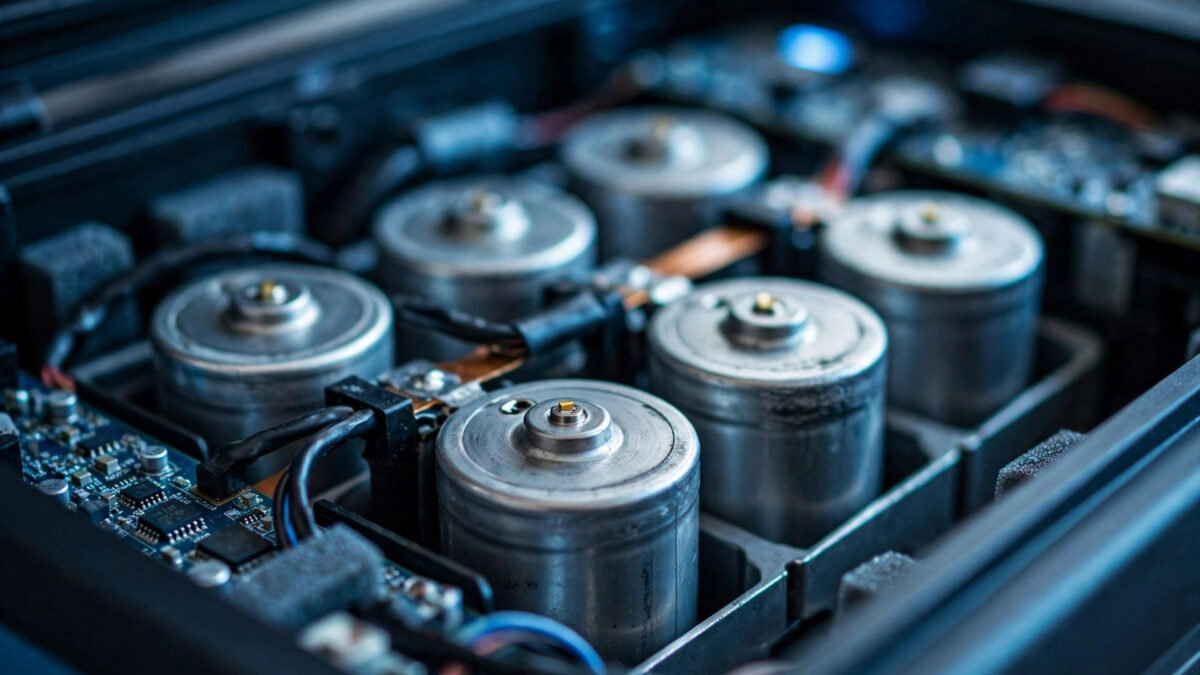
“How long does a solar generator last?” is really two questions wearing one disguise. There is how long a single charge lasts — hours or days — and there is how long the unit itself lasts before the battery wears out — years or decades. Both matter, and both have straightforward answers. This guide covers battery lifespan, what wears batteries out, and how to make yours last as long as possible.
Battery Lifespan: LiFePO4 vs. Older Chemistries
The battery is the only part of a solar generator with a meaningful expiration date. The panels last 25+ years, the inverter and electronics last a decade or more — but the battery slowly loses capacity with every charge cycle. How slowly depends almost entirely on chemistry:
- LiFePO4 (lithium iron phosphate) — the standard in virtually every solar generator sold since 2023. Rated for 3,000 to 6,000+ full cycles before dropping to 80 percent of original capacity. Extremely thermally stable and the safest lithium chemistry for home use.
- NMC / standard lithium-ion — found in older models like the original Jackery Explorer 500. Rated for roughly 500 to 1,000 cycles to 80 percent. Fine, but a fraction of LiFePO4 longevity.
“Cycles to 80 percent” needs unpacking: a battery rated for 4,000 cycles does not die at cycle 4,001. It means after 4,000 full charge-discharge cycles, it still holds about 80 percent of its original capacity. It keeps working after that — just with gradually shrinking runtime. Most manufacturers treat 80 percent as the end of rated life, not the end of usable life.
To put it in perspective: the BLUETTI Elite 200 V2 carries a LiFePO4 battery rated for 6,000+ cycles to 80 percent. Even at one complete cycle every single day, that is more than 16 years of cycling before it hits the 80 percent mark.
What Counts as a “Cycle”?
A cycle is one full 100-percent discharge worth of energy — not necessarily one plug-in. If you drain your unit from 100 percent to 50 percent two days in a row, that is one cycle, not two. Shallow discharges are gentler than deep ones: consistently draining to empty wears cells faster than topping up from half.
This is good news for real-world use. Most owners do not fully cycle their unit daily. Weekend campers might log 30 to 50 partial cycles a year; emergency-backup owners might log a dozen. At that pace, a 4,000-cycle LiFePO4 battery is effectively a multi-decade component.
Calendar Aging: Batteries Age Even Sitting Still
Cycles are only half the story. Lithium batteries also degrade with time regardless of use — a process called calendar aging. A LiFePO4 battery stored on a shelf for ten years will hold less than it did new, even with zero cycles on it.
The good news: calendar aging for LiFePO4 is slow. Expect roughly 10 to 15 years of useful life from a quality LiFePO4 battery with reasonable care, with cycles rarely being the limiting factor for typical owners. Heat is the great accelerator here — a unit stored in a cool closet ages far better than one baking in a garage through summer.
What Wears a Battery Out Faster
Five things shorten battery life more than anything else:
- Heat. The number one killer. Sustained temperatures above 35°C (95°F) accelerate both cycle degradation and calendar aging. Never leave your unit in a hot car or in direct sun while charging.
- Storing at 100% or 0%. Batteries are happiest around half charge. Months at full charge stresses the cells; months at zero can let voltage drop low enough to damage them permanently.
- Constant fast-charging. Slamming a battery from empty to full at maximum wattage every time generates heat and stress. Fine when you need speed; unnecessary as a daily habit.
- Deep discharges to empty. Regularly running to 0 percent wears LiFePO4 faster than stopping at 10 to 20 percent.
- Charging below freezing. Charging a lithium battery below 0°C (32°F) can cause permanent lithium plating. Quality units have low-temperature charging protection that simply refuses to charge until the cells warm up — do not bypass it.
How to Make Your Solar Generator Last Longer
Seven habits that add years to your battery:
- Store at 40–60% charge if you will not use the unit for weeks or months.
- Top up every 3 months during storage. Batteries self-discharge slowly; a quarterly check keeps them from sliding to zero.
- Keep it cool. Room temperature storage, shade while in use, ventilation around the vents.
- Use standard charging speed for routine top-ups; save turbo/fast-charge modes for when you genuinely need speed.
- Prefer the 20–80% band for daily cycling if your unit offers a charge-limit setting. Many 2026–2027 models let you cap charging at 80 or 90 percent in the app.
- Update the firmware. Manufacturers quietly improve battery management algorithms over the air.
- Use DC outputs for small devices. Less inverter heat, less wasted energy, gentler on the system overall.
How Long Does a Single Charge Last?
The other meaning of “how long” — runtime per charge — is simple division with one adjustment:
Runtime (hours) = battery Wh × 0.85 ÷ device watts.
The 0.85 accounts for inverter efficiency losses. Examples on a 1,000Wh unit:
- Phone charging (15W): around 56 hours of cumulative charging
- Laptop (60W): around 14 hours
- Mini fridge (60W average): around 14 hours
- Full-size fridge (150W running, cycling): roughly 8–12 hours of real-world coverage
- TV + router (120W): around 7 hours
Connect solar panels while you use it and the math changes completely — incoming solar power offsets consumption, and in good sun a well-matched array can run small loads indefinitely. For help matching panels to your station, see our guide to solar generator bundles.
What About the Rest of the Unit?
Batteries get the attention, but the other components are durable. Solar panels degrade about 0.5 percent per year and are typically warrantied for 25 years. Inverters and MPPT controllers are solid-state electronics with no wear parts — expect a decade or more. Cooling fans are the only moving part and are replaceable. In practice, the battery defines the lifespan of the whole system, which is why LiFePO4’s longevity matters so much.
How many years does a solar generator last?
A modern LiFePO4 solar generator typically lasts 10 to 15 years with reasonable care. Cycle ratings of 3,000 to 6,000+ cycles mean the battery outlasts most owners’ actual usage patterns — calendar aging, not cycles, is usually the limiting factor.
Do solar generator batteries need to be replaced?
Eventually, yes — but most owners never will. By the time a LiFePO4 battery degrades meaningfully (a decade or more), the unit’s electronics are aging too, and replacing the whole station usually makes more sense. Some large units do offer replaceable battery modules.
Is it bad to leave a solar generator plugged in all the time?
Modern units with a battery management system handle it fine — they stop charging at 100 percent and many offer an 80 percent charge cap for longevity. For long-term standby, though, storing at 40 to 60 percent and topping up quarterly is gentler than sitting at full charge for months.
Does cold weather damage solar generators?
Cold reduces available capacity temporarily and charging below freezing can permanently damage lithium cells. Quality units include low-temperature protection that blocks charging until cells warm up. Store and charge above freezing whenever possible.
What does the warranty actually cover?
Most major brands now offer 5-year warranties on LiFePO4 stations, covering defects and premature capacity loss below a threshold (often 80 percent). Warranties do not cover normal gradual degradation or damage from heat, water, or misuse — read the capacity guarantee clause before buying.
Our verdict
A quality LiFePO4 solar generator bought in 2027 should serve you for 10 to 15 years: 3,000 to 6,000+ cycles covers the battery, and everything else is solid-state. The biggest threats are heat and neglect, not use — store it half-charged in a cool spot, top it up quarterly, and it will be ready whenever the grid is not. If longevity is your top priority, compare cycle ratings in our best solar generators of 2027 roundup.

Related Guides
Best Solar Generator Bundles with Panels for 2027
Save money with the best solar generator bundles of 2027 — power station plus solar panel kits ready to use out of the box.

Best Solar Generators for RVs in 2027
Power your RV adventures with the best solar generators for RVs in 2027, featuring TT-30 outlets and fast solar charging.

Best Solar Generators for Camping in 2027
The best solar generators for camping in 2027: lightweight, quiet power stations that keep your gear charged off-grid.
1 Comment