


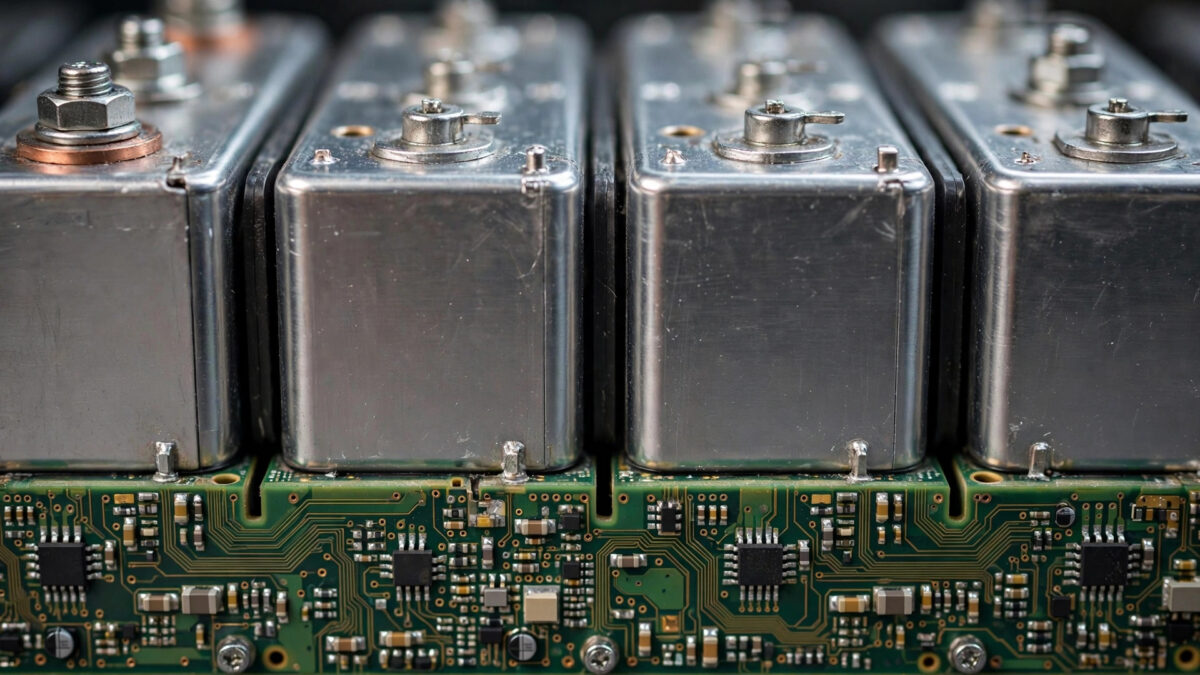
Open any solar generator spec sheet and you will see the battery chemistry listed: LiFePO4 or lithium-ion. That one line tells you more about the product’s lifespan, safety, and value than almost any other spec — yet most buyers glide right past it. The two dominant chemistries, lithium iron phosphate (LiFePO4) and nickel manganese cobalt (NMC), behave very differently over years of ownership.
This guide explains what each chemistry actually means for you, which one wins on the factors that matter, and how to spot which chemistry a product uses before you buy.
What LiFePO4 and NMC Actually Are
Both are types of rechargeable lithium-ion batteries — LiFePO4 is not a separate technology, it is a specific lithium-ion chemistry. The difference is in the cathode material: LiFePO4 uses lithium iron phosphate, while NMC uses a blend of nickel, manganese, and cobalt.
That material choice cascades into every performance characteristic: how many charge cycles the battery survives, how it behaves under heat and abuse, how much energy fits in a given weight, and what it costs to manufacture. Here is how they compare head to head.
Cycle Life: The Biggest Difference
This is where LiFePO4 dominates, and it is not close. A quality LiFePO4 cell is typically rated for 3,000 to 4,000+ charge cycles before dropping to 80 percent capacity — and some manufacturers now claim 6,000 cycles. NMC cells in portable power stations are typically rated for 500 to 800 cycles.
In practical terms: if you cycle your station 100 times a year, an NMC battery reaches end of life in 5 to 8 years, while a LiFePO4 battery keeps going for 30 to 40 years in cycle terms (calendar aging becomes the limit long before that). For something you expect to own for a decade, LiFePO4’s cycle life is a transformative advantage.
This is the main reason the entire industry has shifted: virtually every major solar generator released since 2023 uses LiFePO4, from budget units to 4kWh home-backup systems.
Safety: LiFePO4 Wins Clearly
LiFePO4 is the most thermally stable lithium chemistry in common use. Its thermal runaway temperature is far higher than NMC’s, it is far more resistant to overheating during faults, and it does not contain cobalt — a material associated with the most energetic battery failures.
To be clear: NMC batteries in quality power stations are still safe products. Reputable manufacturers wrap them in battery management systems with overcharge, over-discharge, short-circuit, and temperature protection, and failures are rare. But chemistry-level, LiFePO4 has a wider safety margin — which is exactly what you want in a device that sits in your home, charges unattended, and may run while you sleep.
Energy Density and Weight: NMC’s One Advantage
NMC packs more energy into less weight and space — roughly 150 to 220 Wh/kg versus LiFePO4’s 90 to 160 Wh/kg. That is why NMC dominated early portable power stations and still dominates electric vehicles, where every kilogram matters.
In practice, the weight difference is modest at common sizes. A 1kWh NMC station might weigh 20 pounds where its LiFePO4 equivalent weighs 25. Noticeable, but rarely decisive — and manufacturers have narrowed the gap with better cell packaging. For a device that mostly sits in one place, LiFePO4’s extra few pounds are a fine trade for triple the lifespan.
Cost: Roughly Even Now
NMC cells were historically cheaper at small scales, but LiFePO4 manufacturing has scaled enormously (driven by EVs and grid storage), and iron and phosphate are abundant, cheap materials — unlike cobalt and nickel. Today, LiFePO4 stations are price-competitive at every tier, and often cheaper than their NMC predecessors were.
When you factor in lifespan, LiFePO4 wins on cost per cycle by a wide margin. A battery that lasts four times as long does not need to be cheaper upfront to be the better value.
Which Brands Use Which Chemistry?
Nearly every current-generation solar generator from EcoFlow, BLUETTI, Jackery, and Anker uses LiFePO4. If you are buying a 2026 or 2027 model, you are almost certainly getting LiFePO4 — check the spec sheet to confirm.
The main place you still encounter NMC is older or entry-level models. The classic example is the Jackery Explorer 500 — a long-running, well-regarded 518Wh unit that uses a standard lithium-ion (NMC) battery rather than LiFePO4. To be fully transparent: that means roughly 500 to 800 cycles versus the 3,000+ you would get from a modern LiFePO4 equivalent. It remains a fine lightweight option for occasional use, but heavy daily users should know exactly what they are buying.
Rule of thumb: if a listing says “lithium-ion” without specifying LiFePO4 or LFP, assume NMC and check the cycle rating. If it says LiFePO4 or LFP, you are getting the longer-life chemistry.
Which Should You Buy?
For the overwhelming majority of buyers in 2027, the answer is LiFePO4. Longer life, better safety, competitive pricing, and near-universal availability across brands make it the default right choice. There is a reason the industry standardized on it.
The only scenarios where NMC still makes sense: you found a deeply discounted older NMC model and will use it lightly (weekend camping a few times a year), or you need the absolute lightest weight per watt-hour for backpacking-style portability and accept the shorter lifespan. In every other case, buy LiFePO4 and enjoy a battery that will likely outlast the electronics around it.
For help picking a specific model, our best solar generators of 2027 roundup lists only LiFePO4 units, and our EcoFlow vs Jackery vs BLUETTI comparison breaks down how the big three brands implement the chemistry.
Which is better for solar generators: LiFePO4 or NMC?
LiFePO4 is better for almost all solar generator buyers. It lasts 3,000 to 4,000+ cycles versus NMC’s 500 to 800, has a wider thermal safety margin, and is now price-competitive. NMC’s only advantage is slightly higher energy density (lighter weight per Wh).
How long does a LiFePO4 battery last in a solar generator?
LiFePO4 batteries are rated for 3,000 to 6,000+ cycles to 80 percent capacity. At 100 full cycles per year, that is decades of cycle life — in practice, calendar aging over 10+ years becomes the limiting factor, not cycle wear.
Is LiFePO4 safer than lithium-ion?
Yes. LiFePO4 (a type of lithium-ion) is the most thermally stable common lithium chemistry, with a much higher thermal runaway threshold than NMC. Both are safe in quality products with proper battery management systems, but LiFePO4 has the wider safety margin.
Does the Jackery Explorer 500 use LiFePO4?
No. The Jackery Explorer 500 uses a standard lithium-ion (NMC) battery rated for roughly 500 to 800 cycles — not LiFePO4. It is still a solid lightweight unit for occasional use, but buyers should know they are getting shorter cycle life than modern LiFePO4 models.
How can I tell which battery chemistry a solar generator uses?
Check the spec sheet: it will list LiFePO4, LFP, or lithium iron phosphate for the newer chemistry. Listings that say only “lithium-ion” without qualification are usually NMC — confirm by checking the cycle life rating (500-800 suggests NMC; 3,000+ means LiFePO4).
Our verdict
LiFePO4 won this contest years ago, and the market agrees — it is now the standard chemistry across every major brand. Buy LiFePO4 for the 4x+ cycle life and superior safety margin at no real price premium. Only consider NMC if you find a steep discount on an older model for light, occasional use — and go in knowing the battery will age faster.

Related Guides
Best Solar Generator Bundles with Panels for 2027
Save money with the best solar generator bundles of 2027 — power station plus solar panel kits ready to use out of the box.

Best Solar Generators for RVs in 2027
Power your RV adventures with the best solar generators for RVs in 2027, featuring TT-30 outlets and fast solar charging.

Best Solar Generators for Camping in 2027
The best solar generators for camping in 2027: lightweight, quiet power stations that keep your gear charged off-grid.