


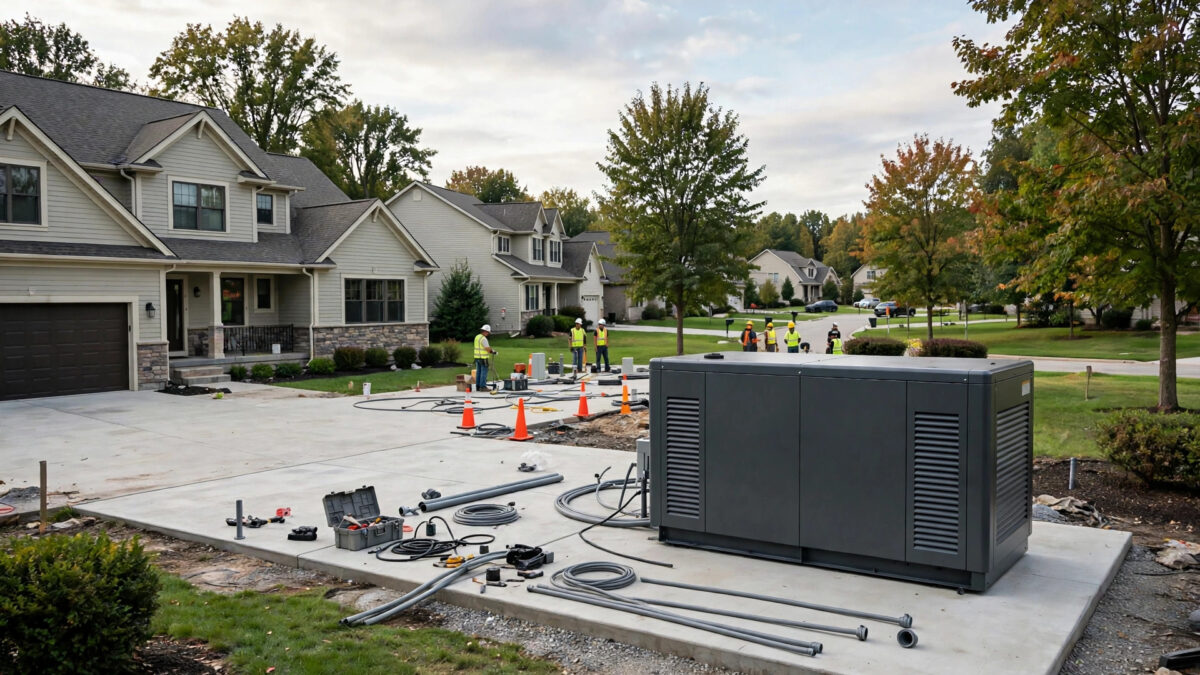
What does whole house generator cost installed 2027 data show? The direct answer: most homeowners pay $9,000 to $16,000 for a professionally installed air-cooled standby generator in the popular 14kW to 24kW range, including the unit, automatic transfer switch, labor, permits, and gas hookup. Smaller essential-circuit systems can land around $7,000-$9,000, while larger or liquid-cooled units push past $20,000 and can exceed $40,000 for big homes. These are published price ranges we researched from contractor cost data and equipment pricing — not quotes. Because roughly half of the total is labor, permits, and site work, your final number depends heavily on your region, your gas supply, and how far the generator sits from your meter and panel. Always get three written quotes from certified installers.
Key Takeaways
- Typical installed cost (14-24kW air-cooled): $9,000-$16,000; national average near $12,000.
- Equipment is only ~40-50% of the total; labor, gas work, permits, and site prep make up the rest.
- Common sizes: 14kW ($7,000-$10,000 installed), 22kW ($10,000-$15,000), 24-26kW ($12,000-$18,000).
- Liquid-cooled 30-48kW+ units: $20,000-$40,000+ installed.
- Expect 1-3 days for the install itself, plus weeks for permits, gas work, and inspection scheduling.
- Use certified installers — most manufacturers require professional installation to keep the warranty valid.
How Much Does a Whole House Generator Cost Installed in 2027?
The whole house generator cost installed in 2027 breaks into two halves: the equipment and everything else. The generator unit itself — a 14kW to 24kW air-cooled standby from a major brand — typically retails between $3,000 and $7,000 depending on size and features. The “everything else” is where the other half of your bill comes from: a licensed electrician to wire the automatic transfer switch and panel connections, a plumber or gas fitter to run the fuel line, a concrete or composite pad, permits, inspections, and sometimes trenching or landscaping restoration. All in, published ranges put the typical residential project at $9,000 to $16,000, with a national average clustering around $12,000.
That average hides a lot of spread. A straightforward 14kW install on a house with an existing natural gas line, a short run from meter to generator pad, and a modern 200-amp panel can come in under $9,000. A 26kW unit on a property that needs a propane tank, 100 feet of trenching, and a panel upgrade can sail past $20,000. The sections below break down where every dollar goes so you can read a quote like a contractor.
| Generator size | Typical installed cost (2027) | What it usually covers |
|---|---|---|
| 10-14kW air-cooled | $7,000-$10,000 | Essential circuits: fridge, furnace, well pump, lights, sump pump |
| 18-22kW air-cooled | $10,000-$15,000 | Most of the house, including 3-4 ton central AC with load management |
| 24-26kW air-cooled | $12,000-$18,000 | Large homes, 5-ton AC, electric water heater, multiple large loads |
| 30-48kW liquid-cooled | $20,000-$40,000+ | Estate homes, home offices with servers, heavy electric loads |
Whole House Generator Cost Breakdown: Equipment vs. Labor
Understanding the split between equipment and installation costs helps you spot an overpriced quote — or an underpriced one that is missing something. Based on published contractor breakdowns, here is roughly where the money goes on a typical $12,000 project.
| Cost component | Share of total | Typical range |
|---|---|---|
| Generator unit | 40-50% | $3,000-$7,000 |
| Automatic transfer switch | 10-15% | $1,000-$2,500 |
| Electrical labor (wiring, panel work) | 15-25% | $1,500-$3,500 |
| Gas line work (plumber/gas fitter) | 10-20% | $500-$3,000+ (trenching adds more) |
| Pad, site prep, materials | 5-10% | $300-$1,000 |
| Permits and inspections | 2-5% | $200-$600 |
Two things surprise first-time buyers. First, the automatic transfer switch is not a minor accessory — a 200-amp whole-house ATS is a $1,000-$2,500 piece of equipment that must be sized to your service. Second, gas work is the wildcard. If your home already has natural gas with adequate pressure and the meter is near the install site, the gas line may cost a few hundred dollars. If you need a propane tank (purchase or lease), a regulator, and a long buried line, gas work alone can run $2,000-$5,000. Propane tank installation typically requires its own permit and setback clearances from the house and property lines.
What Size Whole House Generator Do You Need?
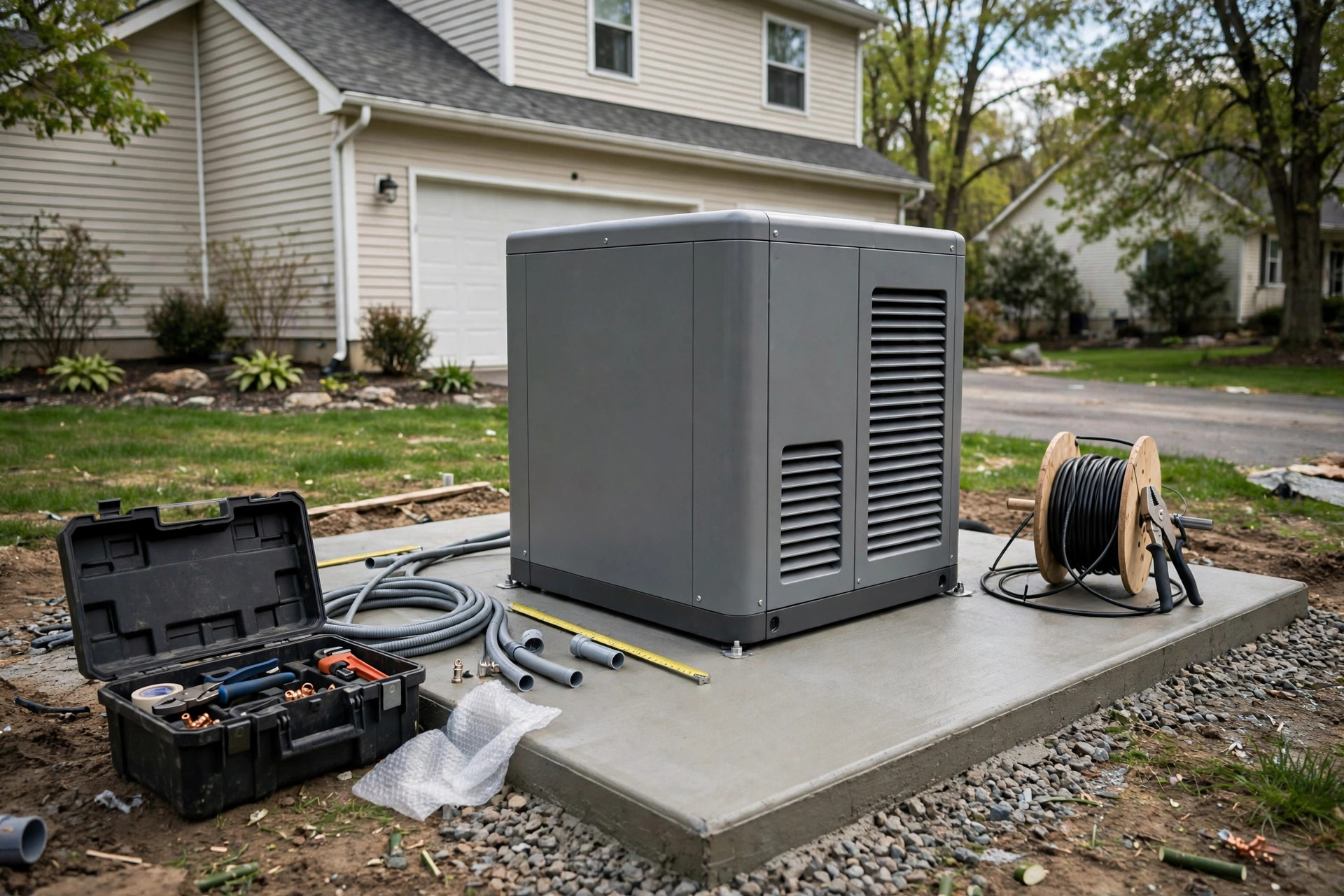
Size is the single biggest driver of equipment cost, and oversizing wastes thousands of dollars while undersizing leaves you in the dark. The right size depends on your home’s square footage, whether major appliances are gas or electric, and whether you want whole-house coverage or just essentials. As a rough guide: homes under 2,000 sq ft with gas heat and hot water often do fine on 14-18kW; 2,500-3,500 sq ft homes with central AC typically need 22-24kW; all-electric homes over 3,500 sq ft may need 26kW+ or load-shedding modules. A proper load calculation by the installer — not a guess — should determine the final size. For a deeper walkthrough, see our guide on sizing a generator for your home’s loads.
Load management matters as much as raw kilowatts. Modern automatic transfer switches can shed non-essential loads (like a second AC or electric dryer) during an outage, letting a smaller generator cover a bigger house. A 22kW unit with smart load management often does the job of a 26kW unit without it — and costs less both to buy and to fuel. Ask your installer whether the quote includes load-shed modules and how they are configured.
Factors That Raise or Lower Your Installation Cost
Fuel type: natural gas vs. propane
Natural gas is usually the cheapest fuel to connect if the line is already there — no tank, no refills, and lower per-hour fuel cost. Propane adds tank costs ($500-$2,500 to buy, or a monthly lease) and higher fuel costs per hour, but it works anywhere, including rural properties without gas service. Propane also stores indefinitely, which matters for a generator that may sit idle for months.
Distance and trenching
Generators must sit a code-required distance from the house (typically 5 feet from openings, 18 inches from walls, with 3 feet of working clearance, though local codes vary). Every foot between the generator pad, the gas meter, and the electrical panel adds wire, pipe, and labor. Trenching for buried gas or electric lines runs roughly $10-$20 per linear foot on top of everything else. A site visit is the only way to price this accurately.
Electrical panel upgrades
A 200-amp service is standard for whole-house ATS installations. If your home has an older 100-amp panel, upgrading the service ($1,500-$3,000) may be required before the generator goes in. Your installer should verify service size during the site survey, not on installation day.
Permits, inspections, and HOA rules
Electrical and gas permits typically total $200-$600, and most jurisdictions require inspections of both. Some municipalities add noise ordinances or setback rules that dictate placement. HOAs may require screening or specific pad locations. Budget both the fees and the calendar time — permit approval can add 2-6 weeks to a project.
Brand and dealer network
The two dominant residential brands, Generac and Kohler, both sell through dealer networks, and installation pricing reflects local dealer competition as much as the hardware. Generac’s Guardian series (including the popular 22kW and 24kW models) tends to price slightly lower with the widest installer network; Kohler’s 20RCAL and similar models typically cost a bit more upfront with a reputation for premium build quality. Our whole-house generator comparison breaks down the models side by side.
Ongoing Costs: Fuel, Maintenance, and Warranty
The installation check is not the last money you will spend. Budget for the running costs before you buy.
Fuel. A 22kW standby running on natural gas at half load burns roughly 2 therms per hour — at $1.50 per therm, that is about $3 per hour, or $72 per day of continuous outage. On propane, the same load burns about 2.4 gallons per hour; at $3 per gallon, that is over $7 per hour. Fuel choice meaningfully changes the cost of a multi-day outage.
Maintenance. Air-cooled standby generators need an oil and filter change roughly every 100-200 hours of runtime or annually, plus a weekly self-test cycle that burns a small amount of fuel. Budget $200-$400 per year for DIY-level maintenance or $300-$600 per year for a dealer service plan. Dealer service plans also keep warranty documentation clean.
Warranty. Most residential standby generators carry a 5-year limited warranty (Generac and Kohler both offer 5-year terms on residential units). Extended warranties of 7-10 years are available through dealers, typically $500-$1,500. Read the fine print: warranty coverage usually requires professional installation and documented maintenance.
How to Get Accurate Quotes (and Avoid Overpaying)
Start with a site survey, not a phone estimate. Reputable installers visit your property, check your panel and gas service, measure distances, and perform a load calculation before quoting. Get three written quotes from certified dealers, and be wary of any quote that is dramatically lower than the others — it may exclude the transfer switch, the gas line, or the permit. Ask each installer: What size do you recommend and why? Is the transfer switch whole-house or managed-circuit? What does the gas work include? Who pulls the permits? What is the warranty, and what maintenance does it require? How long from contract to final inspection? The answers matter as much as the number.
Financing is common — many dealers offer 12-60 month plans — but compare the total financed cost, not just the monthly payment. And check for utility or state incentives: some regions offer rebates for standby generators in outage-prone areas, though these are the exception rather than the rule.
Our verdict
Budget $9,000-$16,000 for a typical 14-24kW whole-house generator installed, with $12,000 as a reasonable planning number. The equipment is less than half the story — electrical labor, gas work, permits, and site prep make up the rest, which is why three itemized quotes from certified installers matter more than any national average. Size the unit with a real load calculation, confirm your gas supply and panel capacity early, and keep up with maintenance to protect the 5-year warranty.
How we researched this
We compiled installed-cost ranges from published contractor pricing data, dealer cost guides, and equipment retail pricing available at the time of our research, cross-checked across multiple sources. We did not solicit live quotes or perform installations. All figures are approximate ranges; labor rates, permit fees, gas-work costs, and material prices vary significantly by region. Get written, itemized quotes from certified installers in your area before making a purchase decision.
How much does a whole house generator cost installed in 2027?
What size whole house generator do I need?
How long does whole house generator installation take?
Is a whole house generator worth the cost?
Does a whole house generator need a permit?
How much does it cost to run a whole house generator per hour?
A whole house generator is a major purchase, but it is also one of the few home upgrades that pays you back in the middle of a storm — automatically, whether you are home or not. In 2027, the installed cost for the mainstream 14-24kW range remains $9,000 to $16,000 for most homes. Start with a load calculation, get three itemized quotes from certified installers, and compare the result against a portable-generator-plus-transfer-switch setup before you commit. Either way, you will sleep better the next time the grid goes dark.

Related Guides
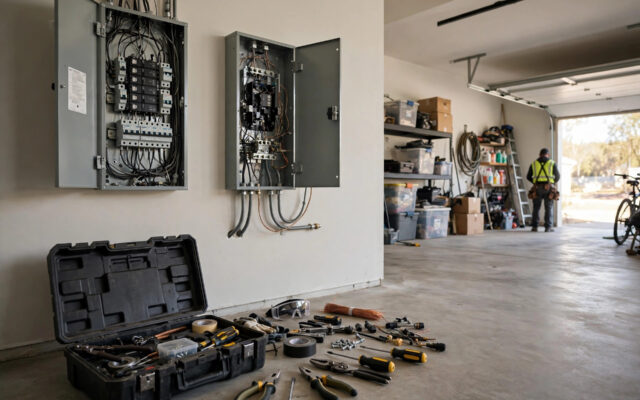
Generator Transfer Switch Installation Cost in 2027: Labor & Equipment
Generator transfer switch installation costs $600-$1,800 in 2027. Compare hardware, electrician labor, permit costs, and manual vs. automatic switch pricing.

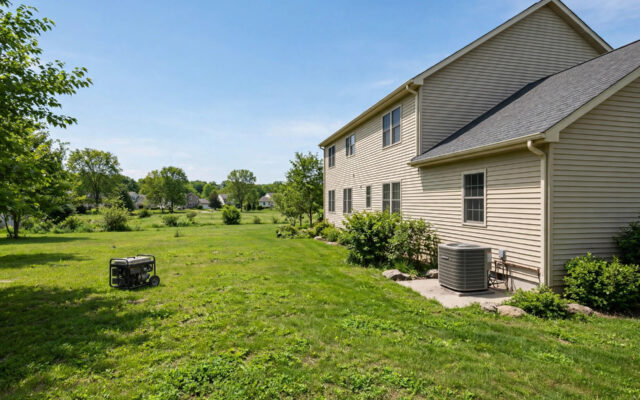
What Size Generator Do I Need to Run Central AC? Complete Sizing Guide
What size generator to run central AC? Most systems need 14–24 kW standby. Tonnage wattage chart, RLA/LRA explained, soft-start savings, and safe hookup.
What Size Generator Do I Need for a Sump Pump?
What size generator for a sump pump? A 2,000–4,000W generator covers most 1/3–1/2 HP pumps. Wattage chart, extension cord safety, and storm-season tips inside.