



Wondering what size generator for a well pump you actually need? For most homes, a 5,000 to 7,500-watt generator will run a typical residential well pump. The number that matters most is not the pump’s running watts but its starting watts: a common 1 HP submersible pump draws about 2,000 watts while running but needs roughly 4,000 watts for the split second it starts. In 2027, sizing a generator for a well pump still comes down to matching the generator’s surge rating to your pump’s locked-rotor amps — and making sure the generator has a 240-volt outlet, since most deep-well pumps run on 240V.
A well pump is one of the toughest loads a home generator can face. Unlike a refrigerator or a few lights, a pump motor pulls a large inrush of current when it starts — often two to three times its running watts. Undersize the generator and the pump may just hum, trip a breaker, or refuse to start at all. In this guide, we researched published wattage data and sizing charts for common residential well pumps so you can pick the right generator size the first time, without guessing.
Key Takeaways
- Most residential well pumps need a 3,500 to 7,500-watt generator, depending on pump horsepower.
- Starting watts (surge) matter more than running watts — pump motors draw 2 to 3 times their running watts at startup.
- Most submersible well pumps run on 240V, so your generator must have a 240V outlet.
- Find your pump’s exact numbers on its nameplate or by calculating amps times volts.
- A soft-start kit can cut the pump’s starting surge substantially, sometimes letting you use a smaller generator.
- Never backfeed a well pump through a dryer outlet — use a transfer switch installed by a licensed electrician.
What Size Generator Do I Need for a Well Pump?
Most homes need a generator rated for 3,500 to 7,500 running watts to power a well pump, with the exact size depending on the pump’s horsepower. A 1/2 HP pump typically starts fine on a 3,500-watt generator, a 1 HP pump usually needs 5,000 to 6,500 watts, and a 2 HP pump may need 10,000 watts or more. These are approximate ranges based on published wattage data — always size to your specific pump’s starting (surge) watts, not just its running watts, and choose a generator with a 240V outlet if your pump is a 240V submersible model.
Well Pump Wattage Chart: Running vs. Starting Watts
Well pump wattage depends mainly on the pump’s horsepower (HP) rating and type. The table below shows widely published approximate wattages for common residential pumps. Starting watts are the surge the motor draws for a few seconds when it kicks on; running watts are what it draws while pumping steadily.
| Pump size | Typical running watts | Typical starting watts | Generator size (approx.) |
|---|---|---|---|
| 1/3 HP jet pump | 700 W | 1,400 W | 2,500–3,500 W |
| 1/2 HP jet or submersible | 1,000 W | 2,000–2,100 W | 3,500–4,500 W |
| 3/4 HP submersible | 1,500 W | 3,000 W | 4,500–6,500 W |
| 1 HP submersible | 2,000 W | 4,000 W | 5,000–7,500 W |
| 1.5 HP submersible | 2,500 W | 5,000 W | 6,500–9,500 W |
| 2 HP submersible | 3,000 W | 6,000 W | 9,000–12,000 W |
These figures are industry-standard approximations, not exact specifications — individual pumps vary by brand, age, well depth, and how hard the pump has to work. Always confirm your own pump’s numbers (see the next section) before buying a generator.
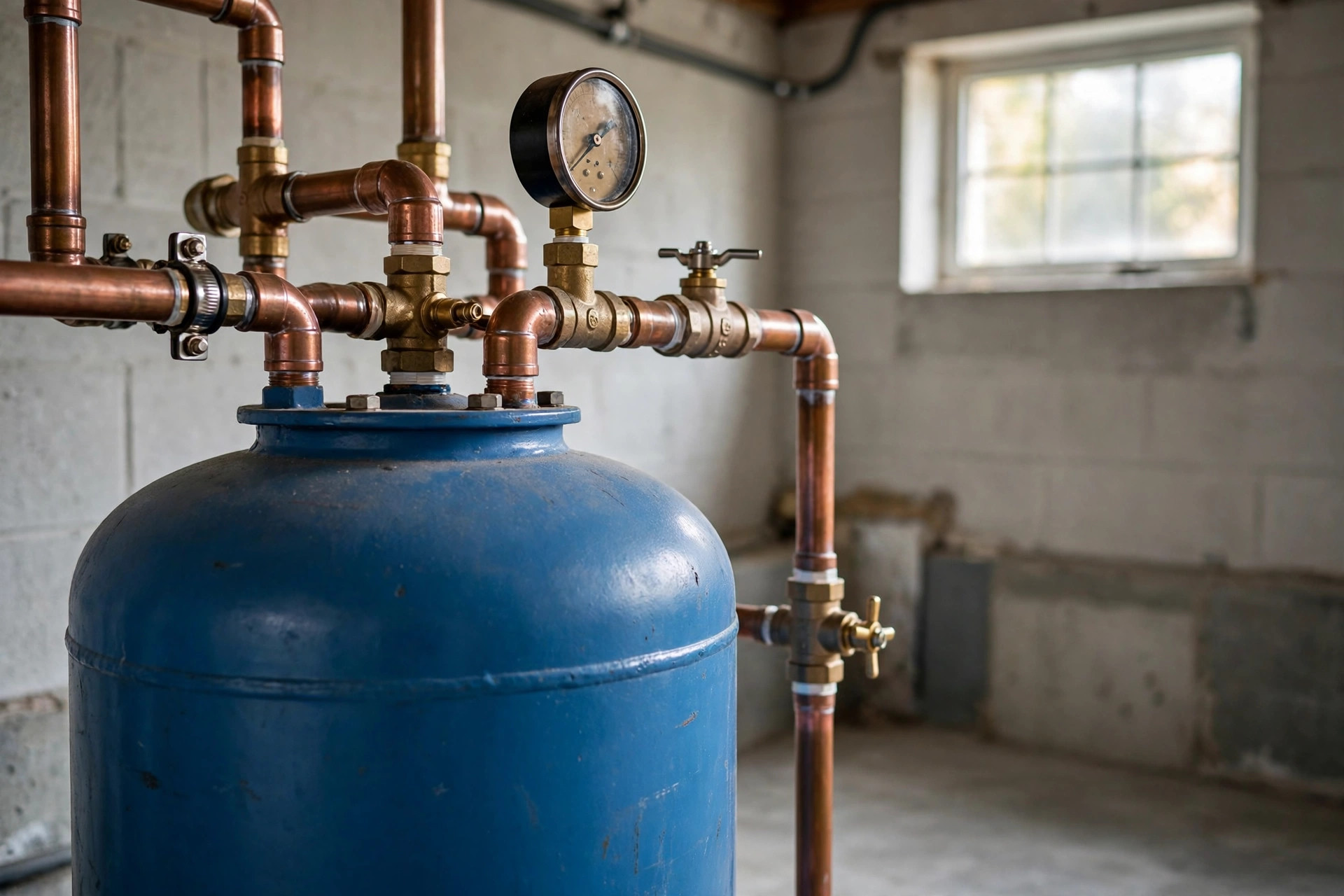
How to Find Your Well Pump’s Exact Wattage
Charts give you a ballpark, but your pump’s nameplate gives you the truth. Here are three ways to get exact numbers, from easiest to most hands-on.
Check the pump’s nameplate or manual
Most well pumps have a metal nameplate on the motor or control box listing voltage, running amps, and sometimes locked-rotor amps (LRA). Multiply running amps by voltage to get running watts. For example, a pump drawing 9 amps at 240 volts uses about 2,160 running watts. The nameplate may also list LRA — multiply that by voltage to get the starting watt requirement.
Identify your pump type
Shallow wells (under about 25 feet) usually use above-ground jet pumps, which are often 120V or convertible 120/240V and draw less power. Deeper wells use submersible pumps that sit down in the well itself — these are almost always 240V and draw more power. Knowing your pump type tells you whether the generator needs a 240V outlet, which many smaller portable generators lack.
Ask your well installer or check the paperwork
If the nameplate is underwater or unreadable, your well driller or installer usually has the pump model on file. The pump manufacturer publishes a spec sheet with running amps and locked-rotor amps. A quick model-number lookup is more reliable than guessing from a chart.
Why Starting Watts Matter More Than Running Watts
Starting watts matter because an electric motor needs a large burst of current to overcome inertia and get spinning — this is called locked-rotor current, and it typically runs 2 to 3 times the motor’s normal running current for the first second or two. If the generator cannot supply that burst, voltage sags, the motor stalls and overheats, and the generator’s breaker trips. That is why a 1 HP well pump that “only” draws 2,000 watts while running still needs a generator with roughly 4,000 watts of surge capacity. Size for the start, and the running load takes care of itself.
What Size Portable Generator Can Run a Well Pump?
Yes, a portable generator can run a well pump as long as it meets two conditions: enough surge wattage to start the motor, and the right voltage outlet. Most 240V submersible pumps need a generator with a 240V twist-lock outlet (usually L14-30R), which is common on mid-size portable generators in the 5,000 to 7,500-watt class but rare on small 2,000-watt inverter generators.
Smaller 120V jet pumps are the exception — a 2,000 to 3,000-watt inverter generator can often run a 1/2 HP jet pump. But check the pump’s voltage before assuming: plugging a 240V pump into a 120V-only generator will not work, and attempting it through adapters is dangerous.
Can a Soft-Start Kit Let You Use a Smaller Generator?
Sometimes, yes. A soft-start kit is a small electronic device wired into the pump circuit that ramps the motor up gradually instead of hitting it with full current all at once. Published data and owner feedback suggest soft starters can cut a pump motor’s starting surge by 50 to 70 percent. That can mean the difference between needing a 7,500-watt generator and getting by with a 5,000-watt one for a 1 HP pump.
Soft-start kits must be installed by a licensed electrician, and they need to be matched to your pump’s motor. If you already own a mid-size generator that is close to — but not quite — big enough to start your pump, a soft starter is worth discussing with an electrician before you buy a bigger generator.
What Else Can You Run Alongside a Well Pump?
Once the pump is running, it only draws its running watts — the surge lasts a second or two. That leaves spare capacity on a properly sized generator for other essentials, as long as the combined running watts stay under the generator’s running-watt rating and you never exceed its surge rating when the pump cycles on.
| Appliance | Typical running watts | Fits alongside a 1 HP pump? |
|---|---|---|
| Refrigerator | 150–250 W | Yes |
| A few LED lights | 30–60 W | Yes |
| Phone/laptop chargers | 50–100 W | Yes |
| Gas furnace blower | 300–800 W | Usually yes |
| Microwave | 1,000–1,500 W | Only if pump is off |
| Electric water heater | 4,000–4,500 W | No — far too much |
The key discipline: avoid running the microwave or other heavy loads while the pump is actively pumping. Stagger your big loads and a mid-size generator covers a comfortable essentials setup.
Connecting a Generator to a Well Pump Safely
Because well pumps are hardwired (not plugged into a wall outlet), you cannot simply run an extension cord to them. The standard safe setup is a manual transfer switch that isolates the well pump circuit from the grid and switches it to generator power. A licensed electrician can usually install one in a few hours. If your area follows the NEC 2026 code cycle, ask your electrician about current interlock and transfer equipment requirements.
FAQs
What size generator do I need for a 1 HP well pump?
Will a 3500-watt generator run a well pump?
Can I run a well pump on an inverter generator?
Why does my generator trip when the well pump starts?
Can a soft starter reduce the generator size needed for a well pump?
Do I need a transfer switch for a well pump generator?
Conclusion
Choosing what size generator for a well pump comes down to one number: your pump’s starting watts. Find the locked-rotor amps on the nameplate, multiply by voltage, add about 20 percent headroom, and make sure the generator offers 240V output if your pump needs it. For most homes that means a 5,000 to 7,500-watt portable generator with a proper transfer switch installed by a licensed electrician. Size it right once, and your water stays on through every outage.

Related Guides
Whole House Generator Installation Cost in 2027: Complete Price Guide
Whole house generator installation costs $9,000-$16,000 in 2027. Full price breakdown: equipment, labor, gas line work, permits, and costs by generator size.

Generator Transfer Switch Installation Cost in 2027: Labor & Equipment
Generator transfer switch installation costs $600-$1,800 in 2027. Compare hardware, electrician labor, permit costs, and manual vs. automatic switch pricing.
What Size Generator Do I Need to Run Central AC? Complete Sizing Guide
What size generator to run central AC? Most systems need 14–24 kW standby. Tonnage wattage chart, RLA/LRA explained, soft-start savings, and safe hookup.