


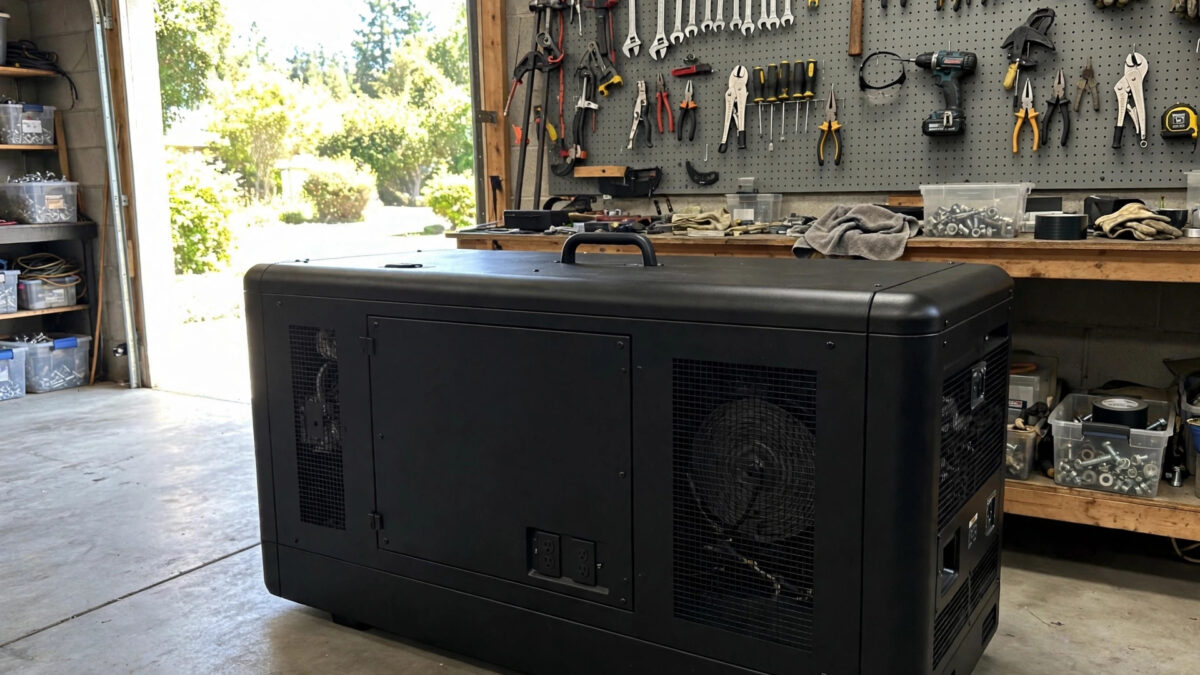
Walk into any Harbor Freight and you’ll see it sitting there like it owns the place: the Predator 9500, a 9,500-watt super-quiet inverter generator selling for around $1,900–$2,200. Next to a Honda EU7000iS at $5,000, the math looks almost insulting. How can an inverter generator with 2,000 more starting watts cost less than half as much?
That question has made the Predator 9500 one of the most talked-about generators on YouTube and forums like DIY Solar Forum, where off-grid owners run them as battery-charger workhorses. The nickname that stuck is “Honda killer.” After digging through owner reports, teardowns, and the spec sheet, here’s my honest take: it’s not a Honda killer. It’s something more interesting — a genuinely good value that forces you to decide what the Honda premium actually buys.
One important note before we go further: Harbor Freight sells Predator generators exclusively through its own stores. You won’t find the Predator 9500 on Amazon — the listings there are parts and accessories. I’ve linked the closest Amazon-available alternatives below, and I’ll tell you exactly where to buy the Predator itself.
Key takeaways
- 9,500 starting / 7,600 running watts of inverter power for ~$1,900–$2,200 — the best watts-per-dollar ratio in the large-inverter class.
- 67 dB noise rating is genuinely quiet for 7,600 watts, though not Honda-quiet. Expect conversation-level hum at 20+ feet.
- CO SECURE carbon monoxide auto-shutdown, electric start, and 120/240V output come standard.
- Harbor Freight exclusive — no Amazon listing, and long-term parts availability depends on HF’s supply chain, not a nationwide dealer network.
Our verdict
The Predator 9500 is the best value in large inverter generators, full stop. If you want 7,600 running watts of clean, quiet power and you don’t want to spend $5,000, this is your generator. The tradeoffs are real — it’s heavy at ~257 lbs, it’s a Harbor Freight product with a shorter track record, and resale value won’t touch Honda’s. But on pure capability per dollar, nothing in 2027 comes close.
Best value large inverter
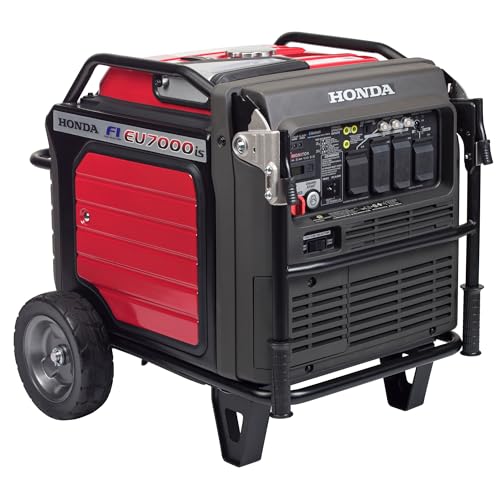
Honda EU7000iS Inverter Generator
- Running Watts: 5,500
- Runtime: Up to 16 hours (light load)
- Noise Level: 52–58 dB
- Weight: ~270 lbs
As an Amazon Associate, we earn from qualifying purchases.
The generator the Predator gets compared to. Less power (5,500 running watts), but fuel injection, 52–58 dB, legendary reliability, and a real dealer network. Read our full Honda EU7000iS review for the detailed breakdown.
Budget quiet alternative
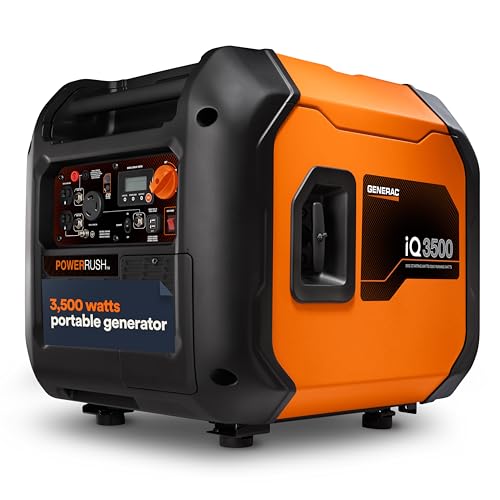
Generac iQ3500 Inverter Generator
- Running Watts: 3,000
- Runtime: Up to ~7 hours at 50% load
- Noise Level: ~50 dB (light load)
- Weight: 109 lbs
As an Amazon Associate, we earn from qualifying purchases.
If the Predator’s size and weight are overkill, the iQ3500 gives you 3,000 running watts of quiet inverter power for roughly $1,300–$1,600. Enough for essentials, camping, and RV use — just not central A/C or 240V loads.
Pros
- 7,600 running watts for ~$2,000 — unmatched value
- Clean inverter power, 120/240V output
- 67 dB is quiet for this much power
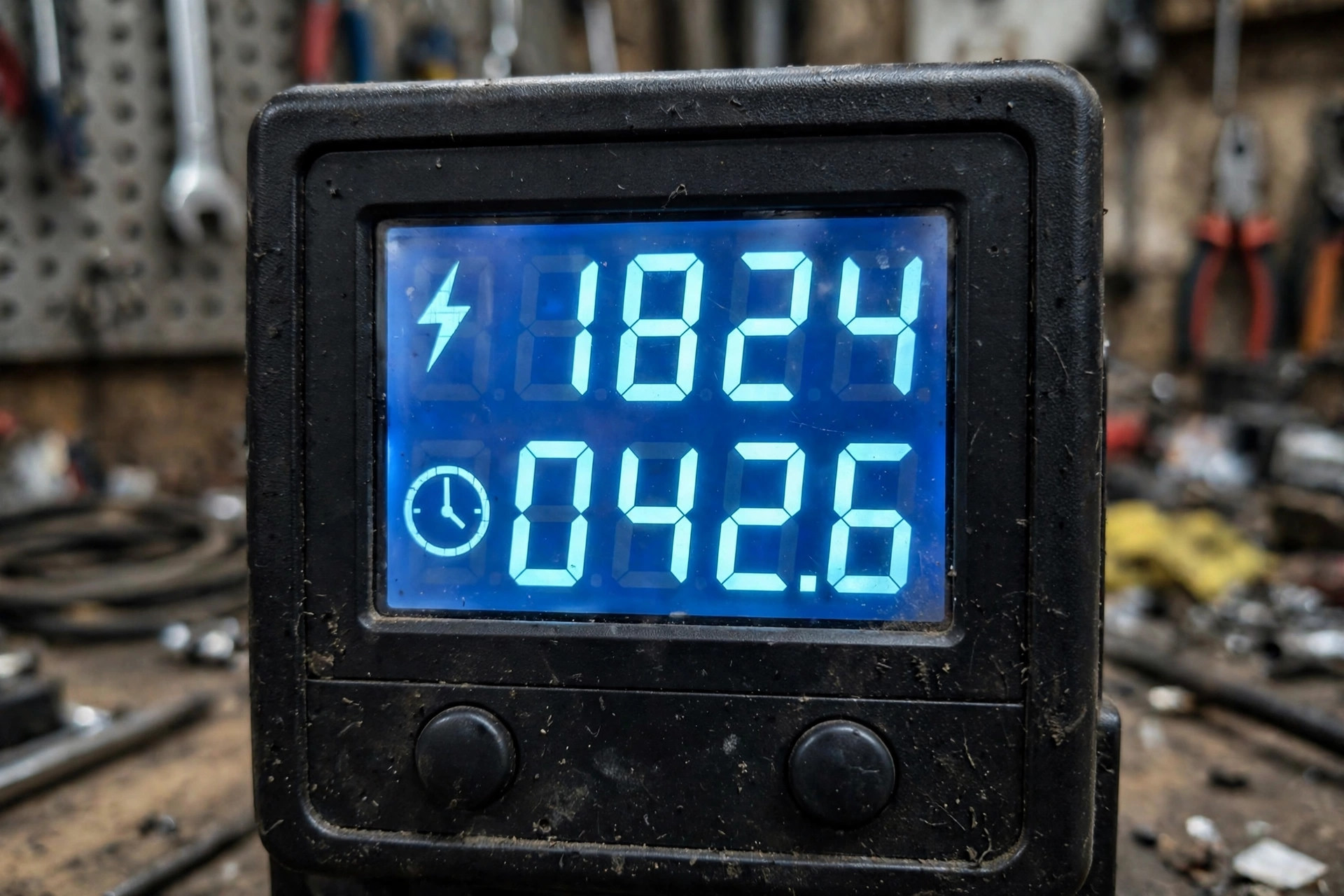
- Electric start, CO SECURE shutdown, digital display
- Strong owner community and parts availability through HF
Cons
- Harbor Freight exclusive — not on Amazon
- 90-day standard warranty is short for the price
- 257 lbs — needs a ramp and two people
- Not as quiet or refined as the Honda EU7000iS
- Gasoline only, no dual-fuel option
Is the Predator 9500 as good as the Honda EU7000iS?
Where can I buy the Predator 9500?
Can the Predator 9500 run a central air conditioner?
How long does the Predator 9500 run on a tank?
Is the Predator 9500 an inverter generator?
Final verdict
The “Honda killer” nickname oversells it, but the value proposition is real: 7,600 watts of clean, quiet-ish, 240V inverter power for about $2,000. Buy the extended warranty, change the oil early and often, and keep the battery on a tender. Do that, and the Predator 9500 will do 90% of what the Honda does for 40% of the money.
Break-in and maintenance: the 20-hour rule
If you buy a Predator 9500, the single most important thing you can do is ignore Harbor Freight’s break-in schedule and change the oil early. The manual says first change at 30 hours; experienced owners do it at 5 hours, again at 20, then every 100. The first oil change on these units comes out glittery with break-in metal — that’s normal for a new engine, but you don’t want that circulating any longer than necessary. Use a quality 10W-30 conventional for break-in, then switch to synthetic.
Beyond oil: check the valve lash at 100 hours (they’re usually tight from the factory and loosening them to spec smooths out the idle noticeably), upgrade the stock spark plug to an NGK equivalent at the first service (a $5 part that owners swear by for easier starting), and keep the air filter clean — the enclosure runs warm and a clogged filter makes it run warmer. Keep the starter battery on a tender between uses. Do these five things and the reliability gap between this and the Honda narrows dramatically. Skip them and you’ll be the one writing the one-star review.
For storage, run it dry or stabilized — same as any generator. The fuel shutoff valve makes running the carb dry easy: close the valve, let it stall, done. Our fuel stabilizer guide covers the chemistry if you want the details.
How we researched this: Spec comparison against Harbor Freight documentation, owner review analysis from retail sites, YouTube teardowns, and DIY Solar Forum long-term owner threads. We did not bench-test this unit; performance claims derive from published specs and aggregated owner reports.

Related Guides
Westinghouse iGen4500DF Review: The Dual-Fuel Inverter to Beat in 2027
Westinghouse iGen4500DF review: 4,500W dual-fuel inverter, 52 dBA, remote start, RV-ready. We test the specs, noise, and value against Honda in 2027.

Champion vs Generac Generators: Which Brand Is Better in 2027?
Champion vs Generac: Champion wins portable value, Generac wins standby. We compare lineups, reliability, safety tech, and support to pick the right brand.
Inverter vs Conventional Generators: Which Should You Buy in 2027?
Inverter vs conventional generators: inverters win on noise, fuel use and clean power; conventional wins on watts per dollar. Here's how to choose in 2027.