


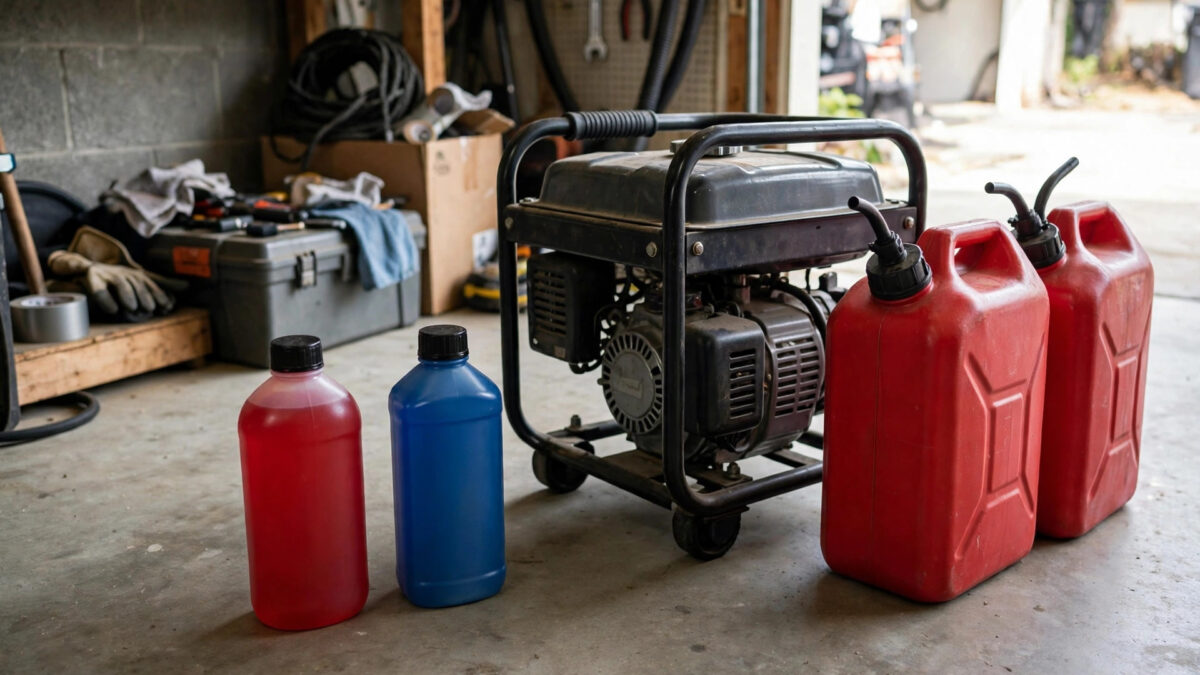
Here’s a statistic that should bother every generator owner: the most common reason a generator won’t start isn’t a dead battery or a bad spark plug. It’s stale fuel. Gasoline starts degrading in as little as 30 days, and ethanol-blended fuel — which is nearly all pump gas in the US — is worse, absorbing moisture and separating into a gummy mess that clogs carburetors. I’ve seen it kill generators that were otherwise perfect.
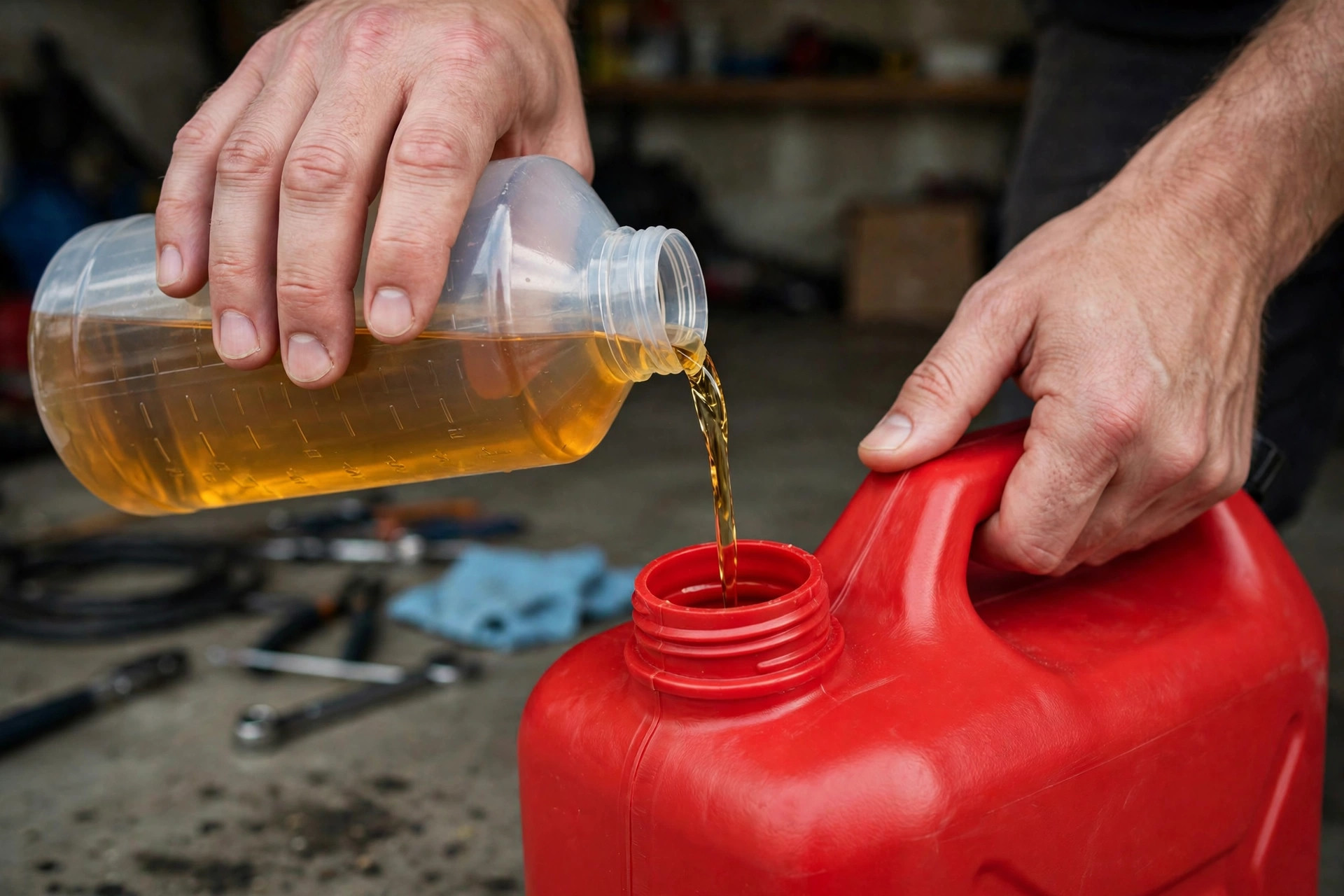
The fix costs about fifteen dollars: fuel stabilizer. A bottle of the right stuff keeps gasoline fresh for up to two years, prevents the varnish and gum that clog jets, and fights the corrosion ethanol causes in fuel systems. It’s the highest-ROI maintenance item in all of generator ownership. But not all stabilizers are equal — some are pure storage chemistry, others clean while they stabilize, and dosing math varies wildly. Here’s what actually works in 2027.
Key takeaways
- Untreated gasoline goes stale in 30–90 days; ethanol blends degrade faster. Stabilizer keeps fuel fresh up to 24 months.
- STA-BIL Storage (32 oz, treats 80 gallons) is the best all-around pick — proven chemistry, easy measuring, ~$12–$18.
- Star Tron enzyme treatment is the best concentrated option — 16 oz treats up to 256 gallons and can help rejuvenate old fuel.
- Dose correctly: 1 oz of STA-BIL per 2.5 gallons. More is not better — follow the bottle.
Quick picks: Best overall — STA-BIL Storage Fuel Stabilizer (22214). Best concentrated — Star Tron Enzyme Fuel Treatment. Best cleaner + stabilizer — Sea Foam Motor Treatment. Best for ethanol/marine — STA-BIL 360 Marine. Best for small engines — Star Tron Small Engine Formula.
Best overall
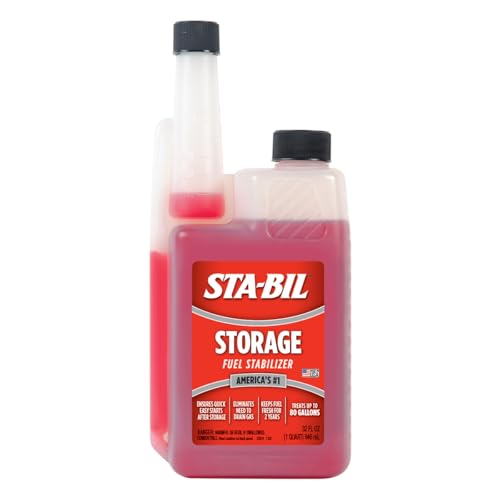
STA-BIL Storage Fuel Stabilizer, 32 oz (22214)
- Fuel Types: All gasoline incl. ethanol blends to E85
- Size: 32 oz (treats up to 80 gallons)
- Dosage: 1 oz per 2.5 gallons
- Storage Life: Up to 24 months
As an Amazon Associate, we earn from qualifying purchases.
STA-BIL is the Kleenex of fuel stabilizers — the name everyone knows, and in this case the reputation is earned. The 22214 Storage formula keeps gasoline fresh for up to 24 months, prevents the gum and varnish formation that clogs carburetors, and fights corrosion in the fuel system. It works in all gasoline including ethanol blends up to E85, and it’s safe for 2-cycle and 4-cycle engines alike.
The dosing is simple: 1 ounce treats 2.5 gallons, so the 32-ounce bottle handles 80 gallons — enough to treat a generator, a mower, a snowblower, and several gas cans with room to spare. The bottle has a built-in measuring chamber, which sounds trivial until you’ve tried to eyeball half an ounce. In independent long-term tests (including a well-known 5-year fuel storage test), STA-BIL-treated fuel started engines reliably while untreated fuel failed within a year. At roughly $12–$18, it’s cheap insurance.
Pros
- Proven 24-month storage protection
- Built-in measuring chamber — no guessing
- Works in all gasoline engines
- Excellent value per treated gallon
Cons
- Storage-focused — doesn’t clean existing deposits
- Must be added to fresh fuel to work best
Best concentrated
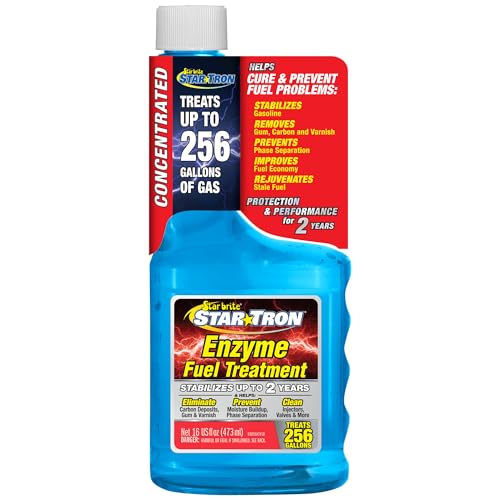
Star Tron Enzyme Fuel Treatment Concentrate, 16 oz
- Fuel Types: All gasoline incl. ethanol blends
- Size: 16 oz (treats up to 256 gallons)
- Dosage: 1 oz per 16 gallons (concentrate)
- Storage Life: Up to 2 years
As an Amazon Associate, we earn from qualifying purchases.
Star Tron takes a different approach: enzyme technology that disperses water into sub-micron droplets (preventing ethanol phase separation), breaks down gum and carbon deposits, and stabilizes fuel for up to 2 years. The concentrate is absurdly economical — 16 ounces treats up to 256 gallons. One bottle lasts most generator owners years.
Where Star Tron really shines is borderline fuel: owners report it helping rejuvenate gasoline that’s already a few months old, where pure storage stabilizers work best on fresh fuel. It’s not magic — truly varnished fuel needs a carb rebuild — but for “I forgot to treat this gas in October” situations, it’s the best shot short of draining the tank.
Pros
- Treats 256 gallons — best value per gallon
- Fights ethanol phase separation
- Can help salvage aging fuel
- Cleans as it stabilizes
Cons
- Concentrated dosing is easy to overdo (harmless, but wasteful)
- Enzyme claims are less independently tested than STA-BIL’s
Best cleaner + stabilizer
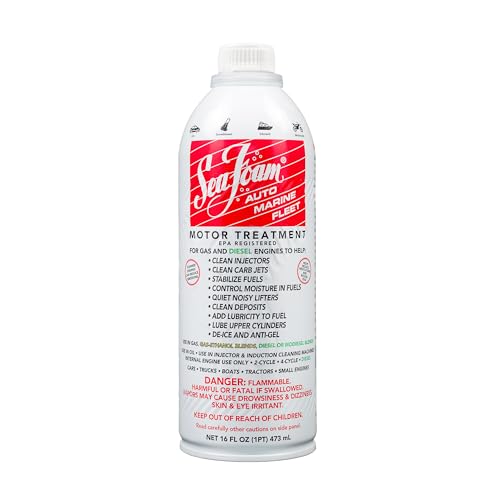
Sea Foam Motor Treatment SF16, 16 oz
- Fuel Types: Gasoline and diesel
- Size: 16 oz
- Dosage: 1 oz per gallon (maintenance); 2+ oz per gallon (cleaning)
- Storage Life: Up to 2 years
As an Amazon Associate, we earn from qualifying purchases.
Sea Foam is the Swiss Army knife: part fuel stabilizer (keeps fuel fresh up to 2 years), part fuel system cleaner (dissolves gum and varnish in injectors and carburetor passages), and it even works as a crankcase cleaner. For a generator that’s already showing symptoms — rough idle, hard starting, surging — Sea Foam in the fuel is the first thing to try before you pull the carburetor apart. I’ve watched it smooth out surging small engines more times than I can count.
As a pure storage stabilizer it’s good but not quite as purpose-built as STA-BIL; as a problem-solver it’s unmatched. Dose 1 ounce per gallon for maintenance, 2+ ounces per gallon for cleaning. Every generator owner should have a can on the shelf.
Pros
- Cleans while it stabilizes — fixes minor gum issues
- Works in fuel and oil systems
- Safe for gas and diesel
Cons
- Higher dose rate = higher cost per gallon treated
- Won’t fix a fully varnished carburetor
Best for ethanol / marine
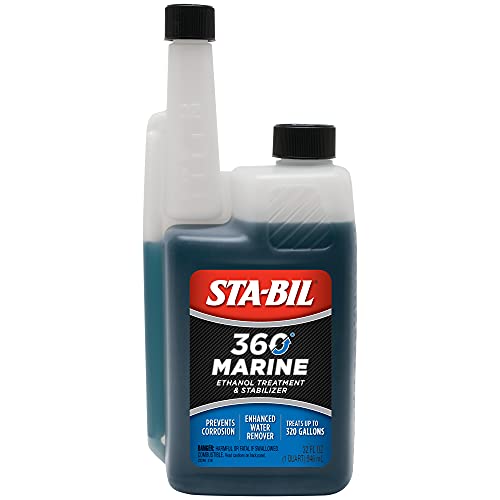
STA-BIL 360 Marine Ethanol Treatment, 32 oz
- Fuel Types: Ethanol-blended gasoline
- Size: 32 oz (treats up to 320 gallons)
- Dosage: 1 oz per 10 gallons
- Storage Life: Up to 12 months
As an Amazon Associate, we earn from qualifying purchases.
If your fuel sits in humid conditions — coastal areas, boats, or just a damp shed — ethanol phase separation is your enemy. STA-BIL 360 Marine is formulated specifically for ethanol defense: it removes water from fuel, prevents corrosion with vapor-corrosion inhibitors that protect above the fuel line (where regular stabilizers don’t reach), and keeps fuel fresh up to 12 months. The 32-ounce bottle treats up to 320 gallons at 1 oz per 10 gallons.
For generator owners in humid climates or anyone storing fuel in less-than-ideal conditions, this is the upgrade pick over standard STA-BIL. It’s also designed for use at every fill-up, not just storage.
Pros
- Best ethanol phase-separation defense
- Protects above the fuel line
- Use at every fill-up
Cons
- 12-month storage vs. 24 for standard STA-BIL
- Overkill for dry-climate storage
Best for small engines
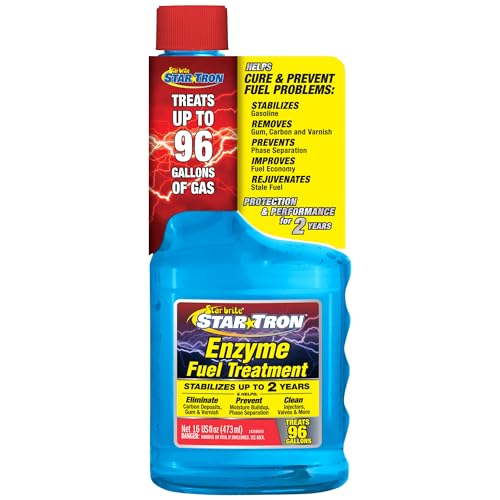
Star Tron Small Engine Formula, 16 oz
- Fuel Types: All gasoline incl. ethanol blends
- Size: 16 oz (treats up to 96 gallons)
- Dosage: 1 oz per 6 gallons
- Storage Life: Up to 2 years
As an Amazon Associate, we earn from qualifying purchases.
Star Tron’s small-engine formula is dosed for the equipment most generator owners actually have: mowers, blowers, trimmers, and small generators with 1–5 gallon tanks. 16 ounces treats up to 96 gallons at 1 oz per 6 gallons — a more practical dose rate for small tanks than the concentrate’s 1-per-16. Same enzyme technology: stabilizes up to 2 years, disperses water, cleans deposits.
If you’re treating a 5-gallon generator tank plus a couple of gas cans, this is the right size and dose. The concentrate (pick #2) is the better buy if you’re treating 50+ gallons a year.
Pros
- Practical dosing for small tanks
- Same enzyme benefits as concentrate
- Good for the mower + generator combo
Cons
- Less economical than concentrate for big volumes
| Product | Treats | Storage life | Also cleans? | Best for |
|---|---|---|---|---|
| STA-BIL Storage 22214 | 80 gal | 24 months | No | Best overall |
| Star Tron Concentrate | 256 gal | 24 months | Yes | Best value |
| Sea Foam SF16 | 16 gal | 24 months | Yes | Problem-solving |
| STA-BIL 360 Marine | 320 gal | 12 months | No | Ethanol/humidity |
| Star Tron Small Engine | 96 gal | 24 months | Yes | Small tanks |
How to use fuel stabilizer correctly
Add it to fresh fuel, then run the engine
Stabilizer prevents degradation — it can’t reverse it. Add it to fresh gasoline (ideally at the pump, into the can), then run the generator for 5–10 minutes so treated fuel circulates through the entire fuel system, including the carburetor bowl. Treating the tank but not the carb is the classic half-measure: the bowl still gums up.
Get the dose right
More is not better. Overdosing wastes money and, in extreme cases, can cause its own deposits. STA-BIL Storage: 1 oz per 2.5 gallons. Star Tron concentrate: 1 oz per 16 gallons. Sea Foam: 1 oz per gallon for maintenance. Use the bottle’s measuring chamber or a cheap graduated cylinder — don’t eyeball it.
Store fuel properly
Keep cans 95% full (less air = less moisture absorption and oxidation), sealed tight, in a cool place out of sunlight. Metal safety cans beat plastic for long storage. Date your cans with a marker — even stabilized fuel has a clock, and you’ll thank yourself in a year. Our generator maintenance guide covers the full storage routine.
For long storage, consider running dry instead
Belt and suspenders: for storage beyond a year, many mechanics recommend running the carburetor dry (shut the fuel valve, let the engine die) after treating the tank fuel. The treated fuel stays good in the tank; the empty carb has nothing to gum up. It’s an extra two minutes that eliminates the failure point entirely.
How long does gasoline last in a generator without stabilizer?
Can fuel stabilizer fix old gas?
How much STA-BIL do I put in my generator?
Is STA-BIL or Sea Foam better for generators?
Does fuel stabilizer work with ethanol gas?
Our verdict
Buy STA-BIL Storage 22214 for routine generator storage — it’s proven, cheap, and easy to dose. Keep Sea Foam on the shelf for troubleshooting, and consider Star Tron concentrate if you’re treating large volumes. Fifteen dollars of stabilizer beats a $150 carburetor rebuild every single time.
What the long-term tests actually show
Marketing claims are cheap; multi-year fuel storage tests aren’t. The best-known independent test ran pump gasoline — treated and untreated — for five years, periodically trying to start engines on it. The results were stark: untreated fuel failed within 6–12 months (engines wouldn’t start or ran terribly), while STA-BIL-treated fuel started engines reliably at every check, out past 4 years. Star Tron-treated fuel also performed well in shorter 2-year tests, particularly on ethanol-blend fuel where its water-dispersing chemistry helps.
Two caveats from the data: first, every successful test started with fresh fuel — stabilizer preserves, it doesn’t resurrect. Second, storage conditions matter as much as chemistry: sealed containers, minimal air space, cool temperatures. The best stabilizer in a half-empty can baking in a hot shed still loses to mediocre stabilizer in a full sealed can in a cool garage. Chemistry is half the battle; storage discipline is the other half.
Your fuel strategy: stabilize, drain, or switch fuels?
You have three legitimate strategies for the stale-fuel problem. Stabilize (this article): cheapest, easiest, works for fuel you’ll use within 2 years. Drain and run dry: free, bulletproof for indefinite storage, but a hassle — and an empty steel tank can rust internally in humid climates. Switch to propane: a dual/tri-fuel generator on propane sidesteps the problem entirely since propane never degrades; the upfront cost is the generator premium and a propane tank. Our dual-fuel generator guide covers the best options if you go this route.
My recommendation for most generator owners: stabilize the fuel and run the carb dry for long storage. It takes five extra minutes and eliminates both failure modes. If you’re buying a new generator anyway and propane is available, the tri-fuel upgrade pays for itself the first time you skip the spring carburetor rebuild.
Diesel owners: different chemistry
Everything above is about gasoline. If you run a diesel generator — less common in portable sizes, but they exist — don’t use gasoline stabilizers in it. Diesel’s enemy isn’t varnish, it’s algae and water: diesel fuel grows microbial contamination (“diesel bug”) in the presence of water, clogging filters with black slime. Diesel needs a biocide (like Biobor JF) plus a stability additive, not STA-BIL. The storage principles rhyme — keep tanks full, keep water out, treat fresh fuel — but the chemistry is different. Using a gasoline stabilizer in diesel won’t hurt anything, but it won’t stop the algae either. Buy the right product for the fuel.
How to tell if your fuel is already bad
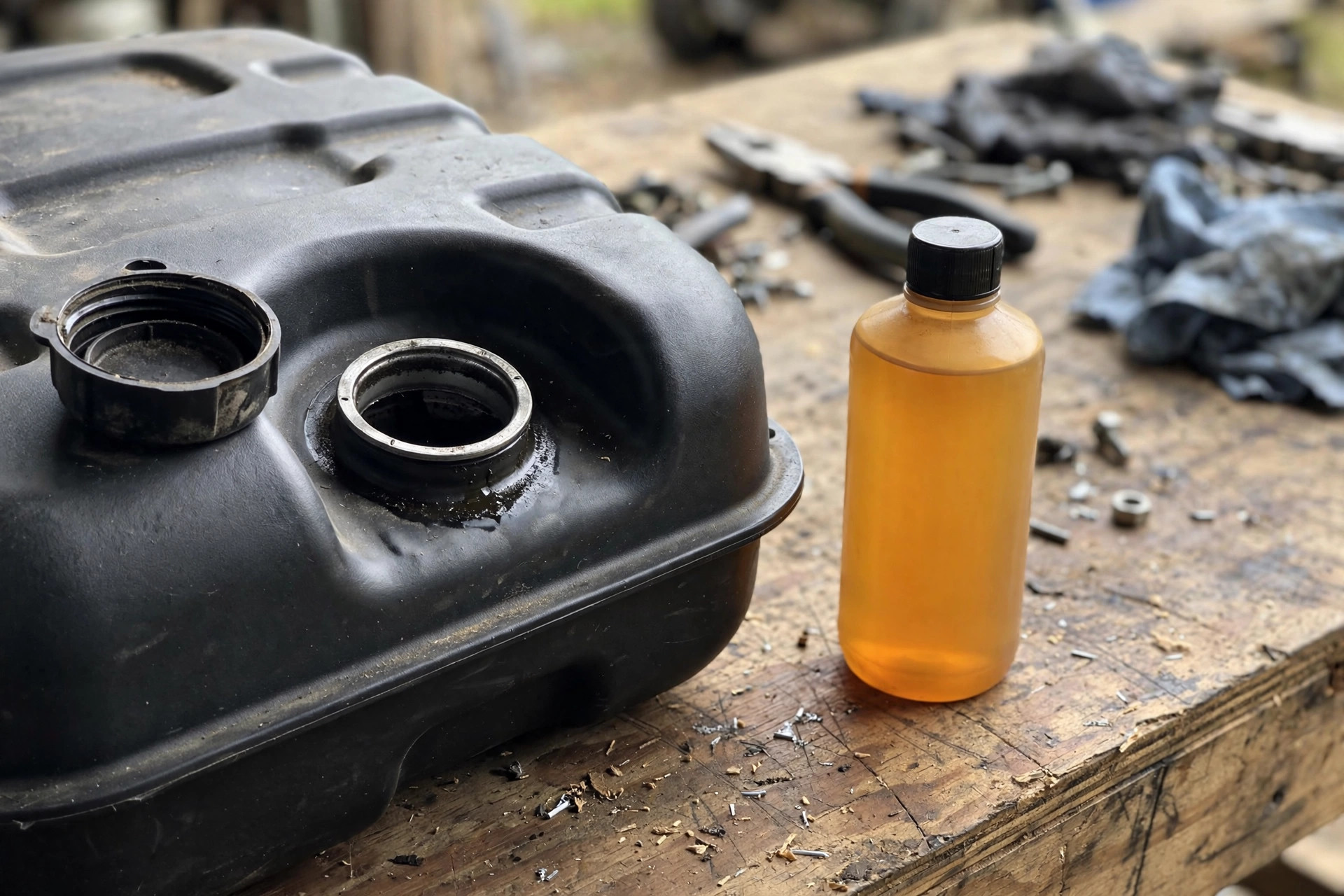
Before you treat anything, check what you’re working with. Fresh gasoline smells sharp and looks clear to slightly amber. Bad fuel tells on itself: a sour or varnish-like smell (think old paint thinner), dark amber or orange color, visible separation layers in a clear container, or a gummy residue on the container walls. If it smells like varnish, it’s done — no stabilizer will bring it back, and running it risks the carburetor. Drain it (take old fuel to a hazardous waste collection; don’t dump it), clean the tank, and start fresh with treated fuel. If it’s 2–4 months old and just smells a little flat, Star Tron or Sea Foam gives you a fighting chance — but fresh treated fuel is always the better bet.
How we researched this: Manufacturer dosing and chemistry data, independent long-term fuel storage test results, and small-engine mechanic guidance on storage best practices. We did not run multi-year storage tests ourselves.

Related Guides
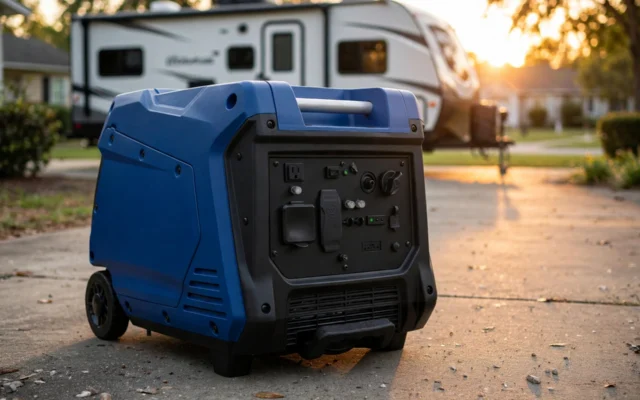
Westinghouse iGen4500DF Review: The Dual-Fuel Inverter to Beat in 2027
Westinghouse iGen4500DF review: 4,500W dual-fuel inverter, 52 dBA, remote start, RV-ready. We test the specs, noise, and value against Honda in 2027.

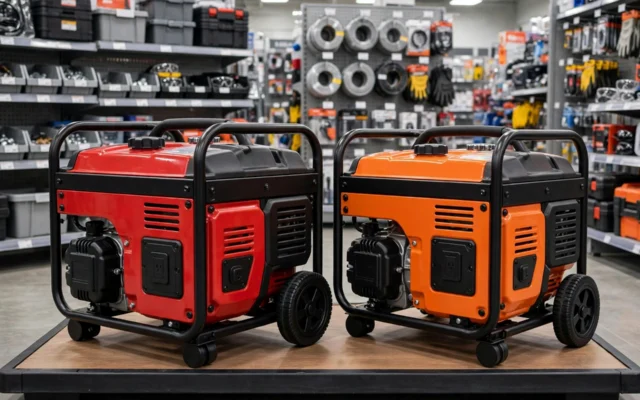
Champion vs Generac Generators: Which Brand Is Better in 2027?
Champion vs Generac: Champion wins portable value, Generac wins standby. We compare lineups, reliability, safety tech, and support to pick the right brand.
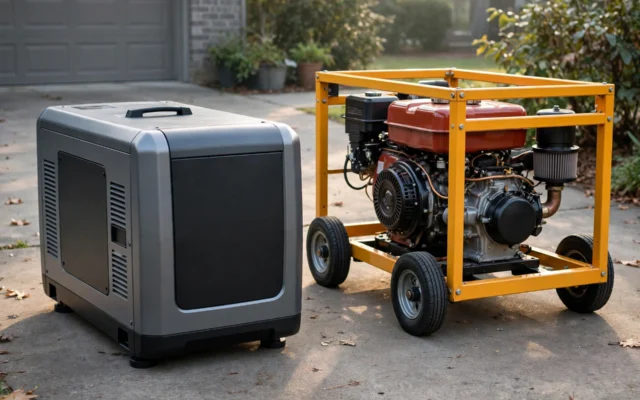
Inverter vs Conventional Generators: Which Should You Buy in 2027?
Inverter vs conventional generators: inverters win on noise, fuel use and clean power; conventional wins on watts per dollar. Here's how to choose in 2027.