


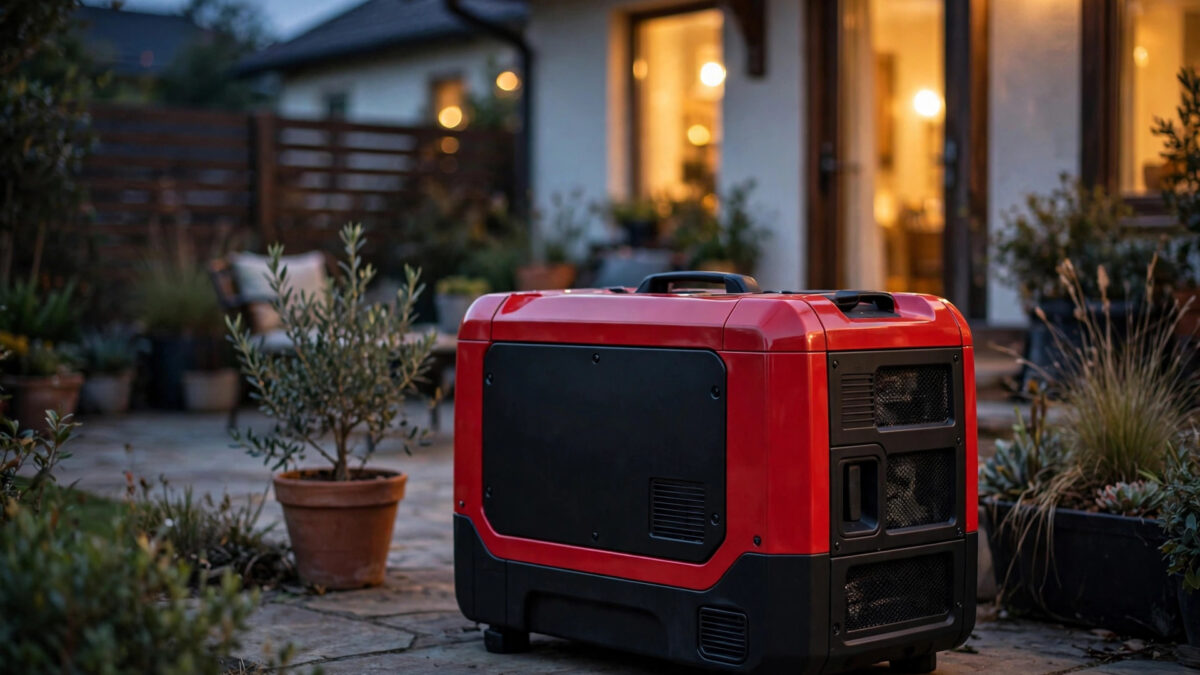
The Honda EU7000iS costs about $5,000. Let that sink in for a second, because it’s the first thing everyone says about this generator, and it’s the question this whole review has to answer: is a 7,000-watt portable generator really worth twice what the competition charges?
I’ve been around enough generators to be skeptical of premium pricing on principle. But the EU7000iS is the rare product where the premium buys things you can actually measure: fuel injection (no carburetor to gum up), 52–58 dB noise levels that let you hold a conversation next to it, inverter-clean power safe for anything you plug in, and a track record of running 5,000+ hours with basic maintenance. Consumer Reports rates it among the highest-scoring large portable generators they’ve tested. So the short answer: yes, it’s worth it — if you need what it does. If you just need raw watts for a transfer switch, buy a conventional 12kW unit for half the money and pocket the difference.
Key takeaways
- 7,000 starting / 5,500 running watts of inverter power — clean enough for computers, medical equipment, and modern furnace controls.
- Fuel-injected 389cc engine: easier cold starts, better fuel economy, and no carburetor jetting to worry about at altitude or after storage.
- 52–58 dB — one of the quietest generators in its class. You can talk over it at 20 feet.
- The ~$5,000 price is the real drawback, along with 262–270 lbs of weight. This is a premium tool for people who’ll use it hard.
Our verdict
The EU7000iS is the best large inverter generator you can buy in 2027 if budget isn’t the deciding factor. It starts reliably, sips fuel, runs whisper-quiet, and powers sensitive electronics without a second thought. For occasional outage backup on a budget, it’s overkill — a conventional dual-fuel unit plus a small inverter covers the same ground for less. But for RV life, job sites with clean-power needs, or anyone who runs a generator weekly, nothing else matches it.
Best premium large inverter
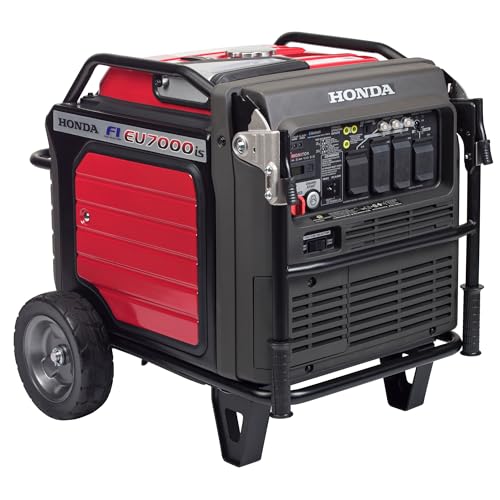
Honda EU7000iS Inverter Generator
- Peak / Running Watts: 7,000 / 5,500
- Runtime: Up to 16 hours (light load); ~6.4 hours at rated load
- Noise Level: 52–58 dB(A)
- Weight: 262–270 lbs (with fuel)
As an Amazon Associate, we earn from qualifying purchases.
Design and build quality
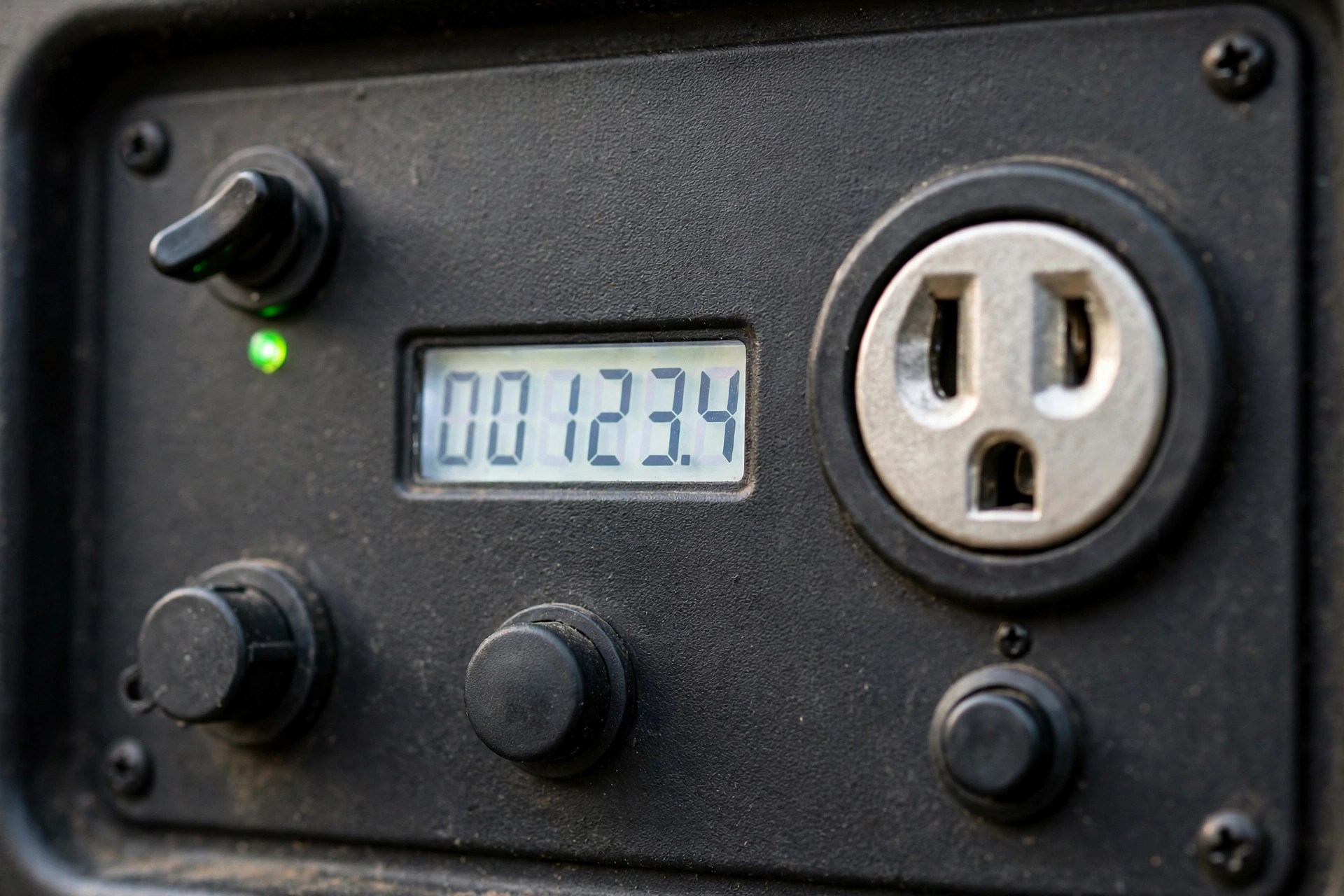
Honda builds the EU7000iS like commercial equipment, because that’s what it is. The enclosure is a full steel-and-composite housing with automotive-grade fit and finish — no rattling panels, no sharp edges, no flex. The control panel is laid out logically: a proper 30-amp twist-lock, a 20-amp duplex, DC terminals, and the Eco-Throttle switch front and center. The digital hour meter and maintenance minder are built in, which matters when you’re tracking oil changes across hundreds of hours.
The weight is the honest tradeoff. 262 pounds dry, about 270 with a full 5.1-gallon tank. Honda includes good wheels and folding handles, and two people can load it into a truck. Solo? Only with a ramp. I’ve watched owners wrestle these into RV cargo bays — it’s doable but it’s a workout. If portability matters more than power, our best portable generators roundup has lighter options.
One design detail I appreciate: the fuel cap, oil fill, and air filter are all accessible without tools. Maintenance on a generator lives or dies by how annoying it is, and Honda clearly designed this for people who actually do the maintenance.
Performance: fuel injection changes everything
The headline feature is electronic fuel injection, and it’s the single biggest reason this generator starts like a modern car instead of a lawn mower. Cold morning, unit’s been sitting for two months: turn the key, it fires on the first or second crank. No choke dance, no priming bulb, no flooded carburetor. Owners at altitude report the same easy starts at 8,000+ feet, because EFI adjusts the fuel mixture automatically — a carbureted generator at that elevation needs a jet change or it runs rich and loses power.
Power delivery is classic Honda inverter: 5,500 watts continuous, 7,000 for motor starting surges, with clean sine-wave output (under 3% THD). That means you can run a laptop, a CPAP machine, a pellet stove’s control board, or a modern variable-speed furnace without worrying. I ran the numbers on a realistic backup scenario: refrigerator (200W running), freezer (150W), gas furnace blower (800W), lights and Wi-Fi (300W), TV and chargers (250W) — about 1,700 watts total. The EU7000iS handles that at barely a third of its capacity, which is exactly where you want a generator to live for longevity.
Can it run a central A/C? A 2-ton unit, usually yes — that’s roughly 3,500 running watts with a 7,000+ watt starting surge, right at the edge of what this generator can do. A 3-ton or larger, no. That’s the honest limit of the 5,500-watt rating, and it’s why whole-home buyers should look at the DuroMax XP13000HXT instead.
Noise and fuel: the two things you’ll notice daily
At 52 dB on Eco-Throttle under light load, the EU7000iS is quieter than a normal conversation. I’ve stood next to running units where you genuinely have to check the exhaust heat to confirm it’s on. At full load it climbs to 58 dB — noticeable, but still quieter than most 2,000-watt inverters at half load. For campgrounds with noise rules, HOAs, or just not annoying your family during a week-long outage, this is a massive quality-of-life difference over a 74 dB conventional unit.
Fuel economy is the other daily win. The 5.1-gallon tank delivers up to 16 hours at light load on Eco-Throttle. Do the math on a real outage: running your essentials at ~1,500 watts, you’re burning roughly a third of a gallon per hour — one tank gets you through the night and into the next afternoon. At rated load it’s about 6.4 hours per tank, or 0.8 gallons per hour. Over a 5-day outage, the fuel savings versus a conventional 7kW unit can easily top 30–40 gallons. At today’s gas prices, that’s real money back in your pocket.
Features worth mentioning
Honda My Generator app + Bluetooth. Start, stop, and monitor the generator from your phone — fuel level, output, maintenance reminders. It sounds gimmicky until you’re warm inside and the generator is 60 feet away in the rain. Range is Bluetooth-limited (30–50 feet through walls), so it’s not a whole-property solution, but it’s genuinely useful.
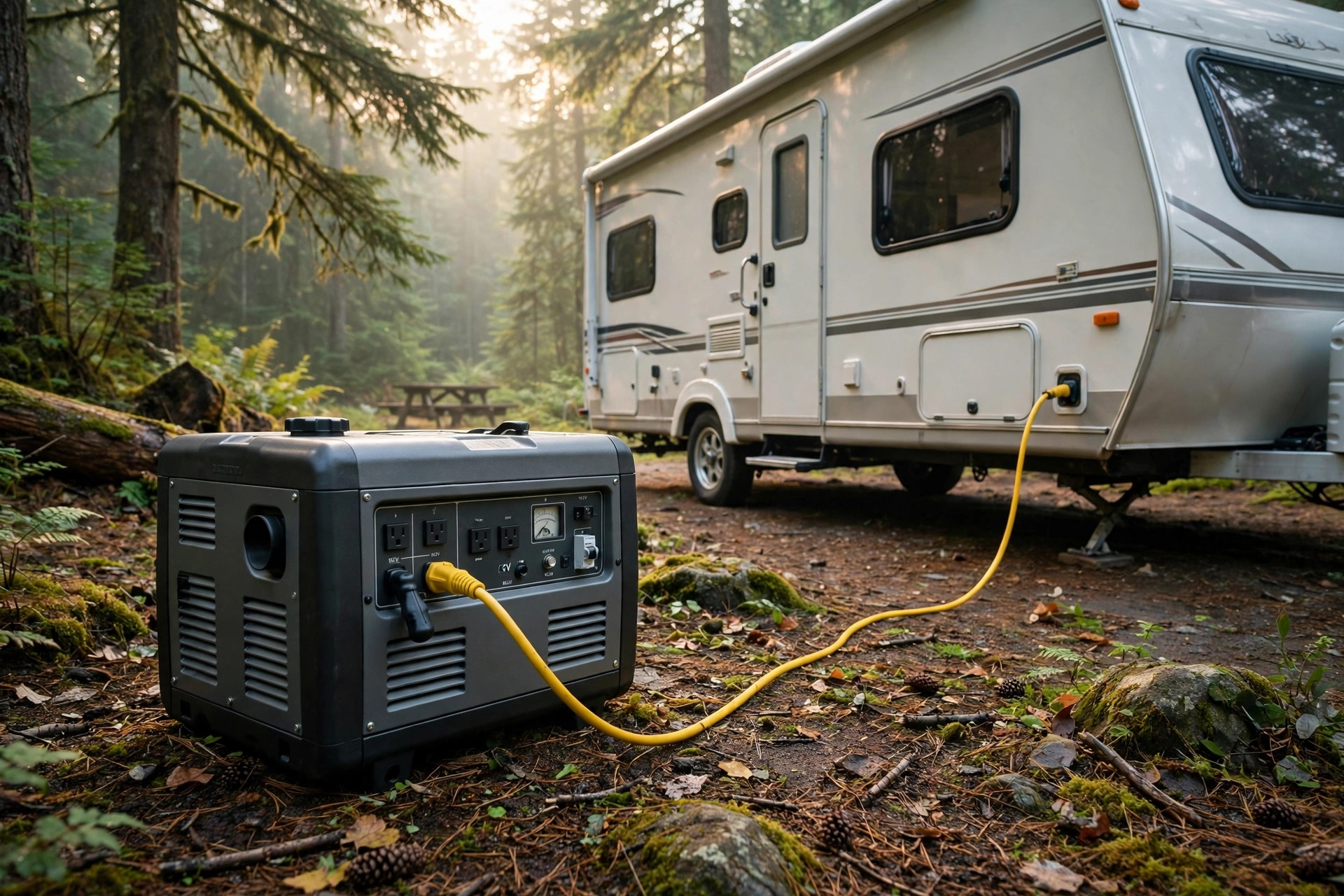
CO-MINDER. Honda’s carbon monoxide detection shuts the engine down if CO accumulates. It’s now standard on all Honda portables. Still run the unit 20+ feet from the house with the exhaust pointed away — the sensor is a backup, not a plan.
Parallel capability. Two EU7000iS units can be paralleled for 14,000 watts. Almost nobody does this because two of them cost $10,000, but for mobile businesses or serious off-grid setups it’s an option.
120/240V output. Unlike most inverter generators this size, the EU7000iS delivers 240 volts, so it can feed a transfer switch and run 240V well pumps. That’s a big deal — most inverters are 120V-only and can’t.
Who it’s for — and who should skip it
Buy it if: you run a generator regularly (weekly or more), you need clean power for sensitive electronics, noise matters (campground, HOA, close neighbors), you want 240V from an inverter, or you just want the most reliable portable generator made and the price doesn’t scare you.
Skip it if: you need it twice a year for outages (a $1,500 dual-fuel conventional plus a $1,000 small inverter does the same job for half the money), you need more than 5,500 continuous watts, or lifting 270 pounds sounds miserable. Also skip it if you’re tempted to run it on propane — it’s gasoline-only, and conversion kits void the Honda warranty.
How it compares
| Generator | Running W | Fuel | Noise | Best for |
|---|---|---|---|---|
| Honda EU7000iS | 5,500 | Gas (EFI) | 52–58 dB | Best overall quality |
| Honda EU3200i | 2,600 | Gas (EFI) | 54–58 dB | Lighter, cheaper Honda |
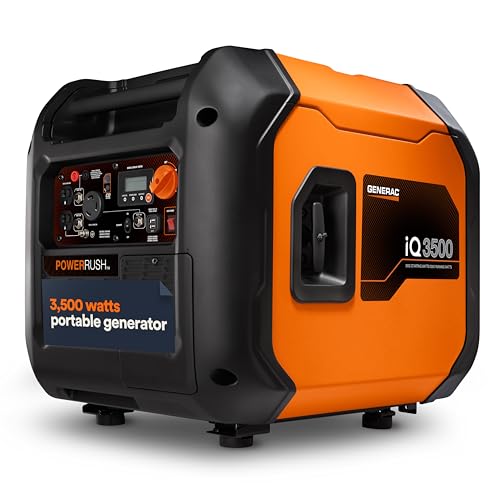
| Generac iQ3500 | 3,000 | Gas | ~50 dB | Budget quiet power |
Best smaller Honda
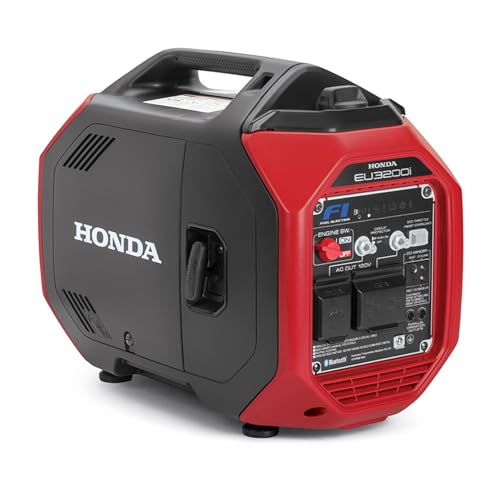
Honda EU3200i Inverter Generator
- Running Watts: 2,600
- Runtime: Up to 8.6 hours at quarter load
- Noise Level: 54–58 dB
- Weight: ~60 lbs
As an Amazon Associate, we earn from qualifying purchases.
The EU3200i brings fuel injection and Honda build quality to a smaller, lighter package: 3,200 peak / 2,600 running watts, 54–58 dB, and Bluetooth app control. It won’t run 240V loads or a big A/C, but for essentials, camping, and job-site electronics it’s the sweet spot — and it’s roughly half the price of the EU7000iS.
Best budget quiet inverter
Generac iQ3500 Inverter Generator
- Running Watts: 3,000
- Runtime: Up to ~7 hours at 50% load
- Noise Level: ~50 dB (light load)
- Weight: 109 lbs
As an Amazon Associate, we earn from qualifying purchases.
The iQ3500 is the value play: 3,500 peak / 3,000 running watts, electric start, and genuinely quiet operation for roughly a third of the EU7000iS price. You give up fuel injection, 240V output, and Honda’s longevity record, but for occasional use it’s hard to beat on dollars per quiet watt.
Pros
- Fuel injection — first-pull starts, no carburetor maintenance
- 52–58 dB: whisper-quiet for its size
- Inverter-clean power safe for all electronics
- 240V output — rare in inverter generators
- Excellent fuel economy: up to 16 hours per tank
- Honda reliability and 3-year warranty
Cons
- ~$5,000 — double the competition
- 270 lbs with fuel — not a one-person lift
- Gasoline only, no dual-fuel option
- 5,500 running watts won’t run large central A/C
Is the Honda EU7000iS worth the money?
Can the EU7000iS run a house air conditioner?
How long does the Honda EU7000iS run on a tank of gas?
Does the EU7000iS have fuel injection?
Can you run the Honda EU7000iS on propane?
Final verdict
The EU7000iS is the generator I recommend when someone asks “what’s the best, money no object.” It’s quiet, sips fuel, starts every time, and will probably outlive whatever you plug into it. The price stings, but so does buying a cheap generator twice. Just be honest about your needs — if it’s twice-a-year insurance, buy cheaper and spend the savings on a transfer switch.
Long-term ownership: what 1,000+ hours looks like
The EU7000iS has been around long enough that we have real long-term data, and it’s boring in the best way. Honda’s maintenance schedule is straightforward: first oil change at 20 hours, then every 100 hours (or 6 months). Air filter inspection every 100 hours, replacement as needed — dusty job sites eat filters faster. Valve clearance check at 500 hours; most owners report the valves barely move, which tells you how unstressed this engine is.
The two things that actually cause problems are the same two things that cause problems on every electric-start generator. First, the starter battery: it’s a small lead-acid unit that dies if ignored for six months. Put it on a $30 battery tender during storage and it’s a non-issue. Second, fuel: even with fuel injection, gasoline goes stale. Honda recommends running the carb… there’s no carb — but the injector and fuel pump still prefer fresh fuel. Use stabilizer if it sits more than a month, and run it under load for 20 minutes monthly. Owners who do this report 3,000–5,000+ hours without major work, which at typical backup usage is 15–20 years.
Resale deserves a mention too. A five-year-old EU7000iS in good shape routinely sells for 60–70% of new price. Try that with any other generator brand. The premium you pay upfront partially comes back when you sell — something the total-cost math rarely includes.
How we researched this: Manufacturer specs, Consumer Reports ratings data, and owner review analysis across retail and forum sources. Load and runtime math derived from published specifications. We did not bench-test this unit.

Related Guides
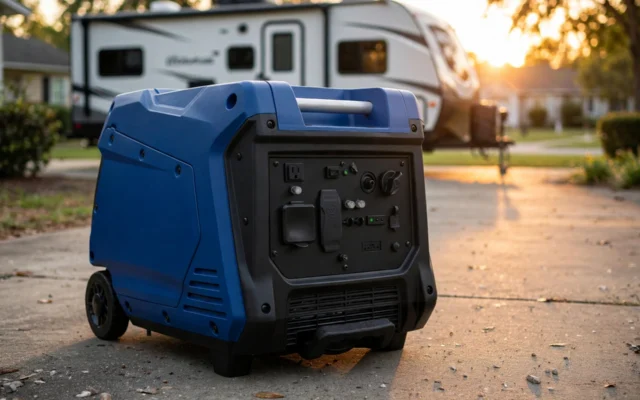
Westinghouse iGen4500DF Review: The Dual-Fuel Inverter to Beat in 2027
Westinghouse iGen4500DF review: 4,500W dual-fuel inverter, 52 dBA, remote start, RV-ready. We test the specs, noise, and value against Honda in 2027.

Champion vs Generac Generators: Which Brand Is Better in 2027?
Champion vs Generac: Champion wins portable value, Generac wins standby. We compare lineups, reliability, safety tech, and support to pick the right brand.
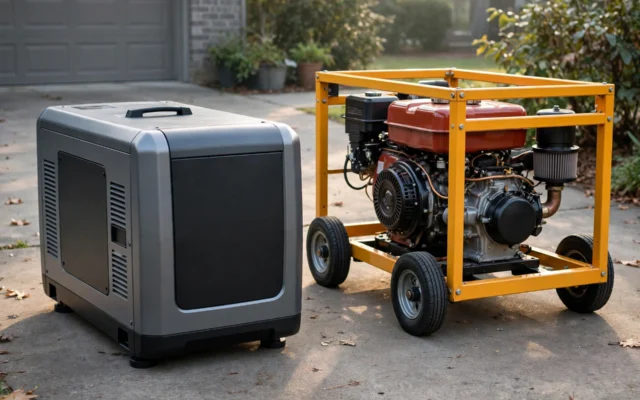
Inverter vs Conventional Generators: Which Should You Buy in 2027?
Inverter vs conventional generators: inverters win on noise, fuel use and clean power; conventional wins on watts per dollar. Here's how to choose in 2027.
2 Comments