


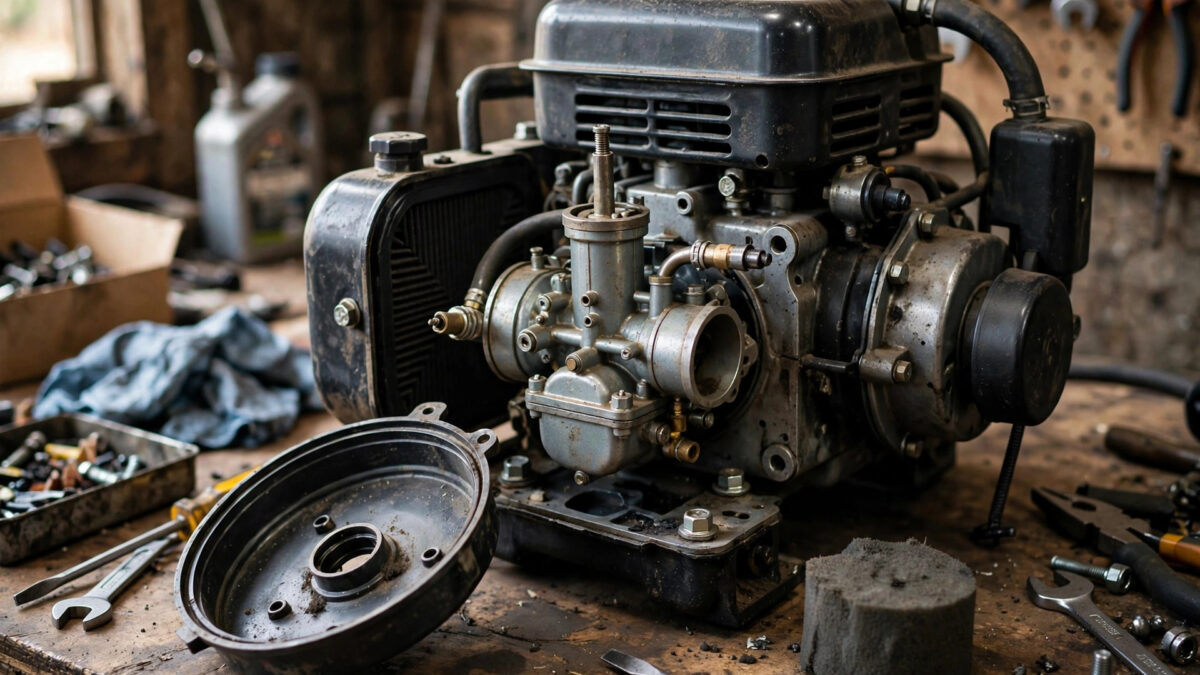
If your generator’s engine keeps revving up and down on its own — vroom… vroom… vroom — that’s called surging (or hunting), and it’s telling you something specific: the engine can’t get a steady supply of fuel, so the governor keeps overcorrecting. The #1 cause is a partially clogged carburetor from stale fuel, and it’s fixable in an afternoon.
I know that sound intimately. My old 5,500-watt unit started hunting one spring after sitting all winter, and I spent a week convinced the governor was broken before a small-engine buddy pointed at the carburetor and said two words: “old gas.” He was right. Here’s how to diagnose it properly.
Key takeaways
- Surging = the governor hunting for the right RPM because fuel delivery is inconsistent. It’s a symptom, not a disease.
- The #1 cause is a gummed carburetor (clogged main jet or idle circuit) from stale fuel — especially after storage.
- Other causes: governor linkage problems, vacuum/air leaks, dirty air filter, low or stale fuel, bad spark plug.
- Don’t run sensitive electronics while it’s surging — the voltage swings with the RPM.
- Prevention is simple: stabilized fuel, monthly exercise runs, and running the carb dry before storage.
What Surging Actually Is
Your generator’s engine is supposed to hold a rock-steady 3,600 RPM (that’s what produces 60 Hz power). A mechanical governor watches the RPM and adjusts the throttle to compensate for load changes. When fuel flow is restricted — say, a partially clogged jet — the engine starts to slow, the governor opens the throttle wide to compensate, the engine briefly gets enough fuel and revs too high, the governor slams the throttle shut, and the cycle repeats. Vroom… vroom… vroom.
That’s hunting: the governor chasing an RPM it can never quite hold because the fuel supply keeps lying to it.
Cause #1: Gummed Carburetor (Check This First)
I’d put money on this being your problem if the generator sat for more than a couple of months. Gasoline varnish narrows the carburetor’s tiny jets — the engine gets enough fuel to run, but not enough to run steadily, so it hunts.
The telltale sign: it surges at idle/no load but smooths out under a heavy load. Under load the governor holds the throttle wide open, which pulls fuel through the main jet hard enough to mask the partial clog. At light load, the restricted idle circuit can’t keep up and the hunting begins.
The fix, in order of effort:
- Run it hard for 30 minutes with fresh fuel + a fuel system cleaner. Sometimes a good loaded run with fresh gas clears a mild varnish. Worth trying first — it’s free.
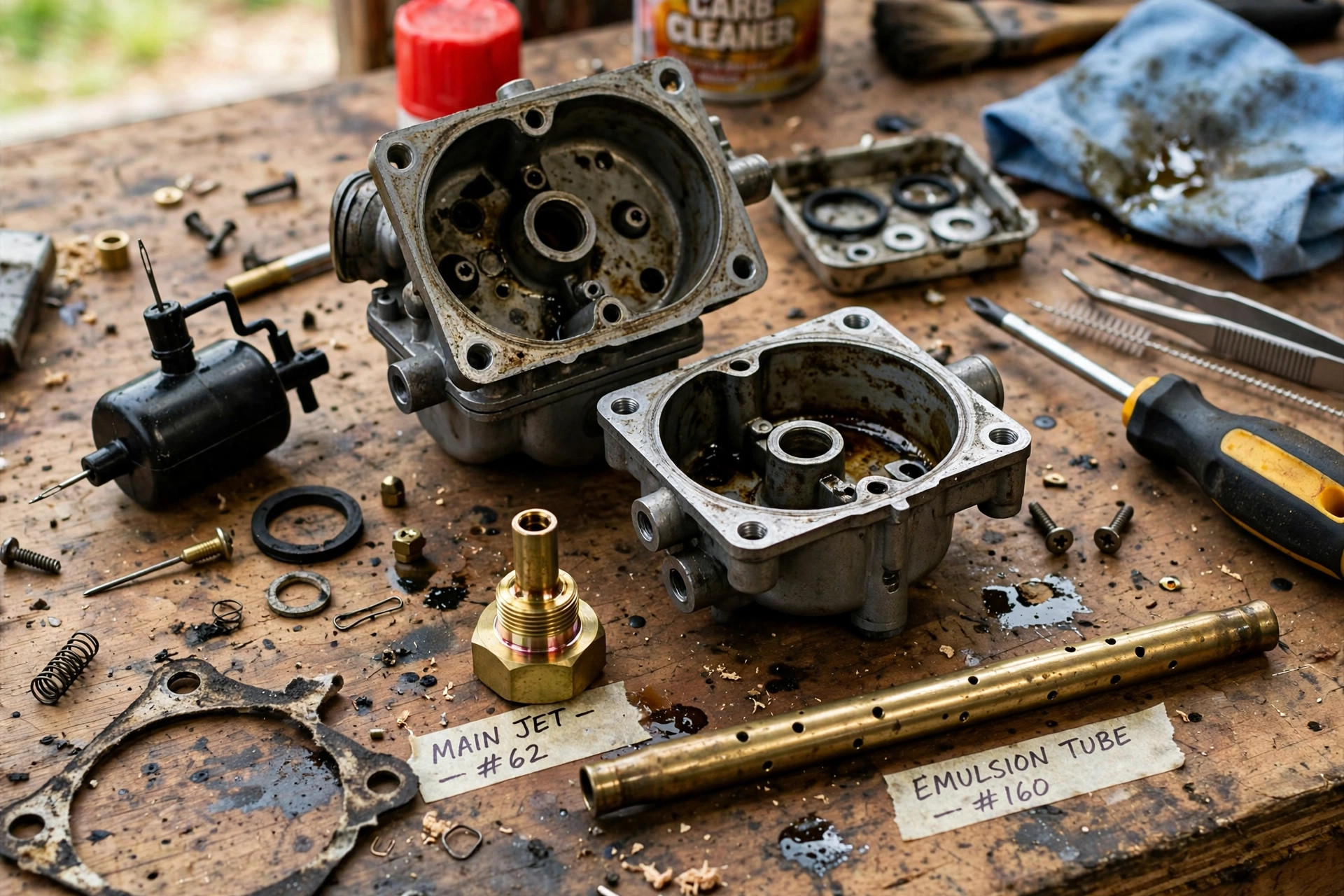
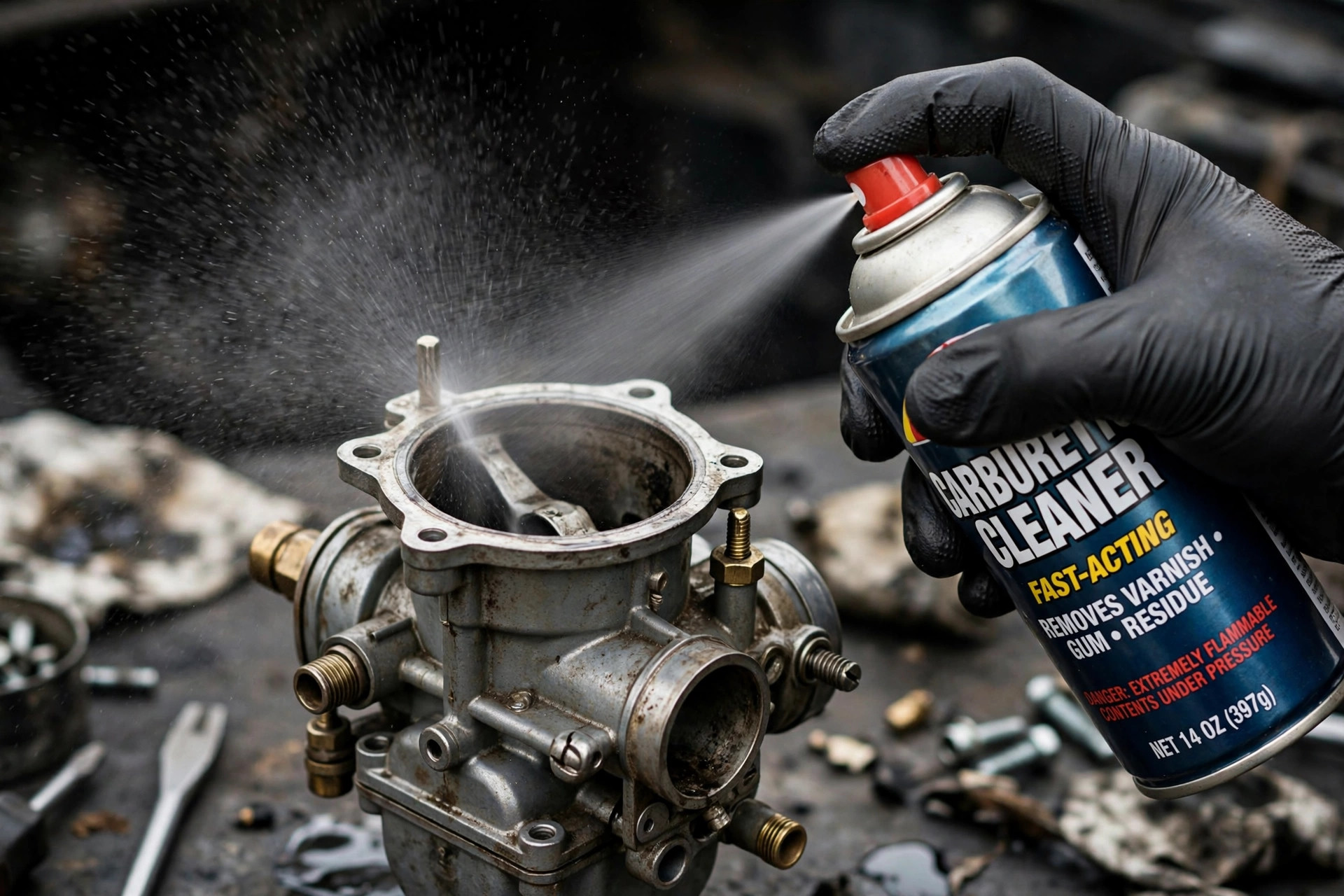
- Clean the carburetor. Remove the bowl, pull the main jet and emulsion tube, and clean every orifice with carb cleaner and a fine wire or jet cleaning tool. Don’t just spray the outside — the clog is inside the tiny passages. Our carburetor cleaning guide walks through it with photos.
- Replace the carburetor. If the varnish is severe or the carb is corroded, a replacement carb for most common generators costs $20–40 online and bolts on in 20 minutes. Sometimes this is the rational choice over an hour of picking at jets.
Cause #2: Governor Linkage Problems
If the carb is clean and it still hunts, look at the governor itself. The governor is a set of springs and linkages connecting the engine’s internals to the throttle plate, and it’s surprisingly delicate:
- Sticking linkage. Dirt, rust, or a bent rod makes the throttle move in jerks instead of smoothly. Disconnect the linkage and make sure the throttle plate moves freely by hand.
- Weak or stretched governor spring. Springs fatigue over years. If the spring looks stretched or the linkage has slop, replace it — they’re a few dollars.
- Someone “adjusted” it. If a previous owner cranked on the governor adjustment screw chasing more power, the governor’s response curve is off. Return it to the factory setting per your manual before doing anything else.
Fair warning: governor internals (the flyweights inside the crankcase) rarely fail on modern engines. Check the external linkage and springs thoroughly before suspecting anything inside.
Cause #3: Air Leaks and Intake Problems
Unmetered air leaning out the mixture causes the same hunting behavior as restricted fuel — the governor can’t find a stable RPM because the air-fuel ratio keeps shifting:
- Cracked intake gasket or loose carb mounting bolts. Spray a little carb cleaner around the carb-to-engine joint while it’s running — if the RPM changes, you’ve found a leak.
- Dirty or collapsed air filter. A filter packed with dust richens the mixture unevenly. Pull it and try running briefly without it (test only).
- Clogged fuel filter or pinched fuel line. Same effect as a clogged jet — inconsistent fuel delivery. Check flow from the tank to the carb.
Cause #4: The Simple Stuff People Overlook
- Low fuel level. When the tank gets very low, fuel sloshes and the pickup sucks air intermittently — instant surging. Fill the tank before diagnosing anything else.
- Stale fuel. Even if the carb isn’t varnished shut yet, old gas burns inconsistently. If the fuel is more than 60 days old (30 without stabilizer), drain and refill before you touch a wrench.
- Fouled spark plug. A weak or intermittent spark mimics fuel problems. A $5 plug is the cheapest diagnostic part you’ll ever buy — replace it early in the process.
- Too-light load. Some generators — especially older conventional models — hunt slightly at no load and settle down the moment you plug in a real load. If yours only surges with nothing plugged in, try a 500W+ load before tearing into the carb.
The Diagnostic Sequence That Works
When a neighbor brings me a hunting generator, I do this in order — it finds the problem in under an hour almost every time:
- Fill with fresh fuel (drain the old first) and check the oil.
- Replace the spark plug. Cheap, fast, eliminates a variable.
- Pull the air filter and inspect it.
- Run it under 50%+ load for 20 minutes. If it smooths out under load, it’s a light-load idle-circuit issue — clean the carb.
- Clean the carburetor — bowl, main jet, emulsion tube, idle passages.
- Inspect governor linkage and springs for binding, rust, or slop.
- Check for intake leaks with the carb-cleaner spray test.
Step 5 fixes it the large majority of the time. Steps 6 and 7 are for the stubborn cases.
FAQs
Why does my generator surge up and down?
Why does my generator surge at idle but run fine under load?
Can a dirty air filter cause surging?
Is it safe to run a surging generator?
Will fuel stabilizer fix a surging generator?
The Bottom Line
Surging is your generator’s way of telling you its fuel system needs attention — almost always a carburetor that’s partially varnished from old gas. Work the diagnostic sequence, clean the carb, and it’ll purr again. Then break the cycle for good: stabilized fuel in every can, monthly exercise runs, and run the carb dry before storage. Do those three things and your generator will forget what hunting sounds like — mine hasn’t done it in years.

Related Guides
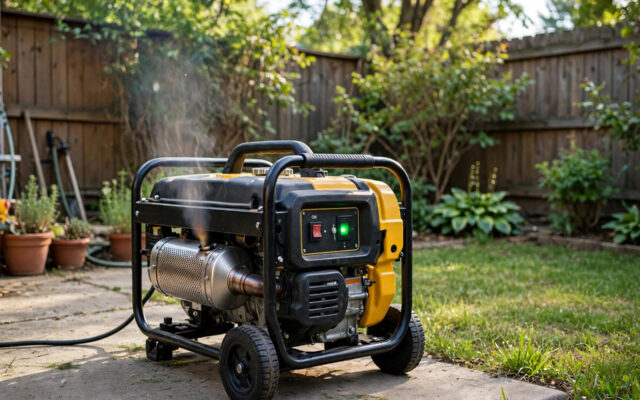
Why Does My Generator Backfire? Causes and Fixes (2027)
Why does your generator backfire? An exhaust bang means unburned fuel in the muffler; a pop through the carb means lean mixture or valve trouble. Here are the fixes.

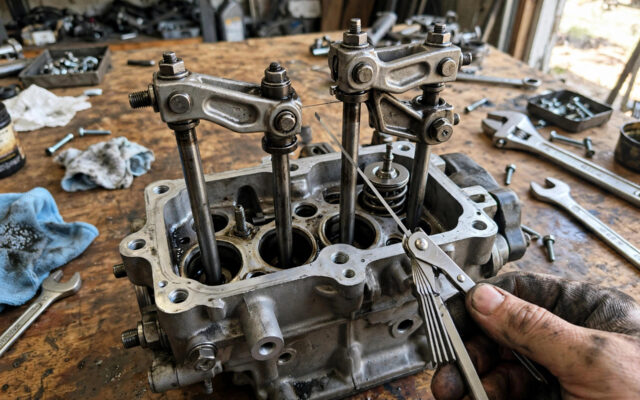
Generator Valve Adjustment: How to Set Valve Lash (2027 Guide)
Generator valve adjustment: 0.006" intake, 0.008" exhaust on Honda GX engines. Tools, TDC procedure, and symptoms of bad valve lash explained.
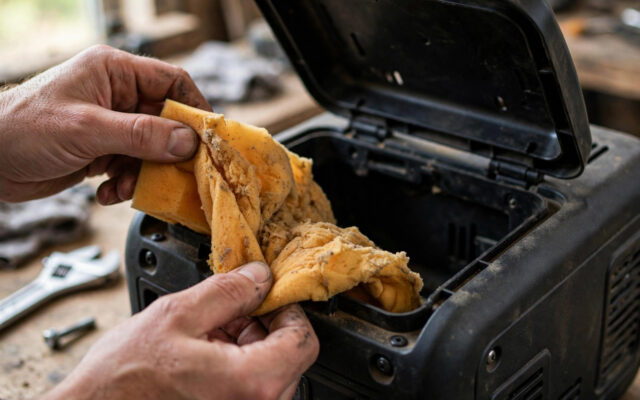
How to Clean and Replace a Generator Air Filter (2027 Guide)
How to clean a generator air filter: wash foam filters in soapy water and re-oil; tap out paper filters, never wash them. Full steps inside.