


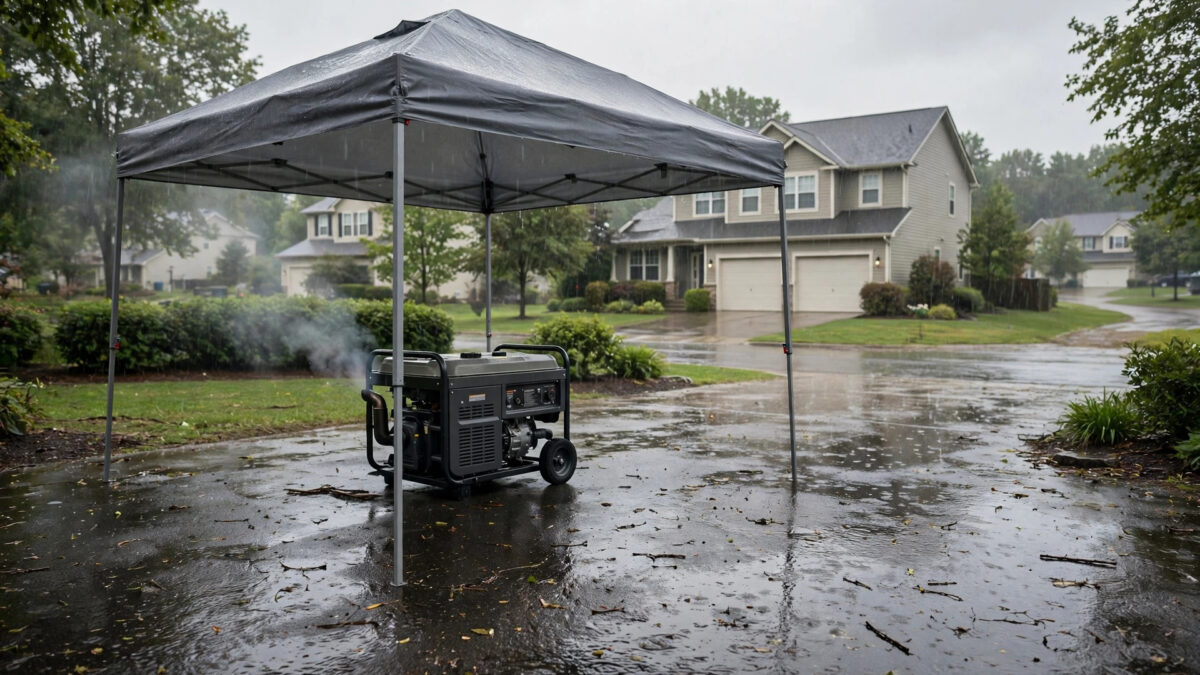
Can you run a generator in the rain? Only with proper protection — a generator tent or canopy specifically rated for the purpose, set up so the unit stays dry while exhaust and heat escape freely. What is never safe is running it unprotected in the rain, under a draped tarp, or — worst of all — moving it into the garage, basement, or house to keep it dry. Water and electricity are a dangerous combination, and the “dry shelter” instinct kills people every storm season through carbon monoxide poisoning.
Key Takeaways
- You can run a generator in the rain only under a proper cover — a generator tent/canopy rated for the purpose or an open-sided canopy — never unprotected and never under a loose tarp.
- Never move a generator into a garage, basement, shed, or house to keep it dry — carbon monoxide can kill in minutes, and this is the most common fatal mistake in storms.
- Keep all electrical connections dry and elevated: use outdoor-rated cords, keep plugs off wet ground, and never handle connections with wet hands.
- The generator itself must stay outdoors, 20+ feet from the home, with exhaust pointed away — rain does not change the placement rules.
- If conditions turn severe (flooding, lightning, high wind), shut the generator down — no outage is worth the risk.
Why Rain and Generators Are a Dangerous Mix
A portable generator is an electrical machine producing 120/240 volts with an internal-combustion engine, hot exhaust, and spinning parts. Rain introduces water into that equation in three ways: it can create shock hazards at wet connections and damaged cords, it can damage the generator’s electrical components (outlets, breakers, control panels), and it drives the human error that causes the most deaths — moving the unit somewhere “dry” that is actually enclosed. Understanding all three risks is what keeps rainy-day operation safe.
Water is a conductor, and wet skin conducts far better than dry skin. A damaged extension cord lying in a puddle, a soaked plug connection, or a generator control panel streaming with water can all deliver a dangerous shock. Meanwhile, rain pooling around the unit can wick into the alternator housing or outlets, causing short circuits, tripped breakers, or permanent damage. None of this means generators cannot run in wet weather — it means the water must be managed deliberately, not ignored.
Can You Run a Generator in the Rain Safely? The Proper Setups
Safe rainy-day operation comes down to one principle: the generator stays dry while breathing freely. Heat and exhaust must escape; rain must not reach the electrical parts. These are the setups that satisfy both.
Option 1: A generator tent or running cover rated for the purpose
The best solution is a purpose-built generator tent or running cover — a frame-and-fabric shelter designed to sit over a running portable generator, keeping rain off the control panel and outlets while leaving the exhaust side and airflow paths open. These are sold by generator accessory makers and outdoor equipment brands; look for one sized to your generator’s footprint with ventilation that cannot be accidentally closed. This is the setup manufacturers and safety agencies point to for wet-weather operation.
Option 2: An open-sided canopy or pop-up shelter
A standard open-sided pop-up canopy works well: it sheds rain from above while all four sides stay open for exhaust dispersal and cooling airflow. Stake or weight it against wind, position the generator under the high side if the canopy is sloped, and keep the canopy fabric well clear of the hot exhaust and muffler — melted or ignited canopy fabric is a real hazard with cheap thin canopies placed too low.
Option 3: A permanent generator shelter or doghouse-style enclosure
Some owners build small roofed, open-sided shelters — essentially a roof on posts with no walls — as a permanent generator station. This is an excellent long-term solution if built with proper clearances: the roof keeps rain off, the open sides guarantee ventilation, and the fixed location means your extension cord routing and placement are worked out before the storm. Keep the structure itself non-combustible near the exhaust side and maintain the manufacturer’s clearance distances.

Can You Run a Generator in the Rain Unprotected? What Is NOT Safe
Every storm season, emergency rooms and news reports document the same tragedies. Learn them here so you never repeat them.
Never move the generator into the garage — even with the door open
This is the single deadliest generator mistake in existence. An open garage door does not ventilate enough to prevent carbon monoxide buildup — CO can reach lethal concentrations in minutes in a garage, and it seeps into the living spaces above and beside it. “Just for a little while until the rain passes” has killed entire families. The generator stays outside, 20+ feet from the house, in all weather, no exceptions.
Never run it in a basement, shed, breezeway, or under a deck
Any enclosed or semi-enclosed space concentrates exhaust. Sheds, crawlspaces, covered patios with walls, and the space under a low deck all trap carbon monoxide. If the space has a roof and walls on more than one side, it is not ventilation — it is a trap.
Never run it unprotected in heavy rain
Light drizzle on a well-maintained unit is one thing; a driving rainstorm soaking the control panel, outlets, and connections is another. If you have no proper cover and the rain is heavy, the safe choice is to shut the generator down and wait. Power can wait; electrocution and equipment destruction cannot be undone.
Never handle electrical connections with wet hands
Plugging and unplugging cords, resetting breakers, or adjusting the control panel with soaked hands or while standing in water invites shock. Dry your hands, stand on a dry surface if possible, and wear rubber-soled boots. Keep all plug connections elevated off wet ground — a simple hook, stand, or even a plastic bin turned upside down keeps connections out of puddles.
Setting Up for Wet Weather: A Step-by-Step Checklist
When rain is forecast during an outage, work through this setup before the weather arrives — scrambling in a downpour is when mistakes happen.
Step 1: Position the generator first
Place the unit outdoors on high, level ground that will not pool water — 20+ feet from the home, exhaust pointed away from buildings, doors, windows, and vents. Avoid low spots, drainage paths, and areas where runoff collects. A few inches of elevation (a pallet or concrete blocks on firm ground) keeps the base out of standing water.
Step 2: Erect the cover before starting
Set up the generator tent or open-sided canopy over the positioned unit, confirming clearances: fabric well above and away from the muffler and exhaust outlet, ventilation paths fully open, and the structure stable against wind. Start the generator only after the cover is in place and secure.
Step 3: Route cords high and dry
Run outdoor-rated extension cords from the generator to the home, keeping every connection point elevated and sheltered. Where a cord must cross wet ground, route it so connections sit on high spots or hang from hooks — never leave a plug junction sitting in a puddle. Inspect cords for nicks, cracks, or exposed wire before each use; rain finds every flaw.
Step 4: Protect the fuel supply
Keep spare fuel containers under cover and sealed. Refuel only with the generator off and cool — never refuel in the rain with the unit running, and wipe the fuel cap area dry before opening to keep water out of the tank. Water in fuel causes rough running and can stall the engine mid-outage.
Step 5: Monitor through the storm
Check the setup periodically from a safe vantage point: is the canopy still secure, is water pooling near the unit, are connections still elevated and dry? If wind threatens to collapse the canopy onto the generator, shut down and reassess — a collapsed cover on a hot running engine is a fire risk.
When to Shut Down: Severe Weather Limits
There are conditions where no cover makes operation safe, and the right call is to shut down:
| Condition | Action | Why |
|---|---|---|
| Flooding or rapidly rising water near the unit | Shut down immediately; move the unit to high ground only when safe | Water in the alternator or fuel system; electrocution risk |
| Frequent close lightning | Shut down; stay indoors away from the unit | Lightning strike to the unit or nearby ground; do not handle cords |
| High winds threatening the canopy | Shut down before the canopy can collapse onto the unit | Fire risk from fabric on hot exhaust; structural hazard |
| Heavy rain with no proper cover available | Shut down and wait | Shock risk at soaked connections; equipment damage |
Shut down properly: disconnect loads first, let the unit run unloaded briefly, then switch off and close the fuel valve. Do not rush a hot generator — but do not leave a dangerous situation running while you deliberate either. When in doubt, shut it down; you can restart when conditions improve.
After the Rain: Drying Out and Inspection
Once the weather clears, give the generator a post-storm check before the next use. Wipe down the control panel and outlets, confirm no water pooled in the receptacle covers, and inspect cords for damage the storm may have caused. If the unit was splashed heavily despite the cover, let it air-dry fully before starting — do not use heat guns or open flames to speed drying. Run it briefly unloaded and verify normal operation, normal voltage output, and that all breakers and GFCI outlets function. Store it dry per our long-term generator storage guide so it is ready for the next storm.
Can you run a generator in the rain?
Can I put a tarp over my generator while it’s running?
Is it safe to run a generator in the garage with the door open during rain?
What happens if a generator gets wet?
How do I keep generator cords dry in the rain?
Should I turn off my generator during a severe thunderstorm?
Conclusion
Running a generator in the rain is a solved problem: proper cover, outdoor placement, dry connections, and the discipline to shut down when conditions exceed the setup. What is never solved — and never will be — is running one in an enclosed space to keep it dry, or improvising with a tarp and hope. Buy the generator tent before storm season, work out your cord routing on a dry day, and keep the CO alarms tested. Then the rain is just weather, and your backup power keeps doing its job through it.

Related Guides
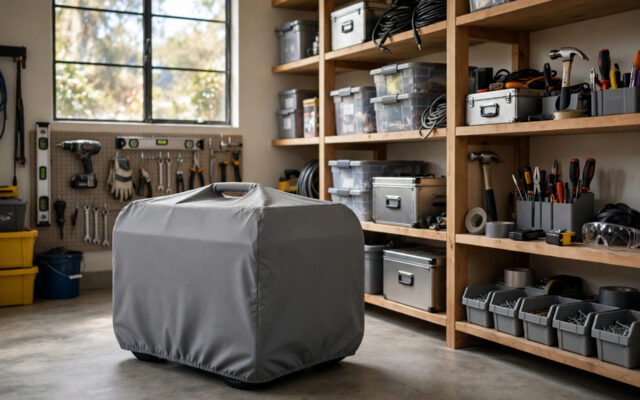
How to Store a Generator Long-Term: Fuel, Battery & Winterization Checklist
How to store a generator long term: fuel stabilizer vs draining, oil change, fogging oil, battery care, winterization extras, plus a printable checklist.

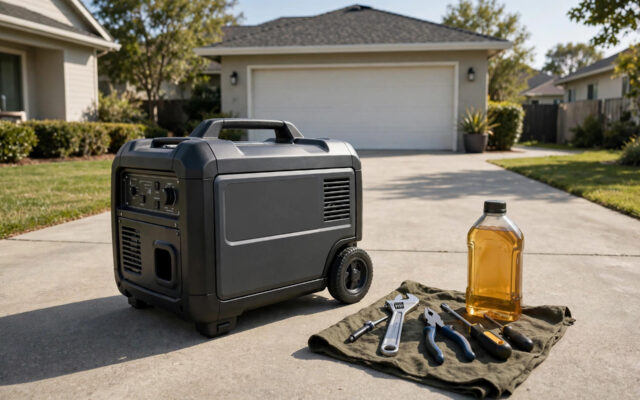
How to Break In a New Generator: Step-by-Step First-Use Guide
How to break in a new generator: pre-start setup, the varying-load running schedule, the critical first oil change, and 5 mistakes that shorten engine life.
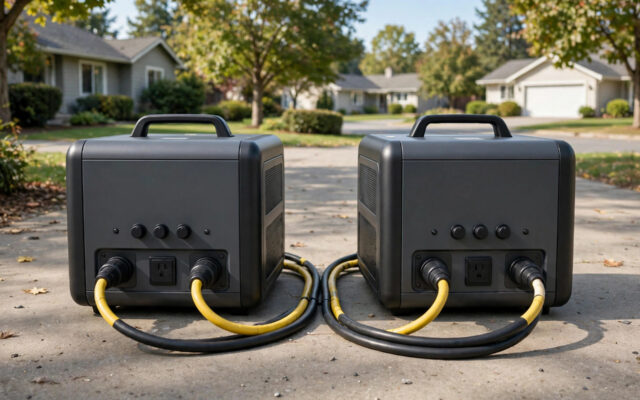
How to Parallel Two Inverter Generators: Safety & Setup Guide
How to parallel two inverter generators safely: compatibility rules, the right parallel kit, step-by-step setup, wattage math, and key safety warnings.