


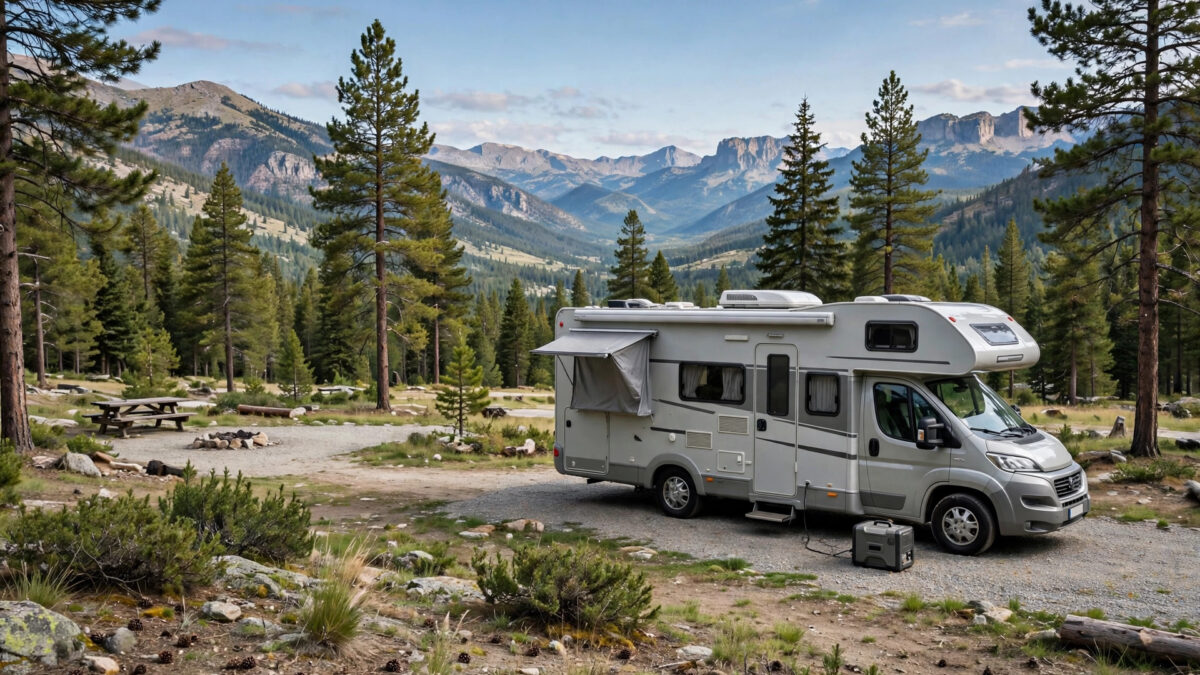
The best RV generators of 2027 share three traits: they are quiet enough for a campground, they have a 30-amp TT-30R RV outlet (or can be paralleled to get one), and they are light enough to load into a storage bay without a hernia. We researched and compared six inverter generators purpose-built for RV camping, boondocking, and road travel.
RV power has one defining challenge: the roof air conditioner. A 13,500 BTU RV A/C needs roughly 2,800–3,000 watts just to start its compressor — more than any single 2,200W-class inverter can deliver. That is why this roundup ranges from ultralight 2,500W units (perfect for everything except the A/C) up to 4,500W models that run the air conditioner with room to spare.

Every model here is an inverter generator with clean power safe for your RV’s electronics. If you want the broader inverter landscape, see our best inverter generators roundup.
Key takeaways
- Champion 201319 is our overall pick — 4,500W dual fuel with a dedicated 30A RV outlet and CO Shield.
- Honda EU3200i is the premium pick — fuel-injected, Bluetooth, and enough power for a 13,500 BTU A/C.
- Westinghouse iGen2550c is the ultralight pick at just 42.4 lbs with a 30A RV outlet.
- For RV A/C, you need ~2,800–3,000 starting watts; for everything else, 2,000–2,500W is plenty.
- Dual fuel (gasoline + propane) is ideal for RVs — propane is already on board for your appliances.
Our top picks at a glance
- Champion 201319 — Best overall — 4,500W dual fuel, 30A RV outlet, CO Shield
- Honda EU3200i — Best premium — fuel-injected, Bluetooth, runs a 13,500 BTU A/C
- Westinghouse iGen2550c — Best ultralight — 42.4 lbs with 30A RV outlet
- Pulsar PGD40iSCO — Best high-power value — 4,000W at 47 lbs (gasoline-only)
- Champion 201323 — Best ultralight dual fuel — 43.2 lbs, parallel-ready
Best overall
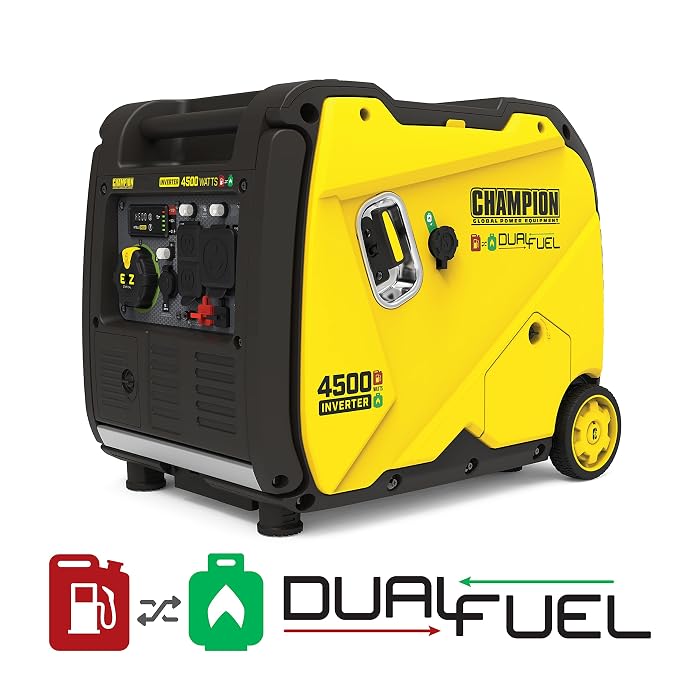
Champion 201319 4500W Dual-Fuel Inverter Generator
- 3500W (gasoline), 3150W (propane) running / 4500W peak output
- dual fuel (gasoline/propane)
- Up to up to 14h gasoline / 21h propane (@25% load) runtime
- Dual-fuel flexibility with a dedicated 30A TT-30R RV outlet and CO Shield
- 4500W starting watts / 3500W, 3150W running watts
- dual fuel (gasoline/propane)
- Noise: 61 dBA
- up to 14h gasoline / 21h propane (@25% load)
As an Amazon Associate, we earn from qualifying purchases.
The Champion 201319 is the best RV generator for most campers. With 4,500 starting watts and 3,500 running watts on gasoline (3,150 on propane), it runs a 13,500 BTU roof air conditioner with power to spare for the microwave, battery charger, and lights. The dedicated 30A TT-30R RV outlet plugs straight into your shore power cord — no adapters.
Dual fuel is a natural fit for RVs: your rig already carries propane for the furnace and stove, so you can run the generator for up to 21 hours on a 20-pound tank without carrying gasoline. CO Shield protection, 61 dBA quiet operation, and parallel capability round out the package. At 99.2 pounds it is a two-person lift into the bay.
Owner feedback from RVers highlights the propane convenience and the genuine A/C-starting ability. For a single generator that does everything an RV needs, this is the pick.
| Running watts | 3,500 (gasoline); 3,150 (propane) |
|---|---|
| Starting watts | 4,500 |
| Fuel type | Dual fuel: gasoline / propane |
| Noise level | 61 dBA |
| Runtime | Up to ~14h gasoline / 21h propane at 25% load |
| Weight | Approx. 99.2 lbs |
Pros
- Runs a 13,500 BTU RV A/C
- Dedicated 30A TT-30R RV outlet
- Dual fuel — use your onboard propane
- CO Shield and parallel capability
Cons
- 99 lbs — two-person lift
- 61 dBA is audible at close range
- Propane output lower than gasoline
Best premium
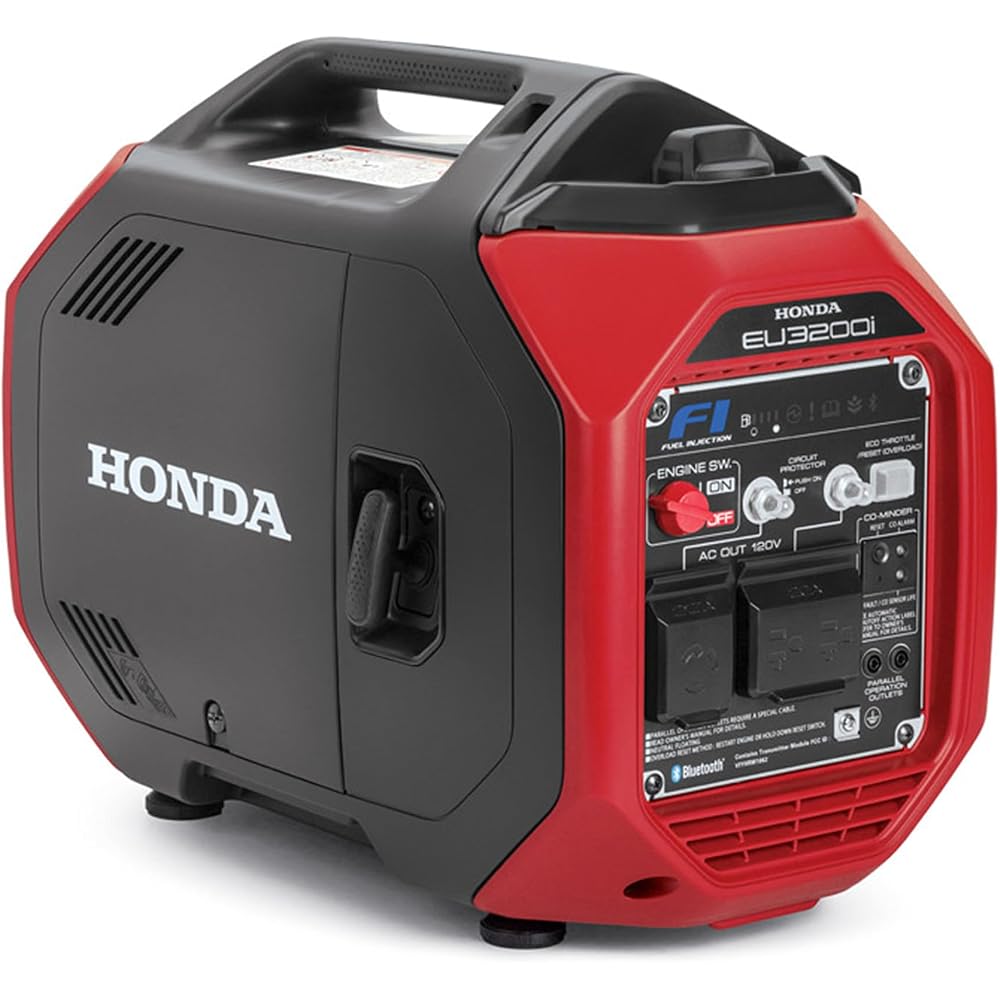
Honda EU3200i Inverter Generator
- 2600W running / 3200W peak output
- gasoline
- Up to 3.3h @ rated load / 8.6h @ 1/4 load runtime
- Honda’s flagship premium RV inverter
- 3200W starting watts / 2600W running watts
- gasoline
- Noise: 54-58 dBA
- 3.3h @ rated load / 8.6h @ 1/4 load
As an Amazon Associate, we earn from qualifying purchases.
The Honda EU3200i is the premium RV generator: 3,200 starting watts and 2,600 running watts from a fuel-injected engine, with Bluetooth app monitoring and CO-MINDER protection. With careful load management (A/C on, water heater on propane), it runs a 13,500 BTU roof air conditioner — the gold standard test for RV generators.
Fuel injection is a genuine advantage on the road: easier starting at altitude, no carburetor gum-up between trips, and smooth running. The 30A locking outlet, 54–58 dBA quiet operation, and 8.6-hour runtime at quarter load make it a superb travel companion. At about 59–65 pounds (depending on configuration) it is manageable solo.
It is the most expensive generator here by a wide margin. But for RVers who want the quietest, most reliable, most refined power available, the EU3200i is worth it.
| Running watts | 2,600 |
|---|---|
| Starting watts | 3,200 |
| Fuel type | Gasoline |
| Noise level | 54–58 dBA |
| Runtime | 3.3h at rated load / 8.6h at 1/4 load |
| Weight | Approx. 59.1 lbs (dry) |
Pros
- Fuel-injected — no carburetor issues, better at altitude
- Bluetooth monitoring + CO-MINDER
- Runs a 13,500 BTU A/C with load management
- Honda reliability and resale value
Cons
- Highest price here
- Gasoline only — no propane option
- Tight for A/C + microwave simultaneously
Best ultralight
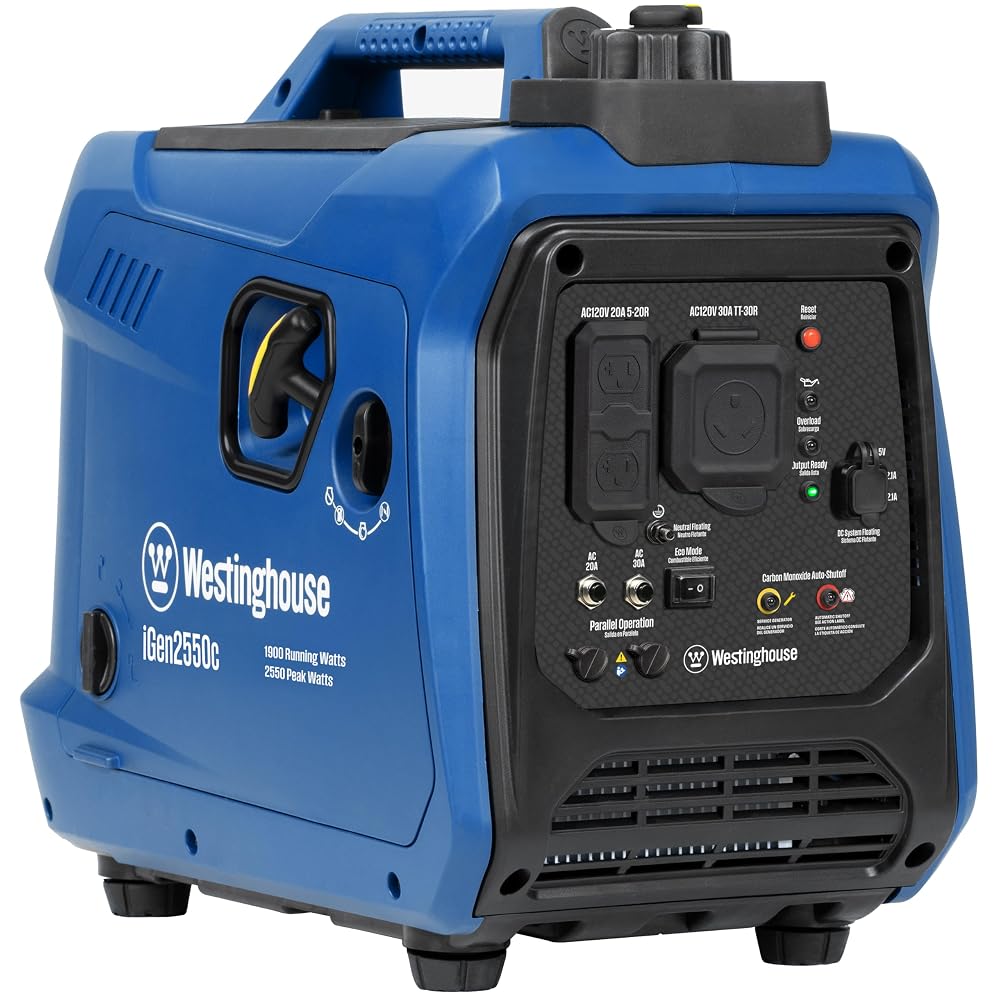
Westinghouse iGen2550c Inverter Generator
- 1900W running / 2550W peak output
- gasoline
- Up to up to 12h @ 25% load (1.1 gal) runtime
- Ultralight RV-ready pick with 30A TT-30R outlet, CO sensor, and LED data center
- 2550W starting watts / 1900W running watts
- gasoline
- Noise: 52 dBA
- up to 12h @ 25% load (1.1 gal)
As an Amazon Associate, we earn from qualifying purchases.
The Westinghouse iGen2550c is the ultralight RV pick: just 42.4 pounds with 2,550 starting watts and 1,900 running watts — and it still includes a 30A TT-30R RV outlet. For everything except the roof air conditioner (battery charging, microwave, TV, lights, fans), it is all the generator most campers need.
It runs at 52 dBA, includes a CO sensor and LED data center, and stretches to about 12 hours at quarter load on its 1.1-gallon tank. Need A/C? It parallels with a second unit for full 30A RV power.
Owner feedback praises the weight-to-usefulness ratio — it is the generator you will actually bring because it is no trouble to load. For non-A/C camping, it is the sweet spot.
| Running watts | 1,900 |
|---|---|
| Starting watts | 2,550 |
| Fuel type | Gasoline |
| Noise level | 52 dBA |
| Runtime | Up to ~12h at 25% load (1.1 gal) |
| Weight | Approx. 42.4 lbs |
Pros
- Ultralight at 42.4 lbs
- 30A TT-30R RV outlet included
- 52 dBA quiet with CO sensor
- Parallels for full 30A power
Cons
- Won’t start an RV A/C alone
- Gasoline only
- 1.1-gal tank needs refills on long runs
Best high-power value
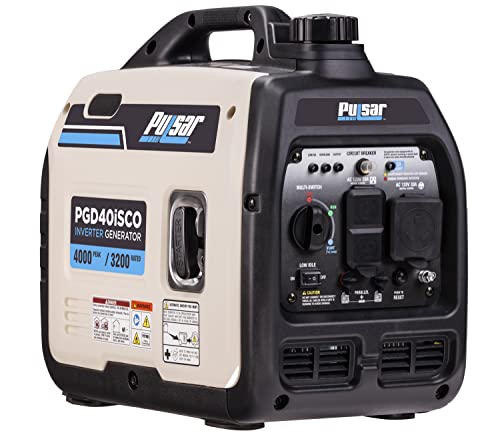
Pulsar PGD40iSCO Inverter Generator
- 3200W running / 4000W peak output
- gasoline
- Up to 4h @ half load (1 gal) runtime
- Budget pick for buyers who want maximum watts per dollar
- 4000W starting watts / 3200W running watts
- gasoline
- Noise: 59 dB
- 4h @ half load (1 gal)
As an Amazon Associate, we earn from qualifying purchases.
The Pulsar PGD40iSCO gives RVers 4,000 starting watts and 3,200 running watts at about 47.3 pounds — enough for the roof A/C plus everything else, at a weight one person can manage. The 30A TT-30R RV outlet, CO Sentry shutdown, and clean sub-3% THD power check every RV box.
The essential clarification, repeated because it matters: the PGD40iSCO is gasoline-only, not dual fuel. Pulsar’s dual fuel sibling is the PGD40BiSRCO — a different model. Buy the PGD40iSCO for its outstanding watts-per-pound and watts-per-dollar as a gasoline inverter; do not expect propane capability.
At 59 dBA it is louder than the 2kW-class inverters, and the 1-gallon tank gives about 4 hours at half load. But for RVers who want A/C power without the weight or price of the big dual fuel units, it is the value leader.
| Running watts | 3,200 |
|---|---|
| Starting watts | 4,000 |
| Fuel type | Gasoline only (NOT dual fuel) |
| Noise level | 59 dB |
| Runtime | Approx. 4h at half load (1 gal) |
| Weight | Approx. 47.3 lbs |
Pros
- 4,000W at only 47 lbs — runs RV A/C solo
- 30A TT-30R RV outlet
- CO Sentry and 3-year warranty
- Excellent value
Cons
- Gasoline only — not dual fuel
- 59 dB is louder than smaller inverters
- Short 4h runtime at half load
Best mainstream compact
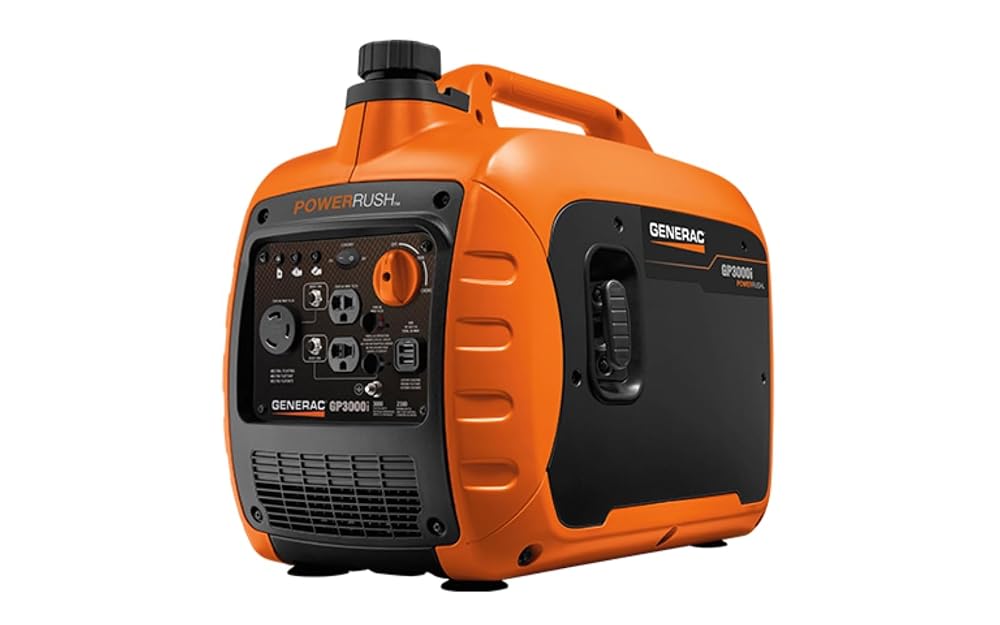
Generac GP3000i Inverter Generator (Model 7129)
- 2200W running / 3000W peak output
- gasoline
- Compact mainstream-brand inverter, parallel-ready, <3% THD
- 3000W starting watts / 2200W running watts
- gasoline
- 59.5 lbs
As an Amazon Associate, we earn from qualifying purchases.
The Generac GP3000i is the mainstream-brand compact inverter: 3,000 starting watts and 2,200 running watts with clean sub-3% THD power, in a 59.5-pound package. It is parallel-ready, so two units give you 6,000W for full RV capability.
One note: Generac’s newer GP3300i successor now sells alongside the GP3000i. The 7129 remains a current, legitimate listing — just be aware the lineup has a newer sibling when comparing prices and features.
A single GP3000i will not start a roof A/C, but it handles everything else in the camper with quiet inverter efficiency. For brand-loyal buyers who want a simple, proven compact inverter, it is a safe mainstream choice.
| Running watts | 2,200 |
|---|---|
| Starting watts | 3,000 |
| Fuel type | Gasoline |
| Noise level | Not published in manufacturer specs we reviewed |
| Runtime | Not published in manufacturer specs we reviewed |
| Weight | Approx. 59.5 lbs |
Pros
- Mainstream Generac brand and support
- Clean <3% THD power
- Parallel-ready for 6,000W
- Compact 59.5-lb package
Cons
- Won’t start an RV A/C alone
- Successor GP3300i now also sold — compare
- Noise and runtime not published
Best ultralight dual fuel
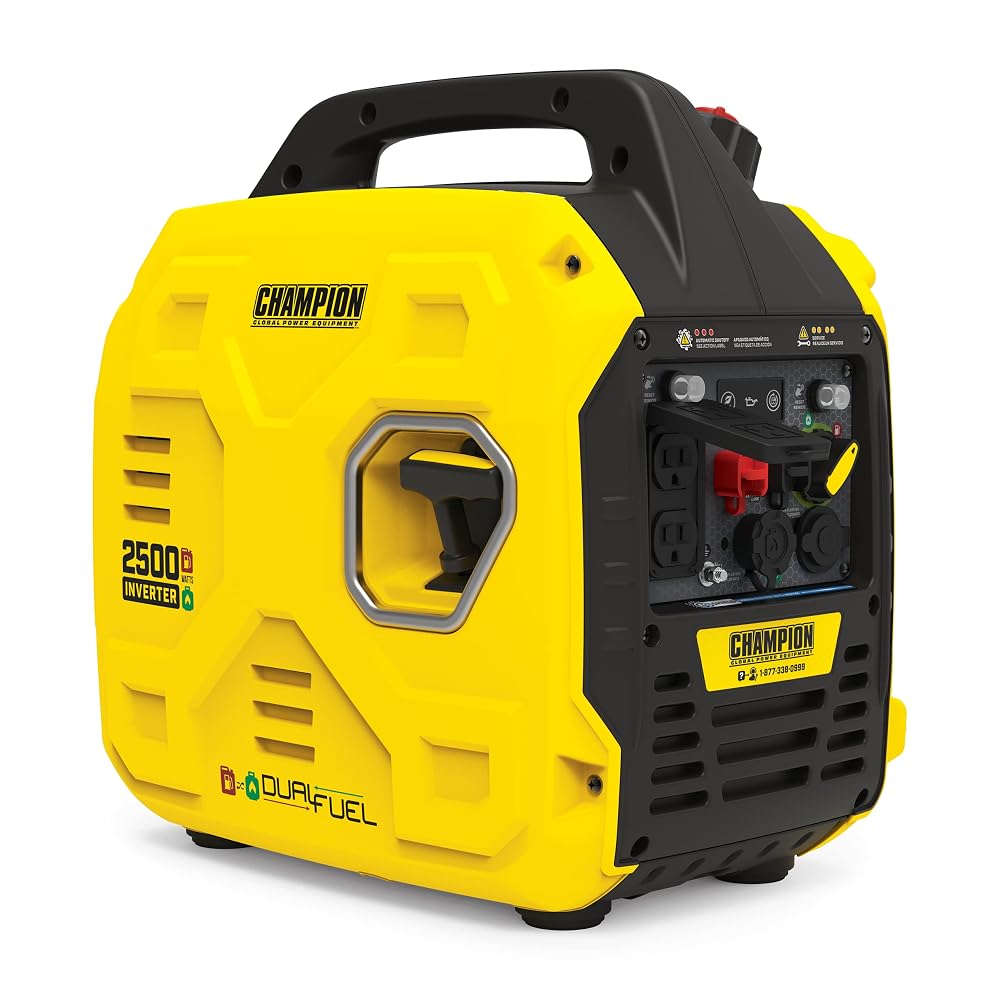
Champion 201323 2500W Dual-Fuel Inverter Generator
- 1850W (gasoline), 1665W (propane) running / 2500W peak output
- dual fuel (gasoline/propane)
- Up to up to 11.5h gasoline / 25h propane (@25% load) runtime
- Dual-fuel inverter producing <3% THD pure-sine power
- 2500W starting watts / 1850W, 1665W running watts
- dual fuel (gasoline/propane)
- Noise: 53 dBA
- up to 11.5h gasoline / 25h propane (@25% load)
As an Amazon Associate, we earn from qualifying purchases.
The Champion 201323 is the ultralight dual fuel RV generator: 2,500 starting watts and 1,850 running watts on gasoline (1,665 on propane) at just 43.2 pounds. It is the newest CO Shield revision of Champion’s beloved 2500W dual fuel line — light enough to load solo into any RV bay.
Dual fuel shines for RVers: run it on your onboard propane for up to 25 hours on a 20-pound tank, no gasoline to carry or go stale. The parallel kit adds a 30A RV outlet when you pair two units — a popular setup for couples who want A/C capability from two tiny generators instead of one heavy one.
Alone it will not start the roof A/C, but for battery charging, microwaves, TVs, and all the quiet comforts of camp, it is the easiest dual fuel generator to own.
| Running watts | 1,850 (gasoline); 1,665 (propane) |
|---|---|
| Starting watts | 2,500 |
| Fuel type | Dual fuel: gasoline / propane |
| Noise level | 53 dBA |
| Runtime | Up to ~11.5h gasoline / 25h propane at 25% load |
| Weight | Approx. 43.2 lbs |
Pros
- Ultralight at 43.2 lbs — solo loadable
- Dual fuel with CO Shield
- Up to 25h on propane
- Parallel kit adds 30A RV outlet
Cons
- Won’t start an RV A/C alone
- Parallel kit sold separately
- Small tank on gasoline
RV generators compared
The key RV question is the roof A/C: ~2,800–3,000 starting watts needed for a 13,500 BTU unit. Models marked accordingly can start it solo.
| Product | Running watts | Fuel | Noise | Best for | |
|---|---|---|---|---|---|
| Champion 201319 4500W Dual-Fuel Inverter Generator | 3,500 | Gas / propane | 61 dBA | Best all-around RV | Check price |
| Honda EU3200i Inverter Generator | 2,600 | Gasoline | 54–58 dBA | Premium RV power | Check price |
| Westinghouse iGen2550c Inverter Generator | 1,900 | Gasoline | 52 dBA | Ultralight camping | Check price |
| Pulsar PGD40iSCO Inverter Generator | 3,200 | Gasoline | 59 dB | A/C power, light weight | Check price |
| Generac GP3000i Inverter Generator (Model 7129) | 2,200 | Gasoline | Not published | Mainstream compact | Check price |
| Champion 201323 2500W Dual-Fuel Inverter Generator | 1,850 | Gas / propane | 53 dBA | Ultralight dual fuel | Check price |
How do you choose the best RV generator in 2027?
RV generator shopping revolves around the air conditioner, the 30A outlet, and weight. Here is the decision framework.
Start with the air conditioner question
A 13,500 BTU roof A/C needs roughly 2,800–3,000 starting watts. If you camp with A/C, your options are: a single 3,200W+ inverter (Honda EU3200i, Champion 201319, Pulsar PGD40iSCO), two paralleled 2,500W inverters, or a soft-start kit on the A/C that reduces its starting surge (a popular mod that lets smaller generators start the A/C). If you never run the A/C on generator power, a 2,000–2,500W ultralight is plenty.
The 30A RV outlet matters
Your RV’s shore power cord expects a TT-30R 30-amp outlet. Generators with a built-in TT-30R (Champion 201319, Westinghouse iGen2550c, Pulsar PGD40iSCO) plug in directly. Smaller units need a parallel kit with a 30A outlet or a simple adapter — workable, but the built-in outlet is cleaner.
Dual fuel is made for RVs
Your RV already carries propane for the furnace, stove, and water heater. A dual fuel generator (Champion 201319, Champion 201323) taps that same supply: no gasoline cans in the storage bay, no stale fuel between trips, and up to 25 hours of runtime on a 20-pound tank. For RVers, dual fuel is the most convenient setup available.
Weight: be honest about loading it
The difference between 43 pounds and 99 pounds is the difference between a generator you use and one you leave home. Ultralights (Westinghouse iGen2550c, Champion 201323) go in the bay solo; 90+ pound units need two people or a ramp. Bigger is only better if you will actually load it.
Noise and campground etiquette
Most campgrounds enforce quiet hours (typically 10 p.m.–6 a.m.) and many restrict generator use to certain hours even during the day. The 52–61 dBA inverters here are all campground-appropriate; conventional generators are not. Position the exhaust away from neighboring sites, and consider that sound carries surprisingly far at night in a quiet campground.
Parallel kits: the modular approach
Two small inverters with a parallel kit give you redundancy (one still works if the other fails), easier loading, and full 30A RV power when combined. The total cost often beats a single large unit. The tradeoff is more setup and two engines to maintain. For couples or long trips, it is worth serious consideration.
RV generator FAQs
What size generator do I need for my RV?
For everything except the roof air conditioner: 2,000–2,500W is plenty. To run a 13,500 BTU A/C: at least 3,000–3,200 starting watts from a single unit (Honda EU3200i, Champion 201319, Pulsar PGD40iSCO), or two paralleled 2,200–2,500W inverters. A soft-start kit on the A/C can reduce its starting surge by up to 70%, letting smaller generators handle it.
Can I run my RV air conditioner on a 2,200W generator?
Not reliably on its own — a 13,500 BTU A/C needs ~2,800–3,000W to start its compressor. Two options work: parallel two 2,200W-class inverters, or install a soft-start capacitor kit on the A/C, which many RVers report lets a single 2,200W Honda start and run the A/C. Results vary by A/C model and altitude.
Is dual fuel better for RV generators?
Usually yes. RVs already carry propane, so a dual fuel generator eliminates gasoline storage in the rig and runs up to 25 hours on a 20-pound tank. Propane also never goes stale between trips. The only tradeoff is ~10% less power on propane versus gasoline.
How do I connect a generator to my RV?
Plug your RV’s 30-amp shore power cord directly into the generator’s TT-30R outlet (or a parallel kit’s 30A outlet). Use a surge protector between the generator and the RV — campground power is notoriously dirty, and generator power benefits from protection too. Never plug the generator into the RV while also connected to shore power.
Can I run a generator all night in my RV?
Check campground rules first — most prohibit generator use during quiet hours (typically 10 p.m. to 6 a.m.). For overnight power needs like a CPAP, a portable power station (battery) is the silent, rule-compliant solution. See our portable power station roundup.
Is the Pulsar PGD40iSCO dual fuel?
No — the PGD40iSCO is gasoline-only. Pulsar’s dual fuel version is the PGD40BiSRCO, a separate model with a separate listing. Verify the exact model on the listing before buying.
Our verdict
The Champion 201319 is the best RV generator of 2027 for most campers: 4,500W of dual fuel power, a real 30A RV outlet, and genuine A/C-starting ability. Splurge on the Honda EU3200i for the quietest, most refined RV power available. Travel light with the Westinghouse iGen2550c (42 lbs) or the dual fuel Champion 201323 (43 lbs). And for maximum A/C power per pound and per dollar, the gasoline-only Pulsar PGD40iSCO is unbeatable value.
How we researched: We did not perform hands-on testing. We compared manufacturer specifications for six RV-suitable inverter generators verified on Amazon in October 2026, confirmed fuel types and RV outlet configurations against brand listings, and reviewed aggregated owner feedback from RVers on A/C starting, noise, and real-world usability. We verified the Pulsar PGD40iSCO is gasoline-only. Prices and availability change frequently — verify the live listing before buying.

Related Guides
Best Time to Buy a Generator: 2027 Price & Sales Calendar
The best time to buy a generator is Black Friday, with 10-30% off typical. 2027 price and sales calendar: clearance windows, pre-season deals, and timing tips.

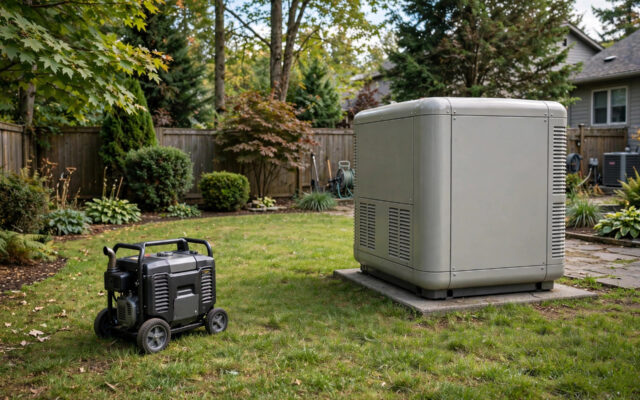
Portable vs Standby Generator: Cost, Runtime, Maintenance & Pros/Cons
Portable vs standby generator: $1,100-$5,000 vs $9,000-$20,000+ installed. Compare costs, runtime, maintenance, pros and cons, and which type wins for you.
Jackery vs EcoFlow vs Bluetti vs Anker: Which Power Station Brand Is Best?
Jackery vs EcoFlow vs Bluetti vs Anker power stations compared on battery chemistry, charging speed, cycle life, and value. Includes the NMC vs LiFePO4 warning.