


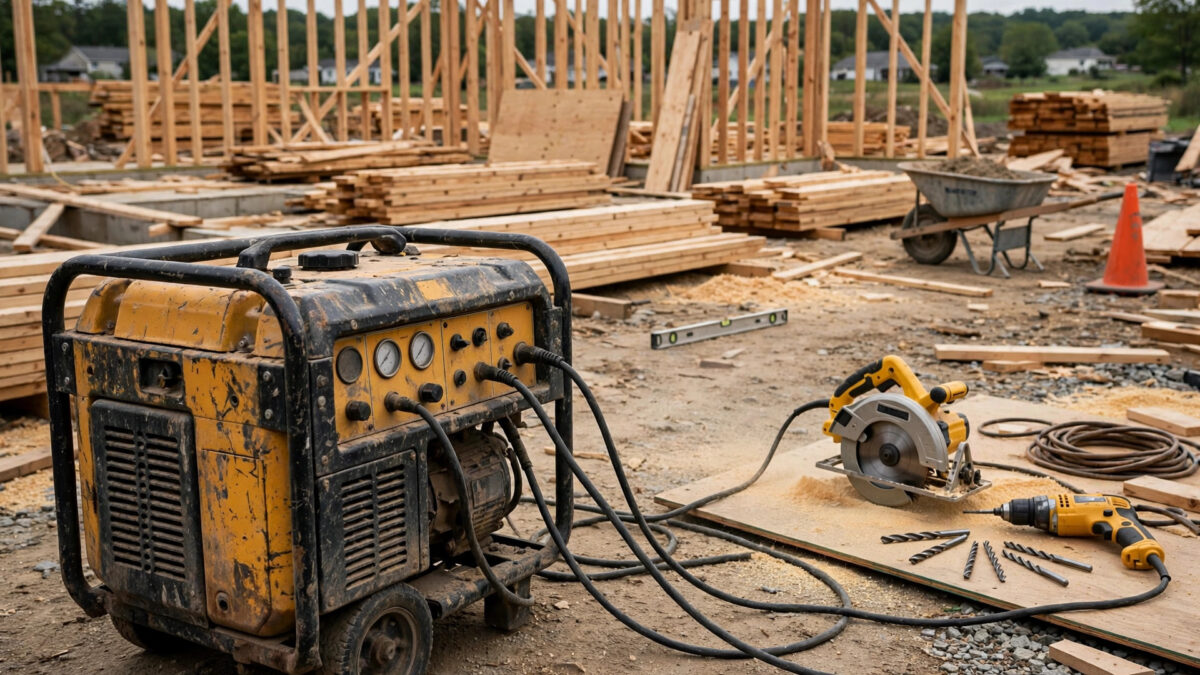
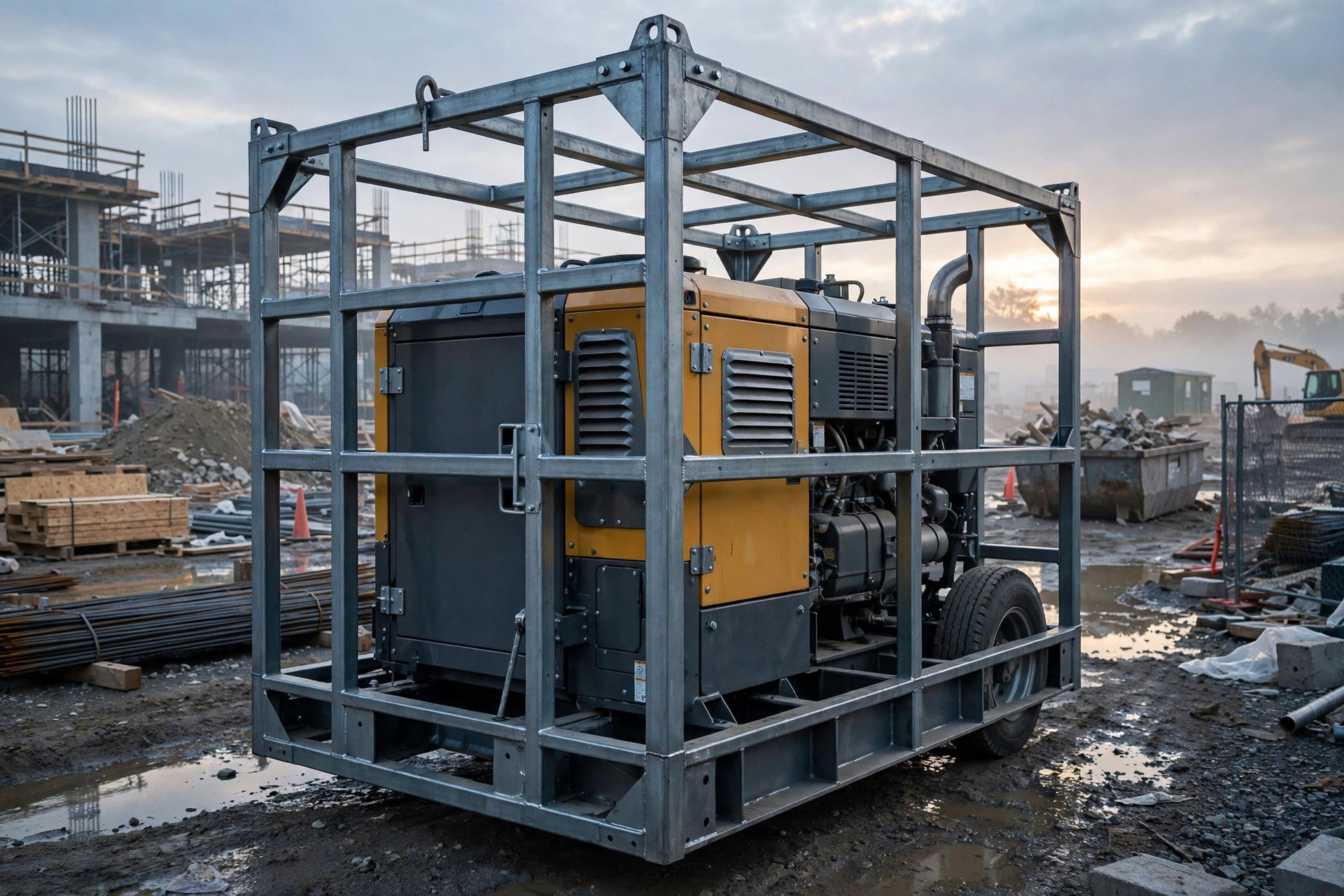
Job sites eat generators alive. Dust, rain, drops off tailgates, running 10 hours a day under full load — a homeowner backup unit won’t survive a month of that. I’ve seen contractors burn through cheap generators in a single season, then spend more on replacements than one good unit would have cost.
The best job-site generator of 2027 depends on your trade, but the Honda EB5000X is the benchmark everything else gets measured against: OSHA-compliant GFCI outlets, a full steel frame, and Honda reliability that crews actually trust. Need to power the whole site? The DuroMax XP15000HX and Generac GP17500E bring serious wattage. Here’s what survives real work, verified with real specs and listings.
Key takeaways
- Job-site generators need GFCI outlets, full-wrap frames, and hour meters — homeowner features don’t cut it.
- The Honda EB5000X is the contractor benchmark: OSHA-ready, 7,000W surge, famously reliable.
- For whole-site power, 13,000–17,500W units (DuroMax XP15000HX, Generac GP17500E) run multiple trades at once.
- Size for your biggest motor’s starting watts — table saws and compressors surge 2–3x on startup.
- Clean power (low THD) matters for battery chargers and electronic tool controls; don’t fry your miter saw’s soft-start.
Quick picks
- Best overall: Honda EB5000X — OSHA/GFCI compliant, 7,000W surge, contractor-proven.
- Best big power: DuroMax XP15000HX — 15,000W, dual fuel, remote start.
- Best maximum watts: Generac GP17500E — 17,500 running watts for whole sites.
- Best value workhorse: Westinghouse WGen9500DF — 12,500W dual fuel around a grand.
- Best mid-size: DuroMax XP13000EH — 13,000W dual fuel, CO Alert, transfer-ready.
- Best 8kW all-rounder: Generac GP8000E — 10,000W surge, electric start, PowerRush.
Best overall
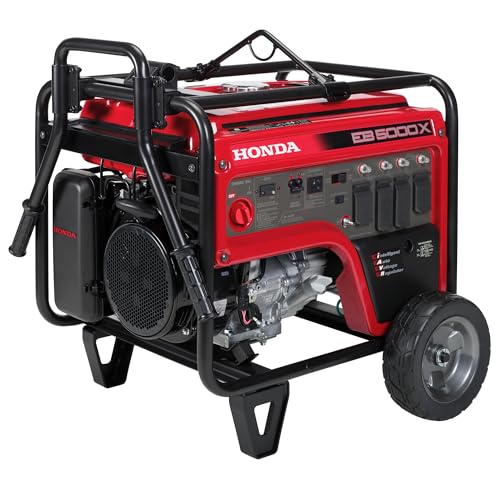
Honda EB5000X Jobsite Generator
- Running Watts: 5,000 W
- Runtime: 10.5 hrs @ 1/2 load
- Noise Level: 63–65 dB
- Weight: ~230 lbs
As an Amazon Associate, we earn from qualifying purchases.
The EB5000X isn’t Honda’s regular generator with a new sticker — it’s built for job sites from the ground up. Full GFCI protection on all outlets (OSHA loves this), a rugged full frame, and 7,000 starting watts with 5,000 running watts. That covers a 15-amp table saw, a miter saw, chargers, and lights without breaking a sweat.
Noise is rated 63–65 dB — noticeably quieter than most open-frame units, which matters when you’re running it all day near the crew. The 6.2-gallon tank delivers about 10.5 hours of runtime, basically a full workday on one fill. Honda’s CO-Minder is included, and the DAVR (digital auto voltage regulator) holds voltage steady for tools with electronic controls.
At typically $2,200–$2,600 it’s not cheap. But talk to any contractor who’s run one for five years: the EB series holds resale value like nothing else, starts first pull in January, and just doesn’t break. Based on spec comparison and owner feedback, it’s the lowest total-cost-of-ownership generator on this list despite the highest upfront price in its class.
Pros
- Full GFCI + OSHA jobsite compliance
- Legendary Honda durability and resale
- Full workday runtime (10.5 hrs)
- Quieter than most open-frame units
Cons
- Premium price ($2,200–$2,600)
- 5,000W won’t run a whole site alone
Best big power
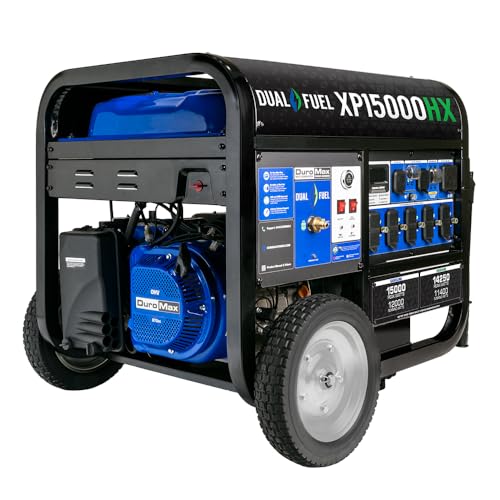
DuroMax XP15000HX Dual-Fuel Generator
- Running Watts: 12,000 W
- Runtime: ~9 hrs @ 1/2 load (gas)
- Noise Level: ~74 dB
- Weight: 345 lbs
As an Amazon Associate, we earn from qualifying purchases.
When one crew isn’t enough and you’ve got framers, roofers, and concrete guys drawing at once, the XP15000HX brings 15,000 peak watts and 12,000 running watts. The 670cc engine is a beast, and dual-fuel means propane backup when the gas cans run dry mid-day.
Remote start is the killer feature here — fire it up from the truck on a cold morning. The 13.2-gallon tank keeps it fed through long days. At 345 pounds it’s a forklift-or-ramp machine, so plan it as semi-permanent site power rather than something that rides in the pickup daily.
Typical pricing runs $2,600–$3,200. Based on owner feedback, the HX series holds up to daily commercial use well, and DuroMax’s support is responsive. For a GC running a whole residential site off one generator, this is the value alternative to units costing twice as much.
Pros
- Massive 12,000W continuous output
- Remote start from the truck
- Dual fuel flexibility
- Strong value per watt
Cons
- 345 lbs — not moving daily
- Loud open-frame at 74 dB
Best maximum watts
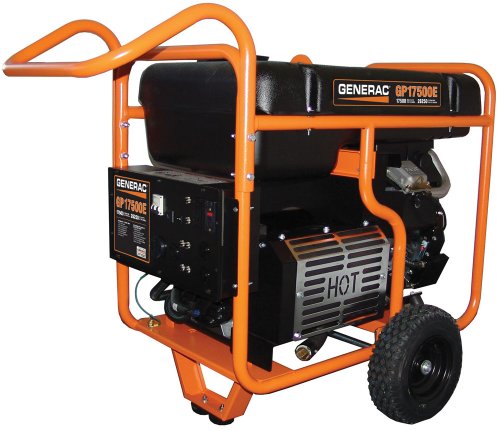
Generac GP17500E Portable Generator (5735)
- Running Watts: 17,500 W
- Runtime: ~10 hrs @ 1/2 load
- Noise Level: ~76 dB
- Weight: 400+ lbs
As an Amazon Associate, we earn from qualifying purchases.
The GP17500E is the biggest portable generator most contractors will ever need: 17,500 running watts, 26,250 surge, from a 992cc twin-cylinder engine. That’s enough to run a commercial site — multiple compressors, welders (within duty cycle), tower lights, and office trailer — simultaneously.
The 16-gallon tank delivers around 10 hours at half load. Electric start is standard, and Generac’s support network is the deepest in the business, which matters when you’re down on a deadline. At 400+ pounds, it lives on a trailer or a dedicated pad.
Typical pricing runs $3,400–$4,000. It’s overkill for a two-man crew — be honest about your loads before buying this much generator. But for site supers running multi-trade commercial work, based on spec comparison and owner feedback, it’s the portable ceiling: anything bigger is a tow-behind diesel.
Pros
- Huge 17,500W output — runs whole sites
- Deep Generac support network
- Electric start, 16-gal tank
Cons
- Overkill (and overpriced) for small crews
- 400+ lbs, trailer territory
- Thirsty at full load
Best value workhorse
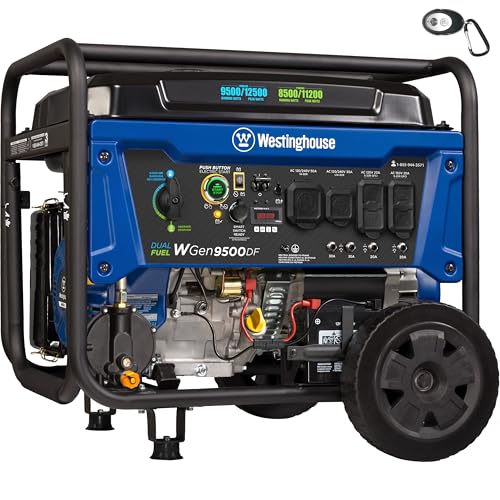
Westinghouse WGen9500DF Dual-Fuel Generator
- Running Watts: 9,500 W
- Runtime: 12 hrs @ 1/2 load
- Noise Level: ~74 dB
- Weight: 210 lbs
As an Amazon Associate, we earn from qualifying purchases.
The WGen9500DF is the generator I recommend to contractors who want big power without the big invoice: 12,500 peak watts, 9,500 running watts, dual fuel, typically $1,000–$1,300. That’s half the price of the Honda per watt, with propane as a bonus.
The 457cc engine and 6.6-gallon tank deliver about 12 hours of runtime. It’ll run a 5HP compressor, a table saw, and chargers together — the standard three-man carpentry load. Push-button electric start and a digital hour meter (track your maintenance!) come standard.
It’s louder and less refined than the Honda, and Westinghouse’s commercial-duty track record is shorter. But based on owner feedback, the WGen series takes daily use well. For the money, it’s the hardest-working value on this list.
Pros
- 9,500W for around a grand — superb value
- Dual fuel with 12-hour runtime
- Electric start + hour meter
Cons
- Not OSHA/GFCI jobsite-rated like the Honda
- Louder, less refined
Best mid-size dual-fuel
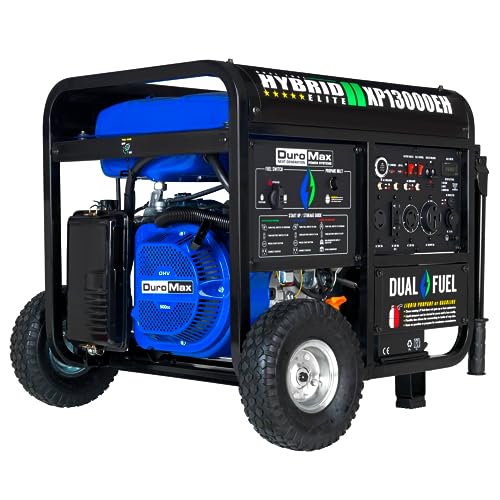
DuroMax XP13000EH Dual-Fuel Generator
- Running Watts: 10,500 W
- Runtime: 8 hrs @ 1/2 load (gas)
- Noise Level: ~74 dB
- Weight: 234 lbs
As an Amazon Associate, we earn from qualifying purchases.
The XP13000EH sits in the sweet spot for serious crews: 13,000 peak watts, 10,500 running watts, dual fuel, typically $1,400–$1,800. The 500cc engine, push-button start, and CO Alert shutdown make it a modern, safe workhorse. GFCI outlets and surge protection come standard — DuroMax clearly designed this with job sites in mind.
Runtime is about 8 hours at half load on gasoline. At 234 pounds with the wheel kit, two people can maneuver it, or one with a ramp. EPA and CARB certification means it’s legal on California sites — a detail that matters more every year.
Based on owner feedback, the XP13000EH is a favorite among contractors who need more than the Honda EB5000X can give but can’t justify the XP15000HX. It splits the difference nearly perfectly.
Pros
- 10,500W sweet spot for crews
- CO Alert + GFCI outlets
- CARB compliant for California sites
- 3-year warranty
Cons
- 234 lbs needs two people or a ramp
- 8-hour runtime means midday refuel on long days
Best 8kW all-rounder
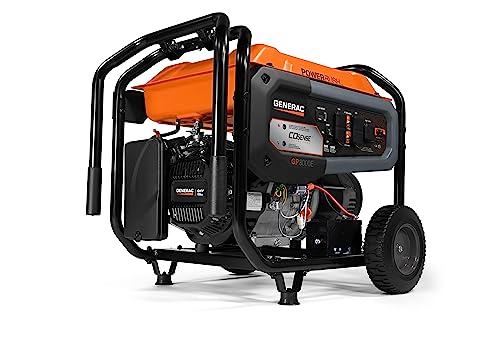
Generac GP8000E Portable Generator (7715)
- Running Watts: 8,000 W
- Runtime: ~11 hrs @ 1/2 load
- Noise Level: ~74 dB
- Weight: 214 lbs
As an Amazon Associate, we earn from qualifying purchases.
The GP8000E is Generac’s bread-and-butter contractor unit: 10,000 peak watts, 8,000 running watts, electric start, typically $1,100–$1,400. Generac’s PowerRush technology gives it extra starting current for motor loads — compressors and saws start easier than the raw wattage suggests.
The 439cc engine and 7.9-gallon tank are sized for full workdays. At 214 pounds it’s manageable with the wheel kit. COsense shutdown is included, which is now table stakes for anything running near a crew.
Based on spec comparison and owner feedback, the GP8000E is the safe mainstream choice — not the cheapest, not the most powerful, but backed by the biggest dealer network in the business. When it breaks at 7 a.m., parts and service are a phone call away. That counts for a lot.
Pros
- PowerRush handles motor starting surges
- Biggest service network in the industry
- Electric start, COsense included
Cons
- Gasoline only — no propane option
- Heavier than some rivals per watt
Side-by-side comparison
| Product | Running W | Fuel | Noise | Best for |
|---|---|---|---|---|
| Honda EB5000X | 5,000 | Gas | 64 dB | OSHA crews, reliability |
| DuroMax XP15000HX | 12,000 | Dual | 74 dB | Big site power |
| Generac GP17500E | 17,500 | Gas | 76 dB | Maximum watts |
| Westinghouse WGen9500DF | 9,500 | Dual | 74 dB | Value workhorse |
| DuroMax XP13000EH | 10,500 | Dual | 74 dB | Mid-size sweet spot |
| Generac GP8000E | 8,000 | Gas | 74 dB | Mainstream 8kW |
How to choose a job-site generator
Jobsite buying is different from home backup. Here’s the contractor’s checklist.
Start with GFCI and OSHA compliance
If the generator runs on a regulated job site, GFCI protection on all 120V outlets isn’t optional — it’s an OSHA requirement, and inspectors do check. The Honda EB5000X is built for this; many homeowner units aren’t. Even on unregulated sites, GFCI + wet conditions + power tools is a combination where protection earns its keep. Don’t learn this from an incident.
Size for starting watts, not running watts
Tools lie about their draw — or rather, they tell the truth only once they’re spinning. A 15-amp table saw draws 1,800W running but can surge past 4,000W on startup. An air compressor is worse. Add up running watts, then add the single largest starting surge on top. If your crew runs a compressor (2,200W running / 5,000W+ starting) plus a saw, you’re already past what a 5,000W unit handles — that’s the XP13000EH’s territory. Our construction site sizing guide has trade-by-trade worksheets.
Runtime = workday coverage
A generator that dies at 3 p.m. costs you labor hours. Look for 8+ hours at half load minimum — that covers a workday with normal cycling. Bigger tanks (the GP17500E’s 16 gallons, the XP15000HX’s 13.2) mean fewer refuel interruptions. Dual-fuel models add a propane fallback when the gas can runs dry mid-afternoon, which has saved more than one of my project days.
Durability: frames, filters, and hour meters
Full-wrap steel frames, never plastic end caps, if the unit rides in a truck. An hour meter isn’t a luxury — it’s how you schedule oil changes at 100-hour intervals instead of guessing. Air filter access matters on dusty sites; foam pre-cleaners extend service intervals. The Honda and Generac units here have the best parts availability, which is a durability factor most buyers ignore until something breaks.
Power quality for modern tools
Today’s tools have soft-start electronics, battery chargers, and laser levels that hate dirty power. Inverter generators and AVR-equipped models (all six here have voltage regulation) protect that investment. For a full breakdown of power types, see our best portable generators roundup.
Theft and placement
Generators walk off job sites. Chain it through the frame (all six have lift eyes or frame rails), and position it 20 feet from any enclosed work area with exhaust downwind — CO kills quietly. Never run one inside a structure, even “just for a minute.” For home-base storage between jobs, our emergency generator guide covers dual-use setups.
What size generator do I need for a job site?
Do job site generators need GFCI outlets?
Can I run a welder off a portable generator?
How long do job site generators last?
Gas or dual-fuel for job site use?
Jobsite generator maintenance: the 100-hour rule
A job-site generator lives or dies by maintenance, and the schedule is brutally simple: oil change every 100 hours, air filter check every 50, spark plug every season. On a crew running 8-hour days, 100 hours arrives in under three weeks. The contractors whose generators last five years aren’t lucky — they’re the ones with the hour meter habit.
All six picks here have hour meters (or should be paired with a $15 inductive tach/hour meter — cheap insurance). Use straight 10W-30 conventional or synthetic per the manual; in dusty conditions, knock the foam pre-cleaner out daily and wash it weekly. Keep a site box with oil, a filter, a spare plug, and a funnel — a 15-minute oil change beats a seized engine every time.
Fuel discipline matters too: ethanol-free gas where you can get it, stabilizer in every can, and never store a generator with old fuel in the carburetor. Run it dry or use the fuel shutoff valve before storage. I’ve watched more generators die from varnished carburetors over winter than from any job-site abuse. The Honda’s fuel shutoff and the DuroMax/Generac fuel gauges exist because the manufacturers have seen the same thing.
Our verdict
For most contractors, the Honda EB5000X remains the smartest money — OSHA-ready, reliable, and worth more used than most generators cost new. Need to power the whole site? The DuroMax XP13000EH hits the sweet spot of watts, features, and price, while the Westinghouse WGen9500DF is the value king for crews watching the budget.
How we researched this: Contractor-focused spec comparison across GFCI compliance, frame durability, runtime at load, and service network depth; manufacturer documentation; and owner feedback from commercial users. We prioritized units with hour meters, CO shutdown, and verifiable Amazon listings, and excluded homeowner-only models without jobsite-grade protection.

Related Guides
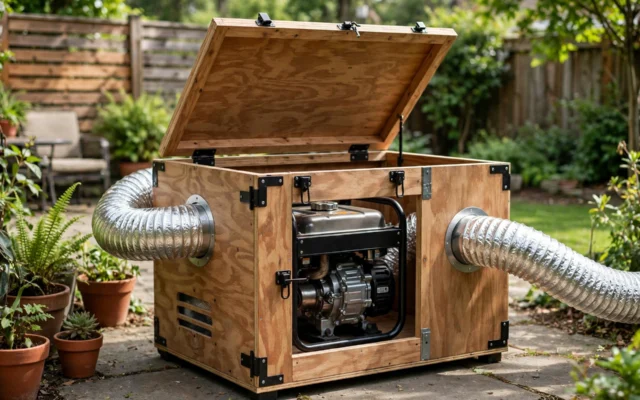
DIY Generator Quiet Box: How to Build a Noise-Reduction Enclosure
A DIY generator quiet box can cut noise 10–20 dB — but ventilation and CO safety are the whole project. Materials, baffle design, fan sizing, and the mistakes to avoid.

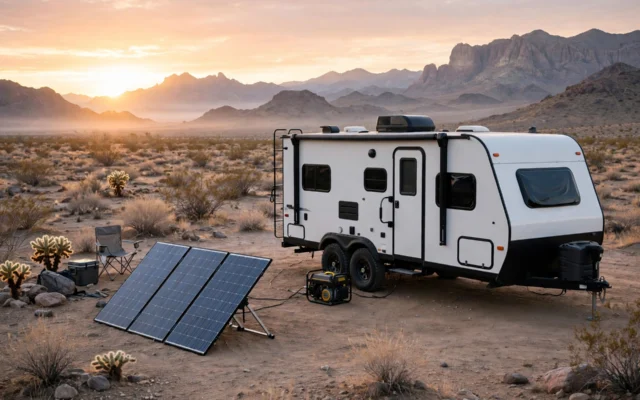
Boondocking Power Setup: Generator + Solar for Off-Grid Camping
The ideal boondocking power setup pairs solar with a generator and battery bank. Real daily load math, sizing tiers, and the generator run strategy that sips fuel.
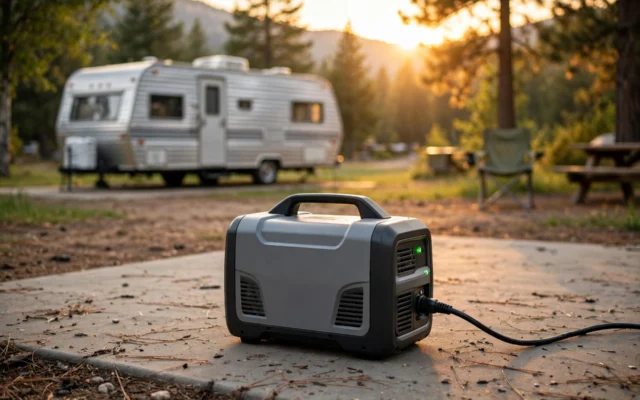
RV Generator Quiet Hours & Campground Etiquette Guide
RV generator quiet hours are usually 10pm–8am, with limited daytime generator windows in national parks. The rules, the unwritten etiquette, and how to stay neighborly.